Health24.com | 5 habits that are bad for your hair

Throughout history, hair has represented different things, including social, political or marital status – and different cultures have widely divergent ideas and practices when it comes to our “crowning glory”. 

Although hair is mostly a fashion statement, it is also an indication of our health status – and the most important thing about your hair is that it stays healthy.

This can, however, be taken for granted in our culture of quick fixes and chemical interventions, and many of the things we do to our hair nowadays seem to be doing more harm than good.

According to the Centers for Disease Control and Prevention, another problem many people face is hair loss, which can be caused by genetics and diseases like alopecia, lupus, and cancer. 

On an everyday level, however, there are a number of things you might be doing that are bad for your overall hair health.

1. Using hairstyling tools

Hairdryers and hair straighteners are our “go-to” when we want to tame our hair or when we feel we are having a bad hair day. But these are damaging to your hair. The heat from a straightener almost literally fries your hair – that sizzling sound should be an indication of the damage being done.

Too much heat strips essential serums and natural oils from your hair, making it look dry and lifeless.  This reduces the strength of your hair, promoting hair damage and loss.

hair,hair loss,hair habits,health

                                                                                                iStock

2. Applying chemical products

We often find ourselves at a loss when choosing the correct shampoos and serums to protect our hair – there are just too many options to choose from!

Many of these products also contain chemicals that can damage our hair if not used correctly.

And, apart from damage to our hair, chemicals present in hair dyes raises the risk of breast cancer in women, according to a Health24 article.

Hair dyes contains chemicals such as hydrogen peroxide and ammonia, which may have irreversible effects like weakening and breaking the hair.   

hair,hair loss,hair habits,health

                                                                                                iStock

3. Brushing wet hair

People often make the mistake of brushing or combing their hair right after washing it. This may damage and even break your hair as it is at its most fragile when wet.

hair,hair loss,hair habits,health

                                                                                               iStock

4. Washing your hair too often

As mentioned above, your hair is at its most fragile when wet, and chemicals in shampoos and other hair products can cause significant damage.

Washing also strips your hair of its natural oils. Give your hair a break!

hair,hair loss,hair habits,health

                                                                                                iStock

5. Stressing too much

Physical stressors like accidents, flu, or surgery can cause hair loss.

According to a Health24 article, this temporary hair loss usually manifests two to four months after the injury or incident. Growth returns to normal after three to six months.

Stress habits, such as scratching your hair – which breaks it at the root – or tugging on your ponytail in stressful situations can also cause hairs to break off. Aim to de-stress your life, and keep your hands out of your hair.

hair,hair loss,hair habits,health

                                                                                              iStock

Read more:

7 myths about male hair loss

Four tips for healthy winter hair

You weave or braids could cause hair loss

Share Button

Health24.com | You’ll be shocked at how dismissive people are of mental health

Yesterday, a story about a CEO’s surprisingly understanding response to an employee’s need to take a mental health day was largely met with adulation – but not so much by readers on News24’s Facebook page.

“Let her take a day, i don’t want to be a working with a psycho [sic]”

“I’d give her the day off. Ever see how mental a woman can go? [sic]”

“So very true, guess who is responsable for woman loosing it? [sic]

“Would tell her to go work at a mental institution [sic]”

“Request admittance letter to asylum.”

It’s staggering that such opinions still exist in 2017 when more than 300 million people worldwide suffer from depression and close to 800 000 people die by suicide every year.

In South Africa, about a fifth (20%) of the population will experience a depressive disorder at least once in their lifetime and the incidence of suicide has risen to 23 a day, says the South African Depression and Anxiety Group (SADAG).

According to the World Health Organization depression and other mental health conditions are on the rise globally.

Yet the negative stigma surrounding mental health still exists.

Why the stigma?

“There is still a huge amount of stigma [about mental illnesses] in our communities and this is largely due to the fact a lot of people still do not understand mental illnesses,” says Nkini Pasha, a SADAG board member.

“There are a lot of myths around what causes mental illnesses, and people find it difficult to define mental illnesses.”

Pasha says the key to fighting this stigma is education.

“Depression affects cognitive functioning such as decision making, concentration, memory and problem solving abilities. Depression negatively impacts productivity,” says psychiatrist and clinical psychologist Dr Frans Korb. “If an employee has depression but is at work, they are five times less productive than an employee who was absent due to depression.”

Not all negative

The feedback wasn’t all negative, however. Many positive comments came through, too.

“Just a personal opinion but – society accepts people who are on chronic meds for different types of illnesses and treat these people with care. However, is the brain and therefore the mind not part of our physical make-up? It is certainly time that society wakes up to the fact that mental well-being is essential. Depression, anxiety, stress and all the ‘dark’ places are a reality and can – and should be – treated and accepted with the same quality of care and understanding that is given to any ‘visible’ illness [sic].” 

“Mental illness is exactly that, an illness and therefore, should be treated with the same urgency as a health illness.”

Want to read all the comments? Click on the Facebook link below.

If you would like get in touch to share your thoughts, please email Mandy Freeman.

Read more:

20% increase in global depression in a decade

Should you tell your boss about your mental illness?

How to support someone with depression

Share Button

Health24.com | HIV/Aids treatments soon available at ‘ATMs’

Access to treatment will be now be made easier for people living with HIV/Aids as they will soon be able to collect their medicine at shopping malls thanks to the introduction of special ATM machines.

The machines, or rather pharmacy dispensing units, are equipped to dispense medication and are set to be rolled out at Gauteng malls.

Achieving the 90-90-90 challenge

The Gauteng Department of Health in partnership with organisations EQUIP and Right to Care are engaging in a pilot project to ensure sufficient and easy access to treatment by people living with HIV/ Aids.

To achieve the 90-90-90 challenge – a plan to ensure that 90% of all South Africans know their HIV status by 2020 – the pharmacy dispensing units are being set up in selected areas of Johannesburg to ensure accessibility of HIV/Aids treatment.

Dr Thembi Xulu, Chief of Party at EQUIP, describes the pharmacy dispensing units as a ground breaking solution that will allow patients to quickly and conveniently collect their prescriptions.  A PDU is an ATM-like innovation using electronic and robotic technology to dispense medication. It is being piloted in collaboration with the Gauteng Department of Health at Ndofaya Mall in Soweto (5 PDUs), Baragwanath Mall in Soweto (3 PDUs), an unnamed outlet in Diepsloot and another 4 PDUs at the Alex Plaza in Alexandra.

Initiative welcomed by TAC

EQUIP is the first Africa-led USAID-funded global consortium to deliver rapid scale-up of innovative HIV treatment and prevention solutions across 17 PEPFAR countries in Africa, South-East Asia, Eastern Europe and the Caribbean. EQUIP was founded in October 2015 in response to a call from USAID to establish a rapid-response mechanism to support PEPFAR countries reach their UNAIDS 90-90-90 targets.

This initiative was welcomed by Treatment Action Campaign General Secretary Anele Yawa.

“One of the challenges we face as public health care users is when people visit clinics and are turned away because there are shortages of medicines or drugs stock outs. As much as we support this project that promises to assist in ensuring the availability of medicines, we have a concern. The majority of people living with HIV/Aids are black, women, poor and some of them are illiterate. We hope that the PDUs will be user friendly to the illiterate as well,” Yawa said. – Health-e News

Read more:

HIV positive teens have to skip school to get ARVs

HIV medication patch shows promise

Mozambique to produce own ARVs

Share Button

Interplay of an African Bat, a Parasite and a Virus, study reveals

[unable to retrieve full-text content]

Share Button

How selenium compounds might become catalysts

[unable to retrieve full-text content]

Share Button

Antibiotic nanoparticles fight drug-resistant bacteria

[unable to retrieve full-text content]

Share Button

Fewer ambulance 999 calls to be classed as ‘life-threatening’

NHS bosses say the changes in England will save lives among the sickest patients.

Share Button

Health24.com | Are you exfoliating enough?

In an ideal world (i.e., when our skin is absolutely healthy and we are under the age of 30), our skin naturally sheds dried out, dead skin cells every 28 days. They start their journey from the lowest layer of the Epidermis (known as the Basal Layer) as healthy, living skin cells, making their way up to the surface over four weeks while doing their thing, until they die and slough off naturally. This natural process is called cell turnover. The problem is that as we age, this process starts to slow down and takes a lot longer. Also if our skin is not healthy in some way, then natural exfoliation isn’t efficient. Dry, dead skin cells start clumping unevenly on the skin’s surface, leading to dry and even flaky patches, and a dull lacklustre appearance.

Why do we need to exfoliate? 

The slowing of the 28 day skin cell turnover cycle leads to ageing, because the more the dry, dead skin cells accumulate on the skin surface, the slower the Basal Layer starts to produce new cells. So a vicious cycle begins. If left unassisted, this leads to all the signs of ageing, dull, thin, crepey skin with fine lines and poor hydration. When we step in to help the exfoliation process, we ensure efficient removal of dead skin cells to reveal fresher, younger cells below; we give the skin many benefits:

We encourage the Basal Layer to produce more young, plump cells more regularly, encouraging the 28 day turnover cycle to continue. We help restore the skin’s natural radiance, smoothness and healthy appearance and the texture of pores appear more fine.

It helps unclog blocked pores that can become blackheads or acne.

A big plus is that exfoliation makes your skin care more efficient. Instead of your moisturiser or treatment product (from acne treatment to anti-ageing serum) being blocked or absorbed by the dead skin cells, it is able to penetrate into the skin more effectively. By exfoliating with a combination of home treatments and in clinic procedures, we also force the skin into the habit of faster cell turnover. The sooner we start clearing the dead skin cells, the more rejuvenated the skin will be, ultimately slowing down the ageing process.

Who should exfoliate? 

Unless you have a serious skin condition such as eczema, for example, everyone should exfoliate. But how you exfoliate and the type of exfoliator you choose is very important. First understand the difference between a manual and chemical exfoliation.

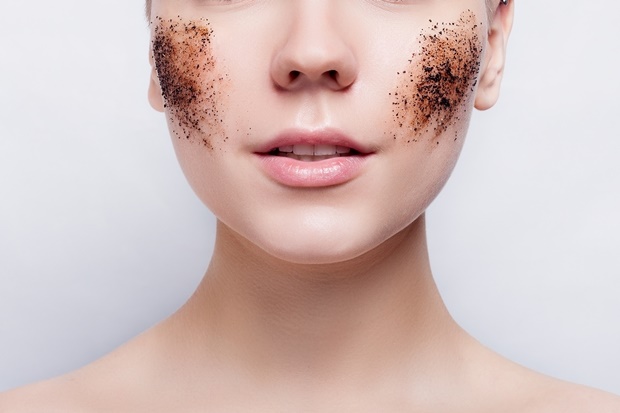
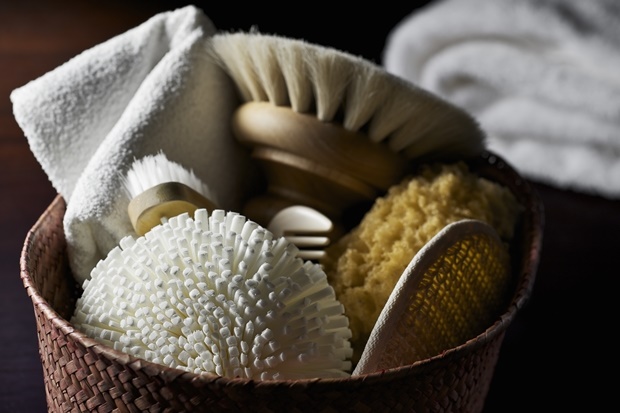
Manual exfoliation is physical sloughing off of skin cells with a scrub, washcloth or brush. A physical scrub has a rough texture due to pieces of grit (fine nut shells or synthetic microbeads), which remove the dead cells as you manually rub it on your skin. Professionals prefer to use these on the body rather than the face, because they can be rough and scratch the skin. Microbeads are also under scrutiny for their environmental unfriendliness and are being reformulated to be biodegradable.

Chemical exfoliators are preferred as these dissolve the “glue” that holds the dead cell to the surface of the skin. Depending on the chemical used – fruit acids, salicylic acid, enzymes from papaya, pineapple and pumpkin, etc., this is your exfoliator of choice for all skins, even sensitive and acne-prone skin.

If in doubt, do a test exfoliation on a small patch of skin on your inner arm to gauge your tolerance. Better still, seek professional advice about the medical products most suited to your particular skin type and condition, when and how often to exfoliate at home, with the prescription of the correct products.

Using the correct products has an enormous impact on the results achieved. Your aesthetic doctor and skin-care therapist will work out the best programme for your home prescription that will work most effectively with your in-clinic treatments, such as chemical peels, microdermabrasion and dermapen treatments.

Exfoliation can benefit problematic skins:

Dry and dehydrated skin: by making moisturising and nourishing treatments penetrate the skin better, and building a more efficient skin barrier against evaporation.

Oily and acne-prone skin: by clearing away dead skin debris that clogs pores and can cause breakouts. Chemical exfoliation with glycolic or salicylic acid is definitely preferred here to avoid breakouts.

Sensitive or reactive skins: can benefit from gentle chemical exfoliation with ingredients such as glucosamine, which don’t cause irritation. Definitely don’t use a physical scrub. 

Too much of a good thing

How often you do it is very important. Too much exfoliation can cause a damaged moisture barrier, resulting in flaking, dehydration, irritation and inflammation. Over-exfoliation may even stimulate melanin activity, causing increased possibility of hyperpigmentation. People with darker skins in particular need to be very careful.

So how often should you exfoliate? Be guided by your skin-care professional, but two to three times a week at most for ‘normal’ skin. Mature and sensitive skin should do it once a week, depending on the type of exfoliator used. Daily micro-exfoliators are designed for gentle daily use. However, if you see that your skin is becoming dry, flaky and irritated, give it a rest for a few days, and slowly reintroduce it every three to four days. Or see your skin care specialist.

Avoid the delicate eye area unless the treatment specifies it may be used there.

To find out more about exfoliation treatments suitable for your skin type and the four pillars to addressing ageing skin, visit Skin Renewal at www.skinrenewal.co.za

.

Share Button

Health24.com | SEE: How to help your child cope with IBS

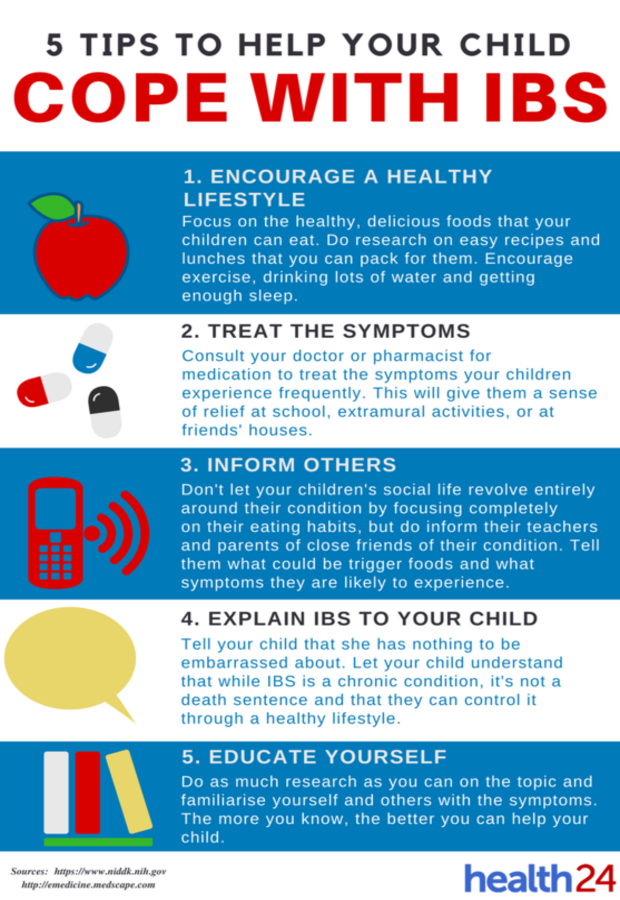
The crippling abdominal cramps and other symptoms associated with IBS (irritable bowel syndrome) are hard for adults to cope with. It can be even worse for a small child to understand and handle these symptoms at school, during extramural activities or when visiting friends.

Is IBS common in children?

On a global basis, the IBS prevalence rate is between 10% and 15%, but in South Africa it’s a little lower and is estimated to occur in about 8% of the population. Research on the prevalence of IBS specifically in children and teenagers is still fairly limited in South Africa.

The fact that there are no specific tests for the diagnosis of IBS, in addition to the various overlapping symptoms used in the diagnosis classification, makes it even more difficult to pinpoint IBS in children.

How do I know if my child has IBS?

As in adults, children will display recurring abdominal cramps, a change in bowel movements, abnormal stool movements and a flare-up of symptoms when eating certain foods. Look out for the following:

  • Bowel movements that are more or less frequent than usual
  • Stools with a significantly different texture 
  • A decrease in abdominal pain or discomfort with a bowel movement

Some symptoms common in adults with IBS that usually occur after eating can also present in children. Bridget Surtees, a registered dietitian from Cape Town, says that any unusual activity in your child’s bowel movement should definitely be checked out by a doctor. In order for the child to be diagnosed with IBS, the following symptoms need to be present for at least three days a month for a period of three months or longer:

  • Diarrhoea
  • Constipation
  • Mucus in stools
  • Bloating

What causes IBS in children?

The causes of IBS remain a mystery to researchers worldwide. In the past, it was thought that IBS was caused only by psychological factors such as stress, but since then other theories such as decreased serotonin production, genetics, inflammation and an abnormal growth of bacteria in the gut have been presented to explain IBS.

The possible causes of IBS in adults are thought to be similar in children, and studies have shown that IBS is more common in children with family members who have a history of IBS. IBS has also been linked to mental health problems, problems between the brain and nerves in the intestines, as well as hypersensitivity.

What should I do if I suspect that my child has IBS?

Monitor your child’s bowel movements especially after they have eaten. If problems occur twice a week for a duration of minimum two months and your child is still growing normally, it is possible that they could be suffering from IBS.

A physical examination by your GP is advisable, where questions will be asked regarding your child’s medical history and regular diet. Additional tests might be necessary to rule out other conditions. Surtees also suggests making gradual changes to a child’s diet, ensuring they get enough fibre, and eliminating the foods that cause a flare-up of symptoms. 

Read more:

Preventing IBS

Behaviour therapy calms IBS

Living with IBS

Share Button

Scan finds heart’s ticking time bombs

Oxford scientists say the test can pick up who is at risk of heart attack and stroke.

Share Button