Bosses at the Great Western Hospital in Swindon have described the behaviour as “unacceptable”.


Bosses at the Great Western Hospital in Swindon have described the behaviour as “unacceptable”.
A new surgery says its repeated offers to treat NHS patients have been turned down by officials.
Charlotte says she feared the worst when her baby was taken into intensive care at St Mary’s Hospital.
Patients coming off Wegovy or Mounjaro should have support and advice for at least a year afterwards, NHS told.
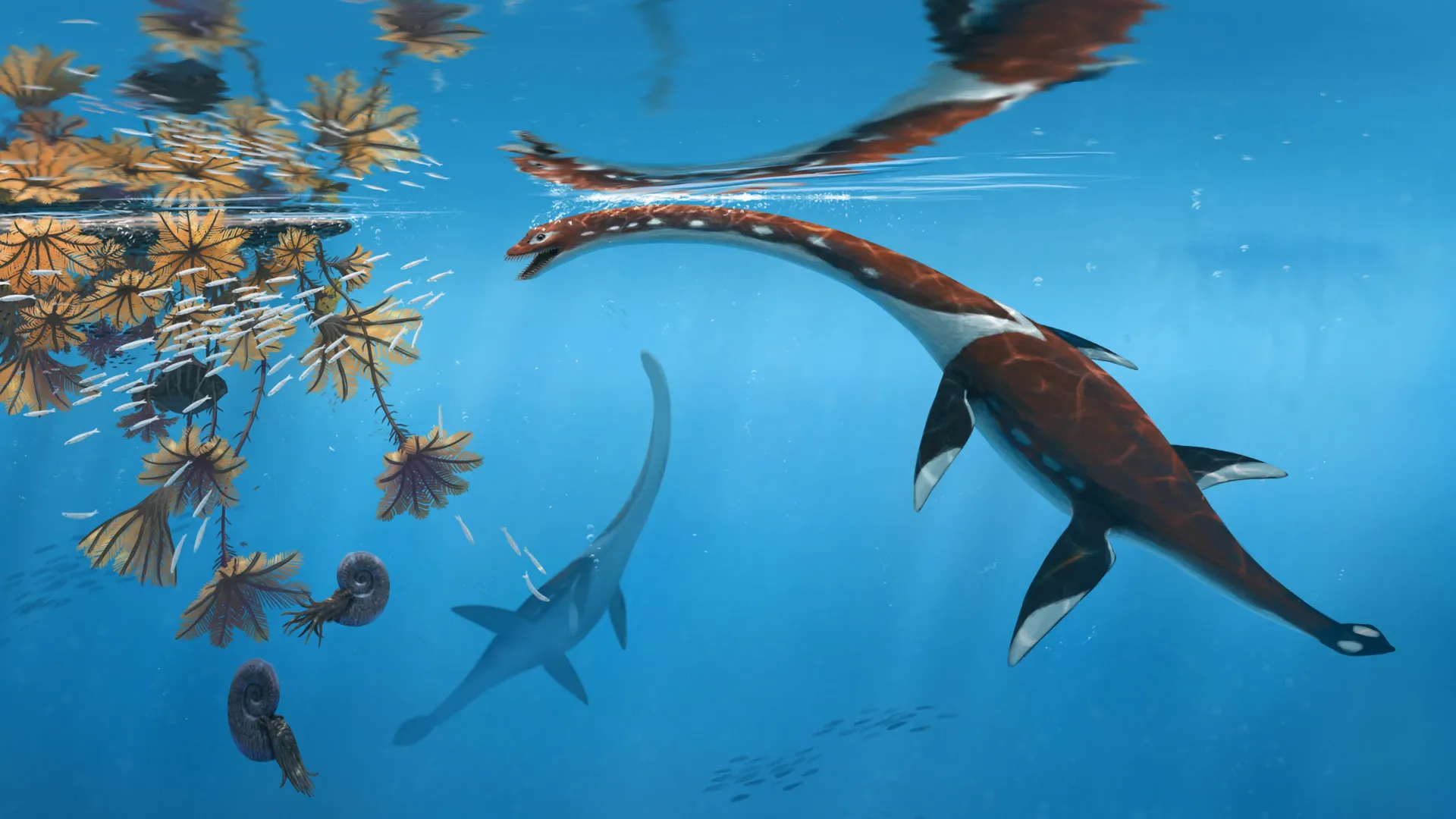
Paleontologists have identified a new species of ancient marine reptile from Germany’s world-renowned Posidonia Shale fossil beds, expanding our understanding of prehistoric ocean ecosystems that existed nearly 183 million years ago.
The newly classified species, named Plesionectes longicollum (“long-necked near-swimmer”), represents a previously unknown type of plesiosauroid — the group of long-necked marine reptiles that inhabited Earth’s oceans during the age of dinosaurs. The specimen is a nearly complete skeleton that even preserves remnants of fossilized soft tissue. It was originally excavated in 1978 from a quarry in Holzmaden, Southwest Germany, but its unique anatomical features have only now been fully recognized through comprehensive scientific analysis.
“This specimen has been in collections for decades, but previous studies never fully explored its distinctive anatomy,” said Sven Sachs of the Naturkunde-Museum Bielefeld, the study’s lead author. “Our detailed examination revealed an unusual combination of skeletal features that clearly distinguish it from all previously known plesiosaurs.”
The research, published by Sven Sachs and co-author Dr. Daniel Madzia from the Polish Academy of Sciences, demonstrates that the Posidonia Shale — already famous for its exceptionally preserved fossils — contained even greater marine reptile diversity than previously recognized.
The Plesionectes specimen is particularly significant as it represents the oldest known plesiosaur from the Holzmaden area. Despite being an immature individual, its distinctive anatomical characteristics were not significantly affected by its developmental stage, warranting classification as an entirely new genus and species.
“This discovery adds another piece to the puzzle of marine ecosystem evolution during a critical time in Earth’s history,” explained Dr. Madzia. “The early Toarcian period when this animal lived was marked by significant environmental changes, including a major oceanic anoxic event that affected marine life worldwide.”
The fossil is permanently housed at the Staatliches Museum für Naturkunde Stuttgart (Stuttgart State Museum of Natural History) where it is cataloged as specimen SMNS 51945.
The Posidonia Shale at Holzmaden has previously yielded five other plesiosaur species, including representatives from all three major plesiosaur lineages. This new addition further cements the formation’s status as one of the world’s most important windows into Jurassic marine life.
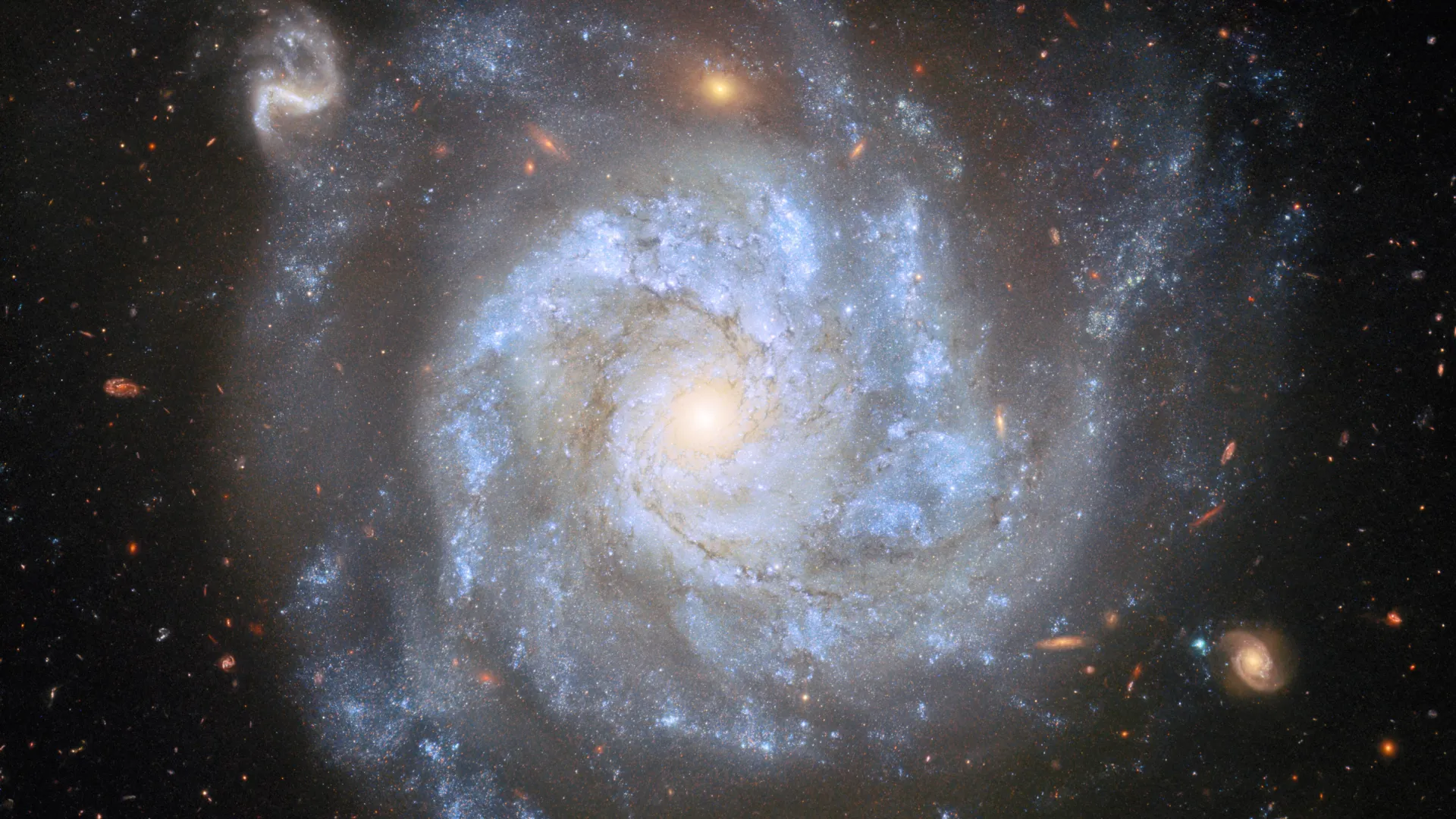
Rich with detail, the spiral galaxy NGC 1309 shines in this NASA/ESA Hubble Space Telescope Picture of the Week. NGC 1309 is situated about 100 million light-years away in the constellation Eridanus.
This stunning Hubble image encompasses NGC 1309’s bluish stars, dark brown gas clouds and pearly white centre, as well as hundreds of distant background galaxies. Nearly every smudge, streak and blob of light in this image is an individual galaxy. The only exception to the extragalactic ensemble is a star, which can be identified near the top of the frame by its diffraction spikes. It is positively neighborly, just a few thousand light-years away in the Milky Way galaxy.
Hubble has turned its attention toward NGC 1309 several times; previous Hubble images of this galaxy were released in 2006 and 2014. Much of NGC 1309’s scientific interest derives from two supernovae, SN 2002fk in 2002 and SN 2012Z in 2012. SN 2002fk was a perfect example of a Type Ia supernova, which happens when the core of a dead star (a white dwarf) explodes.
SN 2012Z, on the other hand, was a bit of a renegade. It was classified as a Type Iax supernova: while its spectrum resembled that of a Type Ia supernova, the explosion wasn’t as bright as expected. Hubble observations showed that in this case, the supernova did not destroy the white dwarf completely, leaving behind a ‘zombie star’ that shone even brighter than it did before the explosion. Hubble observations of NGC 1309 taken across several years also made this the first time the white dwarf progenitor of a supernova has been identified in images taken before the explosion.
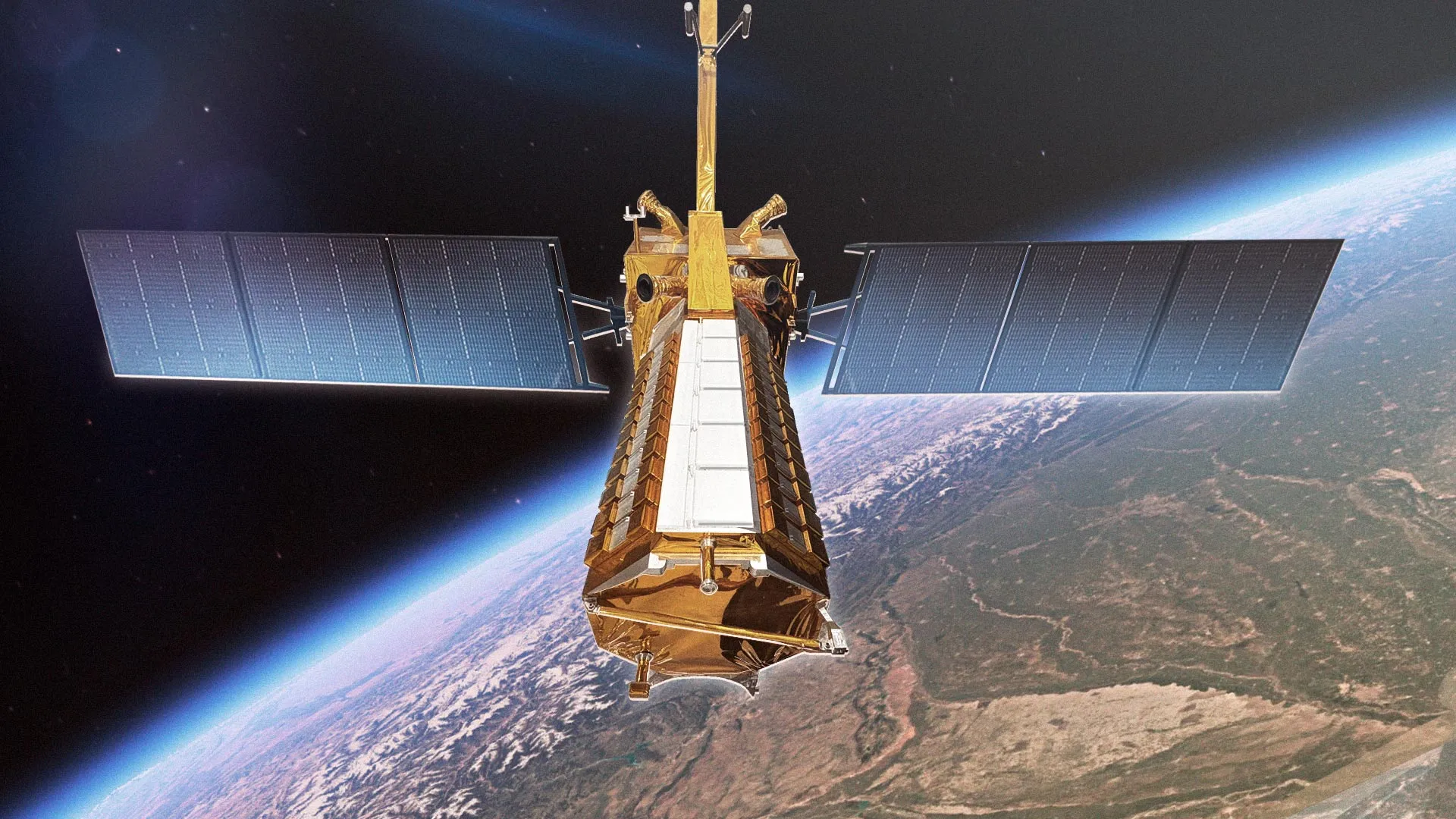
Following a successful launch on July 30, the NISAR satellite will orbit Earth for at least three years, using its sophisticated radar systems to scan nearly all the planet’s land and ice surfaces twice every 12 days. NASA and the Indian Space Research Organisation (ISRO) will jointly operate the spacecraft and gather science of high priority to both the United States and India.
Short for NASA-ISRO Synthetic Aperture Radar, NISAR will help scientists better understand processes involved in natural hazards and catastrophic events, such as earthquakes, volcanic eruptions, and landslides. In addition, it will support monitoring of infrastructure, such as dams, bridges, and roadways. What’s more, the satellite’s cloud-penetrating ability will help urgent-response communities during weather disasters such as hurricanes, storm surges, and floods. And NISAR will provide key global Earth observations, such as changes in ice sheets, glaciers, and sea ice, as well as improve understanding of how deforestation, permafrost loss, and fires affect the carbon cycle.
Along with providing an unprecedented amount of data, the mission breaks new ground with its collaboration between teams of scientists and engineers separated by more than 9,000 miles and 13 time zones.
The first-ever hardware collaboration between NASA and ISRO on an Earth-observing mission, NISAR will carry the most advanced radar system ever launched as part of a NASA or ISRO mission.
About the length of a pickup truck, the satellite’s main body contains engineering systems and a first-of-its-kind dual-radar payload — an L-band system with a 10-inch (25-centimeter) wavelength and an S-band system with a 4-inch (10-centimeter) wavelength. Each system’s signal is sensitive to different sizes of features on Earth’s surface, and each specializes in measuring different attributes, such as moisture content, surface roughness, and motion. These characteristics are important for studying a variety of natural surface conditions, such as the amount of soil moisture available for vegetation to thrive or if land has subsided over time.
When operating together, the satellite’s two radars will collect data synchronized in time and location, extending the sensitivity of the measurements to objects on the surface in a broad range of sizes. For example, S-band data will allow more accurate characterization of shorter plants, such as bushes and shrubs, while L-band data will sense taller vegetation, like trees.
The spacecraft will operate in a Sun-synchronous orbit, with its radar antennas pointed in a configuration that will also offer unprecedented coverage of Antarctica. This is crucial for studying the motion, deformation, and melting of the Antarctic ice sheet as it breaks up and deposits fresh water into the ocean.
One woman says the Welsh NHS “can’t be bothered” to send letters to patients to explain.
Doctors say the jabs could save the NHS millions of pounds over the next decade.
Immediately after the Big Bang, which occurred around 13.8 billion years ago, the universe was dominated by unimaginably high temperatures and densities. However, after just a few seconds, it had cooled down enough for the first elements to form, primarily hydrogen and helium. These were still completely ionized at this point, as it took almost 380,000 years for the temperature in the universe to drop enough for neutral atoms to form through recombination with free electrons. This paved the way for the first chemical reactions.
The oldest molecule in existence is the helium hydride ion (HeH+), formed from a neutral helium atom and an ionized hydrogen nucleus. This marks the beginning of a chain reaction that leads to the formation of molecular hydrogen (H2), which is by far the most common molecule in the universe.
Recombination was followed by the ‘dark age’ of cosmology: although the universe was now transparent due to the binding of free electrons, there were still no light-emitting objects, such as stars. Several hundred million years passed before the first stars formed.
During this early phase of the universe, however, simple molecules such as HeH⁺ and H2 were essential to the formation of the first stars. In order for the contracting gas cloud of a protostar to collapse to the point where nuclear fusion can begin, heat must be dissipated. This occurs through collisions that excite atoms and molecules, which then emit this energy in the form of photons. Below approximately 10,000 degrees Celsius, however, this process becomes ineffective for the dominant hydrogen atoms. Further cooling can only take place via molecules that can emit additional energy through rotation and vibration. Due to its pronounced dipole moment, the HeH⁺ ion is particularly effective at these low temperatures and has long been considered a potentially important candidate for cooling in the formation of the first stars. Consequently, the concentration of helium hydride ions in the universe may significantly impact the effectiveness of early star formation.
During this period, collisions with free hydrogen atoms were a major degradation pathway for HeH⁺, forming a neutral helium atom and an H2⁺ ion. These subsequently reacted with another H atom to form a neutral H2 molecule and a proton, leading to the formation of molecular hydrogen.
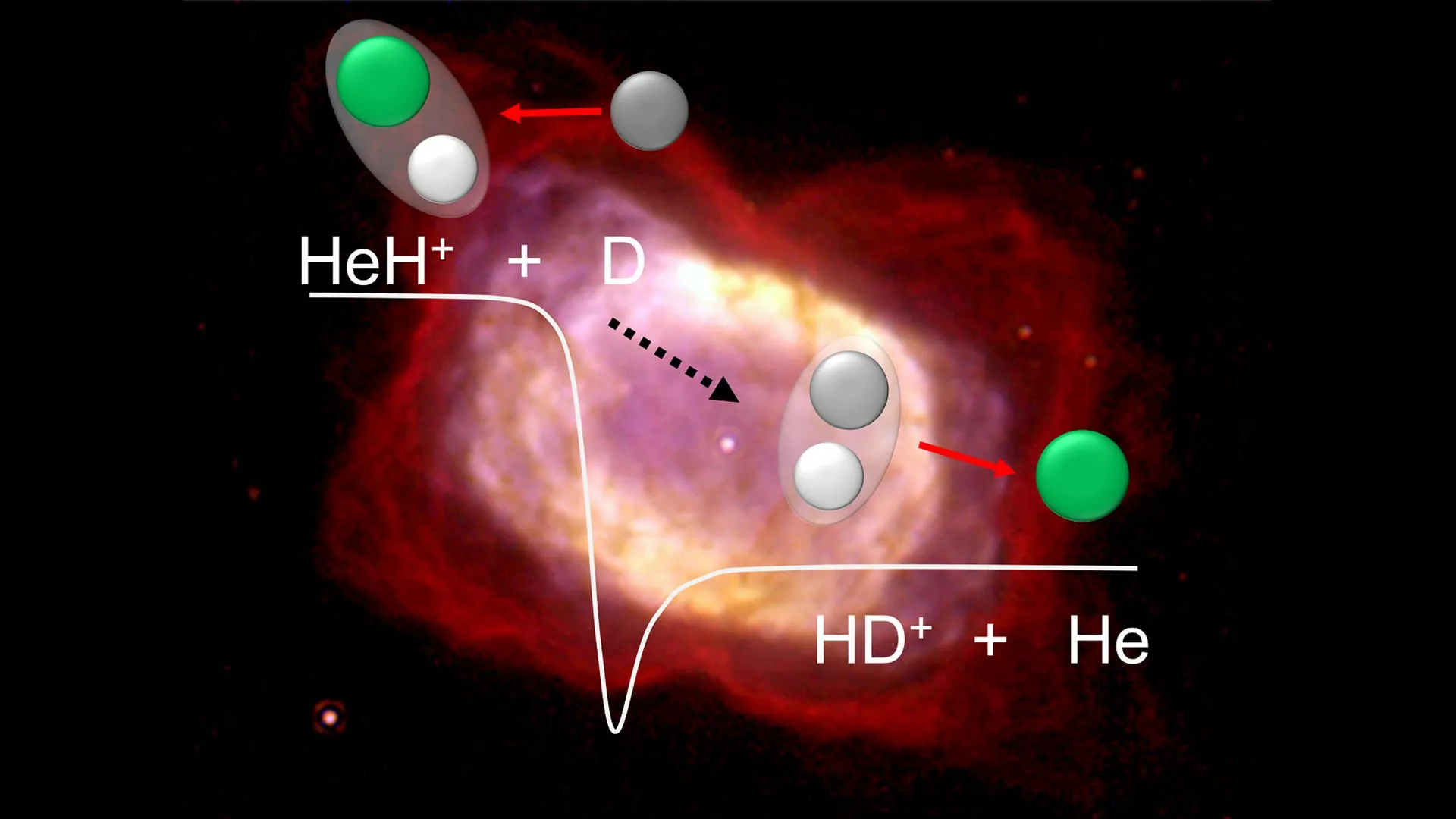
Researchers at the Max-Planck-Institut für Kernphysik (MPIK) in Heidelberg have now successfully recreated this reaction under conditions similar to those in the early universe for the first time. They investigated the reaction of HeH⁺ with deuterium, an isotope of hydrogen containing an additional neutron in the atomic nucleus alongside a proton. When HeH⁺ reacts with deuterium, an HD⁺ ion is formed instead of H2⁺, alongside the neutral helium atom.
The experiment was carried out at the Cryogenic Storage Ring (CSR) at the MPIK in Heidelberg — a globally unique instrument for investigating molecular and atomic reactions under space-like conditions. For this purpose, HeH⁺ ions were stored in the 35-metre-diameter ion storage ring for up to 60 seconds at a few kelvins (-267 °C), and were superimposed with a beam of neutral deuterium atoms. By adjusting the relative speeds of the two particle beams, the scientists were able to study how the collision rate varies with collision energy, which is directly related to temperature.
They found that, contrary to earlier predictions, the rate at which this reaction proceeds does not slow down with decreasing temperature, but remains almost constant. “Previous theories predicted a significant decrease in the reaction probability at low temperatures, but we were unable to verify this in either the experiment or new theoretical calculations by our colleagues,” explains Dr Holger Kreckel from the MPIK. ‘The reactions of HeH⁺ with neutral hydrogen and deuterium therefore appear to have been far more important for chemistry in the early universe than previously assumed,’ he continues. This observation is consistent with the findings of a group of theoretical physicists led by Yohann Scribano, who identified an error in the calculation of the potential surface used in all previous calculations for this reaction. The new calculations using the improved potential surface now align closely with the CSR experiment.
Since the concentrations of molecules such as HeH⁺ and molecular hydrogen (H2 or HD) played an important role in the formation of the first stars, this result brings us closer to solving the mystery of their formation.
