Clockwork from scratch: How scientists made timekeeping cells

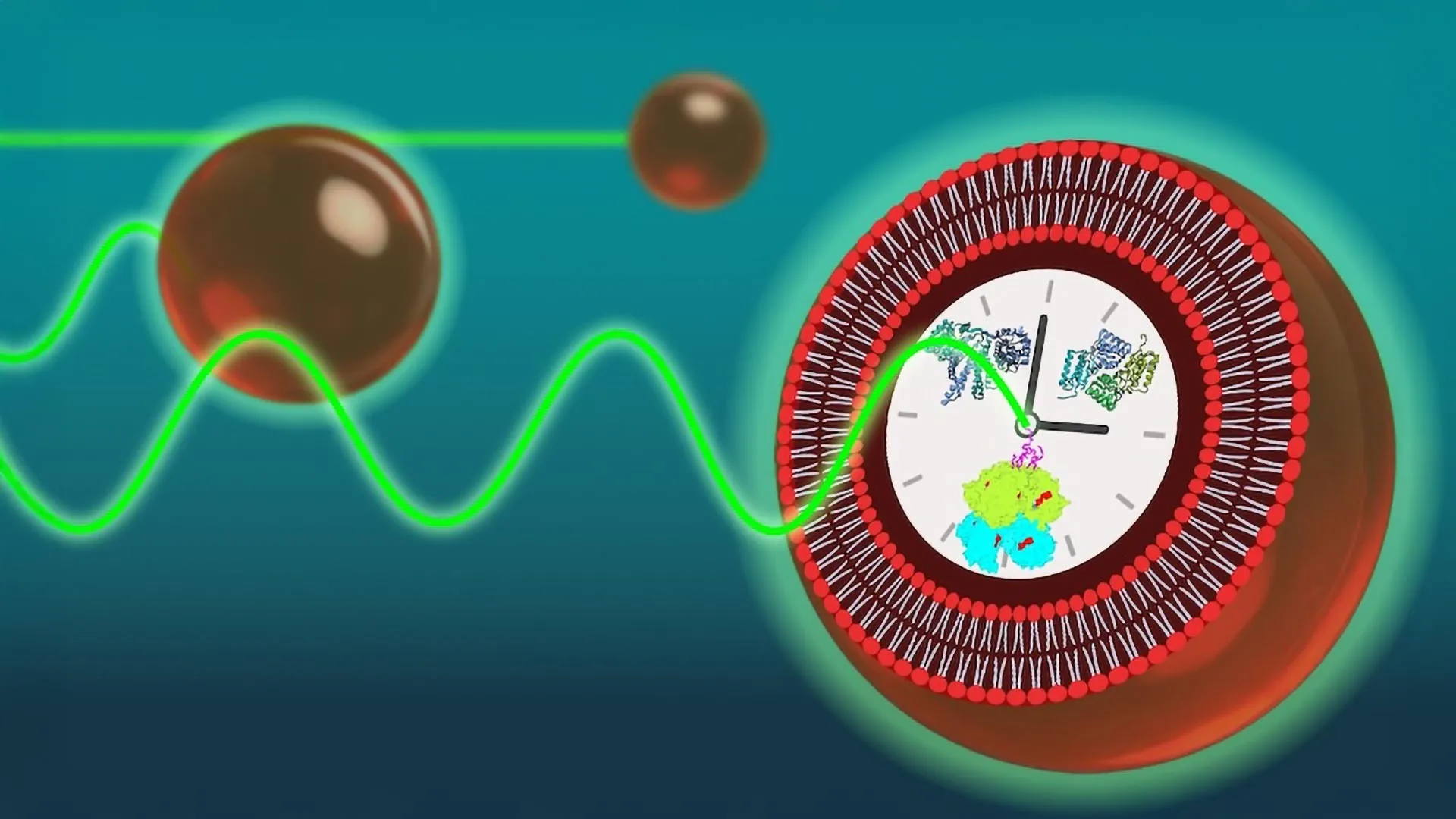
A team of UC Merced researchers has shown that tiny artificial cells can accurately keep time, mimicking the daily rhythms found in living organisms. Their findings shed light on how biological clocks stay on schedule despite the inherent molecular noise inside cells.

The study, recently published in Nature Communications, was led by bioengineering Professor Anand Bala Subramaniam and chemistry and biochemistry Professor Andy LiWang. The first author, Alexander Zhang Tu Li, earned his Ph.D. in Subramaniam’s lab.

Biological clocks — also known as circadian rhythms — govern 24-hour cycles that regulate sleep, metabolism and other vital processes. To explore the mechanisms behind the circadian rhythms of cyanobacteria, the researchers reconstructed the clockwork in simplified, cell-like structures called vesicles. These vesicles were loaded with core clock proteins, one of which was tagged with a fluorescent marker.

The artificial cells glowed in a regular 24-hour rhythm for at least four days. However, when the number of clock proteins was reduced or the vesicles were made smaller, the rhythmic glow stopped. The loss of rhythm followed a reproducible pattern.

To explain these findings, the team built a computational model. The model revealed that clocks become more robust with higher concentrations of clock proteins, allowing thousands of vesicles to keep time reliably — even when protein amounts vary slightly between vesicles.

The model also suggested another component of the natural circadian system — responsible for turning genes on and off — does not play a major role in maintaining individual clocks but is essential for synchronizing clock timing across a population.

The researchers also noted that some clock proteins tend to stick to the walls of the vesicles, meaning a high total protein count is necessary to maintain proper function.

“This study shows that we can dissect and understand the core principles of biological timekeeping using simplified, synthetic systems,” Subramaniam said.

The work led by Subramaniam and LiWang advances the methodology for studying biological clocks, said Mingxu Fang, a microbiology professor at Ohio State University and an expert in circadian clocks.

“The cyanobacterial circadian clock relies on slow biochemical reactions that are inherently noisy, and it has been proposed that high clock protein numbers are needed to buffer this noise,” Fang said. “This new study introduces a method to observe reconstituted clock reactions within size-adjustable vesicles that mimic cellular dimensions. This powerful tool enables direct testing of how and why organisms with different cell sizes may adopt distinct timing strategies, thereby deepening our understanding of biological timekeeping mechanisms across life forms.”

Subramaniam is a faculty member in the Department of Bioengineering and an affiliate of the Health Sciences Research Institute (HSRI). LiWang is a faculty member in the Department of Chemistry and Biochemistry, also affiliated with HSRI. He is a fellow of the American Academy of Microbiology and the 2025 recipient of the Dorothy Crowfoot Hodgkin Award from The Protein Society.

The work was supported by Subramaniam’s National Science Foundation CAREER award from the Division of Materials Research and by grants from the National Institutes of Health and Army Research Office awarded to LiWang. LiWang was supported by a fellowship from the NSF CREST Center for Cellular and Biomolecular Machines at UC Merced.

Share Button

Parents ‘horrified’ by maternity services report

NHS England finds “significant” concerns about services at Leeds Teaching Hospitals NHS Trust.

Share Button

Building electronics that don’t die: Columbia’s breakthrough at CERN

The Large Hadron Collider (LHC) is tough on electronics. Situated inside a 17-mile-long tunnel that runs in a circle under the border between Switzerland and France, this massive scientific instrument accelerates particles close to the speed of light before smashing them together. The collisions yield tiny maelstroms of particles and energy that hint at answers to fundamental questions about the building blocks of matter.

Those collisions produce an enormous amount of data — and enough radiation to scramble the bits and logic inside almost any piece of electronic equipment.

That presents a challenge to CERN’s physicists as they attempt to probe deeper into the mysteries of the Higgs boson and other fundamental particles. Off-the-shelf components simply can’t survive the harsh conditions inside the accelerator, and the market for radiation-resistant circuits is too small to entice investment from commercial chip manufacturers.

“Industry just couldn’t justify the effort, so academia had to step in,” according to Peter Kinget, the Bernard J. Lechner Professor of Electrical Engineering at Columbia Engineering. “The next discoveries made with the LHC will be triggered by one Columbia chip and measured by another.”

Kinget leads the team that designed specialized silicon chips that collect data in one of the harshest and most important environments in particle physics. Their most recent paper describing this project was published July 1 in the IEEE Open Journal of the Solid-State Circuits Society.

“These sort of collaborations between physicists and engineers are very important to advancing our ability to explore fundamental questions about the universe,” according to John Parsons, professor of physics at Columbia University and leader of the Columbia team working on the ATLAS detector, one of the LHC’s massive instruments. “Developing state-of-the-art instrumentation is crucial to our success.”

Circuits that resist radiation

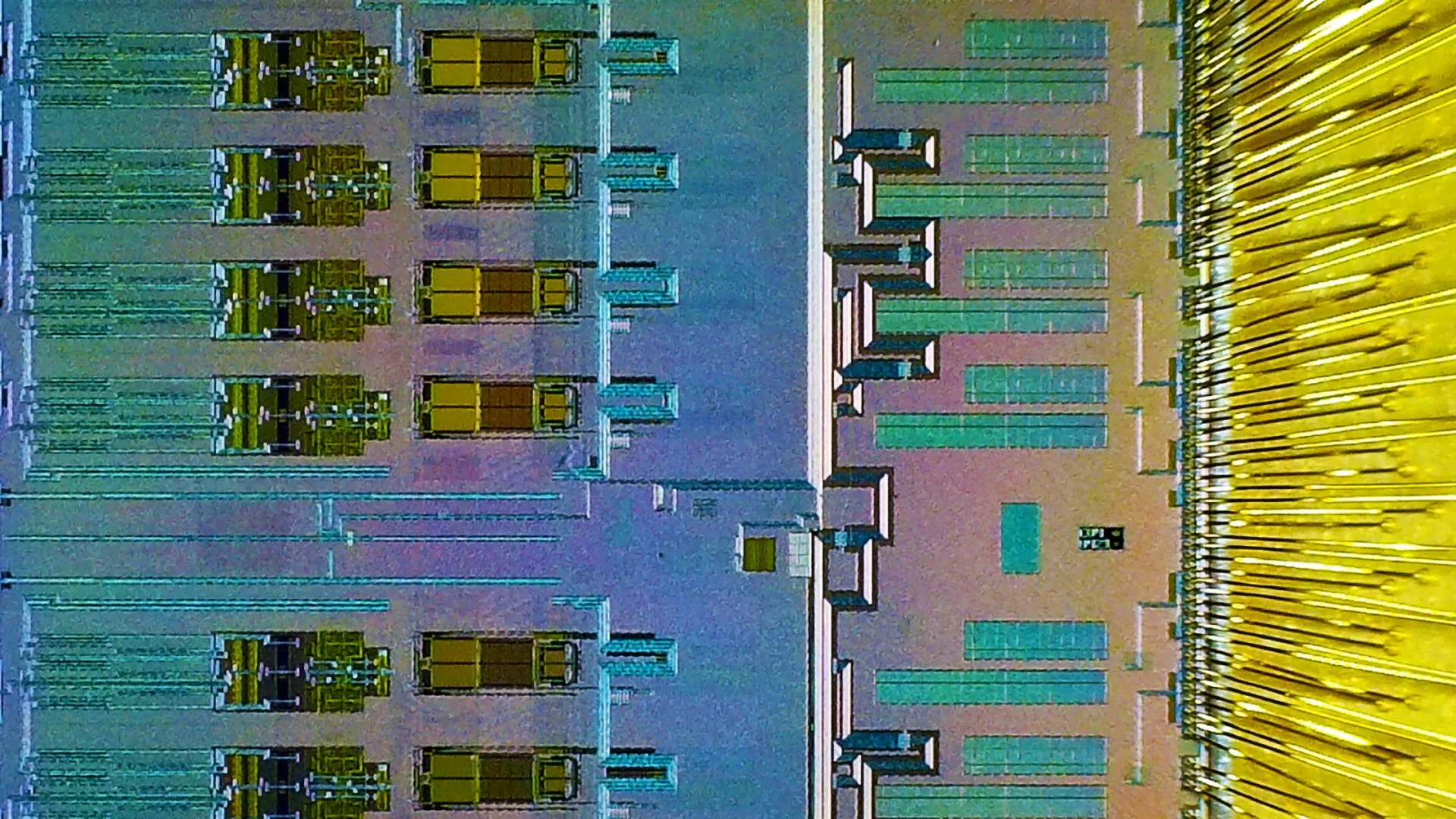
The devices the team designed are called analog-to-digital converters, or ADCs. Their task is capturing electrical signals produced by particle collisions inside CERN’s detectors and translating them into digital data that researchers can analyze.

In the ATLAS detector, the electrical pulses generated by particle collisions are measured using a device called a liquid argon calorimeter. This enormous vat of ultra-cold argon captures an electronic trace of every particle that passes through. Columbia’s ADC chips convert these delicate analog signals into precise digital measurements, capturing details that no existing component could reliably record.

“We tested standard, commercial components, and they just died. The radiation was too intense,” says Rui (Ray) Xu, a Columbia Engineering PhD student who has worked on the project since he was an undergraduate at the University of Texas. “We realized that if we wanted something that worked, we’d have to design it ourselves.”

Designing “high-accuracy” reliability

Instead of creating entirely new manufacturing methods, the team used commercial semiconductor processes validated by CERN for radiation resistance and applied innovative circuit-level techniques. They carefully chose and sized components and arranged circuit architectures and layouts to minimize radiation damage and built digital systems that automatically detect and correct errors in real time. Their resulting design is resilient enough to withstand the unusually severe conditions at LHC for more than a decade.

Two Columbia-designed ADC chips are expected to be integrated into the ATLAS experiment’s upgraded electronics. The first, called the trigger ADC, is already operating at CERN. This chip, initially described in 2017 and validated in 2022, enables the trigger system to filter about a billion collisions each second and to instantly select only the most scientifically promising events to record. It serves as a digital gatekeeper deciding what merits deeper investigation.

The second chip, the data acquisition ADC, recently passed its final tests and is now in full production. The chip, which was described in an IEEE paper earlier this year, will be installed as part of the next LHC upgrade. It will very precisely digitize the selected signals, enabling physicists to explore phenomena like the Higgs boson, whose discovery at CERN made headlines in 2012 and led to the Nobel Prize in physics in 2013, but whose exact properties still hold mysteries.

Both chips represent the kind of direct collaboration between fundamental physicists and engineers.

“The opportunity as an engineer to contribute so directly to fundamental science, is what makes this project special,” Xu said.

It further created opportunities to collaborate across multiple institutions. The chips were designed by electrical engineers at Columbia and at the University of Texas, Austin, in close collaboration with physicists at Columbia’s Nevis Laboratories and the University of Texas, Austin.

Funded by the National Science Foundation and the Department of Energy, Columbia’s chips play a central role in a broader international collaboration coordinated in part by Columbia’s Nevis Laboratories. As research at CERN advances, Columbia-designed components will contribute to data acquisition systems that support physicists in analysing phenomena beyond the current limits of knowledge.

Share Button

Digital twins are reinventing clean energy — but there’s a catch

As the world grapples with the urgent need to reduce carbon emissions and combat climate change, researchers at the University of Sharjah are turning to a cutting-edge technology that could reshape the future of energy: AI-powered digital twins.

According to the researchers, these digital replicas of the physical world have the potential to transform the generation, management, and optimization of energy across diverse clean energy platforms, accelerating the transition away from fossil fuels, which environmental scientists associate with global warming.

Digital twins’ ability to replicate and interact with complex systems has made them a cornerstone of innovation across industries, driving improvements in efficiency, cost reduction, and the development of novel solutions.

However, the scientists caution that current digital twin models still face notable limitations that restrict their full potential in harnessing energy from sources such as wind, solar, geothermal, hydroelectric, and biomass.

“Digital twins are highly effective in optimizing renewable energy systems,” the researchers write in the journal Energy Nexus. “Yet, each energy source presents unique challenges — ranging from data variability and environmental conditions to system complexity — that can limit the performance of digital twin technologies, despite their considerable promise in improving energy generation and management.”

In their study, the authors conducted an extensive review of existing literature on the application of digital twins in renewable energy systems. They examined various contexts, functions, lifecycles, and architectural frameworks to understand how digital twins are currently being utilized and where gaps remain.

To extract meaningful insights, the researchers employed advanced text mining techniques, leveraging artificial intelligence, machine learning, and natural language processing. This scientifically rigorous approach enabled them to analyze large volumes of raw data and uncover structured patterns, concepts, and emerging trends.

From this in-depth analysis, the authors drew several key conclusions. They identified research gaps, proposed new directions, and outlined the challenges that must be addressed to fully harness the potential of digital twin technology in the renewable energy sector.

Following a detailed discussion on the integration of digital twins across various renewable energy applications, the authors summarized their most significant findings across five major energy sources: wind, solar, geothermal, hydroelectric, and biomass. Each source presents unique opportunities and challenges, and the study offers a comprehensive overview of how digital twins can be tailored to optimize performance in each domain.

The study reveals that digital twins offer significant advantages across various renewable energy systems:

Wind Energy: Digital twins can predict unknown parameters and correct inaccurate measurements, enhancing system reliability and performance.

Solar Energy: They help identify key factors that influence efficiency and output power, enabling better system design and optimization.

Geothermal Energy: Digital twins can simulate the entire operational process — particularly drilling — facilitating cost analysis and reducing both time and expenses.

Hydroelectric Energy: The AI-driven models simulate system dynamics to identify influencing factors. In older hydro plants, they are used to mitigate the impact of worker fatigue on productivity.

Biomass Energy: Digital twins improve performance and management by offering deep insights into operational processes and plant configurations.

But the authors’ contribution to the field stands out in highlighting critical limitations in the application of digital twin technology across these energy sources. Their analysis underscores the need for more robust models that can address specific challenges unique to each renewable energy system.

The authors identify several limitations in the application of digital twins across different renewable energy systems:

Wind Energy: Digital twins face challenges in accurately modeling and monitoring environmental conditions. They struggle to simulate critical factors such as blade erosion, gearbox degradation, and electrical system performance — particularly in aging turbines.

Solar Energy: Despite their potential, digital twins still fall short in reliably predicting long-term performance. They have difficulty tracking panel degradation and accounting for environmental influences over time, which affects their accuracy and usefulness.

Geothermal Energy: A major obstacle is the lack of high-quality data, which hampers the ability of digital twins to simulate geological uncertainties and subsurface conditions. The technology also faces complexity in modeling the long-term behavior of geothermal systems, including heat transfer and fluid flow dynamics.

Hydroelectric energy: Applied to hydroelectric projects, digital twins face challenges in accurately modeling water flow variability and in capturing environmental and ecological constraints. These limitations reduce their effectiveness in optimizing system performance and sustainability.

biomass energy: When used with biomass energy systems, digital twins still struggle to simulate the entire production supply chain. They fall short in providing precise models for biological processes, biomass conversion, and the complex biochemical and thermochemical reactions involved.

The authors emphasize the broader implications of these shortcomings for the renewable energy sector. To address these challenges, they offer a set of guidelines and a research roadmap aimed at helping scientists enhance the reliability and precision of digital twin technologies.

Their recommendations focus on improving data collection methods, advancing modeling techniques, and expanding computational capabilities to ensure digital twins can deliver trustworthy insights for decision-making and system optimization.

Share Button

Why the government wants your pet dog and cat poo

The screening is part of the drive to fight superbugs that are resistant to common antibiotic drugs.

Share Button

Patients urged to go to appointments during strike

An NHS spokesperson is thanking teams in the region for their hard work over the weekend.

Share Button

Atomic-scale secrets: What really happens inside your battery

Electrochemical cells – or batteries, as a well-known example – are complex technologies that combine chemistry, physics, materials science and electronics. More than power sources for everything from smartphones to electric vehicles, they remain a strong motivation for scientific inquiry that seeks to fully understand their structure and evolution at the molecular level.

A team led by Yingjie Zhang, a professor of materials science and engineering in The Grainger College of Engineering at the University of Illinois Urbana-Champaign, has completed the first investigation into a widely acknowledged but often overlooked aspect of electrochemical cells: the nonuniformity of the liquid at the solid-liquid interfaces in the cells. As the researchers reported in the Proceedings of the National Academy of Sciences, microscopic imaging revealed that these interfacial structures, called electrical double layers (EDLs), tend to organize into specific configurations in response to chemical deposition on the surface of the solid.

“There’s a tendency to think of electrochemical cells just for their technological utility as batteries, but there is still plenty of science to do on them that will inform the technological applications,” said Qian Ai, a graduate student in Zhang’s research group and the study’s lead author. “In our work, we carefully examined EDLs with 3D atomic force microscopy, a technique designed to sense small forces. We observed the molecular structure of inhomogeneous EDLs surrounding surface clusters for the first time.”

Electrochemical cells take advantage of mobile charges inside liquid electrolytes to maintain an electrical imbalance that gives rise to a voltage difference between two terminals. The earliest investigations of these systems over 100 years ago revealed the existence of EDLs at the interface between the liquid electrolyte and solid conductor mediating the voltage difference. They consist of electrolytes self-organized into nanometer-thick layers at the interface.

Past work has shown that solid-liquid interfaces in batteries are heterogeneous, exhibiting spatially varying chemical compositions and morphologies, sometimes forming surface clusters. However, these attempts to study and model electrochemical cells focused only on model systems with flat and uniform surfaces. The result is a knowledge gap that impedes our understanding of electrochemical cells and battery technology.

To investigate the heterogeneous interfaces, the team used 3D atomic force microscopy, a technique designed to sense small forces. This method allowed them to correlate the inhomogeneity in EDLs with the surface clusters, structures that nucleate at the initial stages of battery charging. Based on the data, the researchers proposed three primary responses in the EDLs: “bending,” in which the layers appear to curve around the cluster; “breaking,” in which parts of the layers detach to form new intermediate layers; and “reconnecting,” in which the EDL layer above the cluster connects to a nearby layer with an offset in the layer number.

“These three patterns are quite universal,” Ai said. “Those structures are mainly due to the finite size of the liquid molecules, not their specific chemistry. We should be able to predict the liquid structure based on the solid’s surface morphology for other systems.”

Going forward, the researchers look forward to expanding their findings.

“This is groundbreaking,” Zhang said. “We have resolved the EDLs in realistic, heterogeneous electrochemical systems, which is a holy grain in electrochemistry. Besides the practical implications in technology, we are starting to develop new chapters in electrochemistry textbooks.”

Lalith Bonagiri, Kaustubh Panse, Jaehyeon Kim and Shan Zhou also contributed to this work.

Support was provided by the Air Force Office of Scientific Research.

Yingjie Zhang is an Illinois Grainger Engineering assistant professor of materials science and engineering in the Department of Materials Science and Engineering. He is a faculty affiliate of the Materials Research Laboratory and the Beckman Institute for Advanced Science and Technology.

Share Button

Being an MMA fighter with PCOS and endometriosis

Mixed martial artist Sammy-Jo Luxton explains the difficulties of fighting with PCOS and endometriosis.

Share Button

Quantum tunneling mystery solved after 100 years—and it involves a surprise collision

Recently, Professor Dong Eon Kim from POSTECH’s Department of Physics and Max Planck Korea-POSTECH Initiative and his research team have succeeded in unraveling for the first time the mystery of the ‘electron tunneling’ process, a core concept in quantum mechanics, and confirmed it through experiments. This study was published in the international journal Physical Review Letters and is attracting attention as a key to unlocking the long-standing mystery of ‘electron tunneling,’ which has remained unsolved for over 100 years.

While the idea of teleporting through walls may sound like something out of a movie, such phenomena actually occur in the atomic world. This phenomenon, called ‘quantum tunneling,’ involves electrons passing through energy barriers (walls) that they seemingly cannot surmount with their energy, as if digging a tunnel through them.

This phenomenon is the principle by which semiconductors, i. e., core components of smartphones and computers, operate, and is also essential for nuclear fusion, the process that produces light and energy in the sun. However, until now, while some understanding existed about what happens before and after an electron passes through a tunnel, the exact behavior of the electron as it traverses the barrier remained unclear. We know the entrance and exit of the tunnel, but what happens inside has remained a mystery.

Professor Kim Dong Eon’s team, along with Professor C. H. Keitel’s team at the Max Planck Institute for Nuclear Physics in Heidelberg, Germany, conducted an experiment using intense laser pulses to induce electron tunneling in atoms. The results revealed a surprising phenomenon: electrons do not simply pass through the barrier but collide again with the atomic nucleus inside the tunnel. The research team named this process ‘under-the-barrier recollision’ (UBR). Until now, it was believed that electrons could only interact with the nucleus after exiting the tunnel, but this study confirmed for the first time that such interaction can occur inside the tunnel.

Even more intriguingly, during this process, electrons gain energy inside the barrier and collide again with the nucleus, thereby strengthening what is known as ‘Freeman resonance.’ This ionization was significantly greater than that observed in previously known ionization processes and was hardly affected by changes in laser intensity. This is a completely new discovery that could not be predicted by existing theories.

This research is significant as it is the first in the world to elucidate the dynamics of electrons during tunneling. It is expected to provide an important scientific foundation for more precise control of electron behavior and increased efficiency in advanced technologies such as semiconductors, quantum computers, and ultrafast lasers that rely on tunneling.

Professor Kim Dong Eon stated, “Through this study, we were able to find clues about how electrons behave when they pass through the atomic wall,” and added, “Now, we can finally understand tunneling more deeply and control it as we wish.”

Meanwhile, this research was supported by the National Research Foundation of Korea and the Capacity Development Project of the Korea Institute for Advancement of Technology.

Share Button

How did Bronze play Euro 2025 with fractured tibia?

Physiotherapist Nick Worth tells BBC Sport how Lucy Bronze was able to play through Euro 2025 with a fractured tibia.

Share Button