Resident doctors in England will strike over pay for five days from 25 July.


Resident doctors in England will strike over pay for five days from 25 July.
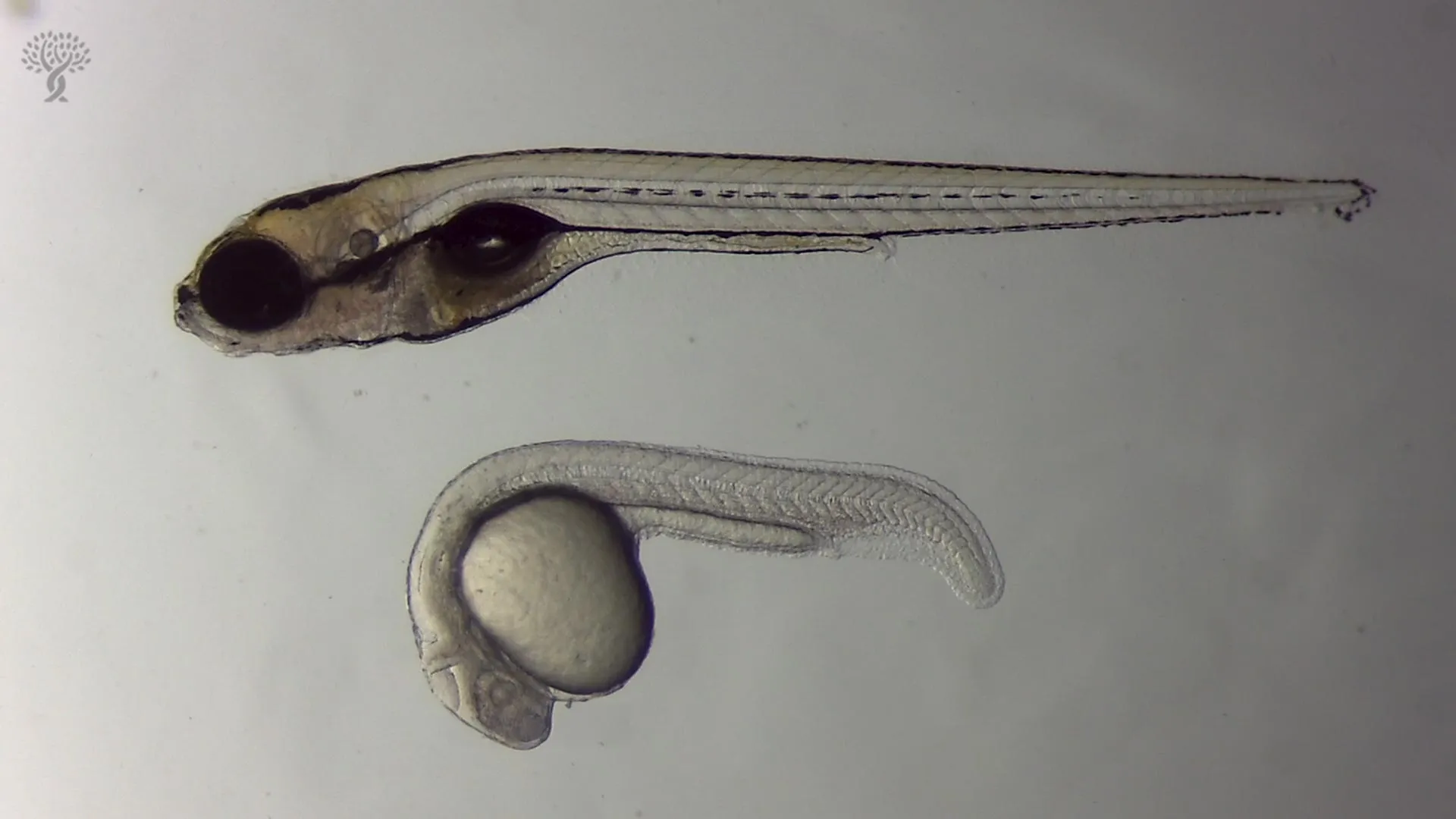
While humans can regularly replace certain cells, like those in our blood and gut, we cannot naturally regrow most other parts of the body. For example, when the tiny sensory hair cells in our inner ears are damaged, the result is often permanent hearing loss, deafness, or balance problems. In contrast, animals like fish, frogs, and chicks regenerate sensory hair cells effortlessly.
Now, scientists at the Stowers Institute for Medical Research have identified how two distinct genes guide the regeneration of sensory cells in zebrafish. The discovery improves our understanding of how regeneration works in zebrafish and may guide future studies on hearing loss and regenerative medicine in mammals, including humans.
“Mammals such as ourselves cannot regenerate hair cells in the inner ear,” said Stowers Investigator Tatjana Piotrowski, Ph.D., the study’s co-author. “As we age or are subjected to prolonged noise exposure, we lose our hearing and balance.”
New research from the Piotrowski Lab, published in Nature Communications on July 14, 2025, seeks to understand how cell division is regulated to both promote regeneration of hair cells and to also maintain a steady supply of stem cells. Led by former Stowers Researcher Mark Lush, Ph.D., the team discovered that two different genes regulating cell division each control the growth of two key types of sensory support cells in zebrafish. The finding may help scientists study whether similar processes could be triggered in human cells in the future.
“During normal tissue maintenance and regeneration, cells need to proliferate to replace the cells that are dying or being shed — however, this only works if there are existing cells that can divide to replace them,” said Piotrowski. “To understand how proliferation is regulated, we need to understand how stem cells and their offspring know when to divide and at what point to differentiate.”
Zebrafish are an excellent system for studying regeneration. Dotted in a straight line from their head to tailfin are sensory organs called neuromasts. Each neuromast resembles a garlic bulb with “hair cells” sprouting from its top. A variety of supporting cells encompass the neuromast to give rise to new hair cells. These sensory cells, which help zebrafish detect water motion, closely resemble those in the human inner ear.
Because zebrafish are transparent during development and have accessible sensory organ systems, scientists can visualize, as well as genetically sequence and modify, each neuromast cell. This allows them to investigate the mechanisms of stem cell renewal, the proliferation of progenitor cells — direct precursors to hair cells — and hair cell regeneration.
“We can manipulate genes and test which ones are important for regeneration,” said Piotrowski. “By understanding how these cells regenerate in zebrafish, we hope to identify why similar regeneration does not occur in mammals and whether it might be possible to encourage this process in the future.”
Two key populations of support cells contribute to regeneration within neuromasts: active stem cells at the neuromast’s edge and progenitor cells near the center. These cells divide symmetrically, which allows the neuromast to continuously make new hair cells while not depleting its stem cells. The team used a sequencing technique to determine which genes were active in each type and found two distinct cyclinD genes present in only one or the other population.
The researchers then genetically altered each gene in the stem and progenitor populations. They discovered that the different cyclinD genes were independently regulating cell division of the two types of cells.
“When we rendered one of these genes non-functional, only one population stopped dividing,” said Piotrowski. “This finding shows that different groups of cells within an organ can be controlled separately, which may help scientists understand cell growth in other tissues, such as the intestine or blood.”
Progenitor cells lacking their cell type-specific cyclinD gene did not proliferate; however, they did form a hair cell, uncoupling cell division with differentiation. Notably, when the stem cell-specific cyclinD gene was engineered to work in progenitor cells, progenitor cell division was restored.
David Raible, Ph.D., a professor at the University of Washington who studies the zebrafish lateral line sensory system, commented on the significance of the new study. “This work illuminates an elegant mechanism for maintaining neuromast stem cells while promoting hair cell regeneration. It may help us investigate whether similar processes exist or could be activated in mammals.”
Because cyclinD genes also regulate proliferation in many human cells, like those in the gut and blood, the team’s findings may have implications beyond hair cell regeneration.
“Insights from zebrafish hair cell regeneration could eventually inform research on other organs and tissues, both those that naturally regenerate and those that do not,” said Piotrowski.
Additional authors include Ya-Yin Tsai, Shiyuan Chen, Daniela Münch, Julia Peloggia, Ph.D., and Jeremy Sandler, Ph.D.
This work was funded by the National Institute on Deafness and Other Communication Disorders of the National Institutes of Health (NIH) (award: 1R01DC015488-01A1), the Hearing Health Foundation, and with institutional support from the Stowers Institute for Medical Research. The content is solely the responsibility of the authors and does not necessarily represent the official views of the NIH.
Astronomers have detected a giant exoplanet – between three and ten times the size of Jupiter – hiding in the swirling disc of gas and dust surrounding a young star.
Earlier observations of this star, called MP Mus, suggested that it was all alone without any planets in orbit around it, surrounded by a featureless cloud of gas and dust.
However, a second look at MP Mus, using a combination of results from the Atacama Large Millimeter/submillimeter Array (ALMA) and the European Space Agency’s Gaia mission, suggest that the star is not alone after all.
The international team of astronomers, led by the University of Cambridge, detected a large gas giant in the star’s protoplanetary disc: the pancake-like cloud of gases, dust and ice where the process of planet formation begins. This is the first time that Gaia has detected an exoplanet within a protoplanetary disc. The results, reported in the journal Nature Astronomy, suggest that similar methods could be useful in the hunt for young planets around other stars.
By studying how planets form in the protoplanetary discs around young stars, researchers can learn more about how our own Solar System evolved. Through a process known as core accretion, gravity causes particles in the disc to stick to each other, eventually forming larger solid bodies like asteroids or planets. As young planets form, they start to carve gaps in the disc, like grooves on a vinyl record.
However, observing these young planets is extremely challenging, due to the interference from the gas and dust in the disc. To date, only three robust detections of young planets in a protoplanetary disc have been made.
Dr Álvaro Ribas from Cambridge’s Institute of Astronomy, who led the research, specialises in studying protoplanetary discs. “We first observed this star at the time when we learned that most discs have rings and gaps, and I was hoping to find features around MP Mus that could hint at the presence of a planet or planets,” he said.
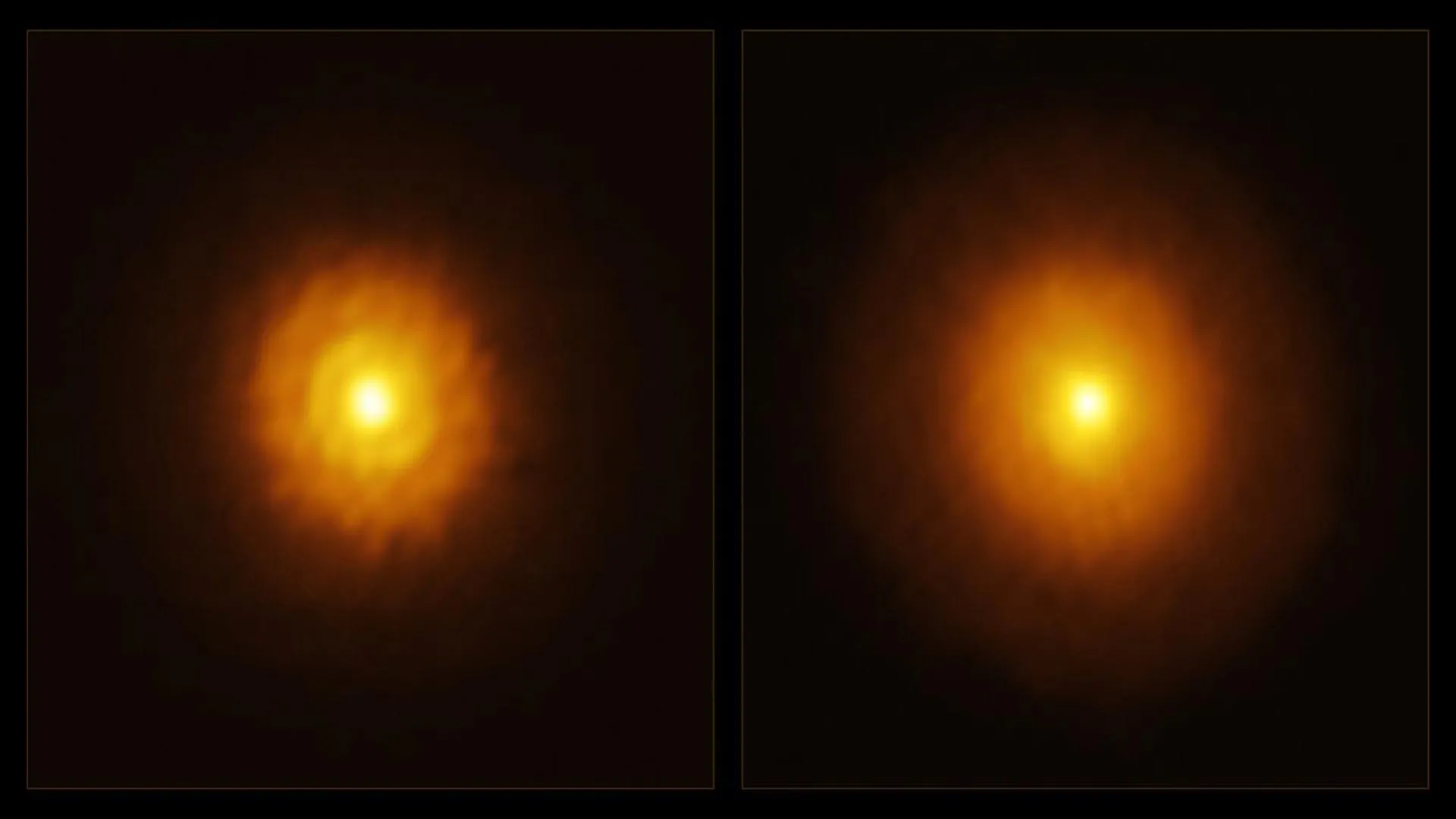
Using ALMA, Ribas observed the protoplanetary disc around MP Mus (PDS 66) in 2023. The results showed a young star seemingly all alone in the universe. Its surrounding disc showed none of the gaps where planets might be forming, and was completely flat and featureless.
“Our earlier observations showed a boring, flat disc,” said Ribas. “But this seemed odd to us, since the disc is between seven and ten million years old. In a disc of that age, we would expect to see some evidence of planet formation.”
Now, Ribas and his colleagues from Germany, Chile, and France have given MP Mus another chance. Once again using ALMA, they observed the star at the 3mm range, a longer wavelength than the earlier observations, allowing them to probe deeper into the disc.
The new observations turned up a cavity close to the star and two gaps further out, which were obscured in the earlier observations, suggesting that MP Mus may not be alone after all.
At the same time, Miguel Vioque, a researcher at the European Southern Observatory, was uncovering another piece of the puzzle. Using data from Gaia, he found MP Mus was ‘wobbling’.
“My first reaction was that I must have made a mistake in my calculations, because MP Mus was known to have a featureless disc,” said Vioque. “I was revising my calculations when I saw Álvaro give a talk presenting preliminary results of a newly-discovered inner cavity in the disc, which meant the wobbling I was detecting was real and had a good chance of being caused by a forming planet.”
Using a combination of the Gaia and ALMA observations, along with some computer modelling, the researchers say the wobbling is likely caused by a gas giant – less than ten times the mass of Jupiter – orbiting the star at a distance between one and three times the distance of the Earth to the Sun.
“Our modelling work showed that if you put a giant planet inside the new-found cavity, you can also explain the Gaia signal,” said Ribas. “And using the longer ALMA wavelengths allowed us to see structures we couldn’t see before.”
This is the first time an exoplanet embedded in a protoplanetary disc has been indirectly discovered in this way – by combining precise star movement data from the Gaia with deep observations of the disc. It also means that many more hidden planets might exist in other discs, just waiting to be found.
“We think this might be one of the reasons why it’s hard to detect young planets in protoplanetary discs, because in this case, we needed the ALMA and Gaia data together,” said Ribas. “The longer ALMA wavelength is incredibly useful, but to observe at this wavelength requires more time on the telescope.”
Ribas says that upcoming upgrades to ALMA, as well as future telescopes such as the next generation Very Large Array (ngVLA), may be used to look deeper into more discs and better understand the hidden population of young planets, which could in turn help us learn how our own planet may have formed.
The research was supported in part by the European Union’s Horizon Programme, the European Research Council, and the UK Science and Technology Facilities Council (STFC), part of UK Research and Innovation (UKRI).
A baby will be placed for adoption in UK after being trafficked from Nigeria. She may never know her real parents.
Seventeen children have been treated at the Liverpool hospital for the virus since June.
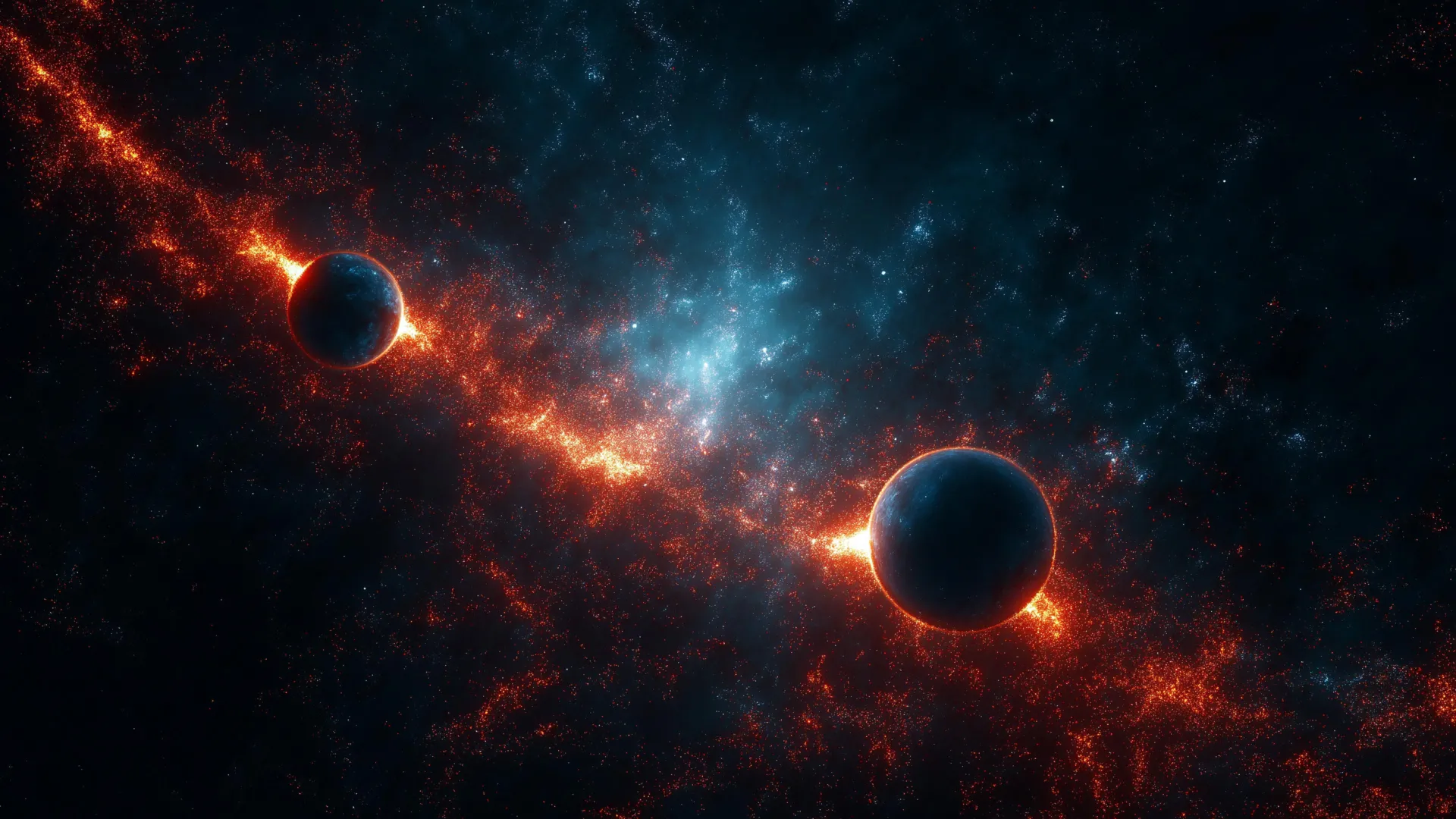
A new kind of cosmic object could help solve one of the universe’s greatest mysteries: dark matter.
Particle Astrophysicists have proposed the existence of a strange new type of star-like object, called a ‘dark dwarf’, which may be quietly glowing in the center of our galaxy.
Far from being dark in appearance, these unusual objects are powered by dark matter (the invisible substance thought to make up about a quarter of the universe).
The discovery comes from a UK-US research team and the full research findings has been published in the Journal of Cosmology and Astroparticle Physics (JCAP).
Using theoretical models, the scientists suggest that dark matter can get trapped inside young stars, producing enough energy to stop them from cooling and turning them into stable, long-lasting objects they call dark dwarfs.
Dark dwarfs are thought to form from brown dwarfs, which are often described as failed stars.
Brown dwarfs are too small to sustain the nuclear fusion that powers most stars, so they cool and fade over time. But if they sit in a dense pocket of dark matter, like near the Milky Way’s center, they could capture dark matter particles.
If those particles then collide and destroy each other, they release energy keeping the dark dwarf glowing indefinitely.
The existence of these objects depends on dark matter being made of specific kinds of particles, known as WIMPs (Weakly Interacting Massive Particles).
These are heavy particles that barely interact with ordinary matter, but could annihilate with one another inside stars, providing the energy needed to keep a dark dwarf alive.
To tell dark dwarfs apart from other faint objects like brown dwarfs, the scientists point to a unique clue: lithium.
The researchers believe dark dwarfs would still contain a rare form of lithium called lithium-7.
In normal stars, lithium-7 gets burned up quickly. So, if they find an object that looks like a brown dwarf but still has lithium-7 that’s a strong hint it’s something different.
Study co-author Dr Djuna Croon of Durham University, said: “The discovery of dark dwarfs in the galactic center would give us a unique insight into the particle nature of dark matter.”
The team believes that telescopes like the James Webb Space Telescope could already be capable of spotting dark dwarfs, especially when focusing on the center of the galaxy.
Another approach might be to look at many similar objects and statistically determine whether some of them could be dark dwarfs.
Finding just one of these dark dwarfs, the researchers say, would be a major step towards uncovering the true nature of dark matter.
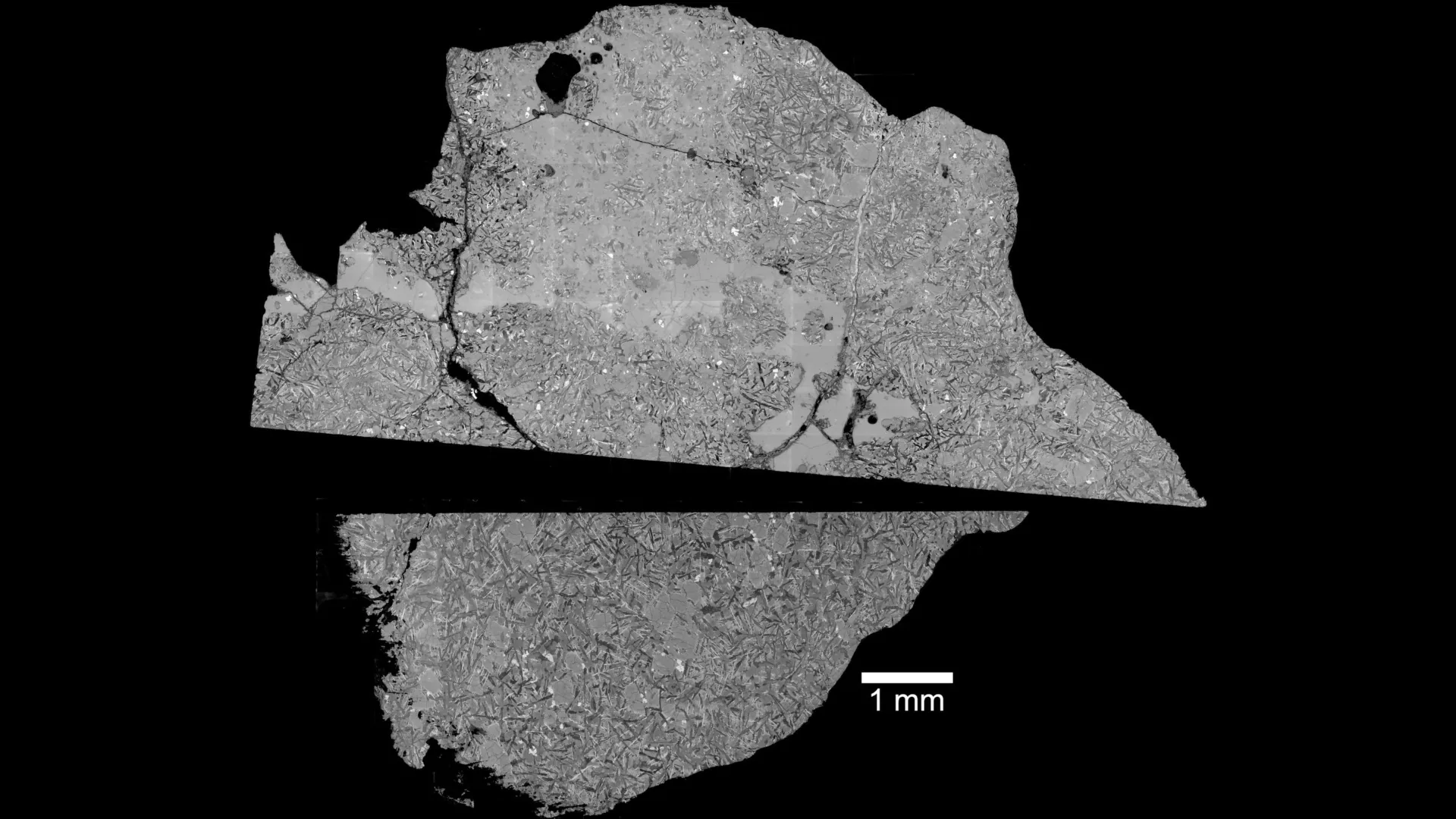
A 2.35-billion-year-old meteorite with a unique chemical signature, found in Africa in 2023, plugs a major gap in our understanding of the Moon’s volcanic history.
Findings from analyses of the Northwest Africa 16286 meteorite, presented at the Goldschmidt Conference in Prague, offer fresh insights into how the Moon’s interior evolved, highlighting the long-lived nature of its volcanic activity.
Analyses by researchers from the University of Manchester, UK, lend weight to a theory that the Moon retained internal heat-generating processes that powered lunar volcanic activity in several distinct phases.
Lead isotope analysis dates the rock’s formation to around 2.35 billion years ago, during a period from which few lunar samples exist, making it the youngest basaltic lunar meteorite discovered on Earth. Its rare geochemical profile sets it apart from those returned by previous Moon missions, with chemical evidence indicating it likely formed from a lava flow that solidified after emerging from deep within the Moon.
Dr Joshua Snape, a Research Fellow at the University of Manchester, UK, is presenting the research at the Goldschmidt Conference. He said: “Lunar rocks from sample return missions are fantastic in the insights they provide us, but they are limited to the immediate areas surrounding those mission landing sites. By contrast, lunar meteorites can potentially be ejected by impact cratering occurring anywhere on the Moon’s surface. As such, there’s some serendipity surrounding this sample; it just happened to fall to Earth and reveals secrets about lunar geology without the massive expense of a space mission.”
Containing relatively large crystals of mineral olivine, the rock is a type of lunar volcanic basalt called olivine-phyric basalt. It contains moderate levels of titanium, high levels of potassium. In addition to the unusual age of the sample, this study found that the Pb isotope composition of the rock – a geochemical fingerprint retained from when the rock formed – points to it originating from a source in the Moon’s interior with an unusually high uranium-to-lead ratio. These chemical clues may help identify the mechanisms that have enabled periods of ongoing internal heat generation on the Moon.
“The age of the sample is especially interesting because it fills an almost billion-year gap in lunar volcanic history,” said Dr Snape. “It’s younger than the basalts collected by the Apollo, Luna and Chang’e 6 missions, but older than the much younger rocks brought back by China’s Chang’e 5 mission. Its age and composition show that volcanic activity continued on the Moon throughout this timespan, and our analysis suggests an ongoing heat generation process within the Moon, potentially from radiogenic elements decaying and producing heat over a long period.
“Moon rocks are rare, so it’s always interesting when we get something that stands out and looks different to everything else. This particular rock provides new constraints about when and how volcanic activity occurred on the Moon. There is much more yet to learn about the Moon’s geological past, and with further analysis to pinpoint its origin on the surface, this rock will guide where to land future sample return missions.”
The 311-gram meteorite is only one of 31 lunar basalts officially identified on Earth. Its distinct composition, with melted glassy pockets and veins, suggests it was likely shocked by an asteroid or meteorite impact on the Moon’s surface before being ejected and eventually falling to Earth. This shock event makes it more challenging to interpret the date obtained for the rock, but the researchers estimate its age with a margin of plus or minus 80 million years.
The research was funded by the Royal Society, and the researchers plan to publish their findings in full in a peer-reviewed journal later this year.
The meeting with Wes Streeting will take place next week, the doctors’ union confirms.
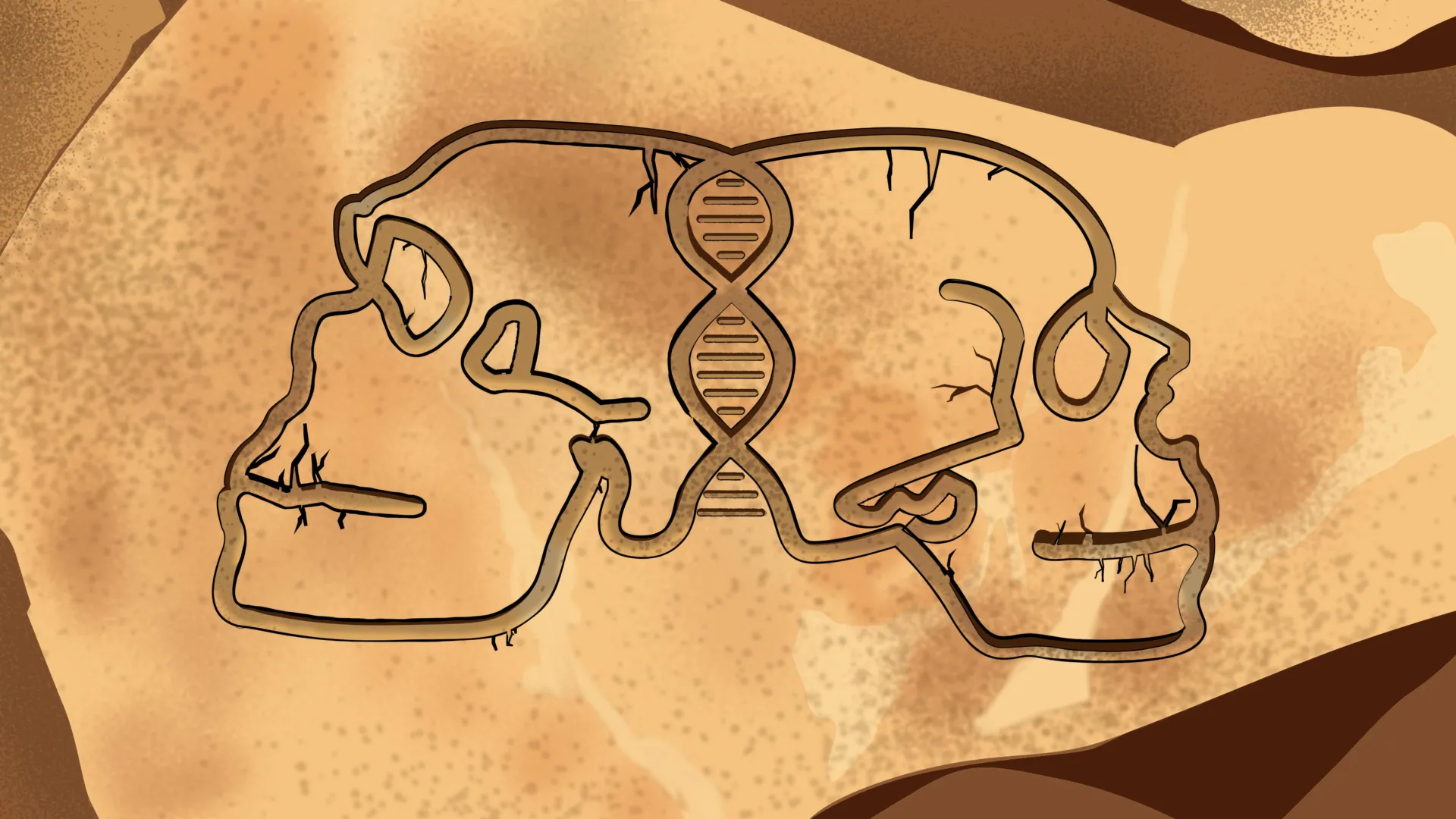
When the first Neanderthal bones were uncovered in 1856, they sparked a flood of questions about these mysterious ancient humans. Were they similar to us or fundamentally different? Did our ancestors cooperate with them, clash with them, or even form relationships? The discovery of the Denisovans, a group closely related to Neanderthals that once lived across parts of Asia and South Asia, added even more intrigue to the story.
Now, a group of researchers made up of geneticists and artificial intelligence specialists is uncovering new layers of that shared history. Led by Joshua Akey, a professor at Princeton’s Lewis-Sigler Institute for Integrative Genomics, the team has found strong evidence of genetic exchange between early human groups, pointing to a much deeper and more complex relationship than previously understood.
“This is the first time that geneticists have identified multiple waves of modern human-Neanderthal admixture,” said Liming Li, a professor in the Department of Medical Genetics and Developmental Biology at Southeast University in Nanjing, China, who performed this work as an associate research scholar in Akey’s lab.
“We now know that for the vast majority of human history, we’ve had a history of contact between modern humans and Neanderthals,” said Akey. The hominins who are our most direct ancestors split from the Neanderthal family tree about 600,000 years ago, then evolved our modern physical characteristics about 250,000 years ago.
“From then until the Neanderthals disappeared — that is, for about 200,000 years — modern humans have been interacting with Neanderthal populations,” he said.
The results of their work were published the journal Science.
Rethinking the Ice Age Stereotype
Neanderthals, once stereotyped as slow-moving and dim-witted, are now seen as skilled hunters and tool makers who treated each other’s injuries with sophisticated techniques and were well adapted to thrive in the cold European weather.
(Note: All of these hominin groups are humans, but to avoid saying “Neanderthal humans,” “Denisovan humans,” and “ancient-versions-of-our-own-kind-of-humans,” most archaeologists and anthropologists use the shorthand Neanderthals, Denisovans, and modern humans.)
Using genomes from 2,000 living humans as well as three Neanderthals and one Denisovan, Akey and his team mapped the gene flow between the hominin groups over the past quarter-million years.
The researchers used a genetic tool they designed a few years ago called IBDmix, which uses machine learning techniques to decode the genome. Previous researchers depended on comparing human genomes against a “reference population” of modern humans believed to have little or no Neanderthal or Denisovan DNA.
Akey’s team has established that even those referenced groups, who live thousands of miles south of the Neanderthal caves, have trace amounts of Neanderthal DNA, probably carried south by voyagers (or their descendants).
With IBDmix, Akey’s team identified a first wave of contact about 200-250,000 years ago, another wave 100-120,000 years ago, and the largest one about 50-60,000 years ago.
Challenging the Out-of-Africa Model
That contrasts sharply with previous genetic data. “To date, most genetic data suggests that modern humans evolved in Africa 250,000 years ago, stayed put for the next 200,000 years, and then decided to disperse out of Africa 50,000 years ago and go on to people the rest of the world,” said Akey.
“Our models show that there wasn’t a long period of stasis, but that shortly after modern humans arose, we’ve been migrating out of Africa and coming back to Africa, too,” he said. “To me, this story is about dispersal, that modern humans have been moving around and encountering Neanderthals and Denisovans much more than we previously recognized.”
That vision of humanity on the move coincides with the archaeological and paleoanthropological research suggesting cultural and tool exchange between the hominin groups.
Li and Akey’s key insight was to look for modern-human DNA in the genomes of the Neanderthals, instead of the other way around. “The vast majority of genetic work over the last decade has really focused on how mating with Neanderthals impacted modern human phenotypes and our evolutionary history — but these questions are relevant and interesting in the reverse case, too,” said Akey.
They realized that the offspring of those first waves of Neanderthal-modern matings must have stayed with the Neanderthals, therefore leaving no record in living humans. “Because we can now incorporate the Neanderthal component into our genetic studies, we are seeing these earlier dispersals in ways that we weren’t able to before,” Akey said.
Shrinking Populations and Genetic Illusions
The final piece of the puzzle was discovering that Neanderthals had a smaller population than researchers previously thought.
Scientists often estimate population size by looking at genetic diversity. In general, more variation in the genome suggests a larger group. But when Akey’s team applied their tool, IBDmix, they found that much of the apparent diversity in Neanderthal DNA actually came from genes inherited from modern humans, who had far larger populations.
With this new insight, scientists lowered their estimate of the Neanderthal breeding population from about 3,400 individuals to roughly 2,400.
Taken together, these findings help explain how Neanderthals disappeared from the fossil and genetic record around 30,000 years ago.
“I don’t like to say ‘extinction,’ because I think Neanderthals were largely absorbed,” said Akey. His idea is that Neanderthal populations slowly shrank until the last survivors were folded into modern human communities.
This “assimilation model” was first articulated by Fred Smith, an anthropology professor at Illinois State University, in 1989. “Our results provide strong genetic data consistent with Fred’s hypothesis, and I think that’s really interesting,” said Akey.
“Neanderthals were teetering on the edge of extinction, probably for a very long time,” he said. “If you reduce their numbers by 10 or 20%, which our estimates do, that’s a substantial reduction to an already at-risk population.
“Modern humans were essentially like waves crashing on a beach, slowly but steadily eroding the beach away. Eventually we just demographically overwhelmed Neanderthals and incorporated them into modern human populations.”
This research was supported by the National Institutes of Health (grant R01GM110068 to JMA).
Cosmetic ingredients should be listed in English to protect people with allergies, campaigners say.
