NHS England says the first patients able to get the jab will be those most in need.


NHS England says the first patients able to get the jab will be those most in need.
Paloma Shemirani’s brothers say she refused chemotherapy because of their mother’s beliefs.
The MP for Ilford North pledges to work “constructively” on technical aspects of the legislation.

A team of researchers at Rice University have discovered a surprisingly simple method for vastly improving the stability of electrochemical devices that convert carbon dioxide into useful fuels and chemicals, and it involves nothing more than sending the CO2 through an acid bubbler.
Their study, published in Science, addresses a major bottleneck in the performance and stability of CO2 reduction systems: the buildup of salt that clogs gas flow channels, reduces efficiency and causes the devices to fail prematurely. Using a technique they call acid-humidified CO2, the researchers extended the operational life of a CO2 reduction system more than 50-fold, demonstrating more than 4,500 hours of stable operation in a scaled-up reactor — a milestone for the field.
Electrochemical CO2 reduction, or CO2RR, is an emerging green technology that uses electricity, ideally from renewable sources, to transform climate-warming CO2 into valuable products like carbon monoxide, ethylene or alcohols. These products can be further refined into fuels or used in industrial processes, potentially turning a major pollutant into a feedstock.
However, practical implementation has been hindered by poor system stability. One persistent issue is the accumulation of potassium bicarbonate salts in the gas flow channels, which occurs when potassium ions migrate from the anolyte across the anion exchange membrane to the cathode reaction zone and combine with CO2 under high pH conditions.
“Salt precipitation blocks CO2 transport and floods the gas diffusion electrode, which leads to performance failure,” said Haotian Wang , the corresponding author of the study and associate professor of chemical and biomolecular engineering, materials science and nanoengineering and chemistry at Rice. “This typically happens within a few hundred hours, which is far from commercial viability.”
To combat this, the Rice team tried an elegant twist on a standard procedure. Instead of using water to humidify the CO2 gas input into the reactor, they bubbled the gas through an acid solution such as hydrochloric, formic or acetic acid.
The vapor from the acid is carried into the cathode reaction chamber in trace amounts, just enough to alter the local chemistry. Because the salts formed with these acids are much more soluble than potassium bicarbonate, they don’t crystallize and block the channels.
The effect was dramatic. In tests using a silver catalyst — a common benchmark for converting CO2 to carbon monoxide — the system operated stably for over 2,000 hours in a lab-scale device and more than 4,500 hours in a 100-square-centimeter, scaled-up electrolyzer. In contrast, systems using standard water-humidified CO2 failed after about 80 hours because of salt buildup.
Importantly, the acid-humidified method proved effective across multiple catalyst types, including zinc oxide, copper oxide and bismuth oxide, all of which are used to target different CO2RR products. The researchers also demonstrated that the method could be scaled without compromising performance with large-scale devices maintaining energy efficiency and avoiding salt blockage over extended periods.
They observed minimal corrosion or damage to the anion exchange membranes that are typically sensitive to chloride by keeping the acid concentrations low. The approach was also shown to be compatible with commonly used membranes and materials, reinforcing its potential for integration into existing systems.
To observe salt formation in real time, the team used custom-built reactors with transparent flow plates. Under conventional water humidification, salt crystals began forming within 48 hours. With acid-humidified CO2, however, no significant crystal accumulation was observed even after hundreds of hours, and any small deposits were eventually dissolved and carried out of the system.
“Using the traditional method of water-humidified CO2 could lead to salt formation in the cathode gas flow channels,” said co-first author Shaoyun Hao, postdoctoral research associate in chemical and biomolecular engineering at Rice. “We hypothesized — and confirmed — that acid vapor could dissolve the salt and convert the low solubility KHCO3 into salt with higher solubility, thus shifting the solubility balance just enough to avoid clogging without affecting catalyst performance.”
The work opens the door to more durable, scalable CO2 electrolyzers, a critical need if the technology is to be deployed at industrial scales as part of carbon capture and utilization strategies. The simplicity of the approach, involving only small tweaks to existing humidification setups, means it can be adopted without significant redesigns or added costs.
“This is a major finding for CO2 electrolysis,” said Ahmad Elgazzar, co-first author and graduate student in chemical and biomolecular engineering at Rice. “Our method addresses a long-standing obstacle with a low-cost, easily implementable solution. It’s a step toward making carbon utilization technologies more commercially viable and more sustainable.”
This work was supported by the Robert A. Welch Foundation, Rice, the National Science Foundation and the David and Lucile Packard Foundation.

Understanding how the universe transitioned from darkness to light with the formation of the first stars and galaxies is a key turning point in the universe’s development, known as the Cosmic Dawn. However, even with the most powerful telescopes, we can’t directly observe these earliest stars, so determining their properties is one of the biggest challenges in astronomy.
Now, an international group of astronomers led by the University of Cambridge have shown that we will be able to learn about the masses of the earliest stars by studying a specific radio signal – created by hydrogen atoms filling the gaps between star-forming regions – originating just a hundred million years after the Big Bang.
By studying how the first stars and their remnants affected this signal, called the 21-centimeter signal, the researchers have shown that future radio telescopes will help us understand the very early universe, and how it transformed from a nearly homogeneous mass of mostly hydrogen to the incredible complexity we see today. Their results are reported in the journal Nature Astronomy.
“This is a unique opportunity to learn how the universe’s first light emerged from the darkness,” said co-author Professor Anastasia Fialkov from Cambridge’s Institute of Astronomy. “The transition from a cold, dark universe to one filled with stars is a story we’re only beginning to understand.”
The study of the universe’s most ancient stars hinges on the faint glow of the 21-centimetre signal, a subtle energy signal from over 13 billion years ago. This signal, influenced by the radiation from early stars and black holes, provides a rare window into the universe’s infancy.
Fialkov leads the theory group of REACH (the Radio Experiment for the Analysis of Cosmic Hydrogen). REACH is a radio antenna and is one of two major projects that could help us learn about the Cosmic Dawn and the Epoch of Reionisation, when the first stars reionised neutral hydrogen atoms in the universe.
Although REACH, which captures radio signals, is still in its calibration stage, it promises to reveal data about the early universe. Meanwhile, the Square Kilometre Array (SKA) — a massive array of antennas under construction — will map fluctuations in cosmic signals across vast regions of the sky.
Both projects are vital in probing the masses, luminosities, and distribution of the universe’s earliest stars. In the current study, Fialkov – who is also a member of the SKA – and her collaborators developed a model that makes predictions for the 21-centimeter signal for both REACH and SKA, and found that the signal is sensitive to the masses of first stars.
“We are the first group to consistently model the dependence of the 21-centimeter signal of the masses of the first stars, including the impact of ultraviolet starlight and X-ray emissions from X-ray binaries produced when the first stars die,” said Fialkov, who is also a member of Cambridge’s Kavli Institute for Cosmology. “These insights are derived from simulations that integrate the primordial conditions of the universe, such as the hydrogen-helium composition produced by the Big Bang.”
In developing their theoretical model, the researchers studied how the 21-centimeter signal reacts to the mass distribution of the first stars, known as Population III stars. They found that previous studies have underestimated this connection as they did not account for the number and brightness of X-ray binaries – binary systems made of a normal star and a collapsed star – among Population III stars, and how they affect the 21-centimeter signal.
Unlike optical telescopes like the James Webb Space Telescope, which capture vivid images, radio astronomy relies on statistical analysis of faint signals. REACH and SKA will not be able to image individual stars, but will instead provide information about entire populations of stars, X-ray binary systems and galaxies.
“It takes a bit of imagination to connect radio data to the story of the first stars, but the implications are profound,” said Fialkov.
“The predictions we are reporting have huge implications for our understanding of the nature of the very first stars in the Universe,” said co-author Dr Eloy de Lera Acedo, Principal Investigator of the REACH telescope and PI at Cambridge of the SKA development activities. “We show evidence that our radio telescopes can tell us details about the mass of those first stars and how these early lights may have been very different from today’s stars.
“Radio telescopes like REACH are promising to unlock the mysteries of the infant Universe, and these predictions are essential to guide the radio observations we are doing from the Karoo, in South Africa.”
The research was supported in part by the Science and Technology Facilities Council (STFC), part of UK Research and Innovation (UKRI). Anastasia Fialkov is a Fellow of Magdalene College, Cambridge. Eloy de Lera Acedo is an STFC Ernest Rutherford Fellow and a Fellow of Selwyn College, Cambridge.
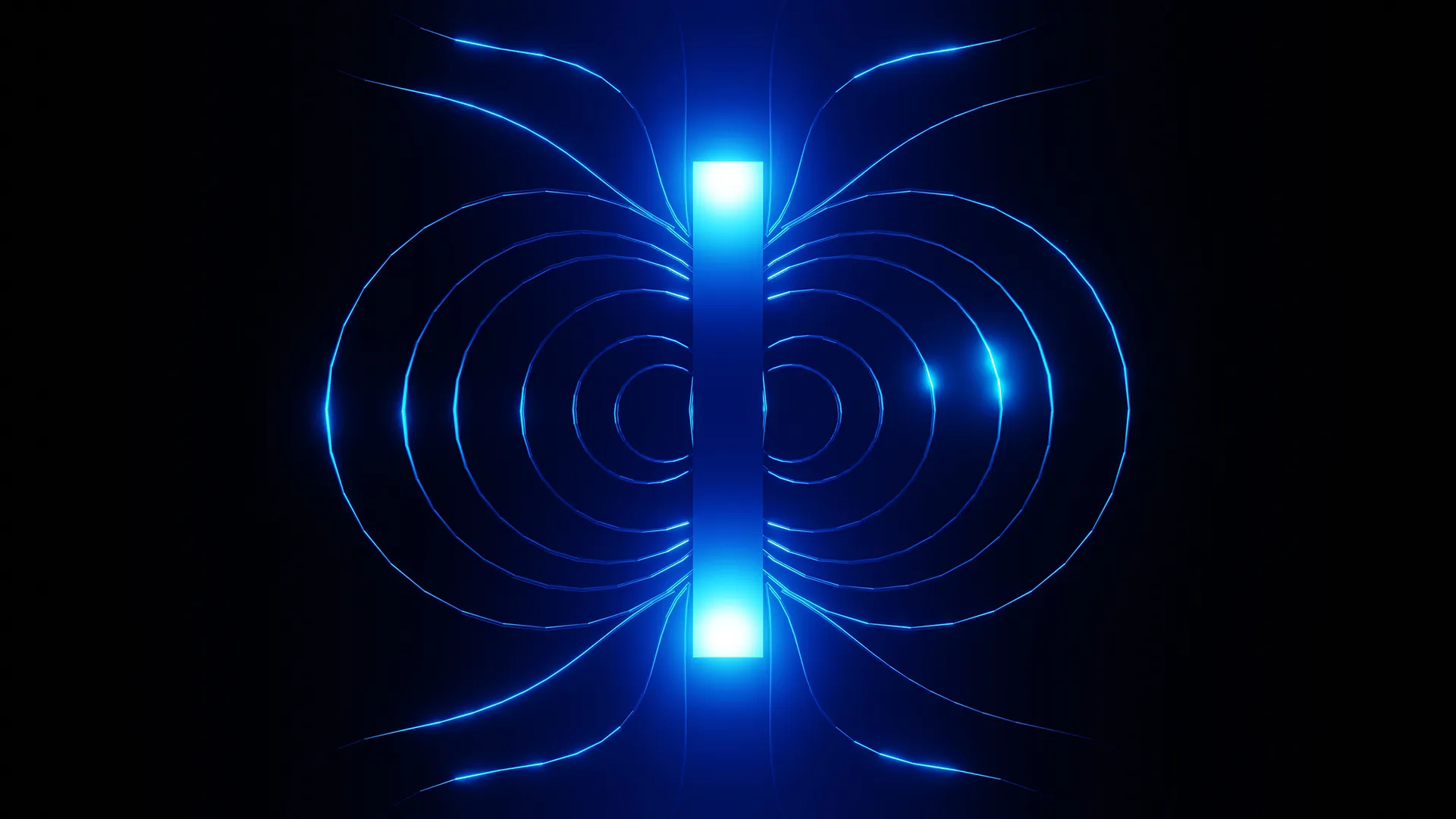
Physicists Prof. Dr. Ingo Rehberg from the University of Bayreuth and Dr. Peter Blümler from Johannes Gutenberg University Mainz have developed and experimentally validated an innovative approach for generating homogeneous magnetic fields using permanent magnets. Their method outperforms the classical Halbach arrangement — which is optimal only for infinitely long and therefore unrealizable magnets — by producing higher field strengths and improved homogeneity in compact, finite-sized configurations. The study was published in the renowned interdisciplinary journal Physical Review Applied, which shows significant advances in the applied sciences at the intersection of physics with engineering, materials science, chemistry, biology, and medicine.
A New Approach to Magnetic Field Homogenization
Homogeneous magnetic fields can be generated over relatively large spatial regions through the targeted arrangement of permanent magnets. A well-known example of an effective design is the so-called Halbach array. However, this approach is based on the idealized assumption that very long — ideally infinitely long — magnets (line dipoles) can be arranged in a circle in such a way that the individual contributions superimpose to produce a homogeneous magnetic field in the center region. In practical applications, using magnets of finite length, the resulting field deviates significantly from this ideal: the field strength inside the circle varies considerably depending on the position. The classical Halbach geometry is therefore clearly suboptimal for compact, practically implementable magnet arrangements when the aim is to achieve the strongest and/or most uniform magnetic field possible.
In their work, Peter Blümler and Ingo Rehberg present optimal three-dimensional arrangements of very compact magnets, idealized by point dipoles. With a view to possible applications, they investigated, among other things, the optimal orientation of the magnets for two geometries relevant to practical use: a single ring and a stacked double ring. A so-called “focused” design additionally allows the generation of homogeneous fields outside the magnet plane, for example in an object positioned above the magnets.
For these new arrangements, Rehberg and Blümler developed analytical formulas, which they subsequently validated experimentally. To this end, they constructed magnet arrays from 16 FeNdB cuboids mounted on 3D-printed supports. The resulting magnetic fields were measured and compared with theoretical predictions, revealing excellent agreement. In terms of both magnetic field strength and homogeneity, the new configurations clearly outperform the classical Halbach arrangement as well as its modifications described in the literature.
Potential for Numerous Applications
The new design concepts offer great potential for applications in which strong and homogeneous magnetic fields are required. In conventional magnetic resonance imaging (MRI), for example, powerful superconducting magnets are used to polarize hydrogen nuclei in tissue. These nuclei are then excited by radio waves, generating measurable voltages in detectors surrounding the body. Algorithms use these signals to calculate detailed cross-sectional images that allow physicians to distinguish tissue types based on properties such as density, water or fat content and diffusion. However, superconducting magnets are technically complex and extremely costly, making this technology hardly available in many parts of the world. For such cases, intensive research is underway to develop alternative methods for generating homogeneous magnetic fields using permanent magnets — a field to which the present study makes a promising contribution. Further potential areas of application include particle accelerators and magnetic levitation systems.
Can social media hacks really help bring down your cortisol levels?
Scheme is part of the government’s 10-year plan for the NHS in England aimed at easing pressure on services.
Some critics, including disability rights campaigner Lord Shinkwin, indicate they will try to amend a bill, backed by MPs, to legalise assisted dying.
Mia Rose Harrison says more awareness of the condition is needed.
