Six simple things you can do to help keep your house cool when temperatures rise.


Six simple things you can do to help keep your house cool when temperatures rise.
Alerts across England are in force until Monday morning and come as heatwave conditions are expected.

No matter which questions we ask an AI, the model will come up with an answer. To produce this information – regardless of whether than answer is correct or not – the model uses tokens. Tokens are words or parts of words that are converted into a string of numbers that can be processed by the LLM.
This conversion, as well as other computing processes, produce CO2 emissions. Many users, however, are unaware of the substantial carbon footprint associated with these technologies. Now, researchers in Germany measured and compared CO2 emissions of different, already trained, LLMs using a set of standardized questions.
“The environmental impact of questioning trained LLMs is strongly determined by their reasoning approach, with explicit reasoning processes significantly driving up energy consumption and carbon emissions,” said first author Maximilian Dauner, a researcher at Hochschule München University of Applied Sciences and first author of the Frontiers in Communication study. “We found that reasoning-enabled models produced up to 50 times more CO2 emissions than concise response models.”
‘Thinking’ AI causes most emissions
The researchers evaluated 14 LLMs ranging from seven to 72 billion parameters on 1,000 benchmark questions across diverse subjects. Parameters determine how LLMs learn and process information.
Reasoning models, on average, created 543.5 ‘thinking’ tokens per questions, whereas concise models required just 37.7 tokens per question. Thinking tokens are additional tokens that reasoning LLMs generate before producing an answer. A higher token footprint always means higher CO2 emissions. It doesn’t, however, necessarily mean the resulting answers are more correct, as elaborate detail that is not always essential for correctness.
The most accurate model was the reasoning-enabled Cogito model with 70 billion parameters, reaching 84.9% accuracy. The model produced three times more CO2 emissions than similar sized models that generated concise answers. “Currently, we see a clear accuracy-sustainability trade-off inherent in LLM technologies,” said Dauner. “None of the models that kept emissions below 500 grams of CO2 equivalent achieved higher than 80% accuracy on answering the 1,000 questions correctly.” CO2 equivalent is the unit used to measure the climate impact of various greenhouse gases.
Subject matter also resulted in significantly different levels of CO2 emissions. Questions that required lengthy reasoning processes, for example abstract algebra or philosophy, led to up to six times higher emissions than more straightforward subjects, like high school history.
Practicing thoughtful use
The researchers said they hope their work will cause people to make more informed decisions about their own AI use. “Users can significantly reduce emissions by prompting AI to generate concise answers or limiting the use of high-capacity models to tasks that genuinely require that power,” Dauner pointed out.
Choice of model, for instance, can make a significant difference in CO2 emissions. For example, having DeepSeek R1 (70 billion parameters) answer 600,000 questions would create CO2 emissions equal to a round-trip flight from London to New York. Meanwhile, Qwen 2.5 (72 billion parameters) can answer more than three times as many questions (about 1.9 million) with similar accuracy rates while generating the same emissions.
The researchers said that their results may be impacted by the choice of hardware used in the study, an emission factor that may vary regionally depending on local energy grid mixes, and the examined models. These factors may limit the generalizability of the results.
“If users know the exact CO2 cost of their AI-generated outputs, such as casually turning themselves into an action figure, they might be more selective and thoughtful about when and how they use these technologies,” Dauner concluded.
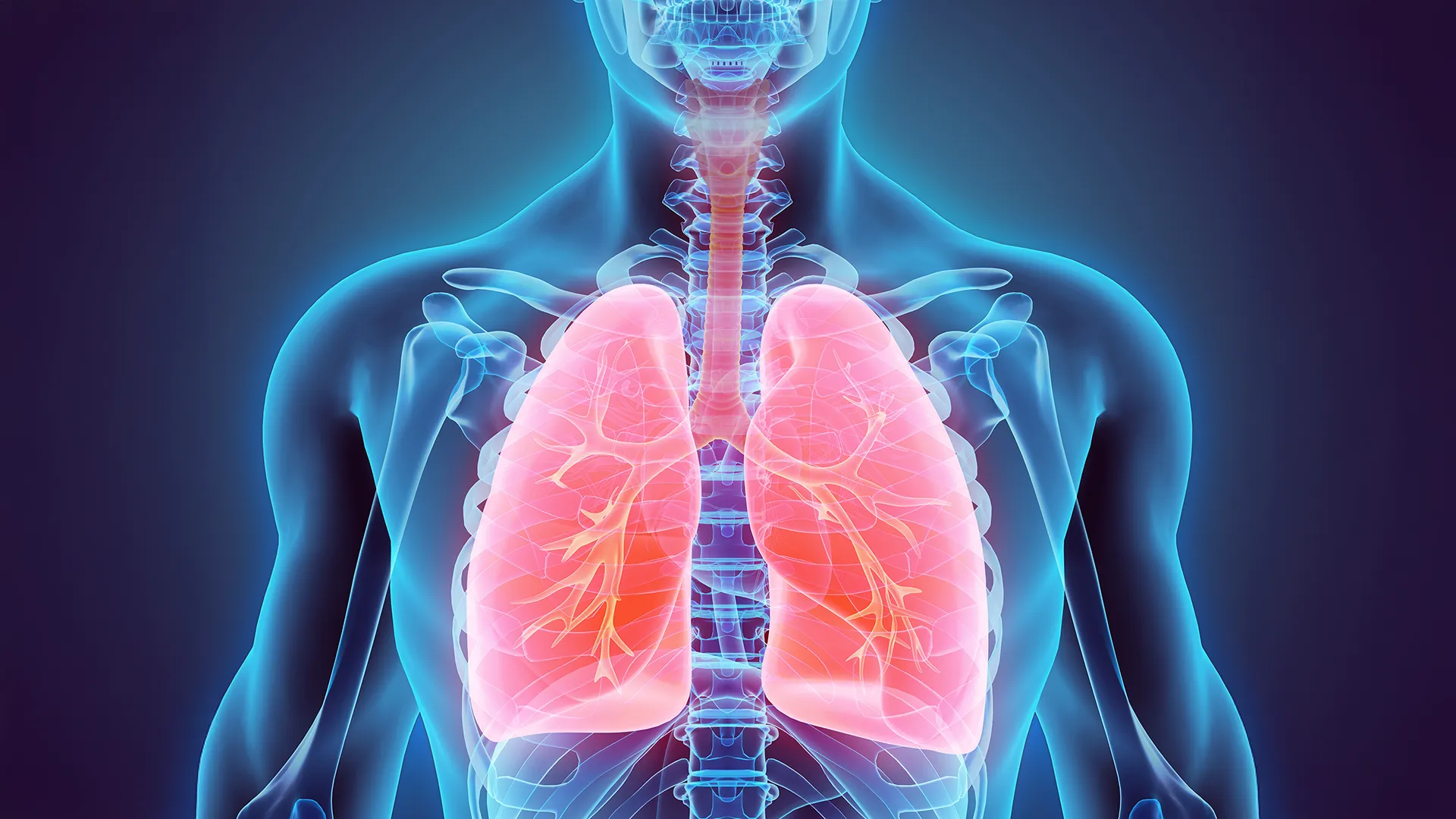
Bacteria of the genus Pandoraea have not been studied much to date. Their name is reminiscent of Pandora’s box from Greek mythology, which is a symbol of uncontrollable dangers. “We have been working with an antibiotic-resistant bacterium,” says Elena Herzog. She is the first author of the publication and works as a doctoral researcher in the team of Christian Hertweck, the head of the study at the Leibniz Institute for Natural Product Research and Infection Biology (Leibniz-HKI). However, like so many things in nature, these pathogenic bacteria do not only have negative properties. “Pandoraea bacteria not only harbor risks. They also produce natural products with an antibacterial effect.”
Despite the high health risk posed by Pandoraea, their molecular properties were hardly known until now. “We only knew that these bacteria occur in nature and that they can be pathogenic because they have been found in the lung microbiome of patients with cystic fibrosis or sepsis,” explains Herzog.
The race for iron
As for most living organisms, iron is also essential for bacteria. “Iron plays a central role in enzymes and the respiratory chain of living organisms, for example,” explains Herzog. Particularly in iron-poor environments such as the human body, the conditions for sufficient absorption of the element are anything but ideal. Many microorganisms therefore produce so-called siderophores: small molecules that bind iron from the environment and transport it into the cell.
“However, there were no known virulence or niche factors in the Pandoraea bacteria that could help them survive,” says Herzog. The research team therefore wanted to find out how Pandoraea strains can survive in such a competitive environment.
Using bioinformatic analyses, the team identified a previously unknown gene cluster called pan. It codes for a non-ribosomal peptide synthetase – a typical enzyme for the production of siderophores. “We started with a gene cluster analysis and specifically searched for genes that could be responsible for the production of siderophores,” reports Herzog.
Through targeted inactivation of genes as well as culture-based methods and state-of-the-art analytical techniques – including mass spectrometry, NMR spectroscopy, chemical degradation and derivatization – the researchers from Jena succeeded in isolating two new natural products and elucidating their chemical structure: Pandorabactin A and B. Both are able to complex iron and could play an important role in how Pandoraea strains survive in difficult environments. “The molecules help the bacteria to take up iron when it is scarce in their environment,” says Herzog.
Less iron, fewer competitors
Bioassays have also shown that pandorabactins inhibit the growth of other bacteria such as Pseudomonas, Mycobacterium and Stenotrophomonas by removing iron from these competitors.
Analyses of sputum samples from the lungs of cystic fibrosis patients further revealed that the detection of the pan gene cluster correlates with changes in the lung microbiome. Pandorabactins could therefore have a direct influence on microbial communities in diseased lungs.
“However, it is still too early to derive medical applications from these findings,” emphasizes Herzog. Nevertheless, the discovery provides important information on the survival strategies of bacteria of the genus Pandoraea and on the complex competition for vital resources in the human body.
The study was carried out in close cooperation between the Leibniz-HKI and the universities of Jena, Heidelberg and Hong Kong. It was conducted as part of the “Balance of the Microverse” Cluster of Excellence and the ChemBioSys Collaborative Research Center and was funded by the German Research Foundation. The imaging mass spectrometer used for the analyses was funded by the Free State of Thuringia and co-financed by the European Union.
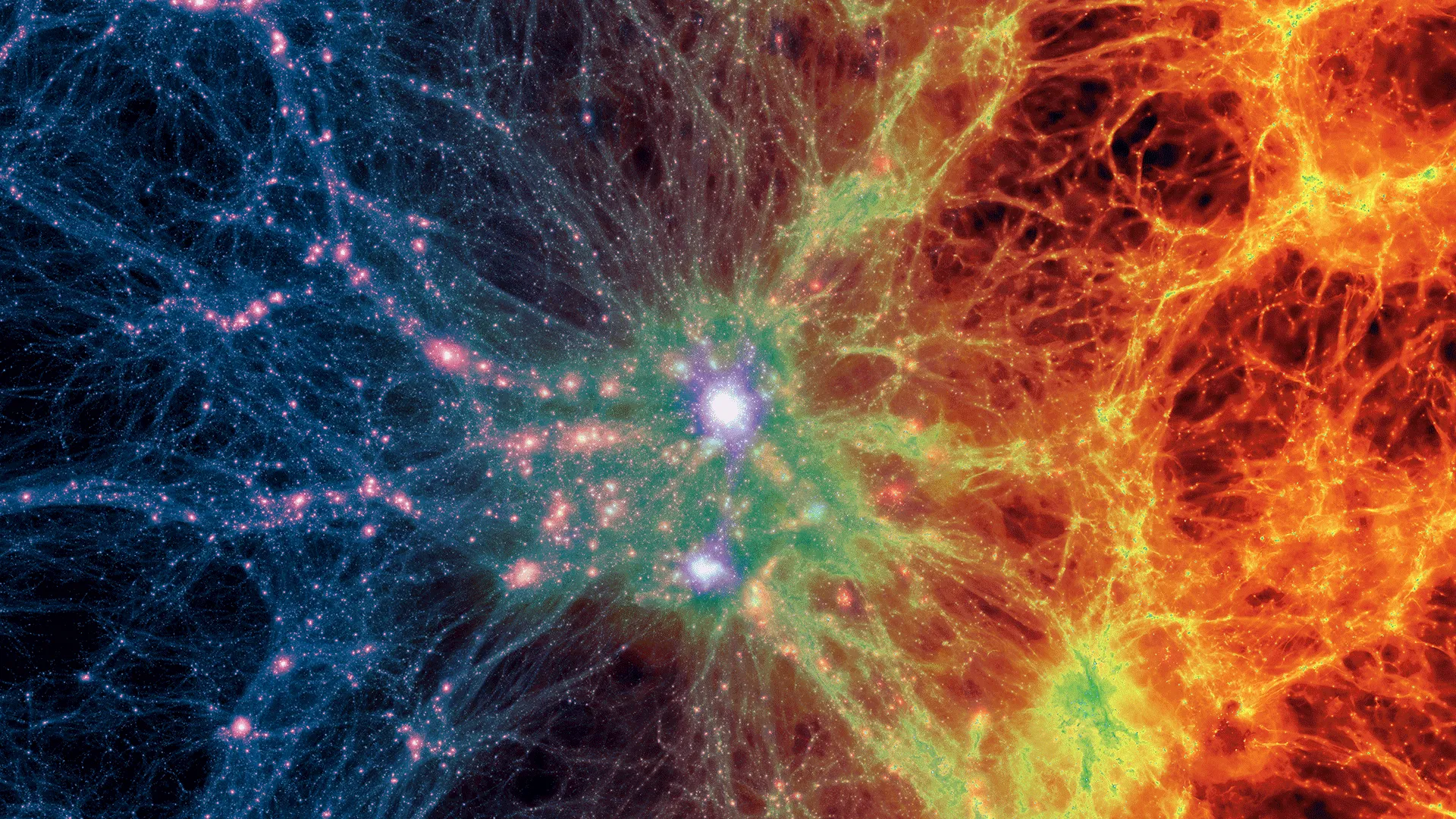
Astronomers have discovered a huge filament of hot gas bridging four galaxy clusters. At 10 times as massive as our galaxy, the thread could contain some of the Universe’s ‘missing’ matter, addressing a decades-long mystery.
The astronomers used the European Space Agency’s XMM-Newton and JAXA’s Suzaku X-ray space telescopes to make the discovery.
Over one-third of the ‘normal’ matter in the local Universe – the visible stuff making up stars, planets, galaxies, life – is missing. It hasn’t yet been seen, but it’s needed to make our models of the cosmos work properly.
Said models suggest that this elusive matter might exist in long strings of gas, or filaments, bridging the densest pockets of space. While we’ve spotted filaments before, it’s tricky to make out their properties; they’re typically faint, making it difficult to isolate their light from that of any galaxies, black holes, and other objects lying nearby.
New research is now one ofthe first to do just this, finding and accurately characterizing a single filament of hot gas stretching between four clusters of galaxies in the nearby Universe.
“For the first time, our results closely match what we see in our leading model of the cosmos – something that’s not happened before,” says lead researcher Konstantinos Migkas of Leiden Observatory in the Netherlands. “It seems that the simulations were right all along.”
XMM-Newton on the case
Clocking in at over 10 million degrees, the filament contains around 10 times the mass of the Milky Way and connects four galaxy clusters: two on one end, two on the other. All are part of the Shapley Supercluster, a collection of more than 8000 galaxies that forms one of the most massive structures in the nearby Universe.
The filament stretches diagonally away from us through the supercluster for 23 million light-years, the equivalent of traversing the Milky Way end to end around 230 times.
Konstantinos and colleagues characterized the filament by combining X-ray observations from XMM-Newton and Suzaku, and digging into optical data from several others.
The two X-ray telescopes were ideal partners. Suzaku mapped the filament’s faint X-ray light over a wide region of space, while XMM-Newton pinpointed very precisely contaminating sources of X-rays – namely, supermassive black holes – lying within the filament.
“Thanks to XMM-Newton we could identify and remove these cosmic contaminants, so we knew we were looking at the gas in the filament and nothing else,” adds co-author Florian Pacaud of the University of Bonn, Germany. “Our approach was really successful, and reveals that the filament is exactly as we’d expect from our best large-scale simulations of the Universe.”
Not truly missing
As well as revealing a huge and previously unseen thread of matter running through the nearby cosmos, the finding shows how some of the densest and most extreme structures in the Universe – galaxy clusters – are connected over colossal distances.
It also sheds light on the very nature of the ‘cosmic web’, the vast, invisible cobweb of filaments that underpins the structure of everything we see around us.
“This research is a great example of collaboration between telescopes, and creates a new benchmark for how to spot the light coming from the faint filaments of the cosmic web,” adds Norbert Schartel, ESA XMM-Newton Project Scientist.
“More fundamentally, it reinforces our standard model of the cosmos and validates decades of simulations: it seems that the ‘missing’ matter may truly be lurking in hard-to-see threads woven across the Universe.”
Piecing together an accurate picture of the cosmic web is the domain of ESA’s Euclid mission. Launched in 2023, Euclid is exploring this web’s structure and history. The mission is also digging deep into the nature of dark matter and energy – neither of which have ever been observed, despite accounting for a whopping 95% of the Universe – and working with other dark Universe detectives to solve some of the biggest and longest-standing cosmic mysteries.
Know the signs and what to do if someone is unwell in hot weather.
Police are determining if criminal action should be taken over errors at two Shropshire hospitals.
A campaign group hosts a special event to raise awareness about how the disease affects women.
Two breakthrough Alzheimer’s drugs cost too much and have too little benefit for NHS use, review finds.
The mental health trust where Alice Figueiredo took her own life faced concerns over 20 other deaths.
