Yvonne Ford had light contact with the stray dog while on holiday in Morocco, her family says.


Yvonne Ford had light contact with the stray dog while on holiday in Morocco, her family says.
The Chartered Trading Standards Institute found evidence of untrained and unlicensed practitioners giving cosmetic procedures.
Almost 50 new families contact the BBC with concerns about inadequate care at maternity units in Leeds.
The vote to decriminalise the procedure is the biggest change to abortion laws in England and Wales for nearly 60 years.
How dangerous is UV radiation and how can you protect yourself when levels are high?
As pollen levels rise, what are the best ways to treat hay fever symptoms, and other useful advice.
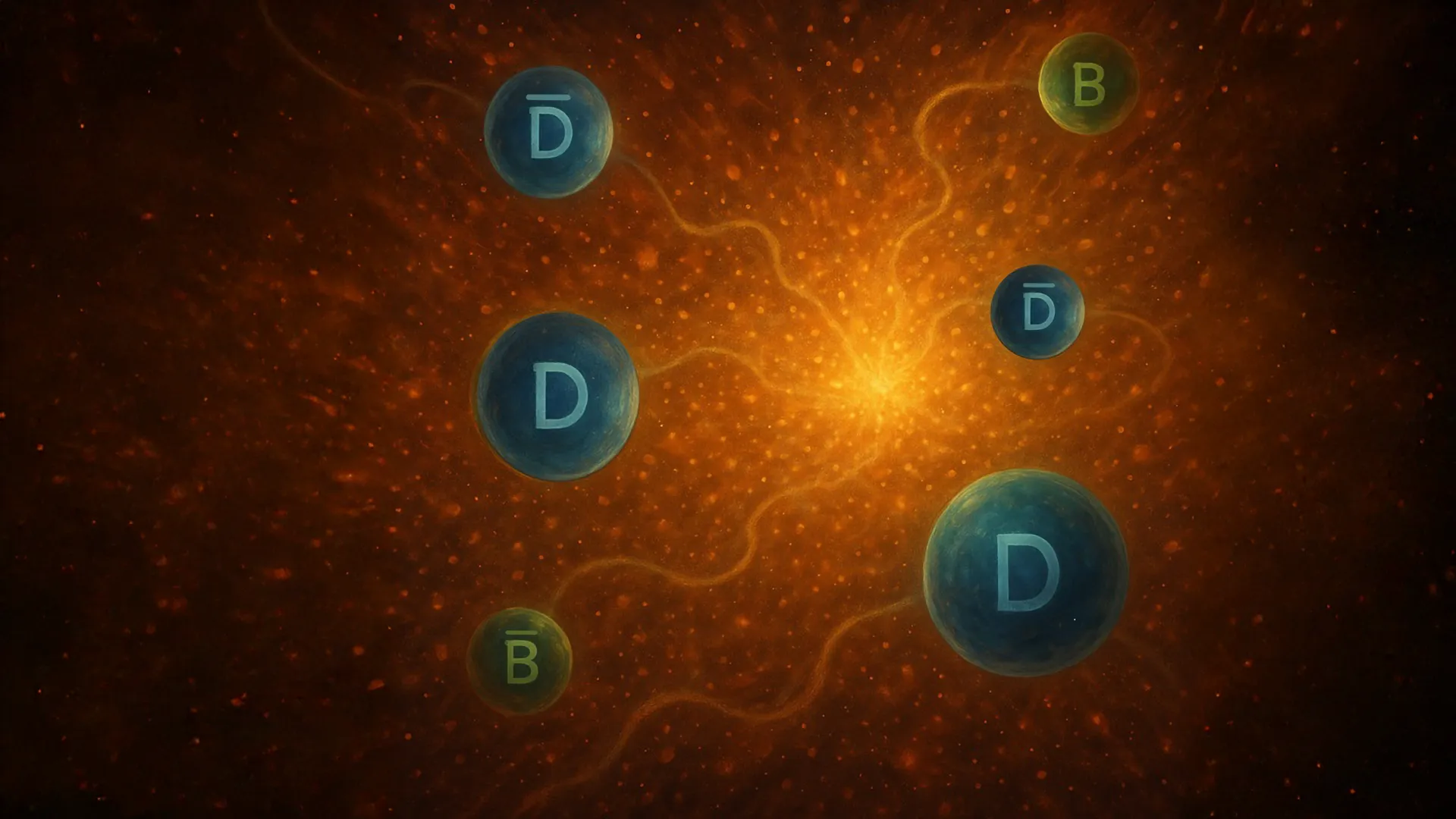
An international team of scientists has published a new report that moves towards a better understanding of the behaviour of some of the heaviest particles in the universe under extreme conditions, which are similar to those just after the big bang. The paper, published in the journal Physics Reports, is signed by physicists Juan M. Torres-Rincón, from the Institute of Cosmos Sciences at the University of Barcelona (ICCUB), Santosh K. Das, from the Indian Institute of Technology Goa (India), and Ralf Rapp, from Texas A&M University (United States).
The authors have published a comprehensive review that explores how particles containing heavy quarks (known as charm and bottom hadrons) interact in a hot, dense environment called hadronic matter. This environment is created in the last phase of high-energy collisions of atomic nuclei, such as those taking place at the Large Hadron Collider (LHC) and the Relativistic Heavy Ion Collider (RHIC). The new study highlights the importance of including hadronic interactions in simulations to accurately interpret data from experiments at these large scientific infrastructures.
The study broadens the perspective on how matter behaves under extreme conditions and helps to solve some great unknowns about the origin of the universe.
Reproducing the primordial universe
When two atomic nuclei collide at near-light speeds, they generate temperatures more than a 1,000 times higher than those at the centre of the Sun. These collisions briefly produce a state of matter called a quark-gluon plasma (QGP), a soup of fundamental particles that existed microseconds after the big bang. As this plasma cools, it transforms into hadronic matter, a phase composed of particles such as protons and neutrons, as well as other baryons and mesons.
The study focuses on what happens to heavy-flavour hadrons (particles containing charmed or background quarks, such as D and B mesons) during this transition and the hadronic phase expansion that follows it.
Heavy particles as probes
Heavy quarks are like tiny sensors. Being so massive, they are produced just after the initial nuclear collision and move more slowly, thus interacting differently with the surrounding matter. Knowing how they scatter and spread is key to learning about the properties of the medium through which they travel.
Researchers have reviewed a wide range of theoretical models and experimental data to understand how heavy hadrons, such as D and B mesons, interact with light particles in the hadronic phase. They have also examined how these interactions affect observable quantities such as particle flux and momentum loss.
“To really understand what we see in the experiments, it is crucial to observe how the heavy particles move and interact also during the later stages of these nuclear collisions,” says Juan M. Torres-Rincón, member of the Department of Quantum Physics and Astrophysics and ICCUB.
“This phase, when the system has already cooled down, still plays an important role in how the particles lose energy and flow together. It is also necessary to address the microscopic and transport properties of these heavy systems right at the transition point to the quark-gluon plasma,” he continues. “This is the only way to achieve the degree of precision required by current experiments and simulations.”
A simple analogy can be used to better understand these results: when we drop a heavy ball into a crowded pool, even after the biggest waves have dissipated, the ball continues to move and collide with people. Similarly, heavy particles created in nuclear collisions continue to interact with other particles around them, even after the hottest and most chaotic phase. These continuous interactions subtly modify the motion of particles, and studying these changes helps scientists to better understand the conditions of the early universe. Ignoring this phase would therefore mean missing an important part of the story.
Looking to the future
Understanding how heavy particles behave in hot matter is fundamental to mapping the properties of the early universe and the fundamental forces that rule it. The findings also pave the way for future experiments at lower energies, such as those planned at CERN’s Super Proton Super Synchrotron (SPS) and the future FAIR facility in Darmstadt, Germany.

A USC-led research team has created a series of supercomputer-simulated twins of our Milky Way galaxy — which could help scientists unlock new answers about one of the biggest mysteries in the universe: dark matter, the invisible substance that makes up about 85% of all matter in existence.
The research was led by cosmologist Vera Gluscevic, who is an associate professor at the USC Dornsife College of Letters, Arts, and Sciences; as well as Ethan Nadler, formerly a postdoc at USC and Carnegie Observatories who is now an assistant professor at University of California, San Diego; and Andrew Benson, a staff scientist at Carnegie Observatories.
They called their simulation project “COZMIC” — short for “Cosmological Zoom-in Simulations with Initial Conditions beyond Cold Dark Matter.”
Scientists have known for decades that dark matter exists — but until now, they could not study how galaxies are born and evolve in a universe where dark and normal matter interact. COZMIC has made that possible, the team said.
The development of COZMIC and the team’s results are described in a trio of studies published on June 16 in The Astrophysical Journal, a publication of the American Astronomical Society.
The heart of dark matter
Scientists know that dark matter is real because it affects how galaxies move and stick together. For example, galaxies spin so fast that they should fly apart, but they don’t. Something invisible holds them together; many scientists believe that dark matter is at the heart of this — an idea first suggested in 1933 by a Swiss researcher, Fritz Zwicky. Research on dark matter has evolved ever since.
Dark matter is tricky to study because it doesn’t emit any light or energy that can be easily detected. Scientists study dark matter by watching how it affects motions and structures like galaxies. However, that is somewhat like studying someone’s shadow without being able to examine in detail the actual person who cast the shadow.
For the suite of studies, the research team took the step of deploying new physics — not just standard particle physics and relativity — and programmed a supercomputer to create very detailed cosmological simulations through COZMIC to test different ideas about what dark matter might be doing.
“We want to measure the masses and other quantum properties of these particles, and we want to measure how they interact with everything else,” Gluscevic said. “With COZMIC, for the first time, we’re able to simulate galaxies like our own under radically different physical laws — and test those laws against real astronomical observations.”
In addition to Glusevic, Nadler and Benson, the team behind COZMIC includes Hai-Bo Yu of UC Riverside; Daneng Yang, formerly of UC Riverside and now at Purple Mountain Observatory CAS; Xiaolong Du of UCLA; and Rui An, formerly of USC.
Several dark matter scenarios
“Our simulations reveal that observations of the smallest galaxies can be used to distinguish dark matter models,” said Nadler.
For the studies with COZMIC, the scientists accounted for the following dark matter behavior scenarios:
While running these simulations, the scientists input new physics into the supercomputer to produce a galaxy whose structure bears the signatures of those interactions between normal and dark matter, said Benson.
Gluscevic added: “While many previous simulation suites have explored the effects of dark matter mass or self-interactions, until now, none have simulated dark matter interactions with normal matter. Such interactions are not exotic or implausible. They are, in fact, likely to exist.”
A new day for dark matter
The team says it is a big step forward in figuring out what dark matter really is. They hope that by comparing their twin galaxies to real telescope images, they can get even closer to solving one of space’s biggest mysteries.
“We’re finally able to ask, ‘Which version of the universe looks most like ours?'” Gluscevic said.
The COZMIC team plans to expand their work by directly testing the predictions from their simulations with telescope data so they may discover signatures of dark matter behavior in real galaxies.
This next stage could bring scientists closer than ever to understanding what dark matter is, and how it shapes the cosmos.
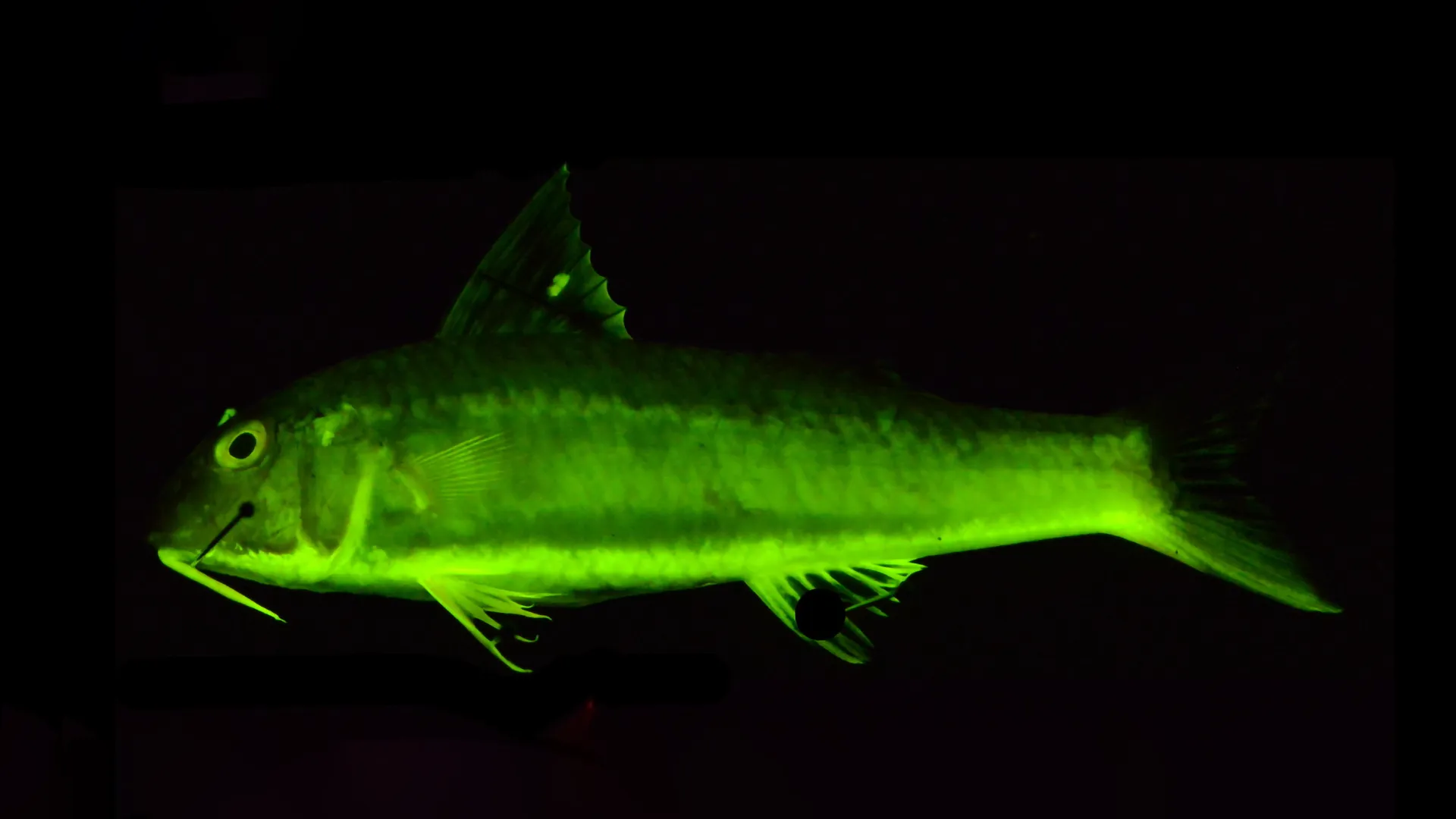
New research led by scientists at the American Museum of Natural History sheds light on the ancient origins of biofluorescence in fishes and the range of brilliant colors involved in this biological phenomenon. Detailed in two complementary studies recently published in Nature Communications and PLOS One, the findings suggest that biofluorescence dates back at least 112 million years and, since then, has evolved independently more than 100 times, with the majority of that activity happening among fish that live on coral reefs.
The new work also reveals that in marine fishes, biofluorescence — which occurs when an organism absorbs light, transforms it, and emits it as a different color — involves a greater variety of colors than previously reported, spanning multiple wavelengths of green, yellow, orange, and red.
“Researchers have known for a while that biofluorescence is quite widespread in marine animals, from sea turtles to corals, and especially among fishes,” said Emily Carr, a Ph.D. student in the Museum’s Richard Gilder Graduate School and the lead author on the two new studies. “But to really get to the root of why and how these species use this unique adaptation — whether for camouflage, predation, or reproduction — we need to understand the underlying evolutionary story as well as the scope of biofluorescence as it currently exists.”
For the Nature Communications study, Carr led a comprehensive survey of all known biofluorescent teleosts — a type of bony fish that make up by far the largest group of vertebrates alive today. This resulted in a list of 459 biofluorescent species, including 48 species that were previously unknown to be biofluorescent. The researchers found that biofluorescence evolved more than 100 times in marine teleosts and is estimated to date back about 112 million years, with the first instance occurring in eels.
The team also found that fish species that live in or around coral reefs evolve biofluorescence at about 10 times the rate of non-reef species, with an increase in the number of fluorescent species following the Cretaceous-Paleogene (K-Pg) extinction about 66 million years ago, when all of the non-avian dinosaurs died off.
“This trend coincides with the rise of modern coral-dominated reefs and the rapid colonization of reefs by fishes, which occurred following a significant loss of coral diversity in the K-Pg extinction,” Carr said. “These correlations suggest that the emergence of modern coral reefs could have facilitated the diversification of fluorescence in reef-associated teleost fishes.”
Of the 459 known biofluorescent teleosts reported in this study, the majority are associated with coral reefs.
For the PLOS One study, Carr and colleagues used a specialized photography setup with ultraviolet and blue excitation lights and emission filters to look at the wavelengths of light emitted by fishes in the Museum’s Ichthyology collection. Collected over the last decade and a half on Museum expeditions to the Solomon Islands, Greenland, and Thailand, the specimens in the study were previously observed fluorescing, but the full range of their biofluorescent emissions was unknown.
The new work reveals far more diversity in colors emitted by teleosts — some families of which exhibit at least six distinct fluorescent emission peaks, which correspond with wavelengths across multiple colors — than had previously been reported.
“The remarkable variation we observed across a wide array of these fluorescent fishes could mean that these animals use incredibly diverse and elaborate signaling systems based on species-specific fluorescent emission patterns,” said Museum Curator John Sparks, an author on the new studies and Carr’s advisor. “As these studies show, biofluorescence is both pervasive and incredibly phenotypically variable among marine fishes. What we would really like to understand better is how fluorescence functions in these highly variable marine lineages, as well as its role in diversification.”
The researchers also note that the numerous wavelengths of fluorescent emissions found in this study could have implications for identifying novel fluorescent molecules, which are routinely used in biomedical applications, including fluorescence-guided disease diagnosis and therapy.
Other authors involved in this work include Rene Martin, from the Museum and the University of Nebraska-Lincoln; Mason Thurman, from Clemson University; Karly Cohen, from California State University; Jonathan Huie, from George Washington University; David Gruber, from Baruch College and The Graduate Center, City University of New York; and Tate Sparks, Rutgers University.
Research in the Solomon Islands was supported by the National Science Foundation under Grant Number DEB-1257555.
The Museum greatly acknowledges the Dalio Foundation for its generous support of the inaugural Explore21 Expedition.
The Museum’s Exlopre21 initiative is generously supported by the leadership contributions of Katheryn P. and Thomas L. Kempner, Jr.
The 2019 Constantine S. Niarchos Expedition to Greenland was generously supported by the Stavros Niarchos Foundation.
Research in Thailand was funded by the Museum and the National Science Foundation Graduate Research Fellowship Program under Grant Number DEB-1938103.
Additional funding for this work was provided by the National Science Foundation under Grant Number DGE-1746914.
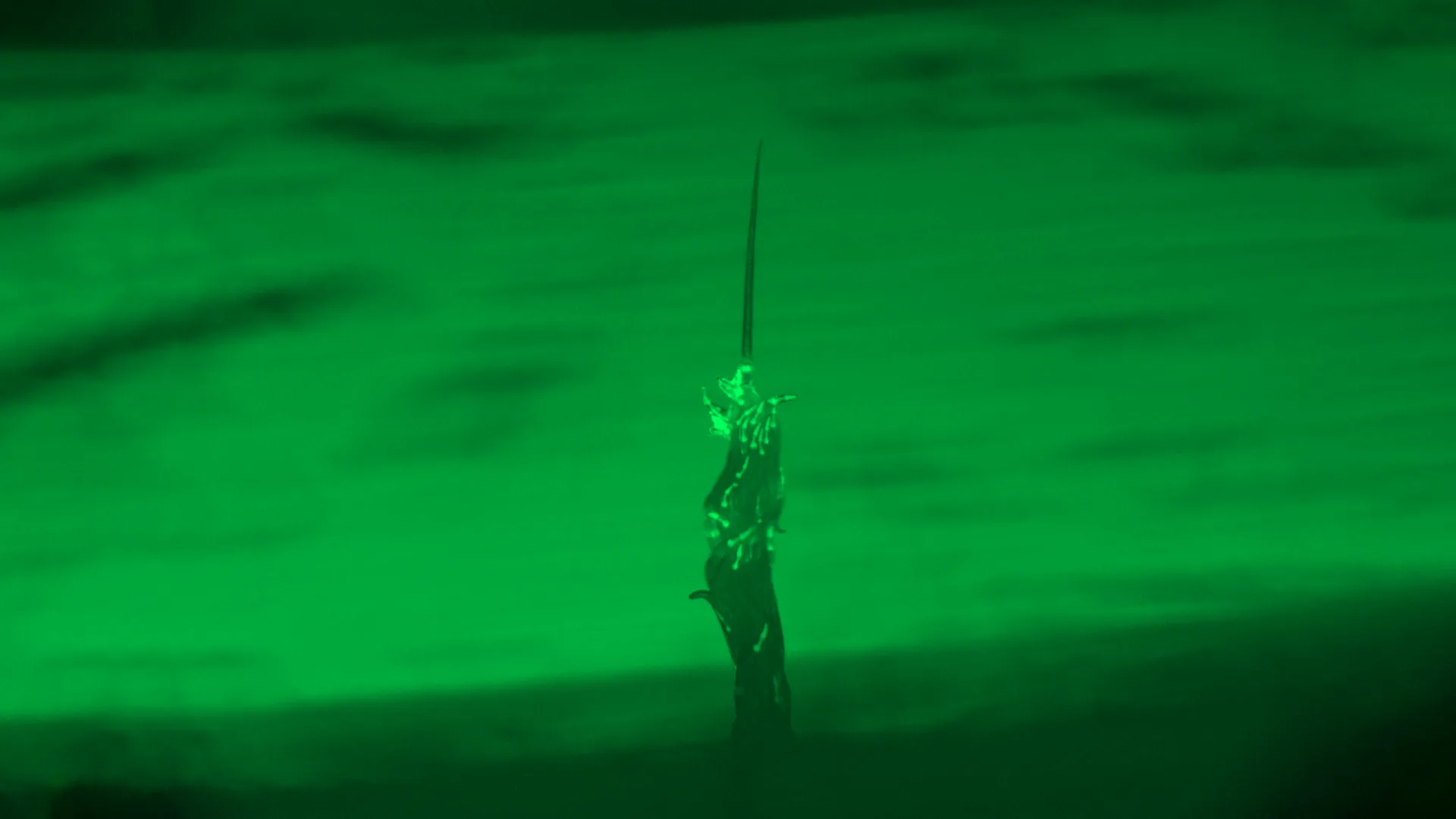
Nematodes are the most abundant animal on earth, but when times get tough, these tiny worms have a hard time moving up and out. So, they play to the strength of their clade. If food runs out and competition turns fierce, they slither towards their numerous kin. They climb onto each other and over one another until their bodies forge a living tower that twists skyward where they might hitch a ride on a passing animal to greener and roomier pastures.
At least that’s what scientists assumed. For decades, these worm structures were more mythical than material. Such aggregations, in which animals link bodies for group movement, are rare in nature. Only slime molds, fire ants, and spider mites are known to move in this way. For nematodes, nobody had even seen the aggregations — known as towers — forming anywhere but within the artificial confines of laboratories and growth chambers; and nobody really knew what they were for. Did towers even exist in the real world?
Now, researchers in Konstanz, Germany, have recorded video footage of worms towering in fallen apples and pears from local orchards. The team from the Max Planck Institute of Animal Behavior (MPI-AB) and the University of Konstanz combined fieldwork with laboratory experiments to provide the first direct evidence that towering behavior occurs naturally and functions as a means of collective transport.
Natural towers
“I was ecstatic when I saw these natural towers for the first time,” says senior author Serena Ding, group leader at the MPI-AB, of the moment when co-author Ryan Greenway sent her a video recording from the field. “For so long natural worm towers existed only in our imaginations. But with the right equipment and lots of curiosity, we found them hiding in plain sight.”
Greenway, a technical assistant at the MPI-AB, spent months with a digital microscope combing through decaying fruit in orchards near the university to record natural occurrences and behavior of worm towers. Some of these whole towers were brought into the lab. What was inside the towers surprised the team. Although the fruits were crawling with many species of nematodes, natural towers were made only of a single species, all at the tough larval stage known as a “dauer.”
“A nematode tower is not just a pile of worms,” says the first author Daniela Perez, a postdoctoral researcher at MPI-AB. “It’s a coordinated structure, a superorganism in motion.”
Function of towers
The team observed the natural dauer towers waving in unison, much like individual nematodes do by standing on their tails to latch onto a passing animal. But their new findings showed that entire worm towers could respond to touch, detach from surfaces, and collectively attach to insects such as fruit flies — hitchhiking on mass to new environments.
To probe deeper, Perez built a controlled tower using laboratory cultures of C. elegans. When placed on food-free agar with a small vertical post — a toothbrush bristle — hungry worms began to self-assemble. Within two hours, living towers emerged, stable for over 12 hours, and capable of extending exploratory “arms” into surrounding space. Some even formed bridges across gaps to reach new surfaces.
“The towers are actively sensing and growing,” says Perez. “When we touched them, they responded immediately, growing toward the stimulus and attaching to it.”
This behavior, it turns out, is not restricted to the so-called “dauer” larval stage seen from the wild samples. Adult C. elegans and all larval stages in the lab also towered — an unexpected twist that suggests towering may be a more generalized strategy for group movement than previously assumed.
Yet despite the architectural complexity of these towers, the worms inside showed no obvious role differentiation. Individuals from the base and the apex were equally mobile, fertile, and strong, hinting at a form of egalitarian cooperation. But so far only, the authors point out, in the controlled conditions of the laboratory. “C. elegans is a clonal culture and so it makes sense that there is no differentiation within the tower. In natural towers, we might see separate genetic compositions and roles, which prompts fascinating questions about who cooperates and who cheats.”
As researchers seek to understand how group behavior evolves — from insect swarms to bird migrations — these microscopic worm towers might rise to provide some of the answers.
“Our study opens up a whole new system for exploring how and why animals move together,” says Ding who leads a research program on nematode behavior and genetics. “By harnessing the genetic tools available for C. elegans, we now have a powerful model to study the ecology and evolution of collective dispersal.”
