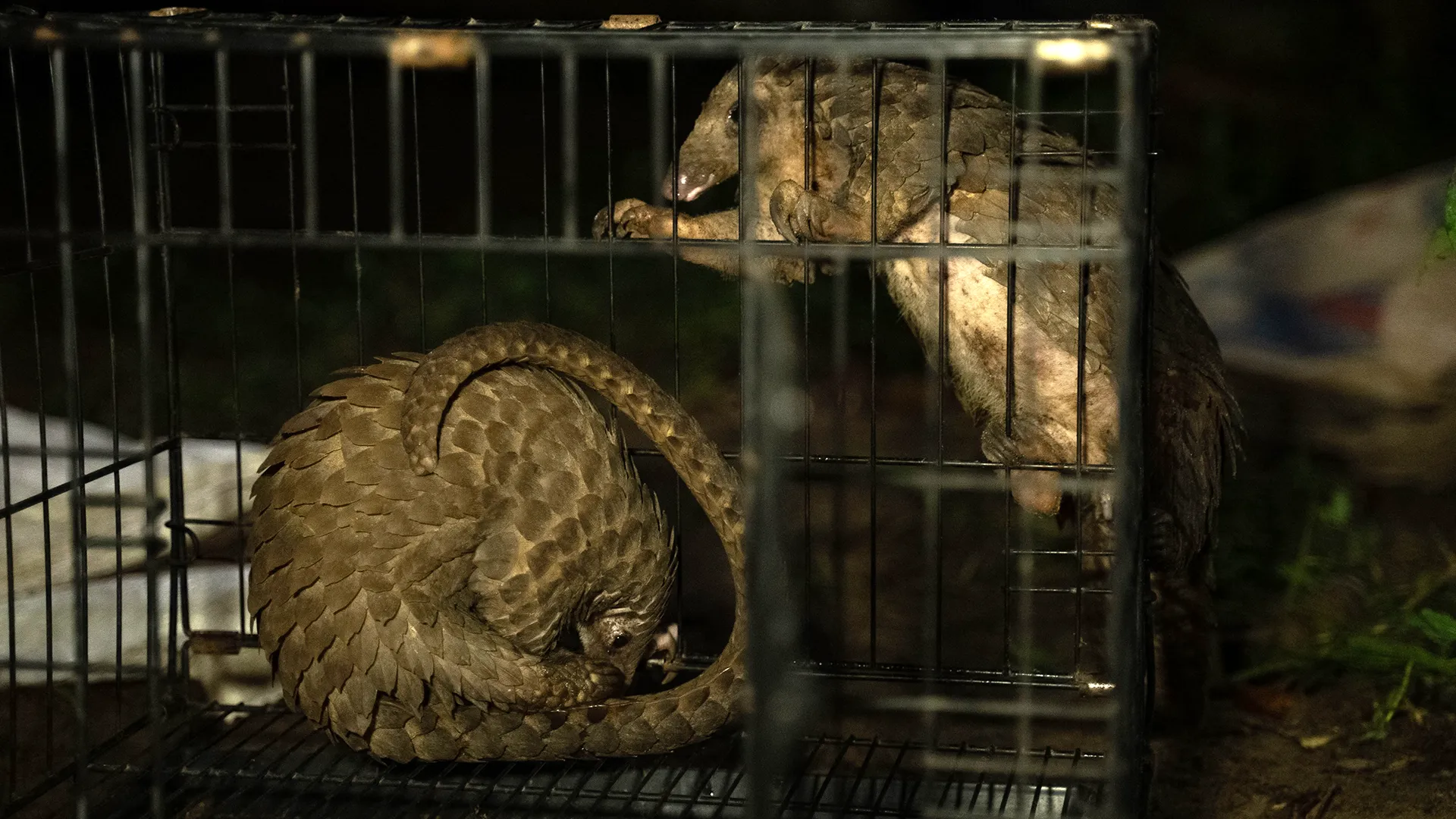
Africa’s pangolin crisis: The delicacy that’s driving a species to the brink

The vast majority of pangolin hunting in African forest landscapes is done for meat consumed by people in the region, rather than for scales shipped to East Asia, a new study led by the University of Cambridge suggests.

Pangolins are the most heavily trafficked wild mammal in the world. A solitary, insect-eating animal about the size of a large domestic cat*, pangolins are famous for their highly prized keratin scales — a staple of traditional Chinese medicine.

All eight existing pangolin species are threatened with extinction and on the IUCN’s Red List, with three Asian species categorised as critically endangered.

As Asian pangolins have declined dramatically, Nigeria has seen a boom in the export of pangolin scales to Asia. While hunting pangolins is illegal in Nigeria the West African country is now the world’s largest hub for the criminal trade in pangolin products.

However, a new study published in the journal Nature Ecology & Evolution suggests that some 98% of Nigerian pangolins are caught for meat first and foremost, with around two-thirds of scales from these animals simply thrown away.

A research team led by Cambridge collected data from over eight hundred hunters and traders in thirty-three locations across Nigeria’s Cross River Forest region, primarily between 2020 and 2023, during which time the conservationists estimate that around 21,000 pangolins were killed annually in the area.

Almost all pangolins were captured “opportunistically” or during general hunting trips (97%) rather than sought out, and caught primarily for meat (98%). Around 71% of pangolins were consumed by hunters themselves, with 27% traded locally as food.

Perhaps surprisingly, given their potential overseas value, around 70% of the scales were discarded, while less than 30% were sold on. However, researchers calculated that, per animal, pangolin meat fetched 3-4 times the price of scales at local Nigerian markets.

“Thousands of kilos of pangolin scales are seized at Nigeria’s ports, creating the impression that the international demand for scales is behind pangolin exploitation in West Africa,” said study lead author and Gates Cambridge Scholar Dr Charles Emogor, who conducted the research for his PhD at the University of Cambridge’s Department of Zoology.

“When we spoke to hunters and traders on the ground around the Cross River forest, the largest stronghold for Nigeria’s pangolins, it was obvious that meat was the motivation for almost all of the pangolin killings.”

“We found that dedicated pangolin hunts are virtually non-existent. Most pangolins are killed by hunters out for any type of game,” said Emogor, now a Schmidt Science Fellow split between Cambridge, UK, and Harvard, US.

“Around a third of pangolins are caught opportunistically, often while people are working in the fields. Pangolins curl into a ball when threatened, which sadly makes them easy to catch.” Among frequent hunters, by far the most common method of catching pangolins was given as simply picking them up by hand.

While Emogor says the demands of traditional medicine markets are exacerbating the decline of African pangolins — his previous research showed that just shipments intercepted by Nigerian authorities between 2010 and 2021 amounted to 190,407 kilos of pangolin scales taken from around 800,000 dead creatures — pangolins have been exploited in West Africa long before being trafficked to Asia.

The meat is a delicacy in parts of Nigeria, often procured for pregnant women in the belief it helps produce strong babies. Emogor and colleagues surveyed hunters and Cross River locals on “palatability”: asking them to rank the tastiness of almost a hundred different animals eaten in the region, from domestic beef and chicken to catfish, monkeys and antelope.

The three major African pangolin species were rated as the most palatable of all available meats, with average scores of almost nine out of ten, and the giant pangolin considered the topmost appetising meat in the region.

“Pangolins face a lethal combination of threats,” said Emogor. “Pangolins are easy to hunt, breed slowly, taste good to humans, and are falsely believed to have curative properties in traditional medicines. In addition, their forest habitat is being destroyed.”

Emogor’s research led him to set up Pangolino in 2021, a global network of volunteers, scientists and pangolin enthusiasts committed to saving the endangered animal. He points out that the cost of policy interventions to tackle meat-driven pangolin trading might be cheaper than those for an international scales market.

These should include anti-poaching patrols as well as community programmes focused on food security. Through Pangolino, Emogor is piloting interventions in four Southeast Nigerian communities by helping create by-laws that prohibit pangolin killing, with financial rewards for compliance.

“Clearly in designing any intervention we need good information on what’s motivating the hunters,” said Prof Andrew Balmford, co-author from Cambridge’s Department of Zoology. “That’s why studies such as this are vital for effective conservation of endangered species.”

While the latest study focused on Nigeria, researchers say their pangolin hunting and consumption data echo that from countries such as Cameroon and Gabon — suggesting these patterns may be Africa-wide.

Raised on the edge of the Cross River National Park, home to Nigeria’s endangered white-bellied and black-bellied pangolins, Emogor grew up surrounded by wildlife. Yet during childhood he only ever saw dead pangolins, and didn’t encounter a living animal until his mid-twenties.

“If we lose the pangolin, we lose 80 million years of evolution,” said Emogor. “Pangolins are the only mammals with scales, and their ancestors existed when dinosaurs still roamed the planet,” added Emogor.

The latest study was conducted by an international team of researchers from the University of Cambridge, Wildlife Conservation Society, Pangolin Protection Network, University of Washington, CIFOR, CARE International, as well as the UK universities of Oxford, Exeter and Kent.

Notes:

*While this is a rough size for some African species, such as the White-bellied pangolin, the Giant Pangolin can grow up to 30kg in weight.


Share Button

I’m an NHS leader – but mum still suffered at hands of health service because she was black

NHS Confederation chair Lord Adebowale says his mother’s death illustrates inequalities in the system.

Share Button

Mood swings fuelled Heston Blumenthal’s genius. But the highs got higher and the lows got darker

A new BBC documentary looks at how a diagnosis of bipolar disorder at 57 changed the celebrity chef’s life.

Share Button

Why is my hay fever so bad this year?

It’s peak pollen season so we set out the best ways to treat hay fever symptoms, and other advice.

Share Button

NHS To Offer ‘Life-Changing’ Cancer Therapy

A world-first ‘Trojan horse’ therapy is being made available on the NHS in England

Share Button

The 10,000-mile march through fire that made dinosaurs possible

The forerunners of dinosaurs and crocodiles in the Triassic period were able to migrate across areas of the ancient world deemed completely inhospitable to life, new research suggests.

In a paper published in Nature Ecology and Evolution on June 11, researchers from the University of Birmingham and University of Bristol have used a new method of geographical analysis to infer how these ancestral reptiles, known as archosauromorphs, dispersed following one of the most impactful climate events the Earth has ever seen, the end-Permian mass extinction.

The first archosauromorphs, some resembling modern reptiles and many times smaller than familiar dinosaurs, were previously believed to only survive in certain parts of the globe due to extreme heat across the tropics, viewed by many paleontologists as a dead zone, in the earliest Triassic.

By developing a new modelling technique based on landscape reconstructions and evolutionary trees, the team of researchers have been able to discover clues about how these reptiles moved around the world during the Triassic period, following the mass extinction where more than half of land-based animals and 81% of marine life died.

The archosauromorphs that survived the extinction event rose to prominence in Earth’s ecosystems in the Triassic, leading to the evolution of dinosaurs. The team now suggest that their later success was in part due to their ability to migrate up to 10,000 miles across the tropical dead zone to access new ecosystems.

Dr Joseph Flannery-Sutherland from the University of Birmingham and corresponding author of the study said:

“Amid the worst climatic event in Earth’s history, where more species died than at any period since, life still survived. We know that archosauromorphs as a group managed to come out of this event and over the Triassic period became one of the main players in shaping life thereafter.

“Gaps in their fossil record have increasingly begun to tell us something about what we weren’t seeing when it comes to these reptiles. Using our modelling system, we have been able to build a picture of what was happening to the archosauromorphs in these gaps and how they dispersed across the ancient world. This is what led us to call our method TARDIS, as we were looking at terrains and routes directed in space-time.

“Our results suggest that these reptiles were much hardier to the extreme climate of the Pangaean tropical dead zone, able to endure these hellish conditions to reach the other side of the world. It’s likely that this ability to survive the inhospitable tropics may have conferred an advantage that saw them thrive in the Triassic world.”

“The evolution of life has been controlled at times by the environment,” says Professor Michael Benton from the University of Bristol, senior author of the study, “but it is difficult to integrate our limited and uncertain knowledge about the ancient landscape with our limited and uncertain knowledge about the ecology of extinct organisms. But by combining the fossils with reconstructed maps of the ancient world, in the context of evolutionary trees, we provide a way of overcoming these challenges.”

Share Button

Sleep-in science: How 2 extra weekend hours can calm teen anxiety

A new study to be presented at the SLEEP 2025 annual meeting found that teens who get moderate — but not excessive — catch-up sleep on weekends have fewer symptoms of anxiety.

Results show that teens who got up to two more hours of sleep on weekends than on weekdays exhibited fewer anxiety symptoms compared with those who did not sleep longer on weekends. However, longer durations of catch-up sleep on weekends were associated with slightly more internalizing symptoms.

“The results show that both sleeping less on weekends than weekdays and sleeping substantially more on weekends were associated with higher anxiety symptoms,” said lead author Sojeong Kim, a doctoral candidate in the department of clinical psychology and psychology graduate advisor at the University of Oregon in Eugene. “In contrast, moderate catch-up sleep — defined as less than two hours — was associated with lower anxiety symptoms, suggesting that some weekend recovery sleep may be beneficial.”

The American Academy of Sleep Medicine recommends that teenagers 13 to 18 years of age should sleep 8 to 10 hours on a regular basis to promote optimal health. However, CDC data show that only 23% of high school students get sufficient sleep on an average school night.

“Many teens try to make up for lost sleep by sleeping in on weekends,” Kim said.

Consistently getting sufficient sleep is associated with better health outcomes including improved attention, behavior, learning, memory, emotional regulation, quality of life, and mental and physical health. In contrast, insufficient sleep in teenagers is associated with increased risks of problems such as depression and suicidal thoughts.

The study involved 1,877 adolescents with a mean age of 13.5 years. Sleep duration was estimated using Fitbit devices, while internalizing symptoms were assessed using the Child Behavior Checklist survey. Weekend catch-up sleep was calculated as the difference between weekend and weekday sleep duration.

Kim noted that it is important to identify the right amount of catch-up sleep that is beneficial to teens who restrict their sleep during the week.

“Too little or too much sleep variability from weekday to weekend may contribute to the symptoms someone is trying to combat, like physical or mental fatigue and feelings of anxiety,” she said.

The research abstract was published recently in an online supplement of the journal Sleep and will be presented Wednesday, June 11, during SLEEP 2025 in Seattle. SLEEP is the annual meeting of the Associated Professional Sleep Societies, a joint venture of the American Academy of Sleep Medicine and the Sleep Research Society.

Abstract Title: The Sweet Spot of Weekend Catch-Up Sleep: A Protective Factor Against Depressive Symptoms?

Abstract ID: 0263

Share Button

Johns Hopkins blood test detects tumor dna three years early

Genetic material shed by tumors can be detected in the bloodstream three years prior to cancer diagnosis, according to a study led by investigators at the Ludwig Center at Johns Hopkins, Johns Hopkins Kimmel Cancer Center, the Johns Hopkins University School of Medicine and the Johns Hopkins Bloomberg School of Public Health.

The study, partly funded by the National Institutes of Health, was published May 22 in Cancer Discovery.

Investigators were surprised they could detect cancer-derived mutations in the blood so much earlier, says lead study author Yuxuan Wang, M.D., Ph.D., an assistant professor of oncology at the Johns Hopkins University School of Medicine. “Three years earlier provides time for intervention. The tumors are likely to be much less advanced and more likely to be curable.”

To determine how early cancers could be detected prior to clinical signs or symptoms, Wang and colleagues assessed plasma samples that were collected for the Atherosclerosis Risk in Communities (ARIC) study, a large National Institutes of Health-funded study to investigate risk factors for heart attack, stroke, heart failure and other cardiovascular diseases. They used highly accurate and sensitive sequencing techniques to analyze blood samples from 26 participants in the ARIC study who were diagnosed with cancer within six months after sample collection, and 26 from similar participants who were not diagnosed with cancer.

At the time of blood sample collection, eight of these 52 participants scored positively on a multicancer early detection (MCED) laboratory test. All eight were diagnosed within four months following blood collection. For six of the eight individuals, investigators also were able to assess additional blood samples collected 3.1-3.5 years prior to diagnosis, and in four of these cases, tumor-derived mutations could also be identified in samples taken at the earlier timepoint.

“This study shows the promise of MCED tests in detecting cancers very early, and sets the benchmark sensitivities required for their success,” says Bert Vogelstein, M.D., Clayton Professor of Oncology, co-director of the Ludwig Center at Johns Hopkins and a senior author on the study.

“Detecting cancers years before their clinical diagnosis could help provide management with a more favorable outcome,” adds Nickolas Papadopoulos, Ph.D., professor of oncology, Ludwig Center investigator and senior author of the study. “Of course, we need to determine the appropriate clinical follow-up after a positive test for such cancers.”

The study was supported in part by National Institutes of Health grant #s R21NS113016, RA37CA230400, U01CA230691, P30 CA 06973, DRP 80057309, and U01 CA164975. Additional funding was provided by the Virginia and D.K. Ludwig Fund for Cancer Research, the Commonwealth Fund, the Thomas M Hohman Memorial Cancer Research Fund, The Sol Goldman Sequencing Facility at Johns Hopkins, The Conrad R. Hilton Foundation, the Benjamin Baker Endowment, Swim Across America, Burroughs Wellcome Career Award for Medical Scientists, Conquer Cancer — Fred J. Ansfield, MD, Endowed Young Investigator Award, and The V Foundation for Cancer Research. The Atherosclerosis Risk in Communities study has been funded in whole or in part with federal funds from the National Heart, Lung, and Blood Institute, National Institutes of Health, Department of Health and Human Services, under contract numbers 75N92022D00001, 75N92022D00002, 75N92022D00003, 75N92022D00004, and 75N92022D00005.

Share Button

World-first blood cancer therapy to be given on NHS

It sneaks toxic drugs inside cancer cells to hit them hard while minimising side-effects.

Share Button

Rivers are exhaling ancient carbon — and climate math just changed

A new study has revealed for the first time that ancient carbon, stored in landscapes for thousands of years or more, can find its way back to the atmosphere as CO2 released from the surfaces of rivers.

The findings, led by scientists at the University of Bristol and the cover story of the journal Nature, mean plants and shallow soil layers are likely removing around one gigatonne more CO2 each year from the atmosphere to counteract this, emphasising their pivotal and greater part in combating climate change.

Lead author Dr Josh Dean, Associate Professor in Biogeochemistry and UKRI Future Leaders Fellow at the University of Bristol, said: “The results took us by surprise because it turns out that old carbon stores are leaking out much more into the atmosphere then previous estimates suggested.

“The implications are potentially huge for our understanding of global carbon emissions. Plants and trees take up CO2 from the atmosphere and can then lock this carbon away in soils for thousands of years.

“Our findings show some of this old carbon, as well as ancient carbon from rocks, is leaking sideways into rivers and making its way back to the atmosphere. We don’t yet know how humans are affecting this flow of ancient carbon, but we do know plants and trees must be taking up more carbon from the atmosphere today to account for this unrecognised release of old carbon.”

Rivers transport and release methane and carbon dioxide as part of the global carbon cycle. Until now, scientists believed the majority of this was a quick turnover derived from the recycling of recent plant growth – organic material broken down and carried into the river system in the past 70 years or so. This new study indicates the opposite, with more than half – some 60% – of emissions being attributed to long-term carbon stores accumulated over hundreds to thousands of years ago, or even longer.

The international research team, led by scientists at the University of Bristol, University of Oxford and the UK Centre for Ecology and Hydrology, studied more than 700 river reaches from 26 different countries across the world.

They took detailed radiocarbon measurements of carbon dioxide and methane from the rivers. By comparing the levels of carbon-14 in the river samples with a standard reference for modern atmospheric CO2, the team was able to date the river carbon.

Co-author Prof Bob Hilton, Professor of Sedimentary Geography at the University of Oxford, explained: “We discovered that around half of the emissions are young, while the other half are much older, released from deep soil layers and rock weathering that were formed thousands and even millions of years ago.”

The research was supported by funding from UK Research and Innovation (UKRI) Natural Environment Research Council (NERC).

Co-author Dr Gemma Coxon, Associate Professor in Hydrology and UKRI Future Leaders Fellow at the University of Bristol, said: “Rivers globally release about two gigatonnes of carbon each year, compared to human activity that results in between 10-15 gigatonnes of carbon emissions. These river emissions are significant at a global scale, and we’re showing that over half of these emissions may be coming from carbon stores we considered relatively stable. This means we need to re-evaluate these crucial parts of the global carbon cycle.”

Further building on these findings, the researchers plan to explore how the age of river carbon emissions varies across rivers the study was not able to capture, as well as investigating how the age of these emissions may have changed through time.

Share Button