Invitations be sent out by the NHS every five years instead of every three for women aged 25-49 in England, if they have a negative test.


Invitations be sent out by the NHS every five years instead of every three for women aged 25-49 in England, if they have a negative test.
Women would never be prosecuted for terminating a pregnancy under proposed new laws.
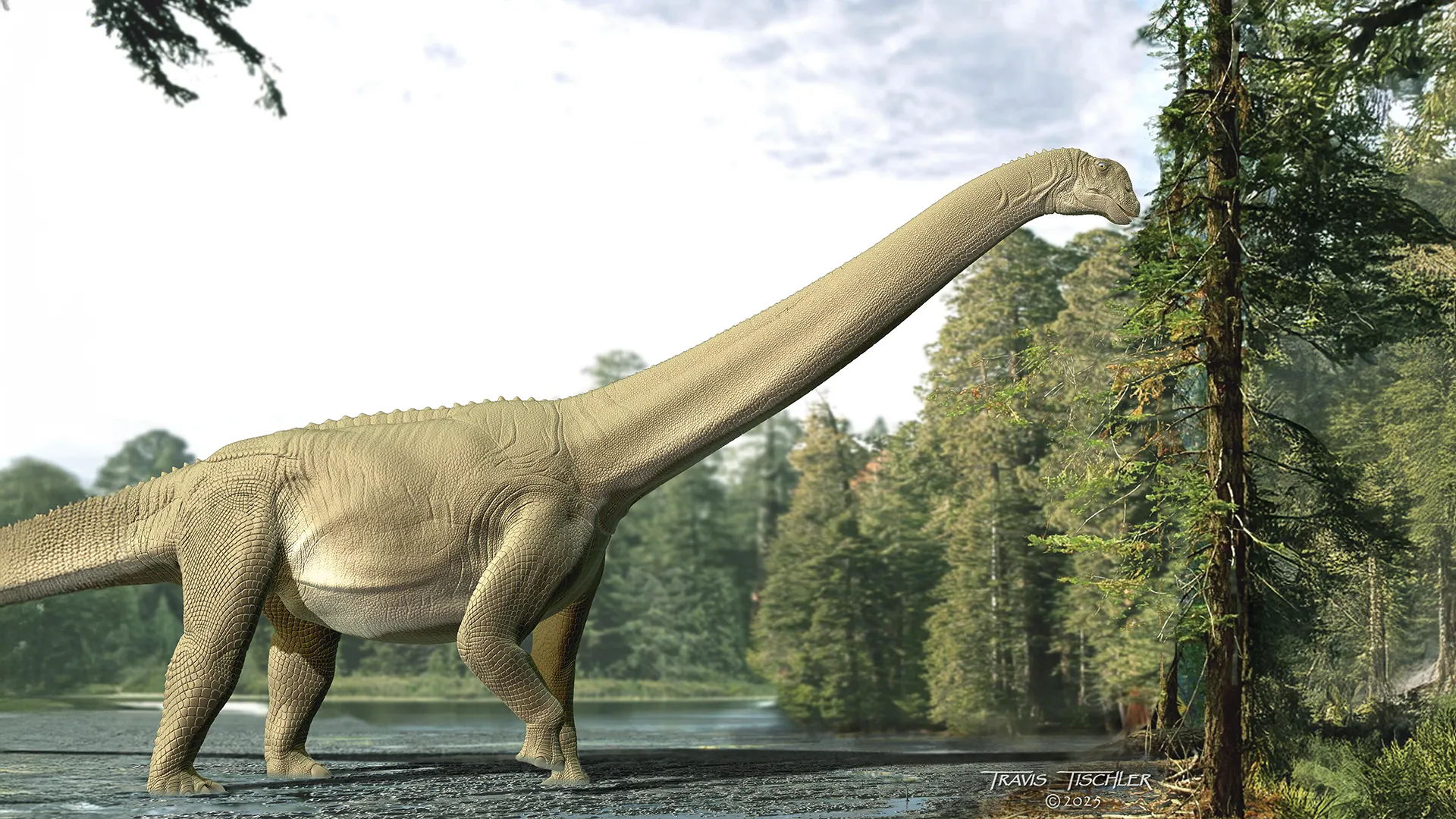
Plant fossils found in the abdomen of a sauropod support the long-standing hypothesis that these dinosaurs were herbivores, finds a study published on June 9 in the Cell Press journal Current Biology. The dinosaur, which was alive an estimated 94 to 101 million years ago, ate a variety of plants and relied almost entirely on its gut microbes for digestion.
“No genuine sauropod gut contents had ever been found anywhere before, despite sauropods being known from fossils found on every continent and despite the group being known to span at least 130 million years of time,” says lead author Stephen Poropat of Curtin University. “This finding confirms several hypotheses about the sauropod diet that had been made based on studies of their anatomy and comparisons with modern-day animals.”
Knowledge of the diet of dinosaurs is critical for understanding their biology and the role they played in ancient ecosystems, say the researchers. However, very few dinosaur fossils have been found with cololites, or preserved gut contents. Sauropod cololites have remained particularly elusive, even though these dinosaurs may have been the most ecologically impactful terrestrial herbivores worldwide throughout much of the Jurassic and Cretaceous periods, given their gigantic sizes. Due to this lack of direct evidence when it comes to diet, the specifics of sauropod herbivory — including the plant taxa they ate — have been largely inferred based on anatomical features such as tooth wear, jaw morphology, and neck length.
In the summer of 2017, the staff and volunteers at the Australian Age of Dinosaurs Museum of Natural History were excavating a relatively complete subadult skeleton of the sauropod Diamantinasaurus matildae from the mid-Cretaceous period, which was found in the Winton Formation of Queensland, Australia. During this process, they noticed an unusual, fractured rock layer that appeared to contain the sauropod’s cololite, which consisted of many well-preserved plant fossils.
Analysis of the plant specimens within the cololite showed that sauropods likely only engaged in minimal oral processing of their food, relying instead on fermentation and their gut microbiota for digestion. The cololite consisted of a variety of plants, including foliage from conifers (cone-bearing seed plants), seed-fern fruiting bodies (plant structures that hold seeds), and leaves from angiosperms (flowering plants), indicating that Diamantinasaurus was an indiscriminate, bulk feeder.
“The plants within show evidence of having been severed, possibly bitten, but have not been chewed, supporting the hypothesis of bulk feeding in sauropods,” says Poropat.
The researchers also found chemical biomarkers of both angiosperms and gymnosperms — a group of woody, seed-producing plants that include conifers. “This implies that at least some sauropods were not selective feeders, instead eating whatever plants they could reach and safely process,” Poropat says. “These findings largely corroborate past ideas regarding the enormous influence that sauropods must have had on ecosystems worldwide during the Mesozoic Era.”
Although it was not unexpected that the gut contents provided support for sauropod herbivory and bulk feeding, Poropat was surprised to find angiosperms in the dinosaur’s gut. “Angiosperms became approximately as diverse as conifers in Australia around 100 to 95 million years ago, when this sauropod was alive,” he says. “This suggests that sauropods had successfully adapted to eat flowering plants within 40 million years of the first evidence of the presence of these plants in the fossil record.”
Based on these findings, the team suggests that Diamantinasaurus likely fed on both low- and high-growing plants, at least before adulthood. As hatchlings, sauropods could only access plants found close to the ground, but as they grew, so did their viable dietary options. In addition, the prevalence of small shoots, bracts, and seed pods in the cololite implies that subadult Diamantinasaurus targeted new growth portions of conifers and seed ferns, which are easier to digest.
According to the authors, the strategy of indiscriminate bulk feeding seems to have served sauropods well for 130 million years and might have enabled their success and longevity as a clade. Despite the importance of this discovery, Poropat pointed out a few caveats.
“The primary limitation of this study is that the sauropod gut contents we describe constitute a single data point,” he explains. “These gut contents only tell us about the last meal or several meals of a single subadult sauropod individual,” says Poropat. “We don’t know if the plants preserved in our sauropod represent its typical diet or the diet of a stressed animal. We also don’t know how indicative the plants in the gut contents are of juvenile or adult sauropods, since ours is a subadult, and we don’t know how seasonality might have affected this sauropod’s diet.”
This research was supported by funding from the Australian Research Council.
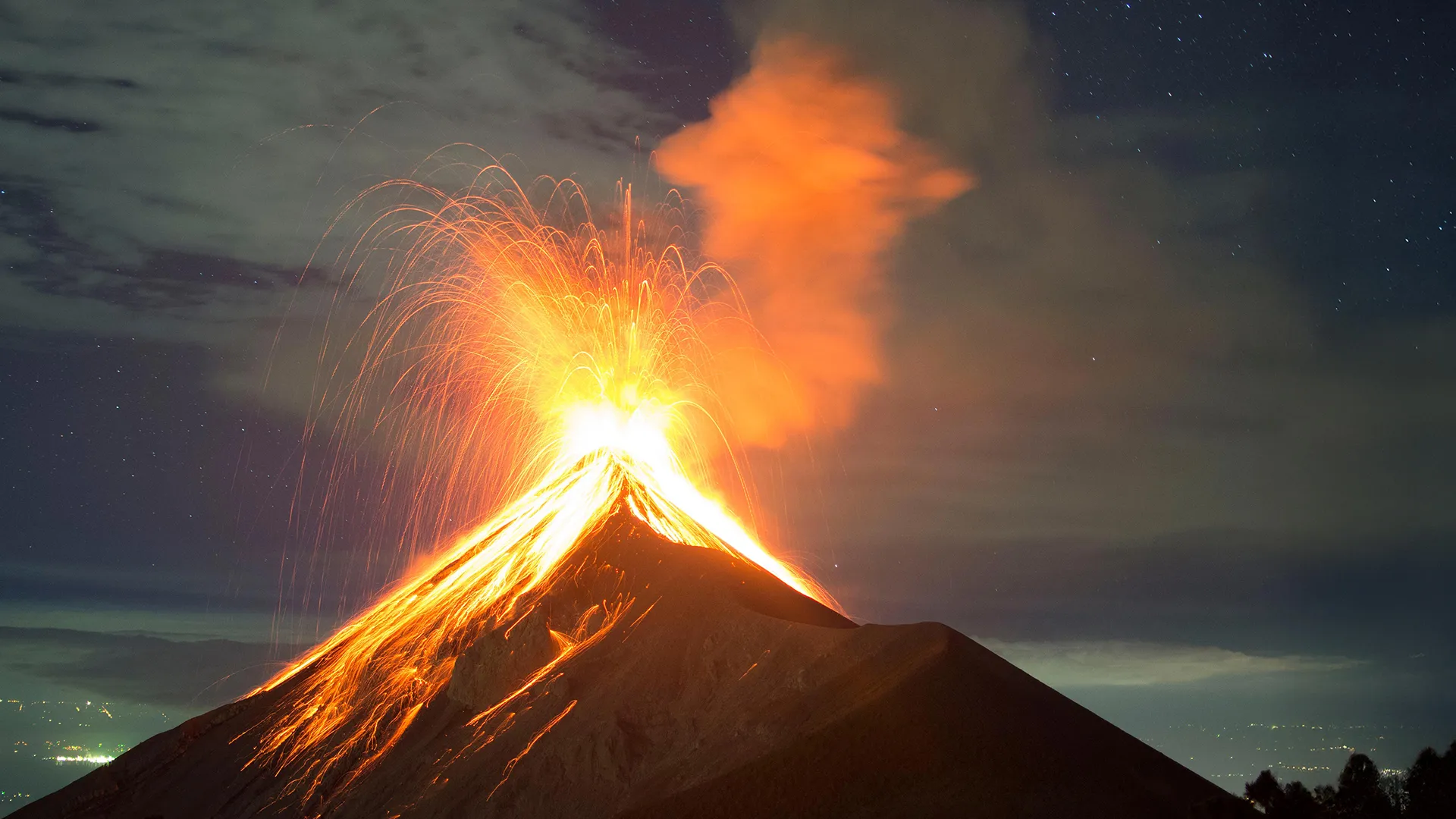
When volcanoes are preparing to erupt, scientists rely on typical signs to warn people living nearby: deformation of the ground and earthquakes, caused by underground chambers filling up with magma and volcanic gas. But some volcanoes, called ‘stealthy’ volcanoes, don’t give obvious warning signs. Now scientists studying Veniaminof, Alaska, have developed a model which could explain and predict stealthy eruptions.
“Despite major advances in monitoring, some volcanoes erupt with little or no detectable precursors, significantly increasing the risk to nearby populations,” said Dr Yuyu Li of the University of Illinois, lead author of the study in Frontiers in Earth Science. “Some of these volcanoes are located near major air routes or close to communities: examples include Popocatépetl and Colima in Mexico, Merapi in Indonesia, Galeras in Colombia, and Stromboli in Italy.
“Our work helps explain how this happens, by identifying the key internal conditions — such as low magma supply and warm host rock — that make eruptions stealthy.”
Warning signs
Veniaminof is an ice-clad volcano in the Aleutian Arc of Alaska. It’s carefully monitored, but only two of its 13 eruptions since 1993 have been preceded by enough signs to alert observing scientists. In fact, a 2021 eruption wasn’t caught until three days after it had started.
“Veniaminof is a case study in how a volcano can appear quiet while still being primed to erupt,” said Li. “It is one of the most active volcanoes in Alaska. In recent decades, it has produced several VEI 3 eruptions — moderate-sized explosive events that can send ash up to 15 km high, disrupt air traffic, and pose regional hazards to nearby communities and infrastructure — often without clear warning signs.”
To understand Veniaminof better, the scientists used monitoring data over three summer seasons immediately before the 2018 stealthy eruption, which produced only ambiguous warning signs immediately before it happened. They created a model of the volcano’s behavior in different conditions which would change the impact of a filling magma reservoir on the ground above: six potential volumes of magma reservoir, a range of magma flow rates and reservoir depths, and three shapes of reservoir. They then compared the models to the data to see which matched best, and which conditions produced eruptions, stealthy or otherwise.
Volcano by the numbers
They found that a high flow of magma into a chamber increases the deformation of the ground and the likelihood of an eruption. If magma is flowing quickly into a large chamber, an eruption may not occur, but if one does the ground will deform enough to warn scientists first. Similarly, a high flow of magma into a small chamber is likely to produce an eruption, but not a stealthy one. Stealthy eruptions become likely when a low flow of magma enters a relatively small chamber. Compared to observational data, the results suggest that Veniaminof has a small magma chamber and a low flow of magma.
The model also suggests that different conditions could produce different warning signs. Magma flowing into larger, flatter chambers may cause minimal earthquakes, while smaller, more elongated chambers may produce little deformation of the ground. But stealthy eruptions only happen when all the conditions are in place — the right magma flow and the right chamber size, shape, and depth.
However, when the scientists added temperature to their model, they found that if magma is consistently present over time so that the rock of the chamber is warm, size and shape matters less. If the rock is warm, it’s less likely to fail in ways that cause detectable earthquakes or deformation of the ground when magma flows into the chamber, increasing the likelihood of a stealthy eruption.
What next?
“To mitigate the impact of these potential surprise eruptions, we need to integrate high-precision instruments like borehole tiltmeters and strainmeters and fiber optic sensing, as well as newer approaches such as infrasound and gas emission monitoring,” said Li. “Machine learning has also shown promise in detecting subtle changes in volcanic behavior, especially in earthquake signal picking.”
At Veniaminof, taking measures to improve the coverage of satellite monitoring and adding tiltmeters and strainmeters could improve the rate of detection. In the meantime, scientists now know which volcanoes they need to watch most closely: volcanoes with small, warm reservoirs and slow magma flows.
“Combining these models with real-time observations represents a promising direction for improving volcano forecasting,” said Li. “In the future, this approach can enable improved monitoring for these stealthy systems, ultimately leading to more effective responses to protect nearby communities.”

Physicists at the University of Oxford have set a new global benchmark for the accuracy of controlling a single quantum bit, achieving the lowest-ever error rate for a quantum logic operation — just 0.000015%, or one error in 6.7 million operations. This record-breaking result represents nearly an order of magnitude improvement over the previous benchmark, set by the same research group a decade ago.
To put the result in perspective: a person is more likely to be struck by lightning in a given year (1 in 1.2 million) than for one of Oxford’s quantum logic gates to make a mistake.
The findings, published in Physical Review Letters, are a major advance towards having robust and useful quantum computers.
“As far as we are aware, this is the most accurate qubit operation ever recorded anywhere in the world,” said Professor David Lucas, co-author on the paper, from the University of Oxford’s Department of Physics. “It is an important step toward building practical quantum computers that can tackle real-world problems.”
To perform useful calculations on a quantum computer, millions of operations will need to be run across many qubits. This means that if the error rate is too high, the final result of the calculation will be meaningless. Although error correction can be used to fix mistakes, this comes at the cost of requiring many more qubits. By reducing the error, the new method reduces the number of qubits required and consequently the cost and size of the quantum computer itself.
Co-lead author Molly Smith (Graduate Student, Department of Physics, University of Oxford), said: “By drastically reducing the chance of error, this work significantly reduces the infrastructure required for error correction, opening the way for future quantum computers to be smaller, faster, and more efficient. Precise control of qubits will also be useful for other quantum technologies such as clocks and quantum sensors.”
This unprecedented level of precision was achieved using a trapped calcium ion as the qubit (quantum bit). These are a natural choice to store quantum information due to their long lifetime and their robustness. Unlike the conventional approach, which uses lasers, the Oxford team controlled the quantum state of the calcium ions using electronic (microwave) signals.
This method offers greater stability than laser control and also has other benefits for building a practical quantum computer. For instance, electronic control is much cheaper and more robust than lasers, and easier to integrate in ion trapping chips. Furthermore, the experiment was conducted at room temperature and without magnetic shielding, thus simplifying the technical requirements for a working quantum computer.
The previous best single-qubit error rate, also achieved by the Oxford team, in 2014, was 1 in 1 million. The group’s expertise led to the launch of the spinout company Oxford Ionics in 2019, which has become an established leader in high-performance trapped-ion qubit platforms.
Whilst this record-breaking result marks a major milestone, the research team caution that it is part of a larger challenge. Quantum computing requires both single- and two-qubit gates to function together. Currently, two-qubit gates still have significantly higher error rates — around 1 in 2000 in the best demonstrations to date — so reducing these will be crucial to building fully fault-tolerant quantum machines.
The experiments were carried out at the University of Oxford’s Department of Physics by Molly Smith, Aaron Leu, Dr Mario Gely and Professor David Lucas, together with a visiting researcher, Dr Koichiro Miyanishi, from the University of Osaka’s Centre for Quantum Information and Quantum Biology.
The Oxford scientists are part of the UK Quantum Computing and Simulation (QCS) Hub, which was a part of the ongoing UK National Quantum Technologies Programme.
The family of a woman who died in mental health care speak about their fight to hold staff accountable.
A NHS trust and hospital manager have been found guilty of health and safety failings over the death of Alice Figueiredo.
The US health secretary, a vaccine sceptic who has been criticised by health experts, said the panel was ‘plagued’ with conflicts of interest.
A medical tribunal has found a senior doctor’s failings amounted to gross negligence and misconduct.
Avoid relying on food pouches for everyday meals, says NHS website for first time.
