Brain activity under anesthesia challenges what we know about consciousness

Researchers at Baylor College of Medicine have discovered that the human brain can continue performing surprisingly advanced language tasks even when a person is fully unconscious under general anesthesia. The findings, published in Nature, challenge long held assumptions about the relationship between consciousness and cognition. They also offer new insights that could shape future research on memory, language, and brain-computer interfaces.

“Our findings show that the brain is far more active and capable during unconsciousness than previously thought,” said Dr. Sameer Sheth, professor and Cullen Foundation Endowed chair of neurosurgery and a McNair Scholar at Baylor. “Even when patients are fully anesthetized, their brains continue to analyze the world around them.”

Recording Brain Activity During Anesthesia

To investigate what the unconscious brain is capable of, Sheth and his colleagues recorded the activity of hundreds of individual neurons in the hippocampus, a brain region involved in memory. The recordings were made while patients undergoing epilepsy surgery were under general anesthesia. These procedures gave researchers a rare opportunity to study this part of the brain directly.

The team used Neuropixels probes, an advanced technology that had never before been used in the hippocampus for this type of research. This allowed them to observe how the brain responded to sounds and language even when patients had no conscious awareness.

The Brain Continued Processing Language

The first experiment exposed patients to a series of repeating tones with occasional unexpected sounds mixed in. The researchers found that neurons in the hippocampus consistently detected these unusual tones. Even more interesting, the brain became better at recognizing them over time, suggesting that learning or neural plasticity was still taking place during anesthesia.

The researchers then increased the complexity of the experiment by playing short stories while continuing to record brain activity. The hippocampus showed clear evidence of processing language in real time. Patterns of neural activity revealed that the brain could distinguish different parts of speech, including nouns, verbs, and adjectives.

The team also made another surprising discovery. Neural signals could be used to predict upcoming words before they were spoken.

“The brain appears to anticipate what comes next in a story, even without conscious awareness,” said Sheth, who is also Director of The Gordon and Mary Cain Pediatric Neurology Research Foundation Laboratories within the Duncan Neurological Research Institute at Texas Children’s Hospital.

“This kind of predictive coding is something we associate with being awake and attentive, yet it’s happening here in an unconscious state,” said Dr. Benjamin Hayden, professor of neurosurgery at Baylor.

Rethinking Consciousness

The findings suggest that important cognitive abilities, including language comprehension and prediction, may not depend on conscious awareness. Instead, consciousness itself may arise from communication across multiple brain regions rather than from activity within a single area such as the hippocampus.

The researchers also noted similarities between the brain’s predictive behavior and artificial intelligence (AI). Just as large language models generate text by anticipating the next word, the hippocampus appeared to make similar predictions during language processing. Understanding these shared principles could help scientists better understand both biological and artificial intelligence.

The work may also contribute to future communication technologies, including speech prosthetics designed for people who have lost the ability to speak.

“Can we use these signals to deploy and run a speech prosthetic for some of the parts of the brain that are damaged by stroke or injury? These are questions that we can now consider in relation to this part of the brain,” said Dr. Vigi Katlowitz, first author and a neurosurgery resident with Baylor.

More Research Is Needed

The researchers caution that the findings should be interpreted carefully. The study examined only one type of general anesthesia, so the results may not apply to other unconscious states such as sleep or coma. In addition, the research focused on a single brain region, and it remains unclear how broadly these processes occur throughout the brain.

“This work pushes us to rethink what it means to be conscious,” said Sheth. “The brain is doing much more behind the scenes than we fully understand.”


Share Button

These tiny soil microbes could rescue crops from salty farmland

Researchers have uncovered an unexpected natural ally that could help farmers tackle one of agriculture’s fastest growing challenges: salty soil.

A team including scientists from the University of East Anglia (UEA), led by Chinese researcher Dr. Yanfen Zheng, found that naturally occurring soil bacteria can significantly improve plants’ ability to survive in saline conditions.

The study also uncovered a previously unknown way these microbes protect crops such as maize, tomato, and rapeseed from salt stress. The discovery could eventually help farmers grow food on land that has become too salty for conventional agriculture.

Soil salinity threatens global agriculture

Salt buildup in farmland is becoming an increasingly serious problem because of climate change, irrigation practices, and rising sea levels. As salt accumulates in soil, it stunts plant growth, damages roots, and can sharply reduce crop yields.

Prof Jonathan Todd, from UEA’s School of Biological Sciences and the Quadram Institute on the Norwich Research Park, said: “The build-up of salt in farmland is a major and worsening problem — driven by climate change, irrigation and rising sea levels.

“Salt chokes plant growth, damages roots and severely impact entire harvests — putting global food supplies at risk.

“We know that plants rely on communities of microbes around their roots, called the root microbiome, to help them cope with environmental stress. But exactly how these relationships work, and whether they are consistent across crops and soils, has remained largely unclear.

“We found that plants appear to recruit beneficial bacteria in salty soil conditions, which in turn trigger internal changes that strengthen their physical structure and resilience.

“If scientists can harness this natural process, it could mark the beginning of a new era in climate-resilient agriculture.”

Root microbes drawn to salt stressed plants

To better understand these plant and microbe partnerships, the researchers examined root microbiomes from multiple crop species grown in different soil types.

They discovered that a group of naturally occurring bacteria known as pseudomonads consistently gathered around plant roots exposed to salt stress. The same pattern appeared across several crops, including maize, tomato, and rapeseed, suggesting this is a widespread biological response rather than something unique to a single plant.

Genetic analyses also explained why these bacteria perform so well in salty environments.

Prof Todd said: “Compared to other microbes, pseudomonads carry specialized genes that help them tolerate high salt levels, including sodium transport systems and other stress-resistance mechanisms.”

Stronger roots and higher yields

The team then introduced selected pseudomonad strains to soybean plants. In both greenhouse studies and field trials, the bacteria successfully colonized the roots and substantially improved plant growth under salty conditions.

“We found that plants treated with the microbes showed stronger root systems, better development and higher yields compared to untreated plants grown in salty soils,” said Prof Todd.

An unexpected plant defense

The researchers were surprised to discover that the bacteria were not helping plants by reducing salt levels inside their tissues.

“The most surprising thing was finding out how the bacteria helped plants cope.

“For decades, it was thought that plants survive salinity by controlling sodium levels -essentially keeping harmful salt out. But we found no evidence that bacteria influenced sodium transport or ion balance.

“Instead of helping plants manage salt directly, the bacteria stimulated the plant to produce more of a substance called lignin.

“Roots of bacteria-treated plants showed a significant increase in lignin content, with some measurements rising by over 30 percent under salt stress.”

Lignin strengthens plants naturally

Lignin is a strong, woody material that forms part of plant cell walls. It acts like a built in support system, reinforcing plant tissues and helping them withstand environmental stress.

The researchers identified the key genes responsible for increasing lignin production. When those genes were artificially overexpressed, plants performed much better in salty soil.

By contrast, plants that were unable to produce lignin did not benefit from the bacteria, showing that lignin production is essential to the newly discovered protective effect.

Prof Todd said: “We hope this discovery opens up new possibilities for agriculture.

“By harnessing naturally occurring microbes like pseudomonads, bio-based treatments could be developed that help crops grow in saline soils without heavy chemical inputs.

“With vast areas of farmland already affected by salinity and more under threat, microbial solutions could become an essential tool for maintaining crop yields and ensuring food security.”

The findings were published in the journal Science Advances in the paper, “Pseudomonads associated to salt-stressed plants facilitate stress adaption of soybean through enhanced lignin biosynthesis.”

Share Button

Over one million children referred for mental healthcare – with anxiety the main reason

Demand is soaring beyond capacity, meaning children in England wait years for help with various conditions.

Share Button

Loved and loathed: The making of India’s viral liver doctor

Dr Cyriac Abby Philips has built a large online following, but often clashes with India’s traditional medicine specialists.

Share Button

Catherine completes Three Peaks Challenge to ‘explore life beyond’ cancer diagnosis

The Princess of Wales did the endurance event to raise awareness about “holistic healthcare” for cancer patients.

Share Button

Hawaii is turning ocean plastic and fishing nets into roads

Hawaii faces a growing plastic waste challenge. Recycling on the islands is expensive and difficult, and large amounts of marine debris continue to wash ashore or remain in surrounding waters. Now, researchers are exploring an innovative solution by turning discarded fishing nets and household plastic waste into asphalt for roads. Early results suggest the approach could provide a practical new destination for plastics that might otherwise end up in landfills or the ocean.

Jeremy Axworthy, a researcher at the Center for Marine Debris Research (CMDR) at Hawaiʻi Pacific University, presented the findings at the spring meeting of the American Chemical Society (ACS).

“This work investigates whether it’s responsible to use recycled plastics in Hawaii’s roads,” shares Axworthy. “By reusing plastic waste that is already in Hawaii, we can reduce the environmental and economic impacts of transporting waste plastics from the islands, incinerating it or dumping it in Hawaii’s overflowing landfills.”

Why Hawaii Is Testing Recycled Plastic Roads

Since 2020, most roads in Hawaii have been built using polymer-modified asphalt (PMA), which is designed to improve strength and durability. Compared with conventional asphalt, PMA is more flexible and better able to resist cracking, rutting, and water damage, making it well suited to Hawaii’s tropical climate.

To make PMA, pellets of styrene-butadiene-styrene (SBS; a type of copolymer) are melted into a sticky petroleum-based asphalt binder. That binder is then mixed with heated aggregates (rocks and sand), coating the material before it is laid as pavement.

Researchers wondered whether some of the virgin polymer could be replaced with discarded plastics. They also wanted to know whether roads made with recycled plastics would perform well and whether they might release microplastics or other chemicals into the environment. Those questions led the Hawaii Department of Transportation (HDOT) to partner with environmental chemist Jennifer Lynch, director of CMDR and leader of the research team.

Recycling Fishing Nets Into Asphalt

HDOT asked Lynch’s team to tackle two key tasks. The first was to supply abandoned fishing nets collected from Hawaii’s waters for use in experimental recycled plastic asphalt.

“Foreign plastic derelict fishing gear is the largest contributor of Hawaii’s marine debris problem,” shares Lynch. “To date, CMDR’s Bounty Project, which pays a financial reward to licensed commercial fishers for marine debris removal, has removed 84 tons of large, derelict fishing gear from the Pacific Ocean.”

The second goal was to determine whether pavement made with recycled plastic released more microplastics than standard SBS-modified asphalt.

“CMDR’s laboratory is equipped with state-of-the-art chemical instrumentation for quantifying and characterizing microplastics in environmental samples,” explains Lynch. “This capability is incredibly unique and impactful, especially when coupled to our marine debris-removal project and our mission to recycle the debris into long-term, locally necessary infrastructure products.”

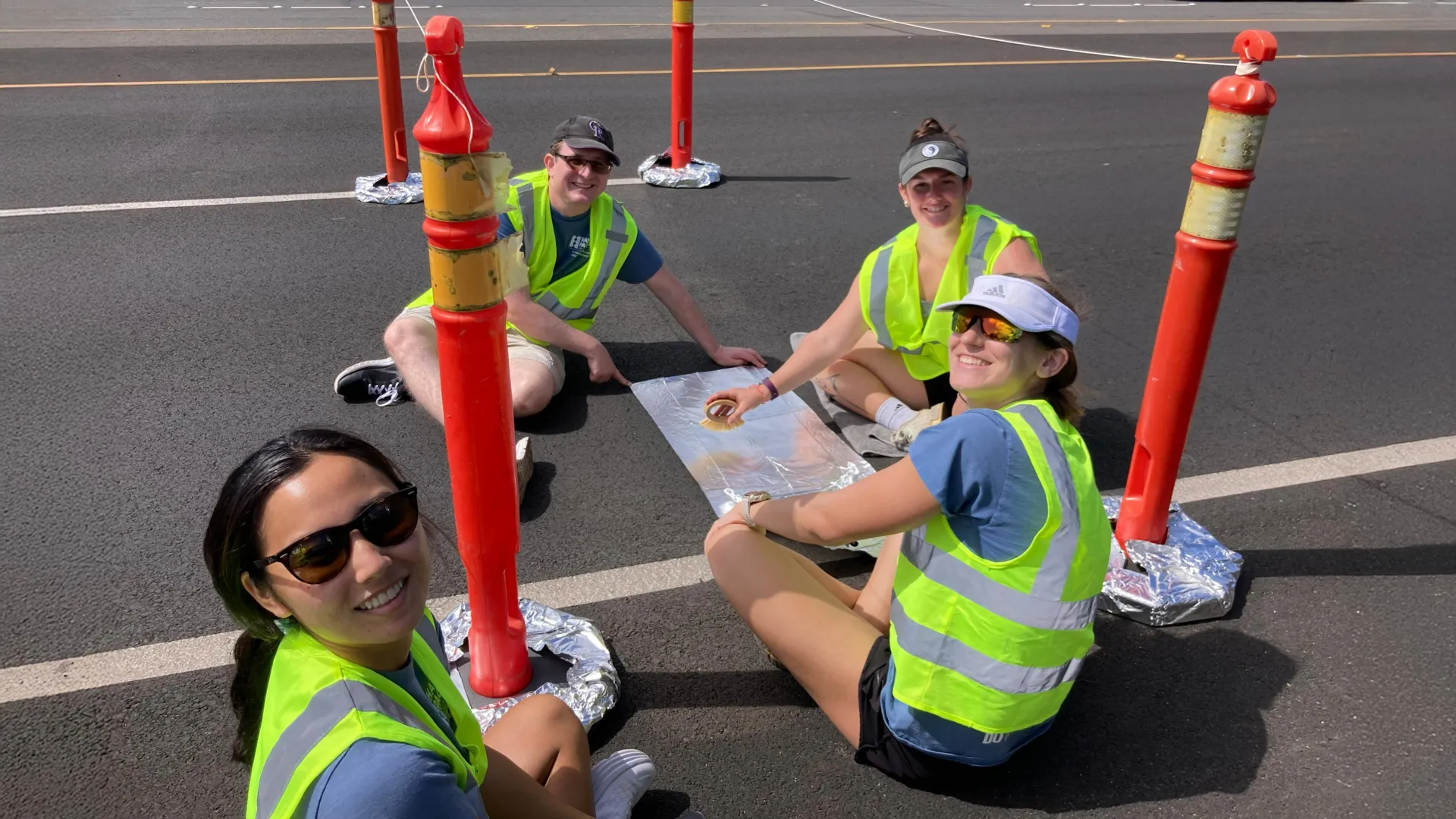
After a U.S. company processed the recovered plastics into materials suitable for asphalt production, HDOT moved the project into the real world. A local paving company resurfaced sections of a residential street on Oahu using three different asphalt mixtures: one with standard SBS, one containing recycled polyethylene from Honolulu’s residential recycling program, and one made with polyethylene recovered from discarded fishing nets.

About 11 months later, Lynch’s team returned to collect road dust from each section so they could measure any microplastic released into the surrounding environment.

Measuring Microplastic Shedding

The scientists separated different types of polymers from the road dust, including microplastics, larger plastic fragments, and tire rubber. They then used pyrolysis gas chromatography-mass spectrometry (Py-GC-MS) to determine where the materials came from. The analysis identified styrene and butadiene from standard PMA, polyethylene from recycled plastic and fishing net pavements, and isoprene and butadiene rubber from vehicle tires.

Early findings showed that pavement containing recycled polyethylene did not release more polymers than conventional SBS pavement. The same pattern appeared in laboratory performance testing and in simulated stormwater collected from the experimental road sections.

Although researchers detected microplastic-sized particles, only a very small number were identified as polyethylene, regardless of which pavement type they came from. The researchers believe this is because the plastic becomes blended into the asphalt binder. As the road wears over time, the particles that break away are made up of rock, asphalt binder, and polymer together rather than plastic by itself.

The team is also comparing polymer release from the pavement with the amount of tire material found in road dust.

“In our initial Py-GC-MS data,” continues Lynch, “we saw tire wear swamps the signal of polyethylene by orders of magnitude, like gigantic peaks! We had to search the weeds of the chromatogram to find signs of polyethylene.”

A Possible New Future for Plastic Waste

More testing is still needed to evaluate how well these recycled plastic roads hold up over the long term. Even so, the researchers believe the approach could eventually reduce both landfill waste and marine debris across Hawaii.

“Some people think plastic recycling is a hoax — that it doesn’t work; it’s too challenging,” Lynch shares. “But this work demonstrates that recycling can work when society prioritizes sustainability.”

The research was funded by the Hawaii Department of Transportation.

Meeting

ACS Spring 2026

Title

Harvesting ocean plastics to pave hawaiian roads: Evaluation of microplastic and plastic additive release from asphalt incorporating recycled plastic from various waste streams

Abstract

Polymer modified asphalt (PMA) is used to increase strength and durability of roads. In Hawaii, PMA is typically produced using the virgin co-polymer styrene-butadiene-styrene (SBS). Recycled plastics, such as high-density polyethylene (HDPE), may also be added to asphalt serving to sequester plastic waste. In the state of Hawaii, derelict fishing gear (DFG) is a significant problem, yet it is also a source of HDPE that can be used in recycling. However, asphalt performance and the consequences of adding recycled polymers to asphalt are not well understood. In collaboration with the Hawaii Department of Transportation (HDOT) and the University of Hawaii (UH), the Center for Marine Debris Research (CMDR) are testing the feasibility of using recycled HDPE in asphalt by quantifying microplastics and plastic additives release from roads paved with asphalts made from different combinations of virgin and recycled polymers. The specific asphalt combinations being tested are: SBS (Control-PMA), DFG with and without SBS (DFG-PMA and DFG-neat), Local Waste recycled HDPE with and without SBS (LW-PMA and LW-neat), and Commercially Available, post-industrial recycled HDPE with and without SBS (CA-PMA and CA-neat). Microplastic and plastic additive release under laboratory conditions were performed using a Hamburg Wheel Tracker Test (HWTT) with water sample analyses. Field trials were conducted on a residential road on the island of Oahu, Hawaii. Road dust was swept and analyzed for microplastics by direct analysis and solvent extraction to separate bound plastic from asphalt and plastic additives by water extraction. Microplastic samples utilized pyrolysis gas chromatography mass spectrometry for analysis. Plastic additives are subjected to solid phase extraction with analysis by gas chromatography mass spectrometry. Results produced using these novel analytical methods provide guidance on the use of recycled plastics over virgin plastics in roadways. Moreover, results of this study may provide a viable end of life fate for plastic marine debris, leading to cleaner and healthier oceans.

Share Button

Scientists discover what triggers belly fat as we age

Many people notice a familiar change as they get older: the waistline gradually expands, even when overall body weight does not change dramatically. This increase in abdominal fat is more than a cosmetic concern. Excess belly fat has been linked to slower metabolism, accelerated aging, type 2 diabetes, heart disease, and other chronic health problems.

Scientists have long known that body composition changes with age, but exactly why fat tends to accumulate around the midsection has remained unclear.

Now, researchers at City of Hope have identified what may be a key biological driver of age-related belly fat. Their findings, published in the journal Science, point to a newly identified type of stem cell that appears during aging and may help fuel the production of new fat cells. The discovery could eventually lead to new strategies for reducing abdominal fat and promoting healthier aging.

“People often lose muscle and gain body fat as they age — even when their body weight remains the same,” said Qiong (Annabel) Wang, Ph.D., the study’s co-corresponding author and an associate professor of molecular and cellular endocrinology at City of Hope’s Arthur Riggs Diabetes & Metabolism Research Institute, a leading center for diabetes research. “We discovered aging triggers the arrival of a new type of adult stem cell and enhances the body’s massive production of new fat cells, especially around the belly.”

Looking Beyond Enlarged Fat Cells

The research team worked with scientists at UCLA and conducted a series of experiments in mice that were later supported by studies of human cells.

Their investigation focused on white adipose tissue (WAT), the body’s primary fat-storage tissue. White adipose tissue is responsible for storing excess energy and is a major contributor to weight gain and belly fat accumulation.

Scientists have long known that existing fat cells can become larger as people age. However, the researchers suspected that another process might also be contributing to expanding waistlines: the creation of entirely new fat cells.

If true, that would mean aging fat tissue could continue growing not just by enlarging existing cells, but by constantly adding new ones.

To test this idea, the team studied adipocyte progenitor cells (APCs), a type of stem cell found within fat tissue. These cells serve as precursors that can mature into fully developed fat cells.

Older Stem Cells Produced Far More Fat

The researchers transplanted APCs from both young and older mice into a separate group of young mice.

The results were striking. APCs taken from older animals generated large numbers of new fat cells.

The opposite experiment produced a very different outcome. When APCs from young mice were transplanted into older mice, they generated relatively few new fat cells.

This suggested that the ability to aggressively produce fat was built into the older APCs themselves and did not depend on the age of the animal receiving them.

To understand what was happening at a molecular level, the researchers used single-cell RNA sequencing, a technique that allows scientists to examine gene activity in individual cells.

The analysis revealed that APCs were relatively quiet in young mice. In middle-aged mice, however, these cells became highly active and began producing large numbers of new fat cells.

“While most adult stem cells’ capacity to grow wanes with age, the opposite holds true with APCs — aging unlocks these cells’ power to evolve and spread,” said Adolfo Garcia-Ocana, Ph.D., the Ruth B. & Robert K. Lanman Endowed Chair in Gene Regulation & Drug Discovery Research and chair of the Department of Molecular & Cellular Endocrinology at City of Hope. “This is the first evidence that our bellies expand with age due to the APCs’ high output of new fat cells.”

Discovery of a New Age-Related Stem Cell

The scientists found that aging did more than simply activate APCs.

As mice reached middle age, some APCs transformed into a newly identified stem cell population called committed preadipocytes, age-specific (CP-As).

These cells appeared specifically during aging and proved especially effective at producing new fat cells. Their emergence may help explain why older mice gained more fat as they aged.

The researchers then searched for the biological signals controlling this process.

They identified an important signaling pathway known as leukemia inhibitory factor receptor (LIFR). Signaling pathways are communication systems that allow cells to receive instructions and coordinate their behavior. In this case, LIFR appeared to play a major role in helping CP-A cells multiply and develop into fat cells.

“We discovered that the body’s fat-making process is driven by LIFR. While young mice don’t require this signal to make fat, older mice do,” explained Wang. “Our research indicates that LIFR plays a crucial role in triggering CP-As to create new fat cells and expand belly fat in older mice.”

Similar Fat-Producing Cells Found in Humans

To determine whether the findings might apply beyond mice, the team analyzed human tissue samples from people of different ages using the same single-cell RNA sequencing approach.

The researchers identified cells that closely resembled the newly discovered CP-As. These cells were found in greater numbers in tissue from middle-aged individuals.

The human CP-As also showed a strong ability to generate new fat cells, suggesting that a similar biological process may occur in people.

“Our findings highlight the importance of controlling new fat-cell formation to address age-related obesity,” said Wang. “Understanding the role of CP-As in metabolic disorders and how these cells emerge during aging could lead to new medical solutions for reducing belly fat and improving health and longevity.”

A Potential New Target for Age-Related Obesity

Although more research is needed, the discovery provides scientists with a promising new target for future therapies.

Researchers now plan to track CP-A cells in animal studies, investigate how these cells behave in humans, and explore ways to block or eliminate them. If successful, such approaches could potentially help prevent the accumulation of belly fat that commonly accompanies aging.

The study’s first authors were City of Hope researcher Guan Wang, Ph.D., and UCLA researcher Gaoyan Li, Ph.D.

Share Button

Tributes paid to pioneering gynaecological surgeon

Prof Christopher Balogun-Lynch was “pivotal” in the development of Milton Keynes University Hospital.

Share Button

Woman found cancer after requesting mammogram at 79

Carol Turansky says it was only discovered after she contacted the breast cancer screening unit.

Share Button

Astronomers found two rare super puff planets lighter than cotton candy

Astronomers have identified two of the fluffiest giant planets ever discovered, with densities so low they are actually less dense than cotton candy. The rare pair of “super-puff” planets was found by an international team led by the University of Oxford, working with Université Côte d’Azur/Observatoire de la Côte d’Azur and the University of Birmingham. The findings were published in Monthly Notices of the Royal Astronomical Society.

The newly confirmed planets, TOI-791 b and TOI-791 c, orbit an F7-type dwarf star about 1,110 light years from Earth in the southern constellation Volans. Although each planet is about the size of Jupiter, both are remarkably lightweight for their size.

TOI-791 b has a density of just 0.038 grams per cubic centimeter, while TOI-791 c measures 0.047 grams per cubic centimeter. Jupiter, by comparison, has an average density of 1.33 grams per cubic centimeter, making it roughly 28 to 35 times denser than these newly discovered worlds.

The comparison becomes even more striking when measured against candy floss, which has a typical density of about 0.05 grams per cubic centimeter. Earth is much denser still, averaging 5.5 grams per cubic centimeter.

Rare Planetary Twins Locked in a Gravitational Dance

Scientists believe the two planets formed together from the same disc of gas and dust surrounding their young star, making them planetary “siblings.”

They are also linked by an unusual orbital arrangement called a 5:3 mean-motion resonance. For every five orbits completed by the inner planet, the outer planet finishes almost exactly three. As they circle their star, their gravity repeatedly pulls on one another, creating small but measurable changes in the timing of each planet’s transit.

Only four other planetary systems are known to contain multiple super-puff planets, making TOI-791 an exceptionally rare opportunity to investigate how these unusual worlds originate and evolve.

Lead author Dr. George Dransfield (she/her) (Department of Physics, University of Oxford and a presenter for BBC Sky at Night) said:

“Only a handful of these super-puffy planets are known, and it is even rarer to find two in the same system. Their extremely low densities make them fascinating targets for understanding how planetary systems form and evolve.”

Citizen Scientists Helped Find the Planets

Volunteers participating in the Planet Hunters TESS citizen-science project first flagged TOI-791 b in 2019 and TOI-791 c in 2023 as possible planets. The project searches observations collected by NASA’s Transiting Exoplanet Survey Satellite (TESS) for signs of previously unknown worlds.

Researchers then combined measurements from telescopes around the world to determine the planets’ sizes and masses, allowing them to calculate their exceptionally low densities.

When a planet crosses in front of its star during a “transit,” it blocks a small amount of starlight. That dip in brightness reveals the planet’s size. In the TOI-791 system, astronomers also detected tiny changes in the timing of the transits caused by the planets’ gravitational interactions. Analyzing those timing variations allowed the team to estimate each planet’s mass.

Antarctica Played a Key Role

The discovery was built on eight years of observations, including data from the ASTEP (Antarctic Search for Transiting ExoPlanets) telescope at Concordia Station in Antarctica. The telescope is jointly operated by researchers from Université Côte d’Azur/Observatoire de la Côte d’Azur and international collaborators.

Antarctica’s long winter nights gave astronomers a major advantage. Months of uninterrupted darkness made it possible to observe the planets’ unusually long transits, each lasting more than 11 hours, without interruption. According to the researchers, these are the longest continuous planetary transits ever fully observed from the ground.

How Do Super-Puff Planets Form?

Scientists are still trying to understand how super-puff planets develop.

One leading explanation is that these worlds possess enormous atmospheres rich in hydrogen and helium that account for a large fraction of their total mass. Researchers think these thick gaseous envelopes may have formed when the planets were much farther from their star, in colder regions of the protoplanetary disc where gas could rapidly accumulate around a solid planetary core.

Future observations are planned to better understand the origins of these unusual planets and test competing theories.

Professor Amaury Triaud (University of Birmingham), the UK Principal Investigator of ASTEP and co-author of the study, said:

“This system offers a unique laboratory for understanding how super-puff planets form and evolve. We propose to carry out space-based observations using the James Webb Space Telescope to assess if the puffy atmosphere contains carbon-, nitrogen-, and oxygen-bearing species, revealing new insight into how these unusual planets formed.”

Professor Tristan Guillot (Université Côte d’Azur), Principal Investigator of ASTEP and co-author of the study, added:

“These multi-planetary systems are complex, with gravitational interactions between the planets that evolve over very long periods, tens of years or more. This discovery highlights the importance of continued international collaboration in astronomy. Bringing together observations from Antarctica, space telescopes and observatories across several continents was essential to revealing the true nature of these extraordinary planets.”

Share Button