More people have become ill in an outbreak of salmonella food poising.


More people have become ill in an outbreak of salmonella food poising.
Grammy award-winning soprano Angel Bluehow discusses how a recent health diagnosis has affected her.

Astronomers now have their strongest evidence yet that Betelgeuse, one of the best-known stars in the night sky, has a stellar companion. A team led by French astronomer Miguel Montargès used the European Southern Observatory’s Very Large Telescope (ESO’s VLT) to capture the clearest image so far of what is believed to be Betelgeuse B, a star orbiting the famous red supergiant.
“This is the conclusion of a century-long quest,” says Montargès.
“We have shown that Betelgeuse is not single, it is accompanied by a faint stellar companion,” says Montargès, astronomer at the Observatoire de Paris — PSL, France, and lead author of the study published today in Astronomy & Astrophysics.
Betelgeuse — a reddish star in the Orion constellation that is easily visible with the naked eye and is known to change in brightness — has been watched by people for thousands of years. Even after centuries of scientific observation, however, the star continues to produce surprises.
A Century-Long Search for Betelgeuse B
“I jumped from my chair when I saw the processed images,” recalls Montargès.
The possibility that Betelgeuse has a companion was first raised roughly a century ago as a potential explanation for some of its changes in brightness. Despite decades of observations, astronomers had been unable to clearly detect such a star.
That changed after Two studies published in 2024 made strong predictions about where the suspected companion should be. The studies indicated that Betelgeuse B would reach its greatest apparent separation from Betelgeuse in December 2024, giving astronomers their best opportunity to see it.
Montargès and his colleagues observed Betelgeuse with ESO’s VLT that December. They then spent several months carefully processing and analyzing the observations.
“Honestly, I thought we did not have the sensitivity to detect Betelgeuse B as it was predicted,” explains Montargès. “Because it is more massive than predicted, we see it!”
Scientists had initially estimated that the companion would have roughly the same mass as the Sun. The new observations instead suggest that Betelgeuse B is considerably larger, with about two to three times the Sun’s mass.
“The fact that we can still discover a nearby companion, more massive and brighter than the Sun, around such a well-studied star is remarkable,” says Montargès. “These are among the best moments in science: seeing something new, unexpected.”
The Clearest Image Yet of Betelgeuse’s Companion
The researchers directly imaged Betelgeuse B, meaning they detected light coming from the companion itself. They accomplished this using the SPHERE instrument on ESO’s VLT in Chile’s Atacama Desert.
Previous observations had already provided clues that the companion existed, including a possible direct detection made with the Gemini North Telescope in Hawaiʻi, USA. The latest VLT observations, however, provide the strongest evidence so far and the clearest image yet of Betelgeuse B.
“It is remarkable to see how SPHERE and advanced post-processing techniques, originally developed to find exoplanets, also excel at detecting a companion around a massive, evolved star like Betelgeuse,” says co-author Anthony Boccaletti, also an astronomer at the Observatoire de Paris.
The case is not considered completely closed yet. Astronomers want another observation showing the candidate companion where its orbit predicts it should next appear.
“To be certain that the companion is really there, we still need to observe it in one year on the other side of the star, but there is very little space left for doubt,” adds Montargès.
Betelgeuse’s Famous Dimming Event
Betelgeuse attracted worldwide attention several years ago when its brightness noticeably dropped. Because the evolved supergiant is expected to eventually end its life in a supernova explosion, the dramatic dimming prompted speculation that the star might be preparing to explode.
That turned out not to be the explanation. A team led by Montargès studied the star with ESO’s VLT and found that a cloud of dust was instead blocking part of Betelgeuse’s light.
Now the likely discovery of Betelgeuse B introduces another factor astronomers must consider when studying the star’s evolution.
Could the Companion Affect Betelgeuse’s Supernova?
Researchers will now investigate whether Betelgeuse B could influence the future evolution of the red supergiant, including its eventual supernova explosion.
“The question is truly opened whether this companion is going to have an impact on the evolution of the red supergiant,” concludes Montargès.
The research was presented in a paper titled “VLT/SPHERE images the candidate companion of Betelgeuse” to appear in Astronomy & Astrophysics.
The team is composed of M. Montargès (Laboratoire d’Instrumentation et de Recherche en Astrophysique, Observatoire de Paris, Université PSL, Sorbonne Université, Université Paris Cité, CY Cergy Paris Université, CNRS, France [LIRA]), A. Boccaletti (LIRA), O. Flasseur (Universite Claude Bernard Lyon 1, Centre de Recherche Astrophysique de Lyon UMR5574, ENS de Lyon, CNRS, France), A. de Koter (University of Amsterdam, Anton Pannekoek Institute for Astronomy, The Netherlands), J. Milli (Univ. Grenoble Alpes, CNRS, IPAG, France), P. Kervella (French-Chilean Laboratory for Astronomy, IRL 3386, CNRS and U. de Chile, Chile and LIRA), S. Ridgway (National Optical Astronomy Observatory, USA), E. Bordier (I. Physikalisches Institut der Universität zu Köln, Germany), E. Lagadec (Université Côte dAzur, Observatoire de la Côte dAzur, CNRS, Laboratoire Lagrange, France), A. K. Dupree (Center for Astrophysics-Harvard & Smithsonian, USA), F. Backs (Institute of Astronomy, KU Leuven, Belgium), T. Calderwood (American Association of Variable Star Observers, USA [AAVSO]), and P. Morgan (AAVSO).
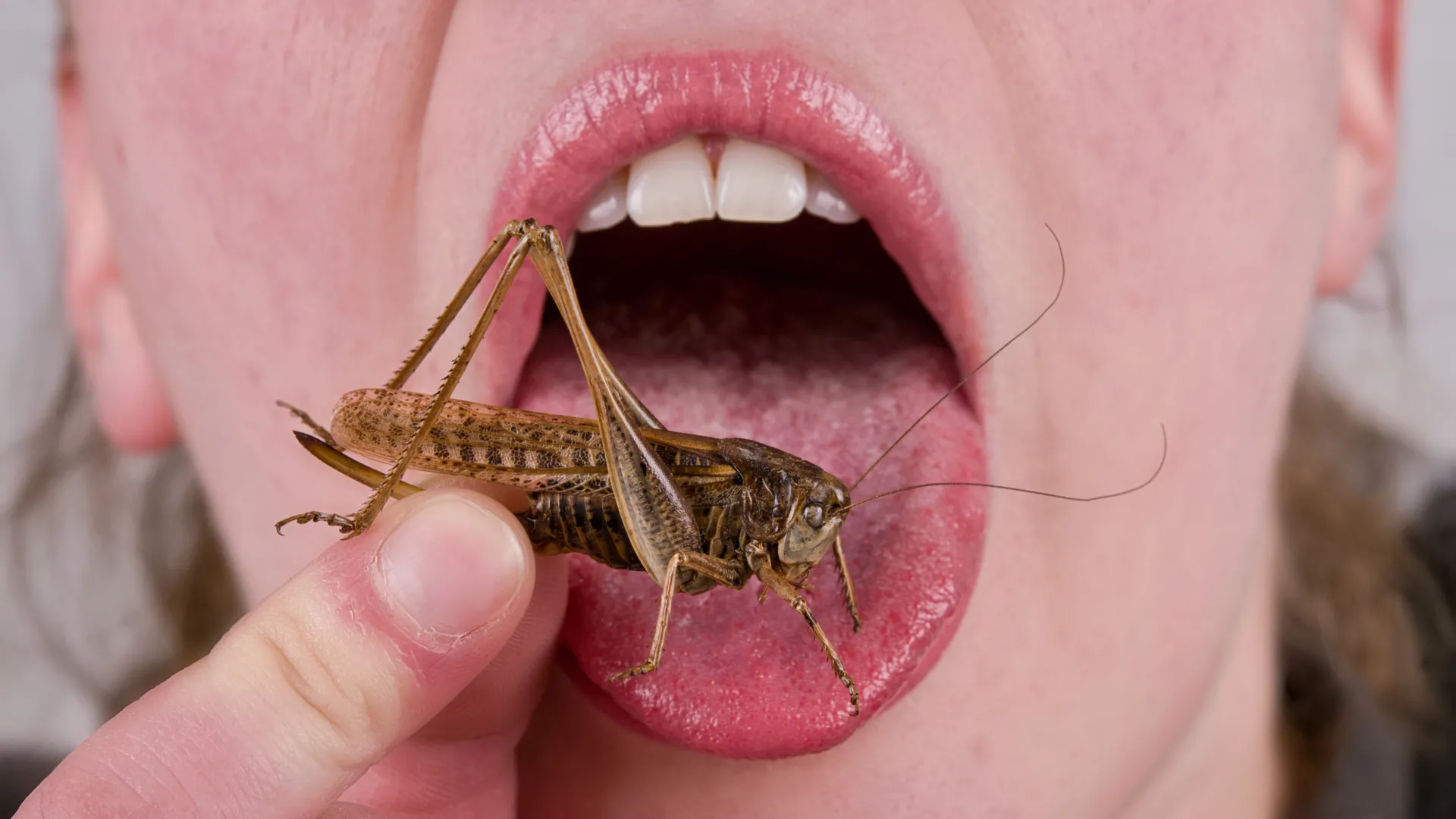
As the global population grows and climate change places increasing pressure on food systems, researchers and policymakers are looking more closely at alternative sources of nutrition. Insects are one possible option. A total of 1,611 insect species are classified as edible, and organizations including the Food and Agriculture Organization of the United Nations (FAO) have highlighted insects as a potentially sustainable food source.
Even so, many Western societies remain strongly resistant to entomophagy, or eating insects, despite the fact that hundreds of millions of people around the world already include insects in their diets. Culture may help explain that reluctance, but scientists have not known how far back it goes or what other forces may have shaped it.
Researchers from the Institute of Evolutionary Biology (IBE), a joint center of the Spanish National Research Council (CSIC) and Pompeu Fabra University (UPF), have now used genomic evidence to reconstruct patterns of insect consumption stretching back thousands of years. Their findings, published in Science Advances, indicate that eating insects was probably occasional and accidental in Europe, Central and East Asia, while it appears to have been more common in tropical regions and among Neanderthals. The work offers new insights into human evolution, ecology, and modern attitudes toward insect-based foods.
Ancient Teeth Reveal Insect Eating in Eurasia
To search for direct signs of insect consumption, the IBE researchers examined 745 samples of dental calculus (tartar) from anatomically modern humans dating back as far as 33,000 years. Dental tartar can trap and preserve DNA from species that were regularly eaten, providing researchers with a record of ancient diets.
The results suggest that modern humans living in northern Eurasia did not regularly eat insects. The team also examined genes involved in breaking down chitin, a major component of insect exoskeletons. Among North Eurasian populations, chitinase genes contain mutations associated with a reduced ability to digest insect exoskeletons. That genetic pattern has persisted for roughly 9,000 years, dating back to the rise of agriculture.
“The scarce presence of insects in the diet of northern Eurasians suggests that the absence of entomophagy is not solely due to recent cultural factors, but also to a long ecological and evolutionary history,” says Pablo Librado, principal investigator at the IBE who led the study.
Neanderthals Show More Evidence of Eating Insects
The picture was different for Neanderthals. Although they lived in many of the same environments as anatomically modern humans, their dental calculus contained considerably more insect DNA.
The amount detected in Neanderthal samples was similar to levels found in western chimpanzees, which use insects to supplement their diets on the savanna, particularly during droughts.
Among the most common genetic traces in Neanderthal tartar were remains from Diptera, the insect group that includes flies and mosquitoes. Mosquito DNA was especially abundant. The results support a recent hypothesis that Neanderthals may have regularly eaten animal carcasses containing fly larvae.
The strong presence of mosquito remains also lends support to the idea that prey carcasses may sometimes have been stored in ponds or marshy environments, where mosquitoes would have laid their eggs.
Genetic evidence points in the same direction. Neanderthal chitinase genes appear to have supported more efficient insect digestion, a pattern also detected in the only Denisovan specimen included in the analysis.
Tropical Populations Retained Insect-Digesting Genes
The researchers also investigated genes involved in digesting the chitin found in insect exoskeletons. These genes are active in the stomach and produce the enzymes chitinase acid (CHIA) and chitobiase (CTBS).
Across both ancient and modern samples, populations living closer to tropical regions were more likely to carry genetic variants associated with higher expression of these enzymes.
“Large quantities of insects need to be ingested to compensate for the high caloric expenditure involved in their collection. In the tropics, there is a greater availability of social insects, such as termites and locusts: their biomass and diversity allow for sustainable exploitation throughout the year, which even contributes to pest control,” explains Manuel Piñero, a predoctoral researcher at the IBE and first author of the study.
As human populations expanded toward higher latitudes, expression of these digestive enzymes gradually declined. The geographic pattern has remained in place for at least 9,000 years and appears to reflect the gradual abandonment of insect eating among European populations.
Why Insect Eating Declined in Europe
The findings suggest that Western reluctance to eat insects may have roots that extend far beyond recent customs or religious traditions.
“Beyond cultural or religious factors, our results suggest that the reduced availability of insects in non-tropical areas may have been a key factor in the abandonment of entomophagy, leading to a reduced capacity to digest insect exoskeletons,” Librado comments.
In other words, ecology may have helped shape both dietary behavior and human biology. In regions where insects were less abundant and harder to collect in large quantities, they may simply have become less worthwhile as a food source over time.
Could Insects Return to the Menu?
Modern food production changes that equation. Industrial processing can make it possible to use the nutritional benefits of insects without requiring people to directly digest as much of the chitin in their exoskeletons. Insect farming also makes large-scale production possible.
The Ancient Population Genomics research group led by Pablo Librado at the IBE is now studying how insect domestication develops. Researchers are using species recently approved for human consumption as models and comparing the genomes of farmed insects with those of pre-domestication individuals preserved in entomological collections.
“We investigate the evolution of domestication in animals, which also gives us information to improve the exploitation of insects for consumption, both as animal feed and for human consumption,” Librado concludes.
Close to 500 people have become ill with salmonella linked to imported eggs, say UK authorities who are investigating more clusters.
From the first hint of cold winter mornings, supermarkets and pharmacies begin heavy marketing to coax us to stock up on vitamin C to get through the cold and flu season.
But where did that idea come from?
As we’ll see, it’s a story including a Nobel Prize winner, a book and some claims that don’t quite stack up.
Linus Pauling was a chemist from the United States who won two Nobel Prizes. One was in 1954 for chemistry, for his research into chemical bonds. The other was in 1962 for peace, for his activism against nuclear weapons testing.
He was not a dietitian or an infectious disease physician. But that didn’t stop him publishing a book on vitamin C and colds in 1970. This book is widely credited with the skyrocketing sales of vitamin C at the time, a trend that continues today.
In this book, Pauling said we should consume high doses of vitamin C, around 1,000–2,000 milligrams a day for good health, and even more to prevent a cold.
His recommendations were said to be initially from one placebo-controlled trial in children on a ski camp in the Swiss Alps. He then analyzed a further four studies conducted after his claims.
But his interpretation of these studies has been widely criticized. There were incorrect mathematical analyses, reliance on four poor-quality trials and the overemphasis of the study in children.
The short answer is not really. Multiple studies conducted since the ones Pauling analyzed show that if there is an effect on vitamin C and colds, it’s minimal. Even then, any marginal benefits are only under certain circumstances, such as if you’re an athlete or in the army.
One study, published in 2023, was a meta-analysis that combined the results of ten placebo-controlled trials. These looked at the effect of vitamin C on the severity and duration of colds. In total, these trials involved 2,736 healthy people (adults, children and athletes) who regularly took at least 1,000mg of vitamin C a day, not just when they had a cold.
Overall, the researchers found people who took vitamin C had a 15% reduction in severe cold symptoms compared to those who didn’t take it. This was expressed as the number of days “confined indoors,” which the authors acknowledged as a limitation. Vitamin C did not affect how long mild symptoms lasted.
A meta-analysis in 2013 found taking lower doses (at around 200mg a day) did not decrease the number of colds in the general population. However, there were fewer colds for athletes and army personnel.
Similar to the other study, regular vitamin C supplements showed a reduction in severity of symptoms in children and adults by 8–14%. However, taking vitamin C at the start of the cold had no benefit.
So, from these two meta-analyses, Pauling’s original advice is over-stated. There is no evidence vitamin C will reduce your risk of catching a cold.
There is some evidence it will reduce how long severe symptoms last, but on average only by about 10%. So if severe symptoms from a cold last for five days, it will reduce severe symptoms by about 12 hours. If the severe symptoms last for 24 hours, they will reduce by about two-and-a-half hours.
Taking vitamin C when symptoms start will have no effect. You need to be taking it regularly, even before you get sick.
Pauling’s recommendation for good health, at around 1,000–2,000mg a day, is around the upper limit of what’s now considered safe to consume.
Australia has not set an upper limit for vitamin C, due to inconclusive evidence. But guidelines refer to other expert recommendations for adults to not consume more than 1,000mg a day. In the United States, the upper limit for adults is 2,000mg a day.
Pauling’s recommendation is also much higher than the recommended daily intake in Australia and other countries. For adults over 19 in Australia, this is 45mg.
This is what you would find in half an orange, three to four florets of cooked broccoli or one-third of a glass of orange juice.
Taking high doses of vitamin C (over 1,000mg a day) continually can increase your risk of adverse events such as:
If you feel you would benefit from vitamin C supplements, discuss this with your GP. You should limit the dose to below 1,000mg a day and be mindful of the side effects.
Remember less than 4% of Australians are deficient in vitamin C.
A team looked at 80 major trials involving nearly 30,000 people and found that nicotine vapes were more effective than traditional aids, increasing the success rate by about 60 percent.
Jersey’s government launches a three-month trial clinic to help women with the ovarian syndrome.
The approach focuses on the patient priorities, seeing the same clinicians, and involving people close to them.
Without brain surgery guided by live AI assistance, Rhys Hibbert could have lost his sight to a tumour.
