The woman, 35, says she was praying for a baby and was “overjoyed” to be “blessed with five at once”.


The woman, 35, says she was praying for a baby and was “overjoyed” to be “blessed with five at once”.
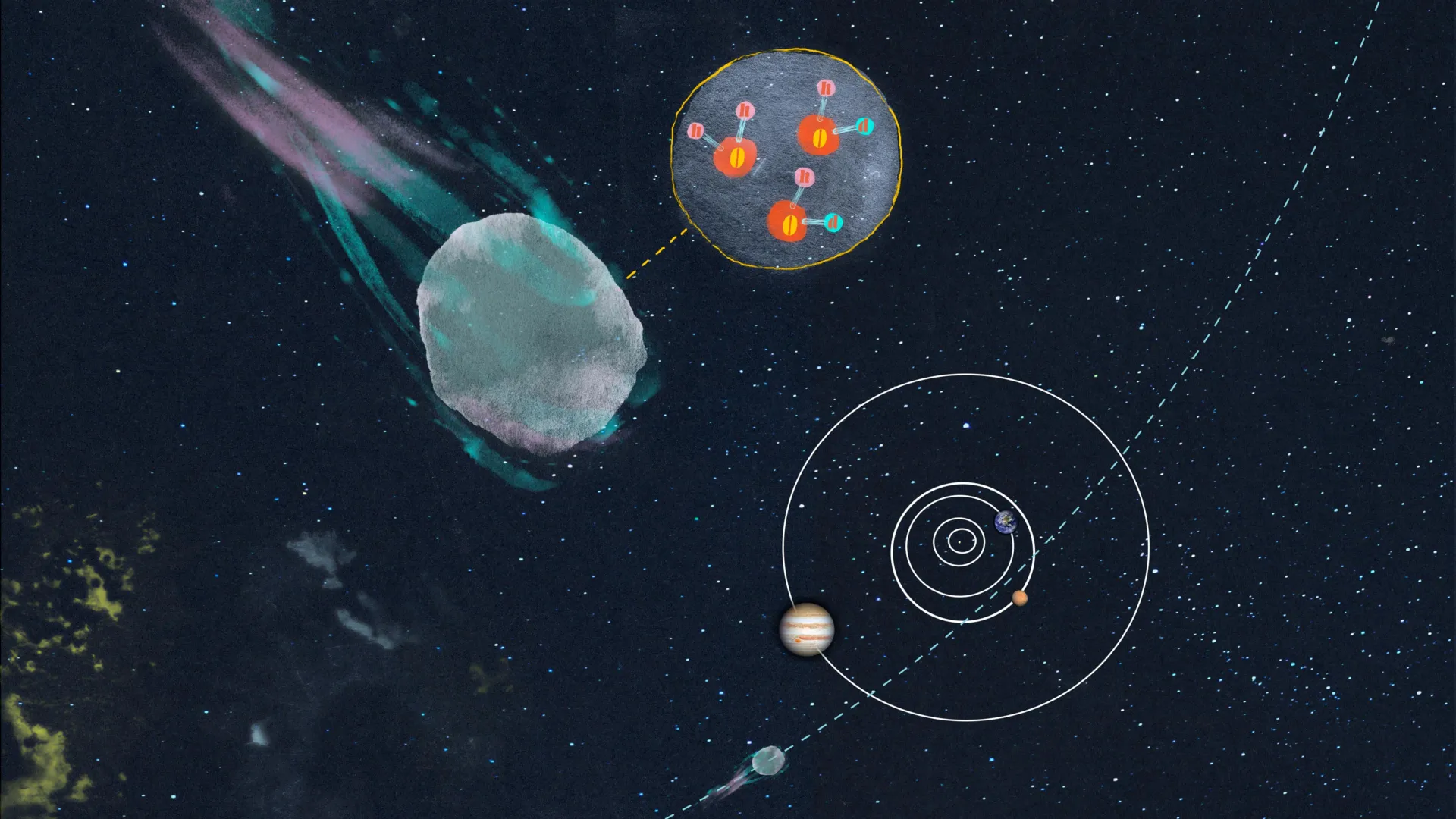
Less than a year ago, astronomers spotted a comet passing through our solar system that originated far beyond it. The object, known as 3I/ATLAS, is only the third confirmed interstellar visitor ever detected, and scientists are now uncovering clues about the alien environment where it formed.
A new study led by researchers at the University of Michigan suggests the comet was born in conditions far colder than those that shaped our own solar system. The findings come from an analysis of the comet’s unusual water composition, which revealed extraordinarily high levels of deuterium, a heavier form of hydrogen.
The research was published in the journal Nature Astronomy and received support from NASA, the U.S. National Science Foundation and Chile’s National Research and Development Agency.
“Our new observations show that the conditions that led to the formation of our solar system are much different from how planetary systems evolved in different parts of our galaxy,” said Luis Salazar Manzano, lead author of the study and a doctoral student in the U-M Department of Astronomy.
Alien Comet Contains Unusual “Heavy Water”
Water molecules are made up of two hydrogen atoms and one oxygen atom, giving water its familiar H2O formula. In ordinary water, hydrogen atoms contain only a proton. But some forms of water contain deuterium, an isotope of hydrogen that includes both a proton and a neutron.
Researchers discovered that 3I/ATLAS contains an exceptionally high amount of this deuterium-rich water. While small amounts of heavy water exist on Earth and in comets within our solar system, the levels found in 3I/ATLAS were dramatically higher.
“The amount of deuterium with respect to ordinary hydrogen in water is higher than anything we’ve seen before in other planetary systems and planetary comets,” Salazar Manzano said.
According to the researchers, the deuterium ratio in the comet was about 30 times higher than what has been measured in comets from our solar system and roughly 40 times higher than the ratio found in Earth’s oceans.
Clues About a Frozen Birthplace
Scientists use deuterium levels as a kind of chemical fingerprint that reveals the conditions present when celestial objects formed. By comparing these ratios with those found closer to home, researchers can infer what kind of environment produced the comet.
The team concluded that 3I/ATLAS likely formed in a much colder region with lower radiation levels than the environment that created the planets and comets in our solar system.
“This is proof that whatever the conditions were that led to the creation of our solar system are not ubiquitous throughout space,” said Teresa Paneque-Carreño, co-leader of the study and assistant professor of astronomy at U-M. “That may sound obvious, but it’s one of those things that you need to prove.”
How Scientists Studied 3I/ATLAS
The researchers said the study was only possible because astronomers detected 3I/ATLAS early enough for detailed follow-up observations.
After the discovery, Salazar Manzano and collaborators secured observing time at the MDM Observatory in Arizona, where they detected some of the first signs of gas emissions from the comet (MDM stands for Michigan, Dartmouth and the Massachusetts Institute of Technology, the observatory’s original partners).
Salazar Manzano then teamed up with Paneque-Carreño, who brought expertise using the Atacama Large Millimeter/submillimeter Array, or ALMA, in Chile. ALMA’s instruments are sensitive enough to distinguish deuterated water from ordinary water, allowing the team to precisely measure the ratio between the two.
The researchers say this marks the first time scientists have successfully performed this type of water analysis on an interstellar object.
“Being at the University of Michigan and having access to these facilities was the key to making this work possible,” Salazar Manzano said. “We were part of a team that was very talented and very experienced in multiple areas, all of us complemented each other and that’s what allowed us to analyze and interpret these data sets.”
More Interstellar Visitors Could Be Found
The study also demonstrates that astronomers may soon be able to chemically analyze additional interstellar objects to better understand how planetary systems form across the galaxy.
So far, scientists have identified only three known interstellar objects entering our solar system, but researchers expect that number to rise as more advanced observatories begin searching the skies.
Paneque-Carreño emphasized that preserving dark night skies will be essential for spotting these faint visitors.
“We need to be taking care of our night skies and keeping them clear and dark so we can detect these tiny and faint objects,” she said.
Additional support for the research came from the Michigan Society of Fellows and the Heising-Simons Foundation. ALMA is operated through a partnership involving the European Southern Observatory, the NSF and Japan’s National Institutes of Nature Sciences in cooperation with the Republic of Chile.
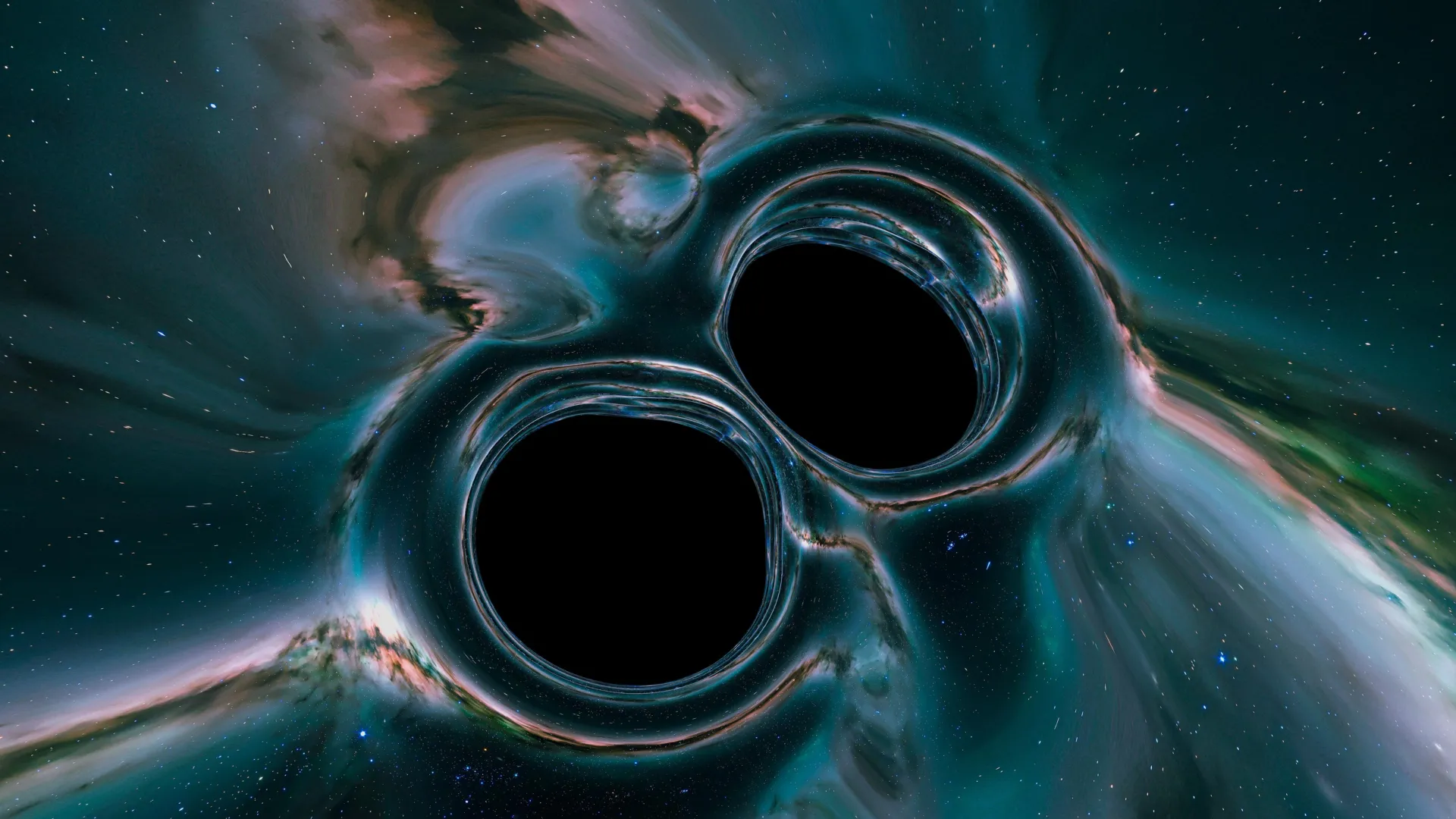
Scientists studying gravitational waves believe they may have uncovered how the Universe creates its biggest black holes. Instead of forming directly from collapsing stars, these enormous objects appear to grow through repeated black hole collisions inside extremely crowded star clusters.
The new research, led by Cardiff University, examined version 4.0 of LIGO-Virgo-KAGRA’s Gravitational-Wave Transient Catalog (GWTC4), which contains 153 reliable detections of merging black holes.
Researchers focused on whether the largest black holes in the catalog could be “second-generation” objects. In this scenario, black holes formed from dying stars collide with each other, then merge again in dense stellar environments where stars are packed up to a million times more tightly than around our Sun.
The findings, published in Nature Astronomy, suggest the most massive black holes detected through gravitational waves belong to a separate class with a very different history from smaller black holes.
Gravitational Waves Reveal Two Black Hole Populations
“Gravitational-wave astronomy is now doing more than counting black hole mergers,” explains lead author Dr. Fabio Antonini from Cardiff University’s School of Physics and Astronomy.
“It is starting to reveal how black holes grow, where they grow, and what that tells us about the lives and deaths of massive stars. This is exciting because we can use the information to test our understanding of how stars and clusters evolve in the Universe.”
By analyzing the gravitational-wave signals, the team identified two distinct groups:
Researchers say the spin behavior of the heavier black holes was especially revealing.
“What surprised us most was how clearly the high-mass black holes stand out as a separate population,” recalls co-author Dr. Isobel Romero-Shaw, Ernest Rutherford Fellow at Cardiff University.
“Unlike the lower-mass systems we analyzed, which were generally slowly-spinning, the higher-mass systems are consistent with having more rapid spins, oriented in seemingly random directions. This is the exact signature you would expect if black holes were repeatedly merging in dense star clusters.
“That makes the cluster origin much more compelling than it was with earlier catalogs.”
Evidence for the Black Hole “Mass Gap”
The study also strengthens evidence for a mysterious “mass gap” predicted by astrophysicists for decades. According to this theory, stars above a certain size should explode so violently that they are destroyed completely instead of collapsing into black holes.
This would create a forbidden range where black holes formed directly from stars should not exist.
The researchers identified this transition in black holes with masses around 45 times greater than the Sun.
Dr. Antonini said: “In our study we find evidence for the long-predicted pair-instability mass gap — a range of masses where stars are not expected to leave behind black holes at all. Gravitational-wave detectors have successfully found black holes that appear to sit in or near that gap, which we identify at around 45 solar masses.
“So, the key question now is are these black holes telling us that our models of stellar evolution are wrong, or are they being made in another way?
“The biggest black holes in the current sample seem to be telling us about cluster dynamics, not just stellar evolution.
“Above about 45 solar masses the spin distribution changes in a way that is hard to explain with normal stellar binaries alone but is naturally explained if these black holes have already been through earlier mergers in dense clusters.”
Black Holes Could Help Scientists Study Nuclear Physics
The researchers say the discoveries may eventually help scientists investigate processes deep inside massive stars.
The team used the transition near the mass gap to study an important nuclear reaction linked to helium burning in stellar cores.
“In the future, gravitational-wave data may help scientists study nuclear physics, because the mass limit set by pair instability depends on the nuclear reactions taking place in the cores of massive stars,” added co-author Dr. Fani Dosopoulou, a research associate at Cardiff University.
The condition affects one in 10 women in the UK and can cause debilitating pain and infertility.
Lucy Woodham answers your questions on the outbreak of hantavirus on board a cruise ship
Some passengers potentially exposed to hantavirus have already taken flights to numerous countries.
The origin of the outbreak is still unknown, with the World Health Organisation saying investigations are “still under way”.
Two survivors who caught the hantavirus years earlier told the BBC they both felt lucky to be alive.
When should we worry that our snoring might be the sign of a larger problem?
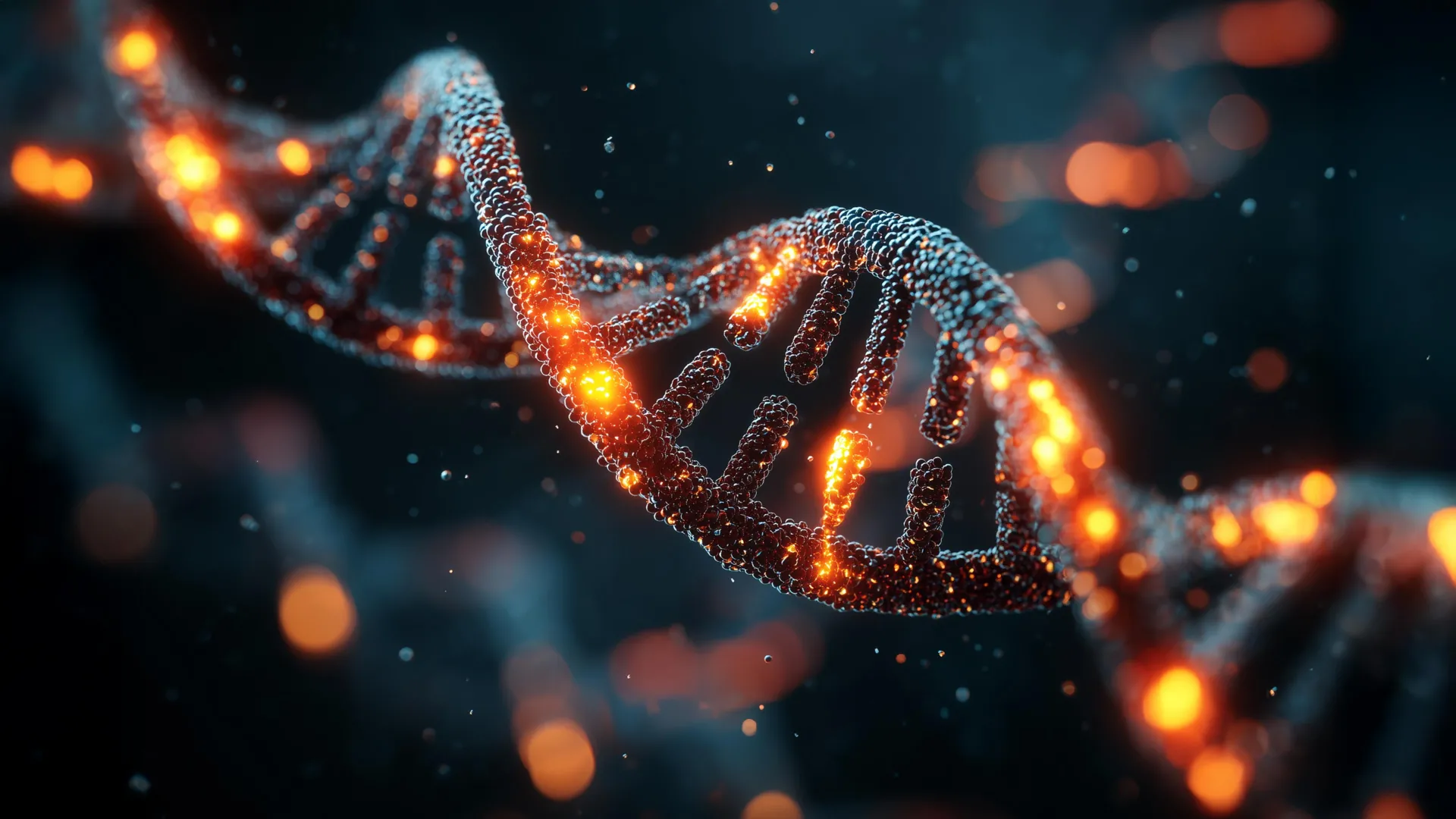
A test designed to push the limits of single cell DNA sequencing ended up revealing something far more surprising: a microscopic organism from a pond at Oxford University Parks appears to use the genetic code in a way scientists had not seen before.
Dr. Jamie McGowan, a postdoctoral scientist at the Earlham Institute, was studying the genome of a protist collected from freshwater. The goal was practical. Researchers wanted to test a DNA sequencing pipeline that could work with extremely small amounts of DNA, including DNA from a single cell.
Instead, the team found an unexpected genetic outlier. The organism, identified as Oligohymenophorea sp. PL0344, turned out to be a previously unknown species with a rare change in how it reads DNA instructions and builds proteins. The PLOS Genetics study reported that two codons normally associated with gene stopping signals had been reassigned to different amino acids, a combination the researchers described as previously unreported.
“It’s sheer luck we chose this protist to test our sequencing pipeline, and it just shows what’s out there, highlighting just how little we know about the genetics of protists.”
A Tiny Organism With a Big Genetic Surprise
Protists are difficult to define neatly because they are so diverse. Many are microscopic, single celled organisms, including amoebas, algae, and diatoms. Others are much larger and multicellular, such as kelp, slime molds, and red algae.
“The definition of a protist is loose — essentially it is any eukaryotic organism which is not an animal, plant, or fungus,” said Dr. McGowan. “This is obviously very general, and that’s because protists are an extremely variable group.
“Some are more closely related to animals, some more closely related to plants. There are hunters and prey, parasites and hosts, swimmers and sitters, and there are those with varied diets while others photosynthesize. Basically, we can make very few generalizations.”
Oligohymenophorea sp. PL0344 belongs to a group called ciliates. These swimming protists can be seen under a microscope and are found in many watery environments. Ciliates have become especially interesting to geneticists because they are known hotspots for genetic code changes, including changes involving stop codons.
When Genetic Stop Signs Change Meaning
In most living things, three stop codons tell the cell where a gene ends: TAA, TAG, and TGA. These work like punctuation marks in the genetic instructions, signaling that protein construction should stop.
The genetic code is usually described as nearly universal because most organisms use the same basic rules. Variations do occur, but they are rare. In the small number of known genetic code variants, TAA and TAG usually change together and usually end up meaning the same thing. That pattern suggested the two codons were evolutionarily linked.
“In almost every other case we know of, TAA and TAG change in tandem,” explained Dr. McGowan. “When they aren’t stop codons, they each specify the same amino acid.”
This organism did something different. In Oligohymenophorea sp. PL0344, only TGA appears to function as a stop codon. The other two signals have been repurposed. TAA specifies lysine, while TAG specifies glutamic acid. The researchers also found more TGA codons than expected, which may help compensate for the loss of the other two stop signals. The PLOS Genetics paper reported that the remaining UGA stop codon is enriched just after coding regions, suggesting it may help prevent harmful readthrough when translation continues too far.
“This is extremely unusual,” Dr. McGowan said. “We’re not aware of any other case where these stop codons are linked to two different amino acids. It breaks some of the rules we thought we knew about gene translation — these two codons were thought to be coupled.
“Scientists attempt to engineer new genetic codes — but they are also out there in nature. There are fascinating things we can find, if we look for them.
“Or, in this case, when we are not looking for them.”
How Cells Read DNA Instructions
DNA can be thought of as a set of instructions, but the instructions must be copied and interpreted before they have an effect. First, a gene is transcribed into RNA. That RNA copy is then translated into amino acids, which are linked together to form proteins and other functional molecules.
Translation begins at the DNA start codon (ATG) and normally ends at a stop codon (normally TAA, TAG, or TGA). In this ciliate, that familiar ending system has been rearranged. The discovery shows that even one of biology’s most conserved systems can be more flexible than expected.
The team’s genome and transcriptome analysis also identified suppressor tRNA genes that match the reassigned codons, supporting the conclusion that the organism truly reads these former stop signals as amino acids. In the study, UAA was found to code for lysine and UAG for glutamic acid.
Later Work Shows Ciliates Are Genetic Rule Breakers
Follow up work has strengthened the idea that ciliates are unusually rich sources of genetic code surprises. In a 2024 PLOS Genetics study, researchers reported multiple independent reassignments of the UAG stop codon in phyllopharyngean ciliates. Some uncultivated ciliates from the TARA Oceans dataset appear to use UAG to encode leucine, while Hartmannula sinica and Trochilia petrani were found to use UAG to encode glutamine.
That later study also found that UAA remains the preferred stop codon in those phyllopharyngean ciliates, while UAG has repeatedly shifted into a protein coding role. The findings point to repeated changes in the genetic code across poorly studied microbial eukaryotes and reinforce the idea that ciliates are among the strongest exceptions to the standard genetic code.
Together, these discoveries suggest that the genetic code is not as fixed as it once seemed. For most organisms, the rules remain remarkably stable. But in overlooked microbial life, especially ciliates, evolution has repeatedly found ways to edit the instructions.
Funding and Publication
The original research was published in PLOS Genetics in 2023. It was funded by the Wellcome Trust as part of the Darwin Tree of Life Project and supported by the Earlham Institute’s core funding from the Biotechnology and Biological Sciences Research Council (BBSRC), part of UKRI. The publication reported sequencing data and genome assembly resources deposited in public repositories.
