Can solar storms trigger earthquakes? Scientists propose surprising link

Scientists at Kyoto University have developed a theoretical model examining whether disturbances in the ionosphere could apply electrostatic forces deep within the Earth’s crust. Under certain conditions, these forces might contribute to the start of large earthquakes.

The research is not designed to forecast earthquakes. Instead, it outlines a possible physical mechanism showing how shifts in ionospheric charge levels — triggered by intense solar activity such as solar flares — might interact with already weakened areas of the crust and influence how fractures develop.

How the Ionosphere Could Affect Fault Zones

In this model, cracked regions of the crust are thought to contain water at extremely high temperatures and pressures, possibly in a supercritical state. Electrically, these fractured zones may act like capacitors. They are coupled both to the Earth’s surface and to the lower ionosphere, creating a vast electrostatic system that links the ground to the upper atmosphere.

When solar activity surges, electron density in the ionosphere can rise significantly. This can produce a negatively charged layer in the lower ionosphere. Through capacitive coupling, that charge may generate intense electric fields inside microscopic voids within fractured rock. The resulting electrostatic pressure could approach levels similar to tidal or gravitational stresses that are already known to influence fault stability.

According to the team’s calculations, ionospheric disturbances tied to major solar flares — involving increases in total electron content of several tens of TEC units — might create electrostatic pressures of several megapascals within these crustal voids.

Ionospheric Anomalies Observed Before Major Quakes

Unusual ionospheric behavior has often been detected before powerful earthquakes. Observations have included spikes in electron density, drops in ionospheric altitude, and slower propagation of medium-scale traveling ionospheric disturbances. Traditionally, scientists have interpreted these changes as effects caused by stress building up inside the crust.

This new framework offers an additional perspective. It suggests a two way interaction in which processes inside the Earth can influence the ionosphere, while ionospheric disturbances may also send feedback forces back down into the crust. The model connects space weather and seismic activity without claiming that solar activity directly causes earthquakes.

Solar Activity and the 2024 Noto Peninsula Earthquake

The researchers point to recent major earthquakes in Japan, including the 2024 Noto Peninsula earthquake, as events that occurred shortly after periods of intense solar flare activity. They stress that this timing does not prove cause and effect. However, it aligns with the idea that ionospheric disturbances could act as a contributing factor when faults are already close to failure.

Rethinking Earthquakes Beyond Internal Forces

By drawing on plasma physics, atmospheric science, and geophysics, this approach expands the traditional view that earthquakes are driven solely by forces inside the planet. The findings indicate that tracking ionospheric conditions alongside underground measurements could improve understanding of how earthquakes begin and how seismic risk is assessed.

Future work will combine high-resolution GNSS-based ionospheric tomography with detailed space weather data. The goal is to determine when and how ionospheric disturbances might exert meaningful electrostatic effects on the Earth’s crust.


Share Button

190-million-year-old “Sword Dragon” fossil rewrites ichthyosaur history

A remarkably complete skeleton uncovered along the UK’s Jurassic Coast has been identified as a previously unknown species of ichthyosaur — a group of prehistoric marine reptiles that once dominated the world’s oceans.

The dolphin-sized creature, named Xiphodracon goldencapensis and nicknamed the “Sword Dragon of Dorset,” is the only known specimen of its species. Its discovery helps close a major gap in the fossil record and offers new insight into ichthyosaur evolution.

For more than two centuries, the Jurassic Coast has yielded thousands of ichthyosaur fossils, ever since pioneering fossil hunter Mary Anning began making historic finds there. However, this marks the first new genus of Early Jurassic ichthyosaur described from the region in more than 100 years.

Exceptionally Preserved 190-Million-Year-Old Fossil

The fossil was found near Golden Cap in 2001 by Dorset collector Chris Moore. Preserved in nearly perfect three-dimensional detail, the skeleton includes a skull with a huge eye socket and an elongated, sword-like snout. Researchers estimate the animal measured about three meters long and likely fed on fish and squid. There may even be traces of its final meal preserved within the remains. It is thought to be the most complete prehistoric reptile ever discovered from the Pliensbachian period.

The research was carried out by an international team of paleontologists led by ichthyosaur specialist Dr. Dean Lomax, an Honorary Research Fellow at The University of Manchester and an 1851 Research Fellow at the University of Bristol. Their findings appear in the journal Papers in Palaeontology.

Dr. Lomax said: “I remember seeing the skeleton for the first time in 2016. Back then, I knew it was unusual, but I did not expect it to play such a pivotal role in helping to fill a gap in our understanding of a complex faunal turnover during the Pliensbachian. This time is pretty crucial for ichthyosaurs as several families went extinct and new families emerged, yet Xiphodracon is something you might call a “missing piece of the ichthyosaur puzzle.” It is more closely related to species in the later Early Jurassic (in the Toarcian), and its discovery helps pinpoint when the faunal turnover occurred, being much earlier than expected.”

Solving an Evolutionary Mystery

After it was collected in 2001, the skeleton was acquired by the Royal Ontario Museum in Canada, where it joined one of the world’s largest ichthyosaur collections. Despite its importance, it had remained unstudied until now.

Ichthyosaurs from the Pliensbachian (193-184 million years ago) are extremely rare, making this specimen especially valuable. Scientists have long known that ichthyosaur species before and after this time period were very different from one another, even though they occupied similar ecological roles.

Co-author Professor Judy Massare of the State University of NY at Brockport explained: “Thousands of complete or nearly complete ichthyosaur skeletons are known from strata before and after the Pliensbachian. The two faunas are quite distinct, with no species in common, even though the overall ecology is similar. Clearly, a major change in species diversity occurred sometime in the Pliensbachian. Xiphodracon helps to determine when the change occurred, but we still don’t know why.”

Evidence of Injury and a Violent End

The skeleton also provides clues about the challenges of life in Jurassic seas. According to co-author Dr. Erin Maxwell of the State Museum of Natural History Stuttgart, several limb bones and teeth show abnormalities that suggest the animal suffered serious injury or illness while it was alive. The skull also appears to bear bite marks from a much larger predator — likely another large ichthyosaur — which may have caused its death.

Dr. Maxwell said: “This skeleton provides critical information for understanding ichthyosaur evolution, but also contributes to our understanding of what life must have been like in the Jurassic seas of Britain. The limb bones and teeth are malformed in such a way that points to serious injury or disease while the animal was still alive, and the skull appears to have been bitten by a large predator — likely another much larger species of ichthyosaur — giving us a cause of death for this individual. Life in the Mesozoic oceans was a dangerous prospect.”

Unique Features and a Fitting Name

Researchers identified several anatomical traits in Xiphodracon that have never been documented in any other ichthyosaur. One of the most unusual features is a distinctive bone near the nostril (called a lacrimal) that includes prong-like projections.

Dr. Lomax, author of the recent book “The Secret Lives of Dinosaurs,” said: “One of the coolest things about identifying a new species is that you get to name it! We opted for Xiphodracon because of the long, sword-like snout (xipho from Greek xiphos for sword) and dracon (Greek and Latin for dragon) in reference to ichthyosaurs being referred to as “sea dragons” for over 200 years.”

The study was published in the international journal Papers in Palaeontology. The fossil is expected to go on public display at the Royal Ontario Museum in Toronto, Canada.

Share Button

GPs to get £3,000 bonus to maximise weight loss drug prescriptions

Bid to improve access to Mounjaro in England, but experts warn eligibility still tightly restricted.

Share Button

First British baby born using transplanted womb from dead donor

Grace Bell, who was born without a viable womb, says her little boy is “simply a miracle”.

Share Button

A hidden force beneath the Atlantic ripped open a 500 kilometer canyon

On land, dramatic canyons such as the Grand Canyon are carved over time by flowing rivers. The ocean does not have rivers capable of cutting into rock on that scale. Even so, the seafloor hosts enormous features that surpass the size of the largest land canyons.

About 1,000 kilometers off the coast of Portugal lies one of the most striking examples. Known as the King’s Trough Complex, this vast underwater structure stretches roughly 500 kilometers and includes a series of parallel trenches and deep basins. At its eastern edge is Peake Deep, one of the deepest locations in the Atlantic Ocean.

What created such an immense formation? A team of international researchers led by the GEOMAR Helmholtz Centre for Ocean Research Kiel has uncovered new clues. Their findings appear in Geochemistry, Geophysics, Geosystems (G-Cubed), published by the American Geophysical Union (AGU).

“Researchers have long suspected that tectonic processes — that is, movements of the Earth’s crust — played a central role in the formation of the King’s Trough,” says lead author Dr. Antje Dürkefälden, marine geologist at GEOMAR. “Our results now explain for the first time why this remarkable structure developed precisely at this location.”

Seafloor Rifting Between Europe and Africa

The new research indicates that between about 37 and 24 million years ago, a plate boundary separating Europe and Africa temporarily passed through this part of the North Atlantic. As the tectonic plates shifted, the crust in this region was pulled apart and fractured, opening progressively from east to west, much like a zipper being undone.

An important piece of the puzzle lies even deeper. Before the plate boundary moved into the area, the oceanic crust there had already become unusually thick and heated. This condition resulted from hot material rising upward from Earth’s mantle. Known as a mantle plume, this steady column of molten rock originates far below the surface. The team believes this was an early offshoot of what is now the Azores mantle plume.

“This thickened, heated crust may have made the region mechanically weaker, so that the plate boundary preferentially shifted here,” explains co-author PD Dr. Jörg Geldmacher, marine geologist at GEOMAR. “When the plate boundary later moved further south towards the modern Azores, the formation of the King’s Trough also came to a halt.”

How Mantle Activity Shapes the Atlantic

The King’s Trough offers a clear example of how deep mantle processes and shifting tectonic plates interact. Activity far below the surface can prepare the crust for later deformation, influencing where major fractures and rifts eventually develop.

These findings also shed light on the broader geodynamic history of the Atlantic Ocean. Similar processes may still be underway today. Near the Azores, a comparable trench system called the Terceira Rift is forming in another region where the oceanic crust is unusually thick.

Mapping the King’s Trough

The conclusions are based on data collected during research expedition M168 aboard the research vessel METEOR in 2020, led by Antje Dürkefälden. The scientists used high resolution sonar to produce a detailed map of the seafloor. They then retrieved volcanic rock samples from several parts of the trench system using a chain bag dredge.

Back in the lab, the team examined the chemical makeup of the rocks. Selected samples were dated at the University of Madison (Wisconsin, USA). Additional bathymetric data came from the Portuguese research centre Estrutura de Missão para a Extensão da Plataforma Continental (EMEPC). Researchers from Kiel University and Martin Luther University Halle-Wittenberg also contributed to the study.

Share Button

Less sugar as a baby, fewer heart attacks as an adult

Limiting sugar consumption during early childhood may reduce the risk of serious heart problems later in life. A study published in The BMJ, based on data from the end of sugar rationing in the United Kingdom in 1953, found that people who consumed less sugar early on were less likely to develop conditions such as heart attack, heart failure, and stroke as adults.

The strongest protective effect, along with the greatest delay in the onset of heart disease — was observed among individuals whose sugar intake was restricted from conception (“in utero”) through about age 2.

Health experts have long suggested that the first 1000 days of life (from conception to around 2 years of age) represent a critical window when nutrition can influence long term health. Current guidelines recommend avoiding sugary drinks and ultra-processed foods (which often contain high amounts of sugar) as infants and toddlers begin eating solid foods.

A Natural Experiment Using UK Sugar Rationing

To explore whether limiting sugar during this early window affects future heart health, researchers took advantage of a unique historical event. Sugar rationing in the UK ended in September 1953, creating a natural comparison between children born before and after that policy change.

The analysis included 63,433 participants from the UK Biobank, with an average age of 55, who were born between October 1951 and March 1956 and had no prior history of heart disease. Of these, 40,063 were exposed to sugar rationing early in life, while 23,370 were not.

Researchers linked participants’ health records to monitor rates of cardiovascular disease (CVD), heart attack, heart failure, irregular heart rhythm (atrial fibrillation), stroke, and death from cardiovascular causes. The analysis accounted for genetic, environmental, and lifestyle factors that could influence heart health. An additional comparison group of adults born outside the UK, who did not experience sugar rationing or similar policy shifts around 1953, was also included to strengthen the findings.

Lower Cardiovascular Risk and Delayed Onset

The study found that longer exposure to sugar rationing corresponded with steadily lower risks of cardiovascular disease in adulthood. Part of this benefit appeared to stem from lower rates of diabetes and high blood pressure among those exposed to rationing early in life.

Compared with people who were never exposed to rationing, individuals exposed in utero plus 1-2 years had a 20% lower risk of CVD overall. They also had reduced risks of heart attack (25%), heart failure (26%), atrial fibrillation (24%), stroke (31%), and cardiovascular death (27%).

In addition to lower risk, heart problems tended to develop later. Those exposed to sugar rationing before birth and in early childhood experienced delays in the onset of cardiovascular conditions of up to two and a half years compared with those who were not exposed.

Researchers also observed modest but meaningful improvements in measures of healthy heart function among individuals who experienced rationing.

Sugar Limits and Modern Dietary Guidance

During the rationing period, sugar allowances for the entire population, including pregnant women and children, were capped at less than 40 g per day — and infants under age 2 were not allowed any added sugars. These limits align closely with today’s dietary recommendations for young children.

Because this was an observational study, it cannot prove that lower sugar intake directly caused better heart outcomes. The researchers note several limitations, including the lack of detailed individual dietary records and the possibility of recall bias.

Even so, they emphasize that the large scale and careful design of the study allowed them to compare different periods of exposure and examine potential pathways connecting early sugar intake with later cardiovascular health.

“Our results underscore the cardiac benefit of early life policies focused on sugar rationing. Further studies should investigate individual level dietary exposures and consider the interplay between genetic, environmental, and lifestyle factors to develop more personalized prevention strategies.”

Share Button

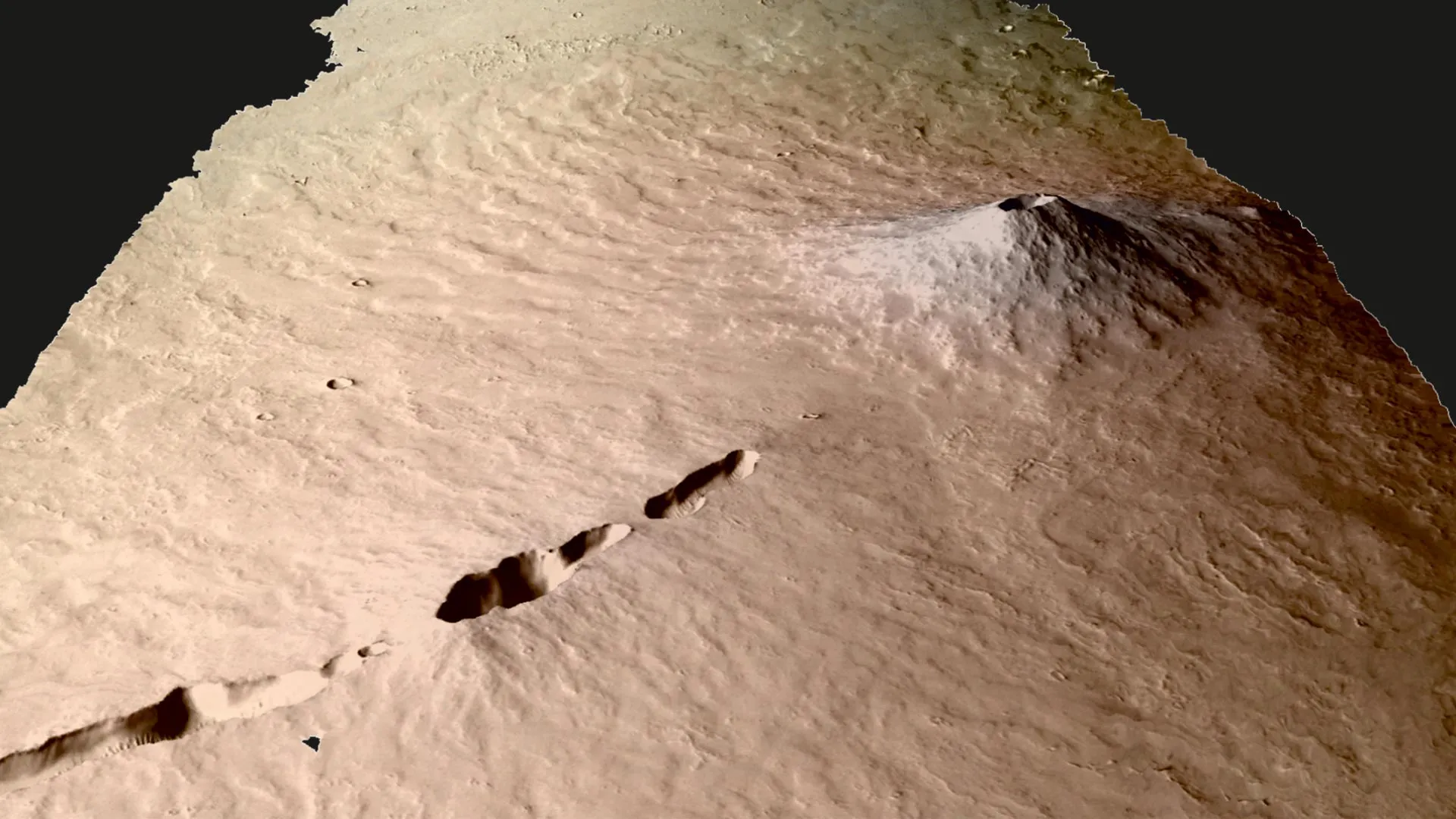
Young Mars volcano hides a powerful magma engine beneath the surface

Volcanic eruptions that look like single events are often the visible outcome of slow, complicated activity taking place deep underground. Beneath the surface, magma shifts position, changes chemically, and can sit for long stretches before finally erupting. To piece together what is happening below, scientists examine lava flows, rock textures, and minerals left behind at the surface. These clues help reveal the hidden magma systems that drive volcanic activity.

A recent study published in Geology shows that this same complexity exists on Mars. High resolution images of the landscape and mineral measurements collected from orbit indicate that some of the planet’s youngest volcanic regions have a much more detailed history than previously assumed. Instead of forming during brief, one time eruptions, these volcanoes were built by magma systems that remained active and changed over extended periods beneath the martian surface.

Study Focuses on Volcanic System Near Pavonis Mons

An international team of researchers from Adam Mickiewicz University in Poznań, the School of Earth, Environment and Sustainability (SEES) at the University of Iowa, and the Lancaster Environment Centre examined a long lasting volcanic system located south of Pavonis Mons, one of the largest volcanoes on Mars. By pairing careful surface mapping with mineral data gathered from orbiting spacecraft, the scientists reconstructed how the volcano and its underlying magma system developed over time with remarkable precision.

“Our results show that even during Mars’ most recent volcanic period, magma systems beneath the surface remained active and complex,” says Bartosz Pieterek of Adam Mickiewicz University. “The volcano did not erupt just once — it evolved over time as conditions in the subsurface changed.”

Multiple Eruptive Phases Traced by Mineral Signatures

The analysis revealed that the volcanic system progressed through several stages. Early activity involved lava spreading out from fissures in the ground, while later eruptions came from more focused vents that built cone shaped features. Although these lava deposits look different today, they were all fed by the same underlying magma reservoir. Each phase left behind a unique mineral fingerprint, allowing researchers to track how the magma’s composition shifted over time.

“These mineral differences tell us that the magma itself was evolving,” Pieterek explains. “This likely reflects changes in how deep the magma originated and how long it was stored beneath the surface before erupting.”

Orbital Data Offers Rare Insight Into Mars Interior

Since scientists cannot yet collect rock samples directly from Martian volcanoes, studies like this offer valuable information about the planet’s interior. The findings demonstrate how powerful orbital observations can be for uncovering the hidden structure and long term evolution of volcanic systems, both on Mars and on other rocky worlds.

Share Button

Woman’s regret over botched Brazilian butt lift

Josephina Finch says the surgery left her with a “gaping wound”.

Share Button

Streeting says he takes Leeds maternity care inquiry concerns ‘extremely seriously’

The health secretary will meet bereaved families on Monday, as delay into maternity care probe drags on.

Share Button

‘It was like buying groceries’ – Woman calls for tighter weight-loss jabs checks

Emma Dyer says she collapsed on her bathroom floor and began vomiting blood after buying jabs online.

Share Button