
Your fireplace may be doing more harm than you think

Adding a log to a glowing fireplace on a cold winter night often feels comforting and harmless. However, new research from Northwestern University shows that burning wood inside homes plays a much larger role in winter air pollution across the United States than many people realize.

The study found that even though only 2% of U.S. households use wood as their main source of heat, residential wood burning is responsible for more than one fifth of Americans’ winter exposure to outdoor fine particulate matter (PM2.5).

These microscopic particles are small enough to travel deep into the lungs and enter the bloodstream. Long term exposure has been linked to serious health problems, including heart disease, lung disease, and premature death. Based on their analysis, the researchers estimate that pollution from residential wood burning is associated with about 8,600 premature deaths each year.

Urban communities face the greatest risks

One of the study’s most unexpected findings is where the greatest harm occurs. People living in cities are affected more than those in rural areas. The health impacts also fall disproportionately on people of color, who tend to burn less wood but experience higher exposure levels and greater health risks from wood smoke. The researchers point to higher baseline mortality rates and the lasting effects of past discriminatory policies as key factors behind this disparity.

The findings suggest that reducing wood burning inside homes could significantly lower outdoor air pollution, leading to major public health benefits and potentially saving thousands of lives.

The study was published on Jan. 23 in the journal Science Advances.

“Long-term exposure to fine particulate matter is associated with an increased risk of cardiovascular diseases,” said Northwestern’s Kyan Shlipak, who led the study. “Studies have shown consistently that this exposure leads to a higher risk of death. Our study suggests that one way to substantially reduce this pollution is to reduce residential wood burning. Using alternative appliances to heat homes instead of burning wood would have a big impact on fine particulate matter in the air.”

Why home wood burning is often overlooked

Wildfire smoke often dominates public attention, but pollution from everyday home heating rarely receives the same scrutiny.

“We frequently hear about the negative health impacts of wildfire smoke, but do not often consider the consequences of burning wood for heat in our homes,” said Northwestern’s Daniel Horton, the study’s senior author. “Since only a small number of homes rely on wood burning for heat, facilitating a home-heating appliance transition to cleaner burning or non-burning heat sources could lead to outsized improvements in air quality.”

Horton is an associate professor of Earth, environmental and planetary sciences at Northwestern’s Weinberg College of Arts and Sciences, where he directs the Climate Change Research Group (CCRG). Shlipak is an undergraduate in mechanical engineering at Northwestern’s McCormick School of Engineering and a member of the CCRG.

Mapping pollution neighborhood by neighborhood

For decades, air quality research and regulation have focused mainly on emissions from vehicles, power plants, agriculture, industry, and wildfires. In this study, the researchers turned their attention to a less studied source of pollution: wood burning in homes, including furnaces, boilers, fireplaces, and stoves.

The team began by collecting residential wood burning data from the National Emissions Inventory (NEI), a detailed database maintained by the U.S. Environmental Protection Agency. The NEI estimates emissions using information from household surveys, housing characteristics, climate conditions, and appliance types.

The researchers then applied a high resolution atmospheric model to simulate how pollution travels through the air. This model incorporates weather patterns, wind, temperature, terrain, and atmospheric chemistry to estimate changes in air quality over time.

“Wood burning emissions enter the atmosphere, where they are affected by meteorology,” Horton said. “Some emissions are considered primary pollutants, such as black carbon, and some interact with the atmosphere and other constituents, and can form additional, secondary species of particulate matter pollution.”

To identify detailed pollution patterns, the team divided the continental United States into a grid made up of 4 kilometer by 4 kilometer squares. For each grid square, they calculated how much pollution was produced each hour, how it moved through the air, and where it accumulated or dispersed. This approach allowed the researchers to pinpoint pollution hotspots that would not appear in broader city or county averages.

The model was run twice, once including residential wood burning emissions and once without them. By comparing the two results, the researchers determined that residential wood burning accounts for about 22% of wintertime PM2.5 pollution. This makes it one of the largest single sources of fine particle pollution during the coldest months of the year.

Vulnerable populations bear the burden

The analysis showed that wood smoke pollution is especially harmful in urban and suburban areas, where population density, emissions patterns, and atmospheric movement combine to increase exposure. In many cases, smoke produced in suburban areas drifts into nearby city centers, where fewer homes burn wood but many more people live.

Cities that are not typically associated with wood burning can also be affected during cold snaps, recreational burning periods, and when smoke travels long distances through the atmosphere.

“Our results suggest that the impacts of residential wood burning are primarily an urban and suburban phenomenon,” Shlipak said. “This finding underscores the public health relevance of this pollution. We estimate that long-term exposure to emissions from wintertime wood burning is associated with approximately 8,600 deaths per year, and this estimate does not account for particulate matter exposures in other seasons.”

To understand who faces the greatest risks, the researchers combined their pollution estimates with U.S. census data and mortality statistics at the census tract level. They found that people of color experience higher exposure and greater health harms despite contributing less to wood burning emissions. In the Chicago metropolitan area, for example, Black communities face more than 30% higher adverse health effects from residential wood burning compared with the citywide average.

“While a lot of emissions from residential wood burning come from the suburbs, pollutants emitted into the air don’t typically stay put,” Horton said. “When this pollution is transported over densely populated cities, more people are exposed. Because people of color tend to be more susceptible to environmental stressors due to the long tail of past discriminatory policies, we estimate larger negative health outcomes for people of color.”

“People of color face both higher baseline mortality rates and higher rates of exposure to pollution from wood burning,” Shlipak said. “However, people of color are correlated with lower emissions rates, indicating that a large fraction of this pollution is transported to these communities, rather than emitted by them.”

The researchers note that the study focuses only on outdoor exposure to wood burning pollution. Health effects linked to indoor exposure to particulate matter were not included, even though they also pose serious public health risks.

The study, “Ambient air quality and health impacts of PM2.5 from U.S. residential wood combustion,” was supported by the National Science Foundation (award number CAS-Climate-2239834).

Share Button

‘Heading football likely to have contributed to McQueen’s brain disease’

An inquest concludes that “it is likely that repetitive head impacts, sustained by heading the ball while playing football, contributed to the CTE” which was a factor in the former Scotland footballer’s death.

Share Button

‘I spent £2,000 on one event’: Why Gen Z is obsessed with Hyrox

How young millennials and Generation Z – people in their twenties to early forties – have become obsessed with this fitness craze.

Share Button

Thousands of children facing ‘catastrophic’ waits for NHS community care

A quarter of the 300,000 children waiting for community NHS care have spent more than a year waiting.

Share Button

New DNA analysis rewrites the story of the Beachy Head Woman

A long-standing mystery surrounding a Roman-era skeleton discovered in southern England may finally be close to an answer.

Earlier studies suggested the young woman, known as the Beachy Head Woman, may have had recent ancestry from sub-Saharan Africa or the Mediterranean. New genetic research now points in a different direction, indicating she was most likely from Britain.

Using advanced DNA sequencing, researchers aimed to resolve questions that have surrounded the Beachy Head Woman for more than a decade.

A Skeleton Found in a Basement

The remains were rediscovered in 2012 during the Eastbourne Ancestors Project, when a box was opened in the basement of Eastbourne Town Hall. Inside was the skeleton of a young woman from the Roman era. A handwritten label indicated she had been found near the Beachy Head headland sometime in the 1950s, but little additional information was available.

Public attention grew after early research suggested the woman may have had recent sub-Saharan African ancestry. If correct, the skeleton would have represented rare early evidence of African ancestry in Roman Britain.

Later, unpublished research proposed a different origin, suggesting she may have come from the Mediterranean, possibly Cyprus. That conclusion, however, relied on poorly preserved DNA, leaving uncertainty around her true background.

New DNA Methods Bring New Answers

Researchers have since returned to the skeleton with improved analytical tools. According to Dr. William Marsh, one of the scientists who analysed the DNA, the new results suggest a much closer connection to Britain.

“By using state-of-the-art DNA techniques and newly published genomes, we were able to determine the ancestry of the Beachy Head Woman with much greater precision than before,” William reveals. “We show she carries genetic ancestry that is most similar to other individuals from the local population of Roman-era Britain.”

Dr. Selina Brace, an ancient DNA specialist and senior author of the study, says the evolving interpretation reflects how science progresses over time.

“Our scientific knowledge and understanding is constantly evolving, and as scientists, it’s our job to keep pushing for answers. Thanks to the advancement of technology that has occurred in the past decade since Beachy Head Woman first came to light, we are excited to report these new comprehensive data and share more about this individual and her life.”

The research findings were published in the Journal of Archaeological Science.

Life in Roman Britain

Britain’s earliest major encounter with Ancient Rome occurred in 55BCE, when Julius Caesar led a military campaign to what is now Kent. Roman Britain itself was established nearly a century later under Emperor Claudius.

At its height, Roman control extended from southern England to the Antonine Wall north of modern-day Glasgow. The region included extensive networks of forts, roads, and towns linked to the wider Roman Empire, facilitating movement across Europe, north Africa, and beyond.

Historical inscriptions and archaeological evidence show that travel between Britain and north Africa was common during this period and continued even after Roman rule ended. Ancient DNA studies have also identified people with mixed European and sub-Saharan ancestry living in Dorset and Kent during the seventh century.

What We Know About the Beachy Head Woman

During the Roman occupation, the area around Beachy Head was dotted with settlements and infrastructure tied to the empire. Archaeological sites nearby include a villa at Eastbourne, a fort at Pevensey, and rural communities at Bullock Down and Birling. Several burials have been found in the region, including adults and a child.

The exact burial location of the Beachy Head Woman remains unknown, but radiocarbon dating indicates she died between 129 and 311 AD, aligning with the Roman period in Britain.

Physical analysis of her skeleton offers further insight into her life. She was likely between 18-25 years old at the time of her death and stood slightly over 1.5 meters tall. A healed injury on her leg points to a serious but survivable wound earlier in her life.

Chemical signatures in her bones also provide clues about her diet. Carbon and nitrogen levels suggest she regularly consumed seafood.

From Early DNA Clues to Clearer Evidence

Initial genetic analysis began in 2017, when researchers first attempted to extract DNA from the remains. Those early results hinted at a Mediterranean origin, but the DNA was limited in quantity and quality.

Because the data were insufficient to support firm conclusions, the findings were not published.

By 2024, advances in ancient DNA techniques made it possible to recover far more genetic material. Researchers returned to the skeleton and successfully sequenced significantly higher-quality DNA.

This expanded dataset allowed for a more detailed comparison with known populations. The analysis showed the Beachy Head Woman’s DNA most closely matched rural communities from Roman-era Britain, with no evidence of recent African or Mediterranean ancestry. Based on these results, researchers concluded she likely originated from southern England.

Reconstructing a Face From the Past

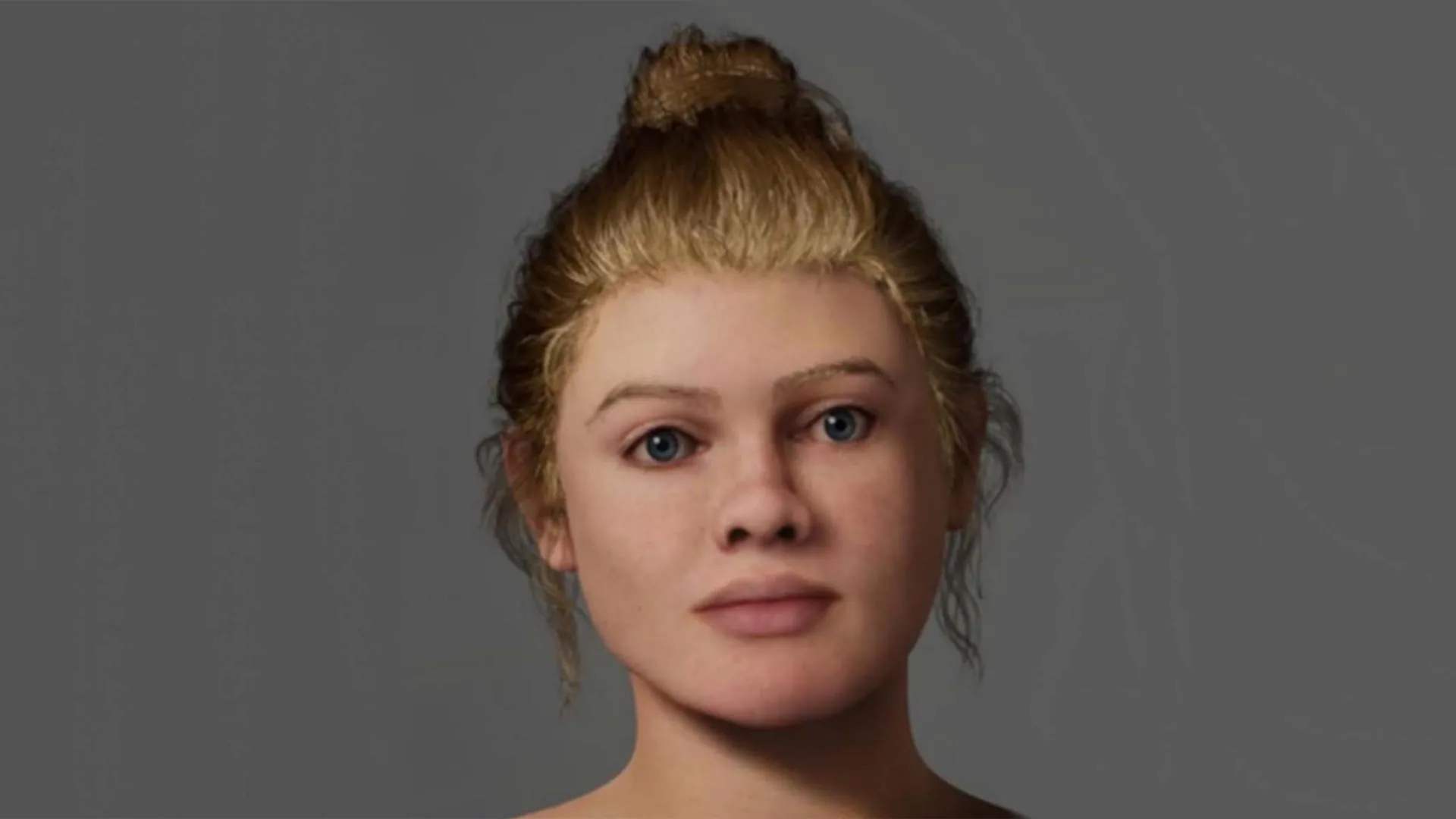
The improved DNA data also enabled modern forensic analysis. Scientists predicted that the Beachy Head Woman probably had light skin pigmentation, blue eyes, and fair hair. These findings were used to update her digital facial reconstruction.

As DNA technology continues to advance, researchers expect even deeper insights into the lives of people who lived thousands of years ago, allowing forgotten individuals like the Beachy Head Woman to be better understood within their historical world.

Share Button

Researchers tested AI against 100,000 humans on creativity

Can generative artificial intelligence systems like ChatGPT genuinely create original ideas? A new study led by Professor Karim Jerbi from the Department of Psychology at the Université de Montréal, with participation from renowned AI researcher Yoshua Bengio, takes on that question at an unprecedented scale. The research is the largest direct comparison ever conducted between human creativity and the creativity of large language models.

The study, published in Scientific Reports (Nature Portfolio), points to a significant shift. Generative AI systems have now reached a level where they can outperform the average human on certain creativity measures. At the same time, the most creative people still show a clear and consistent advantage over even the strongest AI models.

AI Reaches Average Human Creativity Levels

Researchers evaluated several leading large language models, including ChatGPT, Claude, Gemini, and others, and compared their performance with results from more than 100,000 human participants. The findings highlight a clear turning point. Some AI systems, including GPT-4, exceeded average human scores on tasks designed to measure divergent linguistic creativity.

“Our study shows that some AI systems based on large language models can now outperform average human creativity on well-defined tasks,” explains Professor Karim Jerbi. “This result may be surprising — even unsettling — but our study also highlights an equally important observation: even the best AI systems still fall short of the levels reached by the most creative humans.”

Further analysis by the study’s co-first authors, postdoctoral researcher Antoine Bellemare-Pépin (Université de Montréal) and PhD candidate François Lespinasse (Université Concordia), revealed a striking pattern. While some AI models now outperform the average person, peak creativity remains firmly human.

In fact, when researchers examined the most creative half of participants, their average scores surpassed those of every AI model tested. The gap grew even larger among the top 10 percent of the most creative individuals.

“We developed a rigorous framework that allows us to compare human and AI creativity using the same tools, based on data from more than 100,000 participants, in collaboration with Jay Olson from the University of Toronto,” says Professor Karim Jerbi, who is also an associate professor at Mila.

How Scientists Measure Creativity in Humans and AI

To evaluate creativity fairly across humans and machines, the research team used multiple methods. The primary tool was the Divergent Association Task (DAT), a widely used psychological test that measures divergent creativity, or the ability to generate diverse and original ideas from a single prompt.

Created by study co-author Jay Olson, the DAT asks participants, whether human or AI, to list ten words that are as unrelated in meaning as possible. An example of a highly creative response includes words like “galaxy, fork, freedom, algae, harmonica, quantum, nostalgia, velvet, hurricane, photosynthesis.”

Performance on this task is strongly linked to results on other established creativity tests used in writing, idea generation, and creative problem solving. Although the task is language-based, it goes well beyond vocabulary. It engages broader cognitive processes involved in creative thinking across many domains. The DAT also has practical advantages, as it takes only two to four minutes to complete and can be accessed online by the general public.

From Word Lists to Real Creative Writing

The researchers then explored whether AI success on this simple word association task could extend to more complex and realistic creative activities. To test this, they compared AI systems and human participants on creative writing challenges such as composing haiku (a short three-line poetic form), writing movie plot summaries, and producing short stories.

The results followed a familiar pattern. While AI systems sometimes exceeded the performance of average humans, the most skilled human creators consistently delivered stronger and more original work.

Can AI Creativity Be Adjusted?

These findings raised another important question. Is AI creativity fixed, or can it be shaped? The study shows that creativity in AI can be adjusted by changing technical settings, particularly the model’s temperature. This parameter controls how predictable or adventurous the generated responses are.

At lower temperature settings, AI produces safer and more conventional outputs. At higher temperatures, responses become more varied, less predictable, and more exploratory, allowing the system to move beyond familiar ideas.

The researchers also found that creativity is strongly influenced by how instructions are written. For example, prompts that encourage models to think about word origins and structure using etymology lead to more unexpected associations and higher creativity scores. These results emphasize that AI creativity depends heavily on human guidance, making interaction and prompting a central part of the creative process.

Will AI Replace Human Creators?

The study offers a balanced perspective on fears that artificial intelligence could replace creative professionals. While AI systems can now match or exceed average human creativity on certain tasks, they still have clear limitations and rely on human direction.

“Even though AI can now reach human-level creativity on certain tests, we need to move beyond this misleading sense of competition,” says Professor Karim Jerbi. “Generative AI has above all become an extremely powerful tool in the service of human creativity: it will not replace creators, but profoundly transform how they imagine, explore, and create — for those who choose to use it.”

Rather than signaling the end of creative careers, the findings suggest a future where AI serves as a creative assistant. By expanding ideas and opening new paths for exploration, AI may help amplify human imagination rather than replace it.

“By directly confronting human and machine capabilities, studies like ours push us to rethink what we mean by creativity,” concludes Professor Karim Jerbi.

About the Study

The paper titled “Divergent creativity in humans and large language models” was published in Scientific Reports on January 21, 2026. The research brought together scientists from Université de Montréal, Université Concordia, University of Toronto Mississauga, Mila (Quebec AI Institute), and Google DeepMind.

Professor Karim Jerbi led the study, with Antoine Bellemare-Pépin (Université de Montréal) and François Lespinasse (Université Concordia) serving as co-first authors. The research team also included Yoshua Bengio, founder of Mila and LoiZéro, and a pioneer of deep learning, the technology behind modern AI systems such as ChatGPT.

Share Button

Ancient people carried a wild potato across the American Southwest

More than 10,000 years ago, people living in the southwestern United States carried a wild ancestor of the modern potato across long distances. According to a study published January 21, 2026 in the open-access journal PLOS One, this movement likely helped the plant spread beyond its original habitat. The research was led by Lisbeth Louderback of the University of Utah, U.S., along with her colleagues.

The findings suggest that Indigenous communities played an active role in shaping the plant’s future. By moving and using this wild potato, they may have begun the earliest stages of domestication while also building a distinctive cultural tradition in the Four Corners region.

The Four Corners Potato and Its Ancient Use

The plant at the center of the study is known as the Four Corners potato (Solanum jamesii). It is a small but hardy and nutritious wild potato that still grows across southwestern North America today, ranging from southern Utah and Colorado into northern Mexico.

To learn how the potato was used in the past, researchers examined ground stone tools from 14 archaeological sites. These sites span a wide stretch of time, from several hundred to many thousands of years old. The tools were tested for tiny starch granules left behind when plants were processed for food.

Stone Tools and Genetic Clues Tell the Story

Starch from the Four Corners potato was identified on tools from nine of the sites. Some of the evidence dates back as far as 10,900 cal BP. Most of these locations sit near the modern northern edge of the potato’s range, along the borders of Colorado, Utah, Arizona, and New Mexico.

Earlier genetic research adds another layer of evidence. Some living populations of the Four Corners potato in this northern area show strong genetic signs that they originated much farther south. This supports the idea that people carried the plant across the region, extending its range north into Utah and Colorado, where it still grows today.

Early Domestication and Living Cultural Traditions

Researchers note that repeated use of a plant and its movement beyond its natural range are both key indicators of early domestication. In this case, those behaviors appear to have begun thousands of years ago.

Even today, the Four Corners potato holds cultural importance for Indigenous communities. Alongside laboratory work, the research team interviewed 15 Navajo (Diné) elders. These conversations confirmed that the wild potato remains known, eaten, and used for spiritual purposes.

Lisbeth Louderback adds: “By combining new archaeobotanical data and elder interviews with transport patterns identified by genetic sequencing of the Four Corners potato, we have defined an anthropogenic range distinct from its natural distribution. This reveals a unique cultural identity developed by ancient transport of this species — one that continues into the present day.”

Cynthia Wilson adds: “The mobility of Indigenous foodways was driven by kinship-based practices across the landscape. Indigenous knowledge holders, especially matrilineal women, held on to these seedlings and stories across generations to sustain ties to ancestral land and foodways.”

Funding: This work was funded by the National Science Foundation (Award BCS-1827414). General funding was also received from Red Butte Garden and the Natural History Museum of Utah.

Share Button

Cosmetic doctor sorry for picking apart singer Troye Sivan’s looks on TikTok

The singer hit out at Dr Zayn Khalid Majeed – who says he will try to have a positive impact with his content.

Share Button

Brain waves could help paralyzed patients move again

People with spinal cord injuries often lose the ability to move their arms or legs. In many cases, the nerves in the limbs remain healthy, and the brain continues to function normally. The loss of movement happens because damage to the spinal cord blocks signals traveling between the brain and the body.

This disconnect has led researchers to search for ways to restore communication without repairing the spinal cord itself.

Testing EEG as a Noninvasive Solution

In a study published in APL Bioengineering by AIP Publishing, scientists from universities in Italy and Switzerland explored whether electroencephalography (EEG) could help bridge this gap. Their research focused on determining whether EEG could capture brain signals linked to movement and potentially reconnect them with the body.

When a person attempts to move a paralyzed limb, the brain still produces electrical activity associated with that action. If these signals can be detected and interpreted, they could be sent to a spinal cord stimulator that activates the nerves responsible for movement in that limb.

Moving Beyond Brain Implants

Most earlier studies relied on surgically implanted electrodes to record movement signals directly from the brain. Although these systems have shown encouraging results, the research team wanted to investigate whether EEG could offer a safer option.

EEG systems are worn as caps covered with electrodes that record brain activity from the scalp. While the setup may appear complex, the researchers say it avoids the risks involved with placing devices inside the brain or spinal cord.

“It can cause infections; it’s another surgical procedure,” said author Laura Toni. “We were wondering whether that could be avoided.”

Challenges in Reading Movement Signals

Using EEG to decode movement attempts pushes the limits of current technology. Because EEG electrodes sit on the surface of the head, they struggle to capture signals that originate deeper within the brain.

This limitation is less problematic for movements involving the arms and hands. Signals controlling the legs and feet are harder to detect because they come from areas located closer to the center of the brain.

“The brain controls lower limb movements mainly in the central area, while upper limb movements are more on the outside,” said Toni. “It’s easier to have a spatial mapping of what you’re trying to decode compared to the lower limbs.”

Machine Learning Helps Interpret Brain Activity

To better analyze the EEG data, the researchers used a machine learning algorithm designed to work with small and complex datasets. During testing, patients wore EEG caps while attempting a series of simple movements. The team recorded the resulting brain activity and trained the algorithm to sort the signals into different categories.

The system successfully distinguished between moments when patients tried to move and when they remained still. However, it had difficulty telling different movement attempts apart.

What Future Research Could Achieve

The researchers believe their method can be improved with further development. They plan to refine the algorithm so it can recognize specific actions such as standing, walking, or climbing. The team also hopes to explore how these decoded signals could be used to activate implanted stimulators in patients recovering from spinal cord injuries.

If successful, this approach could move noninvasive brain scanning closer to helping people regain meaningful movement after paralysis.

Share Button

This small soil upgrade cut locust damage and doubled yields

“They’re very destructive when there’s a lot of them, but one-on-one, what’s not to love?” says Arianne Cease. She is referring to locusts.

Cease leads Arizona State University’s Global Locust Initiative, where she studies how locusts behave and how their destructive swarms can be controlled. While her research focuses on reducing damage to crops and communities, she also brings a deep respect for the insects themselves.

Locust Swarms Remain a Global Threat

For many people, locust swarms evoke images of ancient plagues, but the danger is very real today. Around the world, swarms can devastate crops across vast regions, wipe out livelihoods, and in some areas disrupt education and long term economic prospects for children. A single swarm can span hundreds of square miles — roughly the size of a major city such as New York City or Phoenix.

That is why Cease and her international research team paid close attention when they identified a straightforward, soil-based way to reduce locust feeding. The scientists realized early on that the approach could have life changing consequences. To their knowledge, this is the first study to test the method in real farming environments and show that it works outside the lab.

Testing the Idea With Farmers in Senegal

The researchers partnered with farmers in Senegal who regularly face outbreaks of the Senegalese grasshopper. Unlike the desert locust, this species does not form massive swarms, but its frequent appearances and smaller groupings can cause even greater harm to local farmers. These communities had previously collaborated with Cease and pushed for a larger field study.

Each farmer planted two plots of millet — one treated with nitrogen fertilizer and one left untreated.

The contrast was clear. Fertilized plots had fewer locusts, reduced crop damage, and harvests that were twice as large as those from untreated fields.

“This breakthrough represents an important step forward in the sustainable management of migratory pests, offering a community-based tool that expands the available treatment options,” says Cease, who is also an associate professor in the ASU School of Sustainability and School of Life Sciences.

The study published in the journal Scientific Reports. Associate Professor Mamour Touré of Université Gaston Berger in Saint-Louis, Senegal, served as lead author, while Cease was the principal investigator for the USAID-supported project.

“The results are of major importance to the scientific community and also to Senegalese farmers,” Touré says. “The study gave them a better understanding of grasshoppers and locusts, as well as a practical way to control them at the local level.”

Why Soil Quality Shapes Locust Behavior

The Global Locust Initiative is part of the Julie Ann Wrigley Global Futures Laboratory and focuses on the many systems that influence locust outbreaks. Environmental conditions, insect biology and behavior, economic pressures, public policy, and land management all contribute to cycles of destruction — and also create opportunities to interrupt them.

After more than 15 years of research, Cease uncovered a consistent pattern. Crops grown in nutrient-poor soil tend to encourage locust outbreaks because those plants contain high levels of carbohydrates and very little protein.

“This carbohydrate bias, or the ‘donut diet,’ is optimal for populations of locusts and swarming grasshoppers,” Cease says. Much like endurance athletes who rely on carbohydrates for energy, locusts depend on carb-heavy plants to fuel their long-distance movement.

Plants grown in nitrogen-rich soil tell a different story. They contain more protein and fewer carbohydrates, making them difficult food for locusts. Their bodies struggle to process the excess protein and fail to get enough energy to thrive.

Protein-Packed Plants Prevent Pests

These findings led to a key question. Could shifting the balance of protein and carbohydrates in crops prevent locust damage? Earlier lab experiments and field observations hinted that it might, but the idea had never been tested on working farms. For Cease, that gap made the next step obvious.

Two Senegalese villages that had collaborated with her before volunteered to take part. Their farms regularly suffer severe losses from Senegalese grasshopper swarms.

In the experiment, 100 farmers each grew two millet plots each — one treated with nitrogen fertilizer and one left untreated for comparison.

Researchers were unsure whether locusts might still enter treated plots from nearby untreated fields or whether higher protein plants might attract other pests. To find out, the team counted locusts and measured crop damage three times during the growing season and recorded yields at harvest.

The results were decisive. Treated plots had fewer locusts, less leaf damage, and double the millet yield at harvest. The team also found no evidence that adding nitrogen worsened other pest problems.

From Fertilizer to Compost Solutions

Although nitrogen fertilizer was supplied for the study, it is not a realistic long term option for many farming communities. Sustainable control requires affordable methods that also protect soil health.

“Ongoing work is focused exclusively on compost, and we seem to be getting the same results,” Cease says.

USAID funding for the project ended in early 2025, but farmers in Senegal have continued the composting approach on their own, encouraged by the results.

“Farmers unanimously stated that they no longer burn crop residues after land clearing, but instead practice composting to fertilize their fields, thereby helping to reduce grasshopper infestations. This technique was fully mastered thanks to the project,” Touré says.

The research team is now seeking additional funding to expand the work into other regions heavily affected by locusts.

Why Locust Research Matters to the United States

The U.S. currently has no native locust species. So why study them at all? Cease says that could change. She is closely monitoring the Central American locust, whose range reaches within about 200 miles of the U.S. border.

“We can say with pretty high certainty that Texas will be very suitable for locusts in about 10 to 15 years,” Cease says. “Whether or not they will create a problem is yet to be determined, but it’s something that we should definitely be aware of.”

Even without locusts, grasshoppers already pose major challenges across the country. There are 12 key species known collectively as the Dirty Dozen.

According to the U.S. Department of Agriculture, these 12 rangeland grasshoppers (plus one cricket) are among the most serious pest threats in the western United States. When they swarm, they can strip grazing land and outcompete livestock for food, creating serious problems for ranchers.

While chemical pesticides remain the primary control tool, the Global Locust Initiative is working to identify alternatives that are safer for people and the environment.

What scientists learn from locust outbreaks abroad may prove critical at home, helping the U.S. manage migratory pests more effectively and prepare for the possibility that locusts one day cross the border.

Share Button