Rosie Stewart played for Ireland and was a founding member of Ulster Women’s Rugby but died after being diagnosed with breast cancer.


Rosie Stewart played for Ireland and was a founding member of Ulster Women’s Rugby but died after being diagnosed with breast cancer.
A force should have flagged mental health services after a family called about their son, IOPC says.
Social anxiety is more common than many think. Here’s what you need to know about the condition.
The PM was at times emotional during his conference speech in which he outlined his long-term plan for the UK.
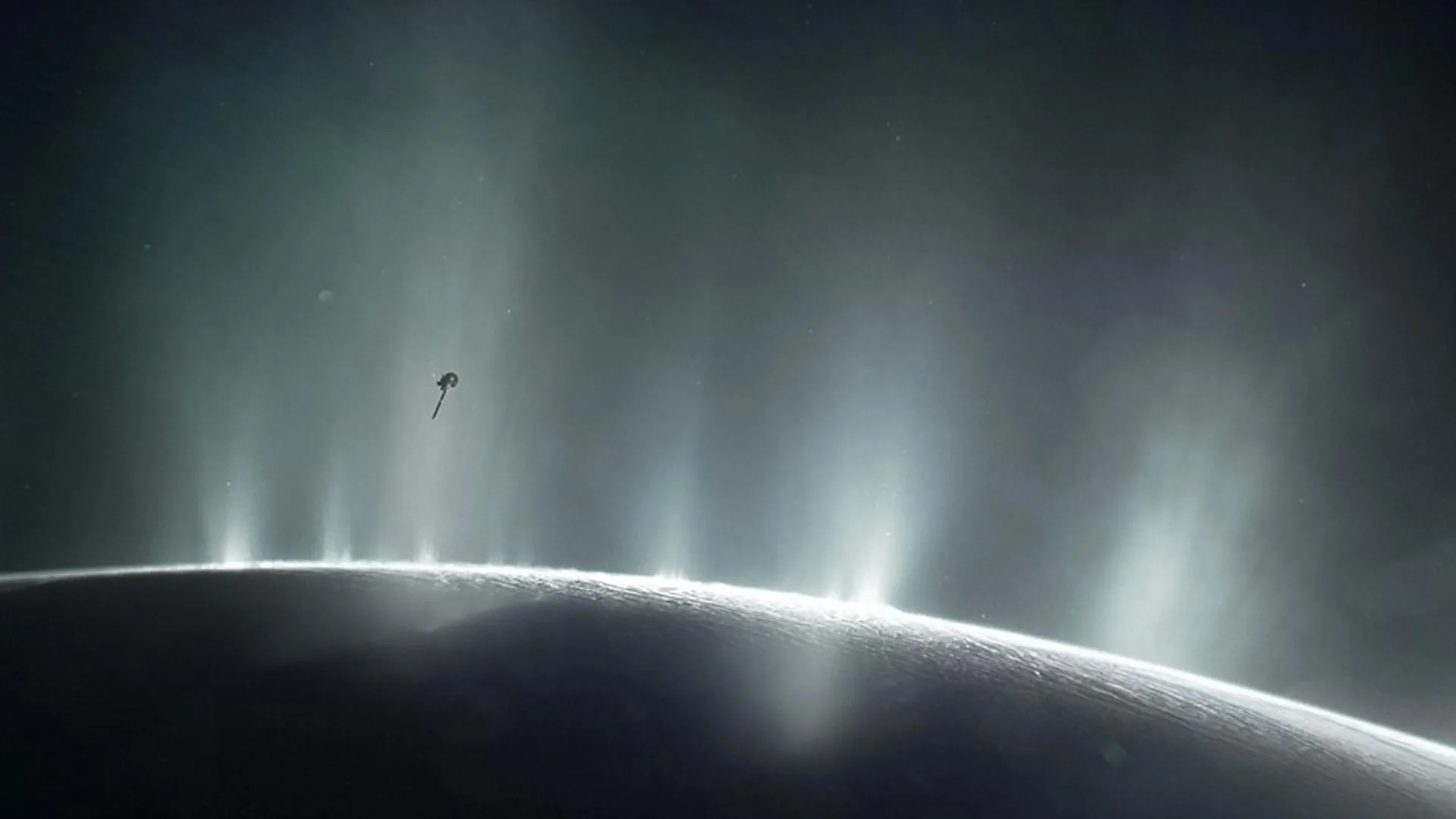
Saturn’s moon Enceladus is covered in ice, but beneath that frozen shell lies a global ocean. Near the moon’s south pole, fractures in the crust release water vapor and ice particles into space. Those particles give scientists an unusual way to study an alien ocean without having to drill through kilometers of ice.
An international team that includes researchers from the Earth-Life Science Institute (ELSI) at the Institute of Science Tokyo has now investigated what happens to that ocean water as it moves from beneath the surface and eventually becomes the tiny ice grains detected in space.
Cassini Found Surprisingly Diverse Ice Grains
Between 2004 and 2017, the Cosmic Dust Analyzer on NASA’s Cassini spacecraft measured the composition of individual ice particles in Saturn’s E-ring. That ring is continually supplied with material erupting from Enceladus.
A team led by Prof Frank Postberg at Freie Universität Berlin examined 961 mass spectra from salt-rich grains known as Type 3 particles. If the grains were simply small samples of the same ocean water, scientists might expect them to contain broadly similar mixtures of salts.
Instead, the grains varied dramatically.
Some were especially rich in sodium chloride, while others contained higher amounts of carbonates, phosphates or potassium chloride. One particularly striking pattern was that chloride and carbonate rarely appeared together in the same sodium-rich particle.
That raised a basic puzzle. If all of these grains came from the same ocean, why did their chemical compositions differ so much?
Recreating Enceladus’ Ocean Droplets in the Lab
To explore that question, Professor Yasuhito Sekine and colleagues at ELSI created laboratory droplets containing the major salts thought to be present in Enceladus’ ocean.
The researchers froze droplets of different sizes under different cooling conditions, then studied how the chemical elements were distributed once the droplets had solidified.
The results showed that the speed of freezing plays a major role.
In droplets about 200 micrometres across, salts became separated into different regions when freezing occurred relatively slowly, at approximately 10 K per minute or less. When the droplets froze more quickly, their chemical ingredients remained much more evenly mixed.
“What surprised us was that the diversity seen by Cassini could emerge from droplets originating from essentially the same ocean water,” said Sekine. “Our experiments show that when relatively large ocean droplets freeze slowly, different salts can separate within them. If those frozen droplets are later broken apart, they can produce much smaller ice grains, each with very different chemical compositions.”
A Slower Journey Through Enceladus’ Ice
The findings may also reveal something about what happens inside the moon’s icy crust.
Earlier studies generally assumed that seawater spray from Enceladus freezes quickly and moves rapidly toward space soon after leaving the ocean. The new experiments point to a different scenario.
The droplets may initially move much more slowly through the underground vent system, following complicated pathways through fractures in the ice before they approach the surface.
The researchers suggest that ocean spray first forms droplets ranging from tens to hundreds of micrometers in size. As those droplets move slowly through deeper sections of the vents, they gradually freeze, giving salts enough time to separate into different regions.
Closer to the surface, conditions change. Gas begins moving faster, and the frozen droplets can slam into the walls of narrower icy channels at high speed. Those collisions may break the droplets into much smaller pieces.
Each fragment can come from a different salt-rich region within the original frozen droplet, creating grains with very different chemical compositions. Those fragments can then escape into space and become part of Saturn’s E-ring.
“The Cassini data showed us that these salt-rich grains are far more chemically diverse than an average ocean composition would suggest,” said Postberg. “Combining those observations with the freezing experiments gives us a physical explanation: Cassini may have sampled fragments of larger frozen ocean droplets, each preserving different components that became separated during their journey towards the surface. The abundance of each individual component in the ocean is then reflected in the number of fragments in which a particular component is found.”
Enceladus May Naturally Concentrate Key Compounds
The discovery could be especially important for future missions to Enceladus.
As droplets freeze and break apart, individual compounds can become concentrated in particular grains. The process does not only separate different salts. Earlier work has also shown that organic substances can become separated from one another and appear at elevated concentrations in certain particles.
That could make future analysis considerably easier.
Compounds that are highly diluted in Enceladus’ ocean and mixed with many other substances may become much easier to detect when concentrated into individual ice grains.
On Earth, laboratories often spend considerable effort separating and concentrating chemicals before analyzing a sample. Enceladus appears to perform both of these “sample preparation” steps naturally: The chemical components become separated, and some end up concentrated within a fraction of the ice particles.
Possible Implications for Prebiotic Chemistry
Slow freezing could have another important consequence.
As ice crystals grow, small pockets of liquid brine may remain trapped between them. Salts and organic compounds can become highly concentrated inside those pockets.
That concentration could matter for prebiotic chemistry, which involves chemical processes that may precede the emergence of life. One major challenge in such chemistry is bringing molecules that are normally very dilute into close contact with one another.
Because much of the material erupted from Enceladus eventually falls back onto the moon, this freezing, concentration and recycling process could potentially happen again and again.
Understanding how Enceladus forms its ice grains therefore does more than explain Cassini’s unusual measurements. It offers new clues about the hidden environment beneath the moon’s surface and may help future spacecraft correctly interpret the particles they collect while searching for evidence of habitability and possible signs of life.
Andy Burnham wants to outline his ideas for a free-at-the-point-of-use social care system in his first speech to Labour conference as prime minister.
Plus, we reveal the All in the Mind Awards judging panel.

Most of us think of a day as a fixed 24 hours. In reality, Earth’s rotation is not perfectly constant.
The difference is tiny, measured in milliseconds, but physicists can detect it. Over time, some days become slightly shorter or longer depending on subtle changes deep inside the planet.
Earth’s Core and Mantle Trade Momentum
For roughly three decades, scientists have known that Earth’s liquid core does not always rotate at the same rate. Changes in the planet’s magnetic field have revealed that the liquid core can gradually speed up over several decades, then slow down during the following decades.
At the same time, the mantle, the roughly 3,000 kilometer thick rocky layer that includes the crust, responds in the opposite direction. When the core speeds up, the mantle slows slightly. When the core slows, the mantle speeds up.
This exchange happens because Earth’s total angular momentum must remain constant.
Even very small changes in the mantle’s rotation are enough to alter the length of a day by a few milliseconds.
A Hidden Gravitational Tug Inside Earth
Scientists have long struggled to explain exactly how the core and mantle exchange this rotational momentum.
In a new study published Sept. 23 in Nature, University of Alberta physics PhD student Huifeng Zhang and professor Mathieu Dumberry present a possible answer.
Their work shows that small changes in the rotational speed of Earth’s inner core, the solid region at the planet’s center, can create what scientists call a “gravitational torque.” Because the inner core is not perfectly spherical, changes in its motion can gravitationally interact with uneven distributions of mass in the mantle.
That interaction can slightly alter how quickly the mantle rotates, producing small changes in the length of a day.
Competing Forces Control Earth’s Rotation
Another force also acts at the boundary between the core and mantle.
Known as core mantle boundary torque, it produces friction and electromagnetic drag that oppose the gravitational pull. This resistance helps limit how much Earth’s day length can change.
According to the researchers, the small observed variations in the length of a day arise from subtle shifts in the balance between gravitational torque and core mantle boundary torque.
Earth’s Inner Core May Be More Dynamic Than Expected
Beyond helping explain a long standing mystery about Earth’s changing day length, the findings also offer new insight into what is happening deep inside the planet.
Zhang and Dumberry say the inner core appears to “deform viscously” on a time scale of about 10 years, suggesting that Earth’s deepest interior may change shape and respond to forces far more dynamically than its solid composition might imply.

NASA and SpaceX are targeting 11:10 a.m. EDT on Thursday, Oct. 1, as the earliest opportunity to launch the Crew-13 mission to the International Space Station.
In the days before liftoff, teams will complete final preparations and readiness reviews to confirm that the astronauts, the space station, SpaceX’s Dragon spacecraft, and the Falcon 9 rocket are ready for flight. The mission is scheduled to launch from Space Launch Complex 40 at Cape Canaveral Space Force Station in Florida.
Less Than Nine Hours to the Space Station
If Crew-13 launches on Oct. 1, Dragon is expected to reach the International Space Station less than nine hours later, with docking planned for about 8 p.m. at the forward-facing port of the Harmony module.
After launch, Falcon 9 will carry Dragon into orbit. The spacecraft will then maneuver to match the station’s path before docking, a carefully controlled process in which Dragon lines up with a designated port and attaches securely.
Harmony is one of the station’s connecting modules and provides docking locations for visiting spacecraft.
Meet the Crew-13 Astronauts
NASA astronaut Jessica Watkins will serve as spacecraft commander, with NASA astronaut Luke Delaney as pilot. CSA (Canadian Space Agency) astronaut Joshua Kutryk and Roscosmos cosmonaut Sergey Teteryatnikov will serve as mission specialists.
After arriving at the station, the four astronauts will become members of Expedition 75. Space station expeditions are long duration missions during which crews conduct scientific research, maintain the orbiting laboratory, and support technology demonstrations and other operations.
Crew-13 is currently in quarantine at NASA’s Johnson Space Center in Houston, a standard preflight precaution designed to reduce the risk of illness before launch. The crew is scheduled to travel to NASA Kennedy on Saturday, Sept. 26, as final preparations continue for the planned Oct. 1 liftoff.

New research suggests that keeping blood sugar extremely steady may come with an unexpected tradeoff for some people with diabetes.
The findings, which will be presented at the Annual Meeting of The European Association for the Study of Diabetes (EASD) in Milan, Italy (Sept. 28 – Oct. 2), indicate that people with type 1 or type 2 diabetes sometimes reported a better quality of life after days when their glucose levels fluctuated more, provided those levels remained within safe limits.
Researchers paired data from continuous glucose monitoring (CGM) devices with daily well-being assessments. Their results suggest that the effort and restrictions required to minimize every glucose fluctuation could make it harder for some people to enjoy everyday activities.
The research was conducted by Professor Dominic Ehrmann of FIDAM (Research Institute Diabetes Academy Mergentheim), Bad Mergentheim, Germany, and colleagues.
Looking Beyond Blood Sugar Numbers
Helping people with diabetes maintain a good quality of life is an important part of treatment. Blood sugar control matters, but researchers also want to understand how day to day diabetes management affects mood, energy, sleep, stress, and the ability to participate in normal activities.
The new analysis examined whether glucose patterns recorded by CGM devices were associated with daily quality of life among people with type 1 and type 2 diabetes.
The data came from the PRO-MENTAL study, funded by the German Center for Diabetes Research (DZD). Participants rated their quality of life every day for 14 consecutive days using a technique known as ecological momentary assessment (EMA) based on the WHO-5 questionnaire.
The questionnaire asks participants to rate five statements:
Researchers also collected daily information about sleep quality, perceived stress, mood, and energy using the same EMA approach.
Tracking Glucose Around the Clock
CGM data from the same 14 day period allowed the team to examine several measures of glucose control. These included blood sugar time below safe range (TBR: <70 mg/dl), time above safe range (TAR: >180 mg/dl), time in normal range (normoglycemia) (TING: 70-140 mg/dl), and glucose variability.
Glucose variability reflects how much a person’s blood sugar rises and falls over time.
The researchers then used statistical modeling to determine whether glucose patterns, sleep, stress, mood, and energy on one day could predict quality of life on the following day.
They also ran a separate analysis to see whether same-day measurements were associated with that day’s quality of life. The models accounted for age, sex, and diabetes type. They also included previous-day quality of life to ensure it was not strongly driving the results.
400 People With Diabetes Took Part
The analysis included data from 400 people with diabetes (72% type 1 diabetes, 28% type 2 diabetes, 55% female, age 47 years (range 32-63 years), mean glycated hemoglobin (HbA1c – a measure of blood sugar control) 7.6%.
Two glucose patterns stood out.
Spending more time in the normal glucose range on one day was significantly associated with better quality of life the next day. But more surprisingly, greater glucose variability on the previous day was also linked to higher next day quality of life.
By contrast, the amount of time participants spent above or below the safe glucose range on the previous day was not significantly associated with their quality of life the following day.
Better sleep during the preceding night was also linked to improved next day well-being. The same was true for higher energy levels on the previous day (by asking how energetic the person felt on a scale from 0 [not at all] to 10 [very much].
Interestingly, glucose measurements from the same day were not associated with quality of life on that day.
A Possible Cost of Trying to Keep Glucose Too Steady
The results do not suggest that poor glucose control is beneficial. In fact, spending more time within the normal range was associated with better quality of life.
Instead, the researchers say the finding involving glucose variability may point to a different issue. People who work especially hard to eliminate normal fluctuations may sometimes impose restrictions on themselves that make everyday life less enjoyable or make certain activities feel harder to pursue safely.
The authors say: “Days with higher time in the normal safe range for blood sugar were followed by days on which individuals with type 1 and type 2 diabetes reported better quality of life, underscoring the importance of optimal blood sugar control for well-being.
“Interestingly, higher-than-usual glucose variability was also associated with improved next-day quality of life. These findings may suggest that individuals experience lower quality of life when attempting to minimize glucose fluctuations too strictly, potentially due to the associated burden or restrictions in daily life, which may contribute to some people living with diabetes feeling unable to safely engage in certain activities.”
