Flu is on the rise, but ministers say schools should only close in extreme circumstances.


Flu is on the rise, but ministers say schools should only close in extreme circumstances.
The response to the pandemic led to “enormous outlays of public money which exposed it to the risk of fraud and error”, a report says.

That is the conclusion reached by Kasper Røjkjær Andersen and Simona Radutoiu, professors of molecular biology at Aarhus University.
Their new research highlights an important biological clue that could help reduce agriculture’s heavy reliance on artificial fertilizer.
Plants require nitrogen to grow, and most crop species can obtain it only through fertilizer. A small group of plants, including peas, clover, and beans, can grow without added nitrogen. They do this by forming a partnership with specific bacteria that turn nitrogen from the air into a form the plant can absorb.
Unlocking the Secrets Behind Natural Nitrogen Fixation
Scientists worldwide are working to understand the genetic and molecular basis of this natural nitrogen-fixing ability. The hope is that this trait could eventually be introduced into major crops such as wheat, barley, and maize.
If achieved, these crops could supply their own nitrogen. This shift would reduce the need for synthetic fertilizer, which currently represents about two percent of global energy consumption and produces significant CO2 emissions.
Researchers at Aarhus University have now identified small receptor changes in plants that cause them to temporarily shut down their immune defenses and enter a cooperative relationship with nitrogen-fixing bacteria.
How Plants Decide Between Defense and Cooperation
Plants rely on cell-surface receptors to sense chemical signals from microorganisms in the soil.
Some bacteria release compounds that warn the plant they are “enemies,” prompting defensive action. Others signal that they are “friends” able to supply nutrients.
Legumes such as peas, beans, and clover allow specialized bacteria to enter their roots. Inside these root tissues, the bacteria convert nitrogen from the atmosphere and share it with the plant. This partnership, known as symbiosis, is the reason legumes can grow without artificial fertilizer.
Aarhus University researchers found that this ability is strongly influenced by just two amino acids, which act as small “building blocks” within a root protein.
“This is a remarkable and important finding,” says Simona Radutoiu.
The root protein functions as a “receptor” that reads signals from bacteria. It determines whether the plant should activate its immune system (alarm) or accept the bacteria (symbiosis).
The team identified a small region in the receptor protein that they named Symbiosis Determinant 1. This region functions like a switch that controls which internal message the plant receives.
By modifying only two amino acids within this switch, the researchers changed a receptor that normally triggers immunity so that it instead initiated symbiosis with nitrogen-fixing bacteria.
“We have shown that two small changes can cause plants to alter their behavior on a crucial point — from rejecting bacteria to cooperating with them,” Radutoiu explains.
Expanding the Potential to Major Food Crops
In laboratory experiments, the researchers successfully engineered this change in the plant Lotus japonicus. They then tested the concept in barley and found that the mechanism worked there as well.
“It is quite remarkable that we are now able to take a receptor from barley, make small changes in it, and then nitrogen fixation works again,” says Kasper Røjkjær Andersen.
The long-term potential is significant. If these modifications can be applied to other cereals, it may ultimately be possible to breed wheat, maize, or rice capable of fixing nitrogen on their own, similar to legumes.
“But we have to find the other, essential keys first,” Radutoiu notes.
“Only very few crops can perform symbiosis today. If we can extend that to widely used crops, it can really make a big difference on how much nitrogen needs to be used.”
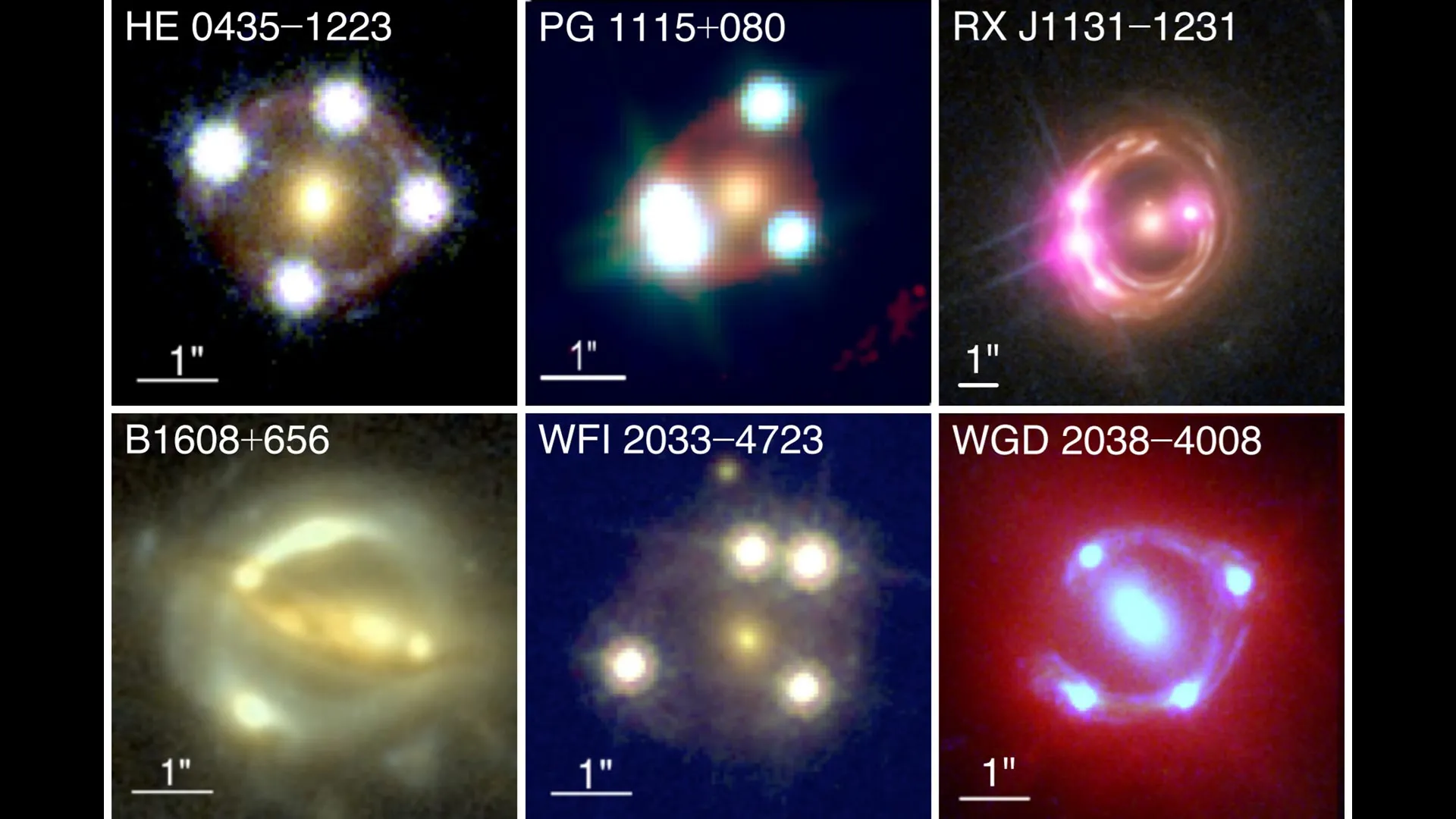
Cosmologists are grappling with a major unresolved puzzle: they do not all agree on how fast the universe is expanding, and solving this puzzle could point to new physics. To check for hidden errors in traditional measurements that rely on markers such as supernovae, astronomers continually look for fresh ways to track cosmic expansion. In recent work, researchers including scientists at the University of Tokyo measured the universe’s growth using new techniques and data from some of the most advanced telescopes available. Their approach takes advantage of the fact that light from extremely distant objects can travel to us along several different paths. Comparing these different routes helps refine models of what is happening on the very largest scales in the universe, including how space itself is stretching.
How fast is the universe expanding?
We know that the universe is enormous, and it is steadily growing larger. Its exact size is unknown, but its rate of expansion can be measured. This turns out to be more complicated than it sounds, because the expansion appears faster when we look at more distant regions of space. For every 3.3 million light years (or one megaparsec) of distance from Earth, objects at that distance appear to be moving away from us at about 73 kilometers per second. Put another way, the universe expands at 73 kilometers per second per megaparsec (km/s/Mpc), a value known as the Hubble constant.
Distance ladders and a new way to measure the Hubble constant
Scientists have developed several methods to estimate the Hubble constant, but until now they have all relied on so-called distance ladders. These ladders are built from objects such as supernovae and special stars called Cepheid variable stars. Because these objects are considered well understood, astronomers assume that even when they are observed in other galaxies, they can be used to estimate distances with high precision. Over decades of observations of many such objects, the allowed range for the Hubble constant has become narrower. However, some uncertainty has always remained about how reliable this approach is, so cosmologists are eager to test alternatives.
In their latest study, a team of astronomers that includes Project Assistant Professor Kenneth Wong and postdoctoral researcher Eric Paic from the University of Tokyo’s Research Center for the Early Universe has successfully demonstrated a technique called time-delay cosmography. They argue that this method can reduce the field’s dependence on distance ladders and could also have valuable applications in other branches of cosmology.
Using gravitational lensing as a cosmic measurement tool
“To measure the Hubble constant using time-delay cosmography, you need a really massive galaxy that can act as a lens,” said Wong. “The gravity of this ‘lens’ deflects light from objects hiding behind it around itself, so we see a distorted version of them. This is called gravitational lensing. If the circumstances are right, we’ll actually see multiple distorted images, and each will have taken a slightly different pathway to get to us, taking different amounts of time. By looking for identical changes in these images that are slightly out of step, we can measure the difference in time they took to reach us. Coupling this data with estimates on the distribution of the mass of the galactic lens that’s distorting them is what allows us to calculate the acceleration of distant objects more accurately. The Hubble constant we measure is well within the ranges supported by other modes of estimation.”
The Hubble tension: conflicting views of the expanding universe
It may seem puzzling that researchers invest so much effort to refine a number that has already been measured many times. The reason is that this value sits at the heart of how scientists reconstruct the history and evolution of the universe, and there is a serious unresolved discrepancy. The value of 73 km/s/Mpc for the Hubble constant agrees with observations of relatively nearby objects. However, there are other ways to infer the cosmic expansion rate that look much farther back in time. One key method uses the radiation that fills the universe and traces back to the big bang, known as the cosmic microwave background (CMB). When scientists analyze the CMB to estimate the Hubble constant, they obtain a lower value of 67 km/s/Mpc.
This mismatch between 73 km/s/Mpc and 67 km/s/Mpc is called the Hubble tension. The work by Wong, Paic and their colleagues helps illuminate what might be causing this tension, at a time when it is still unclear whether the discrepancy is simply due to experimental uncertainties or points to something deeper.
Is the Hubble tension pointing to new physics?
“Our measurement of the Hubble constant is more consistent with other current-day observations and less consistent with early-universe measurements. This is evidence that the Hubble tension may indeed arise from real physics and not just some unknown source of error in the various methods,” said Wong. “Our measurement is completely independent of other methods, both early- and late-universe, so if there are any systematic uncertainties in those methods, we should not be affected by them.”
“The main focus of this work was to improve our methodology, and now we need to increase the sample size to improve the precision and decisively settle the Hubble tension,” said Paic. “Right now, our precision is about 4.5%, and in order to really nail down the Hubble constant to a level that would definitively confirm the Hubble tension, we need to get to a precision of around 1-2%.”
More lenses, more quasars, and higher precision
The researchers are optimistic that they can reach this higher level of accuracy. In the current study, they analyzed eight time-delay lens systems. Each system contains a foreground galaxy that acts as a lens and blocks our direct view of a distant quasar (a supermassive black hole that is accreting gas and dust, causing it to shine brightly). They also incorporated new observations from cutting-edge space-based and ground-based observatories, including the James Webb Space Telescope. Looking ahead, the team plans to expand the number of lens systems they study, refine their measurements, and carefully identify or eliminate any remaining systematic sources of error.
Mass distribution uncertainties and a global cosmology effort
“One of the largest sources of uncertainty is the fact that we don’t know exactly how the mass in the lens galaxies is distributed. It is usually assumed that the mass follows some simple profile that is consistent with observations, but it is hard to be sure, and this uncertainty can directly influence the values we calculate,” said Wong. “The Hubble tension matters, as it may point to a new era in cosmology revealing new physics. Our project is the result of a decades-long collaboration between multiple independent observatories and researchers, highlighting the importance of international collaboration in science.”
Funding: This work was supported by NASA (grants 80NSSC22K1294 and HST-AR-16149), the Max Planck Society (Max Planck Fellowship), the Deutsche Forschungsgemeinschaft under Germany’s Excellence Strategy (EXC-2094, 390783311), the U.S. National Science Foundation (grants NSF-AST-1906976, NSF-AST-1836016, NSF-AST-2407277), the Moore Foundation (grant 8548), and JSPS KAKENHI (grant numbers JP20K14511, JP24K07089, JP24H00221).
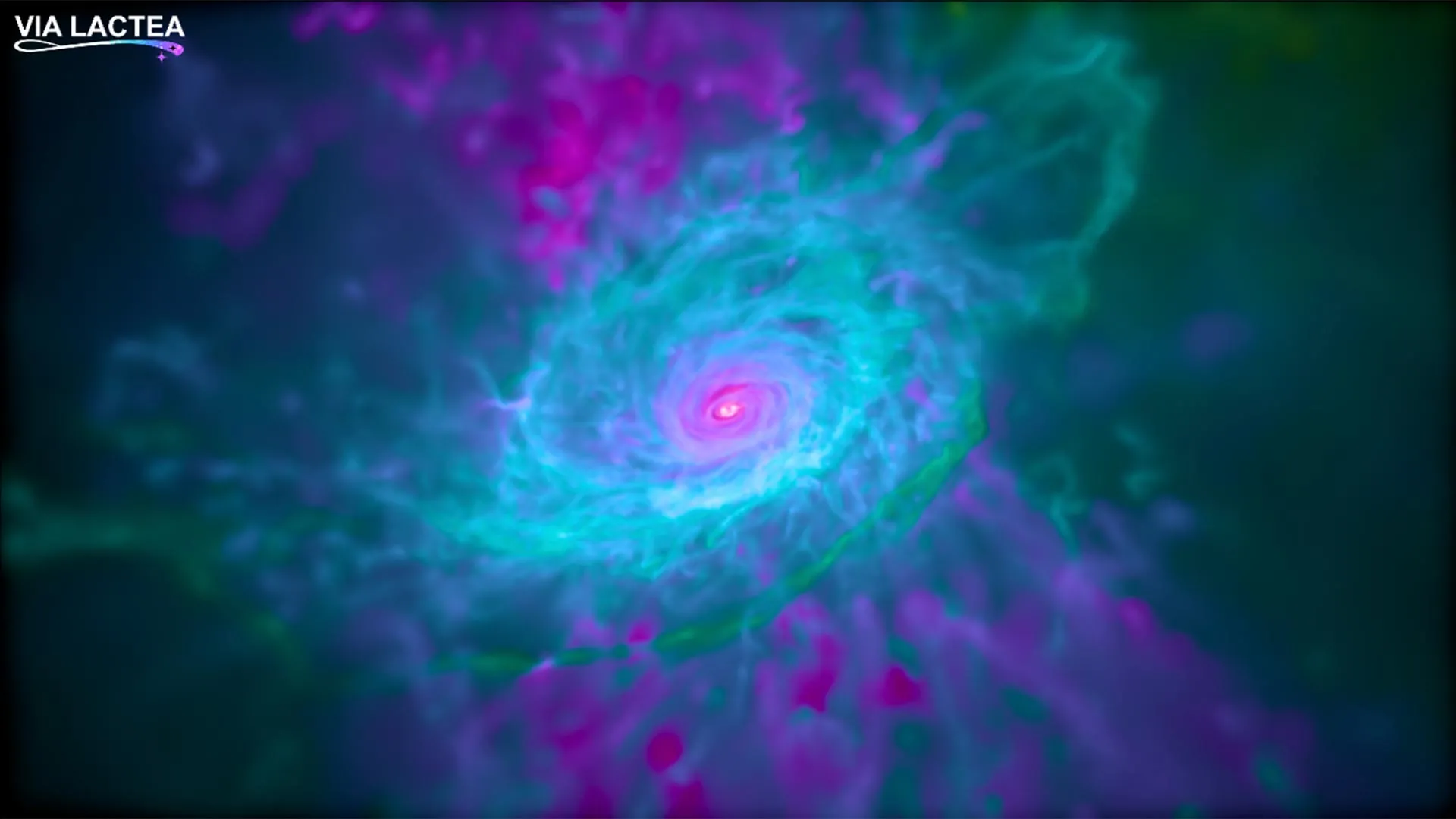
A new investigation is offering fresh insight into how galaxies like the Milky Way take shape, evolve over time, and develop unexpected chemical patterns in their stars.
Published in Monthly Notices of the Royal Astronomical Society, the study examines the origin of a long-standing mystery within the Milky Way: two clearly defined groups of stars with different chemical signatures, a feature known as the “chemical bimodality.”
When researchers look at stars located near the Sun, they consistently identify two major categories based on the relative amounts of iron (Fe) and magnesium (Mg) they contain. These categories create two separate “sequences” on chemical plots, even though they overlap in metallicity (how rich they are in heavy elements like iron). This unusual split has puzzled astronomers for years.
Simulations Reveal How the Chemical Split May Form
To investigate why this structure appears, researchers from the Institute of Cosmos Sciences of the University of Barcelona (ICCUB) and the Centre national de la recherche scientifique (CNRS) used advanced computer models (called the Auriga simulations) to recreate the formation of Milky Way-like galaxies inside a virtual universe. By examining 30 simulated galaxies, the team searched for processes that might shape these chemical sequences.
Gaining a clearer picture of the Milky Way’s chemical development helps scientists understand how our galaxy, along with others, assembled over cosmic time. This includes Andromeda, the Milky Way’s nearby companion galaxy, where no similar chemical bimodality has been identified so far. Insights from this work also shed light on early-universe conditions and the roles of gas flows and past mergers.
“This study shows that the Milky Way’s chemical structure is not a universal blueprint,” said lead author Matthew Orkney, a researcher at ICCUB and the Institut d’Estudis Espacials de Catalunya (IEEC).
“Galaxies can follow different paths to reach similar outcomes, and that diversity is key to understanding galaxy evolution.”
Multiple Routes to the Milky Way’s Dual Chemical Structure
The results indicate that galaxies resembling the Milky Way can form two distinct chemical sequences through several different pathways. One possibility is a cycle of intense star formation followed by calmer periods. Another involves variations in the gas streaming into a galaxy from its surroundings.
The study also challenges an earlier explanation involving a smaller galaxy known as Gaia-Sausage-Enceladus (GSE). While this past collision influenced the Milky Way, the simulations show it is not required to produce the chemical split. Instead, metal-poor gas from the circumgalactic medium (CGM) appears to play a central role in creating the second branch of stars.
The researchers found that the specific shape of the two chemical sequences is tightly connected to the galaxy’s star formation history.
New Observations Will Help Test These Predictions
As observatories such as the James Webb Space Telescope (JWST) and future missions like PLATO and Chronos gather more precise data, scientists will be able to test these simulation predictions and refine models of how galaxies evolve.
“This study predicts that other galaxies should exhibit a diversity of chemical sequences. This will soon be probed in the era of 30m telescopes where such studies in external galaxies will become routine,” said Dr. Chervin Laporte, of ICCUB-IEEC, CNRS-Observatoire de Paris and Kavli IPMU.
“Ultimately, these will also help us further refine the physical evolutionary path of our own Milky Way.”
An interim report by Baroness Amos finds poor care and dirty wards are blighting England’s maternity services.
Frimley Health NHS Trust is the latest to reintroduce masks as UK hospitals come under strain.
Seven out of 11 patients with incurable cancer who had the treatment appear to be cancer-free.
A tribunal said NHS Fife harassed Sandie Peggie but dismissed other claims she made against the health board and a transgender doctor.

A unique opportunity to observe deep brain activity in a person with obesity and loss of control eating provided new insight into how tirzepatide, sold as Mounjaro and Zepbound, interacts with the brain. Recordings showed that the medication reduced activity in the brain’s reward center, a region linked to food noise and compulsive cravings, although this reduction did not last.
Researchers noted that tirzepatide is a glucagon-like peptide-1 (GLP-1) and glucose-dependent insulinotropic polypeptide (GIP) receptor agonist originally created for Type 2 diabetes. Early findings suggest it may also help with conditions related to impulse control, including binge eating disorder. However, the new report from the Perelman School of Medicine at the University of Pennsylvania cautions that current GLP-1 and GIP inhibitors may not be fully optimized for treating these behaviors and warrant more investigation. The case study appears in Nature Medicine.
“This study offers major insights into how these drugs may work inside the brain and will guide us as we explore new indications,” said senior author Casey H. Halpern, MD, a professor of Neurosurgery and head of the Division of Stereotactic and Functional Neurosurgery. “Until we better understand their action on the brain, it’s far too soon to call GLP-1 and GIP inhibitors miracle drugs for more conditions beyond type 2 diabetes and obesity.”
Understanding Loss of Control Eating and Food Noise
Loss of control eating is widespread, affecting many people with obesity as well as multiple eating disorders. Binge eating disorder (BED) is considered the most common eating disorder in the United States, impacting more than 3 million individuals. People with BED often feel unable to stop eating and continue long after they feel full.
Critical brain regions involved in regulating eating behavior include the hypothalamus and the nucleus accumbens (NAc), which serves as a key reward center. The NAc helps govern motivation, pleasure-seeking behaviors, and impulse control. Studies have shown that in people with obesity and BED, signaling within the NAc and related circuits becomes disrupted.
Even without a diagnosis of BED, up to 60 percent of individuals with obesity experience persistent “food noise,” a constant stream of thoughts about food that can lead to distress and maladaptive patterns such as bingeing or loss of control eating. Food noise is also common in bulimia nervosa and anorexia nervosa. Research has linked binge eating with an increased risk of suicide among people with obesity and eating disorders, likely tied to impulsive traits and emotional dysregulation.
“Developing new ways to treat these patients is of the utmost importance,” said Halpern. “While many individuals taking GLP-1 and GIP inhibitors report a reduction in food noise, these medications are not FDA-approved to treat food preoccupation and its related impulsivity. In fact, their impact on human brain activity has only begun to be studied.”
A Patient’s Struggle With Severe Obesity and Food Noise
A 60-year-old woman referred to as “Participant 3” in the study was living with severe, treatment-resistant obesity and persistent food noise. She described constant, intrusive thoughts about food that frequently led her to order takeout or snack throughout the day, even when she tried to stop. She often ate until she felt uncomfortably full and was especially drawn to sugary and salty foods such as packaged cupcakes, fast-food roast beef sandwiches, and French fries. She also had Type-2 diabetes and had previously been prescribed dulaglutide, a GLP-1 inhibitor, but it did not reduce her weight or her obsessive focus on food.
After attempting numerous treatments including bariatric surgery, medications, behavioral therapy, and other interventions for disordered eating, she joined Halpern’s clinical trial. The study involved brain surgery to implant electrodes designed to eventually detect and interrupt cravings before they escalated into binge episodes.
How Brain Signals Reveal the Onset of Cravings
Halpern’s earlier research identified a distinct pattern of electrical activity in the NAc that appears right before a person begins to fixate on food and feels the urge to binge. This activity does not appear when a person is simply hungry before a typical meal. A previous pilot trial led by Halpern showed that delivering high-frequency electrical stimulation to the NAc exactly when these craving signals emerged could stop binge eating behavior.
In the current study of four participants, intracranial electroencephalography (iEEG) electrodes were implanted in individuals with obesity and loss of control eating. Similar to systems used for epilepsy and Parkinson’s disease, the device recorded activity in the NAc as participants encountered foods known to trigger their binge episodes.
After establishing each person’s baseline responses, the research team programmed the electrodes to deliver high-frequency stimulation when craving-related signals were detected. Over six months, participants reported large reductions in loss of control sensations and fewer binge episodes.
Tirzepatide Offers a Rare Research Window
Before surgery, Participant 3 was prescribed tirzepatide to manage her Type-2 diabetes after the first GLP-1 inhibitor did not help her. Her dose was gradually increased to the maximum before and after electrode implantation, since diabetes increases infection risks following surgery. This created an unusual opportunity for researchers to observe how tirzepatide affects brain signals tied to cravings in real time.
“Brain surgery to implant the electrodes is invasive, and thus it is extremely rare to study human brain activity in this way,” said Halpern. “Research fuels more research; This participant was already taking tirzepatide when she enrolled in the trial, but before any stimulation was delivered, giving us a unique opportunity to make foundational observations about how the drug alters brain signals.”
Tirzepatide’s Effects Fade Over Time
Once Participant 3 reached her full tirzepatide dose and had the electrodes implanted, she reported no food preoccupation, and her NAc activity reflected this silence. After roughly five months, however, the previously quiet NAc activity reappeared, along with intense food noise. This shift suggested that tirzepatide’s effect on her loss of control eating was temporary and that the underlying patterns of food preoccupation had resurfaced.
Other participants in the trial who were not taking tirzepatide consistently showed heightened NAc activity and frequent food preoccupation, which aligned with earlier observations from Halpern’s group. The dramatic reduction in signaling seen only in Participant 3 strongly indicated that tirzepatide temporarily suppressed this activity.
“GLP-1 and GIP inhibitors are amazing medications at doing what they were developed for — managing blood sugar in people with type 2 diabetes and weight loss in obesity,” said study investigator Kelly Allison, PhD, a professor of Psychiatry and Director of the Center for Weight and Eating Disorders. “This research shows us that they might be useful to manage food preoccupation and binge eating, but not in their current form.”
“Although this study only featured the data from one person taking tirzepatide, it provides compelling data about how GLP-1 and GIP inhibitors alter electrical signals in the brain,” said co-first author Wonkyung Choi, a PhD candidate in Halpern’s lab. “These insights should inspire further research into developing a treatment better tailored to the impulsivity traits of obesity and related eating disorders that is safe and long-lasting.”
This research was supported by the National Institutes of Health (7UH3NS103446-03, 1R01MH124760-01A1, R25MH119043 and T32NS091008).
