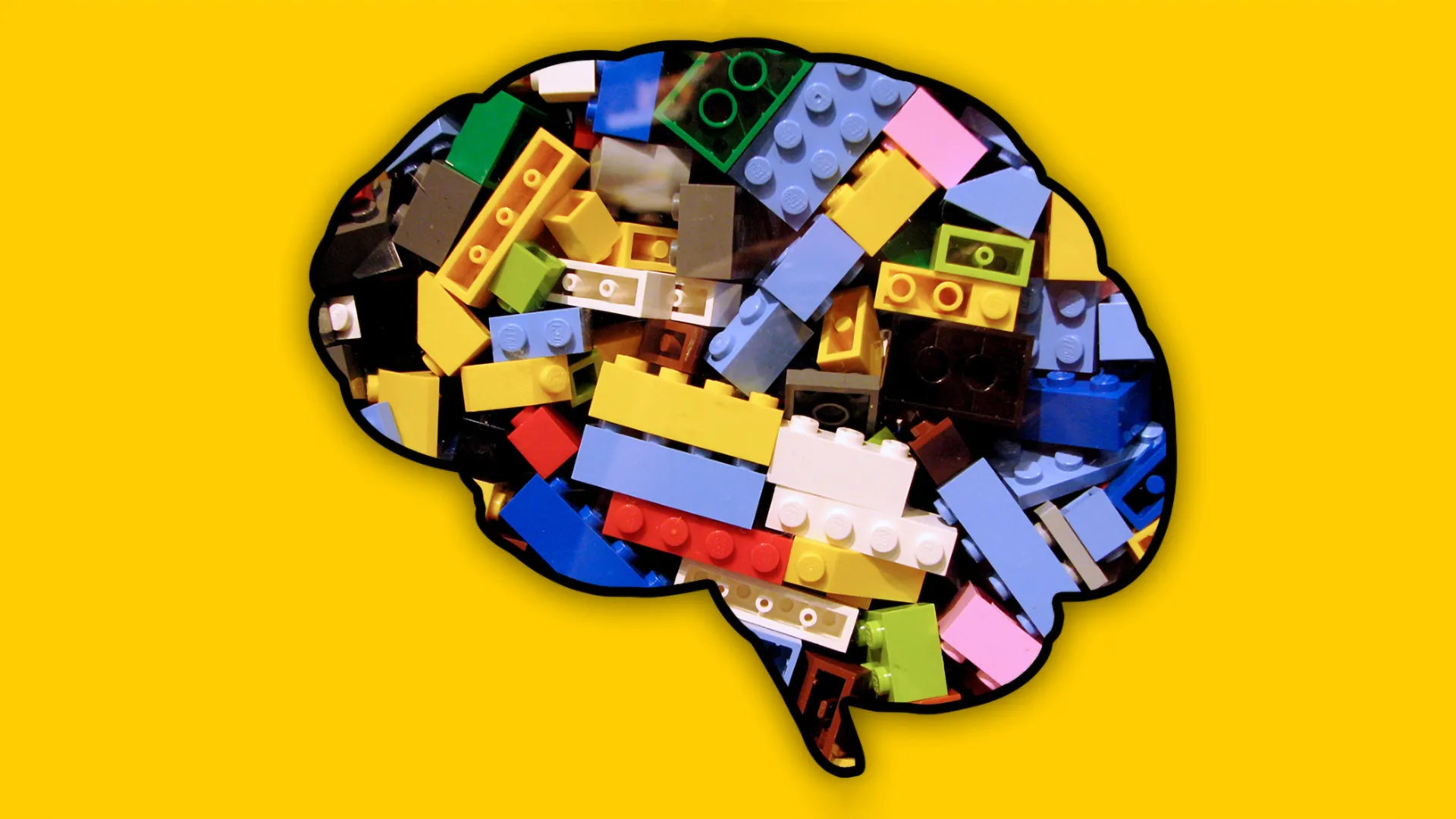
Why some memories last a lifetime while others fade fast

Every day, the brain turns passing impressions, creative sparks, and emotional experiences into lasting memories that shape our identity and guide our decisions. A central question in neuroscience has been how the brain determines which pieces of information are worth storing and how long those memories should remain.

Recent findings show that long-term memories form through a sequence of molecular timing mechanisms that activate across different parts of the brain. Using a virtual reality behavioral system in mice, scientists identified regulatory factors that help move memories into increasingly stable states or allow them to fade entirely.

A study published in Nature highlights how several brain regions work together to reorganize memories over time, with checkpoints that help assess how significant each memory is and how durable it should be.

“This is a key revelation because it explains how we adjust the durability of memories,” says Priya Rajasethupathy, head of the Skoler Horbach Family Laboratory of Neural Dynamics and Cognition. “What we choose to remember is a continuously evolving process rather than a one-time flipping of a switch.”

Moving Beyond the Classic Memory Model

For many years, researchers focused on two primary memory centers: the hippocampus, which supports short-term memory, and the cortex, which was believed to store long-term memories. These long-term memories were thought to sit behind biological on-and-off switches.

“Existing models of memory in the brain involved transistor-like memory molecules that act as on/off switches,” says Rajasethupathy.

This older view suggested that once a memory was marked for long-term storage, it would persist indefinitely. Although this framework provided useful insights, it did not explain why some long-term memories last for weeks while others remain vivid for decades.

A Key Pathway Linking Short and Long-Term Memory

In 2023, Rajasethupathy and colleagues described a brain circuit that connects short-term and long-term memory systems. A central element of this pathway is the thalamus, which helps determine which memories should be kept and directs them to the cortex for long-term stabilization.

These discoveries opened the door to deeper questions: What happens to memories once they leave the hippocampus, and what molecular processes decide whether a memory becomes lasting or disappears?

Virtual Reality Experiments Reveal Memory Persistence

To investigate these mechanisms, the team built a virtual reality setup that allowed mice to form specific memories. “Andrea Terceros, a postdoc in my lab, created an elegant behavioral model allowed us to break open this problem in a new way,” Rajasethupathy says. “By varying how often certain experiences were repeated, we were able to get the mice to remember some things better than others, and then look into the brain to see what mechanisms were correlated with memory persistence.”

Correlation alone could not answer the key questions, so co-lead Celine Chen created a CRISPR-based screening platform to alter gene activity in the thalamus and cortex. This approach showed that removing certain molecules changed how long memories lasted, and each molecule operated on its own timescale.

Timed Programs Guide Memory Stability

The results indicate that long-term memory relies not on a single on/off switch, but on a sequence of gene-regulating programs that unfold like molecular timers across the brain.

Early timers activate quickly but fade fast, allowing memories to disappear. Later timers turn on more gradually, giving important experiences the structural support needed to persist. In this study, repetition served as a stand-in for importance, letting researchers compare frequently repeated contexts with those seen only occasionally.

The team identified three transcriptional regulators essential for maintaining memories: Camta1 and Tcf4 in the thalamus, and Ash1l in the anterior cingulate cortex. These molecules are not required to form the initial memory but are crucial for preserving it. Disrupting Camta1 and Tcf4 weakened connections between the thalamus and cortex and caused memory loss.

According to the model, memory formation begins in the hippocampus. Camta1 and its downstream targets help keep that early memory intact. Over time, Tcf4 and its targets activate to strengthen cell adhesion and structural support. Finally, Ash1l promotes chromatin remodeling programs that reinforce memory stability.

“Unless you promote memories onto these timers, we believe you’re primed to forget it quickly,” Rajasethupathy says.

Shared Memory Mechanisms Across Biology

Ash1l is part of a protein family known as histone methyltransferases, which help maintain memory-like functions in other systems. “In the immune system, these molecules help the body remember past infections; during development, those same molecules help cells remember that they’ve become a neuron or muscle and maintain that identity long-term,” Rajasethupathy says. “The brain may be repurposing these ubiquitous forms of cellular memory to support cognitive memories.”

These discoveries may eventually help researchers address memory-related diseases. Rajasethupathy suggests that, by understanding the gene programs that preserve memory, scientists may be able to redirect memory pathways around damaged brain regions in conditions such as Alzheimer’s. “If we know the second and third areas that are important for memory consolidation, and we have neurons dying in the first area, perhaps we can bypass the damaged region and let healthy parts of the brain take over,” she says.

Next Steps: Decoding the Memory Timer System

Rajasethupathy’s team now aims to uncover how these molecular timers are activated and what determines their duration. This includes investigating how the brain evaluates the importance of a memory and decides how long it should last. Their work continues to point toward the thalamus as a central hub in this decision-making process.

“We’re interested in understanding the life of a memory beyond its initial formation in the hippocampus,” Rajasethupathy says. “We think the thalamus, and its parallel streams of communication with cortex, are central in this process.”

Share Button

HIV battle is not over, warns It’s a Sin creator

Russell T Davies says misinformation about the virus made him “despair”.

Share Button

The HIV battle is not over, warns creator of It’s a Sin

Russell T Davies says misinformation about the virus made him “despair”.

Share Button

Simple thyroid check in pregnancy may lower autism risk

Women who experience continuing thyroid hormone irregularities throughout pregnancy may face a higher chance of having a child diagnosed with autism, according to a study released in The Journal of Clinical Endocrinology & Metabolism.

Thyroid hormones supplied by the mother play an important role in fetal neurodevelopment. When these hormones become disrupted during pregnancy, previous work has linked the imbalance to atypical brain development and a higher likelihood of autism spectrum disorder (ASD). Autism is a multifaceted condition that shapes how an individual communicates, interacts socially and interprets the world.

Untreated Multi-Trimester Imbalance Carries Higher Risk

“We found that while adequately treated chronic thyroid dysfunction was not associated with increased autism risk in offspring, ongoing imbalance across multiple trimesters was,” said Idan Menashe, Ph.D., of the Ben-Gurion University of the Negev in Beer Sheva, Israel. “These findings underscore the need for routine monitoring and timely adjustment of therapy to maintain normal thyroid hormone levels throughout pregnancy.”

Large Birth Cohort Shows Clear Pattern

The research tracked more than 51,000 births and reported that mothers with persistent thyroid hormone imbalance across pregnancy had an increased likelihood of having children with autism.

The authors also documented a dose-response pattern, meaning the risk rose as the number of affected trimesters increased.

Research Team and Publication Information

Other contributors to the study include Leena Elbedour of the Ben-Gurion University of the Negev; May Weinberg of the Meir Medical Center in Kfar Saba, Israel, and Tel Aviv University in Tel Aviv, Israel; Gal Meiri of the Soroka University Medical Center in Beer-Sheva, Israel, and the Ben-Gurion University of the Negev; and Analya Michaelovski of the Soroka University Medical Center.

No funding was received for this research.

“Maternal Thyroid Hormone Imbalance and Risk of Autism Spectrum Disorder,” was published online, ahead of print.

Share Button

Scientists may have found dark matter after 100 years of searching

In the early 1930s, Swiss astronomer Fritz Zwicky noticed that many galaxies were moving far faster than their visible mass should permit. This unusual motion led him to propose that some kind of invisible structure — dark matter — was supplying the extra gravitational pull needed to keep those galaxies intact. Nearly a century later, NASA’s Fermi Gamma-ray Space Telescope may have captured the first direct evidence of this mysterious substance, offering the possibility of finally “seeing” dark matter.

Dark matter has remained one of astronomy’s biggest unknowns since it was first suggested. Until now, scientists have only been able to study it indirectly by observing how it affects ordinary matter, such as the way it produces enough gravity to hold galaxies together. Direct detection has not been possible because dark matter particles do not interact with electromagnetic force — meaning they do not absorb, reflect or emit light.

The WIMP Hypothesis and Predicted Gamma Rays

Many researchers believe that dark matter is made of weakly interacting massive particles, or WIMPs. These particles are thought to be heavier than protons and interact so weakly with normal matter that they are extremely difficult to detect. However, theory suggests that when two WIMPs collide, they annihilate each other and release energetic particles, including gamma ray photons.

Scientists have spent years examining regions where dark matter should be concentrated, especially the center of the Milky Way, searching for these specific gamma rays. Using new data from the Fermi Gamma-ray Space Telescope, Professor Tomonori Totani of the University of Tokyo now believes he has identified the predicted gamma ray signal associated with dark matter particle annihilation.

Totani’s findings appear in the Journal of Cosmology and Astroparticle Physics.

A 20-GeV Gamma Ray Halo Near the Milky Way Center

“We detected gamma rays with a photon energy of 20 gigaelectronvolts (or 20 billion electronvolts, an extremely large amount of energy) extending in a halolike structure toward the center of the Milky Way galaxy. The gamma-ray emission component closely matches the shape expected from the dark matter halo,” said Totani.

The measured gamma ray energy spectrum, which describes how the intensity of the emission varies, closely matches model predictions for the annihilation of hypothetical WIMPs with masses roughly 500 times that of a proton. The estimated frequency of these annihilation events based on the observed gamma ray intensity also fits within expected theoretical ranges.

Evaluating the Possibility of a Major Breakthrough

Totani explains that the gamma ray pattern cannot be easily matched to other known sources or more common astrophysical processes. Because of this, he views the data as a strong candidate for long-sought gamma ray emission from dark matter.

“If this is correct, to the extent of my knowledge, it would mark the first time humanity has ‘seen’ dark matter. And it turns out that dark matter is a new particle not included in the current standard model of particle physics. This signifies a major development in astronomy and physics,” said Totani.

Next Steps and Independent Verification

Although Totani is confident in his analysis, he emphasizes that independent confirmation is essential. Other researchers will need to review the data to verify that the halolike radiation truly results from dark matter annihilation rather than another astrophysical source.

Further support could come from finding the same gamma ray signature in other regions rich in dark matter. Dwarf galaxies orbiting within the Milky Way halo are considered especially promising. “This may be achieved once more data is accumulated, and if so, it would provide even stronger evidence that the gamma rays originate from dark matter,” said Totani.

Funding: This work was supported by JSPS/MEXT KAKENHI Grant Number 18K03692.

Share Button

Millions are about to choose the wrong Medicare plan

Right now, 68 million Americans have a deadline coming up: the deadline to decide their Medicare health coverage for next year if they’re over age 65 or have major disabilities.

They must make those decisions by December 7, for coverage beginning January 1, 2026, which makes this time, known as Medicare Open Enrollment, a very important time.

And yet, University of Michigan research has shown that many people covered by Medicare don’t take key steps during Open Enrollment that could save them money, headaches and worry.

Based on that research, here are five tips for everyone who has Medicare – and the family members and friends who can help them with their choices.

Use the tools

The official Medicare website has a lot of easy-to-understand and straightforward tools to help anyone understand their Medicare coverage options, and explore the options open to them or their loved ones.

But only 33% of people with Medicare used the Internet at all to explore their options, according to a recent U-M study.

That’s even though the choices can be dizzying: many people have dozens of options. Nearly all people have more than 10 Medicare Advantage plans to choose from, as well as multiple Part D prescription drug and Medigap supplemental plans to choose from if they opt for traditional Medicare.

The Medicare Plan Compare site is the place to start, and you can start on the Your Medicare Options page.

It’s available even during the government shutdown, because the plan-navigation tools on it were built before the shutdown began.

Using the Plan Compare site, you can see which Medicare Advantage and Part D prescription drug plans serve your area, what services or drugs they cover, what they charge for monthly premiums and for copays and other costs when you get health care or fill a prescription, and what the plan’s overall star rating is.

If you have a Medicare Advantage plan now, using the Plan Compare tool will also show you if your current plan will still be available next year.

Some plans are ending or combining with others.

You can also enter your prescription drug names and doses to see what they will cost you on different Part D plans, and whether pharmacies near you are in-network.

This includes the Part D drug coverage in many Medicare Advantage plans, as well as standalone Part D plans for people who choose traditional Medicare.

U-M researchers showed that using the prescription drug tool to compare estimated costs could save people a lot of money.

They did the study before the annual cap on Medicare prescription costs took effect in 2025, but still feel it’s important for everyone with Medicare drug coverage to use the tool.

If you need help navigating the Plan Finder site, or signing up for an account that will help you get the most use out of it, don’t be afraid to ask a friend, family member or neighbor. Or use the independent help described in Tip 2, below.

“Given changing clinical circumstances and the fact that insurance plan costs and benefits are often modified from year to year, it is very important that people with Medicare coverage use the available tools during Open Enrollment to identify a plan that best meets their medical needs and fits their financial situation,” said A. Mark Fendrick, M.D., director of U-M’s center for Value Based Insurance Design.

Get independent help

Half of people with Medicare get their coverage through Medicare Advantage plans run by insurance companies.

And of the other half, who choose traditional Medicare, nearly half get Part D prescription drug plans and “Medigap” add-on plans from private insurance companies.

Those insurance companies send out a lot of mail and email at this time of year, trying to persuade people to choose their plans.

They make phone calls, pay for advertising and even hold events where participants get a free meal in exchange for listening to the sales pitch for that plan.

They do all this because they make money on enrollees who are healthier and don’t use their insurance a lot.

Then there are insurance brokers and agents – people who do one-on-one consultations, but are paid for every person they sign up for a particular company’s plan.

While all of this can inform your decision, these aren’t independent sources of information. However, there is an independent source: your State Health Insurance Assistance Program, or SHIP.

Each state has one, with paid staff and trained volunteers who don’t have a financial stake in which plan you choose.

You can find your state’s SHIP program here.

“With the overwhelming number of plans and the vast amount of information available, it’s essential to remember that free help is available,” said Lianlian Lei, Ph.D., who has studied Medicare enrollment by older adults and is an assistant professor in the U-M Medical School’s Department of Psychiatry.

“Seeking independent, unbiased assistance is crucial to making the best choice,” she added.

Because SHIP programs don’t have the marketing dollars that insurance companies and brokers do, many people don’t know about them.

In fact, a recent U-M poll showed that 75% of older adults have never heard of SHIP, and another 21% have heard of it but haven’t used it.

Only 4% of older adults had used SHIP services, even though they’re available for free to anyone eligible for Medicare.

In Michigan, anyone can reach the state SHIP program by calling 1-800-803-7174 from 8 a.m. to 8 p.m., Monday through Friday.

You’ll speak with an agent who can schedule an appointment or provide a referral to a trained, certified counselor in their community.

Not only that, the staff at this help line, called MiOptions, can also help older adults and their caregivers find out what other assistance they might qualify for.

You may also find trained SHIP volunteers offering free in-person counseling sessions at your local public library or senior center; check the events listings to see if any are coming up and how to make an appointment.

Interested in learning how to offer this kind of independent help to others as a SHIP volunteer? Visit this page.

Look at the total package, not just the monthly premiums

When choosing any insurance, a lot of people focus on the monthly premium, and not on the total package of coverage.

This is true for Medicare too.

When you use the Medicare Plan Compare tool, you can see monthly premiums for different Medicare Advantage plans side-by-side.

But you can also see things like co-pays and other costs, which can vary a lot depending on how much health care a person actually uses.

The Plan Compare tool does not allow you to compare Medicare Advantage to traditional Medicare plus any add-on plans you choose.

So, you’ll want to note these costs for traditional Medicare, and then explore the Part D prescription drug plans and Medigap plans available in your area.

And remember, even if a Medicare Advantage plan says it has a $0 premium, that’s just for the coverage it provides beyond Part B.

Unless the plan includes a Part B premium reduction, which most don’t, you will still need to pay a monthly premium of at least $185, or more if you have a higher income.

Sometimes a plan with a higher monthly premium has lower out-of-pocket costs due at the time of care, or a lower cap on total out-of-pocket costs that you could owe each year.

The National Council on Aging has a great guide to all of these kinds of costs.

When choosing a Part D prescription drug plan or a Medigap plan to go with traditional Medicare coverage, it’s also important to compare options, based on the medications you take or whether you travel a lot or live in a second location during part of the year.

But surprisingly, U-M research shows it isn’t cost but access to care providers, and dissatisfaction with quality of care, that drive most people to switch Medicare Advantage plans.

Access to care is also the biggest driver for people leaving Medicare Advantage to switch to traditional Medicare, the study found.

That’s why it’s important to look at the star ratings that Medicare Advantage and Part D prescription plans have earned from past members’ opinions of them.

It’s also important to look at the networks of hospitals, doctors and other providers that each Medicare Advantage plan will allow you to go to, or the restrictions on specific drug classes that Part D plans might impose.

This kind of information is only available on each plan’s website.

The same research team has also looked at Medicare’s “revolving door” and the patterns of switching to and from the different forms of Medicare.

One item they note: Most states do not require insurers to ensure that people have the right to purchase Medigap plans regardless of their health status, except for an initial period after they enroll in Medicare for the first time.

This can result in Medicare Advantage “lock-in” for individuals with costly care needs, meaning they are unable to obtain Medigap coverage to help offset high out-of-pocket costs in traditional Medicare.

So, if you have significant health issues and have been in a Medicare Advantage plan, but you are thinking of switching to traditional Medicare, it’s important to understand if you’ll be able to get an affordable Medigap plan to cover costs that traditional Medicare doesn’t cover.

If you have a low income, see if you’re eligible for extra assistance

For older adults and people with disabilities who have limited incomes, there are new programs and supports available for 2026, on top of the ones already in place in 2025.

Some of them are automatic, but some require you to apply for them.

You can get help understanding all of the options open to you by contacting the SHIP program for your state (see above).

But here are some major ones to be aware of:

You can find out if there’s one serving your area, and whether you might qualify, using the Plan Compare tool or by contacting your state’s SHIP program.

Don’t assume you and your spouse or partner should have the same plan

If you are married or live with a partner, your instinct might be to enroll in the same plan as them for convenience.

But that’s not always the best choice.

Your health needs, and your spouse’s or partner’s needs, may be very different. One of you might be retired, the other working.

Or maybe you have different coverage related to your past employment or military service.

If one of you has dementia, for instance, there may be special plans and programs that could cover more services.

But U-M research showed that people with and without dementia make very similar Medicare Advantage choices, which may mean they aren’t examining all their options.

No matter what your health status, and your spouse or partner’s health status, it’s still important to make individual choices when it comes to Medicare Open Enrollment.

U-M research has shown, though, that many people with Medicare Advantage coverage are making changes to their coverage in sync with their spouse or partner.

The Medicare online tools don’t have a “couples” setting, so each person should go through the process by inputting their information.

You could seek SHIP counseling together, but you may have to make two appointments depending on the program in your area.

Bonus tip about Medicare enrollment

Even if you make a choice during Medicare Open Enrollment, you may not be stuck with that choice for all of 2026.

For instance, if you choose a Medicare Advantage plan, but then realize in early 2026 that it’s not right for you, you will have until March 31 to choose a different Medicare Advantage Plan or move to traditional Medicare.

And if you have a major change in your income, employment, address, or living situation during 2026, you may become eligible for a Special Enrollment Period that will allow you to change plans.

This article contains information based on research by, and expertise from, experts who are part of the U-M Institute for Healthcare Policy and Innovation, including Lianlian Lei, Ph.D., U-M Medical School Department of Psychiatry; Geoffrey Hoffman, Ph.D., U-M School of Nursing; Kristian Stensland, M.D., M.P.H., M.S., U-M Medical School Department of Urology; and A. Mark Fendrick, M.D., and Renuka Tipirneni, M.D., M.Sc., U-M Medical School Department of Internal Medicine, Division of General Medicine. Data on awareness of SHIP comes from the National Poll on Healthy Aging, based at IHPI.

Share Button

Where cannabis stores cluster, emergency visits climb

A population-based natural experiment investigated how living near cannabis retail stores relates to cannabis-related harms. The researchers found a connection between store exposure and higher rates of harm, with the largest increases appearing in neighborhoods that had many stores located close together. These results indicate that limiting the number of cannabis retailers, reducing concentrated clusters of stores, or restricting store placement in certain areas could support public health goals. The study appears in Annals of Internal Medicine.

A research team from North York General Hospital and partner institutions analyzed data from 6,140,595 people living in Ontario, Canada. Participants were between 15 and 105 years old and lived in 10,574 neighborhoods from April 2017 through December 2022. The team examined whether living near a cannabis retail store after legalization in October 2018 influenced neighborhood-level rates of cannabis-related emergency department (ED) visits.

To define exposure, the researchers used provincial records on cannabis store locations. Neighborhoods were considered exposed if they were located within 1000m of a cannabis retail store and unexposed if they were situated more than 1000m away. The main measure of health impact was the rate of cannabis-attributable ED visits per 100,000 people aged 15 years or older.

The analysis showed that exposed neighborhoods were more commonly located in major urban centers and were disproportionately represented in the lowest income quintile compared to unexposed neighborhoods. After a cannabis store opened nearby, exposed neighborhoods did not show a rise in monthly cannabis-attributable ED visits. By contrast, unexposed neighborhoods experienced a decline in monthly ED visits over the same period.

When the two groups were compared directly, exposed neighborhoods had a 12% increase (CI, 6% to 19%) in the absolute rate of cannabis-attributable ED visits relative to unexposed areas. The researchers also observed that neighborhoods with several cannabis stores located within 1000m experienced greater increases in ED visits than areas with fewer stores. According to the authors, these findings suggest that the combination of legalization and retail expansion may introduce public health risks that differ from legalization on its own.

Share Button

Prostate cancer screening should not be offered to most UK men, say experts

It recommends that only men with a confirmed genetic risk of prostate cancer should be screened for the disease.

Share Button

A strange ancient foot reveals a hidden human cousin

Thanks to newly discovered fossil bones, scientists have now been able to match an enigmatic 3.4-million-year-old hominin foot, first found in 2009, to a species that is different from the famous fossil Lucy. This link strengthens the case that two separate species of early human ancestors were living in the same region at the same time.

In 2009, a research team led by Arizona State University paleoanthropologist Yohannes Haile-Selassie uncovered eight bones from the foot of an ancient human ancestor in 3.4-million-year-old sediments in the Afar Rift of Ethiopia. The fossil, known as the Burtele Nature Foot, was recovered at the Woranso-Mille paleontological site and was formally introduced in a 2012 publication.

“When we found the foot in 2009 and announced it in 2012, we knew that it was different from Lucy’s species, Australopithecus afarensis, which is widely known from that time,” said Haile-Selassie, director of the Institute of Human Origins (IHO) and a professor in the ASU School of Human Evolution and Social Change.

“However, it is not common practice in our field to name a species based on postcranial elements -elements below the neck — so we were hoping that we would find something above the neck in clear association with the foot. Crania, jaws and teeth are usually the elements used in species recognition.”

Connecting the Burtele Foot to Australopithecus deyiremeda

When the Burtele foot was first described, some teeth had already been recovered from the same general area. However, scientists were unsure whether those teeth came from exactly the same sediment layer as the foot. In 2015, the team announced a new species from the region, Australopithecus deyiremeda, but did not yet assign the Burtele foot to this species, even though some of the fossils were found very close to the foot, explained Haile-Selassie.

Over the next decade, repeated field seasons and additional fossil discoveries allowed the team to build a stronger picture. Haile-Selassie said they now have enough material to confidently link the Burtele foot with the species A. deyiremeda.

Two Hominin Species Sharing the Same Landscape

The decision to place the Burtele foot in a specific species is only one part of a larger story. The Woranso-Mille site is especially important because it provides clear evidence that two closely related hominin species were living in the same area at the same time.

The Burtele foot, now associated with A. deyiremeda, is considered more primitive than the feet of Lucy’s species, A. afarensis. Unlike Lucy, the Burtele foot kept an opposable big toe, which would have been useful for climbing. On the ground, however, A. deyiremeda still walked on two legs and appears to have pushed off primarily from the second toe rather than the big toe, which is how modern humans typically walk.

“The presence of an abducted big toe in Ardipithecus ramidus was a big surprise because at 4.4 million-years-ago there was still an early hominin ancestor which retained an opposable big toe, which was totally unexpected,” said Haile-Selassie.

“Then 1-million-years later, at 3.4-million-years ago, we find the Burtele foot, which is even more surprising. This is a time when we see species like A. afarensis whose members were fully bipedal with an adducted big toe. What that means is that bipedality — walking on two legs — in these early human ancestors came in various forms. The whole idea of finding specimens like the Burtele foot tells you that there were many ways of walking on two legs when on the ground, there was not just one way until later.”

Isotope Evidence Highlights Different Hominin Diets

To better understand what A. deyiremeda ate, Naomi Levin, a professor at the University of Michigan, analyzed eight of the 25 teeth recovered from the Burtele area using isotope techniques. The method begins with cleaning the tooth surface and then carefully removing only the enamel for testing.

“I sample the tooth with a dental drill and a very tiny (< 1mm) bit — this equipment is the same kind that dentists use to work on your teeth,” said Levin. “With this drill I carefully remove small amounts of powder. I store that powder in a plastic vial and transport it back to our lab at the University of Michigan for isotopic analysis.”

The findings were unexpected.

While Lucy’s species appears to have had a mixed diet, using both C3 (resources from trees and shrubs) and C4 plants (tropical grasses and sedges), A. deyiremeda relied more heavily on C3 resources.

“I was surprised that the carbon isotope signal was so clear and so similar to the carbon isotope data from the older hominins A. ramidus and Au. anamensis,” said Levin. “I thought the distinctions between the diet of A. deyiremeda and A. afarensis would be harder to identify but the isotope data show clearly that A. deyiremeda wasn’t accessing the same range of resources as A. afarensis, which is the earliest hominin shown to make use of C4 grass-based food resources.”

Dating Fossils and Reconstructing Ancient Environments

Another crucial part of the research involved pinning down the age of the fossils and reconstructing the ancient environments in which these hominins lived. Establishing how the fossil layers line up over space and time helps scientists understand when, and under what conditions, each species existed.

“We have done a tremendous amount of careful field work at Woranso-Mille to establish how different fossil layers relate, which is crucial to understanding when and in what settings the different species lived,” said Beverly Saylor, professor of earth, environmental and planetary sciences at Case Western Reserve University. Saylor led the geological work that established the stratigraphic association between the foot and Au. deyiermeda.

Juvenile Jaw Offers Clues to Growth and Development

Alongside the 25 teeth recovered from Burtele, Haile-Selassie’s team also discovered the jaw of a juvenile individual that, based on tooth anatomy, clearly belonged to A. deyiremeda. According to Gary Schwartz, IHO research scientist and professor at the School of Human Evolution and Social Change, this jaw contained a complete set of baby teeth already in place, as well as many adult teeth still developing deep inside the lower jawbone.

The researchers used CT scanning technology to visualize all of the developing teeth. Because tooth development is closely linked to overall growth patterns, this information helped the team estimate that the youngster was about 4.5 years old at the time of death.

“For a juvenile hominin of this age, we were able to see clear traces of a disconnect in growth between the front teeth (incisors) and the back chewing teeth (molars), much like is seen in living apes and in other early australopiths, like Lucy’s species,” said Schwartz.

“I think the biggest surprise was despite our growing awareness of how diverse these early australopith (i.e., early hominin) species were — in their size, in their diet, in their locomotor repertoires and in their anatomy — these early australopiths seem to be remarkably similar in the manner in which they grew up.”

How Ancient Hominins Lived Together

By combining information about movement (locomotion), diet and environment, scientists are gaining new insight into how different hominin species could live in the same region without one driving the other to extinction. Differences in how they walked, climbed and fed may have allowed them to share the landscape by using it in distinct ways.

“All of our research to understand past ecosystems from millions of years ago is not just about curiosity or figuring out where we came from, said Haile-Selassie. “It is our eagerness to learn about our present and the future as well.”

“If we don’t understand our past, we can’t fully understand the present or our future. What happened in the past, we see it happening today,” he said. “In a lot of ways, the climate change that we see today has happened so many times during the times of Lucy and A. deyiremeda. What we learn from that time could actually help us mitigate some of the worst outcomes of climate change today.”

Publication, Research Team and Funding

The paper, “New finds shed light on diet and locomotion in Australopithecus deyiremeda,” appears in the journal Nature. The international research team included scientists from Arizona State University, Washington University, St. Louis, Case Western Reserve University, Berkeley Geochronology Center, Universitat de Barcelona, University of Tampa and University of Michigan. The full list of authors are: Yohannes Haile-Selassie, Gary T. Schwartz, Thomas C. Prang, Beverly Z. Saylor, Alan Deino,Luis Gibert, Anna Ragni and Naomi E. Levin.

Funding for this work came from the National Science Foundation and the W.M. Keck Foundation. Field and laboratory research in Ethiopia was made possible through the support of the Ethiopian Heritage Authority.

Share Button

Scientists uncover the brain’s hidden learning blocks

Artificial intelligence can now craft award-winning essays and help doctors detect disease with impressive accuracy. Yet when it comes to true mental flexibility, living brains still have the clear advantage.

Humans can adjust to new situations and information with remarkable ease. Learning unfamiliar computer software, trying a new recipe, or figuring out the rules of a new game often happens quickly for people, while AI systems typically struggle to adapt in real time and to learn effectively “on the fly.”

In a new study, neuroscientists at Princeton University identify one key reason for this difference. The human brain repeatedly reuses the same cognitive “blocks” across many different situations, combining and recombining them to form new patterns of behavior.

“State-of-the-art AI models can reach human, or even super-human, performance on individual tasks. But they struggle to learn and perform many different tasks,” said Tim Buschman, Ph.D., senior author of the study and associate director of the Princeton Neuroscience Institute. “We found that the brain is flexible because it can reuse components of cognition in many different tasks. By snapping together these ‘cognitive Legos,’ the brain is able to build new tasks.”

The research was published on November 26 in the journal Nature.

Compositionality: reusing skills in new situations

If someone already knows how to tune a bicycle, learning to repair a motorcycle can feel more straightforward. That ability to build a new skill out of simpler, familiar ones drawn from related experiences is known as compositionality.

“If you already know how to bake bread, you can use this ability to bake a cake without relearning how to bake from scratch,” said Sina Tafazoli, Ph.D., a postdoctoral researcher in the Buschman lab at Princeton and lead author of the new study. “You repurpose existing skills — using an oven, measuring ingredients, kneading dough — and combine them with new ones, like whipping batter and making frosting, to create something entirely different.”

Until now, evidence for exactly how the brain supports this kind of flexible, compositional thinking has been limited and sometimes conflicting.

To get a clearer picture, Tafazoli trained two male rhesus macaques to carry out three related tasks while recording activity across their brains.

Testing flexibility with visual categorization tasks

Instead of real-world jobs like baking or bike repair, the animals were asked to perform three visual categorization tasks. On a screen, they saw a series of colorful, balloon-like blobs. Their job was to decide whether each blob looked more like a bunny or the letter “T” (categorizing the shape) or whether it appeared more red or more green (categorizing color).

The challenge was more difficult than it sounded. The blobs varied in how clear the differences were. Some images obviously resembled a bunny or were vividly red, while others were ambiguous and required careful judgment to tell the categories apart.

To report their decision about the shape or color, each monkey indicated its answer by looking in one of four different directions on the screen. In one version of the task, for example, looking left meant the animal judged the blob to be a bunny, while looking right signaled that it looked more like a “T.”

A crucial part of the experiment was that each task had its own specific rules, yet still shared key components with the others.

One of the color tasks and the shape task required the animals to look in the same directions to indicate their choices, while both color tasks asked the monkeys to categorize the color in the same way (as either more red or more green) but to look in different directions when signaling their color judgment (categorizing the color).

This design allowed the researchers to see whether the brain reused the same neural patterns, or cognitive building blocks, whenever tasks shared certain features.

Prefrontal cortex as a hub for reusable cognitive blocks

After examining patterns of brain activity, Tafazoli and Buschman found that the prefrontal cortex, a region at the front of the brain involved in high-level thinking and decision-making, contained several recurring patterns of activity. These patterns appeared whenever groups of neurons worked together toward a common goal, such as distinguishing colors.

Buschman referred to these patterns as the brain’s “cognitive Legos,” a set of building blocks that can be flexibly combined to produce different behaviors.

“I think about a cognitive block like a function in a computer program,” Buschman said. “One set of neurons might discriminate color, and its output can be mapped onto another function that drives an action. That organization allows the brain to perform a task by sequentially performing each component of that task.”

For one of the color tasks, for instance, the brain would assemble a block that determines the color of the image together with another block that guides eye movements in particular directions. When the animal switched to a different task, such as judging shapes instead of colors while still using similar eye movements, the brain simply activated the block for shape processing along with the block for those same eye movements.

This sharing of blocks appeared primarily in the prefrontal cortex and was not seen to the same extent in other brain regions. The finding suggests that this type of compositionality may be a distinctive feature of the prefrontal cortex.

Turning blocks on and off to sharpen focus

Tafazoli and Buschman also observed that the prefrontal cortex seemed to quiet certain cognitive blocks when they were not needed. This likely helps the brain concentrate on the most relevant task at any given moment.

“The brain has a limited capacity for cognitive control,” Tafazoli said. “You have to compress some of your abilities so that you can focus on those that are currently important. Focusing on shape categorization, for example, momentarily diminishes the ability to encode color because the goal is shape discrimination, not color.”

By selectively activating and suppressing different blocks, the brain can avoid being overloaded and can keep performance focused on the current goal.

Cognitive Legos, AI, and mental health

These cognitive Legos may help explain why people are often able to pick up new tasks so rapidly. The brain does not always need to start from scratch. Instead, it can draw on existing mental components, recombine them, and avoid duplicating work, a strategy that current AI systems generally lack.

“A major issue with machine learning is catastrophic interference,” Tafazoli said. “When a machine or a neural network learns something new, they forget and overwrite previous memories. If an artificial neural network knows how to bake a cake but then learns to bake cookies, it will forget how to bake a cake.”

Incorporating compositionality into AI could eventually make artificial systems more human-like in their learning, allowing them to acquire new skills over time without erasing older ones.

The same principles could also influence medicine. Many neurological and psychiatric conditions, including schizophrenia, obsessive-compulsive disorder, and some forms of brain injury, can make it difficult for people to apply existing skills in new situations. These problems may arise when the brain can no longer smoothly recombine its cognitive building blocks.

“Imagine being able to help people regain the ability to shift strategies, learn new routines, or adapt to change,” Tafazoli said. “In the long run, understanding how the brain reuses and recombines knowledge could help us design therapies that restore that process.”

Funding for the study was provided by the National Institutes of Health (R01MH129492, 5T32MH065214).

Share Button