Congleton High School wrote to staff and parents to inform them of the closure.


Congleton High School wrote to staff and parents to inform them of the closure.
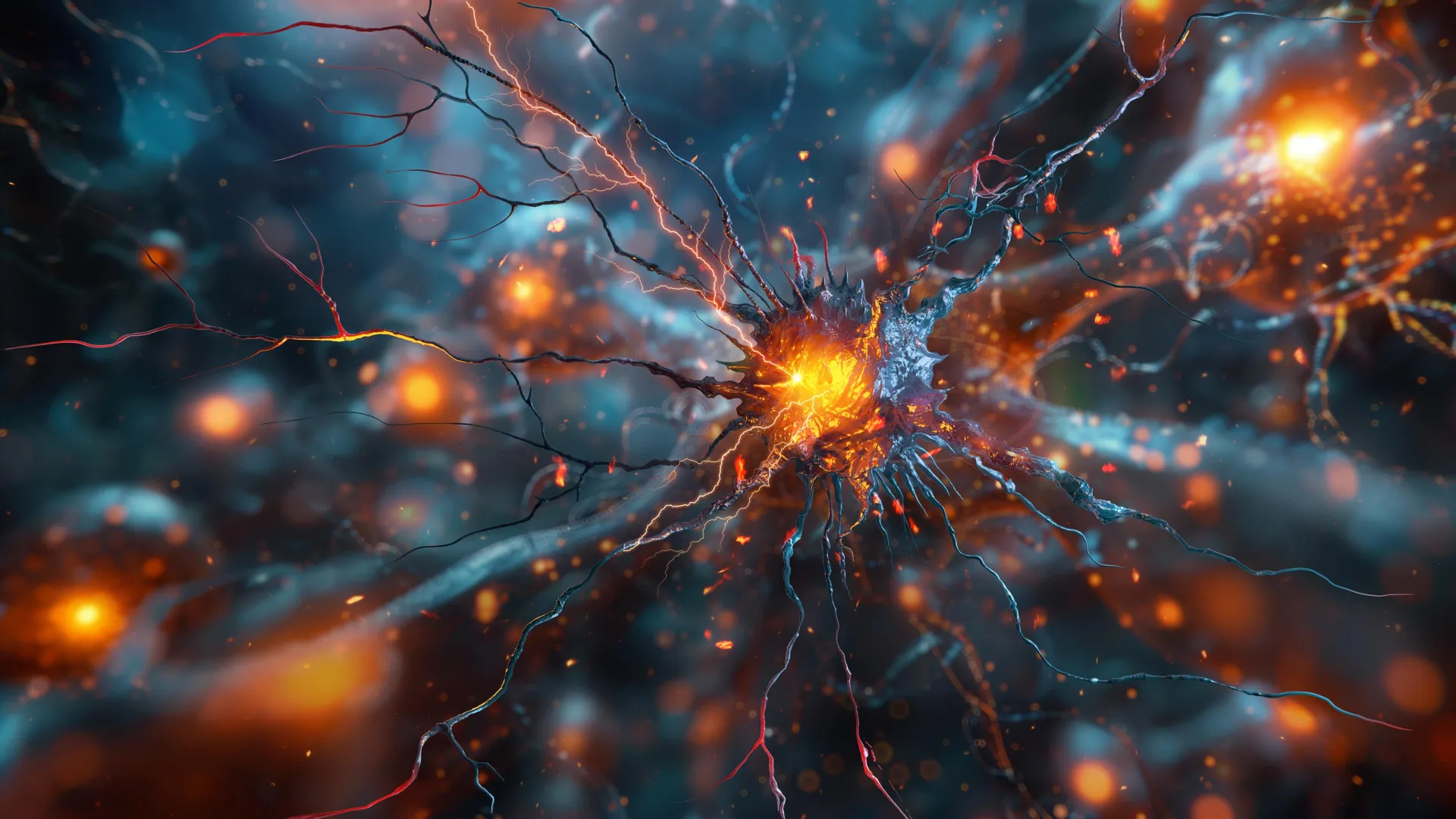
A new JNeurosci study led by Tian-Ming Gao and colleagues at Southern Medical University examined how adenosine triphosphate (ATP) signaling might influence depression and anxiety in male mice. ATP is best known as the cell’s main source of energy, but it also acts as a chemical messenger that helps neurons communicate. Because healthy communication between brain cells is essential for regulating emotions, the researchers focused their work on the hippocampus, a region involved in memory, stress responses, and the development of depressive symptoms.
To better understand how ATP functions in this area, the team examined signaling patterns in the hippocampus and how they changed under stress. The hippocampus has long been associated with mood disorders, in part because it is sensitive to prolonged stress and is involved in shaping emotional behavior. disruptions in this region can affect how the brain processes stress, which may set the stage for depression or anxiety.
Stress, ATP Loss, and the Role of Connexin 43
The researchers found that male mice prone to developing depressive- and anxiety-like behaviors after long-term stress had lower levels of ATP. These mice also produced less of a key protein required for ATP release (connexin 43). Connexin 43 forms channels that allow ATP to move between certain cells, making it an important part of how the brain maintains healthy energy and signaling levels.
To test whether reduced ATP release contributed to mood-related symptoms, the team genetically decreased or removed connexin 43 in cells that normally release ATP. This experiment was done in another group of mice that had not been exposed to prolonged stress. Even without a stressful environment, lowering connexin 43 triggered depressive- and anxiety-like behaviors and reduced ATP levels. This finding suggested that disruptions in ATP release alone could influence emotional behavior.
When the researchers restored connexin 43 in the hippocampus of stressed mice, ATP levels returned to normal and the animals showed noticeable improvements in their behavior. This recovery helped reinforce the idea that ATP signaling plays a central role in regulating mood.
A Shared Biological Pathway for Depression and Anxiety
Gao explains, “This is the first direct evidence that deficient ATP release in [a region of the] hippocampus drives both depressive- and anxiety-like behaviors, revealing a shared molecular pathway [for these conditions].” Identifying such a pathway is important, as depression and anxiety often occur together and can be difficult to treat simultaneously with existing therapies.
Gao notes that the link between connexin 43 and ATP release highlights a possible target for future treatments. By improving or restoring ATP signaling, scientists may eventually be able to develop interventions that address both conditions at once. The research team also plans to include both male and female mice in upcoming studies to determine whether these mechanisms operate similarly across sexes, which could broaden the relevance of their findings.
Transplant donor says “anyone with a heart would give something to keep someone else alive”.
Researchers report that people who have more muscle and a lower visceral fat to muscle ratio tend to show signs of a younger biological brain age. This conclusion comes from a study that will be presented next week at the annual meeting of the Radiological Society of North America (RSNA). Visceral fat refers to the fat stored deep in the abdomen around key internal organs.
“Healthier bodies with more muscle mass and less hidden belly fat are more likely to have healthier, youthful brains,” said senior study author Cyrus Raji, M.D., Ph.D., associate professor of radiology and neurology in the Department of Radiology at Mallinckrodt Institute of Radiology at Washington University School of Medicine in St. Louis, Missouri. “Better brain health, in turn, lowers the risk for future brain diseases, such as Alzheimer’s.”
How MRI Measures Brain Age and Body Composition
Brain age is an estimate of how old the brain appears biologically, based on its structure as seen through MRI. Body MRI can track muscle mass, which serves as a marker for efforts to reduce frailty and strengthen overall health. Estimated brain age from structural scans may also shed light on risk factors for Alzheimer’s disease, including muscle loss.
“While it is commonly known that chronological aging translates to loss of muscle mass and increased hidden belly fat, this work shows that these health measures relate to brain aging itself,” Dr. Raji said. “It shows muscle and fat mass quantified in the body are key reflectors of brain health, as tracked with brain aging.”
Study Details: Imaging, AI Analysis, and Participant Profile
The study evaluated 1,164 healthy adults (52% women) across four research sites using whole-body MRI. Participants had a mean chronological age of 55.17 years. Imaging included T1-weighted MRI sequences, which highlight fat as bright and fluid as dark, providing a clear view of muscle, fat, and brain tissue. An artificial intelligence (AI) algorithm measured total normalized muscle volume, visceral fat (hidden belly fat), subcutaneous fat (fat under the skin) and predicted brain age.
The data indicated that individuals with a higher visceral fat to muscle ratio had higher predicted brain age. Subcutaneous fat showed no meaningful association with how old the brain appeared.
“The participants with more muscle tended to have younger-looking brains, while those with more hidden belly fat relative to their muscle had older-looking brains,” Dr. Raji said. “The fat just under the skin wasn’t related to brain aging. In short, more muscle and a lower visceral fat to muscle ratio were linked to a younger brain.”
Implications for Health, Prevention, and Future Interventions
Dr. Raji explained that focusing on building muscle and reducing visceral fat are realistic and actionable goals. Whole-body MRI and AI-based brain age estimates can offer clear benchmarks for programs designed to lower visceral fat while maintaining or increasing muscle.
He also noted that the results highlight the close connection between physical health and brain health.
“This research has validated widely held hypotheses about the association between body composition biomarkers and brain health and provides a foundation for those biomarkers to be included in future trials of various metabolic interventions and treatments,” he said.
What the Findings Mean for GLP-1 Weight Loss Drugs
Commonly prescribed glucagon-like peptide-1 (GLP-1) weight loss medications, including Ozempic, are effective at reducing body fat but may also contribute to muscle loss. Dr. Raji suggested that the study’s findings could help guide the development of next-generation therapies. These future treatments may aim to reduce visceral fat more than subcutaneous fat while protecting muscle mass.
“Losing fat — especially visceral fat — while preserving muscle volume would have the best benefit on brain aging and brain health based on insights from our work,” he said. “Thus, our study can inform future treatments by promoting research that quantifies MRI of body fat, muscle and brain age, which can help determine the optimal dosing regimens for GLP-1s to achieve the best outcomes in body and brain health.”
Co-authors are Somayeh Meysami, M.D., Soojin Lee, Ph.D., Saurabh Garg, M.Sc., Nasrin Akbari, M.Sc., Rodrigo Solis Pompa M.D., M.H.Sc., Ahmed Gouda, M.Sc., Thanh Duc Nguyen, Ph.D., Saqib Abdullah Basar, M.B.B.S., M.P.H., Yosef G. Chodakiewitz, M.D., David A. Merrill, M.D., Ph.D., Alex Exuzides, Ph.D., M.D., Amar P. Patel, M.D., Daniel J. Durand, M.D., M.B.A., and Sam Hashemi, M.Sc.
Former charity boss Liz Sayce found confusing guidance on Carer’s Allowance had left thousands with fines and surprise bills.
The tax on sugary drinks is being extended to include pre-packaged milk-based drinks.
Milkshakes and lattes to be included in UK sugar tax scheme for the first time.

Eric Boyd and his research team investigated how a burst of small earthquakes in 2021 affected the communities of microbes living deep beneath the Yellowstone Plateau Volcanic Field. These microbes inhabit rock and water systems far below the surface, where sunlight never reaches. Instead of relying on photosynthesis, they depend on chemical reactions that occur when water moves through fractured rock. This chemistry provides the energy that supports many forms of underground life.
Earthquakes have the potential to reshape this environment in several ways. Shaking can break open new rock surfaces, force out fluids that were previously sealed away, and redirect the flow of water through the subsurface. Each of these effects can create fresh chemical reactions, which in turn alter the types of energy available to microbial communities. The authors refer to this shift in available resources as a change in the chemical “menu” that microbes can draw from.
Sampling Yellowstone’s Deep Fluids After the Quake Swarm
To understand how seismic activity influenced this hidden ecosystem, the researchers collected water samples from a nearly 100-meter deep borehole located along the western edge of Yellowstone Lake. They sampled the site five times throughout 2021, giving them a rare look at how conditions changed both immediately and over the following months.
Analyses of these samples showed notable increases in hydrogen, sulfide, and dissolved organic carbon after the earthquakes. These compounds serve as important energy sources for many subsurface organisms. As the chemistry of the water shifted, the team also detected a rise in planktonic cells, suggesting that more microbes were present in the water column than before. This combination of chemical and biological changes indicates that the quake swarm temporarily boosted the resources available to deep microbial life.
Microbial Communities in Motion
Beyond detecting an increase in cell numbers, Boyd and colleagues observed that the types of microbes present changed over time. This result stands out because subsurface microbial communities in continental bedrock aquifers are often considered relatively stable. In contrast, the Yellowstone system appeared to respond quickly and noticeably to the pulse of seismic energy.
According to the authors, the kinetic energy associated with earthquakes can influence both the chemistry and the biological makeup of aquifer fluids. Their findings imply that even small seismic events can drive meaningful ecological shifts underground.
Implications for Other Worlds With Rock and Water
The processes observed in the Yellowstone borehole may not be unique. Many regions around the world experience regular seismic activity that could similarly reshape subsurface energy supplies. If this mechanism is widespread, it could help explain how microbial life persists in deep and isolated environments.
The team also notes that the same basic dynamics might occur on other rocky planets that contain water. If earthquakes or similar geological motions can refresh chemical resources below the surface, this could expand the possible habitats for microbes on worlds such as Mars.
Tributes are paid to the renowned surgeon who carried out the UK’s first successful heart transplant.
Brain scans on thousands of people reveal the dramatic shifts the brain goes through between birth and death.
