Wegovy and Ozempic tied to dramatically lower cancer deaths

A new study from the University of California San Diego suggests that glucagon-like peptide-1 (GLP-1) receptor agonists, a class of medications originally developed for type 2 diabetes, may have benefits that extend far beyond blood sugar and weight management. These drugs, which include semaglutide (sold as Ozempic and Wegovy) and tirzepatide (known as Mounjaro), are already well known for helping people lose weight and manage metabolic conditions. Now, researchers have discovered that they might also be linked to better survival outcomes in colon cancer patients.

The study analyzed medical records from more than 6,800 people diagnosed with colon cancer across University of California Health facilities. Patients who were taking GLP-1 medications were less than half as likely to die within five years compared to those not using the drugs (15.5% versus 37.1%). This striking difference points to a potentially powerful new use for drugs that are already transforming diabetes and obesity treatment.

The research was led by Raphael Cuomo, Ph.D., an associate professor in the Department of Anesthesiology at UC San Diego School of Medicine and a member of the UC San Diego Moores Cancer Center. His team used the University of California Health Data Warehouse to review outcomes across the state’s academic medical centers.

After accounting for important factors such as age, body mass index (BMI), cancer severity, and other health conditions, the team found that people taking GLP-1 drugs still had a significantly lower risk of death. This consistency suggests the protective benefit of GLP-1 therapy may be independent of other medical or lifestyle variables.

Why GLP-1 Drugs Might Protect Against Cancer

The benefit appeared strongest in patients with obesity (BMI over 35). This finding hints that GLP-1 drugs may help offset some of the inflammation and metabolic stress that can make cancer harder to treat.

Scientists are exploring several possible explanations for this effect. GLP-1 receptor agonists are known to lower inflammation throughout the body, enhance insulin sensitivity, and promote weight loss — all factors that can influence cancer growth and progression. Experimental studies in laboratories also indicate that GLP-1 drugs may directly inhibit the growth of tumor cells, encourage cancer cell death, and alter the surrounding environment within tumors to make them less supportive of disease spread.

However, researchers caution that it is still unclear whether the lower death rate seen in this study reflects a direct anti-cancer action or an indirect result of improved overall metabolic health.

Next Steps: Clinical Trials Needed

Dr. Cuomo emphasized that the findings are observational, meaning they do not yet prove that GLP-1 drugs directly improve cancer outcomes. These results highlight an urgent need for clinical trials to test whether GLP-1 medications can actually enhance cancer survival, particularly among patients with obesity-related cancers.

The study was published in Cancer Investigation on November 11, 2025.

Share Button

NASA’s Webb finds life’s building blocks frozen in a galaxy next door

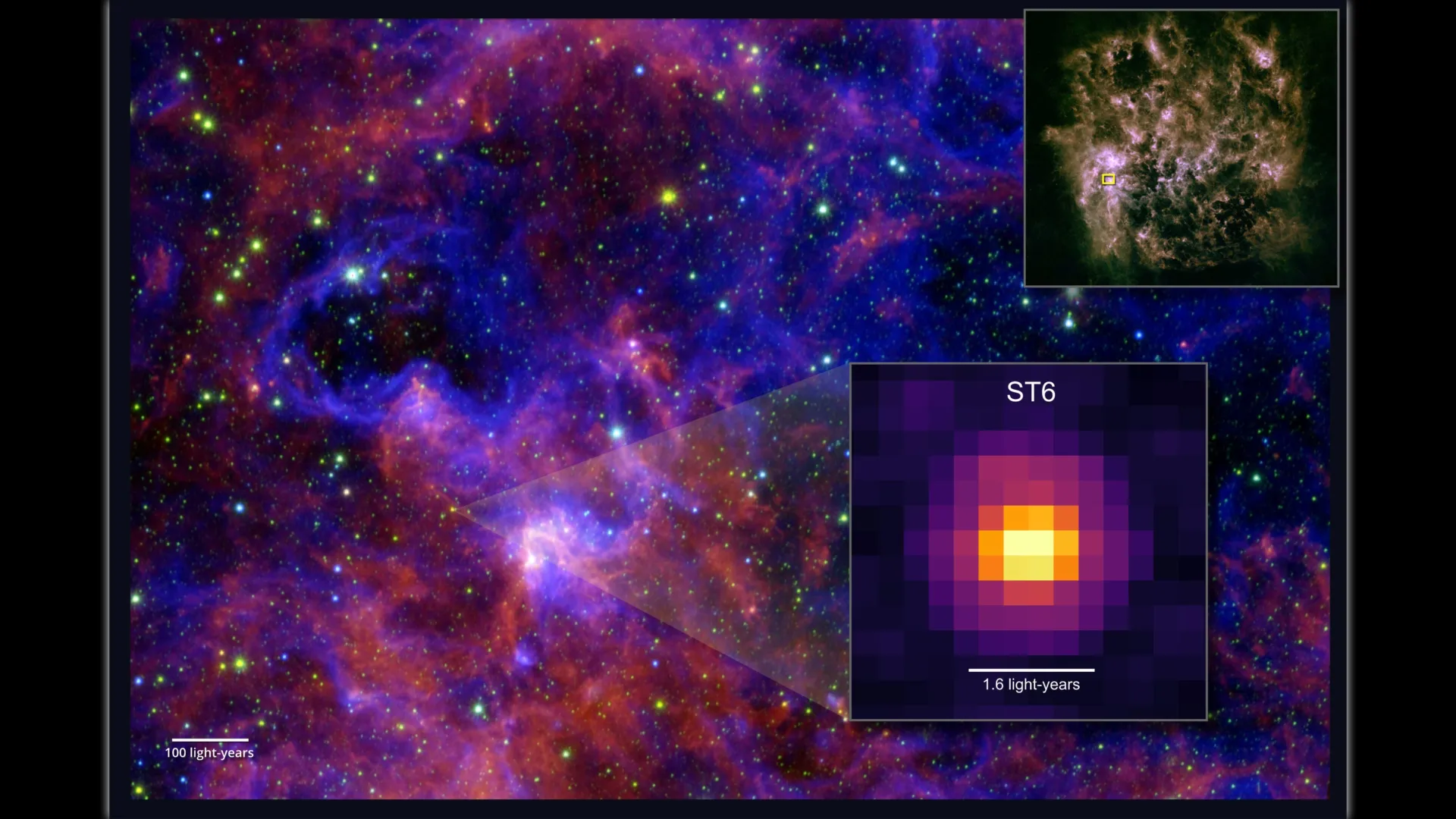
In a finding that could change how scientists understand the spread of life’s ingredients across space, astronomers have detected large organic molecules frozen in ice around a forming star called ST6 in a galaxy beyond the Milky Way.

Using the James Webb Space Telescope’s (JWST) Mid-Infrared Instrument (MIRI), the research team identified five carbon-based compounds in the Large Magellanic Cloud, our closest neighboring galaxy. The study, led by University of Maryland and NASA scientist Marta Sewilo, was published in the Astrophysical Journal Letters on October 20, 2025.

Detecting Life’s Chemical Ingredients in Alien Ice

Sewilo’s group found five complex organic molecules (COMs) within the ice surrounding the young protostar. These included methanol and ethanol (both types of alcohol), methyl formate and acetaldehyde (industrial chemicals on Earth), and acetic acid (the main ingredient in vinegar). One of the compounds, acetic acid, had never before been definitively observed in space ice, while the others — ethanol, methyl formate, and acetaldehyde — were detected in ices outside the Milky Way for the first time.

The team also spotted signs of glycolaldehyde, a sugar-related molecule linked to RNA formation, though further analysis is required to confirm it.

JWST’s Sharp Vision Opens a New Window on Cosmic Chemistry

“It’s all thanks to JWST’s exceptional sensitivity combined with high angular resolution that we’re able to detect these faint spectral features associated with ices around such a distant protostar,” Sewilo said. “The spectral resolution of JWST is sufficiently high to allow for reliable identifications.”

Before the Webb telescope, methanol was the only complex organic molecule ever confirmed in ice around protostars — even within our own galaxy. According to Sewilo, the extraordinary precision of the new data allowed her team to extract an unprecedented amount of information from a single spectrum.

A Harsh Galaxy as a Laboratory for Life’s Origins

The discovery is especially striking because of where the molecules were found. The Large Magellanic Cloud, located about 160,000 light-years from Earth, is an ideal environment for studying how stars form in conditions resembling those of the early universe. This small galaxy has only about one-third to one-half the heavy elements (those with atomic numbers greater than helium) of our solar system and endures far more intense ultraviolet radiation.

“The low metallicity environment, meaning the reduced abundance of elements heavier than hydrogen and helium, is interesting because it’s similar to galaxies at earlier cosmological epochs,” Sewilo explained. “What we learn in the Large Magellanic Cloud, we can apply to understanding these more distant galaxies from when the universe was much younger. The harsh conditions tell us more about how complex organic chemistry can occur in these primitive environments where much fewer heavy elements like carbon, nitrogen and oxygen are available for chemical reactions.”

How Complex Molecules Form on Cosmic Dust

Study co-author Will Rocha of Leiden University in the Netherlands noted that COMs can form in both the gas phase and in icy layers coating interstellar dust grains. Once formed, these ices can later release their molecules back into the gas. Methanol and methyl formate had already been observed in the gas phase within the Large Magellanic Cloud, but this is the first evidence that such molecules are also forming in the solid ice itself.

“Our detection of COMs in ices supports these results,” Rocha said. “The detection of icy COMs in the Large Magellanic Cloud provides evidence that these reactions can produce them effectively in a much harsher environment than in the solar neighborhood.”

Life’s Ingredients May Have Formed Early in the Universe

The presence of these complex molecules in a low-metallicity environment similar to those found in the early universe suggests that the building blocks of life may have begun forming much earlier — and in a wider range of conditions — than scientists once thought.

While this discovery does not prove that life exists elsewhere, it indicates that organic compounds can endure through the process of planetary formation and potentially be incorporated into young planets, creating conditions where life might one day emerge.

Expanding the Search for Cosmic Chemistry

Sewilo and her collaborators plan to extend their work by examining more protostars in both the Large and Small Magellanic Clouds to explore how widespread these molecules may be.

“We currently only have one source in the Large Magellanic Cloud and only four sources with detection of these complex organic molecules in ices in the Milky Way. We need larger samples from both to confirm our initial results that indicate differences in COM abundances between these two galaxies,” Sewilo said. “But with this discovery, we’ve made significant advancements in understanding how complex chemistry emerges in the universe and opening new possibilities for research into how life came to be.”

Share Button

Thousands of NHS staff in England to lose jobs after deal approved

The compromise deal would allow the NHS to overspend this year.

Share Button

Astronomers stunned by three Earth-sized planets orbiting two suns

An international group of scientists has confirmed the discovery of three Earth-sized planets within the binary stellar system known as TOI-2267, located roughly 190 light-years from Earth. The finding, published in Astronomy & Astrophysics, offers new insight into how planets can form and remain stable in double-star systems, which were once thought too chaotic for complex planetary development.

“Our analysis shows a unique planetary arrangement: two planets are transiting one star, and the third is transiting its companion star,” explains Sebastián Zúñiga-Fernández, a researcher at the University of Liège (ULiège) and first author of the paper. “This makes TOI-2267 the first binary system known to host transiting planets around both of its stars.”

A Compact and Unusual Double-Star System

TOI-2267 consists of two stars locked in a close orbital dance, forming what astronomers call a compact binary system. Such systems create gravitational forces that typically disrupt planet formation. Despite this, researchers have detected three Earth-sized planets in tight orbits, a surprising outcome that challenges long-held theories about where rocky worlds can exist.

“Our discovery breaks several records, as it is the most compact and coldest pair of stars with planets known, and it is also the first in which planets have been recorded transiting around both components,” says Francisco J. Pozuelos, a co-leader of the study and researcher at the Instituto de Astrofísica de Andalucía (IAA-CSIC).

Combining Space and Ground Observations

NASA’s TESS space telescope first provided the data leading to this discovery. Two of the planets were initially identified by astronomers at ULiège and IAA-CSIC using their custom software tool, SHERLOCK. This early detection prompted ground-based observations to confirm the findings.

The confirmation process required a major effort involving several observatories. Among the most important were the SPECULOOS and TRAPPIST telescopes operated by ULiège (PI: Michaël Gillon). Designed to detect small exoplanets around cool, dim stars, these robotic instruments were vital for verifying the planets and studying their characteristics in detail.

A Natural Testbed for Planet Formation

“Discovering three Earth-sized planets in such a compact binary system is a unique opportunity,” says Zúñiga-Fernández. “It allows us to test the limits of planet formation models in complex environments and to better understand the diversity of possible planetary architectures in our galaxy.”

Pozuelos adds, “This system is a true natural laboratory for understanding how rocky planets can emerge and survive under extreme dynamical conditions, where we previously thought their stability would be compromised.”

Looking Ahead to Future Exploration

The discovery opens up new questions about how planets form and persist in binary systems. Upcoming observations with the James Webb Space Telescope (JWST) and next-generation ground-based observatories could reveal more details, such as the planets’ masses, densities, and even their atmospheric compositions.

Beyond its scientific importance, the finding underscores the value of combining data from space-based observatories like TESS with precise ground-based instruments such as SPECULOOS and TRAPPIST. Together, they continue to expand our understanding of how planetary systems form and evolve across the galaxy.

Share Button

‘My son, 4, has childhood dementia – I’m heartbroken’

Tammy McDaid is raising funds to help her make memories with her son Tate.

Share Button

Nurses penalised for trans complaint, says lawyer

Closing submissions are being made in an employment tribunal brought by eight female nurses.

Share Button

Hospital trust fined £500k over death of patient

Alice Figueiredo, 22, took her own life at Goodmayes Hospital, east London, in July 2015.

Share Button

TikTok creator ‘so sorry’ over cancer diagnosis lie

Brittany Miller is known for posting food and lifestyle content to her three-and-a-half million followers.

Share Button

Scientists turn body fat into bone to heal spinal fractures

Researchers at Osaka Metropolitan University have developed a promising new method to repair spinal fractures using stem cells extracted from adipose tissue, or body fat. In animal studies, the treatment successfully healed spinal injuries in rats that mimic osteoporosis-related fractures seen in humans. Because these cells are easy to collect, even from older adults, and cause minimal strain on the body, the technique could provide a gentle, non-invasive alternative for treating bone diseases.

Osteoporosis weakens bones, making them fragile and more likely to break. As Japan’s population continues to age, the number of people affected is projected to surpass 15 million. Among the various types of fractures caused by osteoporosis, compression fractures of the spine, known as osteoporotic vertebral fractures, are the most common. These injuries can result in long-term disability and severely reduce quality of life, highlighting the need for safer and more effective treatments.

How Fat-Derived Stem Cells Help Rebuild Bone

Stem cells derived from adipose tissue (ADSCs) show strong potential for repairing bone damage. These multipotent cells can develop into various types of tissue, including bone. When ADSCs are cultivated into three-dimensional spherical groups called spheroids, their ability to promote tissue repair increases. Pre-differentiating these spheroids toward bone-forming cells further enhances their effectiveness in stimulating bone regeneration.

Led by Graduate School of Medicine student Yuta Sawada and Dr. Shinji Takahashi, the Osaka research team used ADSCs to create bone-differentiated spheroids and combined them with β-tricalcium phosphate, a material commonly used in bone reconstruction. The mixture was applied to rats with spinal fractures, resulting in significant improvements in bone healing and strength.

The researchers also observed that genes responsible for bone formation and regeneration became more active after the treatment, suggesting that the approach stimulates the body’s natural healing processes.

Promising Outlook for Future Treatments

“This study has revealed the potential of bone differentiation spheroids using ADSCs for the development of new treatments for spinal fractures,” said Sawada. “Since the cells are obtained from fat, there is little burden on the body, ensuring patient safety.”

Dr. Takahashi added, “This simple and effective method can treat even difficult fractures and may accelerate healing. This technique is expected to become a new treatment that helps extend the healthy life of patients.”

The findings were published in Bone & Joint Research.

Share Button

Scientists uncover a hidden universal law limiting life’s growth

A team of researchers, including a scientist from the Earth-Life Science Institute (ELSI) at the Institute of Science Tokyo in Japan, has identified a new principle in biology that mathematically explains why the growth of living organisms slows down when nutrients become plentiful. This well-known phenomenon is referred to as the “law of diminishing returns.”

How organisms grow in response to changing nutrient conditions has long been one of biology’s central questions. Across all forms of life — from microbes to plants and animals — growth depends on access to nutrients, energy, and the internal machinery of cells. Although scientists have studied how these factors affect growth, most research has focused on individual nutrients or specific biochemical pathways. What has remained unclear is how all these interconnected processes within a cell work together to control growth when resources are limited.

A Global Principle That Unites Living Systems

To explore this mystery, ELSI’s Specially Appointed Associate Professor Tetsuhiro S. Hatakeyama and RIKEN Special Postdoctoral Researcher Jumpei F. Yamagishi discovered a new unifying concept that describes how all living cells manage growth under resource constraints. Their work introduces what they call the global constraint principle for microbial growth — a framework that could reshape how scientists understand biological systems.

Since the 1940s, microbiologists have relied on the “Monod equation” to describe how microbes grow. This model shows that growth rates increase with added nutrients until they level off. However, the Monod equation assumes that only one nutrient or biochemical reaction limits growth at a time. In reality, cells perform thousands of simultaneous chemical processes that must share finite resources.

A Network of Constraints Inside Every Cell

According to Hatakeyama and Yamagishi, the traditional model captures only a small part of what’s happening. Instead of a single bottleneck, cellular growth is shaped by a complex network of limitations that interact to slow growth as nutrients accumulate. The global constraint principle explains that when one limiting factor — such as a nutrient — is alleviated, other constraints like enzyme production, cell volume, or membrane space begin to take over.

Using a technique known as “constraint-based modeling,” the team simulated how cells distribute and manage internal resources. Their results showed that while each additional nutrient helps microbes grow, its benefit gradually decreases — each one contributes less than the last.

“The shape of growth curves emerges directly from the physics of resource allocation inside cells, rather than depending on any particular biochemical reaction,” explains Hatakeyama.

Uniting Classic Laws of Biology

This new principle brings together two of biology’s foundational growth laws: the Monod equation and Liebig’s law of the minimum. Liebig’s law states that a plant’s growth is limited by whichever nutrient is scarcest (for example, nitrogen or phosphorus). Even if all other nutrients are plentiful, the plant can only grow as much as the least available one allows.

By merging these two concepts, the researchers created what they call a “terraced barrel” model. In this model, new limiting factors appear in stages as nutrient availability increases. This explains why organisms — from single-celled microbes to complex plants — experience diminishing growth returns even when conditions seem ideal, as each new stage reveals a fresh constraint.

Hatakeyama compares this to an updated version of Liebig’s famous barrel analogy, in which a plant’s growth is limited by its shortest stave, representing the scarcest resource. “In our model, the barrel staves spread out in steps,” he says, “each step representing a new limiting factor that becomes active as the cell grows faster.”

To test their hypothesis, the researchers built large-scale computer models of Escherichia coli bacteria. These models incorporated details about how cells use proteins, how crowded they are inside, and the physical limits of their membranes. The simulations accurately predicted the observed slowing of growth as nutrients were added and showed how oxygen and nitrogen levels affected the results. Laboratory experiments confirmed that the model’s predictions matched real biological behavior.

Toward Universal Laws of Life’s Growth

The discovery offers a new way to understand how life grows, without the need to model every molecule or reaction in detail. The global constraint principle provides a framework that unifies many aspects of biology. “Our work lays the groundwork for universal laws of growth,” says Yamagishi. “By understanding the limits that apply to all living systems, we can better predict how cells, ecosystems, and even entire biospheres respond to changing environments.”

This principle could have far-reaching applications. It may lead to more efficient microbial production in biotechnology, improved crop yields through better nutrient management, and stronger models for predicting how ecosystems respond to climate change. Future research may explore how this principle applies to different types of organisms and how multiple nutrients interact to influence growth. By bridging cellular biology with ecological theory, this study moves science closer to a universal framework for understanding life’s growth limits.

Earth-Life Science Institute (ELSI) is one of Japan’s prominent World Premiere International (WPI) research centers. It aims to drive breakthroughs in interdisciplinary science by attracting top researchers from around the world to collaborate on challenging scientific problems. ELSI’s mission focuses on studying the origin and co-evolution of Earth and life.

The Institute of Science Tokyo (Science Tokyo) was established on October 1, 2024, through the merger of Tokyo Medical and Dental University (TMDU) and Tokyo Institute of Technology (Tokyo Tech). Its mission is “Advancing science and human wellbeing to create value for and with society.”

Japan’s World Premier International Research Center Initiative (WPI), launched in 2007 by the Ministry of Education, Culture, Sports, Science and Technology (MEXT), supports a network of elite research centers that operate with a high degree of independence and global collaboration. The program is managed by the Japan Society for the Promotion of Science (JSPS).

RIKEN, Japan’s largest research institute for basic and applied science, produces over 2,500 papers each year in leading journals across physics, chemistry, biology, engineering, and medicine. Known for its interdisciplinary and international approach, RIKEN has earned a worldwide reputation for scientific excellence.


Share Button