Are room-temperature superconductors finally within reach?

When electricity moves through wires, some of its energy is lost along the way. That loss, however, might not be inevitable. Researchers at Penn State have developed a new way to identify materials known as superconductors — substances that can carry electric current with zero resistance, meaning no energy is wasted during transmission.

The Challenge of Cold Superconductors

Despite their promise, most superconducting materials cannot yet be used in everyday technology. Their extraordinary ability to conduct electricity only appears at extremely low temperatures, far below what is practical for energy systems or advanced electronics. Supported by the “Theory of Condensed Matter” program within the Department of Energy’s (DOE) Basic Energy Sciences, the Penn State team created a new computational approach to predict which materials might display superconductivity, potentially paving the way to finding ones that work at much higher, even near-room, temperatures.

A New Look at a Longstanding Mystery

Predicting superconductivity — especially in materials that could operate at higher temperatures — has remained an unsolved challenge. Existing theories have long been considered accurate only for low-temperature superconductors, explained Zi-Kui Liu, a professor of materials science and engineering at Penn State.

“The goal has always been to raise the temperature at which superconductivity persists,” said Liu, the lead author of a new study published in Superconductor Science and Technology. “But first, we need to understand exactly how superconductivity happens, and that is where our work comes in.”

How the Classic Theory Explains Superconductors

For decades, scientists have relied on the Bardeen-Cooper-Schrieffer (BCS) theory to describe how conventional superconductors function at extremely low temperatures. According to this theory, electrons move without resistance because of interactions with vibrations in the atomic lattice, called phonons. These interactions allow electrons to pair up into what are known as Cooper pairs, which move in sync through the material, avoiding atomic collisions and preventing energy loss as heat.

“Imagine a superhighway just for electrons,” Liu explained. “If there are too many routes, electrons bump into things and lose energy. But if you create a straight tunnel for them, like the Autobahn in Germany, they can travel fast and freely without resistance.”

The Quest for Power Without Resistance

This ability to transmit energy without resistance is what makes superconductors so promising, Liu said. If scientists can develop materials that stay superconducting at higher temperatures, electricity could travel farther, faster, and more efficiently, transforming global power systems. To understand this phenomenon, the DOE-backed project uses computational tools known as density functional theory (DFT). DFT helps model how electrons behave in ordinary conductors compared to superconductors. The team hypothesizes that even though DFT does not directly model Cooper pairs, the electron density it predicts should resemble that of paired electrons, allowing researchers to study potential superconducting behavior.

Until recently, BCS theory and DFT — one describing electron pairing, the other rooted in quantum mechanics — were treated separately. Liu’s team found a way to connect these frameworks, creating a new path to predict superconductivity.

Introducing Zentropy Theory

The breakthrough centers on a concept called zentropy theory. This approach merges principles from statistical mechanics, which studies the collective behavior of many particles, with quantum physics and modern computational modeling. Zentropy theory links a material’s electronic structure to how its properties change with temperature, revealing when it transitions from a superconducting to a non-superconducting state. To apply the theory, scientists must understand how a material behaves at absolute zero (zero Kelvin), the coldest temperature possible, where all atomic motion ceases. Liu’s team demonstrated that even DFT — though not originally intended to study superconductors — can provide key insights into when and how superconductivity occurs.

Predicting the Next Generation of Superconductors

According to Liu, the new method allows scientists to predict whether a material could become superconducting. Zentropy theory can then estimate the critical temperature at which the material loses that property. The classic BCS theory successfully explains superconductors that operate only at very low temperatures, but fails for high-temperature varieties, where Cooper pairs break apart more easily. Through DFT modeling, Liu’s group discovered that in high-temperature superconductors, the electron “superhighway” remains stable because of a unique atomic structure — similar to a pontoon bridge that flexes with waves, allowing electrons to move smoothly even when thermal vibrations increase.

Using this combined approach, the team successfully predicted superconducting behavior in both conventional and high-temperature materials, including one that traditional theory could not explain. They also forecasted potential superconductivity in copper, silver, and gold — metals not typically considered superconductors — likely because they would require extremely low temperatures for the effect to appear. These findings could accelerate the discovery of new materials that operate as superconductors at higher, more practical temperatures.

Next Steps in the Search for Practical Superconductors

The Penn State researchers now plan to expand their work in two ways. First, they will use the zentropy theory to predict how pressure affects the temperature at which superconductors lose their resistance. Second, they will search a massive database of five million materials to identify new candidates that could exhibit superconductivity. The goal is to find the most promising materials and collaborate with experimental researchers to test them.

“We are not just explaining what is already known,” Liu said. “We are building a framework to discover something entirely new. If successful, the approach could lead to the discovery of high-temperature superconductors that work in practical settings, potentially even at room temperature if they exist. That kind of breakthrough could have an enormous impact on modern technology and energy systems.”

Shun-Li Shang, research professor of materials science and engineering at Penn State, is a co-investigator on this study.

The U.S. Department of Energy supported this research.

Share Button

Scientists shocked by reversed electric field around Earth

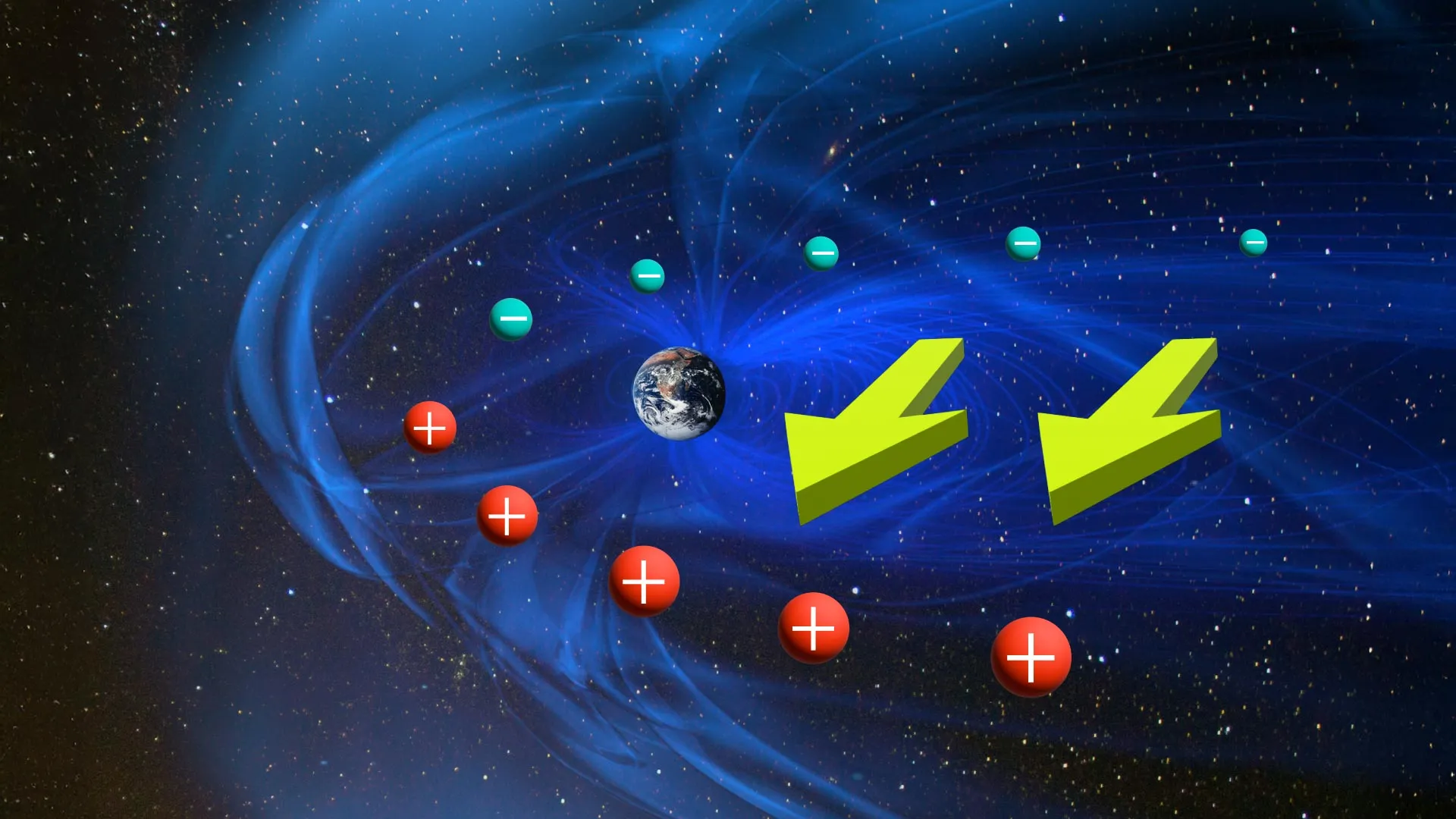
The area of space controlled by Earth’s magnetic field is called the magnetosphere. Within this vast magnetic bubble, scientists have observed an electric field that stretches from the morning side of Earth to the evening side. This large-scale electric force is a major influence on geomagnetic disturbances, including the storms that can disrupt satellites and communications.

Because electric forces move from positive to negative charges, scientists once assumed the magnetosphere was positively charged on the morning side and negatively charged on the evening side. However, recent satellite measurements have overturned that long-standing idea, revealing that the actual charge distribution is the reverse of what was expected.

This surprising finding led researchers from Kyoto University, Nagoya University, and Kyushu University to revisit how the magnetosphere’s electric characteristics are formed and sustained.

To test their hypotheses, the team used large-scale magnetohydrodynamic (MHD) simulations to recreate conditions in near-Earth space. Their model included a steady stream of high-speed solar wind, the constant flow of charged particles emitted by the sun. The results supported the recent satellite observations, showing that the morning side of the magnetosphere carries a negative charge while the opposite side is positive — but this pattern does not apply everywhere.

In the polar regions, the charge polarity matches the traditional theory. Near the equator, though, the pattern flips across a wide area, creating a striking difference between the two zones.

Plasma Motion Explains the Mystery

“In conventional theory, the charge polarity in the equatorial plane and above the polar regions should be the same. Why, then, do we see opposite polarities between these regions? This can actually be explained by the motion of plasma,” explains corresponding author Yusuke Ebihara of Kyoto University.

When magnetic energy from the sun enters Earth’s magnetic field, it moves clockwise on the dusk side of the planet and channels toward the poles. Meanwhile, Earth’s magnetic field lines run from the Southern Hemisphere to the Northern Hemisphere — upward near the equator and downward near the poles. This opposing orientation between the magnetic field and plasma flow leads to the reversal in charge distribution between the regions.

“The electric force and charge distribution are both results, not causes, of plasma motion,” says Ebihara. This insight reframes how scientists interpret electrical activity in Earth’s near-space environment.

Broader Implications for Planetary Science

Plasma convection — the large-scale flow of charged particles within the magnetosphere — drives many dynamic space phenomena. Recent studies also suggest that this movement influences Earth’s radiation belts, which are regions filled with fast-moving, high-energy particles.

By clarifying how plasma motion shapes electric fields, this research deepens understanding of large-scale space plasma behavior. It also sheds light on similar processes occurring around other magnetized worlds, including Jupiter and Saturn, expanding our grasp of how planetary environments evolve across the solar system.

Share Button

Long A&E waits causing heartbreaking suffering, charity says

Patients are dying in corridors and others left for hours in soiled clothes, says Age UK.

Share Button

Health officials worried as flu season comes five weeks early

UK Health Security Agency urges people to get vaccinated with cases on the rise.

Share Button

Scientists discover a stunning new golden-tongued lizard in China

Researchers in China have identified a previously unknown species of mountain lizard living in the upper Dadu River Valley, deep within the Hengduan Mountains of Sichuan Province.

Years of Field Surveys Lead to a Surprise

Starting in 2018, the research team carried out extensive field surveys in the upper reaches of the Dadu River. During their expeditions, they came across a population of lizards that displayed unusual traits not seen in other known Diploderma species from the area. Detailed genetic testing and morphological comparisons confirmed their suspicions: this was a species that had never been documented before.

The scientists named it Diploderma bifluviale, a nod to its discovery site near the meeting point of two rivers, Chuosijia and Jiaomuzu.

With this finding, Diploderma bifluviale becomes the 47th recognized species of Diploderma in China. Members of this genus are found throughout East Asia and the northern Indochinese Peninsula, where they occupy a wide variety of mountain habitats.

A Unique Lizard With Distinctive Traits

Measuring about 6-7 centimeters in body length, D. bifluviale stands out with its distinctive coloring and a wheat-colored tongue — features that set it apart from closely related species. It thrives in semi-arid shrublands and rocky, sun-exposed valleys at elevations between 2,100 and 2,500 meters. The environment it inhabits is characterized by small-leaved shrubs and scattered stones, creating the perfect camouflage for this elusive reptile.

“This discovery highlights the understudied biodiversity of the upper Dadu River,” the researchers wrote in their report, published in the open-access journal ZooKeys. Their finding underscores how even in well-surveyed regions of China, nature continues to reveal new surprises.

Share Button

Scientists discover a way simulate the Universe on a laptop

As astronomers gather more data than ever before, studying the cosmos has become an increasingly complex task. A new innovation is changing that reality. Researchers have now developed a way to analyze enormous cosmic data sets using only a laptop and a few hours of processing time.

Leading this effort is Dr. Marco Bonici, a postdoctoral researcher at the Waterloo Centre for Astrophysics at the University of Waterloo. Bonici and an international team created Effort.jl, short for EFfective Field theORy surrogate. This tool uses advanced numerical techniques and smart data-preprocessing methods to deliver exceptional computational performance while maintaining the accuracy required in cosmology. The team designed it as a powerful emulator for the Effective Field Theory of Large-Scale Structure (EFTofLSS), allowing researchers to process vast datasets more efficiently than ever before.

Turning Frustration Into Innovation

The idea for Effort.jl emerged from Bonici’s experience running time-consuming computer models. Each time he adjusted even a single parameter, it could take days of extra computation to see the results. That challenge inspired him to build a faster, more flexible solution that could handle such adjustments in hours rather than days.

“Using Effort.jl, we can run through complex data sets on models like EFTofLSS, which have previously needed a lot of time and computer power,” Bonici explained. “With projects like DESI and Euclid expanding our knowledge of the universe and creating even larger astronomical datasets to explore, Effort.jl allows researchers to analyze data faster, inexpensively and multiple times while making small changes based on nuances in the data.”

Smarter Simulations for a Faster Universe

Effort.jl belongs to a class of tools known as emulators. These are trained computational shortcuts that replicate the behavior of large, resource-intensive simulations but run dramatically faster. By using emulators, scientists can explore many possible cosmic scenarios in a fraction of the time and apply advanced techniques such as gradient-based sampling to study intricate physical models with greater efficiency.

“We were able to validate the predictions coming out of Effort.jl by aligning them with those coming out of EFTofLSS,” Bonici said. “The margin of error was small and showed us that the calculations coming out of Effort.jl are strong. Effort.jl can also handle observational quirks like distortions in data and can be customized very easily to the needs of the researcher.”

Human Expertise Still Matters

Despite its impressive capabilities, Effort.jl is not a substitute for scientific understanding. Cosmologists still play a vital role in setting parameters, interpreting results, and applying physical insight to ensure meaningful conclusions. The combination of expert knowledge and computational power is what makes the system so effective.

Looking ahead, Effort.jl is expected to take on even larger cosmological datasets and work alongside other analytical tools. Researchers also see potential for its methods in areas beyond astrophysics, including weather and climate modeling.

The paper, “Effort.jl: a fast and differentiable emulator for the Effective Field Theory of the Large Scale Structure of the Universe,” was published in the Journal of Cosmology and Astroparticle Physics.

Share Button

‘New birth advice change is our girl’s lasting legacy’

A mum says she was not warned of the potentially life-threatening risks of a uterine rupture.

Share Button

Cancer survivors say their concerns were dismissed

Two women who had breast cancer say their concerns were dismissed by doctors at first.

Share Button

‘Poor’ insulation that left houses mouldy needs wider investigation, government told

Botched insulation damaged many homes and left a legacy of health problems for residents.

Share Button

“Immortal” flatworm rewrites the science of healing

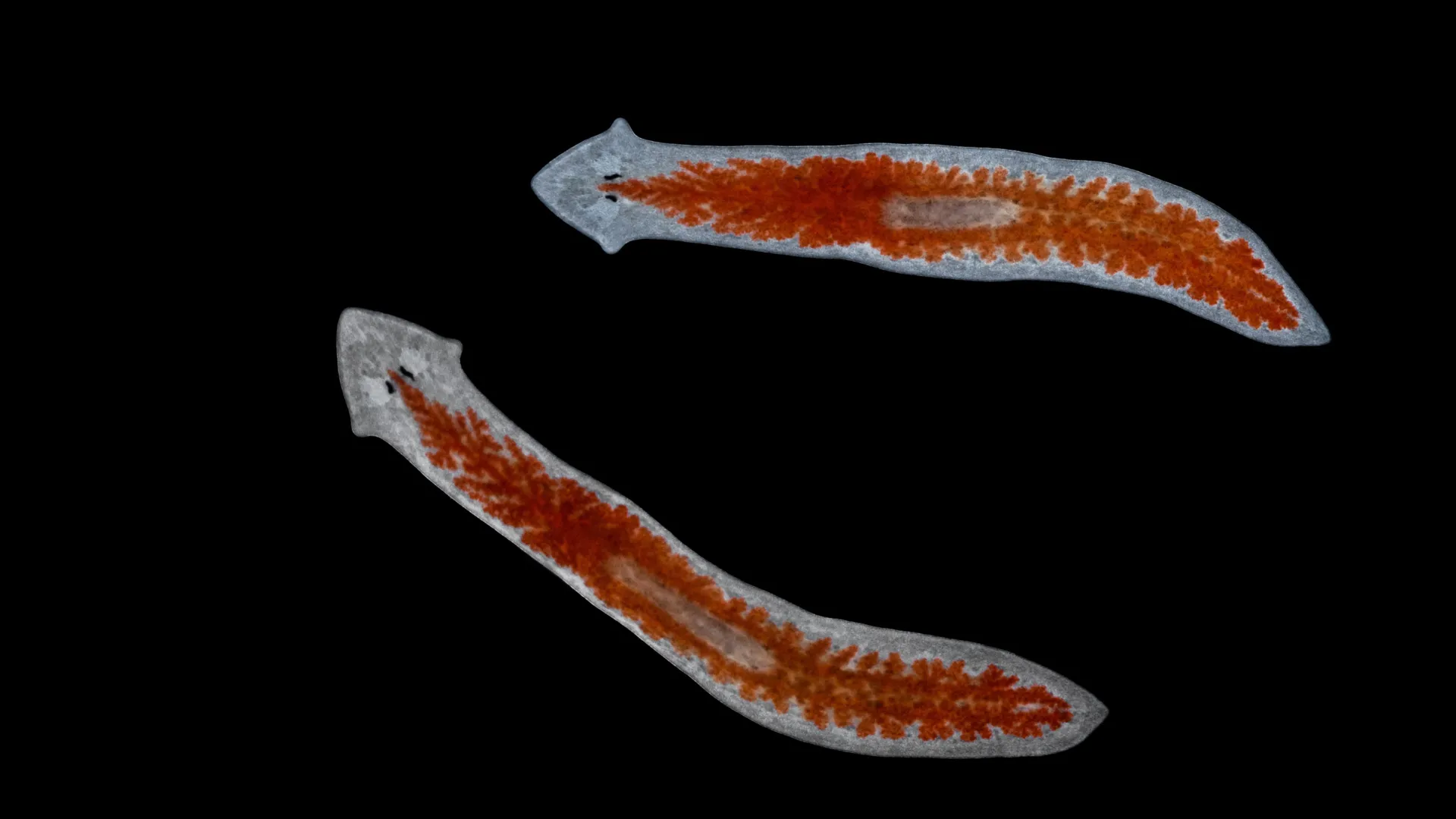
In most animals, stem cells rely on nearby cells to tell them what to do. However, new research from the Stowers Institute for Medical Research shows that flatworm, or planarian, stem cells behave differently. Instead of listening to their immediate neighbors, they take their instructions from cells located farther away in the body. This surprising behavior may explain how flatworms can regrow missing parts so effectively and could reveal new ways to repair or replace human tissues in the future.

The findings, published in Cell Reports on October 15, 2025, come from a study led by Postdoctoral Research Associate Frederick “Biff” Mann, Ph.D., in the laboratory of Stowers President and Chief Scientific Officer Alejandro Sánchez Alvarado, Ph.D. The work challenges a long-held biological principle: that most stem cells live in a fixed “niche,” a physical location where neighboring cells dictate when to divide and what to become.

“For instance, human blood-forming stem cells reside in niches within bone marrow where they divide to self-renew and make new blood cells,” said Mann.

Flatworms Rewrite the Rules of Regeneration

The researchers discovered that flatworms’ extraordinary ability to rebuild lost parts — whether an amputated head or an entire body from a fragment — is tied to stem cells that operate more freely than those in most other animals.

“Understanding how stem cells are regulated in living organisms is one of the great challenges in the fields of stem cell biology and regenerative medicine,” said Sánchez Alvarado. “This finding challenges our concept of a stem cell ‘niche’ and may significantly advance our understanding of how to control stem cells’ abilities to restore damaged tissues.”

Adult planarian stem cells can transform into any type of cell, unlike most animals’ stem cells, which are carefully restricted to forming only a few cell types. That tight control helps prevent uncontrolled growth — a process that can lead to cancer.

“Our hope is to uncover the basic rules that guide stem cells to become specific tissues as opposed to going rogue, as most tumors in humans begin when stem cells stop following these rules,” said Sánchez Alvarado.

“The role of a traditional niche may be more in line with a micromanager — instructing cells, ‘You can be a stem cell, but only one particular type’,” explained Mann. “However, we’ve now shown having a normal niche may not be essential for stem cells to work. Some stem cells, like those in the planarian flatworm, have figured out a way to be independent and can turn into any type of cell without needing a nearby niche.”

Discovering a New Cell Type: The Hecatonoblast

Using an advanced technique called spatial transcriptomics, the team examined which genes were active in individual cells and their surroundings. This revealed unexpected neighboring cells, including one never described before — a large cell with many fingerlike projections extending from its surface. The researchers named these cells “hecatonoblasts,” after Hecatoncheires, a many-armed giant from Greek mythology.

“Because they were located so close to stem cells, we were surprised to find that hecatonoblasts were not controlling their fate nor function, which is counterintuitive to a typical stem cell-niche connection,” said Mann.

Instead of nearby cells taking charge, the strongest instructions for the stem cells came from intestinal cells — the next most common type found in the dataset. These distant cells appeared to influence the planarian stem cells’ position and function during regeneration, even from afar.

“I tend to think about this as local versus global communication networks,” said co-corresponding author Blair Benham-Pyle, Ph.D., an Assistant Professor at the Baylor College of Medicine in Houston, Texas, and former Stowers Postdoctoral Research Associate. “While interactions between stem cells and their neighboring cells influence how a stem cell reacts immediately, distant interactions may control how that same stem cell responds to big changes in an organism.”

Rethinking the Nature of a Stem Cell Niche

The research revealed that planarian stem cells operate without a fixed, contact-based niche. “We found that there isn’t a specific cell type or factor right next to stem cells that is controlling their identity,” said Benham-Pyle. The team believes this unique independence may explain why planarians can regenerate so completely when most animals cannot.

“The big discovery is a property of the whole planarian permitting both subtle local interactions and global signaling events that allow stem cells to achieve these remarkable feats of regeneration,” said Benham-Pyle.

“The most surprising finding is that, at least in planarians, the environment in which the stem cells reside is not fixed. Instead, it’s dynamic — where stem cells reside is essentially made up by ‘friends’ that the stem cells and their progeny make along the way to differentiation,” said Sánchez Alvarado. “The more we understand how nearby cells and overall signals in the body work together to boost the ability and power of our stem cells, the better we’ll be at creating ways to improve the body’s natural healing. This knowledge could help develop new treatments and regenerative therapies for humans in the future.”

Additional authors include Carolyn Brewster, Ph.D., Dung Vuu, Riley Galton, Ph.D., Enya Dewars, Mol Mir, Carlos Guerrero-Hernández, Jason Morrison, Mary KcKinney, Ph.D., Lucinda Maddera, Kate Hall, Seth Malloy, Shiyuan Chen, Brian Slaughter, Ph.D., Sean McKinney, Ph.D., Stephanie Nowotarski, Ph.D., and Anoja Perera.

This work was funded by the National Institute for General Medical Sciences of the National Institutes of Health (NIH) (award: R37GM057260) and by institutional support from the Stowers Institute for Medical Research. The content is solely the responsibility of the authors and does not necessarily represent the official views of the NIH.

Share Button