Scientists discover a stunning new golden-tongued lizard in China

Researchers in China have identified a previously unknown species of mountain lizard living in the upper Dadu River Valley, deep within the Hengduan Mountains of Sichuan Province.

Years of Field Surveys Lead to a Surprise

Starting in 2018, the research team carried out extensive field surveys in the upper reaches of the Dadu River. During their expeditions, they came across a population of lizards that displayed unusual traits not seen in other known Diploderma species from the area. Detailed genetic testing and morphological comparisons confirmed their suspicions: this was a species that had never been documented before.

The scientists named it Diploderma bifluviale, a nod to its discovery site near the meeting point of two rivers, Chuosijia and Jiaomuzu.

With this finding, Diploderma bifluviale becomes the 47th recognized species of Diploderma in China. Members of this genus are found throughout East Asia and the northern Indochinese Peninsula, where they occupy a wide variety of mountain habitats.

A Unique Lizard With Distinctive Traits

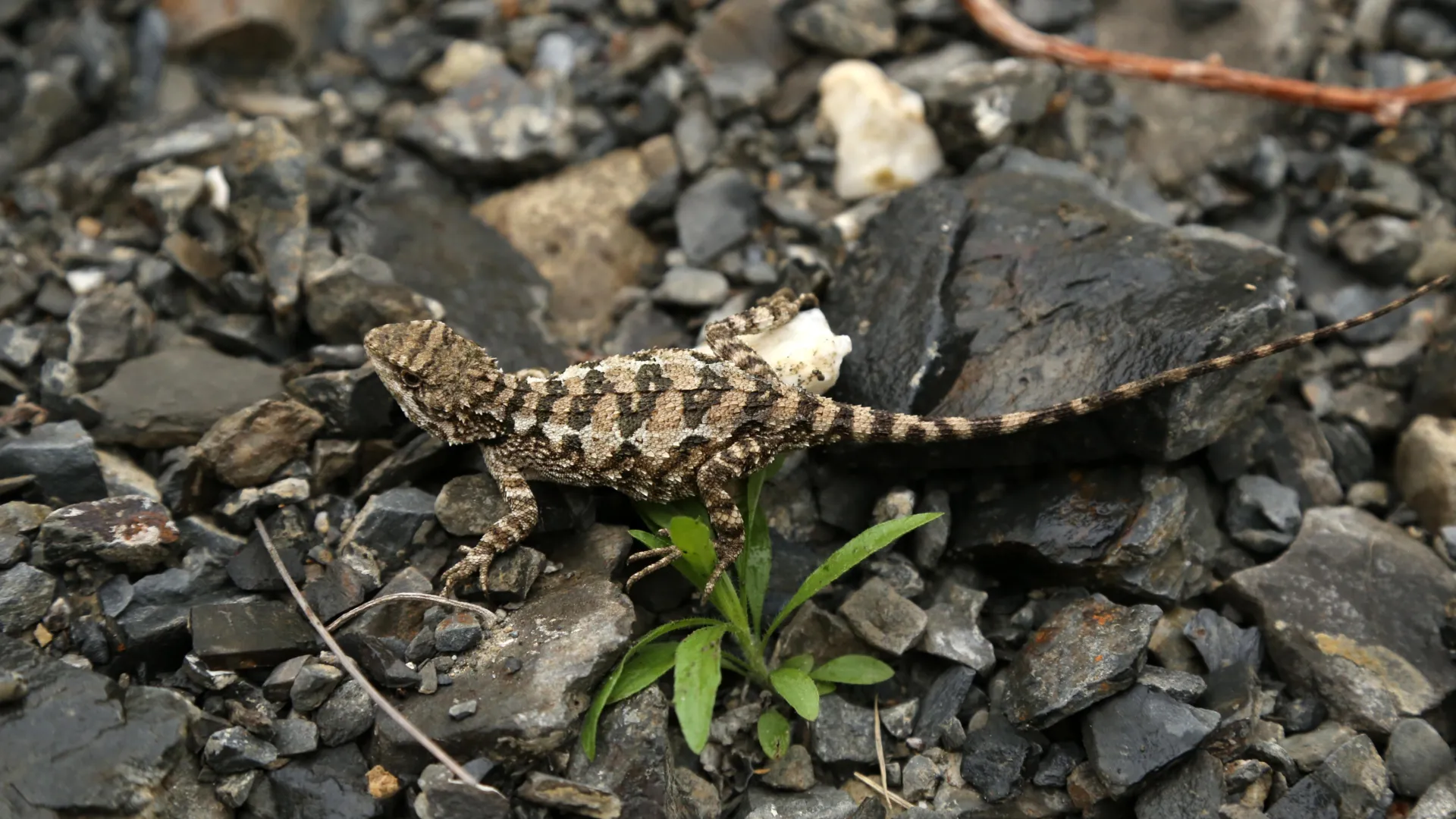
Measuring about 6-7 centimeters in body length, D. bifluviale stands out with its distinctive coloring and a wheat-colored tongue — features that set it apart from closely related species. It thrives in semi-arid shrublands and rocky, sun-exposed valleys at elevations between 2,100 and 2,500 meters. The environment it inhabits is characterized by small-leaved shrubs and scattered stones, creating the perfect camouflage for this elusive reptile.

“This discovery highlights the understudied biodiversity of the upper Dadu River,” the researchers wrote in their report, published in the open-access journal ZooKeys. Their finding underscores how even in well-surveyed regions of China, nature continues to reveal new surprises.

Share Button

Scientists discover a way simulate the Universe on a laptop

As astronomers gather more data than ever before, studying the cosmos has become an increasingly complex task. A new innovation is changing that reality. Researchers have now developed a way to analyze enormous cosmic data sets using only a laptop and a few hours of processing time.

Leading this effort is Dr. Marco Bonici, a postdoctoral researcher at the Waterloo Centre for Astrophysics at the University of Waterloo. Bonici and an international team created Effort.jl, short for EFfective Field theORy surrogate. This tool uses advanced numerical techniques and smart data-preprocessing methods to deliver exceptional computational performance while maintaining the accuracy required in cosmology. The team designed it as a powerful emulator for the Effective Field Theory of Large-Scale Structure (EFTofLSS), allowing researchers to process vast datasets more efficiently than ever before.

Turning Frustration Into Innovation

The idea for Effort.jl emerged from Bonici’s experience running time-consuming computer models. Each time he adjusted even a single parameter, it could take days of extra computation to see the results. That challenge inspired him to build a faster, more flexible solution that could handle such adjustments in hours rather than days.

“Using Effort.jl, we can run through complex data sets on models like EFTofLSS, which have previously needed a lot of time and computer power,” Bonici explained. “With projects like DESI and Euclid expanding our knowledge of the universe and creating even larger astronomical datasets to explore, Effort.jl allows researchers to analyze data faster, inexpensively and multiple times while making small changes based on nuances in the data.”

Smarter Simulations for a Faster Universe

Effort.jl belongs to a class of tools known as emulators. These are trained computational shortcuts that replicate the behavior of large, resource-intensive simulations but run dramatically faster. By using emulators, scientists can explore many possible cosmic scenarios in a fraction of the time and apply advanced techniques such as gradient-based sampling to study intricate physical models with greater efficiency.

“We were able to validate the predictions coming out of Effort.jl by aligning them with those coming out of EFTofLSS,” Bonici said. “The margin of error was small and showed us that the calculations coming out of Effort.jl are strong. Effort.jl can also handle observational quirks like distortions in data and can be customized very easily to the needs of the researcher.”

Human Expertise Still Matters

Despite its impressive capabilities, Effort.jl is not a substitute for scientific understanding. Cosmologists still play a vital role in setting parameters, interpreting results, and applying physical insight to ensure meaningful conclusions. The combination of expert knowledge and computational power is what makes the system so effective.

Looking ahead, Effort.jl is expected to take on even larger cosmological datasets and work alongside other analytical tools. Researchers also see potential for its methods in areas beyond astrophysics, including weather and climate modeling.

The paper, “Effort.jl: a fast and differentiable emulator for the Effective Field Theory of the Large Scale Structure of the Universe,” was published in the Journal of Cosmology and Astroparticle Physics.

Share Button

‘New birth advice change is our girl’s lasting legacy’

A mum says she was not warned of the potentially life-threatening risks of a uterine rupture.

Share Button

Cancer survivors say their concerns were dismissed

Two women who had breast cancer say their concerns were dismissed by doctors at first.

Share Button

‘Poor’ insulation that left houses mouldy needs wider investigation, government told

Botched insulation damaged many homes and left a legacy of health problems for residents.

Share Button

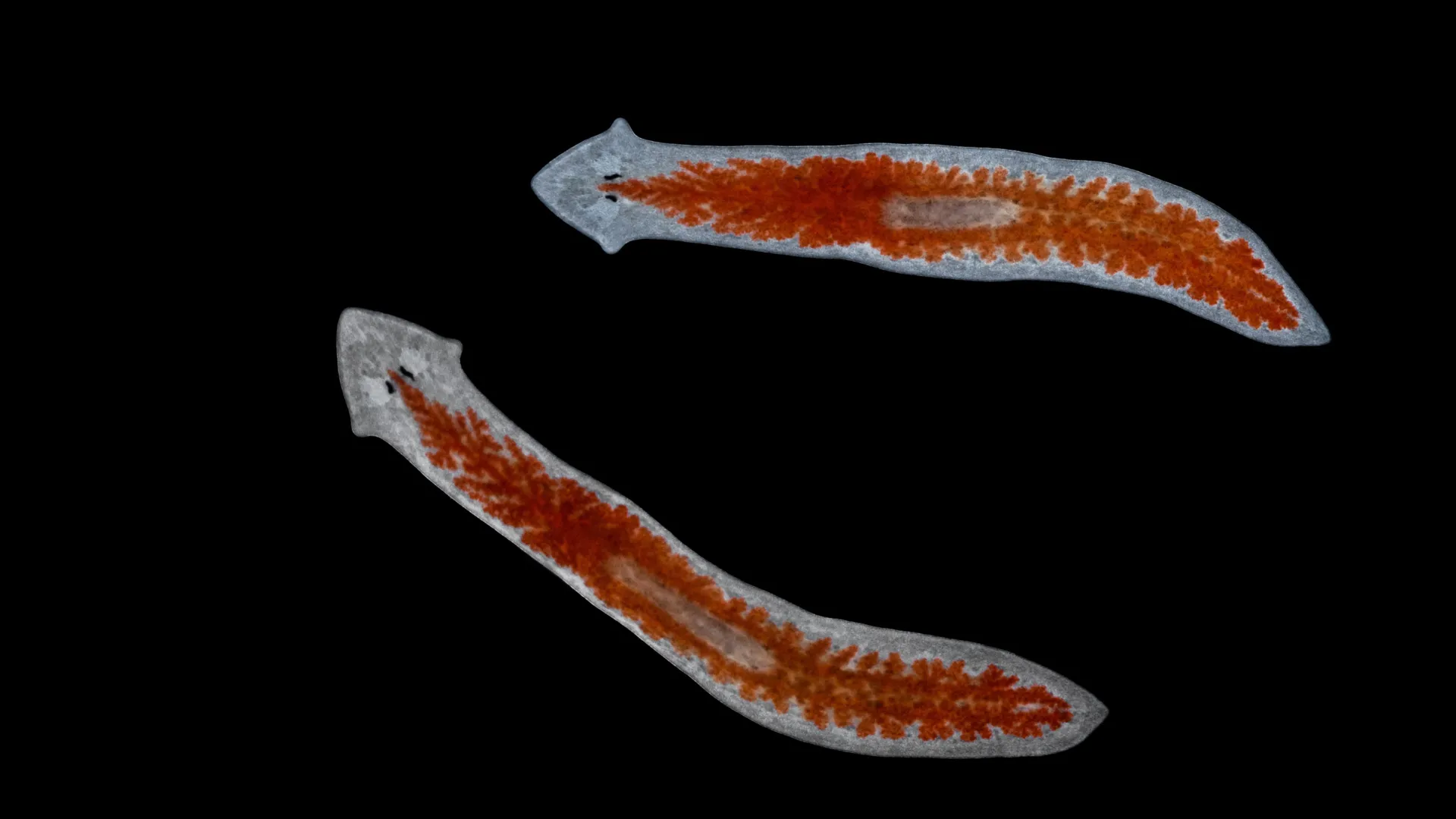
“Immortal” flatworm rewrites the science of healing

In most animals, stem cells rely on nearby cells to tell them what to do. However, new research from the Stowers Institute for Medical Research shows that flatworm, or planarian, stem cells behave differently. Instead of listening to their immediate neighbors, they take their instructions from cells located farther away in the body. This surprising behavior may explain how flatworms can regrow missing parts so effectively and could reveal new ways to repair or replace human tissues in the future.

The findings, published in Cell Reports on October 15, 2025, come from a study led by Postdoctoral Research Associate Frederick “Biff” Mann, Ph.D., in the laboratory of Stowers President and Chief Scientific Officer Alejandro Sánchez Alvarado, Ph.D. The work challenges a long-held biological principle: that most stem cells live in a fixed “niche,” a physical location where neighboring cells dictate when to divide and what to become.

“For instance, human blood-forming stem cells reside in niches within bone marrow where they divide to self-renew and make new blood cells,” said Mann.

Flatworms Rewrite the Rules of Regeneration

The researchers discovered that flatworms’ extraordinary ability to rebuild lost parts — whether an amputated head or an entire body from a fragment — is tied to stem cells that operate more freely than those in most other animals.

“Understanding how stem cells are regulated in living organisms is one of the great challenges in the fields of stem cell biology and regenerative medicine,” said Sánchez Alvarado. “This finding challenges our concept of a stem cell ‘niche’ and may significantly advance our understanding of how to control stem cells’ abilities to restore damaged tissues.”

Adult planarian stem cells can transform into any type of cell, unlike most animals’ stem cells, which are carefully restricted to forming only a few cell types. That tight control helps prevent uncontrolled growth — a process that can lead to cancer.

“Our hope is to uncover the basic rules that guide stem cells to become specific tissues as opposed to going rogue, as most tumors in humans begin when stem cells stop following these rules,” said Sánchez Alvarado.

“The role of a traditional niche may be more in line with a micromanager — instructing cells, ‘You can be a stem cell, but only one particular type’,” explained Mann. “However, we’ve now shown having a normal niche may not be essential for stem cells to work. Some stem cells, like those in the planarian flatworm, have figured out a way to be independent and can turn into any type of cell without needing a nearby niche.”

Discovering a New Cell Type: The Hecatonoblast

Using an advanced technique called spatial transcriptomics, the team examined which genes were active in individual cells and their surroundings. This revealed unexpected neighboring cells, including one never described before — a large cell with many fingerlike projections extending from its surface. The researchers named these cells “hecatonoblasts,” after Hecatoncheires, a many-armed giant from Greek mythology.

“Because they were located so close to stem cells, we were surprised to find that hecatonoblasts were not controlling their fate nor function, which is counterintuitive to a typical stem cell-niche connection,” said Mann.

Instead of nearby cells taking charge, the strongest instructions for the stem cells came from intestinal cells — the next most common type found in the dataset. These distant cells appeared to influence the planarian stem cells’ position and function during regeneration, even from afar.

“I tend to think about this as local versus global communication networks,” said co-corresponding author Blair Benham-Pyle, Ph.D., an Assistant Professor at the Baylor College of Medicine in Houston, Texas, and former Stowers Postdoctoral Research Associate. “While interactions between stem cells and their neighboring cells influence how a stem cell reacts immediately, distant interactions may control how that same stem cell responds to big changes in an organism.”

Rethinking the Nature of a Stem Cell Niche

The research revealed that planarian stem cells operate without a fixed, contact-based niche. “We found that there isn’t a specific cell type or factor right next to stem cells that is controlling their identity,” said Benham-Pyle. The team believes this unique independence may explain why planarians can regenerate so completely when most animals cannot.

“The big discovery is a property of the whole planarian permitting both subtle local interactions and global signaling events that allow stem cells to achieve these remarkable feats of regeneration,” said Benham-Pyle.

“The most surprising finding is that, at least in planarians, the environment in which the stem cells reside is not fixed. Instead, it’s dynamic — where stem cells reside is essentially made up by ‘friends’ that the stem cells and their progeny make along the way to differentiation,” said Sánchez Alvarado. “The more we understand how nearby cells and overall signals in the body work together to boost the ability and power of our stem cells, the better we’ll be at creating ways to improve the body’s natural healing. This knowledge could help develop new treatments and regenerative therapies for humans in the future.”

Additional authors include Carolyn Brewster, Ph.D., Dung Vuu, Riley Galton, Ph.D., Enya Dewars, Mol Mir, Carlos Guerrero-Hernández, Jason Morrison, Mary KcKinney, Ph.D., Lucinda Maddera, Kate Hall, Seth Malloy, Shiyuan Chen, Brian Slaughter, Ph.D., Sean McKinney, Ph.D., Stephanie Nowotarski, Ph.D., and Anoja Perera.

This work was funded by the National Institute for General Medical Sciences of the National Institutes of Health (NIH) (award: R37GM057260) and by institutional support from the Stowers Institute for Medical Research. The content is solely the responsibility of the authors and does not necessarily represent the official views of the NIH.

Share Button

Damning report finds ‘culture of mistrust’ at maternity unit

A review said staffing shortages also contributed to delays and patients being harmed at the Royal Infirmary of Edinburgh.

Share Button

‘Chances missed,’ says damning report into surgeon

An NHS trust failed to act upon recommendations made in 2016, a report into child surgeries finds.

Share Button

Widower backs new pancreatic cancer breath trial

The test detects compounds in the breath which are detectable in cancer patients, say scientists.

Share Button

New quantum network could finally reveal dark matter

Detecting dark matter, the invisible substance thought to keep galaxies intact, remains one of the most enduring mysteries in physics. Although it cannot be directly observed or touched, researchers suspect that dark matter leaves behind faint traces. These subtle signals might be detectable using advanced quantum technologies that can sense extremely small disturbances.

A team at Tohoku University has proposed a new strategy to make quantum sensors more powerful by linking them together in carefully designed networks. These sensors rely on the principles of quantum physics to measure minute fluctuations that ordinary instruments would miss. By connecting them in optimized patterns, the researchers believe it may be possible to detect the elusive fingerprints of dark matter with unprecedented precision.

Superconducting Qubits Become Cosmic Detectors

The research centers on superconducting qubits, tiny electronic circuits kept at extremely low temperatures. These qubits are typically used in quantum computers, but in this case they act as ultrasensitive detectors. The concept is similar to teamwork — while a single sensor might struggle to pick up a weak signal, a coordinated network of qubits can amplify and identify it far more effectively.

To test this concept, the team experimented with several types of network structures, including ring, line, star, and fully connected configurations. They built systems using four and nine qubits and then applied variational quantum metrology (a technique that works much like training a machine-learning algorithm) to fine-tune how quantum states were prepared and measured. To further improve accuracy, they used Bayesian estimation to reduce noise, similar to sharpening a blurred photograph.

Strong Results Show Real-World Potential

The optimized networks consistently outperformed conventional approaches, even when realistic noise was added. This result suggests that the method could already be implemented on existing quantum devices.

“Our goal was to figure out how to organize and fine-tune quantum sensors so they can detect dark matter more reliably,” explained Dr. Le Bin Ho, the study’s lead author. “The network structure plays a key role in enhancing sensitivity, and we’ve shown it can be done using relatively simple circuits.”

Beyond the hunt for dark matter, these quantum sensor networks could drive major advances in technology. Potential applications include quantum radar, gravitational wave detection, and highly accurate timekeeping. In the future, the same approach could help improve GPS precision, enhance MRI brain scans, and even reveal hidden underground structures.

“This research shows that carefully designed quantum networks can push the boundaries of what is possible in precision measurement,” Dr. Ho added. “It opens the door to using quantum sensors not just in laboratories, but in real-world tools that require extreme sensitivity.”

Next Steps for Quantum Research

Looking ahead, the Tohoku University team plans to expand this method to larger sensor networks and develop techniques to make them more resilient against noise.

Their findings were published in Physical Review D on October 1, 2025.

Share Button