“Lost” giant rat found alive in Papua mountains after 30 years

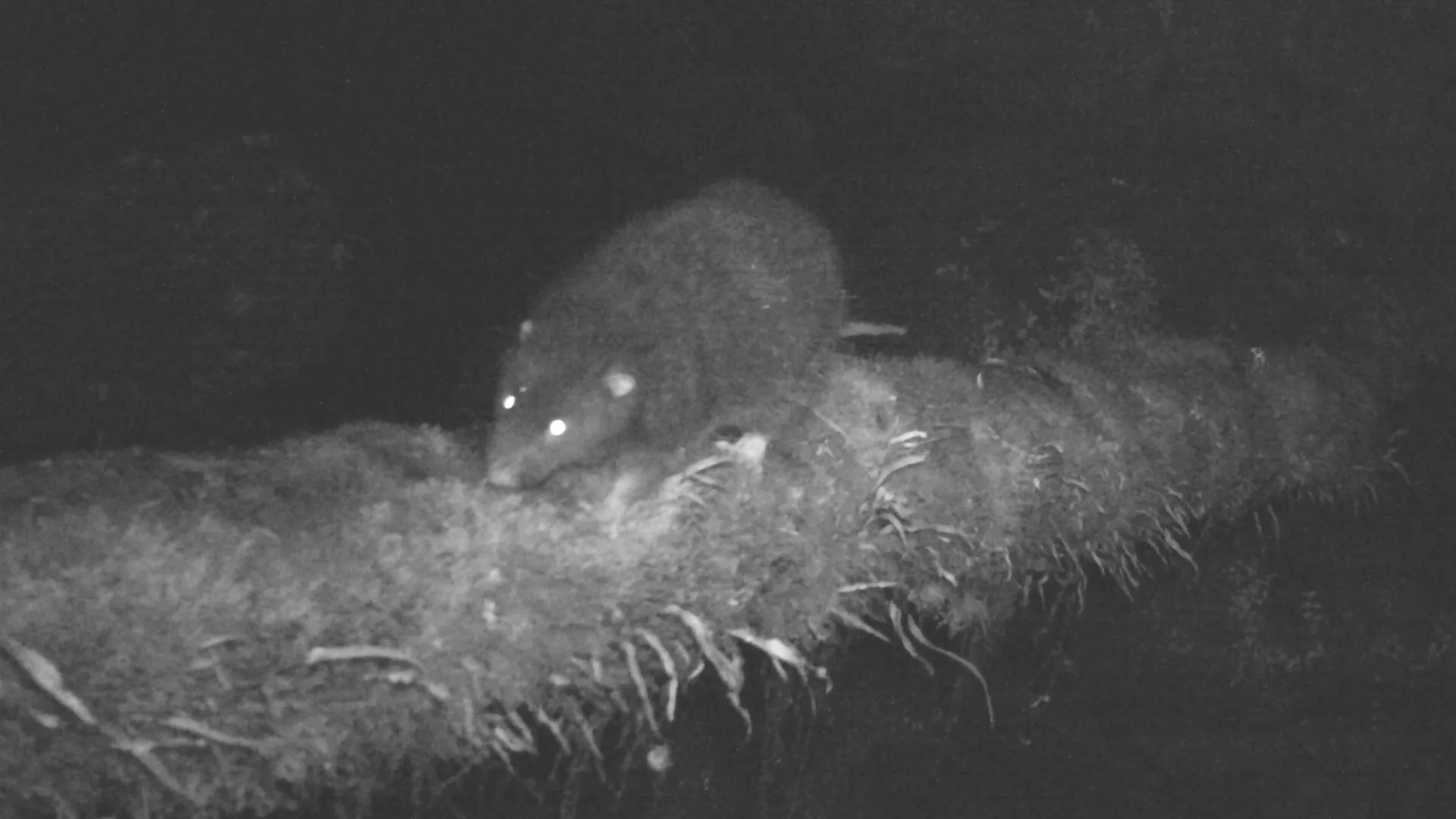
After spending six months exploring the rugged landscapes of New Guinea, a young Czech doctoral student from the Biology Centre of the Czech Academy of Sciences and the University of South Bohemia has made an extraordinary find. František Vejmělka is the first researcher to observe and scientifically document Mallomys istapantap in its natural environment. This enormous nocturnal rodent, one of the largest in the world, lives high in the cool, mist-covered forests and grasslands around 3,700 meters above sea level. Until now, scientists knew the species only from a few preserved museum specimens. For the first time, photographs and video footage now reveal the animal alive in its native mountain habitat.

Bringing a Lost Species Back Into View

The Subalpine Woolly Rat (Mallomys istapantap) was first identified in 1989 from museum samples and had not been recorded in the wild for three decades. It had never been photographed until now. The new field data and imagery collected by Vejmělka provide crucial insight into this rarely seen species and shed new light on the extraordinary mammalian biodiversity of New Guinea’s remote highlands.

A Mysterious Giant of the Highlands

“It’s astonishing that such a large and striking animal has remained so poorly studied. How much more is there to discover about the biodiversity of tropical mountains?” says Vejmělka. Alongside the groundbreaking photos and videos, he obtained the first biometric measurements of male specimens and documented details about the animal’s diet, parasites, movements, and daily behavior.

New Guinean woolly rats, related to the giant cloud rats of the Philippines, rank among the largest murine rodents on Earth. They live only in the steep, rainforest-covered highlands of New Guinea. In the absence of other competing placental mammals, these rodents have diversified over roughly five million years into a surprising array of distinct forms and species.

Life of the Subalpine Woolly Rat

The thick-furred Mallomys istapantap leads a secretive life in isolated, high-altitude regions. Active at night, it climbs trees in search of food and takes shelter during the day in burrows or among tree branches. Feeding exclusively on plant material, it has sharp incisors, dense fur, 8 cm-long paws, and a total body length (including tail) of about 85 cm. Weighing up to 2 kg, it is both imposing and elusive. Its nocturnal behavior and inaccessible habitat have made direct observation extremely rare.

Science Meets Traditional Knowledge

“If it weren’t for the indigenous hunters who accompanied me in the mountains and helped me locate the animals, I would never have been able to collect this data,” says Vejmělka. During his six-month expedition, he worked closely with several local tribes while surveying the mammalian diversity of Mount Wilhelm (4,509 m), the highest peak in Papua New Guinea, from base to summit. He documented and genetically identified 61 species of non-flying mammals (rodents and marsupials) found along the mountain.

This fieldwork deepens scientific knowledge of the incredible but still underexplored wildlife of New Guinea’s tropical mountains. While similar habitats in regions such as the Americas, Africa, and Southeast Asia have been studied extensively, the Australasian highlands remain far less known. Collaboration with local communities is a vital part of this progress.

Through these shared research efforts, indigenous groups gain awareness of their region’s unique natural heritage and the importance of protecting it from increasing threats, including mining.

The findings have been published in the scientific journal Mammalia.

Share Button

Scientists reversed brain aging and memory loss in mice

Scientists at Cedars-Sinai have developed “young” immune cells from human stem cells that reversed signs of aging and Alzheimer’s disease in the brains of laboratory mice, according to findings published in Advanced Science. The breakthrough suggests these cells could eventually lead to new treatments for age-related and neurodegenerative conditions in people.

Clive Svendsen, PhD, executive director of the Board of Governors Regenerative Medicine Institute and senior author of the study, explained the team’s innovative approach. “Previous studies have shown that transfusions of blood or plasma from young mice improved cognitive decline in older mice, but that is difficult to translate into a therapy,” Svendsen said. “Our approach was to use young immune cells that we can manufacture in the lab — and we found that they have beneficial effects in both aging mice and mouse models of Alzheimer’s disease.”

Creating Youthful Immune Cells From Stem Cells

The cells, known as mononuclear phagocytes, normally circulate through the body to clear harmful substances. However, their function diminishes as organisms age. To produce youthful versions, researchers used human induced pluripotent stem cells — adult cells reprogrammed to an early embryonic-like state — to generate new, young mononuclear phagocytes.

When these lab-grown immune cells were infused into aging mice and mouse models of Alzheimer’s disease, the scientists observed remarkable improvements in brain function and structure.

Improved Memory and Brain Cell Health

Mice that received the young immune cells outperformed untreated mice on memory tests. Their brains also contained more “mossy cells” within the hippocampus, a region essential for learning and memory.

“The numbers of mossy cells decline with aging and Alzheimer’s disease,” said Alexendra Moser, PhD, a project scientist in the Svendsen Lab and lead author of the study. “We did not see that decline in mice receiving young mononuclear phagocytes, and we believe this may be responsible for some of the memory improvements that we observed.”

In addition, the treated mice had healthier microglia — specialized immune cells in the brain responsible for detecting and clearing damaged tissue. Normally, microglia lose their long, thin branches as the brain ages or in Alzheimer’s disease, but in treated mice, these branches remained extended and active, suggesting preserved immune and cognitive function.

How the Treatment Might Work

The exact mechanism behind these benefits is not yet clear. Because the young mononuclear phagocytes did not appear to cross into the brain, researchers believe they may influence brain health indirectly.

The team proposes several possibilities: the cells could release antiaging proteins or tiny extracellular vesicles capable of entering the brain, or they might remove pro-aging factors from the bloodstream, protecting the brain from harmful effects. Ongoing studies aim to identify the precise mechanism and determine how best to translate these findings into human therapies.

Toward Personalized Anti-Aging Therapies

“Because these young immune cells are created from stem cells, they could be used as personalized therapy with unlimited availability,” said Jeffrey A. Golden, MD, executive vice dean for Education and Research. “These findings show that short-term treatment improved cognition and brain health, making them a promising candidate to address age- and Alzheimer’s disease-related cognitive decline.”

Additional authors include Luz Jovita Dimas-Harms, Rachel M. Lipman, Jake Inzalaco, Shaughn Bell, Michelle Alcantara, Erikha Valenzuela, George Lawless, Simion Kreimer, Sarah J. Parker,andHelen S. Goodridge.

Funding: This work was supported by the Universal Sunlight Foundation, the Cedars-Sinai Center for Translational Geroscience, and the Cedars-Sinai Board of Governors Regenerative Medicine Institute.

Share Button

Midwife open to leading other maternity inquiries

However, Donna Ockenden’s offer to get involved in other inquiries is rejected by the health secretary.

Share Button

Resident doctors announce five-day strike in November

Walkout will be the 13th of long-running dispute between government and British Medical Association.

Share Button

Councils should not cut ‘vital’ physical activity – former Olympian

The Accounts Commission says the amount councils are spending on culture and leisure services is not keeping up with rising costs.

Share Button

CQC chief resigns over maternity failings

Families had been calling for Sir Julian’s resignation over poor maternity care at Leeds Teaching Hospitals NHS Trust.

Share Button

Gold flakes expose the secret forces binding our world together

When dust clings to a surface or a gecko walks across a ceiling, it happens thanks to what scientists call “nature’s invisible glue.” Researchers at Chalmers University of Technology in Sweden have developed a fast and simple way to observe these hidden forces that hold the tiniest objects in the universe together. By combining gold, salt water, and light, they have built a special platform where these forces can actually be seen as colorful patterns.

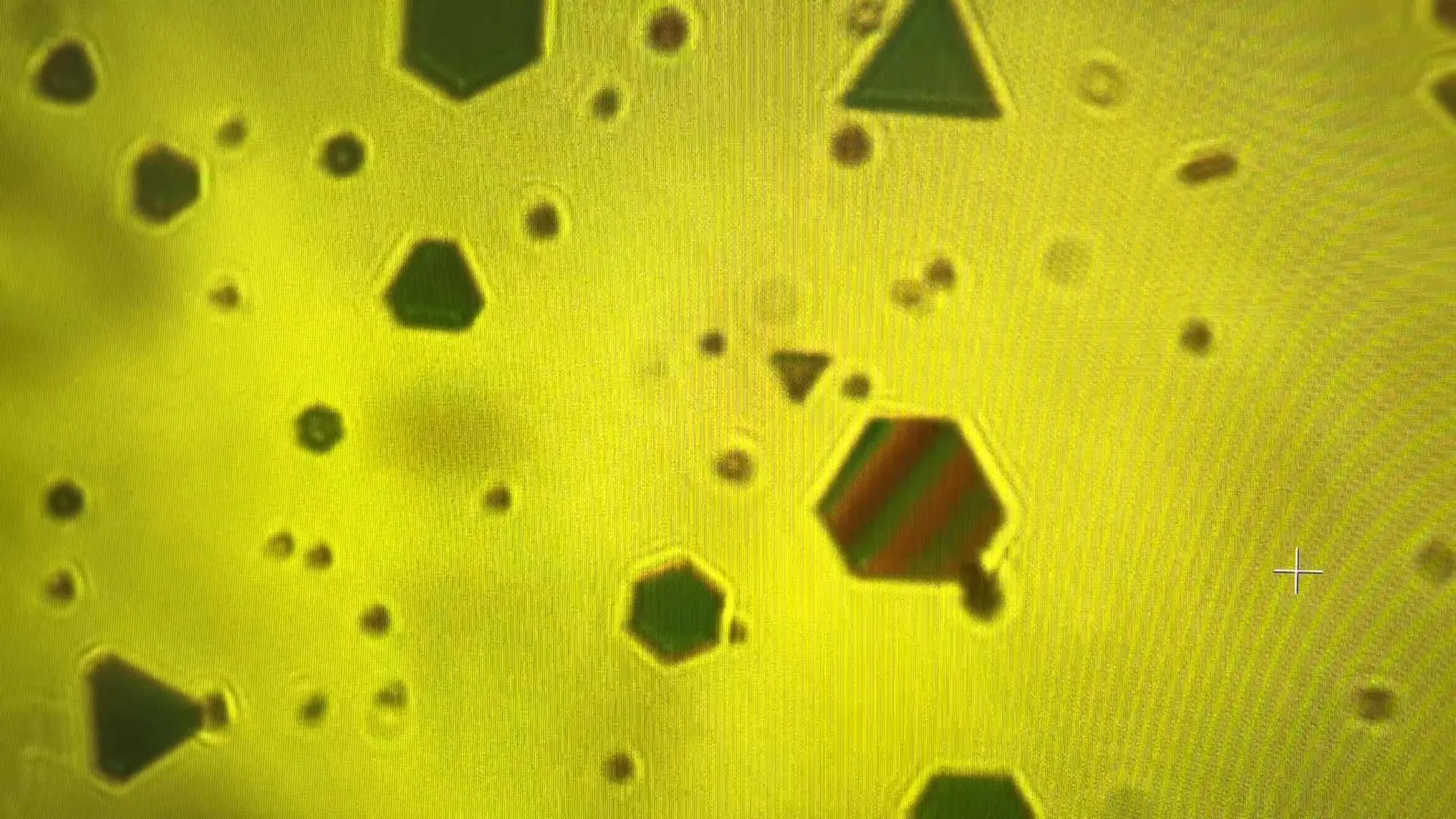
In one of Chalmers’ physics labs, doctoral student Michaela Hošková demonstrates the setup. She holds a glass container filled with millions of microscopic gold flakes suspended in a salt solution. With a pipette, she places a single drop of this liquid on a gold-coated glass plate positioned under an optical microscope. Almost immediately, the gold flakes are drawn toward the surface, but they stop just short of touching it, leaving behind extremely thin gaps measured in nanometers. These tiny cavities act as miniature light traps, causing light to reflect back and forth and produce vivid colors. When illuminated by the microscope’s halogen lamp and analyzed through a spectrometer, the light separates into different wavelengths. On the connected monitor, flakes shimmer and shift between hues of red, green, and gold as they move across the surface.

Studying ‘nature’s glue’ using light trapped in tiny cavities

“What we are seeing is how fundamental forces in nature interact with each other. Through these tiny cavities, we can now measure and study the forces we call ‘nature’s glue’ — what binds objects together at the smallest scales. We don’t need to intervene in what is happening, we just observe the natural movements of the flakes,” says Michaela Hošková, a doctoral student at the Department of Physics at Chalmers University of Technology and first author of the scientific article in the journal PNAS in which the platform is presented.

The light confined inside these nanoscopic cavities allows scientists to explore a delicate equilibrium between two competing forces: one that pulls the flakes toward the surface and another that pushes them apart. The attractive force, known as the Casimir effect, causes the gold flakes to draw closer together and toward the substrate. The opposing electrostatic force, generated by the charged particles in the salt solution, prevents them from sticking completely. When these forces reach perfect balance, a process called self-assembly occurs, creating the cavities that make this phenomenon visible.

“Forces at the nanoscale affect how different materials or structures are assembled, but we still do not fully understand all the principles that govern this complex self-assembly. If we fully understood them, we could learn to control self-assembly at the nanoscale. At the same time, we can gain insights into how the same principles govern nature on much larger scales, even how galaxies form,” says Michaela Hošková.

Gold flakes become floating sensors

The Chalmers researchers’ new platform is a further development of several years of work in Professor Timur Shegai’s research group at the Department of Physics. From the discovery four years ago that a pair of gold flakes creates a self-assembled resonator, researchers have now developed a method to study various fundamental forces.

The researchers believe that the platform, in which the self-assembled gold flakes act as floating sensors, could be useful in many different scientific fields such as physics, chemistry and materials science.

“The method allows us to study the charge of individual particles and the forces acting between them. Other methods for studying these forces often require sophisticated instruments which cannot provide information down to the particle level,” says research leader Timur Shegai.

Can provide new knowledge on everything from medicines to biosensors

Another way to use the platform, which is important for the development of many technologies, is to gain a better understanding of how individual particles interact in liquids and either remain stable or tend to stick to each other. It can provide new insights into the pathways of medicines through the body, or how to make effective biosensors, or water filters. But it is also important for everyday products that you do not want to clump together, such as cosmetics.

“The fact that the platform allows us to study fundamental forces and material properties shows its potential as a truly promising research platform,” says Timur Shegai.

In the lab, Michaela Hošková opens a box containing a finished sample of the platform. She lifts it with tweezers and shows how easily it can be placed in the microscope. Two thin glass plates hold everything needed to study nature’s invisible glue.

“What I find most exciting is that the measurement itself is so beautiful and easy. The method is simple and fast, based only on the movement of gold flakes and the interaction between light and matter,” says Michaela Hošková, zooming the microscope in on a gold flake, the colors of which immediately reveal the forces at play.

How the researchers study ‘nature’s invisible glue’

Gold flakes approximately 10 micrometers in size are placed in a container filled with a salt solution, i.e. water containing free ions. When a drop of the solution is placed on a glass substrate covered with gold, the flakes are naturally attracted to the substrate and nanometer-sized cavities (100-200 nanometers) appear. Self-assembly occurs as a result of a delicate balance between two forces: the Casimir force, a directly measurable quantum effect that causes objects to be attracted to each other, and the electrostatic force that arises between charged surfaces in a salt solution.

When a simple halogen lamp illuminates the tiny cavities, the light inside is captured as if in a trap. This allows the researchers to study the light more closely using an optical microscope connected to a spectrometer. The spectrometer separates the wavelengths of the light so that different colors can be identified. By varying the salinity of the solution and monitoring how the flakes change their distance to the substrate, it is possible to study and measure the fundamental forces at play. To prevent the saline solution with the gold flakes from evaporating, the drop of gold flakes and saline are sealed and then covered with another glass plate.

The platform was developed at Chalmers’ Nanofabrication Laboratory, Myfab Chalmers, and at the Chalmers Materials Analysis Laboratory (CMAL).

More about the research

The scientific article Casimir self-assembly:A platform for measuring nanoscale surface interactions in liquids has been published in PNAS (Proceedings of the National Academy of Sciences). It was written by Michaela Hošková, Oleg V. Kotov, Betül Küçüköz and Timur Shegai at the Department of Physics, Chalmers University of Technology, Sweden, and Catherine J. Murphy at the Department of Chemistry, University of Illinois, USA.

The research was funded by the Swedish Research Council, the Knut and Alice Wallenberg Foundation, the Vinnova Centre 2D-Tech and Chalmers University of Technology’s Nano Area of Advance.

Share Button

Menopause screening to be included in NHS health checks from next year

Despite the change – which will happen in 2026 – campaigners warn some women will lose out because the number who attend is too low.

Share Button

I thought my insides were falling out: The condition affecting one in 12 mums

Pelvic organ prolapse affects around one in 12 mothers, but many people have never even heard of it.

Share Button

‘I was a bad parent’, Baby P’s mother tells panel

Tracey Connolly was first jailed in 2009 over the death of her of toddler son Peter in north London.

Share Button