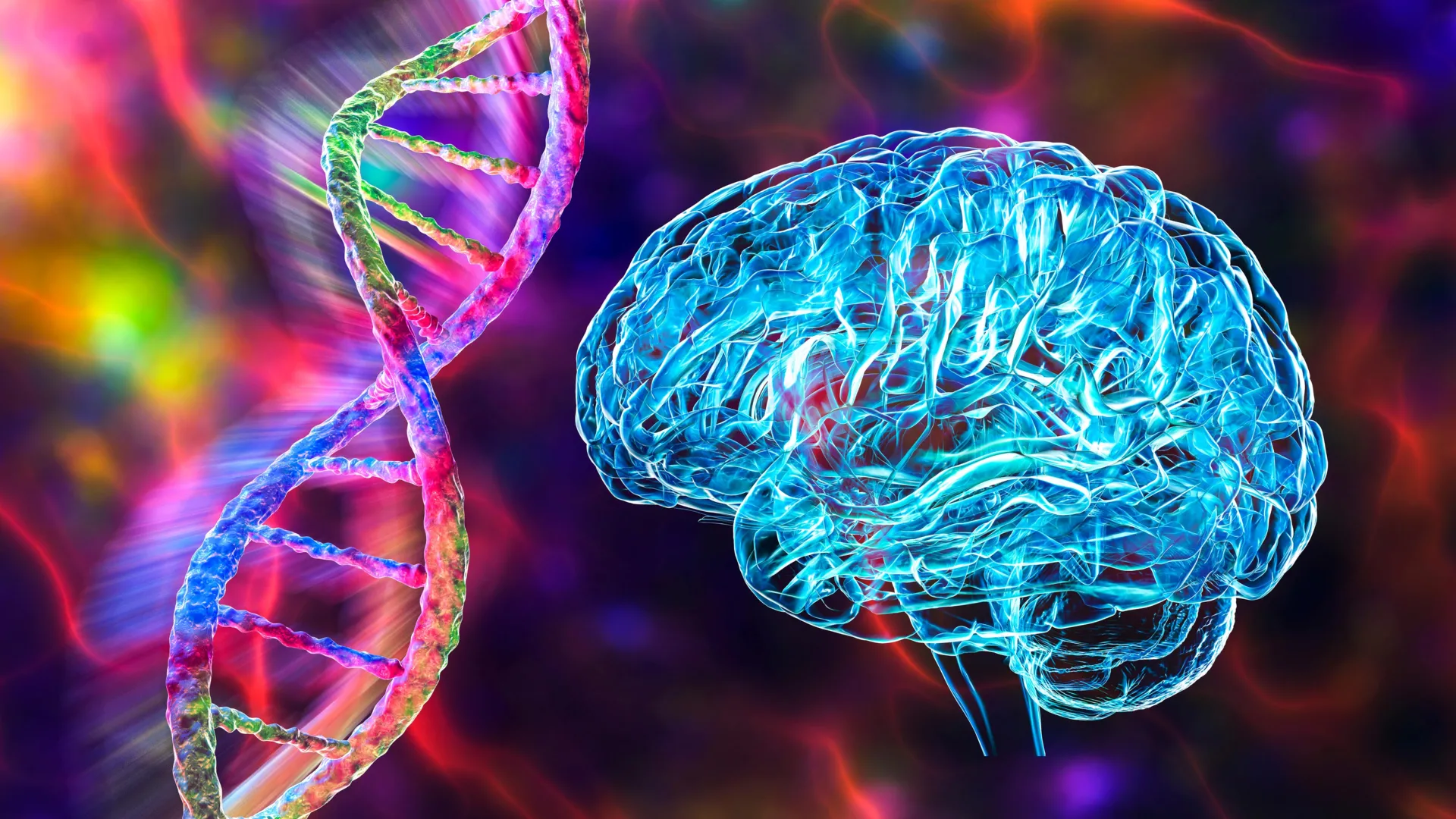
Scientists discover a hidden force that helps wire the brain

As the brain develops, neurons grow long extensions known as axons. These structures connect different regions of the brain and transmit signals both within the brain and throughout the body. To establish these connections, axons must travel along very specific routes through brain tissue. Their journey depends on chemical signals as well as the physical characteristics of the environment around them.

Until now, scientists have not fully understood how these two types of guidance work together. An international research team has discovered that the stiffness of brain tissue can control the production of important signalling molecules. The findings, published in Nature Materials, reveal a direct link between mechanical forces and chemical signalling in the brain. This insight may also help researchers better understand how other organs develop and could eventually inspire new medical strategies.

Chemical Signals and Physical Cues Work Together

For many years, scientists have known that chemical signals guide how tissues grow and organize. Gradients of signalling molecules act like directional cues, helping cells move and develop in the correct locations.

More recent studies have shown that physical factors such as tissue stiffness also influence how cells behave. However, the relationship between these mechanical cues and chemical signals has remained unclear. Understanding how the two interact is critical for explaining how complex tissues such as the brain form during development.

Study Reveals Tissue Stiffness Controls Key Brain Signals

Researchers from the Max-Planck-Zentrum für Physik und Medizin (MPZPM), the Friedrich-Alexander-Universität Erlangen-Nürnberg (FAU), and the University of Cambridge investigated this question using Xenopus laevis (African clawed frogs), a widely used model organism in developmental biology. Their experiments showed that tissue stiffness can regulate the production of important chemical guidance cues.

This process is controlled by a mechanosensitive protein called Piezo1. The team, led by Prof. Kristian Franze, found that when tissue stiffness increased, cells began producing signalling molecules that are normally absent from those areas. One example is the guidance molecule Semaphorin 3A. Notably, this response only occurred when Piezo1 levels were sufficiently high.

“We didn’t expect Piezo1 to act as both a force sensor and a sculptor of the chemical landscape in the brain,” said study co-lead Eva Pillai, a postdoctoral researcher at the European Molecular Biology Laboratory (EMBL). “It not only detects mechanical forces — it helps shape the chemical signals that guide how neurons grow. This kind of connection between the brain’s physical and chemical worlds gives us a whole new way of thinking about how it develops.”

Piezo1 Also Helps Maintain Tissue Structure

The researchers also discovered that Piezo1 influences the physical stability of brain tissue itself. When the amount of Piezo1 is reduced, levels of important cell adhesion proteins including NCAM1 and N-cadherin drop. These proteins are crucial for maintaining cell-cell contacts — which glue cells together.

“What’s exciting is that Piezo1 doesn’t just help neurons sense their environment — it helps build it,” said Sudipta Mukherjee, study co-lead and postdoctoral researcher at FAU and MPZPM. He and Pillai were both doctoral students at the University of Cambridge, where the project was initiated. “By regulating the levels of these adhesion proteins, Piezo1 keeps cells well connected, which is essential for a stable tissue architecture. The stability of the enviroment in turn, influences the chemical environment.”

The results indicate that Piezo1 performs two important roles. It acts as a sensor that converts mechanical signals from the surrounding environment into cellular responses. At the same time, it functions as a modulator that helps organize the mechanical properties of the tissue itself.

Implications for Development and Disease

These findings could have wide ranging significance for developmental biology and medical research. Errors in neuron growth are associated with congenital and neurodevelopmental disorders. In addition, tissue stiffness has been linked to diseases such as cancer.

By demonstrating that mechanical forces can shape chemical signalling, the study provides new insight into how tissues form and function. It also suggests new directions for research into disease and potential treatments.

“Our work shows that the brain’s mechanical environment is not just a backdrop — it is an active director of development,” said senior author Kristian Franze. “It regulates cell function not only directly, but also indirectly by modulating the chemical landscape. This study may lead to a paradigm shift in how we think about chemical signals, with implications for many processes from early embryonic development to regeneration and disease.”

The researchers also found that tissue stiffness can influence chemical signalling across long distances, affecting the behavior of cells far from where the mechanical force originates. Overall, the study highlights mechanical forces as a powerful regulator of development and organ function.

Share Button

Ocean temperatures may be protecting Earth from a planet-wide drought

Scientists at the Indian Institute of Technology Gandhinagar (IITGN), working with international collaborators, have discovered that ocean temperature patterns play a key role in limiting how widely droughts spread across the globe. Their findings, published in Communications Earth & Environment, are based on climate records spanning 1901-2020. The analysis shows that synchronized droughts typically affect only 1.8% to 6.5% of Earth’s land at the same time. This is far lower than earlier suggestions that as much as one sixth of the planet could experience drought simultaneously.

The research team examined how droughts begin in different parts of the world and whether they occur at roughly the same time. The study was led by Dr. Udit Bhatia of IITGN, with contributions from researchers at IITGN and the Helmholtz Centre for Environmental Research — UFZ in Leipzig, Germany.

“We treated drought onsets as events in a global network. If two distant regions entered drought within a short time window, they were considered synchronized,” explained Dr. Bhatia, the lead author and principal investigator of the Machine Intelligence and Resilience Lab and the AI Resilience and Command (ARC) Centre at IITGN.

Global “Drought Hubs” and Crop Risk

By charting thousands of these drought connections, researchers identified several regions that often act as major centers of drought activity. These so called “drought hubs” include Australia, South America, southern Africa, and parts of North America.

The team also compared climate patterns with historical agricultural data to understand how moderate drought conditions influence food production. They analyzed crop yields for wheat, rice, maize, and soybean across multiple regions.

“In many major agricultural regions, when moderate drought occurs, the probability of crop failure rises sharply — often above 25%, and in some areas, above 40-50% for crops like maize and soybean,” said Hemant Poonia, an AI Scientist at IITGN who completed his undergraduate and postgraduate degrees in Civil Engineering from the Institute.

Although such risks could become severe if drought affected many farming regions at the same time, the researchers found that natural climate processes help prevent that scenario. Changes in sea surface temperatures, particularly in the Pacific Ocean, limit how widely drought conditions spread across continents.

El Niño and La Niña Shape Global Drought Patterns

One of the strongest influences on these shifting patterns is the El Niño-Southern Oscillation, a natural warming and cooling cycle in the Pacific Ocean that affects rainfall around the world.

During El Niño phases, Australia often becomes a major drought hub, while other regions respond in different ways. When La Niña conditions develop, drought patterns shift again and tend to spread across a wider range of locations.

“These ocean-driven swings create a patchwork of regional responses, limiting the emergence of a single, global drought covering many continents at once,” explained co-author Danish Mansoor Tantary, a former IITGN master’s student who is now pursuing his PhD at Northeastern University (USA).

Rainfall and Rising Temperatures Both Affect Drought Severity

Researchers also investigated how rainfall and temperature together influence the intensity of drought. Their analysis suggests that precipitation changes account for about two thirds of long term shifts in drought severity over recent decades. The remaining third is linked to increasing evaporative demand caused by rising temperatures.

“Rainfall remains the dominant driver globally, especially in regions like Australia and South America, but the influence of temperature is clearly growing in several mid-latitude regions, such as Europe and Asia,” said Dr. Rohini Kumar, the corresponding author and senior scientist at the Helmholtz Centre for Environmental Research, whose work focuses on interactions between water, land, and climate systems.

Early Warning Signals for Global Food Security

The findings show how large scale, data driven analysis of climate patterns can help protect global food supplies. By studying drought as part of an interconnected planetary system rather than as isolated weather events, scientists can identify potential early warning regions before local droughts expand into broader crises.

Prof Vimal Mishra, a leading water and climate expert at IITGN and recipient of the Shanti Swarup Bhatnagar Prize, India’s highest multidisciplinary science award, emphasized the broader implications.

“These findings underline the importance of international trade, storage, and flexible policies. Because droughts do not hit all regions at the same time, smart planning can use this natural diversity to buffer global food supplies.”

Using Climate Insights to Reduce Future Risk

Dr. Bhatia noted that the research highlights how understanding climate systems can guide better policy decisions in a warming world.

“Our research highlights that we are not helpless in the face of a warming planet,” said Dr. Bhatia. “By understanding the delicate balance between oceans, rainfall, and temperatures, policymakers can focus their resources on specific drought hubs and create pipelines to stabilize the global market before crop failures in one region trigger price spikes in another.”

The authors acknowledged support from the Anusandhan National Research Foundation (SERB) Network of Networks grant, Projekt DEAL, and AI Centre of Excellence (AICoE) in sustainable cities.

Share Button

T. rex took 40 years to reach full size, study finds

For many years, paleontologists have studied annual growth rings preserved inside the fossilized leg bones of Tyrannosaurus rex. Much like the rings inside a tree trunk, these marks help scientists estimate how old the dinosaurs were when they died and how quickly they grew. Earlier research suggested that T. rex reached its full size by about age 25.

A new and far more comprehensive analysis now challenges that timeline. By examining 17 tyrannosaur specimens ranging from young juveniles to enormous adults, researchers determined that the famous predator likely continued growing for around 40 years before reaching its maximum weight of roughly eight tons.

The study, published in the journal PeerJ, represents the most detailed reconstruction of the life history of T. rex so far. Researchers combined advanced statistical modeling with microscopic examination of bone slices. Using a specialized lighting technique, they were able to detect previously overlooked growth rings. These hidden markers allowed the team to build a more complete picture of tyrannosaur growth patterns. The findings also hint that some fossils previously classified as T. rex could actually belong to different species or represent other biological differences.

Reconstructing the Life History of Tyrannosaurus Rex

“This is the largest data set ever assembled for Tyrannosaurus rex,” says Holly Woodward, a professor of anatomy at Oklahoma State University who led the research effort. “Examining the growth rings preserved in the fossilized bones allowed us to reconstruct the animals’ year-by-year growth histories.”

However, the fossil record does not preserve the entire lifespan of an individual animal. Unlike the full sequence of rings visible in a tree trunk, a cross section of T. rex bone typically captures only the final 10 to 20 years of the dinosaur’s life.

To fill those gaps, the researchers developed a new analytical method. By combining growth information from multiple specimens of different ages, they created a composite growth curve for the species.

“We came up with a new statistical approach that stitches together growth records from different specimens to estimate the growth trajectory of T. rex across all stages of life in greater detail than any previous study,” explains Nathan Myhrvold, a mathematician and paleobiologist at Intellectual Ventures who led the statistical analysis. “The composite growth curve provides a much more realistic view of how Tyrannosaurus grew and how much they varied in size.”

A Longer Growth Period for the King of Dinosaurs

The results suggest that Tyrannosaurus did not rapidly reach adulthood. Instead, the dinosaurs appear to have grown gradually over several decades.

Rather than maturing quickly, T. rex experienced a prolonged growth phase lasting roughly four decades. According to the researchers, this extended development may have played an important ecological role.

“A four-decade growth phase may have allowed younger tyrannosaurs to fill a variety of ecological roles within their environments,” says coauthor Jack Horner of Chapman University. “That could be one factor that allowed them to dominate the end of the Cretaceous Period as apex carnivores.”

Could Some Famous Fossils Belong to Other Species

Although Tyrannosaurus rex is the best known species in this group of dinosaurs, scientists continue to debate whether some fossils assigned to T. rex actually belong to closely related species.

Some researchers have proposed that certain smaller fossils represent a distinct species called Nanotyrannus rather than young Tyrannosaurus individuals. Others have suggested that even the largest specimens might belong to two or three separate species.

These ideas remain controversial within the scientific community.

To explore the issue further, the new study examined 17 specimens within what researchers describe as the “Tyrannosaurus rex species complex.” This term acknowledges the possibility that the fossils may represent multiple related species or subspecies.

One notable result involves two well known fossils nicknamed “Jane” and “Petey.” Their growth patterns differ significantly from those of the other specimens in the dataset. While growth data alone cannot prove that they represent separate species, the difference raises intriguing questions. A separate recent analysis by Zanno and Napoli reached a similar conclusion using different techniques, identifying Jane and Petey as belonging to two distinct species of Nanotyrannus.

New Imaging Technique Reveals Hidden Growth Rings

Another key finding involves the discovery of a previously unrecognized type of growth ring in dinosaur bone. Woodward, Myhrvold, and Horner found that circularly polarized and cross-polarized light can reveal growth features that are difficult to detect with standard methods.

This approach helps clarify puzzling growth patterns seen in some specimens. The researchers supported the finding with strong statistical evidence, suggesting that traditional techniques for counting dinosaur growth rings may sometimes overlook important details.

“Interpreting multiple closely spaced growth marks is tricky,” Myhrvold says. “We found strong evidence that the protocols typically used in growth studies may need to be revised.”

A Clearer Picture of Tyrannosaurus Life

More than a century after Tyrannosaurus rex was first discovered, the species continues to surprise scientists. By combining a larger fossil sample, new analytical tools, and improved imaging methods, the research offers a clearer understanding of how these iconic predators grew and developed.

The results provide a more complete portrait of Tyrannosaurus rex as a living animal, tracing its journey from young dinosaur to one of the largest land predators in Earth’s history.

Share Button

‘Moment of reckoning’ needed in social care, says Louise Casey

The chair of the independent commission on social care recommends introducing a full-time dementia tsar, and new fast-track passport system for people diagnosed with motor neurone disease (MND).

Share Button

Covid inquiry chair defends £200m cost and four-year process on final day

Baroness Heather Hallett said completing the hearings in under four years was an achievement but critics have questioned its cost.

Share Button

Trying to get social care can be ‘horrendous’, Baroness Casey tells BBC

The chair of the independent commission on adult social care also says the care system relies on the exploitation of its workforce.

Share Button

Dentists return £900m for not seeing NHS patients

Sum represents £1 out of every £7 they have been given by NHS as dentists opt to chase private work.

Share Button

‘My son can now enjoy life’: Children with severe form of epilepsy helped by new drug

Families say the groundbreaking medicine is transforming the lives of children with Dravet syndrome.

Share Button

Climate models may be missing massive carbon emissions from boreal wildfires

Wildfires sweeping through the vast boreal forests of Alaska, Canada, Scandinavia, and Russia could be having a larger impact on the climate than scientists once believed. A new study led by researchers at UC Berkeley suggests these northern fires may release far more carbon into the atmosphere than current estimates indicate.

The reason is that these fires do not only burn trees. In many boreal regions, flames can spread downward into thick layers of carbon rich soil beneath the forest floor. These soils, known as peat, contain partially decomposed plant material that has accumulated over hundreds or even thousands of years. Because the cold, wet conditions of the far north slow the breakdown of organic matter, these landscapes store enormous amounts of carbon underground.

Satellite Data May Miss Underground Peat Fires

According to the study, many widely used models that estimate wildfire carbon emissions fail to fully capture this underground burning. Most of these models rely heavily on satellite observations of visible flames and are based largely on fires that occur at lower latitudes. As a result, they may overlook slower, less visible fires that smolder deep within peat and organic soils.

“Many of the fires that matter most for the climate don’t look dramatic from space,” said study lead author Johan Eckdahl, a postdoctoral scholar in Berkeley’s Energy and Resources Group. “Peatlands and organic soils can smolder for weeks to years, releasing enormous amounts of ancient carbon.”

Reconstructing Emissions From Swedish Wildfires

The research, published in the journal Science Advances, analyzed 324 wildfires that burned across Sweden in 2018. Eckdahl and his colleagues combined detailed national forest records with direct field measurements to reconstruct the amount of carbon released by each fire.

Using these data, the team created a detailed map of wildfire emissions. Their analysis showed that local conditions such as climate, vegetation, and soil characteristics strongly influence how much carbon is stored in forests and how much is released during a wildfire.

Major Differences From Global Fire Models

When the researchers compared their reconstructed emissions with six widely used global wildfire models, they discovered significant discrepancies. In some places, the models overestimated carbon emissions. In other areas, especially where fires burned deep into soil layers, emissions were dramatically underestimated.

For instance, the models predicted higher emissions in the county of Gävleborg, where intense fires burned through dry forests and were clearly visible from satellites.

However, the situation was very different in neighboring Dalarna County. There, lower intensity fires burned quietly into thick layers of organic soil and were less noticeable from space. In that region, the models underestimated carbon emissions by as much as 14 times.

“Sweden is a very large country, but it’s quite small compared to Siberia and Canada,” Eckdahl said. “We may be severely underestimating the impact of the recent extreme fire seasons in these regions.”

Field Measurements Reveal Soil Carbon Loss

To measure how much carbon wildfires release from soil, the research team collected data from 50 locations affected by fires in 2018. Nineteen sites experienced high intensity fires, while 31 had lower intensity burns.

At each site, the researchers measured the thickness of the organic rich soil layer — which can vary from a few inches to many feet — and collected soil samples. By comparing carbon levels in burned soil with samples from nearby unburned forests, the team calculated how much carbon had been emitted.

“Once you’re out there, it’s a simple task — just dig some holes — but the hard part is getting to the sites,” Eckdahl said. “Sweden has a good network of forest roads, but in Siberia, I hear it’s a real trek, which is one reason why we’re severely missing measurements from that region.”

Expanding Research to Fire Prone U.S. Forests

Eckdahl is now working with colleagues at UC Berkeley and other institutions as part of the Western Fire & Forest Collaborative to apply similar research methods in forests across the Western United States.

Although forests in the western U.S. generally do not contain the same thick peat soils found in northern boreal regions, several other factors still influence wildfire emissions. These include regional climate patterns, the types of trees and vegetation present, and soil conditions. Eckdahl plans to study the role of soil microbes such as bacteria and fungi and how they contribute to forest recovery after wildfire.

“Forests in the Lower 48 and those far up north may look very different, but they share the common currency of carbon,” said Eckdahl. “By improving our understanding of how this element flows between the land and the atmosphere, we can better anticipate the impact of future fire regimes in a warming world and design smarter strategies to reduce climate risks on society.”

Lars Nieradzik of Lund University and Louise Rütting of the Brandenburg University of Technology are co authors of the paper.

Share Button

A simple hand photo may be the key to detecting a serious disease

Researchers at Kobe University have created an artificial intelligence system that can identify a rare endocrine disease simply by examining photos of the back of the hand and a clenched fist. The approach avoids facial images, helping protect patient privacy while still achieving high diagnostic accuracy. Scientists say the technology could eventually help doctors refer patients to specialists more quickly and improve access to care in underserved areas.

The disease the AI targets is acromegaly, an uncommon condition that usually appears in middle age. It is caused by excessive production of growth hormone, which leads to enlarged hands and feet, changes in facial appearance, and abnormal growth of bones and internal organs. Because the disorder develops gradually over many years, it can be difficult to recognize early.

If untreated, acromegaly can lead to serious health problems and shorten life expectancy by about 10 years. “Because the condition progresses so slowly, and because it is a rare disease, it is not uncommon to take up to a decade for it to be diagnosed,” says Kobe University endocrinologist Hidenori Fukuoka. He adds, “With the progress of AI tools, there have been attempts to use photographs for early detection, but they have not been adopted in clinical practice.”

A Privacy Focused AI Approach Using Hand Images

When the research team reviewed existing AI studies, they found that many systems depend on facial photos to identify disease. However, facial recognition can raise privacy concerns for patients. To address this issue, the scientists chose a different strategy.

Yuka Ohmachi, a graduate student at Kobe University, explains, “Trying to address this concern, we decided to focus on the hands, a body part we routinely examine alongside the face in clinical practice for diagnostic purposes, particularly because acromegaly often manifests changes in the hands.”

To strengthen privacy protections, the researchers limited their images to the back of the hand and a clenched fist. They intentionally avoided palm images because palm line patterns are highly individual and could reveal identity. This careful approach helped recruit a large number of participants. In total, 725 patients from 15 medical institutions across Japan contributed more than 11,000 images used to train and test the AI model.

AI Outperforms Experienced Specialists

The team reported their results in the Journal of Clinical Endocrinology & Metabolism. Their AI model demonstrated very high sensitivity and specificity when identifying acromegaly from the hand images. In direct comparisons, the system even performed better than experienced endocrinologists who evaluated the same photographs.

“Frankly, I was surprised that the diagnostic accuracy reached such a high level using only photographs of the back of the hand and the clenched fist. What struck me as particularly significant was achieving this level of performance without facial features, which makes this approach a great deal more practical for disease screening,” says Ohmachi.

Expanding Medical AI to Other Conditions

The researchers now hope to adapt their system to detect additional medical conditions that produce visible changes in the hands. Possible targets include rheumatoid arthritis, anemia and finger clubbing. Ohmachi says, “This result could be the entry point for expanding the potential of medical AI.”

Supporting Doctors and Improving Access to Care

In real clinical settings, doctors rely on far more than hand images when diagnosing patients. Medical history, lab tests and physical exams all play important roles. The Kobe University researchers see their AI tool as something that could assist physicians rather than replace them. In their study, they describe the technology as a way to “complement clinical expertise, reduce diagnostic oversight and enable earlier intervention.”

Study lead Fukuoka says: “We believe that, by further developing this technology, it could lead to creating a medical infrastructure during comprehensive health check-ups to connect suspected cases of hand-related disorders to specialists. Furthermore, it could support non-specialist physicians in regional healthcare settings, thus contributing to a reduction of healthcare disparities there.”

The research received funding from the Hyogo Foundation for Science Technology. The project also involved collaborators from Fukuoka University, Hyogo Medical University, Nagoya University, Hiroshima University, Toranomon Hospital, Nippon Medical School, Kagoshima University, Tottori University, Yamagata University, Okayama University, Hyogo Prefectural Kakogawa Medical Center, Hokkaido University, International University of Health and Welfare, Moriyama Memorial Hospital and Konan Women’s University.

Share Button