Extreme weather may be changing the way we need to shop, with the UK government urging people to stock up on canned goods.


Extreme weather may be changing the way we need to shop, with the UK government urging people to stock up on canned goods.

Common food preservatives found across the processed food supply may be associated with a greater risk of high blood pressure and cardiovascular disease, according to research published in the European Heart Journal.
The study was led by Dr. Mathilde Touvier, a research director at INSERM (the French National Institute for Health and Medical Research), and Anaïs Hasenböhler, PhD student, both from the Nutritional Epidemiology Research Team at the Université Sorbonne Paris Nord and Université Paris Cité, France.
Preservatives are added to foods for several reasons, including preventing the growth of bacteria and mold, slowing spoilage, and helping products maintain their color, flavor, or freshness for longer. Because these ingredients are so widely used, researchers wanted to better understand whether long-term exposure could be connected to cardiovascular health.
Ms. Hasenböhler said: “Food preservatives are used in hundreds of thousands of industrially processed foods. Experimental studies suggest that some preservative food additives may be harmful to cardiovascular health, but we have not had enough evidence on the impact of these ingredients in humans. As far as we know, this is the first study of its kind to investigate the links between a wide range of preservatives and cardiovascular health.”
Tracking Diet and Heart Health in More Than 112,000 People
The work was conducted as part of NutriNet-Santé, a large ongoing research project examining the connections between nutrition and health. The analysis included 112,395 volunteers living across France.
Every six months, participants recorded everything they ate and drank during a three-day period. This gave researchers unusually detailed information about their diets rather than relying only on broad estimates of food consumption.
The research team then examined the ingredients in those foods and beverages, including the preservatives they contained. Participants were followed for an average of seven to eight years so researchers could track whether they developed high blood pressure or cardiovascular diseases such as heart attack, stroke, or angina.
Preservative exposure was nearly universal. During the first two years of participation, 99.5% of the volunteers consumed at least one food preservative.
Higher Preservative Intake Linked to Higher Risk
The strongest associations appeared among people consuming the largest amounts of certain preservatives.
Participants with the highest intake of ‘non-antioxidant’ preservatives had a 29% higher risk of hypertension than those consuming the lowest amounts. They also had a 16% higher risk of cardiovascular disease, which included heart attack, stroke and angina.
People who consumed the greatest amounts of antioxidant preservatives had a 22% higher risk of hypertension.
The two categories protect food in different ways. Non-antioxidant preservatives are generally used to prevent potentially harmful microorganisms, including bacteria and mold, from growing. Antioxidant preservatives instead slow oxidation, a chemical process that can cause foods to brown, develop unpleasant flavors, or become rancid.
Eight Common Preservatives Stood Out
Researchers also analyzed 17 of the preservatives most commonly consumed by participants.
Eight were specifically associated with a higher risk of high blood pressure: potassium sorbate (E202), potassium metabisulphite (E224), sodium nitrite (E250), ascorbic acid (E300), sodium ascorbate (E301), sodium erythorbate (E316), citric acid (E330) and extracts of rosemary (E392).
Ascorbic acid (E300) was also specifically associated with cardiovascular disease.
These findings do not mean that consuming one of these ingredients will necessarily cause high blood pressure or heart disease. The research was observational, meaning it identified statistical associations rather than proving that preservatives were directly responsible for the increased risks.
Dr. Touvier added: “This study has some limitations inherent to its observational design. However, the findings are based on highly detailed data, and we have taken account of other factors that can increase or lower the risk of cardiovascular disease. Experimental research in the literature consistently suggested that preservatives may cause oxidative stress in the body or affect the way the pancreas works.
“These results suggest we need a re-evaluation of the risks and benefits of these food additives by the authorities in charge, such as the EFSA in Europe and the FDA in the USA, for better consumer protection. In the meantime, these findings support existing recommendations to favor non-processed and minimally processed foods, and avoid unnecessary additives. Doctors and other healthcare professionals play a key role in explaining these recommendations to the public.”
Why Preservatives Might Affect the Body
One possible explanation involves oxidative stress. This occurs when reactive molecules build up faster than the body’s protective systems can neutralize them, potentially damaging cells and tissues over time.
Researchers are also investigating whether preservatives could influence pancreatic function. The pancreas plays a central role in regulating blood sugar and metabolism, so changes in its function could have broader effects throughout the body.
The team is now studying how food additives and ultra-processed foods may influence inflammation, oxidative stress, the metabolic profile of the blood, and the gut microbiota.
The gut microbiota refers to the enormous community of bacteria and other microorganisms living in the digestive tract. These microbes are increasingly being studied for their possible roles in metabolism, immune function, and cardiovascular health.
By examining these biological changes, researchers hope to better understand why exposure to certain additives may be associated with a higher risk of disease and whether the preservatives themselves are contributing to those effects.

For 10 years, physicist Stephan Schlamminger had been chasing one of the most stubborn numbers in science. Now, after a decade of experiments, corrections, and painstaking analysis, the answer was sitting inside a sealed envelope.
He was not entirely sure he wanted to open it.
Schlamminger, a physicist at the National Institute of Standards and Technology (NIST), had spent much of the previous decade trying to measure the universal gravitational constant. Known to physicists as big G, this fundamental number determines the strength of gravitational attraction throughout the universe.
The number hidden in the envelope was the key that would finally unscramble his experimental data and reveal what his team had measured.
Gravity’s Most Elusive Number
Gravity is one of the most familiar forces in everyday life. It keeps people anchored to Earth, guides planets around the Sun, helps gather stars into galaxies, and plays a central role in shaping the enormous cosmic web of galaxy clusters that stretches across the universe.
Yet scientists still do not know its fundamental strength with the precision they have achieved for other basic forces of nature.
That strength is represented by big G.
Scientists have been attempting to measure big G for more than 225 years, beginning roughly a century after Isaac Newton introduced his law of universal gravitation. Despite generations of increasingly sophisticated experiments, the gravitational constant remains less precisely known than comparable constants associated with nature’s other three fundamental forces: electromagnetism and the strong and weak nuclear forces.
Part of the problem is surprisingly simple. Gravity is extraordinarily weak.
A tiny magnet can demonstrate the problem. A magnet roughly the size of a pinhead can lift a paper clip against the gravitational pull of the entire Earth. In that simple contest, the electromagnetic force produced by the magnet easily overcomes gravity.
The challenge becomes even greater in the laboratory. Scientists cannot move planets around to perform controlled experiments, so they have to measure the gravitational attraction between much smaller objects that can be weighed and precisely positioned.
Those experimental masses are about 500 billion trillion times smaller than Earth. As a result, the gravitational forces researchers are trying to detect are incredibly faint.
Measurements That Refuse to Agree
Modern instruments have become extraordinarily sensitive, but measurements of big G continue to produce slightly different answers.
The disagreements are small, roughly one part in 10,000. Yet they are still larger than researchers would expect from ordinary experimental uncertainty.
That persistent mismatch has created an uncomfortable question for physicists.
The most likely explanation is that some subtle experimental effect has been overlooked. But there is also a far more intriguing possibility: Perhaps scientists are missing something about gravity itself.
Schlamminger and his colleagues hoped to clarify the problem by carefully replicating a precision experiment carried out by the International Bureau of Weights and Measures (BIPM) in Sèvres, France, in 2007.
The idea was straightforward. If an independent team at NIST’s campus in Gaithersburg, Maryland, could reproduce the French measurement using essentially the same approach, it could help resolve the disagreement surrounding big G.
But Schlamminger was concerned about another source of error: himself.
Scientists can unintentionally influence how they interpret or analyze measurements when they know what answer they expect. Schlamminger wanted to eliminate that possibility as much as possible.
So he asked colleague Patrick Abbott to blind the experiment by scrambling part of the data.
Abbott subtracted a secret number from the carefully measured weights of some of the masses used in the experiment. Because only Abbott knew that number, Schlamminger could analyze the experiment without knowing the true value of big G his team was producing.
The correction needed to recover the real answer was sealed inside an envelope.
Ten Years of Work Came Down to One Envelope
Schlamminger nearly opened the envelope in 2022.
At the last moment, however, he realized that the team had not fully accounted for a subtle effect involving air pressure. Because even tiny disturbances can matter in an experiment this sensitive, he postponed the reveal and returned to the analysis.
Two years later, the moment finally arrived.
At 3 p.m. on July 11, 2024, Schlamminger was scheduled to present the results at the annual Conference on Precision Electromagnetic Measurements in Aurora, Colorado.
He was so anxious that he skipped the morning sessions. Instead, he mentally revisited the many things that could have distorted the measurement, including small variations in temperature and pressure.
By then, he believed the team had accounted for everything it reasonably could.
“I had really dotted all the i’s and crossed all the t’s of the experiment,” he said.
During his afternoon presentation, Schlamminger finally revealed the hidden number.
He immediately felt relieved.
For the experiment to produce the result he anticipated, Abbott’s secret correction needed to be relatively large and negative.
It was.
At first, that seemed like good news.
But as the day went on, Schlamminger realized there was a problem. The correction was too large. Once the blinded data were restored, the NIST measurement did not agree with the French result.
A Tiny Difference With Big Implications
After another two years of detailed analysis, Schlamminger and his collaborators reported their measurement in Metrologia.
Their value for G was 6.67387 × 10⁻¹¹ meters3/kilogram/second2.
That result is 0.0235% lower than the value obtained in the French experiment.
In ordinary life, a difference that small would be meaningless. It will not noticeably change the reading on a bathroom scale, and it would not affect how much peanut butter is required to produce a 16-ounce container.
For fundamental physics, however, the discrepancy is significant.
Other fundamental constants of nature are known to six or more significant digits. Big G remains stubbornly less precise.
History also gives physicists a reason to pay attention to tiny discrepancies. On several occasions, small mismatches between measurements and expectations have eventually revealed that scientists were missing something important about how nature works.
That does not mean the disagreement over big G points to new physics. Experimental error remains the more likely explanation. But the continued inability of precision experiments to converge on the same value keeps the mystery alive.
An Experiment With Roots in 1798
The technique used by both the BIPM and NIST teams has a history stretching back more than two centuries.
Their experiments relied on a torsion balance, an instrument capable of detecting extremely small forces by measuring how much a thin suspended fiber twists.
The basic idea dates to a famous experiment performed by English physicist Henry Cavendish in 1798.
Cavendish placed two lead balls at opposite ends of a wooden beam suspended horizontally from its center by a thin wire. He then positioned two much heavier masses nearby.
The heavier masses gravitationally attracted the smaller lead balls, causing the suspended beam to rotate. As the beam turned, the wire twisted until its resistance balanced the gravitational pull.
By measuring the tiny movement of the beam with a mirror and a light pointer, Cavendish could determine the gravitational interaction between the masses and obtain information corresponding to the value of big G.
More than 200 years later, the same basic principle remains useful, although the equipment has become vastly more sophisticated.
Measuring a Force Almost Too Small to See
The BIPM and NIST experiments used eight cylindrical metal masses.
Four larger cylinders were positioned on a rotating carousel in a configuration resembling four candlesticks on an old-fashioned chandelier. Four smaller masses were located inside the carousel on a disk suspended from a copper-beryllium ribbon about as thick as a human hair.
Gravity between the outer and inner masses caused the suspended torsion balance to rotate, twisting the thin metal ribbon.
By precisely measuring that motion and the associated gravitational torque, the researchers could calculate one value for G. Torque is simply a twisting force, similar to the force used when turning a wrench.
But the teams did not rely on only one method.
In another series of measurements, the scientists placed electrodes beside the inner masses and applied electrical voltage to them.
The resulting electrostatic force produced torque in the opposite direction from the gravitational torque.
Researchers then adjusted the voltage until the electrostatic effect exactly balanced the gravitational effect, preventing the torsion balance from turning.
Because the amount of voltage required to achieve that balance could be measured with exceptional precision, it provided another way to calculate big G.
Copper and Sapphire Give the Same Answer
Schlamminger’s team introduced an additional test.
They wanted to know whether the material used for the experimental masses could somehow influence the result.
The researchers first performed the measurements using copper masses. Then they repeated the experiment using sapphire.
The outcome was essentially the same with both materials.
That result eliminated one possible explanation for the discrepancy, but it did not solve the larger mystery.
After a decade of work, the NIST experiment has become another important data point in scientists’ continuing effort to determine the true value of big G.
“Every measurement is important, because the truth matters,” Schlamminger said. “For me, making an accurate measurement is a way of bringing order to the universe, whether or not the number agrees with the expected value,” he added.
After devoting years to the problem, Schlamminger says he is ready to hand the challenge to others.
“I’ll leave it to younger generations of scientists to work on the problem,” he added.
“We must press on.”
Big G Is Not the Same as Little g
Big G is not the only letter g associated with gravity.
Physicists also use little g, but the two quantities describe very different things.
Little g refers to the acceleration an object experiences because of the gravitational attraction of a nearby large body such as Earth.
Unlike big G, little g changes depending on where you are.
Near Earth’s surface, little g is approximately 9.8 meters per second squared. On the Moon, it is only about 1.62 meters per second squared because the Moon has much less mass and therefore produces weaker gravitational acceleration.
Big G, in contrast, is considered universal.
To the best of scientists’ knowledge, it has the same value everywhere in the cosmos. It determines the gravitational force between any two objects, whether those objects are two laboratory masses, a person and Earth, or two astronomical bodies separated by enormous distances.
Newton’s law of gravitation uses big G to connect mass, distance, and gravitational force.
For two masses, m1 and m2, scientists multiply the masses together, divide that result by the square of the distance r between them, and then multiply by big G.
Written mathematically, the relationship is:
Gm1m2/r2
More than two centuries after scientists began trying to measure it precisely, that seemingly simple constant remains one of the most difficult numbers in physics to pin down.

A growing outbreak of the rare Bundibugyo virus in the Democratic Republic of Congo is drawing attention to a broader problem in global health: how to prepare for dangerous diseases that appear only rarely but can still cause deadly outbreaks.
In a review article published in the New England Journal of Medicine, Boston University professor Nancy Sullivan argues that outbreak preparedness needs to extend beyond the infectious diseases that receive the most attention.
A Rare Relative of Ebola
Bundibugyo belongs to the filovirus family, the same group of viruses that includes the much better-known Ebola virus. Despite its potential severity, Bundibugyo has been linked to only two previously recognized outbreaks, one in Uganda in 2007 and another in the Democratic Republic of Congo (DRC) in 2012.
The current outbreak, however, has already surpassed those earlier events in both its trajectory and scale. According to the WHO, 695 confirmed cases and 138 confirmed deaths had been reported in the DRC and Uganda as of June 11.
Sullivan, a professor of biology and virology, immunology & microbiology at Boston University, explains that bringing an outbreak under control depends on several measures working quickly together. These include rapid diagnosis, isolating infected patients, tracing people who may have been exposed, strengthening infection control, and providing supportive medical care.
Those steps become much harder when laboratory resources are limited. In settings where testing capacity is scarce, delays in confirming infections can give the virus more time to spread.
A Severe Hemorrhagic Fever
Bundibugyo can cause a severe form of hemorrhagic fever. Infection can trigger widespread inflammation, damage and failure of the cells lining blood vessels, uncontrolled bleeding, and failure of multiple organs.
The virus spreads through direct contact with infected bodily fluids. That creates particular risks for family members, caregivers, and health workers, especially when patients are being treated in hospitals without adequate infection control. The 2026 outbreak was formally recognized after the death of a nurse.
Another major challenge is that Bundibugyo can initially resemble several far more common illnesses. Symptoms overlap with malaria, typhoid fever, and other diseases, meaning laboratory testing is necessary to confirm an infection.
Testing Delays Can Slow the Response
Laboratory access remains limited in parts of the DRC, Sullivan found, and samples may need to travel considerable distances to reach national reference laboratories. That can turn a critical diagnosis into a lengthy process.
“Delays in specimen collection, transportation and testing can postpone confirmation by days or weeks, which hinders the isolation of infected persons, contact tracing and the initiation of outbreak-control measures,” Sullivan wrote.
Those delays can be especially damaging during an outbreak, when identifying cases quickly is essential for separating infected people from others and finding anyone who may have been exposed.
The Risk of Overlooking Rare Viruses
The Bundibugyo outbreak also points to a larger weakness in preparedness strategies that concentrate heavily on the most familiar high-risk pathogens.
For decades, Bundibugyo caused relatively little recognized activity. Its return as a significant threat illustrates how difficult it can be to predict which infectious disease will drive the next major outbreak.
Sullivan has argued that medical countermeasures should be developed more broadly for pathogens capable of causing severe illness or death in humans, rather than focusing only on viruses already known to cause frequent outbreaks.
No Licensed Bundibugyo Vaccine
Considerable progress has been made toward vaccines and other medical countermeasures for the Ebola, Sudan and Marburg viruses. Bundibugyo, however, occurs much less often, and no licensed vaccine or therapeutic has been developed specifically to target it.
There are encouraging signs that vaccines designed against other virus species could offer at least some protection, but Bundibugyo remains an example of a dangerous pathogen for which dedicated medical tools are limited.
Sullivan says preparedness also needs to involve much more than creating diagnostic tests, vaccines and drugs. Health systems must be capable of coordinating quickly when outbreaks spread across borders.
“Preparedness planning should extend beyond diagnostics, vaccines, and therapeutics to include operational readiness for multinational outbreak response,” she said.
A report suggests older LGBTQ+ people experience more social isolation than their heterosexual peers.

Slash, also known as Saul Hudson, is famous worldwide as the guitarist for Guns N’ Roses. But music is only part of his story. He has also been fascinated by reptiles for most of his life and has long supported zoos, museums, and natural history.
Now that passion has earned him an unusual scientific honor. Researchers have named a newly identified snake species from New Guinea Lielaphis slashi, or Slash’s groundsnake.
“As a long time herpephile, I am extremely honored and humbled to have Lielaphis slashi from New Guinea named after me. It is really exciting, I never would have imagined this moment would arrive,” says Slash.
A Childhood Connection to Slash
For Sara Ruane, the Field Museum’s Associate Curator of Herpetology and senior author of a paper in Zootaxa describing the species, the name also has a personal connection.
“Guns N’ Roses has been one of my favorite bands since I was in first grade, and by fifth grade, I had already told my teacher that I wanted to be a herpetologist — a scientist who studies reptiles — when I grew up,” says Sara Ruane, the Field Museum’s Associate Curator of Herpetology and senior author of a paper in Zootaxa describing the new species. “So when I was twelve years old and got my copy of Reptiles Magazine in the mail and it had a picture of Slash holding his pet reticulated python on the cover, I thought, ‘This guy is so cool.'”
Years later, after Ruane became a scientist who sometimes has the opportunity to assign official names to newly recognized reptile species, she returned to that old magazine interview.
“I reread his interview, and he talked about how much he loves museums and zoos and natural history, and about how when he was a kid, he’d go outside and look for snakes — it was all stuff that I really related to, and it made me think that he’d be a great person to name a new species after,” says Ruane.
Her opportunity eventually came in the form of a reddish-brown snake measuring 28 inches long that had been collected in the forests of New Guinea.
A Mysterious Snake From New Guinea
New Guinea is the world’s second-largest island, behind Greenland. Located just north of Australia, the island is divided between Indonesia and Papua New Guinea. Its tropical forests support enormous biological diversity, much of which remains poorly documented by scientists.
During fieldwork one night in 2006, Chris Austin, a professor and curator of herpetology at the Louisiana State University Museum of Natural Science, encountered a snake in New Guinea that he did not recognize.
“These New Guinea groundsnakes are nocturnal, so the best way to find them is at night. They are typically found just after sunset at the base of large trees where they are looking for something to eat,” says Austin, a co-author of the paper describing the new species. “When working at night in New Guinea you need to be very careful as there are several highly venomous species that look very similar to the non-venomous groundsnakes.”
After completing her doctorate, Ruane worked with Austin at LSU in 2016. The two began collaborating to better understand New Guinea’s poorly studied snakes, and they have continued working together on the group ever since.
Genetics Reveal a New Species
At first glance, the snake did not obviously appear to represent a species new to science. Laboratory work, however, revealed important differences.
“Using multiple cutting-edge genetic analyses, we found that L. slashi is genetically distinct from other similar snakes in the same genus,” says Tianqi Huang, the study’s first author and a post-doctoral researcher at the Field Museum with Ruane. “The combination of physical characteristics, like differences in numbers of scales when compared with other species, and the genetic evidence is what led us to realize that it is an entirely new species. We also used ecological modeling to show that L. slashi‘s preferred habitat is different from similar snakes.”
The researchers combined genetic evidence with physical traits, including differences in scale counts, to distinguish L. slashi from related snakes. Ecological modeling also indicated that the new species favors a different type of habitat than similar members of the genus.
What Slash’s Groundsnake Eats
Scientists still know relatively little about the behavior and ecology of Slash’s groundsnake.
“It’s incredibly hard to observe snakes in the wild before they slither away, so our knowledge about L. slashi is limited,” says Ruane.
Its anatomy does provide some hints about how it may live and feed.
“Snakes in this genus often have large teeth in the back of their mouths, which New Guinea groundsnakes may use to grab on to and eat small, slippery-scaled lizards and the eggs of other reptiles; this snake isn’t grasping and squeezing its prey like a boa constrictor,” says Ruane.
Although Guns N’ Roses has been called the “most dangerous band in the world,” its reptilian namesake is not dangerous to people. L. slashi does not produce venom capable of seriously harming a human.
Threats to New Guinea’s Forests
Slash’s groundsnake may pose little danger to humans, but human activity could threaten the species and many other animals living in New Guinea’s forests.
“The habitats that Slash’s groundsnake is from are under threat from industries like coffee farming and mining,” says Ruane. “That’s part of why describing the species that live there is important. Every species should be recognized in order for us to better understand how ecosystems work, how everything fits into the environment. We can’t conserve animals or other living things that we don’t know about.”
By formally identifying species such as L. slashi, scientists can build a clearer picture of New Guinea’s biodiversity and better understand which organisms may be at risk as their habitats change.
This study was contributed to by Tianqi Huang (Field Museum and Rutgers University), Chris Austin (Louisiana State University Museum of Natural Science), Justin Bernstein (Slippery Rock University and the American Museum of Natural History), Bulisa Iova (Papua New Guinea National Museum and Art Gallery), Jackson Roberts (Virginia Museum of Natural History), Jeffrey Frederick (University of Kentucky), and Sara Ruane (Field Museum).

Light can transmit huge amounts of information at extraordinary speed, which is why photonic technologies are being explored for faster communications, more powerful computing, and highly sensitive sensors. To make those systems work, however, researchers need precise ways to control the direction of light and change it extremely quickly.
Caltech researchers have now developed a device that uses one beam of light to redirect another in just 74 femtoseconds (74 quadrillionths of a second). That is roughly the amount of time light needs to travel across the width of a human hair.
“Steering light with light is very challenging because light typically interacts very weakly with matter. Using optical meta-surfaces (ultrathin carefully nanoengineered sheets), we can up the interaction strength to make this possible with much higher efficiency,” says Harry Atwater, the Howard Hughes Professor of Applied Physics and Materials Science and the Otis Booth Leadership Chair of the Division of Engineering and Applied Science at Caltech.
The researchers report their findings in a paper recently published in Nature Nanotechnology. Lead author Claudio Hail carried out the research while he was a postdoctoral scholar in Atwater’s Caltech lab. He is now an assistant professor of mechanical engineering at UC Berkeley.
Why Conventional Light Steering Has a Speed Limit
Many existing technologies for steering or modulating light depend on changing the electronic properties of a material. Examples include liquid-crystal panels used in projectors and optical chips found in telecommunications systems.
In these devices, electrons are pushed into higher energy states before returning to lower ones and releasing their excess energy. That relaxation takes time, creating a bottleneck that usually limits light modulation to nanosecond or picosecond timescales (trillionths of a second).
Atwater’s team took a different approach by eliminating the need for an electrical signal. Instead, the researchers used a powerful beam of light, known as the pump, with a carefully designed pattern that temporarily altered the optical behavior of a material.
A second, weaker beam, called the probe, then passed through that material. Its direction changed according to the pattern created by the pump beam.
Using the Optical Kerr Effect
The system relies on a phenomenon known as the optical Kerr effect. When an intense beam of light passes through a material, it can briefly produce a very small change in the material’s refractive index, which describes how much light slows down and bends as it travels through that material.
The effect comes from changes in the motion of electrons within their orbitals, regions around an atom’s nucleus where electrons have a high probability of being located. Crucially, the electrons are not pushed into separate, longer-lasting excited states.
As a result, the change can appear and vanish almost as quickly as the light pulse itself. There is no need to wait for excited electrons to fall back to lower energy levels.
On its own, though, the optical Kerr effect is too weak to redirect a beam of light by an amount that would be useful in practical devices.
Nanoscale Silicon Pillars Amplify the Effect
To strengthen the response, the researchers created a meta-surface from a thin film of amorphous silicon. The surface was covered with nanoscale pillars, each smaller than the wavelength of the pump’s light.
By carefully choosing the size and spacing of these pillars, the team caused light to remain inside the meta-surface slightly longer and circulate within it instead of simply passing straight through.
That additional interaction time amplified the small refractive index change in the silicon. The resulting effect became strong enough to redirect the probe beam.
Using this design, the researchers steered light by angles of up to 13 degrees in as little as 74 femtoseconds. They also showed that the modulation speed was limited by the duration of the pump pulse (which was also 74 femtoseconds).
Even Faster Light Control May Be Possible
The researchers say the current speed limit comes from the laser pulses used to operate the system, not from the fundamental properties of the meta-material itself.
That leaves open the possibility of making the process even faster. With further development, the technology could reach timescales relevant to emerging photonic concepts including time crystals and synthetic time-varying optical materials.
The paper is titled “Ultrafast, reconfigurable all-optical beam steering and spatial light modulation.” Along with Hail and Atwater, Lior Michaeli is also an author of the paper. He completed the work as a postdoctoral scholar at Caltech and is now an assistant professor of electrical and computer engineering at Tel Aviv University.
The work was supported by funding from the Air Force Office of Scientific Research and its Meta-Imaging Multidisciplinary University Research Initiative, the Swiss National Science Foundation, the Fulbright Fellowship program, and the Breakthrough Foundation. The Kavli Nanoscience Institute at Caltech provided infrastructure and support for the work.
It is the first time the juror, who refused to side with the others and acquit Clancy, has spoken publicly about his decision.
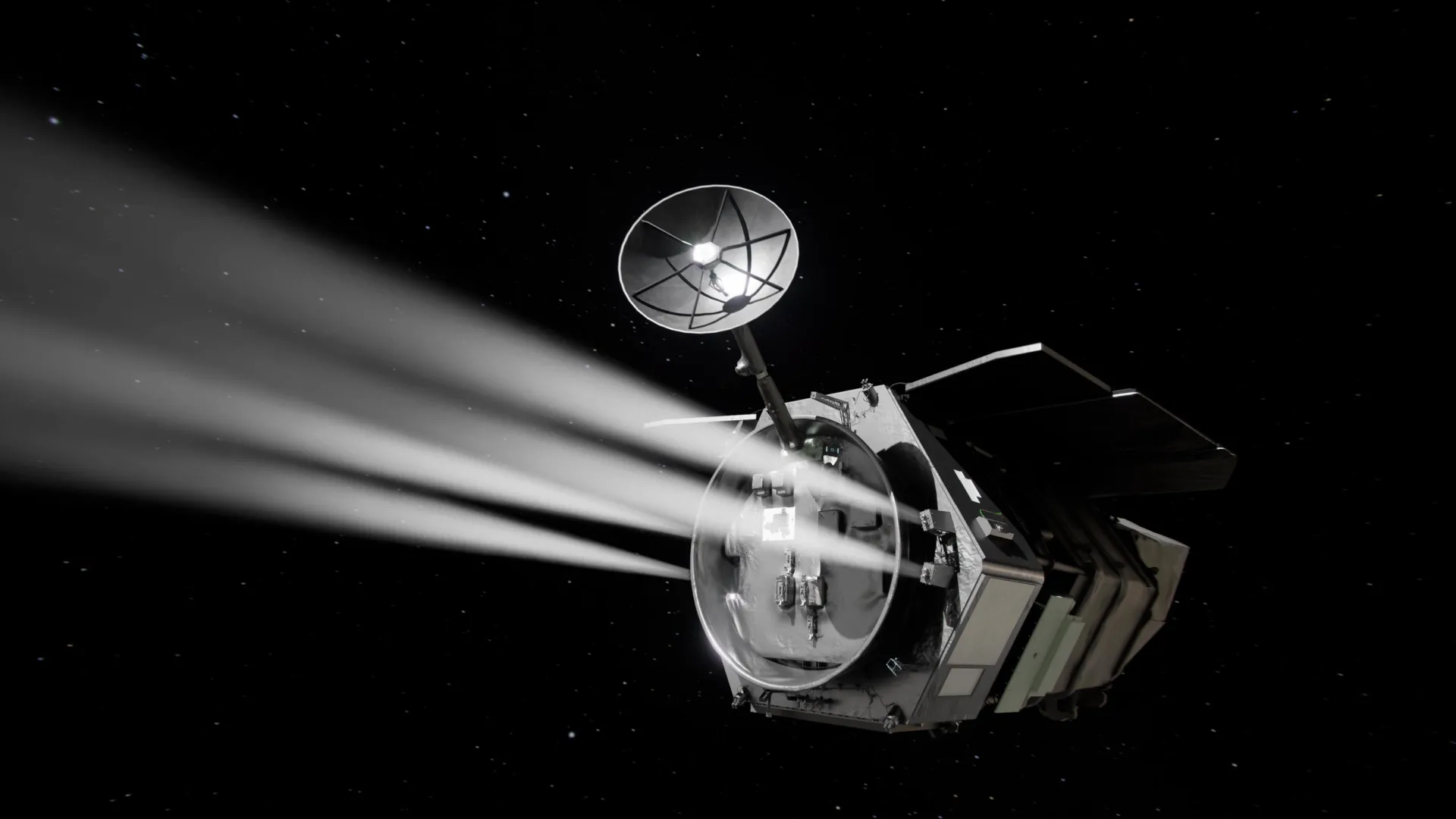
NASA’s Nancy Grace Roman Space Telescope may be able to operate for far longer than originally expected. An exceptionally precise first mid-course correction, combined with other fuel savings, could more than double the observatory’s potential lifetime in space.
“As a result of exquisite planning by our orbital dynamics team, brilliant execution by the operations team, and a precise launch from SpaceX, Roman has fuel for at least 22 years of potential science operations,” said Jamie Dunn, center director at NASA’s Goddard Space Flight Center in Greenbelt, Maryland.
Several factors are behind that dramatic extension. Roman used far less fuel than expected during its first course correction, carried additional propellant at launch, and is projected to conserve even more during its second mid-course correction and orbital insertion.
Roman Was Originally Designed for 10 Years
Roman was built around a five-year primary mission and a five-year extended mission, giving it a total fuel budget intended to support 10 years of operations. Because propellant is the spacecraft’s main consumable resource, every kilogram saved during its journey can potentially translate into additional years of scientific observations.
First Maneuver Could Add Four Years
Roman carried out its first burn on Aug. 31, adjusting its path toward the observatory’s eventual orbit. Since then, the mission team has been studying how the maneuver affected Roman’s long-term fuel outlook.
The results were better than expected. The maneuver was completed with more than 99% accuracy and consumed less than 10% of the fuel reserved for it. Roman used about 40 pounds (18 kilograms), compared with the planned allocation of 441 pounds (200 kilograms).
Those savings alone could provide roughly four additional years of potential science operations.
Extra Fuel at Launch Could Add Another Four Years
Roman also began its journey with more propellant available than planners originally expected to need.
Engineers calculated the spacecraft’s fuel requirements using a conservative maximum weight of 21,605 pounds (9,800 kilograms). Roman ultimately weighed just 17,760 pounds (8,056 kilograms) at launch.
Because the spacecraft was lighter, it required less fuel for its mid-course correction. Its lower mass also allowed the team to fill Roman’s propellant tanks to capacity rather than carrying only enough fuel for the original 10-year mission.
That additional fuel could support roughly four more years of operations.
“A spacecraft’s mass changes throughout the design and build process, so we base the propellant budget on a set maximum value so we won’t come up short,” said Alison Rao, the Roman propulsion lead at NASA Goddard. “We track the propellant needed based on actual mass throughout integration and testing as well, to make sure we have wiggle room. Since Roman’s was lower than we budgeted for, we were able to fill the propellant tanks to their capacity rather than only filling them as much as we needed to for the 10-year requirement.”
More Fuel Savings Expected Ahead
Roman’s successful first mid-course correction is also expected to make its second correction much smaller, potentially conserving still more propellant.
Because the first maneuver was so accurate, mission controllers can wait longer before making the follow-up adjustment, which is now scheduled for later this month. That burn will provide the final amount of energy Roman needs to reach its targeted position before entering its permanent orbit around L2.
Roman is expected to arrive at L2 approximately 100 days after launch, around early December.
Current estimates indicate that the second correction and orbital insertion should both require less fuel than originally budgeted. Together, those savings could provide approximately four additional years of potential mission life and leave even more propellant available for future scientific work.
Once Roman settles into its orbit around L2, maintaining its position should require only periodic station-keeping burns about once every 28 days.

Does gravity affect every type of particle in exactly the same way? Researchers at ETH Zurich and the Paul Scherrer Institute (PSI) in Villigen are preparing an experiment that could test that fundamental assumption using one of nature’s more unusual particles.
“We have taken an important step towards carrying out an exciting experiment on this topic,” says the professor of physics: “We want to measure the gravitational interaction of the muon.”
The familiar matter that makes up people, planets, and nearly everything around us consists of protons, neutrons, and electrons. Physicists classify these particles as belonging to the first generation of matter. Two additional generations also exist, made up of heavier particles. One of them is the muon, a heavier relative of the electron that belongs to the second generation.
Researchers at PSI can create muons and their antiparticles using a large particle accelerator. When a positively charged antimuon combines with a negatively charged electron, the pair forms a neutral atom known as muonium.
Why Physicists Want to Test Muons
The Standard Model of particle physics describes these different generations of particles, but it does not explain why nature has multiple generations in the first place.
“But we physicists do not yet understand why these additional generations exist at all in the first place,” says Soter. “And why are there three in total?”
That mystery raises another important question. Do the heavier particles of the second and third generations respond to gravity in exactly the same way as the lighter particles found in the first generation?
Testing Einstein’s Equivalence Principle
For ordinary matter, objects at the same location in a gravitational field fall at the same rate. Galileo Galilei and Isaac Newton recognized this universality of free fall centuries ago. It later became central to Albert Einstein’s theory of gravity through the equivalence principle, which connects gravitational mass with inertial mass.
So far, however, researchers have demonstrated this principle only with ordinary matter or first-generation antimatter. Measuring how muonium behaves under gravity would provide the first test involving a second-generation particle.
“The exotic muonium is very well suited to this because it is a neutral atom,” explains Soter: “After all, to make something fall, you need something neutral.”
Neutrality is essential because gravity is extremely weak compared with electromagnetism. If researchers tried to perform the experiment with a charged particle, stray electromagnetic fields could overwhelm the gravitational effect they are attempting to detect.
Muonium presents another major obstacle. Muons survive for only about 2.2 microseconds before decaying. Earlier methods also produced muonium atoms traveling at different speeds and in many directions, making them poorly suited for extremely precise gravity measurements.
Researchers at PSI have now found a way around that problem.
“We have managed to produce the muonium atoms in a ‘cold’ state, which is what makes the gravity experiment possible in the first place,” says Soter. “In this case, ‘cold’ means that the atoms propagate at similar speeds, almost parallel to one another.”
Superfluid Helium Creates a Controlled Muonium Beam
The team describes its new method for producing muonium in Nature Physics.
“In order to achieve this, we used superfluid helium that had been cooled close to absolute zero at minus 273 degrees Celsius,” explains Jesse Zhang, lead author of the study. “Superfluid helium is what is known as a quantum fluid, in which the individual helium atoms lose their identity, and which does not tolerate any impurities within it.”
The process begins by directing antimuons from PSI’s accelerator into a thin layer of superfluid helium. Inside the helium, the particles slow down. When an antimuon encounters a free electron, the two form a muonium atom with positive chemical potential.
That chemical potential effectively drives the newly formed atom out of the liquid. When it reaches the surface, the chemical potential is converted into kinetic energy, giving the muonium atom a boost that sends it vertically upward.
“So we’re using the chemical potential as an atomic cannon,” explains Zhang.
The muonium atoms must pass through the quantum liquid without collisions and at a predictable speed. Their lifetime is so short that any significant delay would prevent them from reaching the surface before they decay.
“For our experiments, we also rely on PSI’s particle accelerator, which generates the world’s most intense, continuous muon beams,” says Soter. “Thanks to this high-quality source, a great many muonium atoms can be produced.”
Watching Gravity Shift an Atomic Pattern
The researchers are now building an instrument known as an interferometer to measure how Earth’s gravity affects the muonium beam.
The device takes advantage of the wave properties of atoms to produce an interference pattern. Earth’s gravitational pull should cause an extremely small shift in that pattern. Measuring the displacement would allow the researchers to determine how gravity acts on the muon.
“We hope to be able to test the method for the first time with the atomic beam this year, and if all goes well, the actual gravity experiment should follow in two or three years’ time,” as Soter relates.
The new beam could also make much more precise laser spectroscopy experiments with muonium possible. Those measurements could improve scientists’ understanding of the muon’s mass and fundamental physical constants, another long-term goal of the research group.
Could the Experiment Reveal a Fifth Force?
If muonium responds to gravity differently from ordinary matter, the implications could be profound.
“That would indeed be surprising, and, in addition to other theories, it could point to the existence of a fifth force,” as Soter outlines.
Modern physics recognizes four fundamental interactions: gravity, electromagnetism, the strong interaction, and the weak interaction. Scientists have repeatedly proposed the possibility of an additional fifth force, but no such force has ever been confirmed.
Discovering one is not the main objective of Soter’s experiment. The immediate goal is more fundamental: determining whether one of Einstein’s central principles also holds for a different generation of particles.
“I am completely open-minded,” she says. “I simply want to measure, for the first time, whether the equivalence between gravitational and inertial mass also applies to the second generation of particles — this alone is quite an inspiring piece of work.”
This research is supported by the National Centre of Competence in Research Muoniverse.
