For the first time, scientists pinpoint brain cells linked to depression

Scientists at McGill University and the Douglas Institute have discovered that two distinct types of brain cells show changes in people experiencing depression.

Published in Nature Genetics, the research provides new clues that could guide the creation of treatments focused on these specific cells. It also enhances scientific understanding of depression, a condition that affects more than 264 million people globally and is one of the leading causes of disability.

“This is the first time we’ve been able to identify what specific brain cell types are affected in depression by mapping gene activity together with mechanisms that regulate the DNA code,” said senior author Dr. Gustavo Turecki, a professor at McGill, clinician-scientist at the Douglas Institute and Canada Research Chair in Major Depressive Disorder and Suicide. “It gives us a much clearer picture of where disruptions are happening, and which cells are involved.”

Rare brain bank enables breakthrough

The team conducted their work using post-mortem brain tissue from the Douglas-Bell Canada Brain Bank, one of the few collections worldwide that includes donations from people with psychiatric conditions.

Through advanced single-cell genomic analysis, the researchers examined RNA and DNA from thousands of individual brain cells to determine which ones behaved differently in people with depression and which DNA sequences might explain these variations. The study analyzed tissue from 59 individuals who had depression and 41 who did not.

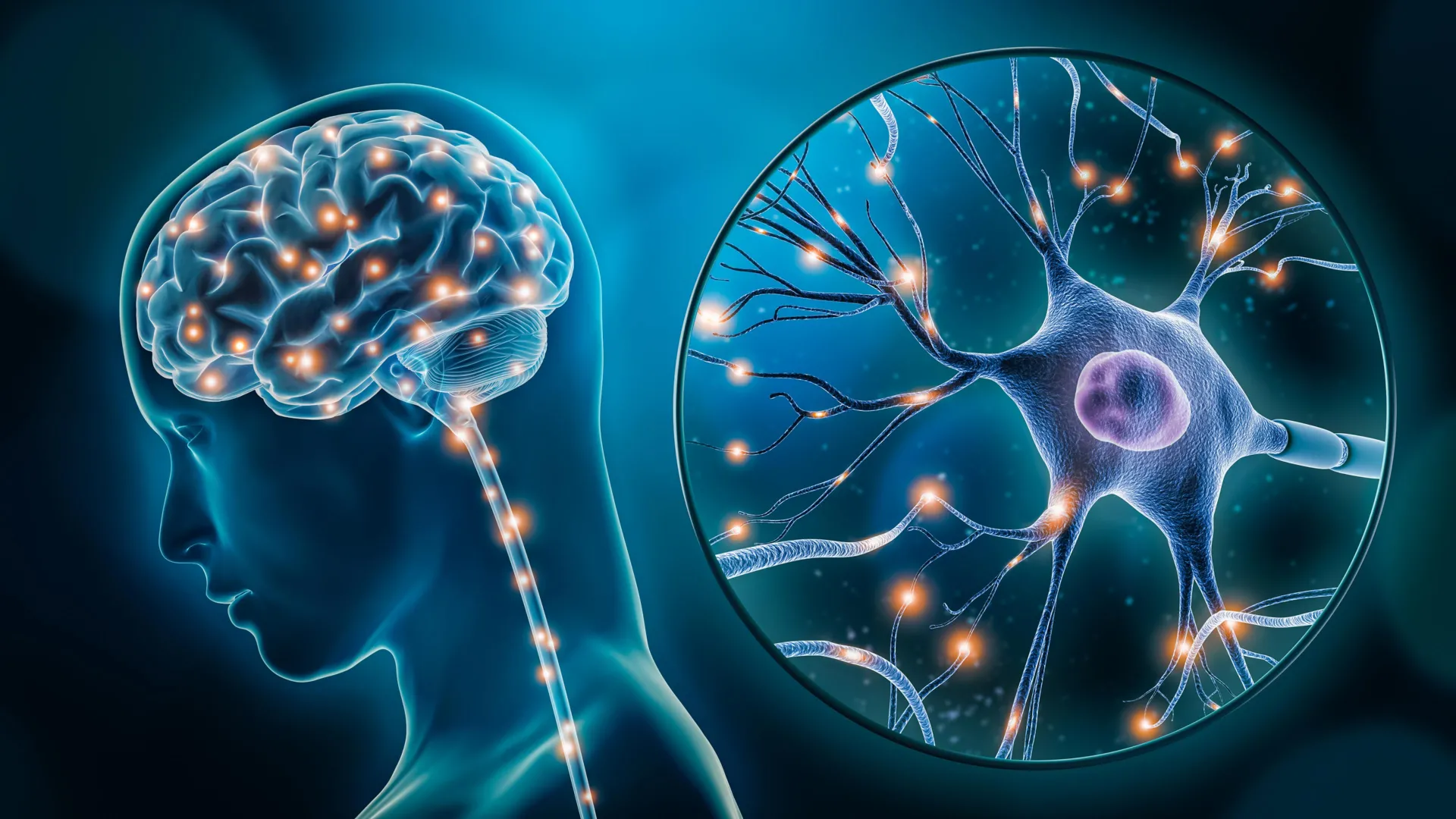
They discovered that gene activity was altered in two types of brain cells: a class of excitatory neurons responsible for mood and stress regulation, and a subtype of microglia, the immune cells that manage inflammation in the brain. In both cell types, many genes were expressed differently in people with depression, pointing to possible disruptions in vital neural systems.

By identifying the specific cells affected, the research deepens understanding of the biological foundation of depression and helps dispel outdated views of the condition.

“This research reinforces what neuroscience has been telling us for years,” Turecki said. “Depression isn’t just emotional, it reflects real, measurable changes in the brain.”

Looking ahead, the scientists intend to explore how these cellular changes influence brain function and whether targeting them could lead to more effective treatments.

About the study

“Single-nucleus chromatin accessibility profiling identifies cell types and functional variants contributing to major depression” by Anjali Chawla and Gustavo Turecki et al., was published in Nature Genetics.

The study was funded by Canadian Institutes of Health Research, Brain Canada Foundation, Fonds de recherche du Québec – Santé and Healthy Brains, Healthy Lives initiative at McGill University.

Share Button

A facelift at 28? Why young people are turning to plastic surgery

Gone are the days when facelifts were for the ageing wealthy. Now younger people are going under the knife.

Share Button

William visibly moved as widow tells of husband’s suicide

Prince William’s foundation is giving £1m to set up a suicide prevention network.

Share Button

‘Marginalised and menopausal’ women given spotlight

Women from ethnic minority communities typically experience perimenopause symptoms earlier and for longer.

Share Button

How 20 minutes of nature can boost your health

Spending just 20 minutes in nature can lower blood pressure, heart rate and stress levels.

Share Button

A hidden “backup heater” that helps burn fat and boost metabolism

Scientists at Washington University School of Medicine in St. Louis have uncovered a new way that brown fat, a type of fat that burns energy, can boost the body’s metabolism. This process allows cells to consume more fuel and generate heat, improving overall metabolic health. Conducted in mice, the research points to new possibilities for using brown fat to address metabolic conditions such as insulin resistance and obesity.

The findings were published Sept. 17 in Nature.

Brown fat is unique because it turns energy (calories) from food into heat. Unlike white fat, which stores energy, or muscle, which uses it immediately, brown fat helps keep the body warm in cold environments. Exposure to cold can increase the amount of brown fat, and scientists have long suggested that activating it could support weight loss by increasing calorie burning.

“The pathway we’ve identified could provide opportunities to target the energy expenditure side of the weight loss equation, potentially making it easier for the body to burn more energy by helping brown fat produce more heat,” said senior author Irfan Lodhi, PhD, a professor of medicine in the Division of Endocrinology, Metabolism & Lipid Research at WashU Medicine. “Boosting this kind of metabolic process could support weight loss or weight control in a way that is perhaps easier to maintain over time than traditional dieting and exercise. It’s a process that basically wastes energy — increasing resting energy expenditure — but that’s a good thing if you’re trying to lose weight.”

A back-up heater in brown fat

Until now, scientists understood brown fat’s heat production mainly through mitochondria, the energy centers of cells. Mitochondria in brown fat can shift from making fuel to generating heat through a molecule called uncoupling protein 1. However, studies have shown that mice lacking this protein can still burn energy and produce heat, suggesting another system at work.

The new research identifies peroxisomes, small structures within cells that process fats, as an alternative heat source in brown fat. When exposed to cold, these peroxisomes multiply. This effect was even stronger in mice whose mitochondria lacked uncoupling protein 1, suggesting that peroxisomes can step in when mitochondria lose their ability to produce heat.

Lodhi and his team discovered that peroxisomes burn fuel and release heat through a process involving a protein called acyl-CoA oxidase 2 (ACOX2). Mice that lacked ACOX2 in their brown fat were less able to tolerate cold, showed lower body temperatures after exposure to cold, and had poorer insulin sensitivity. When fed high-fat diets, they also gained more weight than typical mice.

In contrast, mice genetically engineered to make unusually high amounts of ACOX2 in brown fat showed increased heat production, better cold tolerance and improved insulin sensitivity and weight control when fed the same high-fat diet.

Using a fluorescent heat sensor they developed, the researchers found that when ACOX2 metabolized certain fatty acids, brown fat cells got hotter. They also used an infrared thermal imaging camera to show that mice lacking ACOX2 produced less heat in their brown fat.

While human bodies can manufacture these fatty acids, the molecules also are found in dairy products and human breast milk and are made by certain gut microbes. Lodhi said this raises the possibility that a dietary intervention based on these fatty acids — such as a food, probiotic or “nutraceutical” intervention — could boost this heat-production pathway and the beneficial effects it appears to have. He and his colleagues also are investigating possible drug compounds that could activate ACOX2 directly.

“While our studies are in mice, there is evidence to suggest this pathway is relevant in people,” Lodhi said. “Prior studies have found that individuals with higher levels of these fatty acids tend to have lower body mass indices. But since correlation is not causation, our long-term goal is to test whether dietary or other therapeutic interventions that increase levels of these fatty acids or that increase activity of ACOX2 could be helpful in dialing up this heat production pathway in peroxisomes and helping people lose weight and improve their metabolic health.”

This work was supported by the National Institutes of Health (NIH), grant numbers R01DK133344, R01DK115867, R01DK132239, GM103422, T32DK007120, S10 OD032315, DK020579 and DK056341; and by the FP7 funded European Infrafrontier-I3 project. The content is solely the responsibility of the authors and does not necessarily represent the official views of the NIH.

Lodhi and Liu are named on a provisional patent application filed by Washington University related to targeting ACOX2 activation as a treatment for obesity and related metabolic diseases.

Share Button

JWST spots a hidden red supergiant just before it exploded

A team of astronomers led by Northwestern University has captured the clearest and most detailed view ever of a dying star before its dramatic explosion.

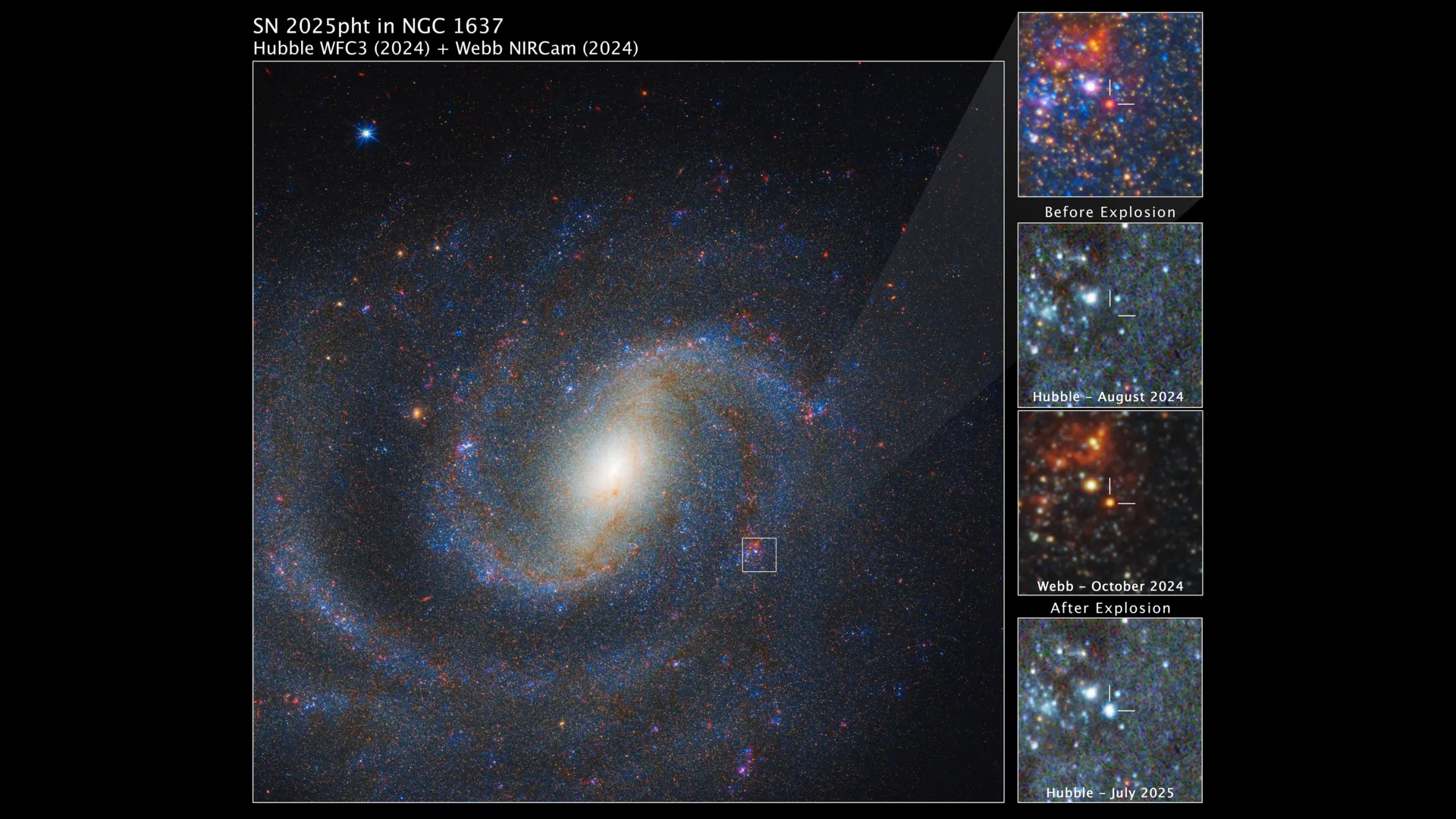
Using NASA’s James Webb Space Telescope (JWST), the international group identified the source of a supernova, known as its progenitor, in mid-infrared light for the first time. When combined with archival observations from the Hubble Space Telescope, the data revealed that the blast originated from a massive red supergiant star wrapped in an unexpected blanket of dust.

This breakthrough may finally explain why astronomers rarely see red supergiants explode, even though models predict they should account for most core-collapse supernovae. The new findings suggest these enormous stars do explode but are often hidden from view by thick dust clouds. Thanks to JWST’s powerful infrared vision, scientists can now see through the obscuring dust, bridging the long-standing gap between theory and observation.

The research, published on Oct. 8 in The Astrophysical Journal Letters, represents JWST’s first confirmed detection of a supernova’s progenitor star.

“For multiple decades, we have been trying to determine exactly what the explosions of red supergiant stars look like,” said Northwestern’s Charlie Kilpatrick, who led the study. “Only now, with JWST, do we finally have the quality of data and infrared observations that allow us to say precisely the exact type of red supergiant that exploded and what its immediate environment looked like. We’ve been waiting for this to happen — for a supernova to explode in a galaxy that JWST had already observed. We combined Hubble and JWST data sets to completely characterize this star for the first time.”

Kilpatrick, a research assistant professor at Northwestern’s Center for Interdisciplinary Exploration and Research in Astrophysics, is an expert on the life cycles of massive stars. His coauthor, Aswin Suresh, a graduate student in physics and astronomy at Northwestern’s Weinberg College of Arts and Sciences, played a key role in the analysis.

Reddest, dustiest progenitor ever observed

The team first detected the supernova, named SN2025pht, on June 29, 2025, using the All-Sky Automated Survey of Supernovae. The event’s light traveled from the nearby spiral galaxy NGC 1637, located about 40 million light-years from Earth.

By comparing Hubble and JWST images of NGC 1637 taken before and after the explosion, Kilpatrick, Suresh, and their collaborators pinpointed the progenitor star. It immediately stood out as both brilliant and intensely red. Although the star radiated roughly 100,000 times more light than the Sun, much of its glow was hidden by surrounding dust. The layer of dust was so dense that it made the star appear over 100 times dimmer in visible light than it would otherwise look. Because the dust blocked shorter, bluer wavelengths, the star’s appearance shifted dramatically toward red.

“It’s the reddest, dustiest red supergiant that we’ve seen explode as a supernova,” Suresh said.

Massive stars in the late stages of their lives, red supergiants are among the largest stars in the universe. When their cores collapse, they explode as Type II supernovae, leaving behind either a neutron star or black hole. The most familiar example of a red supergiant is Betelguese, the bright reddish star in the shoulder of the constellation Orion.

“SN2025pht is surprising because it appeared much redder than almost any other red supergiant we’ve seen explode as a supernova,” Kilpatrick added. “That tells us that previous explosions might have been much more luminous than we thought because we didn’t have the same quality of infrared data that JWST can now provide.”

Clues hidden in dust

The deluge of dust could help explain why astronomers have struggled to find red supergiant progenitors. Most massive stars that explode as supernovae are the brightest and most luminous objects in the sky. So, theoretically, they should be easy to spot before they explode. But that hasn’t been the case.

Astronomers posit that the most massive aging stars also might be the dustiest. These thick cloaks of dust might dim the stars’ light to the point of utter undetectability. The new JWST observations support this hypothesis.

“I’ve been arguing in favor of that interpretation, but even I didn’t expect to see such an extreme example as SN2025pht,” Kilpatrick said. “It would explain why these more massive supergiants are missing because they tend to be dustier.”

In addition to the presence of dust itself, the dust’s composition was also surprising. While red supergiants tend to produce oxygen-rich, silicate dust, this star’s dust appeared rich with carbon. This suggests that powerful convection in the star’s final years may have dredged up carbon from deep inside, enriching its surface and altering the type of dust it produced.

“The infrared wavelengths of our observations overlap with an important silicate dust feature that’s characteristic of some red supergiant spectra,” Kilpatrick said. “This tells us that the wind was very rich in carbon and less rich in oxygen, which also was somewhat surprising for a red supergiant of this mass.”

A new era for exploding stars

The new study marks the first time astronomers have used JWST to directly identify a supernova progenitor star, opening the door to many more discoveries. By capturing light across the near- and mid-infrared spectrum, JWST can reveal hidden stars and provide missing pieces for how the most massive stars live and die.

The team now is searching for similar red supergiants that may explode as supernovae in the future. Observations by NASA’s upcoming Nancy Grace Roman Space Telescope may help this search. Roman will have the resolution, sensitivity and infrared wavelength coverage to see these stars and potentially witness their variability as they expel out large quantities of dust near the end of their lives.

“With the launch of JWST and upcoming Roman launch, this is an exciting time to study massive stars and supernova progenitors,” Kilpatrick said. “The quality of data and new findings we will make will exceed anything observed in the past 30 years.”

The study, “The Type II SN 2025pht in NGC 1637: A red supergiant with carbon-rich circumstellar dust as the first JWST detection of a supernova progenitor star,” was supported by the National Science Foundation (award number AST-2432037).

Share Button

Tiny asteroid flew right over Antarctica, and no one saw it coming

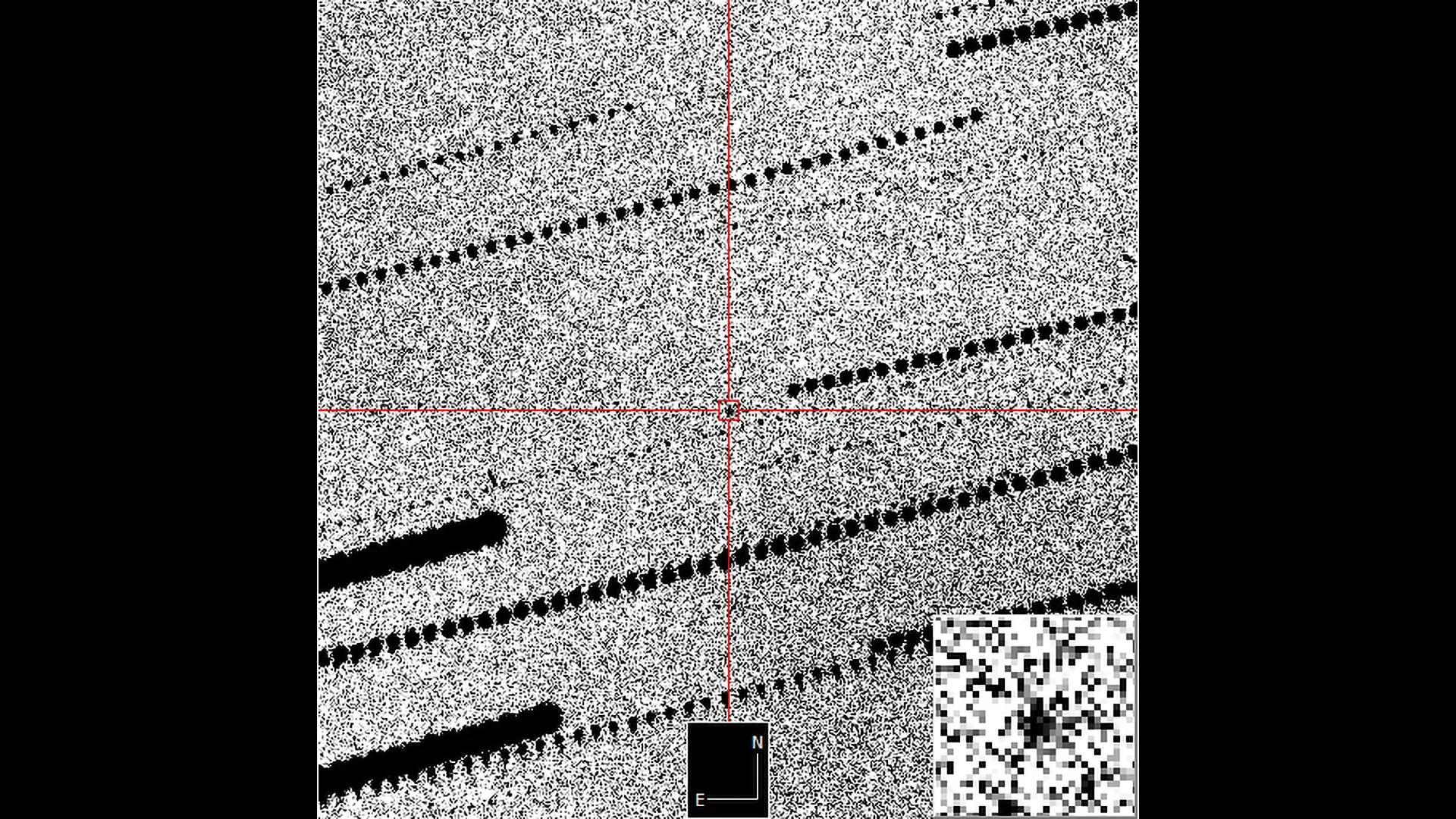
Asteroid 2025 TF passed over Antarctica at 00:47:26 UTC ± 18 seconds on October 1, coming within 428 ± 7 km of Earth’s surface. That distance is nearly the same as the orbit of the International Space Station (approx. 370 — 460 km).

Measuring about 1 to 3 meters in diameter, the asteroid was detected by the Catalina Sky Survey only a few hours after it had already passed by Earth. Space rocks of this size do not present any real threat. If one enters the atmosphere, it can create a bright fireball and sometimes leave behind small meteorites on the ground.

Soon after its detection, astronomers from ESA’s Planetary Defence Office observed the object using the Las Cumbres Observatory telescope at Siding Spring in Australia.

Finding and tracking such a small object in the vastness of space, especially when its position is still uncertain, is a remarkable achievement. These follow-up observations allowed scientists to determine the asteroid’s distance and timing of closest approach with outstanding precision.

Understanding the Risk: How Size Shapes the Threat

Asteroid 2025 TF, only a few meters wide, belongs to a class of near-Earth objects that are considered harmless on a planetary scale. Space rocks this small enter Earth’s atmosphere several times each year, usually breaking apart high above the surface. When they do reach lower altitudes, the result is typically a spectacular fireball, sometimes followed by tiny meteorites scattered across the ground. Events of this scale rarely cause damage and often help scientists learn more about asteroid composition.

By comparison, objects measuring around 20 meters across — such as the one that exploded over Chelyabinsk, Russia, in 2013 — can generate powerful airbursts capable of damaging buildings and injuring people with shockwaves. That explosion released energy equivalent to hundreds of kilotons of TNT, reminding scientists that even modestly sized asteroids can have local effects.

Larger asteroids, those hundreds of meters or more in diameter, pose a much greater risk. While such events are rare, they have the potential to cause regional or even global consequences. For this reason, international efforts like ESA’s Planetary Defence Office and NASA’s Planetary Defense Coordination Office monitor and catalog these objects to predict potential impacts years or decades in advance.

Global Eyes on the Sky

Worldwide networks of observatories continually scan the heavens for moving objects, from bright comets to faint, fast-moving asteroids like 2025 TF. Surveys such as the Catalina Sky Survey and Pan-STARRS regularly discover new near-Earth objects, while dedicated follow-up telescopes refine their orbits.

These coordinated efforts form the backbone of planetary defense. When astronomers detect an object passing extremely close to Earth, even one just a few meters wide, they can test their detection systems and improve prediction models. Each observation strengthens our ability to identify potential hazards early, giving scientists valuable data for future encounters.

Why Close Passes Matter

Although Asteroid 2025 TF never posed a threat, flybys like this one highlight how dynamic and watchful our solar neighborhood is. Every close encounter serves as both a reminder of Earth’s vulnerability and a demonstration of the growing precision of modern astronomy. The successful tracking of such a tiny object so soon after its discovery shows just how far planetary defense efforts have come — and how prepared the global scientific community is to respond to whatever space sends our way.

Share Button

NHS waiting list rises for third month in row

Numbers waiting for treatment hit 7.41 million in England at the end of August.

Share Button

My eating disorder made me good at lying, says Victoria Beckham

The former Spice Girl’s new Netflix documentary has landed – under the shadow of a reported family feud.

Share Button