The government says it is taking action to protect people from “aggressive collection practices”.


The government says it is taking action to protect people from “aggressive collection practices”.
Skoltech scientists have devised a mathematical model of memory. By analyzing its new model, the team came to surprising conclusions that could prove useful for robot design, artificial intelligence, and for better understanding of human memory. Published in Scientific Reports, the study suggests there may be an optimal number of senses — if so, those of us with five senses could use a couple more!
“Our conclusion is of course highly speculative in application to human senses, although you never know: It could be that humans of the future would evolve a sense of radiation or magnetic field. But in any case, our findings may be of practical importance for robotics and the theory of artificial intelligence,” said study co-author Professor Nikolay Brilliantov of Skoltech AI. “It appears that when each concept retained in memory is characterized in terms of seven features — as opposed to, say, five or eight — the number of distinct objects held in memory is maximized.”
In line with a well-established approach, which originated in the early 20th century, the team models the fundamental building blocks of memory: the memory “engrams.” An engram can be viewed as a sparse ensemble of neurons across multiple regions in the brain that fire together. The conceptual content of an engram is an ideal abstract object characterized with regard to multiple features. In the context of human memory, the features correspond to sensory inputs, so that the notion of a banana would match up with a visual image, a smell, the taste of a banana, and so on. This results in a five-dimensional object that exists and evolves in a five-dimensional space populated by all the other concepts retained in memory.
The evolution of engrams refers to concepts becoming more focused or blurred with time, depending on how often the engrams get activated by a stimulus acting from the outer world via the senses, triggering the memory of the respective object. This models learning and forgetting as a result of interaction with the environment.
“We have mathematically demonstrated that the engrams in the conceptual space tend to evolve toward a steady state, which means that after some transient period, a ‘mature’ distribution of engrams emerges, which then persists in time,” Brilliantov commented. “As we consider the ultimate capacity of a conceptual space of a given number of dimensions, we somewhat surprisingly find that the number of distinct engrams stored in memory in the steady state is the greatest for a concept space of seven dimensions. Hence the seven senses claim.”
In other words, let the objects that exist out there in the world be described by a finite number of features corresponding to the dimensions of some conceptual space. Suppose that we want to maximize the capacity of the conceptual space expressed as the number of distinct concepts associated with these objects. The greater the capacity of the conceptual space, the deeper the overall understanding of the world. It turns out that the maximum is attained when the dimension of the conceptual space is seven. From this the researchers conclude that seven is the optimal number of senses.
According to the researchers, this number does not depend on the details of the model — the properties of the conceptual space and the stimuli providing the sense impressions. The number seven appears to be a robust and persistent feature of memory engrams as such. One caveat is that multiple engrams of differing sizes existing around a common center are deemed to represent similar concepts and are therefore treated as one when calculating memory capacity.
The memory of humans and other living beings is an enigmatic phenomenon tied to the property of consciousness, among other things. Advancing the theoretical models of memory will be instrumental to gaining new insights into the human mind and recreating humanlike memory in AI agents.

Researchers at the University of Bath, in collaboration with the Universities of Oxford and Bristol, have developed a molecule that prevents the clumping and build-up of a protein linked to Parkinson’s disease and related dementias. The team has successfully demonstrated it works in an animal model of Parkinson’s and hopes that in the future this could lead to a treatment that slows the progression of the disease.
Alpha-synuclein is a protein naturally found mainly in brain cells (neurons) where it regulates the release of neurotransmitters such as dopamine, allowing communication between the neurons.
In Parkinson’s disease, this protein sticks together into toxic clumps that cause nerve cell death and leads to patients suffering from symptoms such as tremors, difficulties moving and muscle stiffness. Whilst there are treatments available to relieve symptoms, there is currently no cure.
Normally, alpha-synuclein’s natural or “native state” is like a flexible strand, but when active it shapes itself into a helix, which is critical for its function in binding and transporting parcels of dopamine.
The team engineered a peptide fragment that locks alpha-synuclein into its healthy shape, blocking its conversion into the toxic clumps that cause nerve cell death.
Laboratory tests showed the peptide is stable, penetrates brain-like cells, and restores movement while reducing protein deposits in a worm model of Parkinson’s.
This breakthrough, published in the journal JACS Au, demonstrates the potential of rational peptide design to transform large, unstable proteins into compact drug-like molecules.
The findings mark a significant step towards developing new peptide-based treatments for currently untreatable neurodegenerative conditions. Professor Jody Mason, from the Department of Life Sciences at the University of Bath, said: “Our work shows that it is possible to rationally design small peptides that not only prevent harmful protein aggregation but also function inside living systems.
“This opens an exciting path towards new therapies for Parkinson’s and related diseases, where treatment options remain extremely limited.”
Dr Julia Dudley, Head of Research at Alzheimer’s Research UK, which funded the research, said:
“Dementia isn’t an inevitable part of ageing; it’s caused by diseases like Alzheimer’s. To make progress towards a cure for all forms of dementia, we need research focused on developing a broad range of treatments that can slow, stop and ultimately reverse these diseases.
“Although this is early research in an animal model, it’s exciting to see that this new molecule can prevent the build-up of misfolded alpha-synuclein.
“By stabilizing alpha-synuclein in its healthy form, this could open the door to a new class of treatments that could slow progression in diseases like Parkinson’s and dementia with Lewy bodies. We look forward to seeing this research taken to the next stage, potentially exploring how it would work in people.
“We’re delighted to see such promising advances from Alzheimer’s Research UK funded work opening up new avenues for treatments of the future, and the potential to change the lives of those affected by neurodegenerative diseases.”
Further research is needed, but the team hopes that continued progress will enable these and similar molecules to advance towards clinical testing in the coming years.
Gail Cairns started experiencing sight loss, headaches, and eye pain, but did not go to an optician when she first had symptoms.

Green tea is an ancient beverage recognized for its medicinal and antioxidant properties. It has been widely studied for its beneficial effects on metabolic diseases, such as obesity and type 2 diabetes. Recent studies funded by FAPESP have deepened our understanding of the mechanisms of action of this infusion and revealed that green tea treatment reduced weight and significantly improved glucose sensitivity and insulin resistance in obese mice. These results reinforce the potential relevance of the beverage as an adjunct in the treatment of obesity in humans.
Rosemari Otton led the studies from the Interdisciplinary Graduate Program in Health Sciences at Cruzeiro do Sul University in São Paulo, Brazil. The scientist, who has dedicated more than 15 years to green tea research, explains that her initial motivation came from curiosity about the truth behind the popular belief that the drink aids in weight loss. The results of her most recent study were published in the journal Cell Biochemistry & Function.
To study the effects of green tea on obesity, the research team fed mice a high-calorie diet for four weeks, with both fat and what they call a “cafeteria diet,” which mimics the Western diet. “We give them chocolate, filled cookies, dulce de leche, condensed milk… In other words, the same type of food that many people consume on a daily basis,” says Otton.
After this initial phase, the animals underwent the green tea experiment for another 12 weeks. During this period, they continued on the high-calorie diet, but some of them began receiving standardized green tea extract at a dose of 500 mg per kilogram of body weight, administered intragastrically (via gavage).
“It’s a method that ensures they all receive the exact dose we want to study. If we put it in water, for example, we’d have no way of knowing how much the animal actually ingested,” says the researcher. For humans, this amount would be equivalent to consuming about 3 grams of green tea per day, or three cups.
However, according to the researcher, not all commercial green tea meets the necessary quality standards. “Ready-made tea bags do not always guarantee the quantity or quality of the compounds. The ideal for consumption would be to use standardized green tea extract, like those found in compounding pharmacies. This is a concentrated way of using the plant, with a guarantee of the presence of flavonoids, which are the health-beneficial compounds present in the green tea plant,” Otton points out.
One methodological difference in the study was the controlled room temperature. The animals were kept in a thermoneutral environment (28 °C) throughout the experiment. Animal facilities generally maintain an average temperature of 22 °C, which represents chronic cold for mice.
“Excessive cold activates compensatory regulatory mechanisms in the animals’ bodies, causing them to expend more energy to stay warm. This can mask the real effects of any substance,” explains the researcher. “If the animals are in a colder environment, the effect of the tea is enhanced by the activation of energy expenditure due to the cold. But by maintaining thermoneutrality, we were able to see the effects of green tea in a ‘clean’ way, without environmental interference,” she explains.
A previous study published in August 2022 in the European Journal of Nutrition found that obese mice treated with green tea experienced a reduction of up to 30% in body weight. “If a person loses 5% to 10% of their body weight, that’s already a lot. So this result in animals is very significant,” says the professor.
Muscular effect
Another highlight of the most recent study was the preservation of muscle morphology. Obesity typically causes a reduction in muscle fiber diameter, but green tea prevented this muscle atrophy. “One way to assess muscle function is to look at fiber diameter. If it increases, we have more active muscle components. Green tea managed to maintain this diameter, showing that it protects muscle against the harmful effects of obesity,” Otton explains.
In addition to morphological data, the researchers evaluated the expression of genes related to glucose metabolism. Treatment with green tea increased the expression of Insr, Irs1, Glut4, Hk1, and Pi3k – genes that are important for glucose uptake and use in muscles. The activity of lactate dehydrogenase (LDH), an enzyme that is essential for glucose metabolism, was also restored.
According to Otton, there is evidence indicating that green tea does not affect the weight of lean animals, suggesting that it acts selectively against excess body fat. “It makes obese animals lose weight but keeps lean animals at a balanced weight. This shows that the tea seems to need an environment with excess nutrients to act, which supports the hypothesis that it acts directly on fat cells.”
Another aspect investigated by the team was the action of the compounds in isolation. “Green tea is a complex matrix with dozens of bioactive compounds. We’ve tried to separate these compounds and study their effects individually, but the whole extract is always more effective. There’s a synergy between the compounds that we can’t reproduce when they’re isolated,” she says.
According to the scientist, one hypothesis explaining the mechanism by which green tea affects obesity involves adiponectin, a protein produced by adipocytes that has anti-inflammatory and metabolic regulation functions. “We conducted a study with adiponectin-knockout mice, meaning they don’t produce it. And in these animals, green tea had no effect. This suggests that adiponectin is a key player in the mechanism of action of the tea,” she comments.
Real-life effects
Despite the encouraging results of the mouse study, Otton points out that it is not yet possible to determine a safe and effective dose of green tea for humans. This is mainly due to the variability of the extracts and the fact that each person behaves differently. “The ideal is chronic consumption, as we see in Asian countries. In Japan, for example, people consume green tea every day, throughout their lives, and obesity rates are low. But this is different from drinking tea for five months and expecting a miraculous weight loss effect,” she ponders.
The researcher argues that natural and accessible treatments should gain ground in the fight against obesity, especially as alternatives to expensive medications that often have side effects. “The idea is to have safe, natural, effective, and high-quality compounds. The Camellia sinensis plant offers this. We’re still studying all the compounds involved, but there’s no doubt that green tea, as a plant matrix rich in flavonoids, has important therapeutic potential.”
The researcher emphasizes that science always seeks to develop practical solutions. “What we see in animals doesn’t always reproduce in humans. But if we want to make this translation to real life, we need to think about all the details, such as ambient temperature. It’s these precautions that increase the validity of our data. We’re far from having all the answers, but we’re getting closer and closer.”
Some children paid “the highest price” of death because of redeployments, says health visiting charity head.
An Audit Office report says 12,000 operations were carried out without assurance they complied with policy.

Stars of all ages are on display in this new NASA/ESA Hubble Space Telescope Picture of the Week. This sparkling spiral galaxy is called NGC 6000 and it is located 102 million light-years away in the constellation Scorpius.
This galaxy has a glowing yellow center and glittering blue outskirts. The colors reflect differences in the average ages, masses and temperatures of the galaxy’s stars. In the heart of the galaxy, the stars tend to be older and smaller. Less massive stars are cooler than more massive stars, and somewhat counterintuitively, cooler stars are redder, while hotter stars are bluer. Farther out along NGC 6000’s spiral arms, brilliant star clusters host young, massive stars that appear distinctly blue.
Hubble collected the data for this image while surveying the sites of recent supernova explosions in nearby galaxies. NGC 6000 has hosted two recent supernovae: SN 2007ch in 2007 and SN 2010as in 2010. Using Hubble’s sensitive detectors, researchers are able to discern the faint glow of supernovae years after the initial explosion. These observations help to constrain the masses of supernova progenitor stars and can indicate if they had any stellar companions.
By zooming in to the right side of the galaxy’s disc in this image, you may see something else yellow and blue: a set of four thin lines. These are an asteroid in our Solar System, which was drifting across Hubble’s field of view as it gazed at NGC 6000. The four streaks are due to different exposures that were recorded one after another with slight pauses in between. These were combined to create this final image. The colors appear this way because each exposure used a filter to collect only very specific wavelengths of light, in this case around red and blue. Having these separate exposures is important to study and compare stars by their colors — but it also makes asteroid interlopers very obvious!
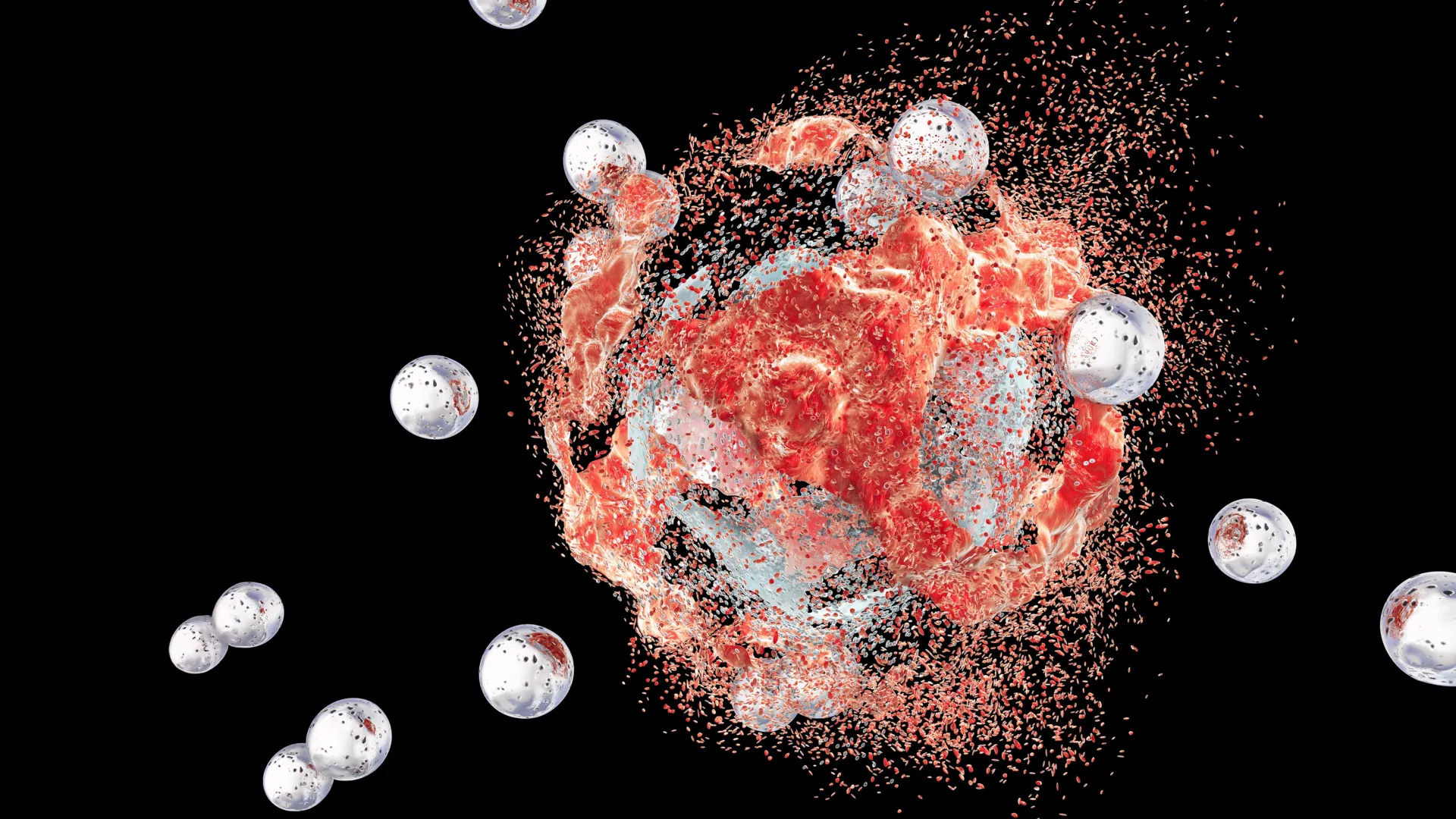
An international team of scientists led by researchers at the MRC Laboratory of Medical Sciences (LMS), Imperial College London and the University of Cologne have discovered that microbes associated with tumors produce a molecule, which can control cancer progression and boost the effectiveness of chemotherapy.
Most people are familiar with the microbes on our skin or in our gut, but recent discoveries have revealed that tumors also host unique communities of bacteria. Scientists are now investigating how these tumor-associated bacteria can affect tumor growth and the response to chemotherapy.
New research, published online in Cell Systems on September 10, 2025, provides a significant breakthrough in this field, identifying a powerful anti-cancer metabolite produced by bacteria associated with colorectal cancer. This finding opens the door to new strategies for treating cancer, including the development of novel drugs that could make existing therapies more potent.
The researchers used a sophisticated large-scale screening approach to test over 1,100 conditions in a type of microscopic worm called C. elegans. Through this, they found that the bacteria E. coli produced a molecule called 2-methylisocitrate (2-MiCit) that could improve the effectiveness of the chemotherapy drug 5-fluorouracil (5-FU).
Using computer modelling, the team demonstrated that the tumor-associated microbiome (bacteria found within and around tumors) from patients was also able to produce 2-MiCit. To confirm the effectiveness of 2-MiCit, the team used two further systems; human cancer cells and a fly model of colorectal cancer. In both cases, they found that 2-MiCit showed potent anti-cancer properties, and for the flies could extend survival.
Professor Filipe Cabreiro, head of the Host-Microbe Co-Metabolism group at the LMS, and group leader at the CECAD Research Cluster in Cologne, explains the significance of the discovery: “We’ve known that bacteria are associated with tumors, and now we’re starting to understand the chemical conversation they’re having with cancer cells. We found that one of these bacterial chemicals can act as a powerful partner for chemotherapy, disrupting the metabolism of cancer cells and making them more vulnerable to the drug.”
The study revealed that 2-MiCit works by inhibiting a key enzyme in the mitochondria (structures inside cells that generate energy for cellular functions) of cancer cells. This leads to DNA damage and activates pathways known to reduce the progression of cancer. This multi-pronged attack weakens the cancer cells and works in synergy with 5-FU. The combination was significantly more effective at killing cancer cells than either compound alone.
Dr Daniel Martinez-Martinez, postdoctoral researcher at the LMS and first author of the paper, says: “Microbes are an essential part of us. That a single molecule can exert such a profound impact on cancer progression is truly remarkable, and another piece of evidence on how complex biology can be when considering it from a holistic point of view. It is really exciting because we are only scratching the surface of what is really happening.”
In collaboration with medicinal chemists, the researchers also modified the 2-MiCit compound to enhance its effectiveness. This synthetic version proved even more powerful at killing cancer cells, demonstrating the potential to develop new drugs based on natural microbial products. Filipe adds: “Using the natural microbial product as a starting point, we were able to design a more potent molecule, effectively improving on mother nature.”
These exciting discoveries highlight how the cancer-associated microbiome can impact tumor progression, and how metabolites produced by these bacteria could be harnessed to improve cancer treatments. These findings are also important in the context of personalized medicine, emphasizing the importance of considering not only the patient, but also their microbes.
This study was primarily funded by the Leverhulme Trust, the Wellcome Trust/Royal Society, the DFG German Research Foundation, and the Medical Research Council.

Can you prove whether a large quantum system truly behaves according to the weird and wonderful rules of quantum mechanics — or if it just looks like it does? In a groundbreaking study, physicists from Leiden, Beijing en Hangzhou found the answer to this question.
You could call it a ‘quantum lie detector’: Bell’s test designed by famous physicist John Bell. This test shows whether a machine, like a quantum computer, is truly using quantum effects or just mimics them.
As quantum technologies become more mature, ever more stringent tests of quantumness become necessary. In this new study, the researchers took things to the next level, testing Bell correlations in systems with up to 73 qubits — the basic building blocks of a quantum computer.
The study involved a global team: theoretical physicists Jordi Tura, Patrick Emonts, PhD candidate Mengyao Hu from Leiden University, together with colleagues from Tsinghua University (Beijing) and experimental physicists from Zhejiang University (Hangzhou).
The world of quantum physics
Quantum mechanics is the science that explains how the tiniest particles in the universe — like atoms and electrons — behave. It’s a world full of strange and counterintuitive ideas.
One of those is quantum nonlocality, where particles appear to instantly affect each other, even when far apart. Although it sounds strange, it’s a real effect, and it won the Nobel Prize in Physics in 2022. This research is focused on proving the occurrence of nonlocal correlation, also known as Bell correlations.
Clever experimenting
It was an extremely ambitious plan, but the team’s well-optimized strategy made all the difference. Instead of trying to directly measure the complex Bell correlations, they focused on something quantum devices are already good at: minimizing energy.
And it paid off. The team created a special quantum state using 73 qubits in a superconducting quantum processor and measured energies far below what would be possible in a classical system. The difference was striking — 48 standard deviations — making it almost impossible that the result was due to chance.
But the team didn’t stop there. They went on to certify a rare and more demanding type of nonlocality – known as genuine multipartite Bell correlations. In this kind of quantum correlation, all qubits in the system must be involved, making it much harder to generate — and even harder to verify. Remarkably, the researchers succeeded in preparing a whole series of low-energy states that passed this test up to 24 qubits, confirming these special correlations efficiently.
This result shows that quantum computers are not just getting bigger — they are also becoming better at displaying and proving truly quantum behaviour.
Why this matters
This study proves that it’s possible to certify deep quantum behaviour in large, complex systems — something never done at this scale before. It’s a big step toward making sure quantum computers are truly quantum.
These insights are more than just theoretical. Understanding and controlling Bell correlations could improve quantum communication, make cryptography more secure, and help develop new quantum algorithms.
