A psychedelic surprise: DMT helps the brain heal after stroke

DMT, or dimethyltryptamine is a natural psychoactive molecule found in many plants and mammals. According to an article published in Science Advances, researchers from the HUN-REN BRC Institute of Biophysics and Semmelweis University Heart and Vascular Centre found that DMT reduces the harmful effects of stroke in animal models and cell culture experiments.

A solution from nature in the spotlight

DMT is also present in the human brain, and it is currently undergoing clinical trials to aid recovery of brain function after stroke. However, its exact mechanism of action had not been fully understood until now. “It is amazing how we can always turn to Nature to find ingenious solutions for health problems” says co-lead author Mária Deli from the HUN-REN BRC.

The blood-brain barrier as a therapeutic target

“We found that DMT significantly reduced infarct volume and edema formation in a rat stroke model,” explains co-first author Marcell László. In both animal experiments and cell culture models, the authors showed that DMT treatment restored the structure and function of the damaged blood-brain barrier and improved the function of astroglial cells. This psychoactive compound also inhibited the production of inflammatory cytokines in brain endothelial cells and peripheral immune cells, while reduced the activation of brain microglia cells through Sigma-1 receptors.

DMT could serve as therapeutic adjuvant to existing stroke treatments

“The therapeutic options currently available for stroke are very limited. The dual action of DMT, protecting the blood-brain barrier while reducing brain inflammation, offers a novel, complex approach that could complement existing treatments,” says Judit Vigh, co-first author of the work.

Since current stroke therapies do not always result in full recovery, a DMT-based treatment may represent a promising new alternative, mainly in combination with existing methods. The recent findings from researchers in Szeged and Budapest, Hungary, support the development of a therapy that goes beyond the limitations of conventional stroke treatment. Clinical trials on the use of DMT and investigation on its long-term effects are currently ongoing.


Share Button

Scientists finally reveal what’s behind long COVID’s mysterious brain fog

Even though many years have passed since the start of the COVID-19 pandemic, the effects of infection with SARS-CoV-2 are not completely understood. This is especially true for Long COVID, a chronic condition that can develop after COVID-19 that causes a variety of lasting symptoms. Among the most common and debilitating of these is cognitive impairment, often referred to as “brain fog,” which affects over 80% of people with Long COVID. Given the hundreds of millions of global cases, Long COVID represents a massive public health and socioeconomic challenge, as it severely impacts people’s ability to work and perform daily activities.

Unfortunately, despite its prevalence, the underlying causes of Long COVID and brain fog remain poorly understood. Previous imaging studies have shown some structural changes in the brain, but they could not pinpoint the molecular dysfunctions responsible for the cognitive symptoms. Since it’s difficult to observe the molecules that govern communication between brain cells directly, researchers are left without objective biomarkers to confirm a Long COVID diagnosis or develop therapies.

To address this challenge, a research team led by Professor Takuya Takahashi from the Graduate School of Medicine at Yokohama City University, Japan, has made a significant breakthrough in understanding the cause of Long COVID brain fog. As explained in their paper, published in Brain Communications on October 1, 2025, the team hypothesized that patients with brain fog might exhibit disrupted expression of AMPA receptors (AMPARs) — key molecules for memory and learning — based on prior research into psychiatric and neurological disorders such as depression, bipolar disorder, schizophrenia, and dementia. Thus, they used a novel method called [11C]K-2 AMPAR PET imaging to directly visualize and quantify the density of AMPARs in the living human brain.

By comparing imaging data from 30 patients with Long COVID to 80 healthy individuals, the researchers found a notable and widespread increase in the density of AMPARs across the brains of patients. This elevated receptor density was directly correlated with the severity of their cognitive impairment, suggesting a clear link between these molecular changes and the symptoms. Additionally, the concentrations of various inflammatory markers were also correlated with AMPAR levels, indicating a possible interaction between inflammation and receptor expression.

Taken together, the study’s findings represent a crucial step forward in addressing many unresolved issues regarding Long COVID. The systemic increase in AMPARs provides a direct biological explanation for the cognitive symptoms, highlighting a target for potential treatments. For example, drugs that suppress AMPAR activity could be a viable approach to mitigate brain fog. Interestingly, the team’s analysis also demonstrated that imaging data can be used to distinguish patients from healthy controls with 100% sensitivity and 91% specificity. “By applying our newly developed AMPA receptor PET imaging technology, we aim to provide a novel perspective and innovative solutions to the pressing medical challenge that is Long COVID,” remarks Prof. Takahashi.

While further efforts will be needed to find a definitive solution for Long COVID, this work is a promising step in the right direction. “Our findings clearly demonstrate that Long COVID brain fog should be recognized as a legitimate clinical condition. This could encourage the healthcare industry to accelerate the development of diagnostic and therapeutic approaches for this disorder,” concludes Prof. Takahashi.

In summary, the team’s findings resolve key uncertainties about the biological basis of Long COVID brain fog and may pave the way for novel diagnostic tools and effective therapies for patients suffering from this condition.

Funding information

This clinical trial project was supported by donations from the READYFOR crowdfunding platform. This project was partially supported by Takeda Science Foundation (T.T.), the Japan Agency for Medical Research and Development (AMED) under grant numbers JP24wm0625304 (T.T.), and JST through the Establishment of University Fellowships Towards the Creation of Science Technology Innovation program, under grant JPMJFS2140 (Y.F.).

Share Button

‘Why won’t anyone give my son access to healthcare?’

When Harry turned 18, he no longer had access to various healthcare services, his mum says.

Share Button

Deaf people criticise hospital interpreter delays

A charity says it has had more than 100 complaints about a lack of interpreters at the hospital.

Share Button

Pharmacies facing angry patients over Covid jab confusion

Up to half of patients coming to some pharmacies are being turned away because they are not eligible.

Share Button

First-year resident doctors back strike action over jobs shortage

British Medical Association say 30,000 medics were chasing 10,000 jobs this year.

Share Button

New research reveals what’s really hiding in bottled water

The sun-drenched paradise of Thailand’s Phi Phi islands isn’t the usual starting point for a PhD. But for Sarah Sajedi, those soft, sandy beaches – or rather, what she found under them -inspired her pivot from a business career to an academic one.

“I was standing there looking out at this gorgeous view of the Andaman Sea, and then I looked down and beneath my feet were all these pieces of plastic, most of them water bottles,” she says.

“I’ve always had a passion for waste reduction, but I realized that this was a problem with consumption.”

Sajedi, BSc ’91, decided to return to Concordia to pursue a PhD with a focus on plastic waste. As the co-founder of ERA Environmental Management Solutions, a leading provider of environmental, health and safety software, she brought decades of experience to complement her studies.

Her latest paper, published in the Journal of Hazardous Materials, looks at the science around the health risks posed by single-use plastic water bottles. They are serious, she says, and seriously understudied.

Tiny threats, little known

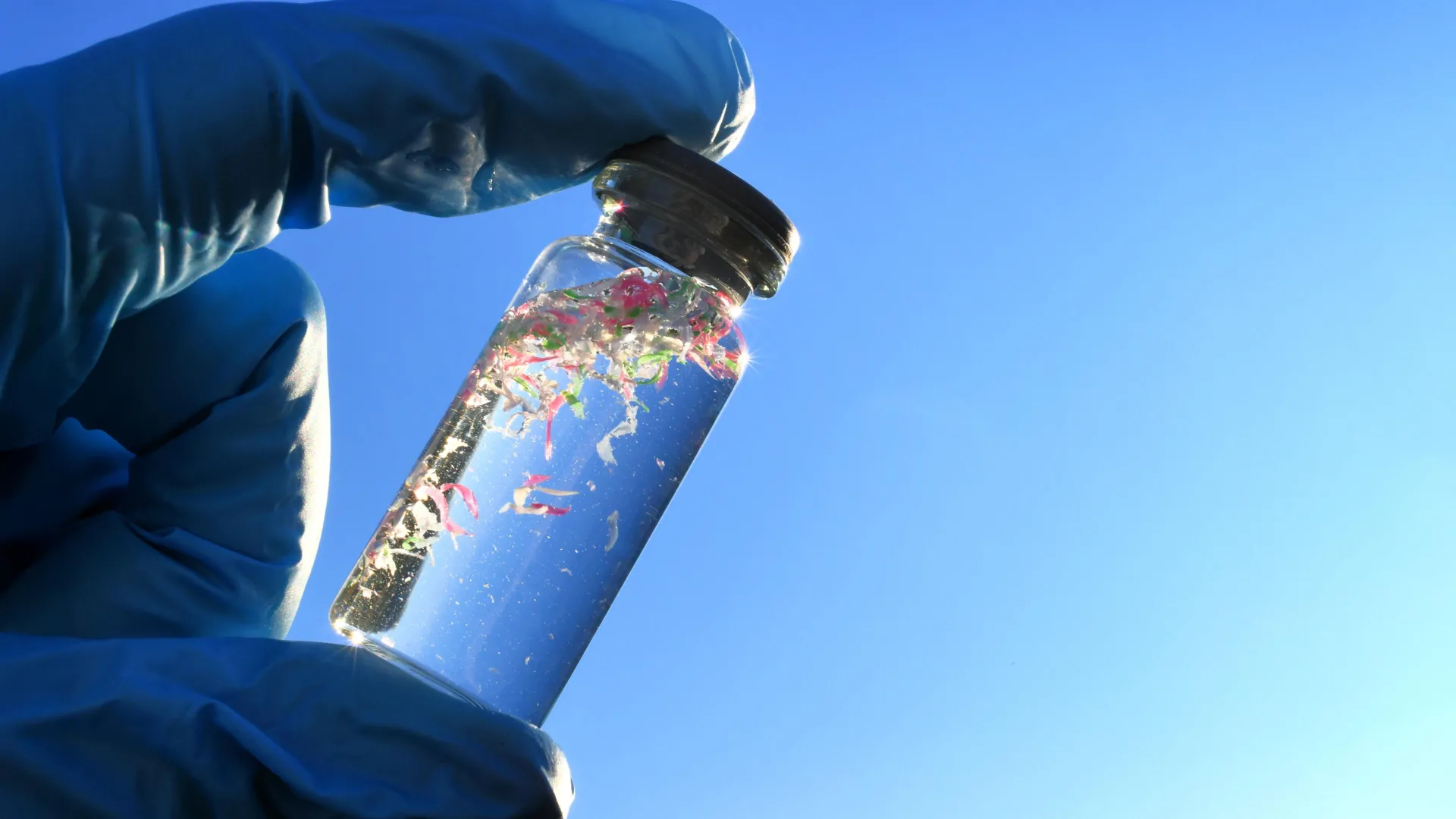
In her review of over 140 scientific articles, Sajedi writes that individuals on average ingest between 39,000 and 52,000 microplastic particles per year, and bottled water users consume 90,000 more particles than tap water consumers.

The particles are usually invisible to the naked eye. A microplastic particle can range between one micron — a thousandth of a millimeter — to five millimeters; nanoplastics are smaller than one micron.

They emerge as bottles are made, stored, transported and broken down over their lifespans. Because they are often made from low-quality plastic, they shed tiny pieces every time they are manipulated and exposed to sunlight and temperature fluctuations. And unlike other types of plastic particles, which enter human bodies through the food chain, these are ingested directly from the source.

As Sajedi notes, the health consequences can be severe. Once inside the body, these small plastics can cross biological boundaries, enter the bloodstream and reach vital organs. This can lead to chronic inflammation, oxidative stress on cells, hormonal disruption, impaired reproduction, neurological damage and various kinds of cancer. However, the long-term effects remain poorly understood due to a lack of widespread testing and standardized methods of measurement and detection.

Sajedi identifies multiple methods researchers have used to measure nano- and microplastics, each with their own strengths and weaknesses. Some, for instance, can detect very small particles but cannot identify their chemical composition. Others can provide details about their makeup but miss the smallest plastics. And the best, most advanced and most reliable tools are often extremely costly and not always available.

Education is the best prevention

Sajedi is encouraged by the legislative action that has been adopted by governments around the world aimed at limiting plastic waste. However, she notes that the most common targets are single-use plastic bags, straws and packaging. Very few address the pressing issue of single-use water bottles.

“Education is the most important action we can take,” she says. “Drinking water from plastic bottles is fine in an emergency but it is not something that should be used in daily life. People need to understand that the issue is not acute toxicity — it is chronic toxicity.”

Chunjiang An, associate professor, and Zhi Chen, professor, in the Department of Building, Civil and Environmental Engineering at the Gina Cody School of Engineering and Computer Science contributed to this paper.

This research was supported by the Natural Sciences and Engineering Research Council of Canada and Concordia University.

Share Button

Alarming number of people now vape, says WHO

More than 100 million people, including at least 15 million children, use e-cigarettes, fuelling a new wave of nicotine addiction, say experts.

Share Button

Scientists win Nobel Prize for discovering why immune system does not destroy the body

The prize-winning discovery explains how the immune system attacks hostile infections, but not the body’s own cells.

Share Button

Thousands of sparkling newborn stars ignite in Webb’s Lobster Nebula view

This is a sparkling scene of star birth captured by NASA’s James Webb Space Telescope. What appears to be a craggy, starlit mountaintop kissed by wispy clouds is actually a cosmic dust-scape being eaten away by the blistering winds and radiation of nearby, massive, infant stars.

Called Pismis 24, this young star cluster resides in the core of the nearby Lobster Nebula, approximately 5,500 light-years from Earth in the constellation Scorpius. Home to a vibrant stellar nursery and one of the closest sites of massive star birth, Pismis 24 provides rare insight into large and massive stars. Its proximity makes this region one of the best places to explore the properties of hot young stars and how they evolve.

At the heart of this glittering cluster is the brilliant Pismis 24-1. It is at the center of a clump of stars above the jagged orange peaks, and the tallest spire is pointing directly toward it. Pismis 24-1 appears as a gigantic single star, and it was once thought to be the most massive known star. Scientists have since learned that it is composed of at least two stars, though they cannot be resolved in this image. At 74 and 66 solar masses, respectively, the two known stars are still among the most massive and luminous stars ever seen.

Captured in infrared light by Webb’s NIRCam (Near-Infrared Camera), this image reveals thousands of jewel-like stars of varying sizes and colors. The largest and most brilliant ones with the six-point diffraction spikes are the most massive stars in the cluster. Hundreds to thousands of smaller members of the cluster appear as white, yellow, and red, depending on their stellar type and the amount of dust enshrouding them. Webb also shows us tens of thousands of stars behind the cluster that are part of the Milky Way galaxy.

Super-hot, infant stars -some almost 8 times the temperature of the Sun – blast out scorching radiation and punishing winds that are sculpting a cavity into the wall of the star-forming nebula. That nebula extends far beyond NIRCam’s field of view. Only small portions of it are visible at the bottom and top right of the image. Streamers of hot, ionized gas flow off the ridges of the nebula, and wispy veils of gas and dust, illuminated by starlight, float around its towering peaks.

Dramatic spires jut from the glowing wall of gas, resisting the relentless radiation and winds. They are like fingers pointing toward the hot, young stars that have sculpted them. The fierce forces shaping and compressing these spires cause new stars to form within them. The tallest spire spans about 5.4 light-years from its tip to the bottom of the image. More than 200 of our solar systems out to Neptune’s orbit could fit into the width its tip, which is 0.14 lightyears.

In this image, the color cyan indicates hot or ionized hydrogen gas being heated up by the massive young stars. Dust molecules similar to smoke here on Earth are represented in orange. Red signifies cooler, denser molecular hydrogen. The darker the red, the denser the gas. Black denotes the densest gas, which is not emitting light. The wispy white features are dust and gas that are scattering starlight.

The James Webb Space Telescope is the world’s premier space science observatory. Webb is solving mysteries in our solar system, looking beyond to distant worlds around other stars, and probing the mysterious structures and origins of our universe and our place in it. Webb is an international program led by NASA with its partners, ESA (European Space Agency) and CSA (Canadian Space Agency).

Share Button