Lawyers say the earplugs were used in operations, including in Afghanistan, from 2003 onwards.


Lawyers say the earplugs were used in operations, including in Afghanistan, from 2003 onwards.

UCLA researchers have uncovered a link between “morning sickness” symptoms and the body’s natural, but complex, inflammatory response to biological and bodily changes during pregnancy.
According to the National Institutes of Health, up to 80% of early-stage pregnant mothers experience some nausea, vomiting and aversions to certain foods and smells. While uncomfortable, these symptoms are not typically a sign that anything is wrong with the health of the mother or the developing fetus, but rather an indication of a delicate balance unique to pregnant women.
“During pregnancy, a mother’s immune system faces a tricky challenge: it has to protect both her and the fetus from infection, but without accidentally attacking the fetus, whose genetic identity is half-foreign because it is half derived from the father. Normally, the immune system attacks anything that seems foreign, so in pregnancy, it has to carefully adjust to keep the fetus safe while still defending against infection,” said UCLA anthropology professor Molly Fox.
Fox is the corresponding author of the study “Of scents and cytokines: How olfactory and food aversions relate to nausea and immunomodulation in early pregnancy,” recently published in the journal Evolution, Medicine and Public Health.
The researchers believe that this delicate balance, which protects mother and fetus, is achieved by a unique mix of inflammatory responses. They function to prevent the mother’s body from rejecting the fetus, alongside adaptive behavioral mechanisms, like nausea, that encourage the mother to avoid foods that are potentially harmful, especially in the first and second trimesters when the fetus is most vulnerable.
“Nausea, vomiting or aversions to foods or smells are not indications that something is going wrong for the mother or the fetus. It’s likely an indication that everything is moving along normally, and a reflection of the body’s healthy and helpful immune response,” said UCLA anthropology professor and paper co-author Daniel Fessler.
Methodology and findings
For the study, the UCLA-led team of anthropologists and epidemiologists collected and analyzed blood samples to measure immune system molecules called cytokines. Cytokines are proteins that send signals to help the body launch a quick defense against sickness and regulate inflammation. Participants also filled out questionnaires that asked about morning sickness-related symptoms and food and smell aversions during the early stages of pregnancy. The participants were 58 Latina women in Southern California who were followed beginning in early pregnancy through the postpartum.
Sixty-four percent of study participants experienced odor or food aversions, primarily to tobacco smoke and meat. Sixty-seven percent reported nausea and 66% experienced vomiting.
The study team measured cytokines that promote inflammation (pro-inflammatory) as well as cytokines that suppress inflammation (anti-inflammatory). They found that women who experienced an aversion to tobacco smoke showed a noticeable shift toward a more inflammatory response. Food aversions, nausea and vomiting were also associated with a more pro-inflammatory immune balance.
Natural selection?
The correlation is consistent with researchers’ theory that these symptoms may be part of an evolutionary adaptation that helps pregnant mothers’ bodies minimize exposure to harmful substances, though the study’s authors caution that the evidence is not definitive and more research is needed.
They emphasized that the study allowed the team to look at both human biological and behavioral responses during pregnancy.
“In many mammals, the fetal compartment has barriers separating it from the mother’s blood supply, where her immune cells are. But in humans, we have a unique setup — fetal cells are bathed in maternal blood. Humans have the most invasive of all placentas, burrowing deep into maternal tissue. So humans need unique strategies to prevent the mother’s immune system from attacking the fetus,” said Fox.
These immunological changes may induce nausea, which in turn encourages food avoidance that might act as an additional layer of protection, according to the researchers
“Nowadays, you will see labels on packages of ground beef or soft cheese that warn pregnant women to be cautious about these products because of the risks of foodborne illness during pregnancy. Aversions to certain odors and foods, and nausea and even vomiting, appear to be evolution’s way of achieving that same objective,” said Fessler.
Practical implications
The researchers, including first author Dayoon Kwon, who just completed her Ph.D. in epidemiology at UCLA (and is now a postdoctoral fellow at Stanford), said that the study could help bolster recognition that nausea and vomiting are normal symptoms with biological underpinnings associated with healthy pregnancies. The study’s results could help in paving the way for common-sense workplace accommodations, such as more efficient deployment of health care benefits and other helpful resources to reduce stigma, excessive absences and lost productivity.
They also encourage other researchers to continue to look into the questions raised by the study, to not only explore the evolutionary questions, but to work toward providing clinicians with non- or low-invasive measures of prognoses.
Funding for this study was provided by the National Institute of Health.
Former Para-athletic world champion Stef Reid says footwear companies are failing amputees.
An undercover BBC team catch a fake doctor, a pharmacist and a nurse supplying Botox illegally without checks.
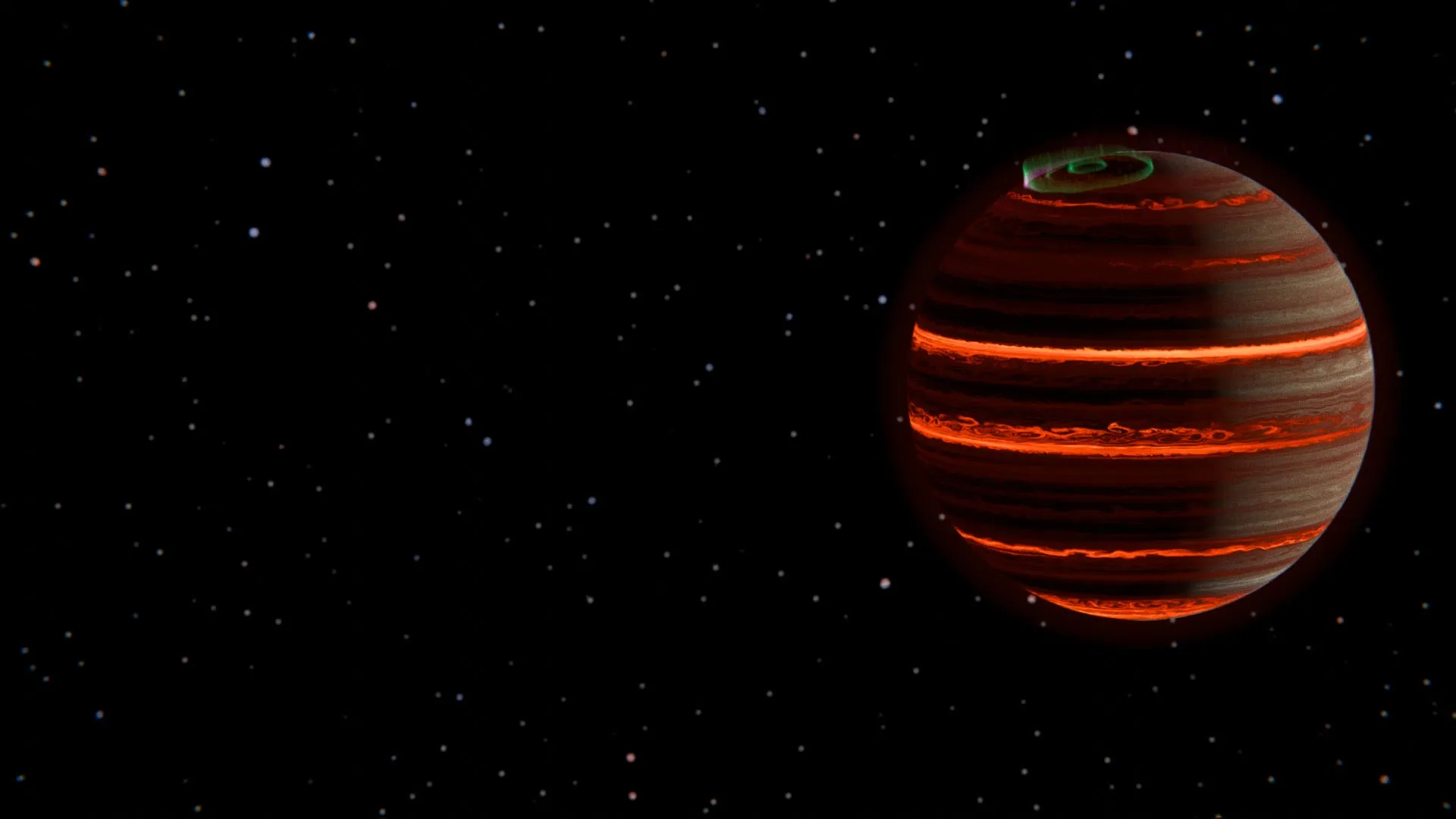
Strong Northern Lights-like activity is the standout feature of today’s weather report, which is coming at you from a strange, extrasolar world, instead of a standard TV studio. That is thanks to astronomers from Trinity College Dublin, who used the NASA/ESA/CSA James Webb Space Telescope to take a close look at the weather of a toasty nearby rogue planet, SIMP-0136.
The exquisite sensitivity of the instruments on board the space-based telescope enabled the team to see minute changes in brightness of the planet as it rotated, which were used to track changes in temperature, cloud cover and chemistry.
Surprisingly, these observations also illuminated SIMP-0136’s strong auroral activity, similar to the Northern Lights here on Earth or the powerful aurora on Jupiter, which heat up its upper atmosphere.
“These are some of the most precise measurements of the atmosphere of any extra-solar object to date, and the first time that changes in the atmospheric properties have been directly measured,” said Dr Evert Nasedkin, a Postdoctoral Fellow in Trinity College Dublin’s School of Physics, who is the lead author of the research article just published in leading international journal, Astronomy & Astrophysics.
“And at over 1,500 °C, SIMP-0136 makes this summer’s heat wave look mild,” he continued. “The precise observations we made meant we could accurately record temperature changes smaller than 5 °C. These changes in temperature were related to subtle changes in the chemical composition of this free-floating planet, which is suggestive of storms – similar to Jupiter’s Great Red Spot – rotating into view.”
Another surprise finding was the lack of variability of the clouds on SIMP-0136. One might expect changes in the cloud coverage to lead to changes in the atmosphere, similar to observing patches of clouds and blue sky here on Earth. Instead, the team found that the cloud coverage was constant over the surface of SIMP-0136. At the temperatures of SIMP-0136 these clouds are unlike those on earth, instead composed of silicate grains, similar to sand on a beach.
This is the first publication from the new ‘Exo-Aimsir’ group led by Prof. Johanna Vos in Trinity’s School of Physics, and includes contributions from all the group members, including PhD candidates Merle Schrader, Madeline Lam and Cian O’Toole.
These data were initially published by a similar team led by Allison McCarthy at Boston University, but the new analysis has revealed more details about the atmosphere.
“Different wavelengths of light are related to different atmospheric features. Similar to observing the changes in colour over the surface of the earth, the changes in the colour of SIMP-0136 are driven by changes in the atmospheric properties,” added Dr. Nasedkin. “So by using cutting-edge models, we could infer the temperature of the atmosphere, the chemical composition, and the position of the clouds.”
Prof. Vos said: “This work is exciting because it shows that by applying our state-of-the-art modelling techniques to cutting-edge datasets from JWST, we can begin to piece together the processes that drive weather in worlds beyond our solar system. Understanding these weather processes will be crucial as we continue to discover and characterize exoplanets in the future.”
“While for now these types of spectroscopic variability observations are limited to isolated brown dwarfs, like this one, future observations with the Extremely Large Telescope and eventually the Habitable Worlds Observatory will enable the study of the atmospheric dynamics of exoplanets, from Jupiter-like gas giants to rocky worlds.”
This part of the inquiry is looking at the impact the pandemic had on children and young people.
GPs are concerned they will be at the end of an “online triage tsunami” when the new system launches.
After the formation of the Solar System, it took a maximum of three million years for the chemical composition of the Earth’s precursor to be completed. This is shown by a new study by the Institute of Geological Sciences at the University of Bern. At this time, however, there were hardly any elements necessary for life such as water or carbon compounds on the young planet. Only a later planetary collision probably brought water to Earth, paving the way for life.
Earth is so far the only known planet on which life exists — with liquid water and a stable atmosphere. However, the conditions were not conducive to life when it formed. The gas-dust cloud from which all the planets in the Solar System formed was rich in volatile elements essential for life, such as hydrogen, carbon and sulphur. However, in the inner Solar System — the part closest to the Sun, where the four rocky planets Mercury, Venus, Earth and Mars and the asteroid belt are located today — these volatile elements could hardly exist: Due to the high temperature of the Sun, they did not condense and initially remained largely in the gas phase. As these gaseous substances were not incorporated into the solid rocky materials from which the planets were formed, the early precursor of the Earth, the so-called proto-Earth, also contained very little of these vital substances. Only celestial bodies that formed further away from the Sun in cooler regions were able to incorporate these components. When and how the Earth became a life-friendly planet is still not fully understood.
In a new study, researchers from the Institute of Geological Sciences at the University of Bern have now been able to show for the first time that the chemical composition of the early Earth was complete no later than three million years after the formation of the Solar System — and in a way that initially made the emergence of life impossible. Their results, recently published in the journal Science Advances, suggest that life on Earth was only made possible by a later event. Dr. Pascal Kruttasch is first author of the study, which was part of his dissertation at the Institute of Geological Sciences and was financially supported by the Swiss National Science Foundation. Kruttasch is now an SNSF Postdoc Mobility Fellow at Imperial College London.
Using a precise clock to measure the history of the Earth’s formation
The research team used a combination of isotope and element data from meteorites and terrestrial rocks to reconstruct the process of the Earth’s formation. Using model calculations, the researchers were able to narrow down in time how the chemical composition of the Earth developed in comparison to other planetary building blocks.
Kruttasch explains: “A high-precision time measurement system based on the radioactive decay of manganese-53 was used to determine the precise age. This isotope was present in the early Solar System and decayed to chromium-53 with a half-life of around 3.8 million years.” This method allowed ages to be determined with an accuracy of less than one million years for materials that are several billion years old. “These measurements were only possible because the University of Bern has internationally recognized expertise and infrastructure for the analysis of extraterrestrial materials and is a leader in the field of isotope geochemistry,” says co-author Klaus Mezger, Professor Emeritus of Geochemistry at the Institute of Geological Sciences at the University of Bern.
Life on Earth thanks to a cosmic coincidence?
Using model calculations, the research team was able to show that the chemical signature of the proto-Earth, i.e. the unique pattern of chemical substances of which it is composed, was already complete less than three million years after the formation of the Solar System. Their study thus provides empirical data on the time of formation of the original material of the young Earth. “Our Solar System formed around 4,568 million years ago. Considering that it only took up to 3 million years to determine the chemical properties of the Earth, this is surprisingly fast,” says first author Kruttasch.
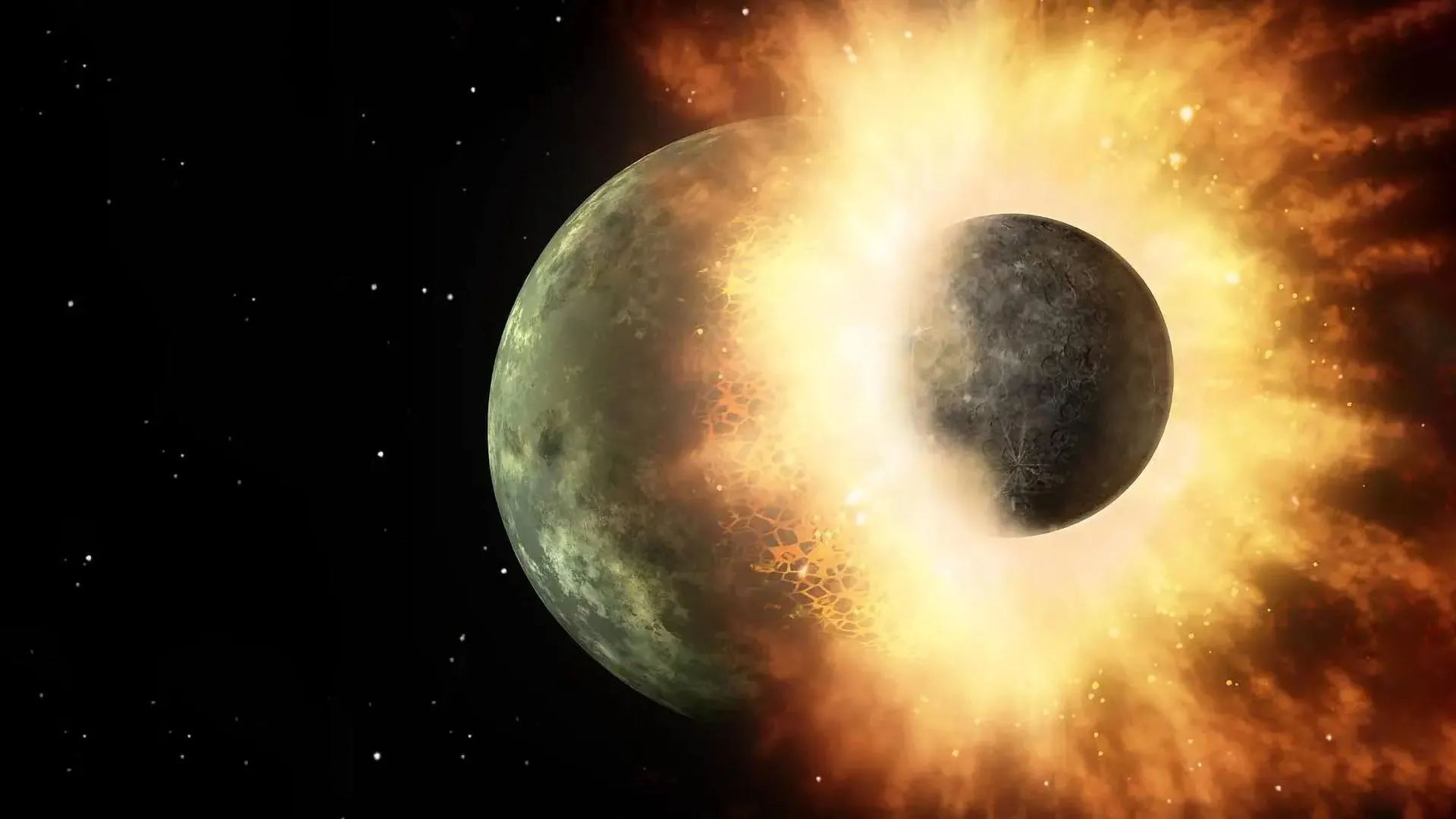
The results of the study thus support the assumption that a later collision with another planet — Theia — brought the decisive turning point and made the Earth a life-friendly planet. Theia probably formed further out in the Solar System, where volatile substances such as water accumulated. “Thanks to our results, we know that the proto-Earth was initially a dry rocky planet. It can therefore be assumed that it was only the collision with Theia that brought volatile elements to Earth and ultimately made life possible there,” says Kruttasch.
Life-friendliness in the universe cannot be taken for granted
The new study contributes significantly to our understanding of the processes in the early phase of the Solar System and provides clues as to when and how planets on which life is possible can form. “The Earth does not owe its current life-friendliness to a continuous development, but probably to a chance event — the late impact of a foreign, water-rich body. This makes it clear that life-friendliness in the universe is anything but a matter of course,” says Mezger.
The next step would be to investigate the collision event between proto-Earth and Theia in more detail. “So far, this collision event is insufficiently understood. Models are needed that can fully explain not only the physical properties of the Earth and Moon, but also their chemical composition and isotope signatures,” concludes Kruttasch.
With claims of a ‘two-tier system’, could it be that these drugs are exacerbating health inequalities?
Sports groups hope England Women’s Rugby World Cup success can boost girls playing sport.
