The Lib Dem leader will use his party conference speech to attack Donald Trump’s “anti-science agenda”.


The Lib Dem leader will use his party conference speech to attack Donald Trump’s “anti-science agenda”.
Some studies have suggested an association between the two, but experts say there is no causal relationship.
Jessica Brady’s parents campaigned for the initiative after she made repeated calls to GPs before her death aged 27 from terminal cancer.
The party says mandatory warnings are required to protect children from “addictive” app algorithms.
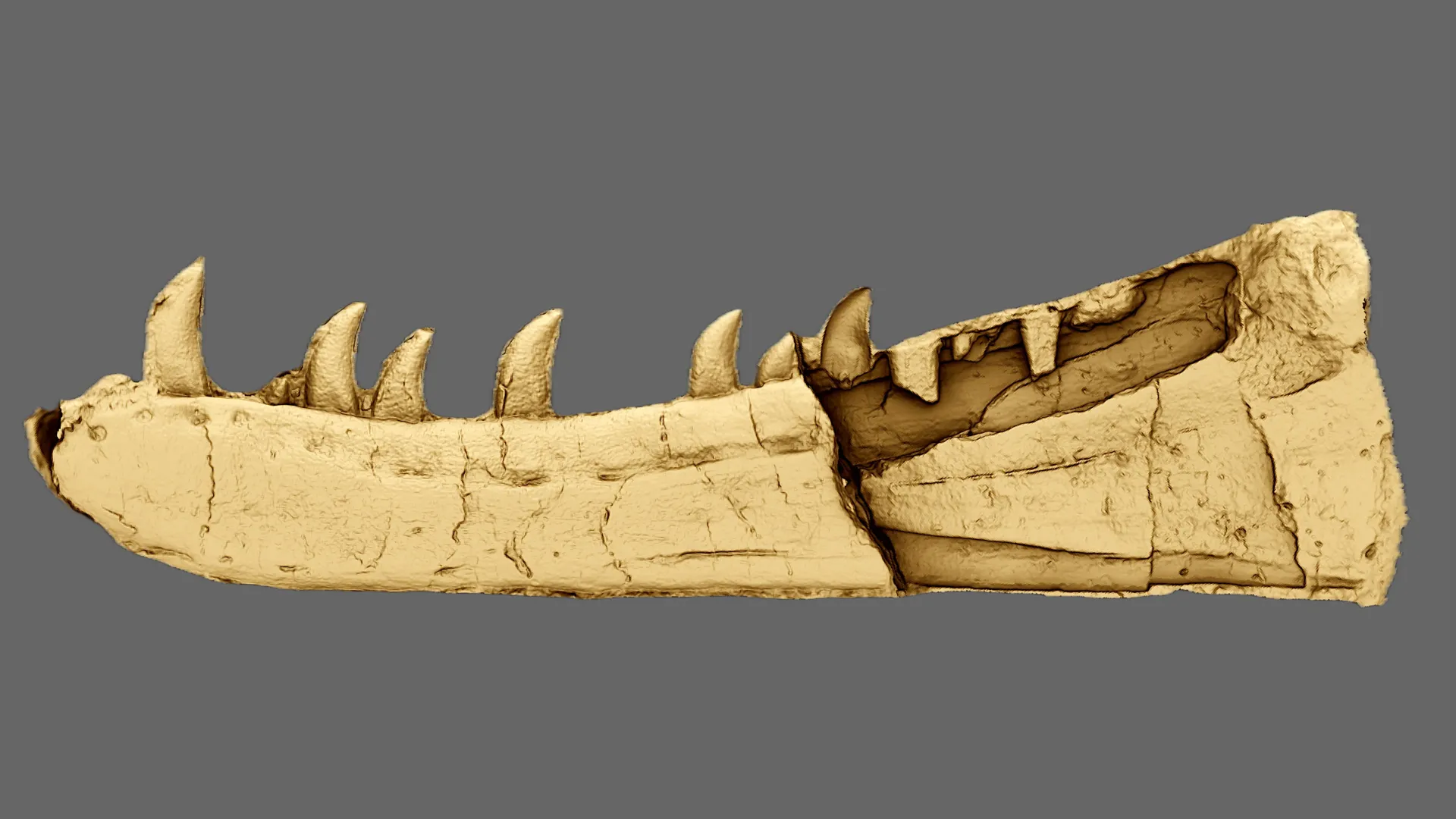
Paleontologists at the University of Bristol have officially identified a new species of dinosaur from Triassic fossil beds in South Wales, near Penarth – more than 125 years after the specimen was initially reported.
Using modern digital scanning techniques the researchers were able to shed new light on the fossil jawbone, which has been known since 1899 and been on display in the National Museum of Wales for many years, but was not correctly identified until now.
The fossil consists of natural molds of the jawbone in the rock and all the original bone has disappeared. So, using photo scanning, paleontology student Owain Evans was able to make a perfect 3D digital reconstruction to enable detailed study.
Owain Evans said: “This specimen has been referred to many times in scientific papers, but had yet to be successfully identified – we were not even sure whether it was dinosaur. It was named Zanclodon cambrensis by Edwin Tully Newton in 1899, but we knew the name Zanclodon had been abandoned as referring to a broad variety of early reptiles. Therefore, we name it after Newton, calling it Newtonsaurus. It is different from all other dinosaurs from around that time, and requires a distinctive name.”
Professor Michael J Benton, who is the senior author on the paper, said: “The natural molds of the inner and outer faces of the jawbone show amazing detail – every groove, ridge, tooth, and even the serrations along the edges of the teeth. We decided to use digital photography to make a 3D model. We began by surface scanning the fossil using photogrammetry. Once we had our digital scan, we then inverted it – essentially giving us a digital negative of the mold. It was then a simple case of fusing the two sides together and analyzing the anatomy from there. The digital reconstruction we have extracted from the specimen gives a much better idea of what the original structure of the bone would have looked like.”
Now that the fossil could be studied, the team was able to use its anatomy to piece together its position in the reptile family tree – and most crucially – whether it was a dinosaur or not.
Owain Evans said: “We can now confirm that this specimen very likely belonged to a large predatory theropod dinosaur, that roamed the shores of South Wales during the latest Triassic. It has some definite unique dinosaur features in the emplacement of the teeth, and it is a theropod — a predatory, flesh-eating dinosaur. Otherwise, it sits near the origins of both major divisions of Theropoda, the Coelophysoidea and the Averostra.
“Most unexpected is the size of the animal. The preserved jawbone is 28 cm long, and that is just the front half, so originally the jawbone was 60 cm long, corresponding to a dinosaur with a body length of 5-7 meters. This is unusually large for a Triassic theropod, most of which were half the size or smaller.”
Cindy Howells at the National Museum of Wales said: “These historical specimens are vitally important in paleontology and often yield new and exciting results – even if they have been sitting in collections for years. The Victorians were fascinated by the fossil record and prospected all across the UK for fossils. On top of this, the re-description of Newtonsaurus cambrensis once again highlights the significance of Wales in paleontological research. These Triassic beds are rare worldwide, and yet there are several across Wales. There might very well be another dinosaur waiting to be discovered.”
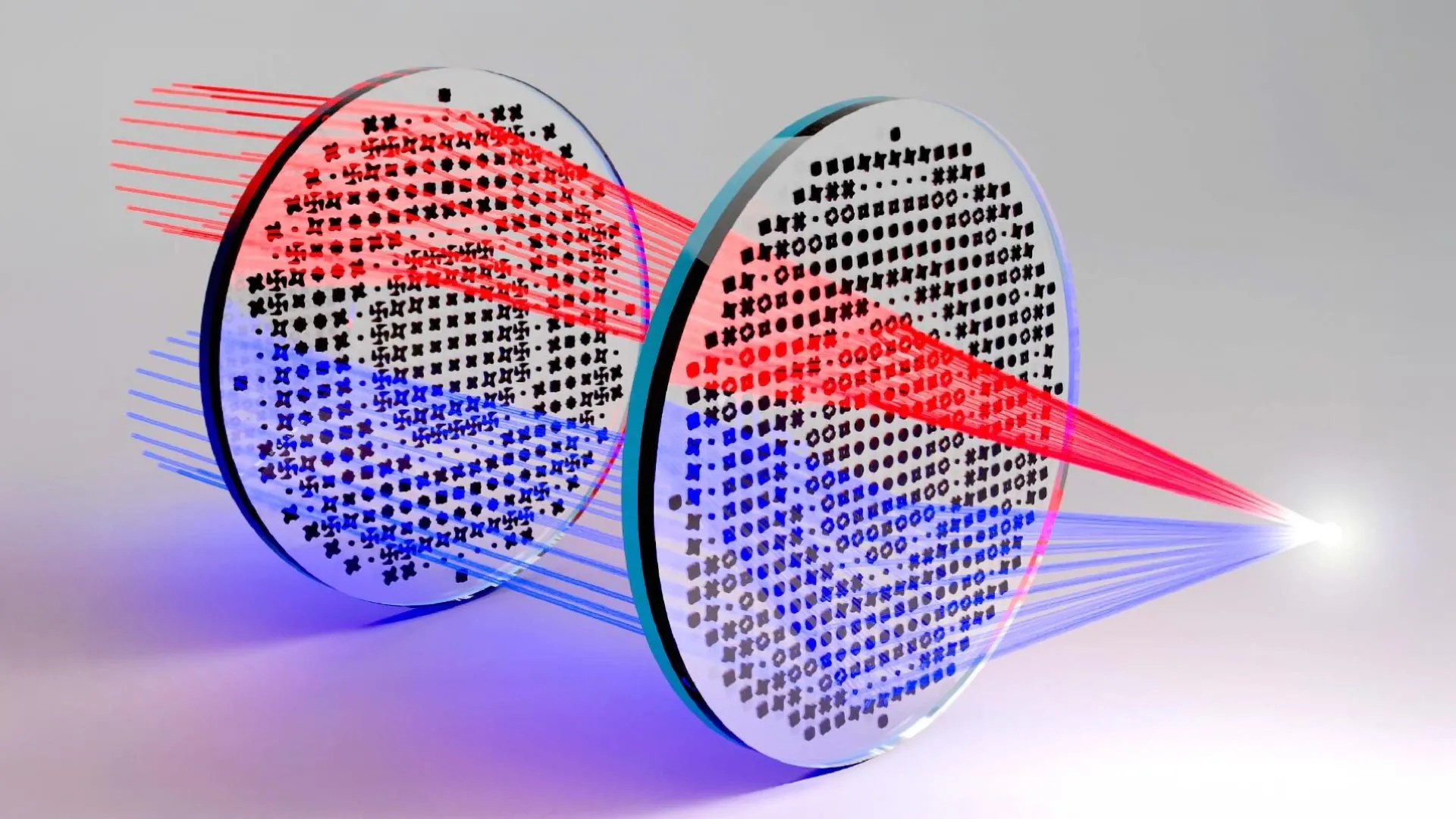
A new approach to manufacturing multicolor lenses could inspire a new generation of tiny, cheap, and powerful optics for portable devices such as phones and drones.
The design uses layers of metamaterials to simultaneously focus a range of wavelengths from an unpolarized source and over a large diameter, overcoming a major limitation of metalenses, said the first author of the paper reporting the design, Mr Joshua Jordaan, from the Research School of Physics at the Australian National University and the ARC Centre of Excellence for Transformative Meta-Optical Systems (TMOS).
“Our design has a lot of nice features that make it applicable to practical devices.”
“It’s easy to manufacture because it has a low aspect ratio and each layer can be fabricated individually and then packaged together, it’s also polarisation insensitive, and is potentially scalable through mature semiconductor nanofabrication platforms,” Mr Jordaan said.
The project was led by researchers from the Friedrich Schiller University Jena in Germany as part of the International Research Training Group Meta-ACTIVE. The paper reporting their design is published in Optics Express.
Metalenses have thickness mere fractions of the width of a hair, which is orders of magnitude thinner than conventional lenses. They can be designed to have properties such as focal lengths that would be impossibly short for conventional optics.
Initially the team attempted to focus multiple wavelengths with a single layer, but they hit up against some fundamental constraints, Mr Jordaan said.
“It turns out the maximum group-delay attainable in a single-layer metasurface has physical limitations, and these in turn set upper bounds on the product of the numerical aperture, physical diameter and operating bandwidth.”
“To work at the wavelength range we needed, a single layer would either have to have a very small diameter, which would defeat the purpose of the design, or basically have such a low numerical aperture that it’s hardly focusing the light at all,” he said.
“We realized we needed a more complex structure, which then led to a multi-layer approach.”
With the design shifted to incorporating several metalens layers, the team approached the problem with an inverse design algorithm based on shape optimization, with parameterization that meant a lot of degrees of freedom.
They guided the software to search for metasurface shapes that, for a single wavelength, created simple resonances in both the electric and magnetic dipole, known as Huygens resonances. By employing resonances, the team were able to improve on previous designs by other groups, and develop metalens designs that were polarization independent, and had greater tolerances in manufacturing specifications – crucial in the quest to scale fabrication to industrial quantities.
The optimization routine came up with a library of metamaterial elements in a surprising range of shapes, such as rounded squares, four-leaf clovers and propellers.
These tiny shapes, around 300 nm tall and 1000 nm wide, spanned the full range of phase shifts, from zero to two pi, enabling the team to create a phase gradient map to achieve any arbitrary focusing pattern – although they were initially just aiming for a simple ring structure of a conventional lens.
“We could, for example, focus different wavelengths into different locations to create a colour router,” Mr Jordaan said.
However, the multilayer approach is limited to a maximum of around five different wavelengths, Mr Jordaan said.
“The problem is you need structures large enough to be resonant at the longest wavelength, without getting diffraction from the shorter wavelengths,” he said.
Within these constraints, Mr Jordaan said the ability to make metalenses to collect a lot of light will be a boon for future portable imaging systems.
“The metalenses we have designed would be ideal for drones or earth-observation satellites, as we’ve tried to make them as small and light as possible,” he said.
Families affected by a rare inherited disease say they have had to “scramble” for information.

Physicians rely on nuclear medicine scans, like SPECT scans, to watch the heart pump, track blood flow and detect diseases hidden deep inside the body. But today’s scanners depend on expensive detectors that are difficult to make.
Now, scientists led by Northwestern University and Soochow University in China have built the first perovskite-based detector that can capture individual gamma rays for SPECT imaging with record-breaking precision. The new tool could make common types of nuclear medicine imaging sharper, faster, cheaper and safer.
For patients, that could mean shorter scan times, clearer results and lower doses of radiation.
The study was published on Aug. 30 in the journal Nature Communications.
“Perovskites are a family of crystals best known for transforming the field of solar energy,” said Northwestern’s Mercouri Kanatzidis, the study’s senior author. “Now, they are poised to do the same for nuclear medicine. This is the first clear proof that perovskite detectors can produce the kind of sharp, reliable images that doctors need to provide the best care for their patients.”
“Our approach not only improves the performance of detectors but also could lower costs,” said co-corresponding author Yihui He, a professor at Soochow University. “That means more hospitals and clinics eventually could have access to the best imaging technologies.”
Kanatzidis is a Charles E. and Emma H. Morrison Professor of Chemistry at Northwestern’s Weinberg College of Arts and Sciences and a senior scientist at Argonne National Laboratory. Yihui He is a former postdoctoral fellow from Kanatzidis’ laboratory.
Nuclear medicine, like SPECT (single-photon emission computing tomography) imaging, works like an invisible camera. Physicians implant a tiny, safe, short-lived radiotracer in a specific part of a patient’s body. The tracer emits gamma rays, which pass outward through tissues and eventually hit a detector outside of the body. Each gamma ray is like a pixel of light. After collecting millions of these pixels, computers can construct a 3D image of working organs.
Today’s detectors, which are either made from cadmium zinc telluride (CZT) or sodium iodide (NaI), have several disadvantages. CZT detectors are incredibly expensive, sometimes reaching into the price range of hundreds of thousands to millions of dollars for a whole camera. Because CZT crystals are brittle and prone to cracking, these detectors also are difficult to manufacture. While cheaper than CZT detectors, NaI detectors are bulky and produce blurrier images — like taking a photo through a foggy window.
To overcome these issues, the scientists turned to perovskite crystals, a material that Kanatzidis has studied for more than a decade. In 2012, his group built the first solid-film solar cells made from perovskites. Then, in 2013, Kanatzidis discovered that single perovskite crystals were highly promising for detecting X-rays and gamma rays. This breakthrough, enabled by his group’s growth of high-quality single crystals, sparked a worldwide surge of research and effectively launched a new field in hard radiation detection materials.
“This work demonstrates how far we can push perovskite detectors beyond the laboratory,” Kanatzidis said. “When we first discovered in 2013 that perovskite single crystals could detect X-rays and gamma rays, we could only imagine their potential. Now, we’re showing that perovskite-based detectors can deliver the resolution and sensitivity needed for demanding applications like nuclear medicine imaging. It’s exciting to see this technology moving closer to real-world impact.”
Building on this foundation, Kanatzidis and He led the crystal growth, surface engineering and device design for the new study. By carefully growing and shaping these crystals, the researchers created a pixelated sensor — just like the pixels in a smartphone camera — that delivers record-breaking clarity and stability.
Leading the design and development of the prototype gamma-ray detector, He developed the camera’s pixelated architecture, optimized the multi-channel readout electronics and carried out the high-resolution imaging experiments that validated the device’s capabilities. He, Kanatzidis and their team demonstrated that perovskite-based detectors can achieve record energy resolutions and unprecedented single-photon imaging performance, paving the way for practical integration into next-generation nuclear medicine imaging systems.
“Designing this gamma-ray camera and demonstrating its performance has been incredibly rewarding,” He said. “By combining high-quality perovskite crystals with a carefully optimized pixelated detector and multi-channel readout system, we were able to achieve record-breaking energy resolution and imaging capabilities. This work shows the real potential of perovskite-based detectors to transform nuclear medicine imaging.”
In experiments, the detector was able to differentiate among gamma rays of different energies with the best resolution reported thus far. It also sensed extremely faint signals from a medical radiotracer (technetium-99m) commonly used in clinical practice and distinguished incredibly fine features, producing crisp images that could separate tiny radioactive sources spaced just a few millimeters apart. The detector also remained highly stable, collecting nearly all the tracer’s signal without loss or distortion. Because these new detectors are more sensitive, patients potentially could require shorter scan times or smaller doses of radiation.
Northwestern spinout company Actinia Inc. is commercializing this technology — working with partners in the medical device field to bring it out of the lab and into hospitals. Because they are easier to grow and use simpler components, perovskites offer a far less expensive alternative to CZT and NaI detectors without sacrificing quality. Perovskite-based detectors also offer a realistic pathway to imaging using a lower dose of a radiotracer than can be used with a NaI detector but at a price that ensures widespread patient access.
“Demonstrating that perovskites can deliver single-photon gamma-ray imaging is a milestone,” He said. “It shows these materials are ready to move beyond the laboratory and into technologies that directly benefit human health. From here, we see opportunities to refine the detectors further, scale up production and explore entirely new directions in medical imaging.”
“High-quality nuclear medicine shouldn’t be limited to hospitals that can afford the most expensive equipment,” Kanatzidis said. “With perovskites, we can open the door to clearer, faster, safer scans for many more patients around the world. The ultimate goal is better scans, better diagnoses and better care for patients.”
The study, “Single photon γ-ray imaging with high energy and spatial resolution perovskite semiconductor for nuclear medicine,” was supported by the Defense Threat Reduction Agency (award number HDTRA12020002), the Consortium for Interaction of Ionizing Radiation with Matter University Research Alliance, the National Key R&D Program of China (award number 2021YFF0502600), the National Natural Science Foundation of China (award number U2267211) and the Jiangsu Natural Science Foundation (award number BK20240822).
Music can evoke powerful memories and offers a sense of normality for people dealing with illness or death.
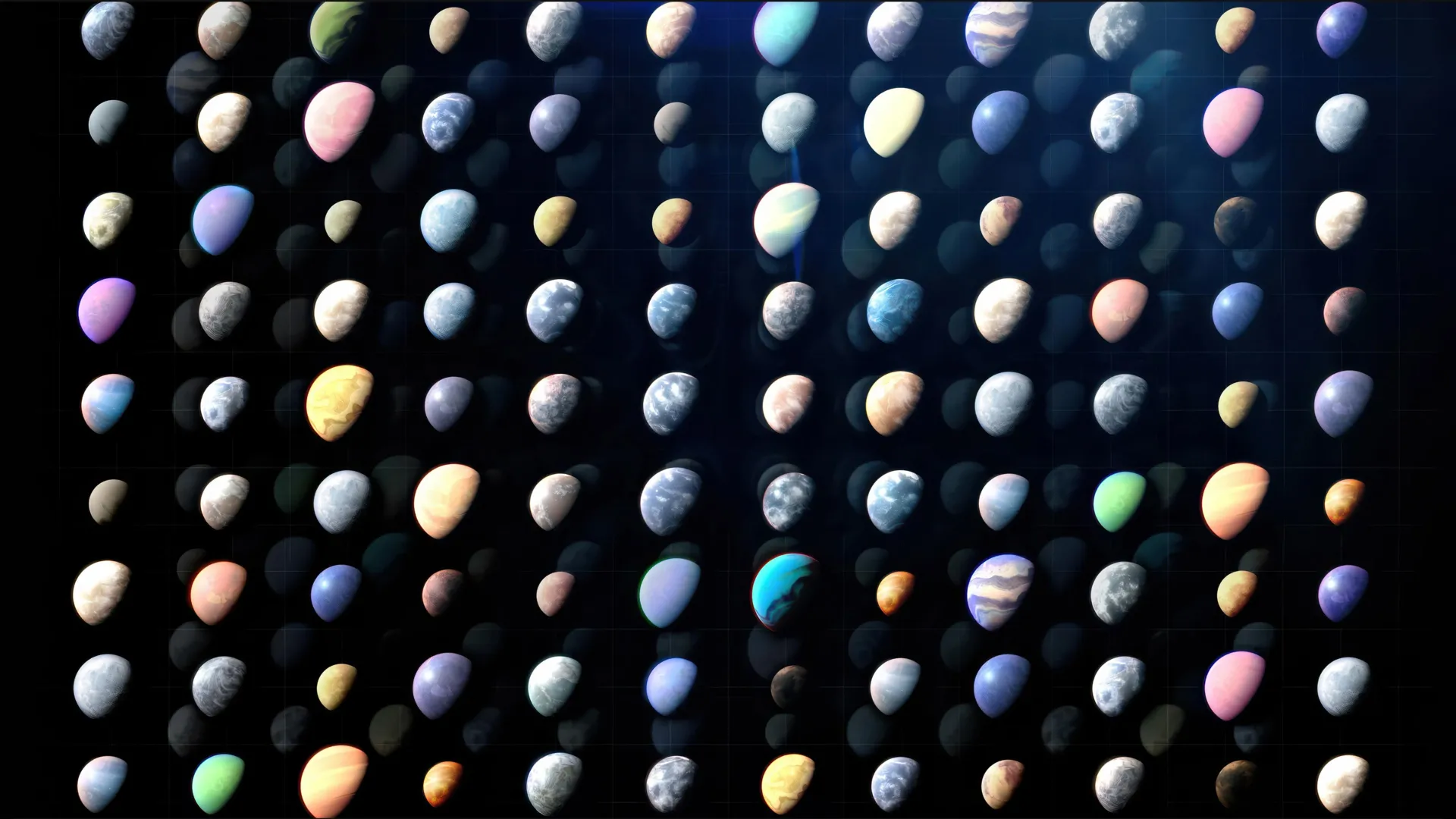
The official number of exoplanets — planets outside our solar system — tracked by NASA has reached 6,000. Confirmed planets are added to the count on a rolling basis by scientists from around the world, so no single planet is considered the 6,000th entry. The number is monitored by NASA’s Exoplanet Science Institute (NExScI), based at Caltech’s IPAC in Pasadena, California. There are more than 8,000 additional candidate planets awaiting confirmation, with NASA leading the world in searching for life in the universe.
“This milestone represents decades of cosmic exploration driven by NASA space telescopes — exploration that has completely changed the way humanity views the night sky,” said Shawn Domagal-Goldman, acting director, Astrophysics Division, NASA Headquarters in Washington. “Step by step, from discovery to characterization, NASA missions have built the foundation to answering a fundamental question: Are we alone? Now, with our upcoming Nancy Grace Roman Space Telescope and Habitable Worlds Observatory, America will lead the next giant leap — studying worlds like our own around stars like our Sun. This is American ingenuity, and a promise of discovery that unites us all.”
The milestone comes 30 years after the first exoplanet was discovered around a star similar to our Sun, in 1995. (Prior to that, a few planets had been identified around stars that had burned all their fuel and collapsed.) Although researchers think there are billions of planets in the Milky Way galaxy, finding them remains a challenge. In addition to discovering many individual planets with fascinating characteristics as the total number of known exoplanets climbs, scientists are able to see how the general planet population compares to the planets of our own solar system.
For example, while our solar system hosts an equal number of rocky and giant planets, rocky planets appear to be more common in the universe. Researchers have also found a range of planets entirely different from those in our solar system. There are Jupiter-size planets that orbit closer to their parent star than Mercury orbits the Sun; planets that orbit two stars, no stars, and dead stars; planets covered in lava; some with the density of Styrofoam; and others with clouds made of gemstones.
“Each of the different types of planets we discover gives us information about the conditions under which planets can form and, ultimately, how common planets like Earth might be, and where we should be looking for them,” said Dawn Gelino, head of NASA’s Exoplanet Exploration Program (ExEP), located at the agency’s Jet Propulsion Laboratory in Southern California. “If we want to find out if we’re alone in the universe, all of this knowledge is essential.”
Searching for other worlds
Fewer than 100 exoplanets have been directly imaged, because most planets are so faint they get lost in the light from their parent star. The other four methods of planet detection are indirect. With the transit method, for instance, astronomers look for a star to dim for a short period as an orbiting planet passes in front of it.
To account for the possibility that something other than an exoplanet is responsible for a particular signal, most exoplanet candidates must be confirmed by follow-up observations, often using an additional telescope, and that takes time. That’s why there is a long list of candidates in the NASA Exoplanet Archive (hosted by NExScI) waiting to be confirmed.
“We really need the whole community working together if we want to maximize our investments in these missions that are churning out exoplanets candidates,” said Aurora Kesseli, the deputy science lead for the NASA Exoplanet Archive at IPAC. “A big part of what we do at NExScI is build tools that help the community go out and turn candidate planets into confirmed planets.”
The rate of exoplanet discoveries has accelerated in recent years (the database reached 5,000 confirmed exoplanets just three years ago), and this trend seems likely to continue. Kesseli and her colleagues anticipate receiving thousands of additional exoplanet candidates from the ESA (European Space Agency) Gaia mission, which finds planets through a technique called astrometry, and NASA’s upcoming Nancy Grace Roman Space Telescope, which will discover thousands of new exoplanets primarily through a technique called gravitational microlensing.
Future exoplanets
At NASA, the future of exoplanet science will emphasize finding rocky planets similar to Earth and studying their atmospheres for biosignatures — any characteristic, element, molecule, substance, or feature that can be used as evidence of past or present life. NASA’s James Webb Space Telescope has already analyzed the chemistry of over 100 exoplanet atmospheres.
But studying the atmospheres of planets the size and temperature of Earth will require new technology. Specifically, scientists need better tools to block the glare of the star a planet orbits. And in the case of an Earth-like planet, the glare would be significant: The Sun is about 10 billion times brighter than Earth — which would be more than enough to drown out our home planet’s light if viewed by a distant observer.
NASA has two main initiatives to try overcoming this hurdle. The Roman telescope will carry a technology demonstration instrument called the Roman Coronagraph that will test new technologies for blocking starlight and making faint planets visible. At its peak performance, the coronagraph should be able to directly image a planet the size and temperature of Jupiter orbiting a star like our Sun, and at a similar distance from that star. With its microlensing survey and coronagraphic observations, Roman will reveal new details about the diversity of planetary systems, showing how common solar systems like our own may be across the galaxy.
Additional advances in coronagraph technology will be needed to build a coronagraph that can detect a planet like Earth. NASA is working on a concept for such a mission, currently named the Habitable Worlds Observatory.
More about ExEP, NExScI
NASA’s Exoplanet Exploration Program is responsible for implementing the agency’s plans for the discovery and understanding of planetary systems around nearby stars. It acts as a focal point for exoplanet science and technology and integrates cohesive strategies for future discoveries. The science operations and analysis center for ExEP is NExScI, based at IPAC, a science and data center for astrophysics and planetary science at Caltech. JPL is managed by Caltech for NASA.
