Scientists just made atoms talk to each other inside silicon chips

UNSW engineers have made a significant advance in quantum computing: they created ‘quantum entangled states’ – where two separate particles become so deeply linked they no longer behave independently – using the spins of two atomic nuclei. Such states of entanglement are the key resource that gives quantum computers their edge over conventional ones.

The research was published on Sept. 18 in the journal Science, and is an important step towards building large-scale quantum computers – one of the most exciting scientific and technological challenges of the 21st century.

Lead author Dr Holly Stemp says the achievement unlocks the potential to build the future microchips needed for quantum computing using existing technology and manufacturing processes.

“We succeeded in making the cleanest, most isolated quantum objects talk to each other, at the scale at which standard silicon electronic devices are currently fabricated,” she says.

The challenge facing quantum computer engineers has been to balance two opposing needs: shielding the computing elements from external interference and noise, while still enabling them to interact to perform meaningful computations. This is why there are so many different types of hardware still in the race to be the first operating quantum computer: some are very good for performing fast operations, but suffer from noise; others are well shielded from noise, but difficult to operate and scale up.

The UNSW team has invested on a platform that – until today – could be placed in the second camp. They have used the nuclear spin of phosphorus atoms, implanted in a silicon chip, to encode quantum information.

“The spin of an atomic nucleus is the cleanest, most isolated quantum object one can find in the solid state,” says Scientia Professor Andrea Morello, UNSW School of Electrical Engineering & Telecommunications.

“Over the last 15 years, our group has pioneered all the breakthroughs that made this technology a real contender in the quantum computing race. We already demonstrated that we could hold quantum information for over 30 seconds – an eternity, in the quantum world – and perform quantum logic operations with less than 1% errors.

“We were the first in the world to achieve this in a silicon device, but it all came at a price: the same isolation that makes atomic nuclei so clean, makes it hard to connect them together in a large-scale quantum processor.”

Until now, the only way to operate multiple atomic nuclei was for them to be placed very close together inside a solid, and to be surrounded by one and the same electron.

“Most people think of an electron as the tiniest subatomic particle, but quantum physics tells us that it has the ability to ‘spread out’ in space, so that it can interact with multiple atomic nuclei,” says Dr Holly Stemp, who conducted this research at UNSW and is now a postdoctoral researcher at MIT in Boston.

“Even so, the range over which the electron can spread is quite limited. Moreover, adding more nuclei to the same electron makes it very challenging to control each nucleus individually.”

Making atomic nuclei talk through electronic ‘telephones’

“By way of metaphor one could say that, until now, nuclei were like people placed in a sound-proof room,” Dr Stemp says.

“They can talk to each other as long as they are all in the same room, and the conversations are really clear. But they can’t hear anything from the outside, and there’s only so many people who can fit inside the room. This mode of conversation doesn’t ‘scale’.

“With this breakthrough, it’s as if we gave people telephones to communicate to other rooms. All the rooms are still nice and quiet on the inside, but now we can have conversations between many more people, even if they are far away.”

The ‘telephones’ are, in fact, electrons. Mark van Blankenstein, another author on the paper, explains what’s really going on at the sub-atomic level.

“By their ability to spread out in space, two electrons can ‘touch’ each other at quite some distance. And if each electron is directly coupled to an atomic nucleus, the nuclei can communicate through that.”

So how far apart were the nuclei involved in the experiments?

“The distance between our nuclei was about 20 nanometers – one thousandth of the width of a human hair,” says Dr Stemp.

“That doesn’t sound like much, but consider this: if we scaled each nucleus to the size of a person, the distance between the nuclei would be about the same as that between Sydney and Boston!”

She adds that 20 nanometers is the scale at which modern silicon computer chips are routinely manufactured to work in personal computers and mobile phones.

“You have billions of silicon transistors in your pocket or in your bag right now, each one about 20 nanometers in size. This is our real technological breakthrough: getting our cleanest and most isolated quantum objects talking to each other at the same scale as existing electronic devices. This means we can adapt the manufacturing processes developed by the trillion-dollar semiconductor industry, to the construction of quantum computers based on the spins of atomic nuclei.”

A scalable way forward

Despite the exotic nature of the experiments, the researchers say these devices remain fundamentally compatible with the way all current computer chips are built. The phosphorus atoms were introduced in the chip by the team of Professor David Jamieson at the University of Melbourne, using an ultra-pure silicon slab supplied by Professor Kohei Itoh at Keio University in Japan.

By removing the need for the atomic nuclei to be attached to the same electron, the UNSW team has swept aside the biggest roadblock to the scale-up of silicon quantum computers based on atomic nuclei.

“Our method is remarkably robust and scalable. Here we just used two electrons, but in the future we can even add more electrons, and force them in an elongated shape, to spread out the nuclei even further,” Prof. Morello says.

“Electrons are easy to move around and to ‘massage’ into shape, which means the interactions can be switched on and off quickly and precisely. That’s exactly what is needed for a scalable quantum computer.”


Share Button

This stunning X-ray advance could help detect cancer earlier

When German physicist Wilhelm Röntgen discovered X-rays in the late 1800s while experimenting with cathode ray tubes, it was a breakthrough that transformed science and medicine. So much so that the basic concept remains in use today. But a team of researchers at Sandia National Laboratories believes they’ve found a better way, harnessing different metals and the colors of light they emit.

“It’s called colorized hyperspectral X-ray imaging with multi-metal targets, or CHXI MMT for short,” said project lead Edward Jimenez, an optical engineer. Jimenez has been working with materials scientist Noelle Collins and electronics engineer Courtney Sovinec to create X-rays of the future.

“With this new technology, we are essentially going from the old way, which is black and white, to a whole new colored world where we can better identify materials and defects of interest,” Collins said.

The team found they could achieve this using tiny, patterned samples of varied metals such as tungsten, molybdenum, gold, samarium and silver.

The Basics of X-ray Creation

To understand the concept, one must understand the basics of X-ray creation. Traditional X-rays are generated by bombarding a single metal target, or anode, with high-energy electrons. Those X-rays are channeled into a beam and directed at a subject or material. Denser tissues, like bone, absorb more X-rays, while less dense tissues, like muscles and organs allow more to pass through. A detector records the pattern, creating an image.

While X-ray technology has advanced over time, the basic concept remains the same, which limits resolution and clarity.

A New Type of X-Ray Image

The Sandia team set out to solve that limitation by making the X-ray focal spot smaller. The smaller the spot, the sharper the image.

They achieved this by designing an anode with metal dots patterned to be collectively smaller than the beam, effectively reducing the focal point.

But the team decided they wanted to push the limits and took the concept a step further.

“We chose different metals for each dot,” Sovinec said. “Each metal emits a particular ‘color’ of X-ray light. When combined with an energy discriminating detector, we can count individual photons, which provide density information, and measure the energy of each photon. This allows us to characterize the elements of the sample.”

The result is colorized images with what the team calls revolutionary image clarity and a better understanding of an object’s composition.

“We get a more accurate representation of the shape and definition of that object, which is going to allow us to make unprecedented measurements and unprecedented observations,” Jimenez said.

Far-reaching applications

The team sees this as a major advancement for X-ray technology with a wide range of uses, from airport security and quality control to nondestructive testing and advanced manufacturing.

They also hope its impact will improve medical diagnostics.

“With this technology, you can see even slight differences between materials,” Jimenez said. “We hope this will help better identify things like cancer and more effectively analyze tumor cells. In mammography you are trying to catch something before it grows. In breast tissue, it’s hard to identify the different dots, but with colorization you have a sharper beam and higher resolution image that increases the system’s capability to detect a microcalcification. It’s really exciting to be a part of that.”

“From here we will continue to innovate,” Collins said. “We hope to identify threats faster, diagnose diseases quicker and hopefully create a safer, healthier world.”

The team was recently awarded an R&D 100 award for their technology. They were among six winners from Sandia. Click for R&D 100 Submission video with soundbites.

Share Button

Creatine – can this muscle-boosting supplement help sharpen my brain?

As its popularity grows, research suggests creatine may also benefit short-term memory, mood and focus.

Share Button

Hardly anyone uses this surprisingly simple fix for high blood pressure

Few people with high blood pressure were using salt substitutes, even though they are a simple and effective way to lower sodium intake and manage blood pressure, according to preliminary research presented at the American Heart Association’s Hypertension Scientific Sessions 2025. The meeting is the premier scientific exchange focused on recent advances in basic and clinical research on high blood pressure and its relationship to cardiac and kidney disease, stroke, obesity and genetics.

High blood pressure occurs when the force of blood flowing through the blood vessels is consistently too high. High blood pressure can lead to other serious events such as heart attack and stroke. Using data from 2017 to 2020, 122.4 million (46.7%) adults in the U.S. had high blood pressure and it contributed to more than 130,000 deaths. Too much sodium and too little potassium in the diet are risk factors for high blood pressure.

“Overall, less than 6% of all U.S. adults use salt substitutes, even though they are inexpensive and can be an effective strategy to help people control blood pressure, especially people with difficult-to-treat high blood pressure,” said lead study author Yinying Wei, M.C.N., R.D.N., L.D., and Ph.D. candidate in the departments of applied clinical research and hypertension section, cardiology division, at UT Southwestern Medical Center in Dallas. “Health care professionals can raise awareness about the safe use of salt substitutes by having conversations with their patients who have persistent or hard-to-manage high blood pressure.”

Salt substitutes are products that replace some or all of the sodium with potassium. Potassium salt tastes similar to regular salt, except when heated it can have a bitter aftertaste. Many foods contain some sodium in their natural state, however, the largest amount of sodium comes from processed and packaged foods and meals prepared at restaurants. The American Heart Association recommends consuming no more than 2,300 mg of sodium a day, with an ideal limit of less than 1,500 mg per day for most adults, especially for those with high blood pressure. For most people, cutting back by 1,000 mg a day can improve blood pressure and heart health.

This study is the first to examine long-term trends in salt substitute use among a nationally representative sample of U.S. adults. Using data from the National Health and Nutrition Examination Survey (NHANES) from 2003 to 2020, researchers analyzed the use of products that replace salt with potassium-enriched or other alternative salts.

The investigation focused on people with high blood pressure, and an additional analysis was conducted among adults eligible to use salt substitutes, including people with normal kidney function and those not taking medications or supplements that affect blood potassium levels. Some salt substitutes contain potassium, and they can raise blood potassium to dangerous levels in people with kidney disease or those taking certain medications or potassium supplements. Excessive potassium can lead to irregular heart rhythms. People with high blood pressure who are thinking about switching from regular salt to a salt substitute should first consult with a health care professional.

The analysis found:

  • Overall, salt substitute use among all U.S. adults remained low, peaking at 5.4% in 2013-2014 before falling to 2.5% by 2017-March 2020. Data collection for 2020 stopped before March because of the pandemic.
  • Among adults eligible to use salt substitutes, only 2.3% to 5.1% did so.
  • Usage was highest in people with high blood pressure whose BP was controlled with medications (3.6%-10.5%), followed by those with high blood pressure whose BP was not controlled despite medications (3.7%-7.4%).
  • Salt substitute use remained consistently less than 5.6% among people with untreated high blood pressure and for people with normal blood pressure.
  • Adults who ate at restaurants three or more times a week appeared less likely to use salt substitutes compared to those who ate out less often, but this difference was no longer statistically significant after accounting for age, race/ethnicity, education level and insurance status.

“Salt substitute use remained uncommon over the last two decades including among people with high blood pressure,” Wei said. “Even among individuals with treated and poorly managed or untreated high blood pressure, most continued to use regular salt.”

“This study highlights an important and easy missed opportunity to improve blood pressure in the U.S. — the use of salt substitutes,” said Amit Khera, M.D., M.Sc., FAHA, an American Heart Association volunteer expert. “The fact that use of salt substitutes remains so low and has not improved in two decades is eye-opening and reminds patients and health care professionals to discuss the use of these substitutes, particularly in visits focused on high blood pressure.” Khera, who was not involved in this study, is a professor of medicine, clinical chief of cardiology and director of preventive cardiology at UT Southwestern Medical Center in Dallas.

The study has several limitations. First, information about salt substitute use was self-reported, so there may have been underreporting or misclassification. In addition, all types of salt substitutes were included in the analysis, therefore, the analysis could not specifically separate potassium-enriched salt from other types of salt substitutes. Finally, the survey data did not capture how much salt substitute the participants used.

“Future research should explore why salt substitute-use remains low by investigating potential barriers, such as taste acceptance, cost and limited awareness among both patients and clinicians,” said Wei. “These insights may help guide more targeted interventions.”

Study details, background and design:

  • The analysis included 37,080 adults, ages 18 and older (37.9% were aged 18-39, 36.9% were aged 40-59 years, and 25.2% were aged 60 and older). 50.6% of participants were women, 10.7% of participants self-reported their race as non-Hispanic Black, and 89.3% self-reported they were from other racial and ethnic groups.
  • Participants were categorized into four subgroups based on presence or absence of high blood pressure (≥130/80 mm Hg) and whether they were using blood pressure lowering medication: 1) high blood pressure that was treated and controlled; 2) high blood pressure that was treated and not controlled; 3) untreated high blood pressure; and 4) those with normal blood pressure.
  • Salt types were classified as ordinary salt (iodized salt, sea salt, kosher salt), salt substitute (potassium-enriched or other salt substitute) and no salt use.
  • An additional analysis was conducted on a subgroup of individuals eligible to use salt substitutes — those with healthy kidney function (estimated glomerular filtration rate ≥ 60) and not taking medications or supplements that affect blood potassium levels.
  • The frequency of eating at restaurants to assess its influence on salt substitute use was also evaluated.
  • All analyses incorporated NHANES sampling weights and complex survey design.

Research Highlights:

  • Despite their effectiveness in lowering sodium intake and managing blood pressure, salt substitutes were rarely used by people with high blood pressure, according to a review of almost 20 years of U.S. health survey data.
  • Researchers recommend increasing awareness of salt substitutes as a strategy to help effectively treat blood pressure, especially for individuals with difficult-to-treat or treatment-resistant high blood pressure.
  • The study is supported by a grant from the National Institutes of Health.
  • Note: The study featured in this news release is a research abstract. Abstracts presented at American Heart Associations scientific meetings are not peer-reviewed, and the findings are considered preliminary until published as a full manuscript in a peer-reviewed scientific journal.
Share Button

Smoking’s hidden gut bacteria trick may lead to new colitis treatments

Researchers led by Hiroshi Ohno at the RIKEN Center for Integrative Medical Sciences (IMS) in Japan have discovered why smoking tobacco helps people suffering from ulcerative colitis, a chronic disease typified by inflammation of the large intestine. Published in the scientific journal Gut, the study shows that smoking produces metabolites that encourage bacteria from the mouth to grow in the large intestines where they trigger an immune response. These findings imply that protection against ulcerative colitis can be achieved through prebiotics like hydroquinone or probiotic therapy with bacteria like Streptococcus mitis, thus eliminating the need to smoke and all the associated risks for other diseases.

Inflammatory bowel disease comes in two main varieties, Crohn’s disease and ulcerative colitis. Although both cause chronic abdominal pain, diarrhea, fatigue and weight loss, their causes and the exact type and location of the inflammation differ. Along with these differences is a mystery that has puzzled doctors and scientists for over 40 years; smoking increases the risk of Crohn’s disease but somehow protects against ulcerative colitis. As both diseases are related to gut inflammation — which is an immune response — and gut immunity depends in part on the types of bacteria in the gut, Ohno and his team at RIKEN IMS set out to investigate whether the differential effects of smoking on these diseases can be explained by gut bacteria.

The researchers used a combination of human clinical data and experiments with mice to reach their conclusions. Among those with ulcerative colitis, they found that smokers had certain bacteria usually found in the mouth, such as Streptococcus, growing in the gut, specifically in the colonic mucosa that cover the inner lining of the intestines. This phenomenon did not occur in ex-smokers. Thus, while these bacteria normally pass all the way through the digestive system as we swallow saliva throughout the day, smoking somehow allows them to settle down in the gut mucosa.

The next question was why? The researchers also examined gut metabolites — small substances produced in the gut when food is broken down and processed by the body and gut bacteria. They found that levels of several gut metabolites were higher in smokers with ulcerative colitis than in ex-smokers with colitis. In mice, the researchers found that one of these metabolites, called hydroquinone, promoted the growth of Streptococcus in the gut mucosa. So, smoking-related metabolites like hydroquinone allow mouth bacteria like Streptococcus to flourish in the mucus layer that covers the inner lining of the intestines. But how do these bacteria help reduce inflammation? And why don’t they help in Crohn’s disease?

The researchers then went back to the oral bacteria that they had discovered was growing in the gut mucosa of smokers with ulcerative colitis, and isolated 10 strains from the saliva of smokers. When they treated mouse models of Crohn’s disease and ulcerative colitis with each of these 10 strains for five days, they found that giving the mice Streptococcusmitis had almost the same effect as smoking. Inflammation was reduced in mice with ulcerative colitis and exacerbated in mice with Crohn’s disease.

Analysis showed that S. mitis triggered the emergence of helper Th1 cells, which are an important part of the gut’s immune response to invaders. In Crohn’s disease this likely worsens the condition because the original inflammation is actually caused by these same helper Th1 cells. But in colitis, the Th1 cells fight against an initial Th2-immune response, and this ends up reducing inflammation.

As smoking poses high risks for cancer, heart disease, and many other illnesses, it is not a sustainable treatment for ulcerative colitis. “Our results indicate the relocation of bacteria from the mouth to the gut, particularly those of the Streptococcus genus, and the subsequent immune response in the gut, is the mechanism through which smoking helps protect against the disease,” says Ohno. “Logically, direct treatment with this kind of bacteria, or indirect treatment with hydroquinone, is thus likely to mimic the beneficial effects of smoking but avoid all the negative effects.”

Share Button

Forgotten royal warship sunk 500 years ago reveals surprising secrets

Lund University archaeologists have revealed details of late medieval artillery from the wreck of the royal Danish-Norwegian flagship, Gribshunden. The shipwreck is the only known example of its kind from the medieval period — as both ship and weapons are nearly identical to those of the early Spanish and Portuguese explorers. The new study tells the story of how early modern maritime adventurers were equipped to start the process of dominance and colonisation across the world.

“Diving on this late medieval royal shipwreck is of course exciting. However, the greatest satisfaction is when we can actually put the pieces of the puzzle together later on; combining Martin’s castle expertise with Kay’s deep understanding of artillery,” explains Brendan Foley, the marine archeologist behind the study, who worked closely with fellow LU archaeologist Martin Hansson and medieval artillery expert Kay Douglas Smith.

Gribshunden, the flagship of the Danish-Norwegian King Hans, sank mysteriously in 1495 off the coast of Ronneby, Sweden. The wreck is internationally significant as the world’s best-preserved ship from the Age of Exploration — a proxy for the vessels of Christopher Columbus and Vasco da Gama.

Ocean-going ships like Gribshunden and the artillery they carried were critical technologies for European explorers after 1492. The voyages to America and into the Indian Ocean via the Cape of Good Hope led to European colonization around the world. Gribshunden is a rare archaeological resource, as it is the most complete example yet discovered of a late medieval carvel warship.

The ship carried 50 or more small calibre guns firing lead shot with an iron core. They were intended for anti-personnel use at close range, with tactics designed to injure or kill the enemy ships’ personnel, followed by boarding to capture the vessel. Led by Lund University Professor Nicolo Dell’Unto, the Lund University team recreated the guns from 3D models of the artifacts

A Danish ‘floating castle’

Gribshunden was built near Rotterdam between 1483-84. King Hans of Denmark and Norway had taken possession of the ship by spring 1486. The high cost of building and equipping these ships meant Gribshunden probably absorbed about 8% of the Danish national budget in 1485.

Hans utilized his flagship differently from other monarchs; he personally sailed on it frequently, using it not for exploration, but to solidify his grasp on his kingdom. It was his floating castle, enabling royal travel to Sweden and all around the Danish realm including Gotland and especially Norway. The king used this vessel in ways similar to a terrestrial royal fortification. This included several soft power functions: economic, diplomatic, social, cultural, and administrative. Underpinning all of these was the obvious hard power of the ship’s martial purpose embodied by the guns and other weapons carried aboard.

Evidence of explosion

Gribshunden served the crown for a decade before sinking while the king was en route from Copenhagen to a political summit in Sweden, where he expected to unify the entire Nordic region in a new Kalmar Union. Historical documents including eyewitness accounts relate that while Hans was ashore in Ronneby, an explosion and fire claimed the ship while it was anchored off the town.

Among the 22-lead artillery shots from Gribshunden, several are flattened on one or two sides. This may be a result of the explosion that sank the vessel. Shot stored in the hold near the gunpowder ricocheted inside the ship.

No Nordic expansion into North America

So, given the existence of these warships, why didn’t Denmark compete in expanding to the Americas? Denmark and Norway shared the long Viking and medieval Nordic history of exploration and settlement in the west, with colonies in Iceland and Greenland, and settlements in North America. Coupled with adoption of this new enabling technology, Hans might have successfully competed with the Iberian rulers in global exploration and expansion to the Americas.

However, Hans’ primary concern was consolidating rule over the Baltic region. In pursuit of that goal, Hans himself sailed on Gribshunden into the Atlantic on several royal visits, and to Kalmar on the ship’s final voyage.

One reason for Denmark’s inattention to the Americas might have been a 1493 papal bull signed by Pope Alexander VI. This granted Spain rights to the Americas, and a treaty between Spain and Portugal ceded the Indian Ocean to the latter. Prior to the Reformation, the threat of excommunication for ignoring the papal ‘Inter Caetera’ was very real.

Summary of the publication:

  • Presents the artillery of a well-preserved late medieval Danish-Norwegian carvel warship, Gribshunden
  • Of its original 50 or more guns, elements of 11 have been recovered and digitally recreated, and more remain on the wreck
  • Provides insights into the development of shipboard artillery in the late 15th century

More about the study:

The study was written by archaeologists Brendan Foley and Martin Hansson, with English medieval artillery expert Kay Douglas Smith. The project is conducted in collaboration with Blekinge Museum, Vikingeskibsmueet, and Ronneby municipality. The research was funded by grants from the Swedish Research Council (Vetenskapsrådet), Crafoordska Stifltelsen, Huckleberry Foundation (USA), and with support from Blekinge Museum and the Lund University Department of Archaeology and Ancient History.

The Gribshunden artillery artifacts are exhibited and curated at the Blekinge Museum facility in Rosenholm, with select artifacts on temporary display in Kallvattenkuren in Ronneby, and in Museet for Søfart in Helsingør, Denmark. Plans are underway to create a dedicated Gribshunden museum in Ronneby, where the artillery and other objects from the wreck may ultimately find a permanent home.

Share Button

Ambulance workers arrested after six people die

Two ambulance workers have been arrested over the deaths of six adults, Wiltshire Police have said.

Share Button

‘Shocking’ pharmacy chain should be shut down – MP

Some Jhoots pharmacies are accused of not paying staff, as patients face closures and low stock.

Share Button

Scientists just found the hidden cosmic fingerprints of dark matter

A Rutgers-led team of scientists has uncovered evidence of how galaxies expand by tracing the invisible scaffolding of the universe created by a mysterious substance known as dark matter.

In a newly published study in Astrophysical Journal Letters, researchers used what they said are the largest-ever samples of special galaxies called Lyman-alpha emitters to study how galaxies clumped together over billions of years. In doing so, they gained an improved understanding of how galaxies relate to the surrounding dark matter and how they evolve over time.

“Analyzing these fingerprints gives us insight into the mass of dark matter surrounding the galaxies,” said Eric Gawiser, a Distinguished Professor with the Department of Physics and Astronomy in the Rutgers School of Arts and Sciences and an author of the study. “The dark matter masses revealed by this study are consistent with the idea that Lyman-alpha emitting galaxies evolved into present-day galaxies like our own Milky Way.”

The analysis, which assessed wide-field images across three different eras of the universe’s history shortly after the Big Bang, revealed distinct patterns, akin to cosmic fingerprints. These patterns point to where dark matter is most concentrated, the researchers said.

Dark matter, a mysterious substance that doesn’t emit light or energy, cannot be seen, but makes up most of the matter in the universe, according to scientists. They know dark matter exists because its gravity affects how galaxies move and how these vast cosmic systems are arranged in space.

The study, led by Rutgers doctoral student Dani Herrera, used data from the ODIN (One-hundred-square-degree DECam Imaging in Narrowbands) survey, which is a large astronomical project designed to analyze more than 100,000 Lyman-alpha emitting galaxies.

The researchers focused on data taken from a region of the sky known as the Cosmic Evolution Survey Deep Field (COSMOS), in one of the largest deep-sky surveys ever conducted. Looking deep into space and into the distant past, they viewed three time periods, some 2.8 billion, 2.1 billion and 1.4 billion years after the Big Bang. During these periods, Lyman-alpha emitter galaxies were young and actively forming stars, making them ideal markers for study. They also contain hydrogen gas that emits a special glow, which allows scientists to discover large numbers of them in the distant universe.

“We wanted to find the dark matter whose gravity drives galaxies to merge and grow,” Herrera said. “Understanding where it is and how it has evolved helps us understand how the universe itself has evolved.”

Dark matter plays a crucial role in galaxy formation by acting as a gravitational “glue” that helps pull gas together to form galaxies, Herrera said. Its invisible mass creates deep wells in space where galaxies can grow, merge and evolve, forming the large-scale structure of the universe.

“We used the clumpiness of these galaxies to identify where the dark matter was densest,” Gawiser said. “Visualizing that with a contour map, much the way that a hiking map shows elevations, lets us observe the ‘fingerprints’ of dark matter in the distant universe.”

One result stood out. Three percent to 7% of the dense regions of dark matter capable of hosting galaxies contain Lyman-alpha emitting galaxies, they found. This means that Lyman-alpha emitting galaxies represent a small percentage of the galaxies forming where the dark matter is densest. The low percentage hints that the galaxies were observed during a short-lived phase, glowing in Lyman-alpha light for tens to hundreds of millions of years.

To uncover these results, the researchers used a technique called clustering which measures how galaxies are grouped compared with random distributions. They calculated the angular correlation function, a method of counting pairs of galaxies.

This research, the scientists said, not only deepens understanding of galaxy evolution but also helps scientists refine models of the universe’s structure. As the ODIN survey continues, future studies will expand to more galaxies, offering a more complete view of the cosmic web, they said.

“While invisible to our telescopes, dark matter shapes the universe through interactions with visible material,” Gawiser said. “While some try to understand what it is, others like this research team try to understand where it is and what that implies about the evolution of the universe.”

Share Button

Cosmic simulations that once needed supercomputers now run on a laptop

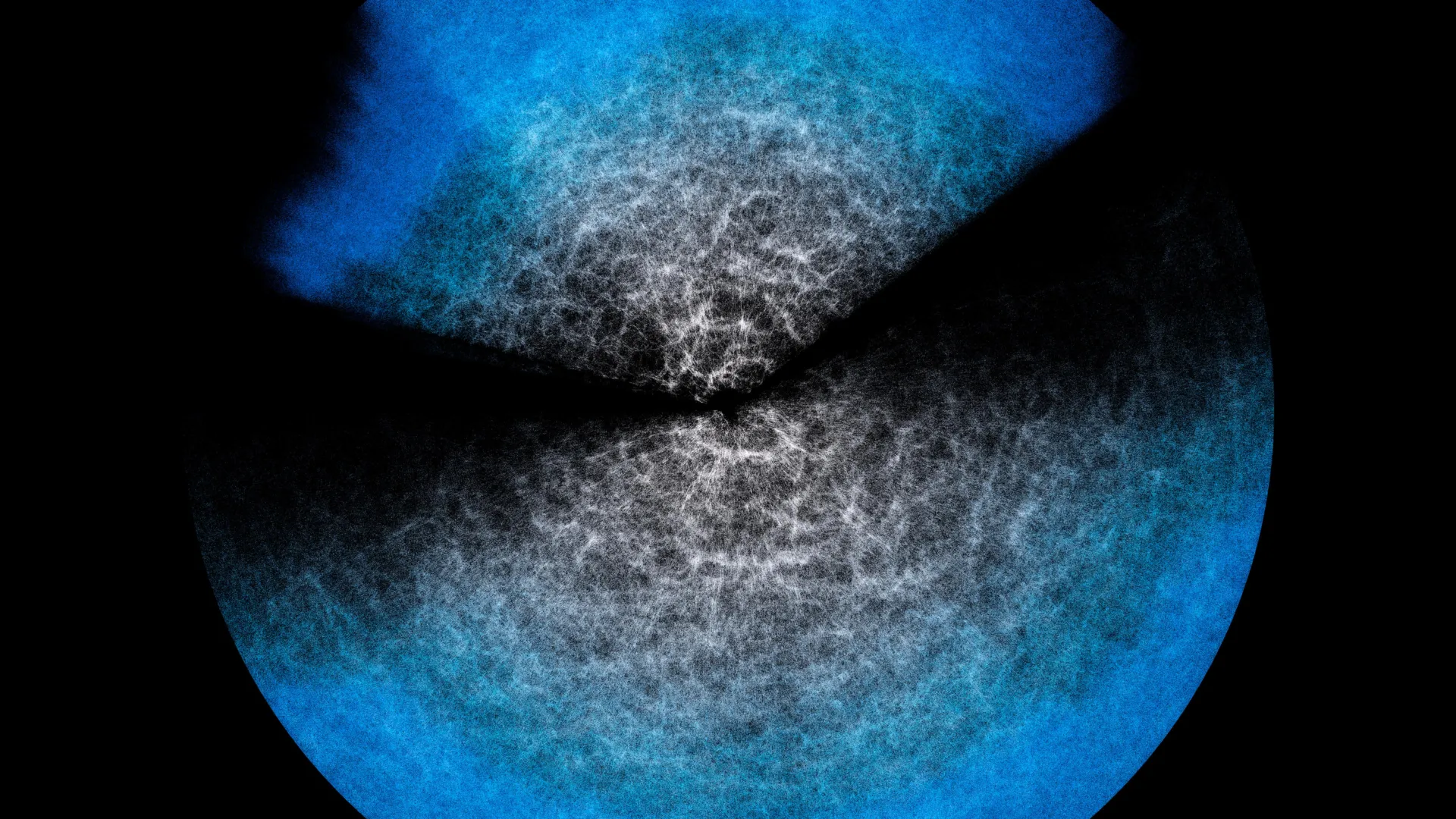
If you think a galaxy is big, compare it to the size of the Universe: it’s just a tiny dot which, together with a huge number of other tiny dots, forms clusters that aggregate into superclusters, which in turn weave into filaments threaded with voids — an immense 3D skeleton of our Universe.

If that gives you vertigo and you’re wondering how one can understand or even “see” something so vast, the answer is: it isn’t easy. Scientists combine the physics of the Universe with data from astronomical instruments and build theoretical models, such as EFTofLSS (Effective Field Theory of Large-Scale Structure). Fed with observations, these models describe the “cosmic web” statistically and allow its key parameters to be estimated.

Models like EFTofLSS, however, demand a lot of time and computing resources. Since the astronomical datasets at our disposal are growing exponentially, we need ways to lighten the analysis without losing precision. This is why emulators exist: they “imitate” how the models respond, but operate much faster.

Since this is a kind of “shortcut,” what’s the risk of losing accuracy? An international team including, among others, INAF (Italy), The University of Parma (Italy) and the University of Waterloo (Canada) has published in the Journal of Cosmology and Astroparticle Physics (JCAP) a study testing the emulator Effort.jl, which they designed. It shows that Effort.jl delivers essentially the same correctness as the model it imitates — sometimes even finer detail — while running in minutes on a standard laptop instead of a supercomputer.

“Imagine wanting to study the contents of a glass of water at the level of its microscopic components, the individual atoms, or even smaller: in theory you can. But if we wanted to describe in detail what happens when the water moves, the explosive growth of the required calculations makes it practically impossible,” explains Marco Bonici, a researcher at the University of Waterloo and first author of the study. “However, you can encode certain properties at the microscopic level and see their effect at the macroscopic level, namely the movement of the fluid in the glass. This is what an effective field theory does, that is, a model like EFTofLSS, where the water in my example is the Universe on very large scales and the microscopic components are small-scale physical processes.”

The theoretical model statistically explains the structure that gives rise to the data collected: the astronomical observations are fed to the code, which computes a “prediction.” But this requires time and substantial compute. Given today’s data volume — and what is expected from surveys just begun or coming soon (such as DESI, which has already released its first batch of data, and Euclid) — it’s not practical to do this exhaustively every time.

“This is why we now turn to emulators like ours, which can drastically cut time and resources,” Bonici continues. An emulator essentially mimics what the model does: its core is a neural network that learns to associate the input parameters with the model’s already-computed predictions. The network is trained on the model’s outputs and, after training, can generalize to combinations of parameters it hasn’t seen. The emulator doesn’t “understand” the physics itself: it knows the theoretical model’s responses very well and can anticipate what it would output for a new input. Effort.jl’s originality is that it further reduces the training phase by building into the algorithm knowledge we already have about how predictions change when parameters change: instead of making the network “re-learn” these, it uses them from the start. Effort.jl also uses gradients — i.e., “how much and in which direction” predictions change if you tweak a parameter by a tiny amount — another element that helps the emulator learn from far fewer examples, cutting compute needs and allowing it to run on smaller machines.

A tool like this needs extensive validation: if the emulator doesn’t know the physics, how sure are we that its shortcut yields correct answers (i.e., the same ones the model would give)? The newly published study answers exactly this, showing that Effort.jl’s accuracy — on both simulated and real data — is in close agreement with the model. “And in some cases, where with the model you have to trim part of the analysis to speed things up, with Effort.jl we were able to include those missing pieces as well,” Bonici concludes. Effort.jl thus emerges as a valuable ally for analyzing upcoming data releases from experiments like DESI and Euclid, which promise to greatly deepen our knowledge of the Universe on large scales.

The study “Effort.jl: a fast and differentiable emulator for the Effective Field Theory of the Large Scale Structure of the Universe” by Marco Bonici, Guido D’Amico, Julien Bel and Carmelita Carbone is available in the Journal of Cosmology and Astroparticle Physics (JCAP).

Share Button