
Caltech breakthrough makes quantum memory last 30 times longer

While conventional computers store information in the form of bits, fundamental pieces of logic that take a value of either 0 or 1, quantum computers are based on qubits. These can have a state that is simultaneously both 0 and 1. This odd property, a quirk of quantum physics known as superposition, lies at the heart of quantum computing’s promise to ultimately solve problems that are intractable for classical computers.

Many existing quantum computers are based on superconducting electronic systems in which electrons flow without resistance at extremely low temperatures. In these systems, the quantum mechanical nature of electrons flowing through carefully designed resonators creates superconducting qubits. These qubits are excellent at quickly performing the logical operations needed for computing. However, storing information — in this case quantum states, mathematical descriptors of particular quantum systems — is not their strong suit. Quantum engineers have been seeking a way to boost the storage times of quantum states by constructing so-called “quantum memories” for superconducting qubits.

Now a team of Caltech scientists has used a hybrid approach for quantum memories, effectively translating electrical information into sound so that quantum states from superconducting qubits can survive in storage for a period up to 30 times longer than in other techniques.

The new work, led by Caltech graduate students Alkim Bozkurt and Omid Golami, supervised by Mohammad Mirhosseini, assistant professor of electrical engineering and applied physics, appears in a paper published in the journal Nature Physics.

“Once you have a quantum state, you might not want to do anything with it immediately,” Mirhosseini says. “You need to have a way to come back to it when you do want to do a logical operation. For that, you need a quantum memory.”

Previously, Mirhosseini’s group showed that sound, specifically phonons, which are individual particles of vibration (in the way that photons are individual particles of light) could provide a convenient method for storing quantum information. The devices they tested in classical experiments seemed ideal for pairing with superconducting qubits because they worked at the same extremely high gigahertz frequencies (humans hear at hertz and kilohertz frequencies that are at least a million times slower). They also performed well at the low temperatures needed to preserve quantum states with superconducting qubits and had long lifetimes.

Now Mirhosseini and his colleagues have fabricated a superconducting qubit on a chip and connected it to a tiny device that scientists call a mechanical oscillator. Essentially a miniature tuning fork, the oscillator consists of flexible plates that are vibrated by sound waves at gigahertz frequencies. When an electric charge is placed on those plates, the plates can interact with electrical signals carrying quantum information. This allows information to be piped into the device for storage as a “memory” and be piped out, or “remembered,” later.

The researchers carefully measured how long it took for the oscillator to lose its valuable quantum content once information entered the device. “It turns out that these oscillators have a lifetime about 30 times longer than the best superconducting qubits out there,” Mirhosseini says.

This method of constructing a quantum memory offers several advantages over previous strategies. Acoustic waves travel much slower than electromagnetic waves, enabling much more compact devices. Moreover, mechanical vibrations, unlike electromagnetic waves, do not propagate in free space, which means that energy does not leak out of the system. This allows for extended storage times and mitigates undesirable energy exchange between nearby devices. These advantages point to the possibility that many such tuning forks could be included in a single chip, providing a potentially scalable way of making quantum memories.

Mirhosseini says this work has demonstrated the minimum amount of interaction between electromagnetic and acoustic waves needed to probe the value of this hybrid system for use as a memory element. “For this platform to be truly useful for quantum computing, you need to be able to put quantum data in the system and take it out much faster. And that means that we have to find ways of increasing the interaction rate by a factor of three to 10 beyond what our current system is capable of,” Mirhosseini says. Luckily, his group has ideas about how that can be done.

Additional authors of the paper, “A mechanical quantum memory for microwave photons” are Yue Yu, a former visiting undergraduate student in the Mirhosseini lab; and Hao Tian, an Institute for Quantum Information and Matter postdoctoral scholar research associate in electrical engineering at Caltech. The work was supported by funding from the Air Force Office of Scientific Research and the National Science Foundation. Bozkurt was supported by an Eddleman Graduate Fellowship.

Share Button

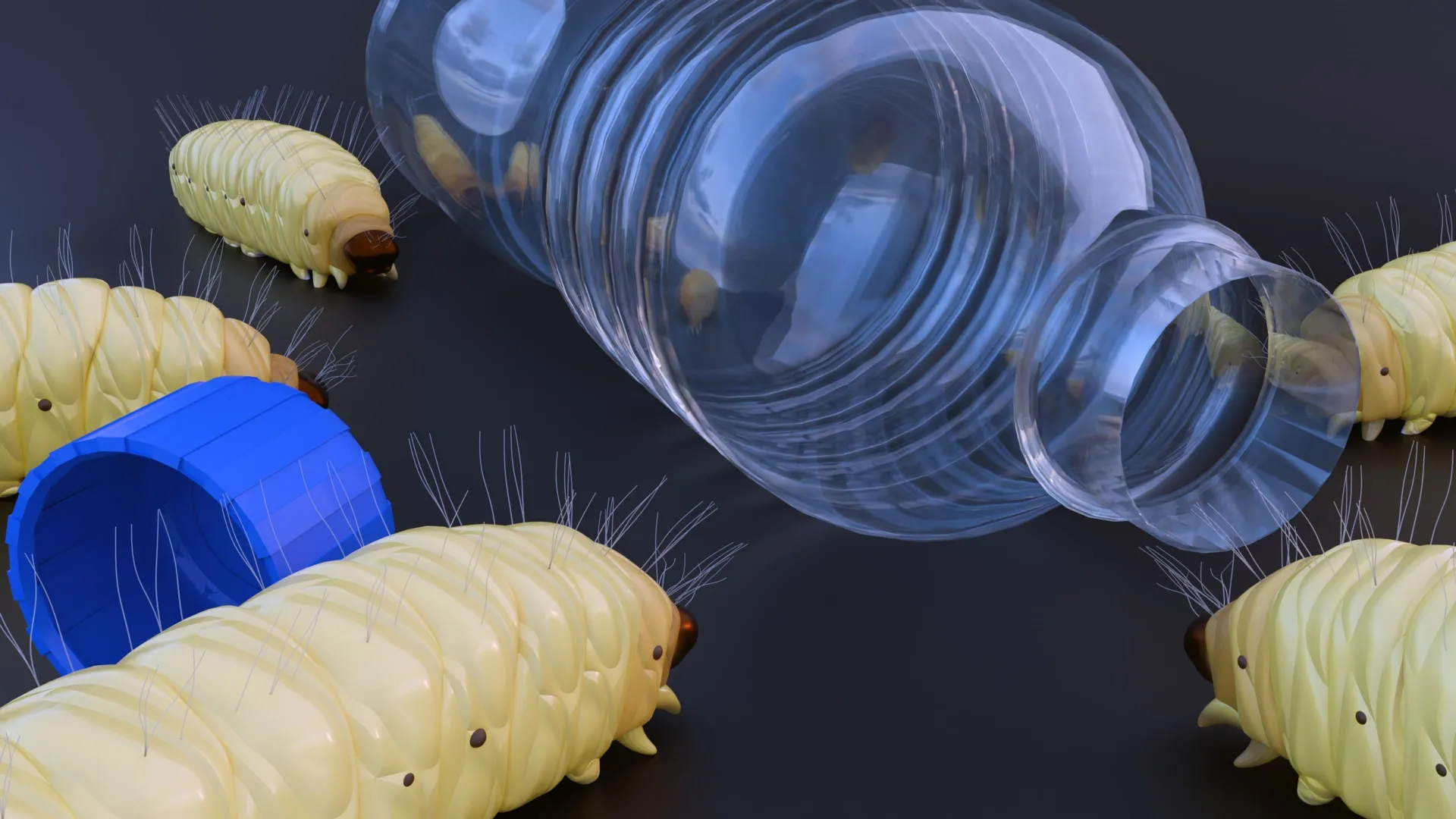
These “plastivore” caterpillars can devour a plastic bag in just 24 hours

Plastics play a fundamental role in modern life, but their resistance to biodegradation makes them very difficult to dispose of. New research reveals how “plastivore” caterpillars can metabolically degrade plastics in a matter of days, not decades, and store them internally as body fat – but at what cost?

In 2017, a groundbreaking study demonstrated that the caterpillars of the greater wax moth (Galleria mellonella), known as waxworms, can degrade polyethylene plastic. Polyethylene is the world’s most commonly manufactured plastic, with over 100 million tonnes of polyethylene produced globally each year. Polyethylene is chemically resilient, which makes it resistant to decomposition and can take decades or even hundreds of years to fully degrade.

While this plastic degradation process has been demonstrated by waxworms at a small scale, this ongoing research project is helping us to better understand the biological mechanisms at work, the impact of an all-plastic diet on the health of these organisms, and their viability as a sustainable solution to plastic pollution.

“Around 2,000 waxworms can break down an entire polyethylene bag in as little as 24 hours, although we believe that co-supplementation with feeding stimulants like sugars can reduce the number of worms considerably,” says Dr Bryan Cassone, a Professor of Insect Pest and Vector Biology in the Department of Biology at Brandon University, Canada. “However, understanding the biological mechanisms and consequences on fitness associated with plastic biodegradation is key to using waxworms for large-scale plastic remediation.”

Utilizing a suite of techniques spanning animal physiology, material science, molecular biology and genomics, Dr Cassone and his team have studied the interesting relationship between waxworms, their bacterial microbiome, and their potential for large-scale plastic biodegradation, as well as the possible impacts on waxworm health and survivability.

This research reveals that waxworms metabolically process the plastics down into lipids and store it as body fat. “This is similar to us eating steak – if we consume too much saturated and unsaturated fat, it becomes stored in adipose tissue as lipid reserves, rather than being used as energy,” says Dr Cassone.

While waxworms will readily consume polyethylene, this research also shows that this ultimately ends in a quick death. “They do not survive more than a few days on a plastic-only diet and they lose considerable mass,” says Dr Cassone. “However, we are optimistic that we can formulate a co-supplementation that not only restores their fitness to natural levels but exceeds it.”

Dr Cassone and his team have identified two ways in which waxworms could contribute solutions to the ongoing plastic pollution crisis. “Firstly, we could mass rear waxworms on a co-supplemented polyethylene diet as part of a circular economy,” he says. “Secondly, we could explore the re-engineering of the plastic biodegradation pathway outside the animal.”

As a bonus benefit, the mass production of waxworms would also generate a substantial surplus of insect biomass, which could represent an additional economic opportunity in aquaculture. “Our preliminary data suggests that they could become part of a very nutritious diet for commercial food fishes,” says Dr Cassone.

This research is being presented at the Society for Experimental Biology Annual Conference in Antwerp, Belgium on the 8th July 2025.

Share Button

Seven-week wait for some red flag cancer patients ‘frustrating’

The target set by the Department of Health for patients red flagged for breast cancer to be assessed is 14 days.

Share Button

NHS to lose out on new drugs, pharma firm warns

The claims from pharmaceutical giant Novartis comes amid a row over drug pricing deals.

Share Button

Patients struggle to get weight loss drug ahead of price rise

The drug’s US manufacturer has asked UK distributors to stop taking orders from pharmacies until next month’s price increase.

Share Button

More likely to be struck by lightning than get tetanus. So why the boosters?

The United States could safely drop tetanus and diphtheria booster shots for adults and save an estimated $1 billion a year, according to a new review led by researchers at Oregon Health & Science University.

The safety and savings depend on maintaining strong childhood vaccination rates, researchers emphasized.

“By maintaining high childhood vaccination coverage, we not only protect kids, but we may actually be able to reduce adult booster vaccinations,” said lead author Mark Slifka, Ph.D., professor of microbiology and immunology in the OHSU School of Medicine and the Oregon National Primate Research Center. “That would save $1 billion a year in the U.S. while maintaining the safety and protection of the general population.”

Slifka noted that dropping the 10-year schedule for adult boosters would more closely match guidelines recommended by the World Health Organization.

The review bolsters previous OHSU research in 2016 and in 2020 that concluded the combined vaccine produced at least 30 years of immunity, well beyond the current recommendation of every 10 years for adults from the U.S. Centers for Disease Control and Prevention. The vaccine is usually given as a combined tetanus, diphtheria and pertussis vaccine, known as DTaP.

In the U.S., childhood vaccinations are recommended six times, from infancy through age 12.

The new review suggests doing away with adult boosters altogether, as long as childhood vaccination rates remain high and the vaccine remains available on a case-by-case basis. For example, it may be necessary for someone injured in a workplace accident or car crash to receive a tetanus booster.

A natural experiment in the U.K. and France

Published recently in the journal Clinical Microbiology Reviews, the review highlights a comparison between two industrialized countries just 21 miles across the English Channel: France and the United Kingdom. Both countries have excellent childhood vaccination coverage, similar to the U.S.

“This represents sort of an experiment of nature,” Slifka said. “We have one country with over 60 million people that for decades has continued to vaccinate adults throughout their lifetime and another nearby country that also has over 60 million people, but over the past 50 years, they have never recommended adult booster vaccinations.

“The question we asked is, ‘What happens if we don’t vaccinate the adults? Are there more cases of disease or are these people protected after completing their childhood vaccination series?'”

Similar to the United States, France has a recommended booster vaccination schedule for adults. In contrast, except during pregnancy or for wound management, the United Kingdom hasn’t recommended boosters for tetanus and diphtheria beyond age 14 since the 1950s.

Yet, despite decades of adult booster vaccination, the review found that France had virtually no advantage over the U.K. in the rates of tetanus or diphtheria. In fact, the review found that the UK had a slightly lower rate overall.

In addition, “herd immunity” held strong even in 2022 when the U.K. reported an outbreak of 73 imported diphtheria cases among immigrants seeking asylum. This spike in cases was almost equal to the total number of diphtheria cases reported in the entire country over the previous 20 years combined.

“Remarkably, despite this proportionally large influx of imported diphtheria cases, there was no evidence of transmission reported among other asylum seekers who arrived by other routes or among staff or health care workers,” the authors write.

The U.K. Health Security Agency concluded that the country’s current childhood-focused vaccination program is sufficient for preventing the spread of diphtheria and that the risk to the general UK population remains low.

Strong rates of childhood vaccination are critical

The findings highlight the remarkable durability of protection following childhood vaccination against a pair of diseases that were once all but a death sentence.

In 1948, the U.S. mortality rate for tetanus was 91%. Before the introduction of antibiotics and vaccines, the mortality rate for diphtheria was roughly 50%. To this day, diphtheria kills roughly one out of 10 people who aren’t vaccinated against it.

Today, the public health threat is diminished thanks to childhood vaccinations as well as booster shots recommended in pregnancy.

“Thanks to childhood vaccinations, these diseases are incredibly rare,” Slifka said. “In fact, you’re 10 to 1,000 times more likely to be struck by lightning than to be diagnosed with tetanus and diphtheria in the United States.”

In addition to Slifka, co-authors include Archana Thomas and Lina Gao, Ph.D., of OHSU; Ian J. Amanna, Ph.D., of Najít Technologies, and Walter A. Orenstein, M.D., of the Emory Vaccine Center at Emory University.

Research reported in this publication was supported by the Office of the Director of the National Institutes of Health, award number P51OD011092. The content is solely the responsibility of the authors and does not necessarily represent the official views of the NIH.

Share Button

Scientists finally pinpoint Jupiter’s birth using “molten rock raindrops”

Four and a half billion years ago Jupiter rapidly grew to its massive size. Its powerful gravitational pull disrupted the orbits of small rocky and icy bodies similar to modern asteroids and comets, called planetesimals. This caused them to smash into each other at such high speeds that the rocks and dust they contained melted on impact and created floating molten rock droplets, or chondrules, that we find preserved in meteorites today.

Now, researchers at Nagoya University in Japan and the Italian National Institute for Astrophysics (INAF) have for the first time determined how these droplets formed and accurately dated the formation of Jupiter based on their findings. Their study, published in Scientific Reports, shows how the characteristics of chondrules, particularly their sizes and the rate at which they cooled in space, are determined by the water contained in the impacting planetesimals. This explains what we observe in meteorite samples and proves that chondrule formation was a result of planet formation.

Time capsules from 4.6 billion years ago

Chondrules, small spheres approximately 0.1-2 millimeters wide, were incorporated into asteroids as the solar system formed. Billions of years later, pieces of these asteroids would break off and fall to Earth as meteorites. How chondrules came to have their round shape has puzzled scientists for decades.

“When planetesimals collided with each other, water instantly vaporized into expanding steam. This acted like tiny explosions and broke apart the molten silicate rock into the tiny droplets we see in meteorites today,” co-lead author Professor Sin-iti Sirono from Nagoya University’s Graduate School of Earth and Environmental Sciences explained.

“Previous formation theories couldn’t explain chondrule characteristics without requiring very specific conditions, while this model requires conditions that naturally occurred in the early solar system when Jupiter was born.”

The researchers developed computer simulations of Jupiter’s growth and tracked how its gravity caused high-speed collisions between rocky and water-rich planetesimals in the early solar system.

“We compared the characteristics and abundance of simulated chondrules to meteorite data and found that the model spontaneously generated realistic chondrules. The model also shows that chondrule production coincides with Jupiter’s intense accumulation of nebular gas to reach its massive size. As meteorite data tell us that peak chondrule formation took place 1.8 million years after the solar system began, this is also the time at which Jupiter was born,” Dr. Diego Turrini, co-lead author and senior researcher at the Italian National Institute for Astrophysics (INAF) said.

A new way to date when planets form

This study provides a clearer picture of how our solar system formed. However, the production of chondrules started by Jupiter’s formation is too brief to explain why we find chondrules of many different ages in meteorites. The most likely explanation is that other giant planets like Saturn also triggered chondrule formation when they were born.

By studying chondrules of different ages, scientists can trace the birth order of the planets and understand how our solar system developed over time. The research also suggests that these violent planet formation processes may occur around other stars and offers insights into how other planetary systems developed.

The study, “Chondrule formation by collisions of planetesimals containing volatiles triggered by Jupiter’s formation,” was published in the journal Scientific Reports, on August 25, 2025, at DOI: 10.1038/s41598-025-12643-x.

Funding information:

This work was supported by JSPS KAKENHI Grant Number 25K07383, by the Italian Space Agency through ASI-INAF contract 2016-23-H.0 and 2021-5-HH.0 and by the European Research Council via the Horizon 2020 Framework Programme ERC Synergy “ECOGAL” Project GA-855130.

Share Button

Brain image doctor banned for assault and racism

Dr Sayed Talibi is told his conduct was “fundamentally incompatible” with being a doctor.

Share Button

The surprising reason x-rays can push arthritis patients toward surgery

Routine x-rays aren’t recommended to diagnose the condition. Instead, GPs can make a diagnosis based on symptoms and medical history.

Yet nearly half of new patients with knee osteoarthritis who visit a GP in Australia are referred for imaging. Osteoarthritis imaging costs the health system A$104.7 million each year.

Our new study shows using x-rays to diagnose knee osteoarthritis can affect how a person thinks about their knee pain – and can prompt them to consider potentially unnecessary knee replacement surgery.

What happens when you get osteoarthritis?

Osteoarthritis arises from joint changes and the joint working extra hard to repair itself. It affects the entire joint, including the bones, cartilage, ligaments and muscles.

It is most common in older adults, people with a high body weight and those with a history of knee injury.

Many people with knee osteoarthritis experience persistent pain and have difficulties with everyday activities such as walking and climbing stairs.

How is it treated?

In 2021–22, more than 53,000 Australians had knee replacement surgery for osteoarthritis.

Hospital services for osteoarthritis, primarily driven by joint replacement surgery, cost $3.7 billion in 2020–21.

While joint replacement surgery is often viewed as inevitable for osteoarthritis, it should only be considered for those with severe symptoms who have already tried appropriate non-surgical treatments. Surgery carries the risk of serious adverse events, such as blood clot or infection, and not everyone makes a full recovery.

Most people with knee osteoarthritis can manage it effectively with:

  • education and self-management
  • exercise and physical activity
  • weight management (if necessary)
  • medicines for pain relief (such as paracetamol and non-steroidal anti-inflammatory drugs).

Debunking a common misconception

A common misconception is that osteoarthritis is caused by “wear and tear”.

However, research shows the extent of structural changes seen in a joint on an x-ray does not reflect the level of pain or disability a person experiences, nor does it predict how symptoms will change.

Some people with minimal joint changes have very bad symptoms, while others with more joint changes have only mild symptoms. This is why routine x-rays aren’t recommended for diagnosing knee osteoarthritis or guiding treatment decisions.

Instead, guidelines recommend a “clinical diagnosis” based on a person’s age (being 45 years or over) and symptoms: experiencing joint pain with activity and, in the morning, having no joint-stiffness or stiffness that lasts less than 30 minutes.

Despite this, many health professionals in Australia continue to use x-rays to diagnose knee osteoarthritis. And many people with osteoarthritis still expect or want them.

What did our study investigate?

Our study aimed to find out if using x-rays to diagnose knee osteoarthritis affects a person’s beliefs about osteoarthritis management, compared to a getting a clinical diagnosis without x-rays.

We recruited 617 people from across Australia and randomly assigned them to watch one of three videos. Each video showed a hypothetical consultation with a general practitioner about knee pain.

One group received a clinical diagnosis of knee osteoarthritis based on age and symptoms, without being sent for an x-ray.

The other two groups had x-rays to determine their diagnosis (the doctor showed one group their x-ray images and not the other).

After watching their assigned video, participants completed a survey about their beliefs about osteoarthritis management.

What did we find?

People who received an x-ray-based diagnosis and were shown their x-ray images had a 36% higher perceived need for knee replacement surgery than those who received a clinical diagnosis (without x-ray).

They also believed exercise and physical activity could be more harmful to their joint, were more worried about their condition worsening, and were more fearful of movement.

Interestingly, people were slightly more satisfied with an x-ray-based diagnosis than a clinical diagnosis.

This may reflect the common misconception that osteoarthritis is caused by “wear and tear” and an assumption that the “damage” inside the joint needs to be seen to guide treatment.

What does this mean for people with osteoarthritis?

Our findings show why it’s important to avoid unnecessary x-rays when diagnosing knee osteoarthritis.

While changing clinical practice can be challenging, reducing unnecessary x-rays could help ease patient anxiety, prevent unnecessary concern about joint damage, and reduce demand for costly and potentially unnecessary joint replacement surgery.

It could also help reduce exposure to medical radiation and lower health-care costs.

Previous research in osteoarthritis, as well as back and shoulder pain, similarly shows that when health professionals focus on joint “wear and tear” it can make patients more anxious about their condition and concerned about damaging their joints.

If you have knee osteoarthritis, know that routine x-rays aren’t needed for diagnosis or to determine the best treatment for you. Getting an x-ray can make you more concerned and more open to surgery. But there are a range of non-surgical options that could reduce pain, improve mobility and are less invasive.

Written by:

  • Belinda Lawford
    Senior Research Fellow in Physiotherapy, The University of Melbourne
  • Kim Bennell
    Professor of Physiotherapy, The University of Melbourne
  • Rana Hinman
    Professor in Physiotherapy, The University of Melbourne
  • Travis Haber
    Postdoctoral Research Fellow in Physiotherapy, The University of Melbourne 

The Conversation

Share Button

How did a planet this big form around a star this small?

The host star, TOI-6894, is a red dwarf with only 20% the mass of the Sun, typical of the most common stars in our galaxy. Until now, such low-mass stars were not thought capable of forming or retaining giant planets. But as published recently in Nature Astronomy, the unmistakable signature of a giant planet — TOI-6894b — has been detected in orbit around this tiny star.

This exceptional system was first identified in data from NASA’s Transiting Exoplanet Survey Satellite (TESS), as part of a large search for giant planets around small stars, led by Dr. Edward Bryant from UCL’s Mullard Space Science Laboratory.

The planetary nature of the signal was then confirmed by an extensive ground-based observation campaign, involving several telescopes — including those of the SPECULOOS and TRAPPIST projects, both led by the University of Liège.

Dr. Khalid Barkaoui, researcher on the SPECULOOS and TRAPPIST teams, oversaw these crucial follow-up observations. He explained: “The transit signal was unambiguous in our data. Our analysis ruled out all alternative explanations — the only viable scenario was that this tiny star hosts a Saturn-sized planet with an orbital period of just over three days. Additional observations confirmed that its mass is about half that of Saturn. This is clearly a giant planet.”

TOI-6894 is now the smallest star known to host a transiting giant planet, with a radius 40% smaller than that of any previous such host.

Prof. Jamila Chouquar, who was an astronomer at ULiege at the time of the discovery, added: “We previously believed that stars this small couldn’t form or hold on to giant planets. But stars like TOI-6894 are the most common type in the Milky Way — so our discovery suggests there may be far more giant planets out there than we thought.”

A Challenge to Planet Formation Models

According to current planet formation models, giant planets are rare around small stars. This is because their protoplanetary disks — the gas and dust reservoirs from which planets form — are thought to lack the material needed to build massive cores and accrete thick gas envelopes.

Dr. Mathilde Timmermans, member of the SPECULOOS team and ULiege astronomer at the time of the discovery, noted: “The existence of TOI-6894b is hard to reconcile with existing models. None can fully explain how it formed. This shows that our understanding is incomplete, and underscores the need to find more such planets. That’s exactly the goal of MANGO, a SPECULOOS sub-program led by myself and Dr. Georgina Dransfield at the University of Birmingham.”

Prof. Michaël Gillon,Fund for Scientific Research — FNRS Research Director at ULiege and head of the SPECULOOS and TRAPPIST programs, concluded: “This giant planet orbiting a tiny star reveals that planetary diversity in the galaxy is even greater than we imagined. Most of the targets observed by SPECULOOS and TRAPPIST are similar stars, or even smaller — so we’re well positioned to uncover more cosmic outliers in the years ahead.”

Share Button