Optometry NI chair says rules stopping children from paying for special short-sightedness treatment using NHS vouchers should change.


Optometry NI chair says rules stopping children from paying for special short-sightedness treatment using NHS vouchers should change.
Warnings for some ’emerging’ food allergens should be added to food packaging, researchers suggest.

Increased demand for electric vehicles, portable electronics, and renewable energy storage has resulted in lithium becoming a truly critical mineral. As the world races toward a clean energy future, the recycling of lithium batteries has become crucial.
New research from Edith Cowan University (ECU) has highlighted that tapping into used batteries as a secondary source of lithium not only helps reduce environmental impact but also secures access to this valuable resource, supporting a circular economy and ensuring long-term sustainability in the energy sector.
PhD student Ms Sadia Afrin has pointed out that the global lithium-ion battery market size is projected to expand at a compound annual growth rate of 13 per cent, reaching $87.5 billion by 2027, with lithium consumption forecast to increase from 390 kilotons in 2020 to approximately 1,600 kilotons by 2026.
However, only around 20 per cent of a lithium-ion battery’s capacity is used before the battery is no longer fit for use in electric vehicles, meaning those batteries ending up in storage or on the landfill retain nearly 80 per cent of their lithium capacity.
The Australian Department of Industry, Science and Resources has previously estimated that by 2035, Australia could be generating 137,000 t of lithium battery waste annually.
For the end-of-life batteries, the obvious answer is recycling, said first author Mr Asad Ali quoting figures from the government which estimates that the recycling industry could be worth between $603 million and $3.1 billion annually in just over a decade.
“By recycling these batteries, you can access not only the remaining lithium – which already purified to near 99 per cent – but you can also retrieve the nickel and the cobalt from these batteries.”
While the lithium retrieved through the recycling process is unlikely to impact the lithium extraction or downstream sectors, Mr Ali noted that the recycling process offered significant environmental benefits when compared with the mining industry.
“Recycling processes can significantly reduce the extensive use of land, soil contamination, ecological footprint, water footprint, carbon footprint and harmful chemical release into the environment, thereby lowering greenhouse gas emissions and minimising waste.
“Mining emits up to 37% tons of CO2 per ton of lithium. Recycling processes produce up to 61 per cent less carbon emissions compared with mining and uses 83 per cent less energy and 79 per cent less water as compared to mining. Hydrometallurgical recycling can generate profit up to $27.70 per kilogram of lithium recovered. And again, the lithium produced through the recycling process is already purified to 99 per cent, which means all of the energy, water and emissions are saved from the downstream process.”
ECU lecturer and corresponding author Dr Muhammad Azhar said that while Australia holds one of the largest hard rock lithium reserves in the world, the recovery of lithium from end-of-life batteries could provide socio-economic benefits and fulfils environmental sustainability.
“The mining industry actually offers another source of retired and potentially end-of-life batteries, as the electrification of the mining industry gains momentum. ECU is exploring the second life of these retired lithium batteries,” he added.
While the benefits of lithium-ion battery recycling seem obvious, Ms Afrin noted that there were still some challenges to be addressed.
“The rate of innovation significantly outstrips policy development, and the chemical make-up of the batteries also continuously evolve, which makes the recycling of these batteries more complicated,” she said.
“There is a definite need for investment into the right infrastructure in order to create this circular economy, but there are several Australian companies that are looking at the best ways to approach this.”
Diabetes patients should have better and more equal access to newer medicines, says official healthcare body.
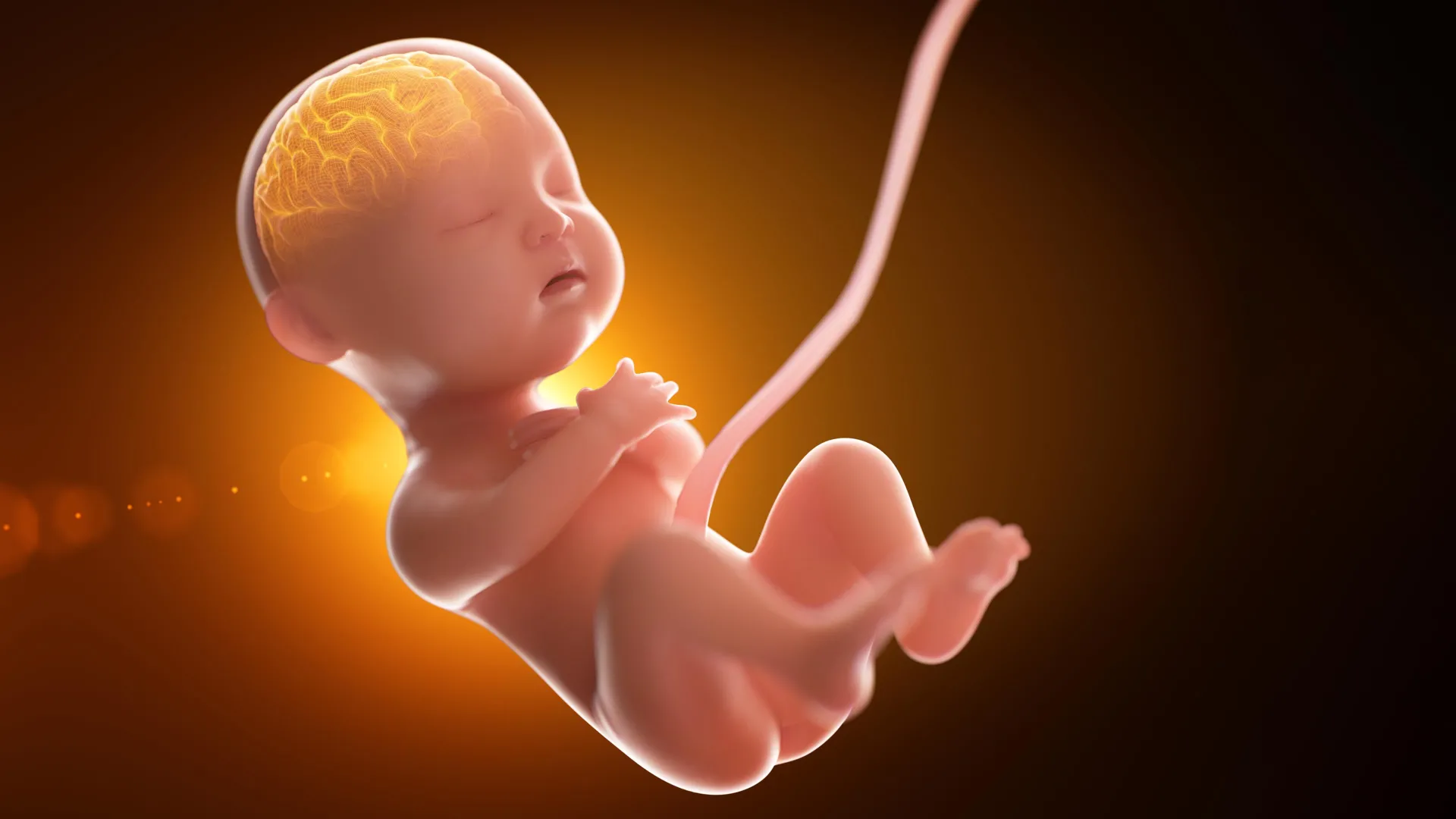
New research from Michigan State University finds that microbes play an important role in shaping early brain development, specifically in a key brain region that controls stress, social behavior, and vital body functions.
The study, published in Hormones and Behavior, used a mouse model to highlight how natural microbial exposure not only impacts brain structure immediately after birth but may even begin influencing development while still in the womb. A mouse model was chosen because mice share significant biological and behavioral similarities with humans and there are no other alternatives to study the role of microbes on brain development.
This work is of significance because modern obstetric practices, like peripartum antibiotic use and Cesarean delivery, disrupt maternal microbes. In the United States alone, 40% of women receive antibiotics around childbirth and one-third of all births occur via Cesarean section.
“At birth, a newborn body is colonized by microbes as it travels through the birth canal. Birth also coincides with important developmental events that shape the brain. We wanted to further explore how the arrival of these microbes may affect brain development,” said Alexandra Castillo Ruiz, lead author of the study and assistant professor in the MSU Department of Psychology.
The research team focused on a brain region called the paraventricular nucleus of the hypothalamus (PVN), which plays a central role in regulating stress, blood pressure, water balance, and even social behavior. Their previous work had shown that mice raised without microbes, or germ-free mice, had more dying neurons in the PVN during early development. The new study set out to determine whether this increased cell death translated to changes in neuron number in the long run, and if any effects could be caused by the arrival of microbes at birth or if they began in the womb via signals from maternal microbes.
To find out, the researchers used a cross-fostering approach. Germ-free newborn mice were placed with mothers that had microbes and compared them to control groups. When the brains of these mice were examined just three days after birth, results were striking: All mice gestated by germ-free mothers had fewer neurons in the PVN, regardless of whether they received microbes after birth. They also found that germ-free adult mice had fewer neurons in the PVN.
“Our study shows that microbes play an important role in sculpting a brain region that is paramount for body functions and social behavior. In addition, our study indicates that microbial effects start in the womb via signaling from maternal microbes,” said Dr. Castillo-Ruiz.
Rather than shunning our microbes, we should recognize them as partners in early life development,” said Dr. Castillo-Ruiz. “They’re helping build our brains from the very beginning.”
The illustrated walking maps guide people along four car-free routes in and around Tewkesbury.

For decades, astrochemists have been looking for sulfur atoms in space and finding surprisingly little of the element that is a key ingredient to life. A new study could point to where it has been hiding.
An international team of researchers including Ryan Fortenberry, an astrochemist at the University of Mississippi, and Ralf Kaiser, professor of chemistry at the University of Hawaii at Mānoa and Samer Gozem, computational chemist at Georgia State University, published their research in the journal Nature Communications.
“Hydrogen sulfide is everywhere: it’s a product of coal-fired power plants, it has an effect on acid rain, it changes the pH levels of oceans and it comes out of volcanoes,” Fortenberry said. “If we gain a better understanding of what the chemistry of sulfur can do, the technological commercialization that can come from that can only be realized with a foundation of fundamental knowledge.”
Sulfur is the 10th most abundant element in the universe and is considered a vital chemical element for planets, stars and life. The lack of molecular sulfur in space has been a mystery for years.
“The observed amount of sulfur in dense molecular clouds is less – compared to predicted gas-phase abundances- by three orders of magnitude,” Kaiser said.
The answer might lie in interstellar ice.
In cold regions of space, sulfur can form two distinct, stable configurations: octasulfur crowns, which are a group of eight sulfur atoms configured in ring-like crowns, and polysulfanes, chains of sulfur atoms that are bonded by hydrogen. These molecules can form on icy dust grains, locking sulfur into solid forms.
“If you use, for instance, the James Webb Space Telescope, you get a specific signature at specific wavelengths for oxygen and carbon and nitrogen and so forth,” Fortenberry said. “But when you do that for sulfur, it’s out of whack, and we don’t know why there isn’t enough molecular sulfur.
“What this work is showing is that the most common forms of sulfur that we already know about are probably where the sulfur is hiding.”
Kaiser and Fortenberry’s research showed that these sulfur-rich molecules may be abundant in icy regions of interstellar space, giving astronomers a potential road map to solving the sulfur puzzle.
“Laboratory simulations of interstellar conditions such as this study discover possible inventories of sulfur-containing molecules that can be formed on interstellar ices,” Kaiser said. “Astronomers can then utilize the results and look for these polysulfane molecules in the interstellar medium via radio telescopes once sublimed into the gas-phase in star forming regions.”
The reason sulfur has been so difficult to find is that the bonds it forms are always changing, going from crowns to chains and a variety of other formulations.
“It never maintains the same shape,” Fortenberry said. “It’s kind of like a virus – as it moves, it changes.”
The researchers’ work identifies possible stable configurations that astronomers can search for in the universe.
“The thing that I love about astrochemistry is that it forces you to ask hard questions, then forces you to come up with creative solutions,” Fortenberry said. “And those hard questions and creative solutions can have significant, unintended positive consequences.”
Charlotte Chapman-Hart tells of her experience of a lack of coordinated and informed care.
A chef with kidney failure calls for Pip assessments to change after he was refused the benefit twice.
Akram Mohammed died of various infections but his parents previously blamed their living conditions.
