Selfies, sugar, and death: How tourists are endangering elephants

A study led by a scientist at the University of California San Diego offers new warnings on the dangers of human interactions with wildlife.

Assistant Professor Shermin de Silva of the School of Biological Sciences studies endangered Asian elephants and has reported on their shrinking habitats, a downturn that has resulted in territorial conflicts between people and elephants.

Along with her study coauthors, de Silva now provides fresh evidence in the journal Ecological Solutions and Evidence on the serious consequences of humans supplying food to wild animals. The report indicates that such provisioning can lead wildlife to become habituated to people, causing the animals to become bolder and more prone to causing problems. Even for those who live in areas without native elephant populations, the new study provides cautionary information about interactions with any wildlife species living among us.

Wild elephants are a prime attraction in Asia, with Sri Lanka and India featuring some of the world’s last abundant populations of Asian elephants.

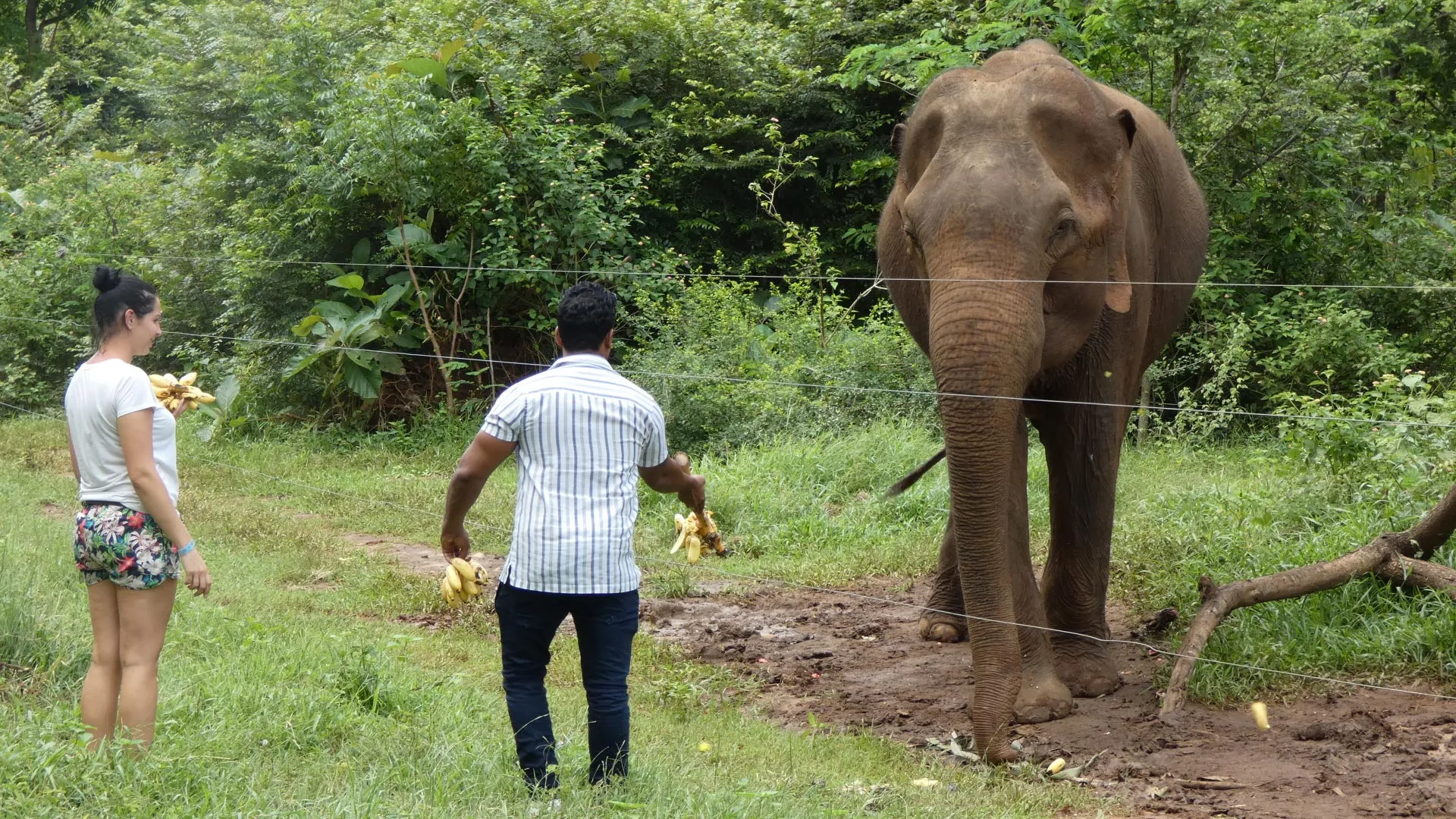
In Sri Lanka, de Silva studied 18 years of elephant-tourist interactions at Udawalawe National Park. She found that the elephants congregating near tourists at the park’s southern boundary have developed “begging” behavior and have become habituated to sugary foods, sometimes breaking through fences to continue being fed. As a result of elephants being drawn to the fence, several people have been killed or injured, and at least three elephants have been killed, while others have ingested plastic food bags and other contaminants. Such close human-wildlife encounters, including tourists feeding animals from sightseeing vehicles, also increases the risk of disease transmission to animals.

In India’s Sigur region, study coauthors Priya Davidar and Jean-Philippe Puyravaud of the Sigur Nature Trust observed feeding interactions with 11 male Asian elephants, four of which died from suspected human causes. One elephant was successfully rehabilitated and returned to natural foraging behavior.

“Many people, especially foreign tourists, think Asian elephants are tame and docile, like domestic pets,” said de Silva, a faculty member in the Department of Ecology, Behavior and Evolution and founder of the non-profit conservation organization Trunks & Leaves. “They don’t realize these are formidable wild animals and try to get too close in order to take photographs or selfies, which can end badly for both parties.”

Of the 800 to 1,200 elephants estimated living in Udawalawe National Park, the study found that 66 male elephants, or nine to 15% of the local male population of Asian elephants, were observed begging for food. Some elephants, including a popular male named Rambo, became local celebrities as they solicited food from tourists over several years.

“Food-conditioned animals can become dangerous, resulting in the injury and death of wildlife, people or both,” the researchers note in their paper. “These negative impacts counteract potential benefits.”

Since wild elephant feeding cannot be adequately regulated as an ongoing activity, the authors of the study recommend that feeding bans should be strictly enforced.

The researchers recognize that tourists are for the most part acting with good intentions, like people in many areas around the world who feed or leave food for wild animals in their regions. They can act from a motivation that they are helping friends in nature and take gratification from such interactions. “But this encourages wild animals to seek food from people, attracting them to areas that can put themselves or people at risk,” said de Silva. “It can be a conduit for disease transfer between species. Such feeding can also cause animals to lose their ability to forage for themselves if the behavior becomes prevalent, especially with young animals.”

Such interactions, de Silva says, can change animals’ movement patterns and possibly force them to lose knowledge of natural food sources if they become too dependent on handouts.

With rare exceptions, people should avoid feeding wild animals, de Silva urges, and encourages people to engage in responsible tourism.

Share Button

Doctors strikes: BMA and Streeting talks ‘constructive’

Resident doctors will walk out for five consecutive days from 25 July over a dispute about pay.

Share Button

‘Unfair’ NHS wait lists revealed in official report

Data for the NHS in England shows the waiting list for gynaecology is one of the largest.

Share Button

These dogs are trained to sniff out an invasive insect—and they’re shockingly good at it

Imagine if your dog’s favorite game — sniffing out treats or toys — could help protect America’s vineyards, orchards, and forests from a devastating invader.

It turns out, it just might.

A new study led by Virginia Tech found that volunteer dog-handler teams — made up of everyday people and their pets — can effectively detect the elusive egg masses of the spotted lanternfly, an invasive insect that’s damaging farms and forests across the eastern and central United States.

It’s the first study to show that citizen dog-handler teams can achieve detection success rates comparable to professional conservation detection dogs.

“These teams demonstrated that citizen scientists and their dogs can play a meaningful role in protecting agriculture and the environment from invasive species,” said Sally Dickinson, the study’s lead author, who recently earned her Ph.D. from Virginia Tech’s College of Agriculture and Life Sciences. “With proper training, dog owners can turn their pets into powerful partners for conservation.”

An invasive pest, a hidden target

The spotted lanternfly, native to Asia, was first detected in Pennsylvania in 2014. Since then, it’s spread rapidly to 18 states, laying its eggs on trees, stone, lumber, and even cars and trailers, where it can hitch a ride to a new home.

Catching the bug early is key — but finding its egg masses is no easy task.

“They often resemble mud smears or lichens and are tucked into bark crevices, cracks, or hidden undersides,” said Mizuho Nita, a plant pathologist at Virginia Tech’s Alson H. Smith Jr. Agricultural Research and Extension Center, who co-authored the study. “Finding them is like searching for a needle in a haystack.”

That’s where the dogs come in.

With a sense of smell that’s tens of thousands of times more acute than humans’, dogs can be trained to sniff out spotted lanternfly egg masses without disturbing the environment. Previous research has shown that professional conservation detection dogs can do this with high accuracy. But professional dogs are expensive, and there aren’t nearly enough of them to cover the growing threat.

So the researchers asked: “What if we tapped into the tens of thousands of dog owners already doing scent detection as a hobby around the country?” Known as recreational scent work, this sport allows dogs to find hidden scents for fun in homes, parks, and training classes.

Dogs of all shapes, sizes, and snouts

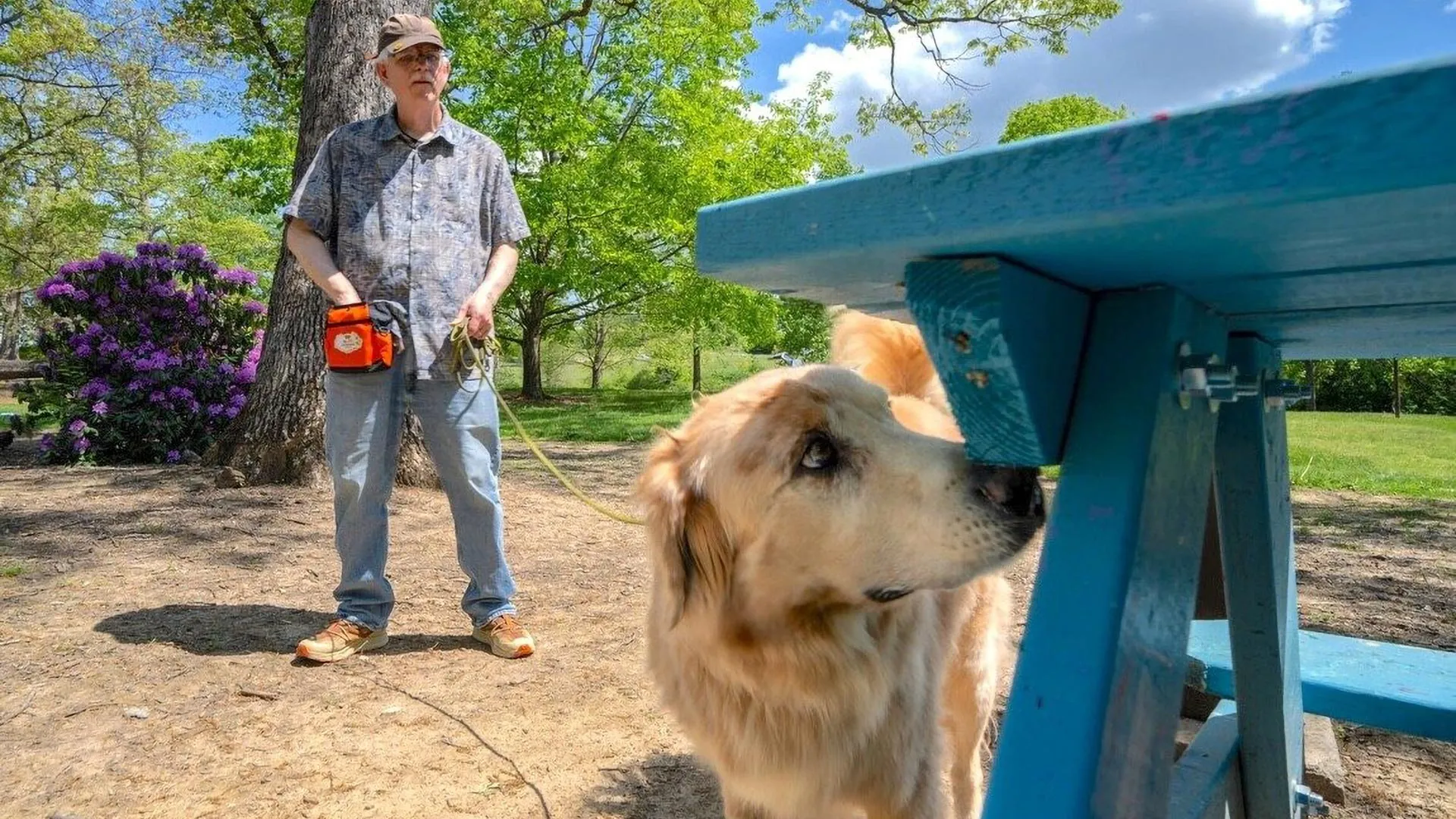
Over 1,000 dog owners expressed interest in the study. More than 40 percent had prior experience in sport scent detection or related activities. Ultimately, 182 teams from across the U.S. were selected and given devitalized – or non-hatching – egg masses as training aids. Participants trained their dogs at home or in small groups, with oversight from a designated local trainer.

After several months of training, the dogs were put to the test in two environments – one indoor and one outdoor. In the controlled indoor environment, dogs had to complete an odor recognition test, identifying the box with the spotted lanternfly egg mass from among multiple boxes with other items and scents. Those that passed the odor recognition test advanced to a field test, where they had to find the scent in an outdoor environment with competing smells.

The results? Dogs correctly identified the egg masses 82 percent of the time in the controlled tests. In real-world field trials, accuracy dropped to 61 percent — still better than many human searches. Of the dogs that passed both tests, 92 percent were successful in finding live egg masses with minimal extra training.

Study participant Bill Wellborn of Roanoke said his 7-year-old Tibetan terrier, Pepe, enjoyed the challenge. Over the course of six months, they trained with devitalized spotted lanternfly egg masses two or three times a week for 15 to 30 minutes.

“Anytime you can stimulate your dog, it’s good for them,” Wellborn said. “Pepe obviously enjoys it. And it’s a way we can take dog skills and training to help our community.”

Katie Thomas of Radford and her pit bull mix, Finch, also volunteered for the study, hoping to put their seven years of recreational scent work to real-world use.

“Being able to do the same thing for the greater good — for citizen science — adds another layer we didn’t have before,” she said.

Agriculture’s new best friend?

Erica Feuerbacher, an animal behaviorist and Dickinson’s graduate advisor and co-author, said the findings show the untapped power of community science.

“There are thousands of people out there doing scent work with their dogs just for fun,” said Feuerbacher, associate professor in the School of Animal Sciences. “What Sally’s study shows is that this can be more than a hobby — these citizen-scientists and their dogs can be a valuable resource for fighting the spread of an invasive pest.”

Sniffing out the spotted lanternfly may be just the beginning. A separate study co-authored by Nita, Dickinson, and Feuerbacher with researchers from Texas Tech University found that trained pet dogs could also detect powdery mildew, a major fungal disease of grapes and vineyards, with over 90 percent accuracy.

Together, these studies point to a growing role for dogs — and their owners — in safeguarding agriculture.

For Dickinson, a longtime firefighter and career search-and-rescue canine handler, the project reflects a personal mission: giving more dogs and their humans a chance to do meaningful work.

“This research is about more than detection,” she said. “It’s about empowering people to work alongside their dogs to protect the places and communities they care about.”

About the research

The project was supported by the U.S. Department of Agriculture’s National Institute of Food and Agriculture through the Agriculture and Food Research Initiative’s Tactical Sciences for Agricultural Biosecurity program.

The research team included Dickinson, Feuerbacher, and Nita from Virginia Tech and Edgar Aviles-Rosa and Nathan Hall from Texas Tech University.

Share Button

This 10-minute ozone hack keeps mangoes fresh for 28 days

In good news for mango lovers, new research from Edith Cowan University (ECU) has identified a way to extend the storage life of the popular tropical fruit.

The study, led by ECU School of Science Lecturer Dr Mekhala Vithana, found that dipping mangoes in ozonated water (aqueous ozonation) for 10 minutes before cold storage extended the cold storage life by up to two weeks, with significantly lowered occurrence of chilling injury.

“Increasing storage life of mangoes is incredibly important for both growers and traders, as it reduces food loss during storage and offers a longer market window,” Dr Vithana said.

Rise in popularity and consequential waste

With a global rise in the consumption of fruit and vegetables in recent years, there has been a subsequent increase in the production of mangoes.

However, a significant proportion is lost along the supply chain due to rapid ripening and excessive perishability.

“It is estimated that about 20 per cent of the total Australian mango production is lost or wasted, and horticultural produce is responsible for about 50 per cent of the total food waste in Australia,” Dr Vithana said.

“Therefore, it is important to explore eco-friendly and cost-effective technologies to minimize post-harvest losses of mangoes.”

Growers to traders

Typically, mangoes are picked at the mature green stage and stored at 13 degrees Celsius for up to 14 days, however this is not cold enough for extended storage.

“Being a tropical fruit, unripe mangoes should not be stored below 12.5 degrees due to their high sensitivity to cold temperatures,” Dr Vithana said. “Prolonged storage of mango below this temperature causes a physiological disorder known as chilling injury, which damages the fruit skin and leads to decreased marketability and significant food waste.

“Therefore, susceptibility to chilling injury is the key limitation for exploiting cold storage technology to its maximum capacity for lengthening the storage life of mangoes.”

Ripe for research

The study — carried out on Australia’s most widely produced variety of mango Kensington Pride — tested aqueous ozonation technology to improve chilling tolerance during cold storage.

By dipping the mango in the ozonated water for 10 minutes prior to cold storage at 5 degrees Celsius, researchers found that they could keep the mangoes for longer with much less chilling injury.

“Generally, Kensington Pride mango can only be stored for about two weeks without ripening at 13 degrees. However, aqueous ozonation extends the storage and shelf life of these mangoes up to 28 days, with 40 per cent less chilling injury than untreated mangoes,” Dr Vithana said.

“The aqueous ozonation seems to be highly feasible technology for improving chilling tolerance and quality of Kensington Pride mango fruit.”

Dr Vithana said ozonation can be controlled on-site, is cost-effective and considered safe for workers at a threshold level due to its faster break down into oxygen.

“Aqueous ozonation is bubbling ozone into water through an ozone generator,” she said. “Ozone is a compound widely used to sanitize fruits and vegetables on a commercial scale.

“The ozonation can be combined with the hydrocooling step after quarantine heat treatment in export mangoes or separately as a sanitization step just after harvesting, depending upon the convenience of the grower, but this needs further optimization under commercial settings.”

Dr Vithana said ECU researchers are hoping to do further research on other varieties of mangoes to test their responsiveness and to achieve further reduction in chilling injury for extended cold storage.

Share Button

Cognitive collapse and the nuclear codes: When leaders lose control

Many former leaders of the world’s nine nuclear-armed nations were impaired by health conditions while in office, raising concerns over their decision-making abilities while they had access to nuclear weapon launch codes, a study from the University of Otago, New Zealand, has found.

The study analyzed the health information of 51 deceased leaders of nuclear-armed countries: China, France, India, Israel, North Korea, Pakistan, Russia, the United Kingdom and the United States. Eight of the leaders died from chronic disease while still in office, five from heart attacks or strokes. Many of the leaders had multiple serious health issues while in office, including dementia, personality disorders, depression and drug and alcohol abuse.

The research was led by Professor Nick Wilson, from the Department of Public Health at the University of Otago, Wellington – Ōtākou Whakaihu Waka, Pōneke, with Associate Professor George Thomson and independent researcher Dr Matt Boyd. Professor Wilson says that of the leaders who left office while still alive, 15 had confirmed or possible health issues which likely hastened their departure.

“Probably all of this group of 15 leaders had their performance in office impaired by their health conditions. In some cases, the degree of impairment was profound, such as in the case of two former Israeli Prime Ministers: Ariel Sharon, who became comatose after suffering a stroke in office, and Menachem Begin, whose depression was so severe he spent his last year as leader isolated in his home. Impairment during crises was also seen in the case of Richard Nixon’s bouts of heavy drinking – including during a nuclear crisis involving the Middle East.

“There have also been occasions where health information about leaders has been kept secret at the time.”

This was the case for multiple US presidents, including Dwight D Eisenhower, whose doctor described his 1955 heart attack as a digestive upset; John F Kennedy, whose aides lied about him having Addison’s disease, a serious, chronic condition; and Ronald Reagan, whose administration hid the extent of his injuries after he was shot in 1981, and the likely signs of his dementia near the end of his term.

Professor Wilson says Kennedy was in poor health during his first two years in office in 1961 and 1962, with his performance likely impaired from Addison’s disease, back pain, and his use of anabolic steroids and amphetamines. It was in 1961 that he authorized the failed CIA-backed Bay of Pigs invasion of Cuba and that his poor performance at a Cold War summit with Soviet leader Nikita Khrushchev in Vienna was noted. In turn, Khrushchev’s poor mental health probably contributed to him triggering both the Berlin Crisis and the Cuban Missile Crisis.

In France, long-serving President François Mitterrand clung onto power until the end of his term in 1995, despite keeping secret his advanced prostate cancer and after his doctor had concluded in late 1994 that he was no longer capable of carrying out his duties. This latest study follows previous research involving Professor Wilson on the health of former New Zealand Prime Ministers. It found the performance of at least four of the leaders was impaired, in three cases by poor health, and, in the case of Robert Muldoon, by his heavy drinking.

Professor Wilson says with the rise in international instability following the Russian invasion of Ukraine in 2022 it has become even more important to ensure there is good leadership and governance in those countries with nuclear weapons.

“This is particularly the case for the United States, where a leader can in principle authorize the release of nuclear weapons on their own, a situation referred to as a ‘nuclear monarchy’.”

He says there are a range of measures which could reduce global security risks from leaders whose judgement is in question. They include removing nuclear weapons from ‘high alert’ status, adopting ‘no first use’ policies where nations refrain from using nuclear weapons except as a retaliatory second strike, ensuring any weapon launches need authorization by multiple people, and progressing nuclear disarmament treaties.

Professor Wilson says democracies could consider introducing term limits for their leaders, as well as recall systems, so voters could petition for politicians to step down. Requirements for medical and psychological assessments could be introduced for leaders before they take office, and during their terms.

“Maintaining a strong media with investigative journalists can also help expose impairment in leaders.”

Professor Wilson says politicians in general are exposed to high levels of stress, which can affect their mental well-being. A study of UK Members of Parliament has found they were 34 per cent more likely to experience mental health problems than other high-income earners.

“Finding ways to reduce stress on politicians and better address their mental health needs is another way global security risks can be reduced.”

Share Button

New science centre aims to help fight pandemics

The government wants to invest billions to make the National Biosecurity Centre the largest in Europe.

Share Button

Babies made using three people’s DNA are born free of hereditary disease

The method was pioneered by UK scientists to overcome devastating, often fatal inherited diseases.

Share Button

Dogs can detect Parkinson’s years before symptoms—with 98% accuracy

People with Parkinson’s disease (PD) have an odour that can be reliably detected from skin swabs by trained dogs, a new study has shown.

The research, in collaboration with Medical Detection Dogs and the Universities of Bristol and Manchester, was published on July 15 in The Journal of Parkinson’s Disease.

Two dogs were trained by the charity, Medical Detection Dogs, to distinguish between sebum swabs from people with and without Parkinson’s disease.

In a double blind trial, they showed sensitivity of up to 80% and specificity of up to 98%.

Not only that, they detected it in samples from patients who also had other health conditions.

The dogs were trained over a number of weeks on over 200 odor samples from individuals that had tested positive for PD and control samples from people who did not have the disease. Samples were presented to the dogs on a stand system and the dogs were rewarded for correctly indicating a positive sample and for correctly ignoring a negative sample.

In the double-blind testing, meaning that only a computer knew where the correct samples were, each line was also presented in reverse order so that samples for which no decision was made were re-presented. Then any unsearched samples were collected together in new lines, until a decision had been made for all samples.

A definitive diagnostic test for Parkinson’s Disease (PD) remains elusive, so identification of potential biomarkers could help diagnosis and timely intervention.

Claire Guest, Medical Detection Dogs CEO and Chief Scientific Officer, says: “We are extremely proud to say that once again, dogs can very accurately detect disease.

“There is currently no early test for Parkinson’s disease and symptoms may start up to 20 years before they become visible and persistent leading to a confirmed diagnosis.

“Timely diagnosis is key as subsequent treatment could slow down the progression of the disease and reduce the intensity of symptoms.”

Nicola Rooney, Associate Professor at Bristol Veterinary School at the University of Bristol and lead author, says: “Identifying diagnostic biomarkers of PD, particularly those that may predict development or help diagnose disease earlier is the subject of much ongoing research. The dogs in this study achieved high sensitivity and specificity and showed there is an olfactory signature distinct to patients with the disease. Sensitivity levels of 70% and 80% are well above chance and I believe that dogs could help us to develop a quick non-invasive and cost-effective method to identify patients with Parkinson’s disease.”

Perdita Barran, Professor of Mass Spectrometry at The University of Manchester, said: “It’s wonderful to be part of this research inspired by Joy Milne and our Nose2Diagnose programme. This study adds to the growing body of evidence showing that simple, non-invasive skin swabs can be used to diagnose Parkinson’s disease, offering a faster and more accessible method for early detection.”

The two dogs in the study were Golden Retriever, Bumper and Black Labrador, Peanut.

Share Button

Can’t sleep, can’t focus, can’t thrive? ADHD and insomnia may be a vicious cycle

Insomnia could explain why adults with ADHD traits report having a lower quality of life, according to new research led by the University of Southampton and the Netherlands Institute of Neuroscience.

A study published on July 15 in BMJ Mental Health found that having higher ADHD traits was associated with a lower quality of life and that insomnia could be part of the reason why.

At least one in four people with attention deficit hyperactivity disorder (ADHD) report having a sleep disorder, with insomnia being the most common of these.

“Our findings show a link between ADHD traits, insomnia severity, and reduced life satisfaction,” says Dr Sarah L. Chellappa, Associate Professor in Psychology at the University of Southampton and senior author on the research paper.

“We know that sleep disruption can impact neurobehavioral and cognitive systems, including attention and emotional regulation. At the same time, sleep disruption may arise from ADHD-related impulsivity and hyperactivity, suggesting a reinforcing cycle between sleep disorders and ADHD.”

Researchers from the University of Southampton and the Netherlands Institute for Neuroscience (Prof Eus Van Someren) examined data from the Netherlands Sleep Registry, an online survey with more than ten thousand adult participants.

The team analysed responses from 1,364 participants who had answered questions about ADHD traits, sleep disturbances, circadian factors, depression, and quality of life.

They found ADHD traits were associated with worse depression, more severe insomnia, lower sleep quality, and a preference for going to bed and waking up later.

ADHD and insomnia severity both predicted a lower quality of life, with analysis suggesting insomnia was the potential link in this association.

“Adults with ADHD traits may be more likely to have low sleep quality, insomnia complaints, and low mood levels, all of which lead to reduced life satisfaction,” says Professor Samuele Cortese, a co-author on the paper, also from the University of Southampton.

“There needs to be more research to understand this complex interplay. By improving our understanding, we could uncover treatment options that improve the quality of life of people with ADHD. For instance, targeting insomnia complaints in individuals with higher ADHD traits, with Cognitive Behavioural Therapy for Insomnia or Sleep Restriction therapy may help improve their quality of life.”

The paper Associations of ADHD symptom severity, sleep/circadian factors, depression, and quality of life is published in BMJ Mental Health and is available online.

The research was supported by the Netherlands Organisation for Scientific Research and the European Research Council.

Share Button