Brighter, bolder, hotter: Why female guppies can’t resist orange

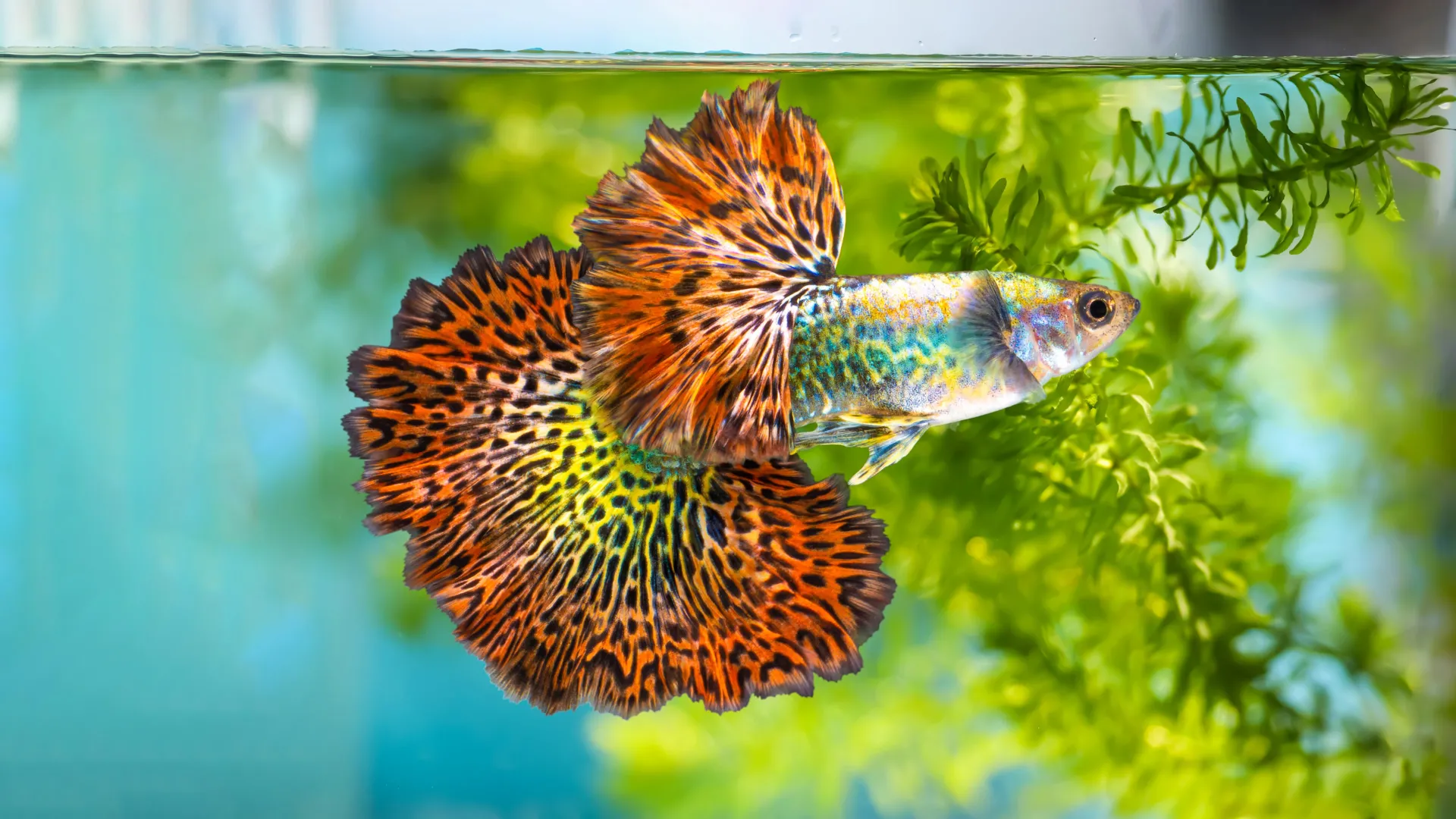
It turns out color isn’t just fashionable for guppies: According to a new UBC study, the more orange a male, the more virile it is.

The research published in Nature Ecology & Evolution shines light on an enduring evolutionary mystery: why male guppies have such vibrant and varied colors and patterns.

Virile me up

Zoologists Drs. Wouter van der Bijl and Judith Mank used deep learning, genetic studies and bred three generations of increasingly orange guppies to investigate. They found the more colorful males were up to two times more sexually active, performing for females at a greater rate and for longer periods of time, and attempting to sneakily copulate more often.

Orange you glad to see me, baby?

It’s known that female guppies prefer orange, and unusual, patterns in their male partners, but the team found that the color diversity of guppies comes from the same cells that are responsible for forming the brain, suggesting a genetic link between how guppies look and how they behave.

“Previously, people thought perhaps males realized that if they were more orange, they were more sexy. With the genetic link, it may be that they’re healthier and fitter,” said Dr. Mank.

Let’s recombine sometime

The researchers found the guppy color genes, and the locations they appeared in, were tied to multiple chromosomes, creating a vast architecture of genetic possibilities. Seven orange and eight black color types were identified overall, allowing for a potential 32,768 unique pattern combinations.

“Genetic variation is the raw material that evolution uses to produce resilient, adapted animals and plants, including for things like climate change or disease,” said van der Bijl. “We often look at extreme examples to understand where genetic variation comes from and how it’s maintained.”

Share Button

Surgeon banned by private practice is working for NHS

Marc Lamah, dropped by a private provider, continues to operate on NHS patients in Brighton.

Share Button

Lemurs age without inflammation—and it could change human health forever

What can lemurs tell us about inflammation and aging, aka “inflammaging” in humans? That’s the question Elaine Guevara, a biological anthropologist who studies the evolution of life history and aging in primates, set out to understand.

In newly published research on age-related inflammation in ring-tailed and sifaka lemurs, Guevara discovered that perhaps we should rethink the inevitability of inflammaging in humans.

Although similar in many ways, ring-tailed and sifaka lemurs show differences in life pacing and lifespan, making useful comparisons. Because lemurs and humans are primates and share a common ancestor that lived millions of years ago, they offer valuable insights into human evolution.

Her findings, she said, were “surprising.”

“Contrary to our predictions, neither species showed age-related change in either marker of oxidative stress. Neither lemur species exhibited age-related change in inflammation; if anything, contrary to our prediction, ring-tailed lemurs showed marginal declines in inflammation with age,” Guevara said.

This finding, consistent with a few recent studies of other non-human primates, suggests that lemurs avoid the phenomenon of “inflammaging” widely observed in humans.

The study shows inflammaging is not a universal feature of primates, pointing to some differences that might suggest it turns out it’s not even a universal feature of humans, according to Christine Drea, a professor of evolutionary anthropology who was one of the researchers working with Guevara.

What is Inflammaging?

As we grow older, low-grade chronic inflammation sets in, which in turn can cause health problems such as heart disease, strokes, diabetes, cancer and osteoarthritis.

Why inflammaging increases with age in humans, what causes it and how it can be prevented are answers to questions that can unlock critical information to help humans live longer and healthier lives.

Collecting Data from Lemurs

Drea said the team first had to find a way to measure oxidative stress, which can be found in blood, urine and saliva. They settled on urine.

“Our role at the beginning was planning, designing, brainstorming, comparing and getting these samples,” said Drea, who has worked with the Duke Lemur Center since 1999. The Lemur Center does not allow research that will harm the animals.

The next step says Guevara is to conduct similar research with lemurs in the wild.

“There are a lot of good reasons to think that aging can be quite different in captivity and in the wild, and that in itself, is informative to evaluating the degree to which human inflammation is intrinsic versus environmental,” she said.

In the meantime, Guevara says this study serves as the first step in unraveling the question of why humans are suffering from inflammatory-related and age-related conditions and finding ways to treat them.

With a rapidly aging global population, “these insights are essential for mitigating disability and improving quality of life in later years,” she said.

Share Button

This magnetic breakthrough could make AI 10x more efficient

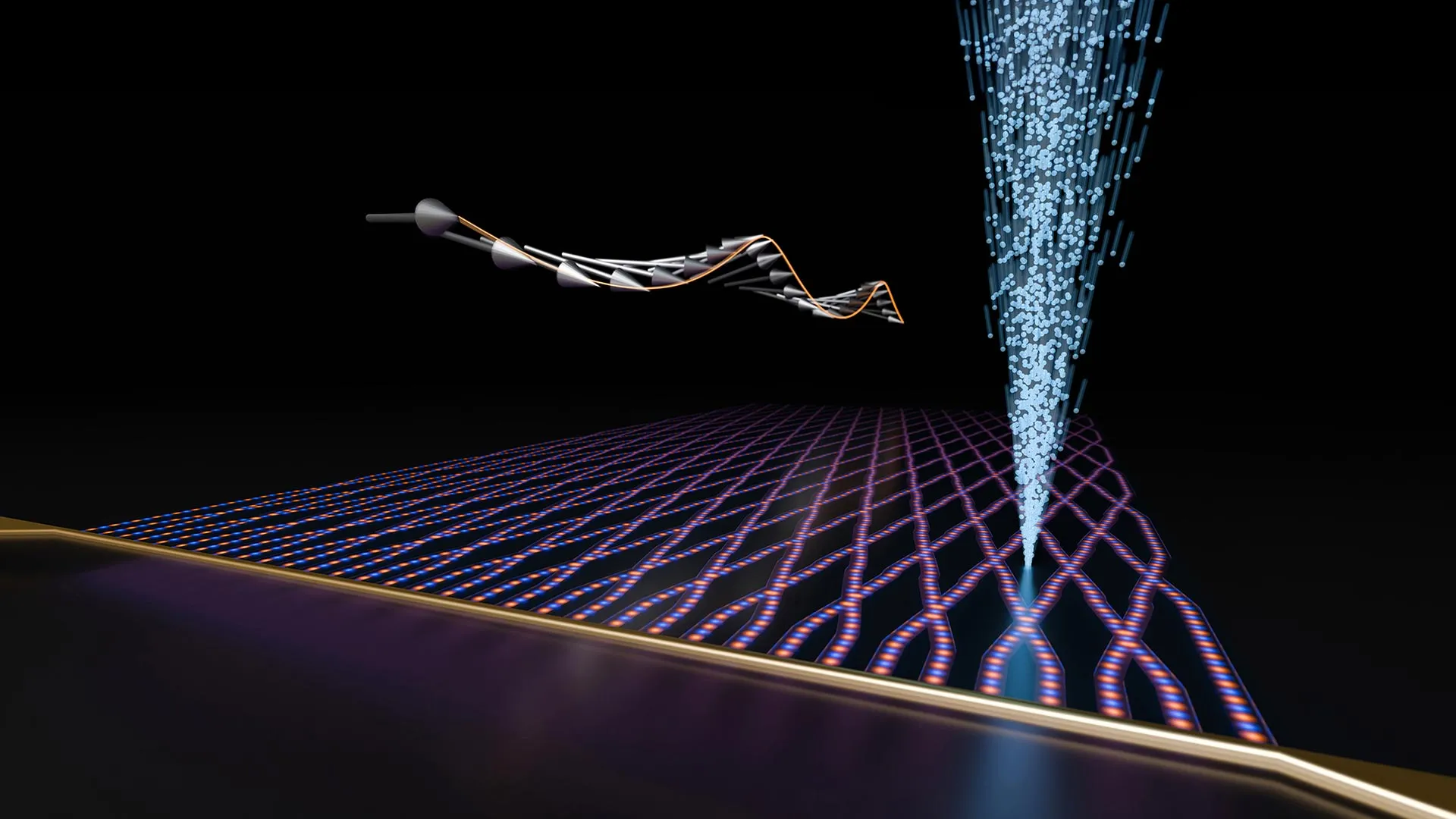
The rapid rise in AI applications has placed increasingly heavy demands on our energy infrastructure. All the more reason to find energy-saving solutions for AI hardware. One promising idea is the use of so-called spin waves to process information. A team from the Universities of Münster and Heidelberg (Germany) led by physicist Prof. Rudolf Bratschitsch (Münster) has now developed a new way to produce waveguides in which the spin waves can propagate particularly far. They have thus created the largest spin waveguide network to date. Furthermore, the group succeeded in specifically controlling the properties of the spin wave transmitted in the waveguide. For example, they were able to precisely alter the wavelength and reflection of the spin wave at a certain interface. The study was published in the scientific journal Nature Materials.

The electron spin is a quantum mechanical quantity that is also described as the intrinsic angular momentum. The alignment of many spins in a material determines its magnetic properties. If an alternating current is applied to a magnetic material with an antenna, thereby generating a changing magnetic field, the spins in the material can generate a spin wave.

Spin waves have already been used to create individual components, such as logic gates that process binary input signals into binary output signals, or multiplexers that select one of various input signals. Up until now, however, the components were not connected to form a larger circuit. “The fact that larger networks such as those used in electronics have not yet been realised, is partly due to the strong attenuation of the spin waves in the waveguides that connect the individual switching elements – especially if they are narrower than a micrometre and therefore on the nanoscale,” explains Rudolf Bratschitsch.

The group used the material with the lowest attenuation currently known: yttrium iron garnet (YIG)., The researchers inscribed individual spin-wave waveguides into a 110 nanometre thin film of this magnetic material using a silicon ion beam and produced a large network with 198 nodes. The new method allows complex structures of high quality to be produced flexibly and reproducibly.

The German Research Foundation (DFG) funded the project as part of the Collaborative Research Centre 1459 “Intelligent Matter.”

Share Button

This tiny implant could save diabetics from silent, deadly crashes

For people with Type 1 diabetes, developing hypoglycemia, or low blood sugar, is an ever-present threat. When glucose levels become extremely low, it creates a life-threatening situation for which the standard treatment of care is injecting a hormone called glucagon.

As an emergency backup, for cases where patients may not realize that their blood sugar is dropping to dangerous levels, MIT engineers have designed an implantable reservoir that can remain under the skin and be triggered to release glucagon when blood sugar levels get too low.

This approach could also help in cases where hypoglycemia occurs during sleep, or for diabetic children who are unable to administer injections on their own.

“This is a small, emergency-event device that can be placed under the skin, where it is ready to act if the patient’s blood sugar drops too low,” says Daniel Anderson, a professor in MIT’s Department of Chemical Engineering, a member of MIT’s Koch Institute for Integrative Cancer Research and Institute for Medical Engineering and Science (IMES), and the senior author of the study. “Our goal was to build a device that is always ready to protect patients from low blood sugar. We think this can also help relieve the fear of hypoglycemia that many patients, and their parents, suffer from.”

The researchers showed that this device could also be used to deliver emergency doses of epinephrine, a drug that is used to treat heart attacks and can also prevent severe allergic reactions, including anaphylactic shock.

Siddharth Krishnan, a former MIT research scientist who is now an assistant professor of electrical engineering at Stanford University, is the lead author of the study, which was published on July 9 in Nature Biomedical Engineering.

Emergency response

Most patients with type 1 diabetes use daily insulin injections to help their body absorb sugar and prevent their blood sugar levels from getting too high. However, if their blood sugar levels get too low, they develop hypoglycemia, which can lead to confusion and seizures, and may be fatal if it goes untreated.

To combat hypoglycemia, some patients carry preloaded syringes of glucagon, a hormone that stimulates the liver to release glucose into the bloodstream. However, it isn’t always easy for people, especially children, to know when they are becoming hypoglycemic.

“Some patients can sense when they’re getting low blood sugar, and go eat something or give themselves glucagon,” Anderson says. “But some are unaware that they’re hypoglycemic, and they can just slip into confusion and coma. This is also a problem when patients sleep, as they are reliant on glucose sensor alarms to wake them when sugar drops dangerously low.”

To make it easier to counteract hypoglycemia, the MIT team set out to design an emergency device that could be triggered either by the person using it, or automatically by a sensor.

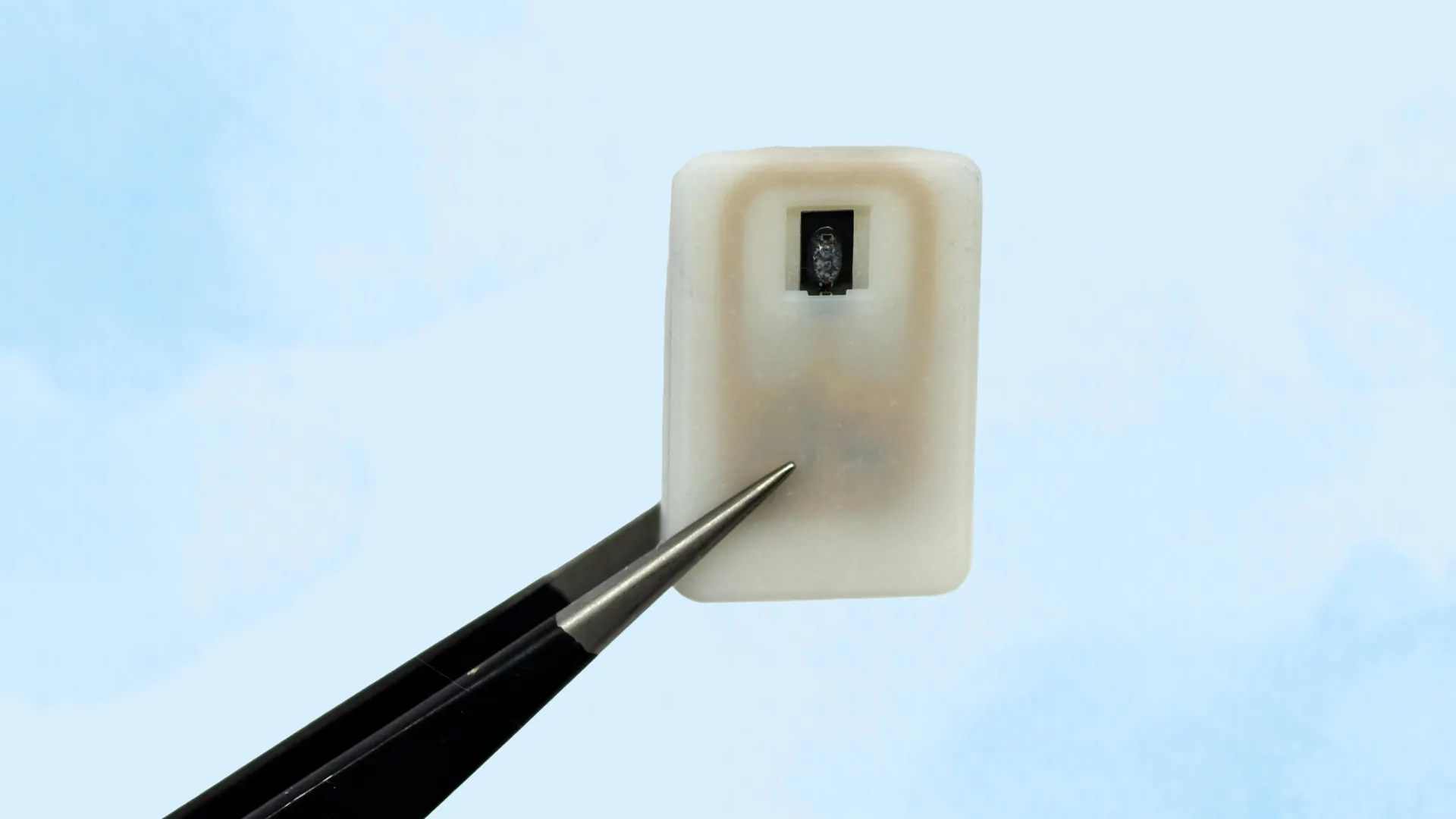
The device, which is about the size of a quarter, contains a small drug reservoir made of a 3D-printed polymer. The reservoir is sealed with a special material known as a shape-memory alloy, which can be programmed to change its shape when heated. In this case, the researcher used a nickel-titanium alloy that is programmed to curl from a flat slab into a U-shape when heated to 40 degrees Celsius.

Like many other protein or peptide drugs, glucagon tends to break down quickly, so the liquid form can’t be stored long-term in the body. Instead, the MIT team created a powdered version of the drug, which remains stable for much longer and stays in the reservoir until released.

Each device can carry either one or four doses of glucagon, and it also includes an antenna tuned to respond to a specific frequency in the radiofrequency range. That allows it to be remotely triggered to turn on a small electrical current, which is used to heat the shape-memory alloy. When the temperature reaches the 40-degree threshold, the slab bends into a U shape, releasing the contents of the reservoir.

Because the device can receive wireless signals, it could also be designed so that drug release is triggered by a glucose monitor when the wearer’s blood sugar drops below a certain level.

“One of the key features of this type of digital drug delivery system is that you can have it talk to sensors,” Krishnan says. “In this case, the continuous glucose-monitoring technology that a lot of patients use is something that would be easy for these types of devices to interface with.”

Reversing hypoglycemia

After implanting the device in diabetic mice, the researchers used it to trigger glucagon release as the animals’ blood sugar levels were dropping. Within less than 10 minutes of activating the drug release, blood sugar levels began to level off, allowing them to remain within the normal range and avert hypoglycemia.

The researchers also tested the device with a powdered version of epinephrine. They found that within 10 minutes of drug release, epinephrine levels in the bloodstream became elevated and heart rate increased.

In this study, the researchers kept the devices implanted for up to four weeks, but they now plan to see if they can extend that time up to at least a year.

“The idea is you would have enough doses that can provide this therapeutic rescue event over a significant period of time. We don’t know exactly what that is — maybe a year, maybe a few years, and we’re currently working on establishing what the optimal lifetime is. But then after that, it would need to be replaced,” Krishnan says.

Typically, when a medical device is implanted in the body, scar tissue develops around the device, which can interfere with its function. However, in this study, the researchers showed that even after fibrotic tissue formed around the implant, they were able to successfully trigger the drug release.

The researchers are now planning for additional animal studies and hope to begin testing the device in clinical trials within the next three years.

“It’s really exciting to see our team accomplish this, which I hope will someday help diabetic patients and could more broadly provide a new paradigm for delivering any emergency medicine,” says Robert Langer, the David H. Koch Institute Professor at MIT and an author of the paper.

Other authors of the paper include Laura O’Keeffe, Arnab Rudra, Derin Gumustop, Nima Khatib, Claudia Liu, Jiawei Yang, Athena Wang, Matthew Bochenek, Yen-Chun Lu, Suman Bose, and Kaelan Reed.

The research was funded by the Leona M. and Harry B. Helmsley Charitable Trust, the National Institutes of Health, a JDRF postdoctoral fellowship, and the National Institute of Biomedical Imaging and Bioengineering.

Share Button

‘Both my daughters needed new hearts’

A mum from Surrey calls for more organ donors, as the waiting list reaches an all-time high.

Share Button

Schools recognised for emotional wellbeing skills

Seven schools receive awards for changes they have made to help pupils and staff.

Share Button

South Africans fear spike in HIV infections as US aid cuts bite

South Africa has been at the forefront of the successful battle to halt the spread of HIV/Aids – until now.

Share Button

‘It’s heartbreaking leaving women sleeping rough’

An outreach worker helping homeless women at risk of violence in a Somerset town.

Share Button

Blood scandal victims harmed further by compensation delays, inquiry chair says

Payments need to be made fairer and faster, the chair of the public inquiry into the disaster says.

Share Button