The home tests will be offered so that women can check for cervical cancer without visiting a GP.


The home tests will be offered so that women can check for cervical cancer without visiting a GP.
It will target the worst-performing trusts in England – and report back by the end of the year.
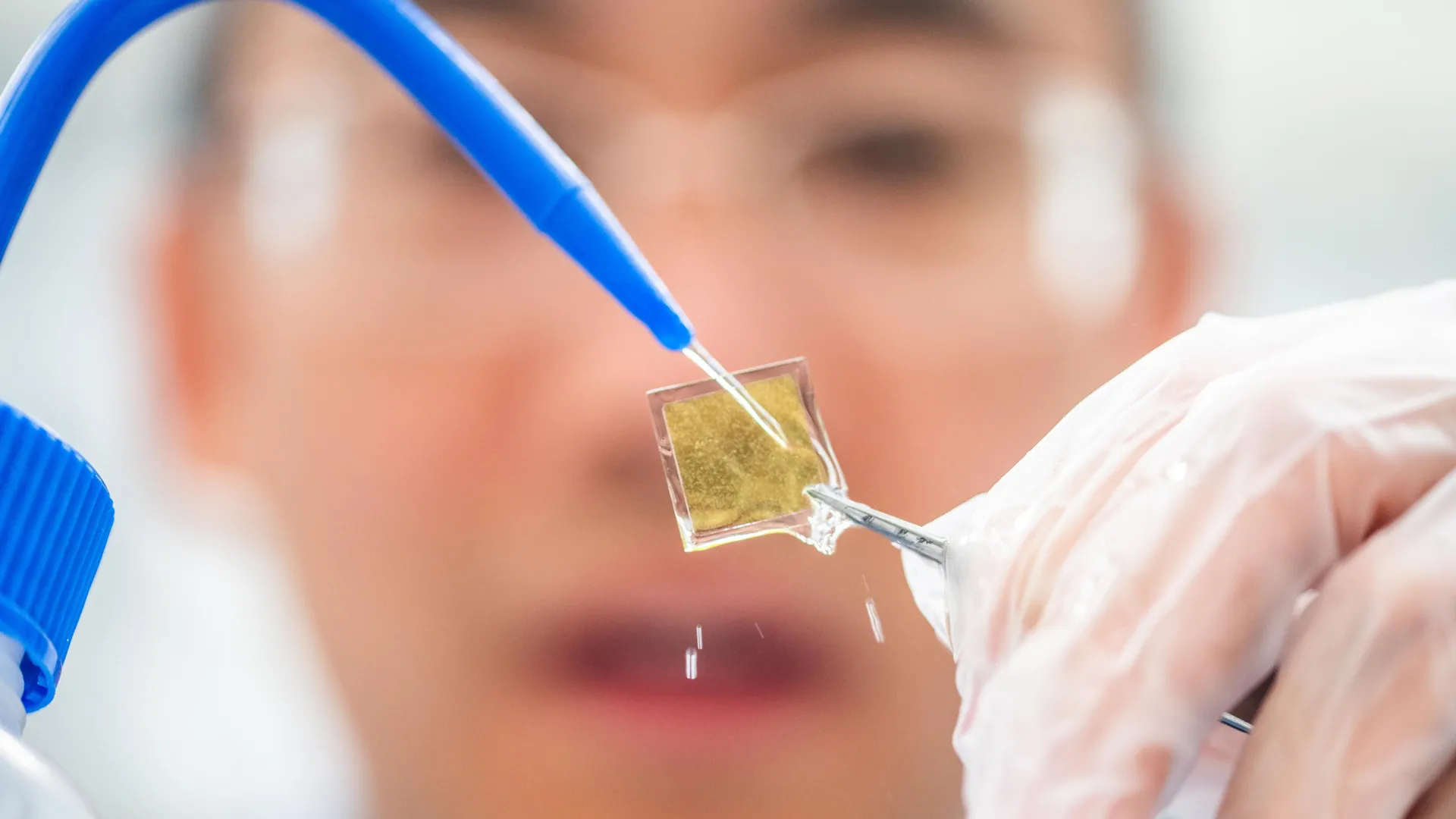
The chemical reaction to produce hydrogen from water is several times more effective when using a combination of new materials in three layers, according to researchers at Linköping University in Sweden. Hydrogen produced from water is a promising renewable energy source – especially if the hydrogen is produced using sunlight.
The production of new petrol and diesel cars will be banned in the EU as of 2035. Electric motors are expected to become increasingly common in vehicles – but they are not suitable for all types of transport.
“Passenger cars can have a battery, but heavy trucks, ships or aircraft cannot use a battery to store the energy. For these means of transport, we need to find clean and renewable energy sources, and hydrogen is a good candidate,” says Jianwu Sun, associate professor at Linköping University, who has led the study published in the Journal of the American Chemical Society.
The LiU researchers are working on developing materials that can be used to produce hydrogen (H2) from water (H2O) by using the energy in sunlight.
The research team has previously shown that a material called cubic silicon carbide (3C-SiC) has beneficial properties for facilitating the reaction where water is split into hydrogen and oxygen. The material can effectively capture the sunlight so that the energy therein can be used for hydrogen production through the photochemical water splitting reaction.
In their current study, the researchers have further developed a new combined material. The new material consists of three layers: a layer of cubic silicon carbide, a layer of cobalt oxide and a catalyst material that helps to split water.
“It’s a very complicated structure, so our focus in this study has been to understand the function of each layer and how it helps improve the properties of the material. The new material has eight times better performance than pure cubic silicon carbide for splitting water into hydrogen,” says Jianwu Sun.
When sunlight hits the material, electric charges are generated, which are then used to split water. A challenge in the development of materials for this application is to prevent the positive and negative charges from merging again and neutralising each other. In their study, the researchers show that by combining a layer of cubic silicon carbide with the other two layers, the material, known as Ni(OH)2/Co3O4/3C-SiC, becomes more able to separate the charges, thereby making the splitting of water more effective.
Today, there is a distinction between “grey” and “green” hydrogen. Almost all hydrogen present on the market is “grey” hydrogen produced from a fossil fuel called natural gas or fossil gas. The production of one tonne of “grey” hydrogen gas causes emission of up to ten tonnes of carbon dioxide, which contributes to the greenhouse effect and climate change. “Green” hydrogen is produced using renewable electricity as a source of energy.
The long-term goal of the LiU researchers is to be able to use only energy from the sun to drive the photochemical reaction to produce “green” hydrogen. Most materials under development today have an efficiency of between 1 and 3 per cent, but for commercialisation of this green hydrogen technology the target is 10 per cent efficiency. Being able to fully drive the reaction using solar energy would lower the cost of producing “green” hydrogen, compared to producing it using supplementary renewable electricity as is done with the technology used today. Jianwu Sun speculates that it may take around five to ten years for the research team to develop materials that reach the coveted 10 per cent limit.
The research has been funded with support from, among others, the Swedish Foundation for International Cooperation in Research and Higher Education (STINT), the Olle Engkvists Stiftelse, the ÅForsk Foundation, the Carl Tryggers Stiftelse and through the Swedish Government Strategic Research Area in Advanced Functional Materials (AFM) at Linköping University.

As artificial intelligence reshapes workplaces worldwide, a new study provides early evidence suggesting AI exposure has not, thus far, caused widespread harm to workers’ mental health or job satisfaction. In fact, the data reveals that AI may even be linked to modest improvements in worker physical health, particularly among employees with less than a college degree.
But the authors caution: It is way too soon to draw definitive conclusions.
The paper, “Artificial Intelligence and the Wellbeing of Workers,” published June 23 in Nature: Scientific Reports, uses two decades of longitudinal data from the German Socio-Economic Panel. Using that rich data, the researchers — Osea Giuntella of the University of Pittsburgh and the National Bureau of Economic Research (NBER), Luca Stella of the University of Milan and the Berlin School of Economics, and Johannes King of the German Ministry of Finance — explored how workers in AI-exposed occupations have fared in contrast to workers in less-exposed roles.
“Public anxiety about AI is real, but the worst-case scenarios are not inevitable,” said Professor Stella, who is also affiliated with independent European bodies the Center for Economic Studies (CESifo) and the Institute for Labor Economics (IZA). “So far, we find little evidence that AI adoption has undermined workers’ well-being on average. If anything, physical health seems to have slightly improved, likely due to declining job physical intensity and overall job risk in some of the AI-exposed occupations.”
Yet the study also highlights reasons for caution.
The analysis relies primarily on a task-based measure of AI exposure — considered more objective — but alternative estimates based on self-reported exposure reveal small negative effects on job and life satisfaction. In addition, the sample excludes younger workers and only covers the early phases of AI diffusion in Germany.
“We may simply be too early in the AI adoption curve to observe its full effects,” Stella emphasized. “AI’s impact could evolve dramatically as technologies advance, penetrate more sectors, and alter work at a deeper level.”
Key findings from the study include:
Due to the data supply, the study focuses on Germany — a country with strong labor protections and a gradual pace of AI adoption. The co-authors noted that outcomes may differ in more flexible labor markets or among younger cohorts entering increasingly AI-saturated workplaces.
“This research is an early snapshot, not the final word,” said Pitt’s Giuntella, who previously conducted significant research into the effect of robotics on households and labor, and on types of workers. “As AI adoption accelerates, continued monitoring of its broader impacts on work and health is essential. Technology alone doesn’t determine outcomes — institutions and policies will decide whether AI enhances or erodes the conditions of work.”
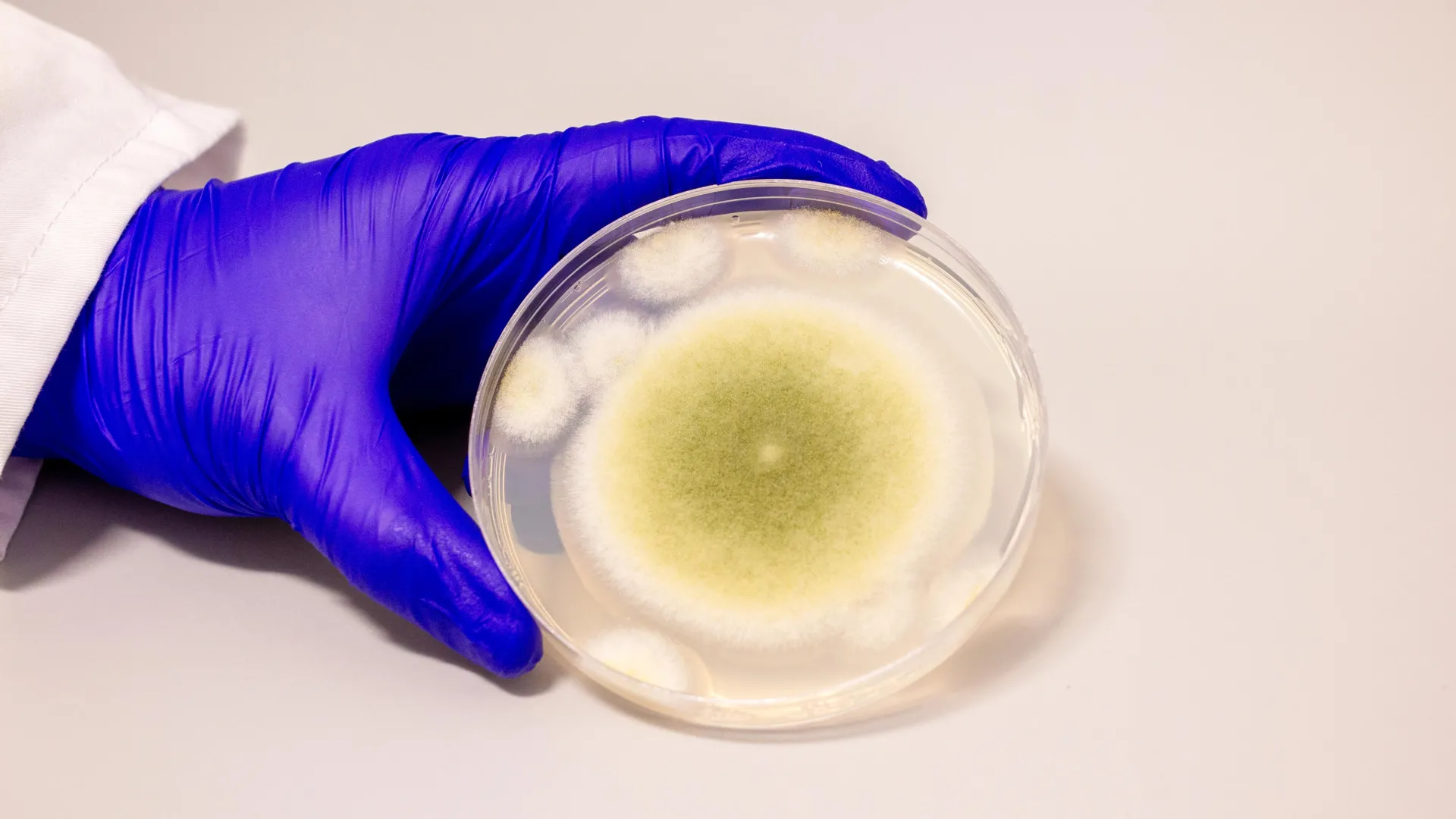
Penn-led researchers have turned a deadly fungus into a potent cancer-fighting compound. After isolating a new class of molecules from Aspergillus flavus, a toxic crop fungus linked to deaths in the excavations of ancient tombs, the researchers modified the chemicals and tested them against leukemia cells. The result? A promising cancer-killing compound that rivals FDA-approved drugs and opens up new frontiers in the discovery of more fungal medicines.
“Fungi gave us penicillin,” says Sherry Gao, Presidential Penn Compact Associate Professor in Chemical and Biomolecular Engineering (CBE) and in Bioengineering (BE) and senior author of a new paper in Nature Chemical Biologyon the findings. “These results show that many more medicines derived from natural products remain to be found.”
From Curse to Cure
Aspergillus flavus, named for its yellow spores, has long been a microbial villain. After archaeologists opened King Tutankhamun’s tomb in the 1920s, a series of untimely deaths among the excavation team fueled rumors of a pharaoh’s curse. Decades later, doctors theorized that fungal spores, dormant for millennia, could have played a role.
In the 1970s, a dozen scientists entered the tomb of Casimir IV in Poland. Within weeks, 10 of them died. Later investigations revealed the tomb contained A. flavus, whose toxins can lead to lung infections, especially in people with compromised immune systems.
Now, that same fungus is the unlikely source of a promising new cancer therapy.
A Rare Fungal Find
The therapy in question is a class of ribosomally synthesized and post-translationally modified peptides, or RiPPs, pronounced like the “rip” in a piece of fabric. The name refers to how the compound is produced — by the ribosome, a tiny cellular structure that makes proteins — and the fact that it is modified later, in this case, to enhance its cancer-killing properties.
“Purifying these chemicals is difficult,” says Qiuyue Nie, a postdoctoral fellow in CBE and the paper’s first author. While thousands of RiPPs have been identified in bacteria, only a handful have been found in fungi. In part, this is because past researchers misidentified fungal RiPPs as non-ribosomal peptides and had little understanding of how fungi created the molecules. “The synthesis of these compounds is complicated,” adds Nie. “But that’s also what gives them this remarkable bioactivity.”
Hunting for Chemicals
To find more fungal RiPPs, the researchers first scanned a dozen strains of Aspergillus, which previous research suggested might contain more of the chemicals.
By comparing chemicals produced by these strains with known RiPP building blocks, the researchers identified A. flavus as a promising candidate for further study.
Genetic analysis pointed to a particular protein in A. flavus as a source of fungal RiPPs. When the researchers turned the genes that create that protein off, the chemical markers indicating the presence of RiPPs also disappeared.
This novel approach — combining metabolic and genetic information — not only pinpointed the source of fungal RiPPs in A. flavus, but could be used to find more fungal RiPPs in the future.
A Potent New Medicine
After purifying four different RiPPs, the researchers found the molecules shared a unique structure of interlocking rings. The researchers named these molecules, which have never been previously described, after the fungus in which they were found: asperigimycins.
Even with no modification, when mixed with human cancer cells, asperigimycins demonstrated medical potential: two of the four variants had potent effects against leukemia cells.
Another variant, to which the researchers added a lipid, or fatty molecule, that is also found in the royal jelly that nourishes developing bees, performed as well as cytarabine and daunorubicin, two FDA-approved drugs that have been used for decades to treat leukemia.
Cracking the Code of Cell Entry
To understand why lipids enhanced asperigimycins’ potency, the researchers selectively turned genes on and off in the leukemia cells. One gene, SLC46A3, proved critical in allowing asperigimycins to enter leukemia cells in sufficient numbers.
That gene helps materials exit lysosomes, the tiny sacs that collect foreign materials entering human cells. “This gene acts like a gateway,” says Nie. “It doesn’t just help asperigimycins get into cells, it may also enable other ‘cyclic peptides’ to do the same.”
Like asperigimycins, those chemicals have medicinal properties — nearly two dozen cyclic peptides have received clinical approval since 2000 to treat diseases as varied as cancer and lupus — but many of them need modification to enter cells in sufficient quantities.
“Knowing that lipids can affect how this gene transports chemicals into cells gives us another tool for drug development,” says Nie.
Disrupting Cell Division
Through further experimentation, the researchers found that asperigimycins likely disrupt the process of cell division. “Cancer cells divide uncontrollably,” says Gao. “These compounds block the formation of microtubules, which are essential for cell division.”
Notably, the compounds had little to no effect on breast, liver or lung cancer cells — or a range of bacteria and fungi — suggesting that asperigimycins’ disruptive effects are specific to certain types of cells, a critical feature for any future medication.
Future Directions
In addition to demonstrating the medical potential of asperigimycins, the researchers identified similar clusters of genes in other fungi, suggesting that more fungal RiPPS remain to be discovered. “Even though only a few have been found, almost all of them have strong bioactivity,” says Nie. “This is an unexplored region with tremendous potential.”
The next step is to test asperigimycins in animal models, with the hope of one day moving to human clinical trials. “Nature has given us this incredible pharmacy,” says Gao. “It’s up to us to uncover its secrets. As engineers, we’re excited to keep exploring, learning from nature and using that knowledge to design better solutions.”
This study was conducted at the University of Pennsylvania School of Engineering and Applied Science; Rice University; the University of Pittsburgh; The University of Texas MD Anderson Cancer Center; Washington University School of Medicine, St. Louis; Baylor College of Medicine and the University of Porto.
The study was supported by the U.S. National Institutes of Health (R35GM138207, R35CA274235, R35GM128779), the University of Pennsylvania, the Welch Foundation (C-2033-20200401), the Houston Area Molecular Biophysics Program (NIH Grant T32 GM008280), the Cancer Prevention and Research Institute of Texas (RR220087, RR210029) and the National Science Foundation (OAC-2117681, OAC-1928147, OAC-1928224).
Additional co-authors include Fanglong Zhao, Xuerong Yu, Caleb Chang, Rory Sharkey, Bryce Kille, Hongzi Zheng, Kevin Yang, Alan Du, Todd Treangen, Yang Gao and Hans Renata of Rice University; Chunxiao Sun and Shuai Liu of Penn Engineering and Rice; Siting Li and Junjie Chen of MD Anderson; Mithun C. Madhusudhanan and Peng Liu of Pitt; Sandipan Roy Chowdhury, Dongyin Guan, Jin Wang, Xin Yu and Dishu Zhou of Baylor; Maria Zotova and Zichen Hu of Penn Engineering; Sandra A. Figueiredo and Pedro N. Leão of the University of Porto; and Andy Xu and Rui Tang of Wash U, St. Louis.
NHS England says the first patients able to get the jab will be those most in need.
Paloma Shemirani’s brothers say she refused chemotherapy because of their mother’s beliefs.
The MP for Ilford North pledges to work “constructively” on technical aspects of the legislation.
A team of researchers at Rice University have discovered a surprisingly simple method for vastly improving the stability of electrochemical devices that convert carbon dioxide into useful fuels and chemicals, and it involves nothing more than sending the CO2 through an acid bubbler.
Their study, published in Science, addresses a major bottleneck in the performance and stability of CO2 reduction systems: the buildup of salt that clogs gas flow channels, reduces efficiency and causes the devices to fail prematurely. Using a technique they call acid-humidified CO2, the researchers extended the operational life of a CO2 reduction system more than 50-fold, demonstrating more than 4,500 hours of stable operation in a scaled-up reactor — a milestone for the field.
Electrochemical CO2 reduction, or CO2RR, is an emerging green technology that uses electricity, ideally from renewable sources, to transform climate-warming CO2 into valuable products like carbon monoxide, ethylene or alcohols. These products can be further refined into fuels or used in industrial processes, potentially turning a major pollutant into a feedstock.
However, practical implementation has been hindered by poor system stability. One persistent issue is the accumulation of potassium bicarbonate salts in the gas flow channels, which occurs when potassium ions migrate from the anolyte across the anion exchange membrane to the cathode reaction zone and combine with CO2 under high pH conditions.
“Salt precipitation blocks CO2 transport and floods the gas diffusion electrode, which leads to performance failure,” said Haotian Wang , the corresponding author of the study and associate professor of chemical and biomolecular engineering, materials science and nanoengineering and chemistry at Rice. “This typically happens within a few hundred hours, which is far from commercial viability.”
To combat this, the Rice team tried an elegant twist on a standard procedure. Instead of using water to humidify the CO2 gas input into the reactor, they bubbled the gas through an acid solution such as hydrochloric, formic or acetic acid.
The vapor from the acid is carried into the cathode reaction chamber in trace amounts, just enough to alter the local chemistry. Because the salts formed with these acids are much more soluble than potassium bicarbonate, they don’t crystallize and block the channels.
The effect was dramatic. In tests using a silver catalyst — a common benchmark for converting CO2 to carbon monoxide — the system operated stably for over 2,000 hours in a lab-scale device and more than 4,500 hours in a 100-square-centimeter, scaled-up electrolyzer. In contrast, systems using standard water-humidified CO2 failed after about 80 hours because of salt buildup.
Importantly, the acid-humidified method proved effective across multiple catalyst types, including zinc oxide, copper oxide and bismuth oxide, all of which are used to target different CO2RR products. The researchers also demonstrated that the method could be scaled without compromising performance with large-scale devices maintaining energy efficiency and avoiding salt blockage over extended periods.
They observed minimal corrosion or damage to the anion exchange membranes that are typically sensitive to chloride by keeping the acid concentrations low. The approach was also shown to be compatible with commonly used membranes and materials, reinforcing its potential for integration into existing systems.
To observe salt formation in real time, the team used custom-built reactors with transparent flow plates. Under conventional water humidification, salt crystals began forming within 48 hours. With acid-humidified CO2, however, no significant crystal accumulation was observed even after hundreds of hours, and any small deposits were eventually dissolved and carried out of the system.
“Using the traditional method of water-humidified CO2 could lead to salt formation in the cathode gas flow channels,” said co-first author Shaoyun Hao, postdoctoral research associate in chemical and biomolecular engineering at Rice. “We hypothesized — and confirmed — that acid vapor could dissolve the salt and convert the low solubility KHCO3 into salt with higher solubility, thus shifting the solubility balance just enough to avoid clogging without affecting catalyst performance.”
The work opens the door to more durable, scalable CO2 electrolyzers, a critical need if the technology is to be deployed at industrial scales as part of carbon capture and utilization strategies. The simplicity of the approach, involving only small tweaks to existing humidification setups, means it can be adopted without significant redesigns or added costs.
“This is a major finding for CO2 electrolysis,” said Ahmad Elgazzar, co-first author and graduate student in chemical and biomolecular engineering at Rice. “Our method addresses a long-standing obstacle with a low-cost, easily implementable solution. It’s a step toward making carbon utilization technologies more commercially viable and more sustainable.”
This work was supported by the Robert A. Welch Foundation, Rice, the National Science Foundation and the David and Lucile Packard Foundation.

Understanding how the universe transitioned from darkness to light with the formation of the first stars and galaxies is a key turning point in the universe’s development, known as the Cosmic Dawn. However, even with the most powerful telescopes, we can’t directly observe these earliest stars, so determining their properties is one of the biggest challenges in astronomy.
Now, an international group of astronomers led by the University of Cambridge have shown that we will be able to learn about the masses of the earliest stars by studying a specific radio signal – created by hydrogen atoms filling the gaps between star-forming regions – originating just a hundred million years after the Big Bang.
By studying how the first stars and their remnants affected this signal, called the 21-centimeter signal, the researchers have shown that future radio telescopes will help us understand the very early universe, and how it transformed from a nearly homogeneous mass of mostly hydrogen to the incredible complexity we see today. Their results are reported in the journal Nature Astronomy.
“This is a unique opportunity to learn how the universe’s first light emerged from the darkness,” said co-author Professor Anastasia Fialkov from Cambridge’s Institute of Astronomy. “The transition from a cold, dark universe to one filled with stars is a story we’re only beginning to understand.”
The study of the universe’s most ancient stars hinges on the faint glow of the 21-centimetre signal, a subtle energy signal from over 13 billion years ago. This signal, influenced by the radiation from early stars and black holes, provides a rare window into the universe’s infancy.
Fialkov leads the theory group of REACH (the Radio Experiment for the Analysis of Cosmic Hydrogen). REACH is a radio antenna and is one of two major projects that could help us learn about the Cosmic Dawn and the Epoch of Reionisation, when the first stars reionised neutral hydrogen atoms in the universe.
Although REACH, which captures radio signals, is still in its calibration stage, it promises to reveal data about the early universe. Meanwhile, the Square Kilometre Array (SKA) — a massive array of antennas under construction — will map fluctuations in cosmic signals across vast regions of the sky.
Both projects are vital in probing the masses, luminosities, and distribution of the universe’s earliest stars. In the current study, Fialkov – who is also a member of the SKA – and her collaborators developed a model that makes predictions for the 21-centimeter signal for both REACH and SKA, and found that the signal is sensitive to the masses of first stars.
“We are the first group to consistently model the dependence of the 21-centimeter signal of the masses of the first stars, including the impact of ultraviolet starlight and X-ray emissions from X-ray binaries produced when the first stars die,” said Fialkov, who is also a member of Cambridge’s Kavli Institute for Cosmology. “These insights are derived from simulations that integrate the primordial conditions of the universe, such as the hydrogen-helium composition produced by the Big Bang.”
In developing their theoretical model, the researchers studied how the 21-centimeter signal reacts to the mass distribution of the first stars, known as Population III stars. They found that previous studies have underestimated this connection as they did not account for the number and brightness of X-ray binaries – binary systems made of a normal star and a collapsed star – among Population III stars, and how they affect the 21-centimeter signal.
Unlike optical telescopes like the James Webb Space Telescope, which capture vivid images, radio astronomy relies on statistical analysis of faint signals. REACH and SKA will not be able to image individual stars, but will instead provide information about entire populations of stars, X-ray binary systems and galaxies.
“It takes a bit of imagination to connect radio data to the story of the first stars, but the implications are profound,” said Fialkov.
“The predictions we are reporting have huge implications for our understanding of the nature of the very first stars in the Universe,” said co-author Dr Eloy de Lera Acedo, Principal Investigator of the REACH telescope and PI at Cambridge of the SKA development activities. “We show evidence that our radio telescopes can tell us details about the mass of those first stars and how these early lights may have been very different from today’s stars.
“Radio telescopes like REACH are promising to unlock the mysteries of the infant Universe, and these predictions are essential to guide the radio observations we are doing from the Karoo, in South Africa.”
The research was supported in part by the Science and Technology Facilities Council (STFC), part of UK Research and Innovation (UKRI). Anastasia Fialkov is a Fellow of Magdalene College, Cambridge. Eloy de Lera Acedo is an STFC Ernest Rutherford Fellow and a Fellow of Selwyn College, Cambridge.
