Over the next year, nearly four million will receive invites on the NHS App or via text message, email or letter to order a free kit to use at home.


Over the next year, nearly four million will receive invites on the NHS App or via text message, email or letter to order a free kit to use at home.
Mum developed sepsis after scan error and now calls for better postnatal care for women.
It will the create world’s largest menstrual fluid biobank to improve treatment of heavy periods.
There have been decades of mistreatment and mismanagement of those who seek help later in life, say experts in a new, damning report.
They work better than patches, gum or pills, the most up-to-date evidence suggests.
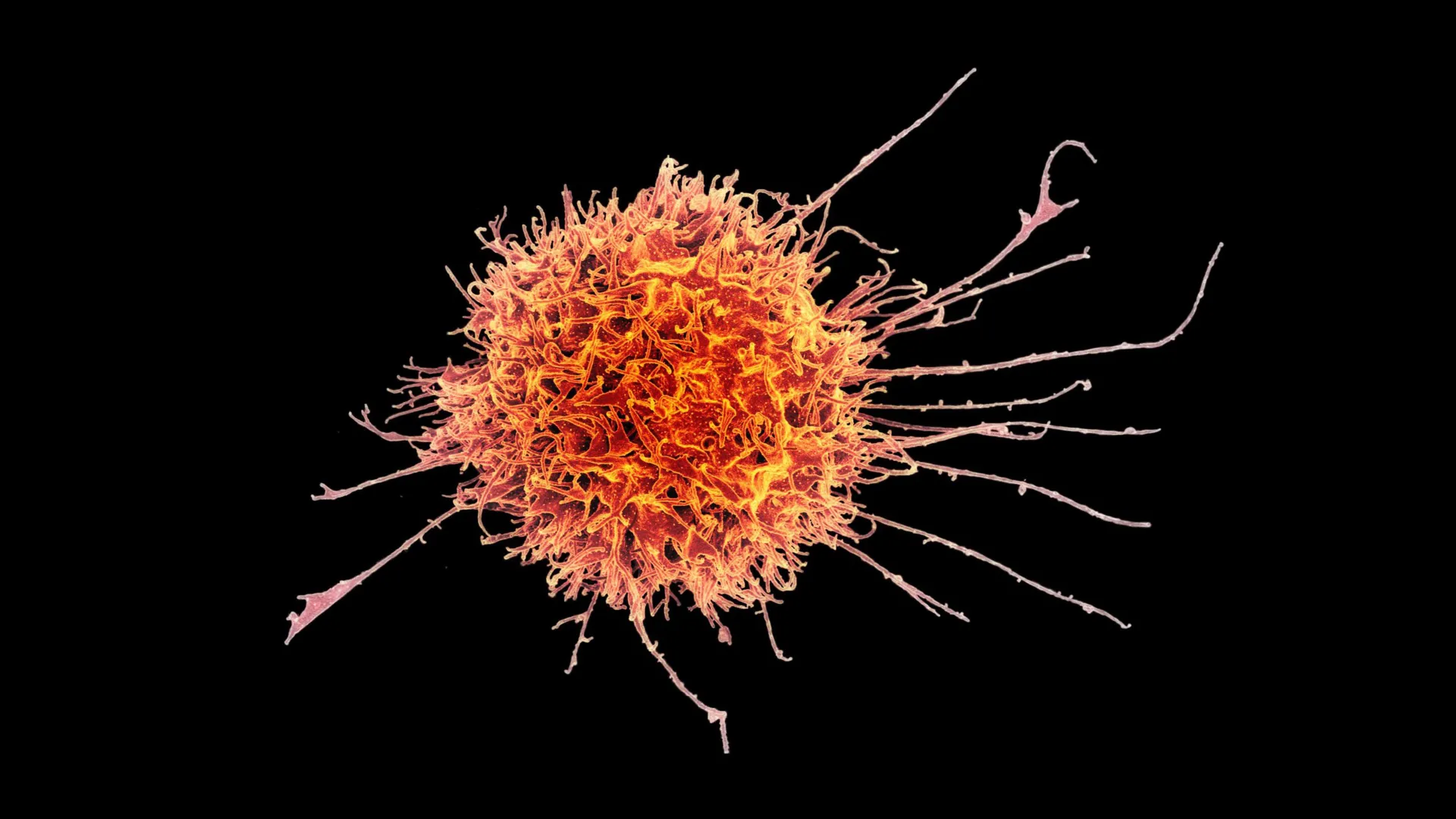
Cell therapies that harness the immune system have transformed treatment for some cancers of the blood and lymphatic system. Solid tumors, however, have remained much more difficult to treat because they are harder for immune cells to enter and can release signals that weaken nearby immune defenses.
Researchers at Stanford Medicine and collaborating institutions have now developed a strategy aimed at overcoming those obstacles. Their approach transforms natural killer cells, a type of immune cell known for rapidly attacking abnormal cells, into a specialized tissue resident form that can move into solid tumors and destroy cancer cells.
“We show that these tissue-resident natural killer cells infiltrate into the solid tumors much better than conventional natural killer cells. It was very reproducible, very striking and very clear,” said John Sunwoo, MD, the Edward C. and Amy H. Sewall Professor in the School of Medicine and senior author of the study published last month in Science Translational Medicine.
The study’s co-lead authors are Nina Horowitz, PhD, a former doctoral student in otolaryngology; Imran Mohammad, PhD, a postdoctoral fellow in the Sunwoo lab; and June Ho Shin, PhD, a senior scientist in the Sunwoo lab.
Natural Killer Cells Show Promise Against Solid Tumors
The team tested the experimental therapy in mice and found that the modified natural killer cells slowed the growth of several kinds of solid tumors. The effect became stronger when the cells were paired with an antibody treatment that helps guide natural killer cells toward cancer cells.
Natural killer cells may also offer an important practical advantage. They do not typically trigger an immune reaction when transferred from one person to another. Most current immune cell therapies must be individually manufactured from a patient’s own cells, but a treatment based on these modified natural killer cells could potentially be produced in large batches, frozen and made available to many patients.
“It would be almost an off-the-shelf drug,” Sunwoo said. “It could make cell therapy much more accessible to a wider variety of patients.”
Why Tissue Resident Immune Cells Matter
Natural killer cells were first identified in the 1970s. Their name comes from their ability to rapidly recognize and destroy abnormal cells, including cancer cells and cells infected by viruses. Unlike other white blood cells, such as B cells and T cells, natural killer cells do not need to encounter a specific target beforehand, allowing them to respond quickly.
Historically, much of immunology has centered on immune cells circulating in the bloodstream, including B cells, T cells, and natural killer cells. These cells travel throughout the body searching for infection and disease. Some, however, eventually settle inside tissues and take on functions tailored to their local environment.
“For a long time, the study of immunology and disease in humans was concentrated on the blood immune cells,” Sunwoo said. “With the advancement of tools and bioinformatics, we are now starting to look more at what’s going on in tissue. For most immune cells, the tissue is where the action is.”
Tissue resident natural killer cells are found in locations including the skin, mucous membranes, lungs and liver. Scientists have struggled to understand exactly what they do because previous studies have produced conflicting results. Some suggested these cells were relatively weak killers and could even suppress immune activity, while others found that they were highly effective at destroying target cells.
“They may adopt different functions based on certain cues in the microenvironment and in the tissue, and differentiate into a certain kind of sub-population,” Sunwoo said.
In some circumstances, immune-suppressing tissue-resident natural killer cells are beneficial. During early pregnancy, for example, these cells in the uterine lining help prevent the immune system from attacking fetal cells and support placental growth. Cancer treatment, however, requires the more aggressive type.
Finding the Right Cellular Recipe
Evidence suggested that there were two distinct forms of tissue-resident natural killer cells, but researchers did not fully understand how they developed or why their behavior was so different.
To investigate, Sunwoo’s team isolated circulating natural killer cells from human blood donors and exposed them to different combinations of cellular signals.
One important ingredient was TGF-b, transforming growth factor beta. This signaling protein is produced by many cell types, including tumor cells, and plays a role in determining how cells develop. The researchers found, however, that the amount and duration of the signal were critical.
“It’s a Goldilocks kind of thing where if you give just enough of a TGF-b signal, then the natural killer cells become tissue resident with strong toxic activity against malignant cells. If you give too much TGF-b, they’re still tissue resident, but they’re inhibited and dysfunctional, and they don’t kill,” Sunwoo said. “You need it to be presented to the natural killer cells in just the right amount and in just the right manner.”
The experiments showed that TGF-b was required to turn natural killer cells into a tissue resident form. But prolonged exposure produced cells that were poor killers.
A different approach worked much better. The researchers briefly exposed natural killer cells to short-lived human epithelial tumor cells that provided a temporary burst of active TGF-b. That produced tissue-resident natural killer cells with strong tumor-killing activity.
Direct physical contact with the epithelial tumor cells was also essential. Simply placing the cells nearby was not enough, suggesting that additional activating signals were involved.
“These two tissue-resident natural killer cell populations look very similar, and they have some of the same requirements, but their function seems to be on opposite ends of the spectrum,” Sunwoo said.
What Makes the Strongest Killer Cells Different
The team then compared the two types of tissue-resident natural killer cells in detail.
Both types displayed the surface proteins CD49a and CD103. Only the highly effective cancer-killing cells, however, expressed CD39.
The stronger cells also contained more of the molecular machinery needed to kill targets. This included perforin, a protein that creates holes in target cells, and granzyme A, a toxic molecule delivered through those openings.
Slowing Tumor Growth in Mice
Once the researchers established a reliable method for producing the more aggressive natural killer cells, they tested how well the cells could enter tumors.
In laboratory experiments, the modified cells successfully infiltrated tumor organoids grown in dishes. When injected into mice, they slowed the growth of several types of solid tumors over periods of days and weeks. These included tumors derived from human melanoma and head and neck squamous cell carcinoma.
The strongest results came when the modified natural killer cells were combined with cetuximab, a monoclonal antibody that helps mark certain cancer cells for immune attack.
Cetuximab is approved to treat metastatic colorectal cancer and advanced head and neck squamous cell carcinoma, although Sunwoo noted that it does not work especially well when used alone.
A single dose of the combination therapy suppressed tumor growth in mice much more effectively over one month than either treatment by itself. The researchers also did not observe apparent adverse effects.
“Even at day 30, when the other mice were sick, the mice that received the combination seemed very healthy,” Sunwoo said, though he cautioned against extrapolating too much from mice to humans, adding, “This was just proof of concept.”
Toward an Off-the-Shelf Cell Therapy
Sunwoo and his colleagues are now preparing a Phase I clinical trial to test the combination therapy in people with advanced squamous cell carcinoma. The trial could begin by the end of the year, pending approval from the Food and Drug Administration.
Sunwoo has also developed and applied to patent a method for producing and expanding large numbers of the modified cells, technically known as cytotoxic tissue-resident natural killer cells.
According to the researchers, natural killer cells collected from a single donor could produce about 20 treatment doses in roughly two weeks.
“They’ll be cryopreserved, so we can make a bunch of doses and give it to different patients,” Sunwoo said. “There would be no delay.”
Researchers from Ohio State University and Washington University School of Medicine contributed to the work.
The study received funding from the National Institutes of Health (grants R35DE030054, K22CA282364 and R25DC020174), the Tai Tsun Wu Research Fund for Natural Killer Cell Immunotherapy and the Stanford Bio-X Fellowship.
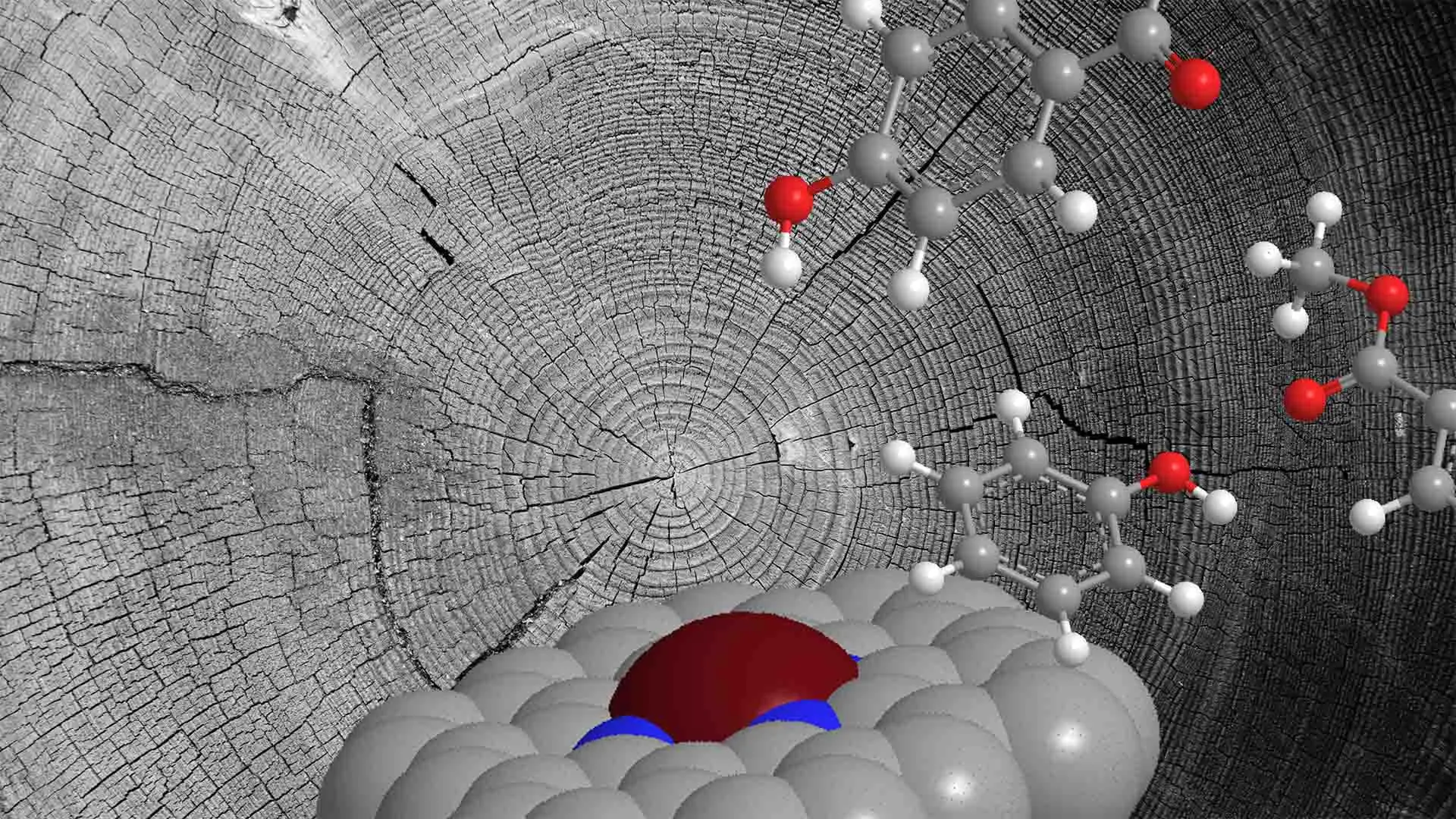
Lignin gives plants much of their structural strength and represents the largest renewable source of aromatic chemicals found in nature. It can make up a substantial share (up to 35%) of waste biomass from agriculture and forestry. Yet lignin’s complicated molecular structure makes it notoriously difficult to break apart efficiently, which has limited its potential use in sustainable manufacturing.
In a study published in ACS Catalysis, an international team that included Dr. Christopher Parlett, Xinyue Zhou, and Yutao Jiang from the Department of Chemical Engineering developed a highly efficient “single-atom catalyst.” The researchers also determined, at the molecular level, how the catalyst breaks the strong chemical bonds that help hold lignin together.
The catalyst contains individual ruthenium atoms embedded within a nitrogen-doped carbon material. By keeping the ruthenium atoms isolated, the design can deliver strong catalytic performance while requiring only very small amounts of metal, improving efficiency compared with conventional systems.
Revealing How the Catalyst Breaks Down Lignin
One persistent obstacle in lignin research has been identifying exactly which parts of a catalyst are responsible for breaking the material’s unusually strong chemical bonds. Without that information, researchers have had limited guidance for designing more effective catalysts.
The team found that a particular atomic arrangement known as a “Ru-N4 site” is especially important. These sites activate oxygen molecules and help trigger the breaking of both carbon-oxygen and carbon-carbon bonds within lignin.
Using a combination of laboratory experiments and computational modeling, the researchers were able to reconstruct the process in greater detail. The catalyst first activates oxygen, producing highly reactive species. Those species then attack the lignin structure and split it into smaller molecules.
High Conversion With Milder Conditions
When tested under optimized conditions, the catalyst converted nearly all of the model lignin compounds and generated high yields of valuable chemical products, including phenol.
The process also works under relatively mild conditions and does not require harsh chemicals. That combination could make the approach useful for developing more sustainable methods of chemical manufacturing.
The researchers went beyond simplified model compounds and tested the catalyst on real lignin collected from several biomass sources. It successfully converted those samples into useful aromatic compounds that could potentially become building blocks for fuels, plastics, and other materials.
A Potential Path Toward Biomass-Based Chemicals
The findings provide a more detailed picture of how single-atom catalysts operate during biomass conversion. That understanding could serve as a guide for developing more efficient catalytic systems in the future.
“Understanding exactly how these catalysts work at the atomic level allows us to design better materials for converting renewable resources into valuable chemicals,” said Dr. Christopher Parlett, Lecturer in Chemical Engineering.
By making it easier to upgrade lignin and convert it into higher-value products, the research could support a broader shift away from traditional linear petroleum-derived chemical production and toward a more circular, biomass-based economy.

A human, an octopus, and a coral may appear to have almost nothing in common, but their chromosomes still contain recognizable fragments inherited from an animal ancestor that lived more than 600 million years ago. Researchers at the University of Vienna have now traced how those ancient genomic pieces were reorganized as animal life diversified.
The study, published in Science Advances, suggests that animal genomes do not evolve through an unlimited number of possible routes. Instead, chromosome changes tend to move along a restricted set of irreversible pathways that the researchers describe as “evolutionary highways.” The findings may also provide a valuable foundation for efforts to understand and conserve animal biodiversity.
Tracing More Than 600 Million Years of Genome Evolution
Every living animal ultimately descends from a common ancestor that existed more than 600 million years ago. Since that time, chromosomes have repeatedly fused, separated, and been rearranged as new animal lineages emerged.
Thousands of animal genomes have now been sequenced, but comparing their long-term evolution has remained difficult. In this study, an international team led by University of Vienna researchers brought thousands of genomes together in a single large-scale comparison.
“Understanding these rules of evolution doesn’t just tell us about the past,” said Oleg Simakov, a professor at the University of Vienna who co-led the study. “It also lets us ask where genome evolution might go next and enables us to identify key measures for the conservation of animal biodiversity.”
Many sequenced genomes remain “drafts.” They can reveal which genes an animal possesses without showing exactly where those genes are positioned along its chromosomes. Chromosome-scale assemblies provide much more detail by arranging genes in their proper order across complete chromosomes. Producing these assemblies is considerably more difficult, and only recently have enough species been analyzed at this level to make a broad comparison across the animal kingdom possible.
Largest Chromosome Comparison Across the Animal Tree of Life
The researchers examined more than 5,800 publicly available chromosome-scale genomes representing 4,454 species from 19 animal phyla. According to the team, this is the largest comparison of its kind across the animal tree of life.
To organize such a vast amount of information, the scientists created a framework called evolutionary genome topology. It places the enormous variety of animal genome structures onto a single map.
That map revealed an important pattern. Genome architecture does not appear to change randomly. Instead, animal lineages tend to move along “evolutionary highways.” Evidence from hundreds of living species shows that different groups traveled along these routes or departed from them at different times and at different rates.
“For the first time, we can see thousands of genomes on a single map and trace the unique paths along which animals’ DNA evolved. Viewing the map as a whole gives us a picture of the patterns by which animal genomes have changed over time,” said Darrin Schultz, who led the work as a postdoctoral researcher at the University of Vienna and is now an Assistant Professor at Lehigh University and Lehigh Oceans. “And if we fold the map up in a different way, we can compare how different groups of animals took different paths from each other after splitting onto different evolutionary paths.”
Irreversible Chromosome Mixing Leaves a Genetic Record
A major force behind these patterns is a process the researchers previously named “fusion-with-mixing.” It occurs when two chromosomes join, and their genes become intermixed. Once this happens, the original arrangement cannot be restored.
That irreversibility makes such chromosome changes especially useful for reconstructing evolutionary history. Each event leaves a lasting genomic record that can serve as a marker of shared ancestry. Researchers have already used this type of evidence to help identify the sibling group to all other animals.
The team found that differences in chromosome numbers among animal groups can arise in two main ways. Ancestral chromosomes can combine, or they can separate. In either case, fusion-with-mixing can push different lineages onto very different evolutionary trajectories.
Animal Groups Occupy Distinct Genome Architecture Regions
Because the process cannot be reversed, a major chromosome detour can permanently influence where a lineage ends up in what researchers describe as “genome-architecture space.”
Once such a change (“fusion with mixing”) takes place, major animal groups can be shifted into distinct regions of this genomic landscape. As chromosome mixing accumulates over time, lineages continue to diverge. These changes can leave long-lasting effects across many genes, including important genes involved in controlling development.
Evolutionary genome topology focuses on the arrangement and structure of genomes rather than relying only on DNA sequences. This gives researchers a shared coordinate system for comparing the rapidly growing number of chromosome-scale animal genomes.
The framework could make it easier to identify unusual evolutionary lineages that deserve closer study. It may also help scientists investigate whether changes in chromosome structure are connected to differences in gene regulation, development, or biodiversity.
Identifying Some of the Most Distinctive Animal Genomes
The potential applications extend beyond reconstructing evolutionary history. Some clades occupy highly isolated parts of the genome map because their chromosome architecture has few close parallels.
Mosquitoes, glass sponges, and earthworms are among the lineages that stand out in this way. By highlighting groups with especially distinctive genome organization, the framework could help researchers identify evolutionarily unusual animals that may warrant greater scientific or conservation attention.
The system can also simulate possible future directions of genome evolution. That could give scientists a way to explore how animal genomes and biodiversity might continue to change over time.
Summary
Funding for this research was provided by the European Research Council (Horizon 2020 / European Union Research and Innovation Programme, grant No. 945026), the Austrian Science Fund (FWF, grant P32190), and the Rupert Riedl Prize of the Vienna Haus des Meeres Verein.
Nearly four million women in England can order a self-testing kits to check for high-risk HPV.
Caroline Bryan died three months after being diagnosed of an incurable cancer linked to asbestos.
