Hundreds have fallen ill with salmonella infections in an outbreak linked to imported eggs.


Hundreds have fallen ill with salmonella infections in an outbreak linked to imported eggs.

Coffee is consumed around the world every day, and earlier research has associated coffee drinking with a reduced risk of conditions including type 2 diabetes and cardiovascular disease. Scientists still do not fully understand the biological processes that might explain those connections. Now, new research from Finland suggests that regular coffee consumption is associated with healthier body composition, favorable metabolic markers, and distinct patterns involving sex hormones in men and women.
Researchers at the University of Oulu analyzed information from 2,264 people who were 46 years old and taking part in the Northern Finland Birth Cohort 1966. The team investigated how participants’ usual coffee intake related to circulating metabolites, indicators of cardiometabolic risk, and sex hormone levels.
Coffee Drinkers Had Less Fat and More Muscle
People who consumed more coffee tended to have lower levels of both total body fat and visceral fat, along with greater skeletal muscle mass. These differences appeared even though participants with higher and lower coffee intake had a similar body mass index (BMI).
Higher coffee consumption was also associated with lower circulating concentrations of branched-chain amino acids in both men and women. When chronically elevated, these biomarkers have previously been associated with insulin resistance and a greater risk of developing type 2 diabetes.
Coffee Intake Was Linked to Different Hormone Patterns
Some of the clearest differences appeared among men. Greater coffee consumption was associated with a more favorable glucose-insulin profile, higher levels of total and bioavailable testosterone, and greater concentrations of sex hormone-binding globulin (SHBG). However, free testosterone and the free androgen index were modestly lower.
The hormonal associations were less extensive in women. Higher coffee consumption was mainly associated with increased SHBG and lower measures of free androgens.
“Coffee is consumed by millions of people every day, yet we still know surprisingly little about how it relates to our metabolism and hormones. What stood out in our findings was a distinct hormonal signature that didn’t disappear even after we took into account BMI and lifestyle factors, with several of these associations differing between men and women,” says Luca Verroest, lead author of the study and Doctoral Researcher at the University of Oulu.
Hormones Could Offer a Clue to Coffee’s Health Links
The findings raise the possibility that hormonal pathways could help explain some of the previously observed relationship between coffee consumption and metabolic health. Because the research was observational, however, it cannot establish that drinking coffee directly caused any of the biological differences identified in the study.
The setting also makes the research especially relevant. Finland ranks among the world’s highest coffee-consuming countries, with average annual consumption of approximately 11.8 kilograms (26 pounds) per person.
Researchers say the results offer a starting point for studies designed to determine whether coffee itself produces these biological changes and, if so, which compounds may be responsible. Scientists are currently investigating these questions using animal models, with the longer-term aim of moving toward human intervention studies.
Additional research will be necessary before the findings can be used to shape dietary recommendations.
The study, “Associations of habitual coffee intake with testosterone and cardiometabolic markers: the Northern Finland Birth Cohort 1966 study,” was published in the European Journal of Nutrition.

New research led by the University of Oxford has uncovered an unexpected ability in bees. They can change how much they eat depending on the balance of essential amino acids in their food. This feeding behavior may protect them from consuming excessive amounts of certain amino acids when pollen does not provide the nutritional mix they need.
The findings, published in Current Biology, also show that many types of pollen contain essential amino acids in proportions that do not closely match the needs of bees. Essential amino acids are protein building blocks that animals cannot produce themselves and therefore must obtain through food. The discovery could help farmers, landowners, conservationists and gardeners make better decisions about how to support healthy pollinator populations.
Why Pollen Is Not Always Perfect Bee Food
Bees obtain nearly all of their food from flower nectar and pollen. Nectar supplies mostly sugar, while pollen is their primary source of protein. However, pollen did not evolve mainly as a food reward for pollinators. It is the male reproductive material of plants, so its nutritional composition does not necessarily provide bees with the ideal mixture of nutrients needed for growth, survival and reproduction.
To explore this nutritional mismatch, researchers compared the essential amino acid composition of honeybee tissues with pollen collected from 99 UK flowering plant species representing 26 plant families. They also produced artificial foods designed to mimic either the amino acid composition of different pollens or the composition of honeybee tissues. Newly emerged worker honeybees were then given these diets during controlled laboratory experiments.
Most of the pollen samples turned out to be a relatively poor match for the essential amino acid composition of honeybee tissues. Bees given food that more closely resembled their own tissue composition (rather than pollen) consumed more food, gained more body mass, and chose a diet containing a greater proportion of protein.
One Amino Acid May Help Control Bee Appetite
The researchers suspected that histidine could play an important role in this response. Histidine is an essential amino acid, but bees require it only in relatively small amounts.
To investigate further, the team created artificial diets containing either relatively high or low levels of histidine compared with branched-chain amino acids (such as leucine and isoleucine) that are important for bee growth and development. When the relative amount of histidine was high, the bees reduced their overall food intake. They consumed less protein as well as less carbohydrate.
According to the researchers, this behavior could result from a post-digestive feedback mechanism that prevents bees from taking in potentially harmful quantities of particular amino acids. Instead of simply eating more pollen to compensate for missing nutrients, bees may reduce their intake when another nutrient becomes excessive. Similar responses have been observed in other animals. In rats, for example, excess histidine can be converted into histamine, which activates brain receptors involved in controlling food intake.
Lead author Professor Geraldine Wright (Department of Biology, University of Oxford) said: “Although pollen is often assumed to be a near-perfect food for bees, it is the male gamete of plants and, unlike nectar, it is rarely produced solely as a reward for pollinators. This creates a conflict of interest between the plant and the pollinator.”
Honeybees Create Better Food for Their Young
Honeybees appear to have another way of dealing with the nutritional limitations of pollen, especially when feeding their developing larvae.
Workers gather pollen from a wide variety of flowers and store it inside the hive as ‘bee bread’. Nurse bees eat this material and process its nutrients into glandular secretions, including royal jelly, which are then fed to developing larvae.
The researchers found that bee bread contained a more balanced essential amino acid profile than most individual pollen sources. Royal jelly provided an even closer match to the amino acid composition of bee tissues. The results suggest that combining pollen from different plants and then processing it through nurse bees may allow honeybee colonies to compensate for the nutritional shortcomings of individual pollen sources.
Professor Wright added: “We predict that honeybees have evolved to create glandular secretions which are the perfect food for their larvae, providing them with the ratios of essential amino acids that maximize growth.”
Wild Bees May Face a Greater Nutritional Challenge
This nutritional system is not available to every bee species. Many wild bees, including bumblebees and solitary bees, provide pollen directly to their offspring. In habitats with only a small variety of flowering plants, these bees may have difficulty obtaining the appropriate balance of essential amino acids for both themselves and their developing young.
The results indicate that pollinator-friendly planting schemes may need to consider more than simply providing large numbers of flowers. The nutritional quality of pollen and the diversity of plants producing it may also be important.
Professor Wright said: “Our results suggest that planting for pollinators should not only focus on providing flowers throughout the season, but also on ensuring a diversity of pollen sources. A varied diet may be essential for bees to obtain the right balance of nutrients.”
The research also included scientists from the University of Southampton, Lancaster University, Newcastle University and The Hebrew University of Jerusalem.
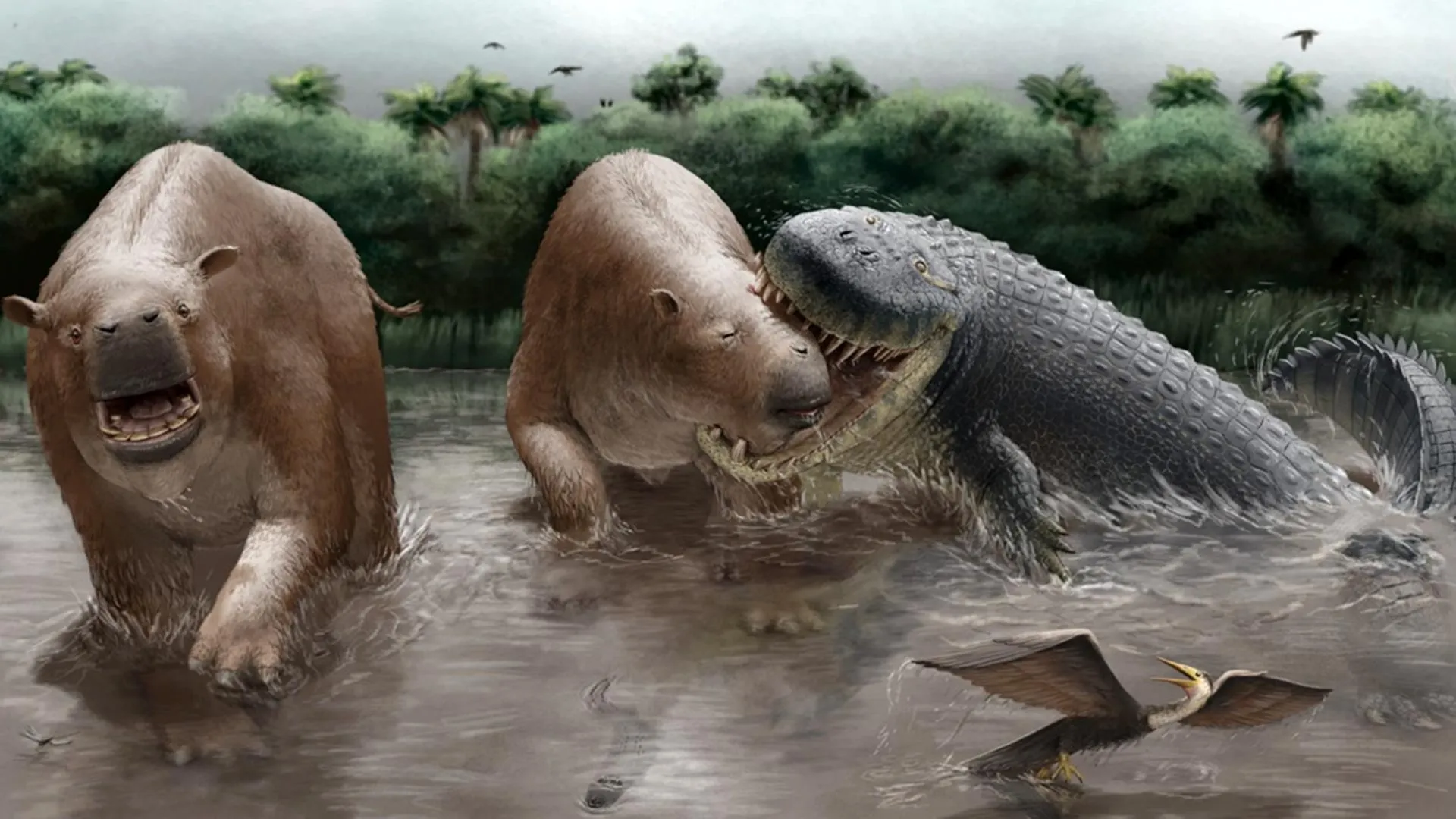
More than 10 million years ago, South America was home to an ecosystem filled with enormous animals and formidable predators. During the Miocene, a geological period that lasted for millions of years, a vast lake covered a large portion of the continent. Its waters supported giant turtles and crocodylians, while an extraordinary collection of hunters prowled the surrounding shores.
Those predators included anacondas, saber toothed mammals, flightless “terror birds” and sebecids, a group of land dwelling relatives of crocodylians. Despite this intense competition, new research indicates that crocodylians occupied an especially important place in the ecosystem and were the most significant group of predators in the region.
“There was so much prey available that mammalian predators couldn’t have eaten it all,” says Oscar Wilson, postdoctoral researcher at the University of Helsinki.
“Our new study shows that crocodylians in particular were the region’s most important predators, especially when it came to hunting large prey.”
A Lost Ecosystem Packed With Giant Prey
The lake shores supported a remarkable variety of herbivores. Giant ground sloths lived alongside glyptodonts, heavily built relatives of armadillos, as well as several groups of ungulates. Ungulates are hoofed mammals, although many extinct South American forms looked very different from familiar animals such as horses and deer.
Among them were astrapotheres (“lightning beasts”) and toxodontids. Some of these ancient ungulates reached enormous sizes and could weigh well over a metric ton.
That abundance of large prey helped support predators that were equally impressive in scale.
The Giant Crocodylian at the Top
The largest known predator in this ecosystem was Purussaurus neivensis, a massive crocodylian related to modern caimans. It grew to about seven meters in length and weighed roughly 1,800 kilograms.
Its immense size placed it near the top of the food chain, where it may have done more than simply hunt individual animals. The new study suggests that Purussaurus could have been influential enough as a predator to affect the size of herbivore populations across the ecosystem.
That possibility gives researchers a glimpse of how powerful giant crocodylians may have been in shaping ancient tropical communities, rather than simply living alongside other large predators.
Fossil Bite Marks Reveal Ancient Predation
To determine which animals were actually attacking prey, researchers examined fossils preserved in museum collections. The evidence comes from bite and tooth marks left on the fossilized remains of herbivores.
These traces are especially valuable because they provide the only direct evidence of interactions between predators and their prey. Rather than relying only on the size, anatomy or presumed hunting abilities of extinct animals, researchers can use the marks left on bones to identify signs of actual feeding or attacks.
The fossils analyzed in the study ranged from 10.5 million to 16 million years old.
“The frequency of marks likely made by Purussaurus suggests that it was an important predator in these tropical ecosystems,” Wilson comments.
The study was published in Journal of Vertebrate Paleontology.
Children’s lung capacity caught up with their peers in less polluted areas once a clean air zone came in, a study shows.
Lindsay Clancy has admitted killing her daughter and two sons but has pleaded not guilty to murder, saying she was experiencing postpartum psychosis.
Most of the cases were in England in recent weeks, linked to eating imported eggs, experts believe.
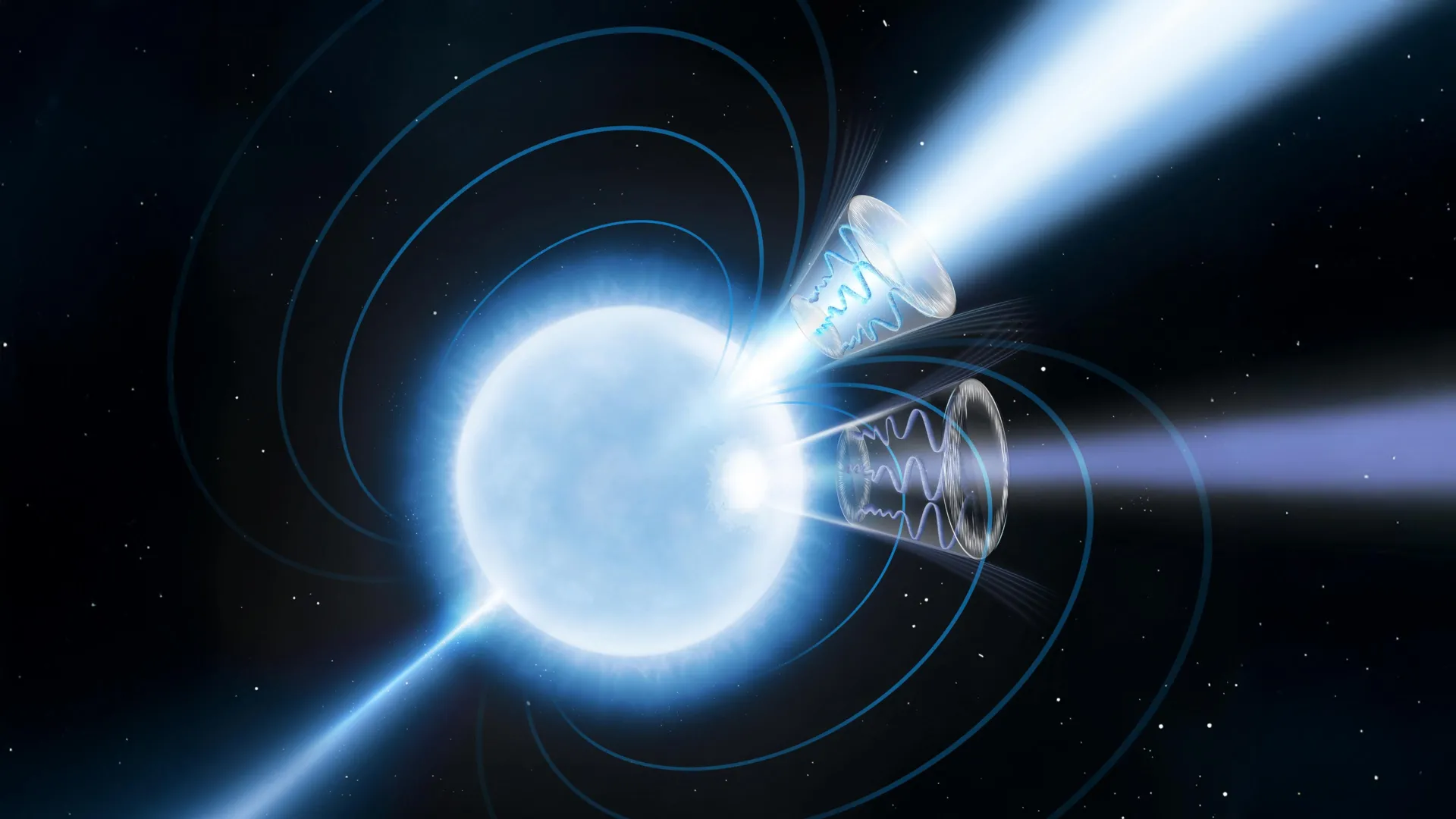
Astronomers may have found some of the strongest evidence yet for one of quantum mechanics’ strangest predictions: even apparently empty space can influence the way light travels.
Known as ‘vacuum birefringence’, the phenomenon was predicted nearly 90 years ago by Werner Heisenberg, one of the pioneers of quantum mechanics. His work suggested that a perfect vacuum is not truly empty. Instead, it should contain ‘virtual particles’ that briefly appear and disappear.
Researchers, including Dr. Marcus Lower from Swinburne University of Technology, investigated this long-standing quantum mystery by studying a magnetar, a rare type of neutron star that possesses the strongest magnetic fields known in the universe.
Their observations may represent the first detection of vacuum birefringence occurring within a magnetar’s extraordinarily powerful magnetic field. If confirmed, the result could give scientists a new way to investigate the quantum universe. The findings were published recently in Nature.
How Extreme Magnetic Fields Can Change Light
According to the theory, an exceptionally strong magnetic field can affect the sea of virtual particles associated with the vacuum. Under these conditions, the particles are expected to influence how light travels, refracting it in a specific way and producing vacuum birefringence.
Magnetars provide a rare opportunity to search for this effect because their magnetic fields are powerful enough to make the predicted quantum behavior potentially observable.
Dr. Lower was part of an international research team that studied the magnetar 1E 1547.0-5408 (or 1E1547 for short) with NASA’s Imaging X-ray Polarimetry Explorer (IXPE). The observations were supported by the NICER X-ray telescope aboard the International Space Station and Murriyang, CSIRO’s Parkes radio telescope, which is owned and operated by Australia’s national science agency.
Radio observations collected by Dr. Lower using Murriyang, followed by analysis on Swinburne’s Ngarrgu Tindebeek supercomputer, helped the researchers investigate what could be the first direct detection of this previously theoretical quantum phenomenon.
Although vacuum birefringence was predicted in the 1930s, Dr. Lower said scientists have yet to obtain a definitive detection.
“Detecting vacuum birefringence requires a magnetic field that is over 100 million times stronger than any we’ve ever made on Earth. Thankfully, nature has provided us with magnetars, which are the perfect cosmic laboratories to go looking for this effect,” Dr. Lower said.
A Magnetar With Ideal Viewing Geometry
The researchers closely followed how the radio waves coming from the magnetar changed direction as the star rotated (their ‘polarization state’). From those measurements, they determined that the magnetic and rotational axes of 1E 1547 are almost aligned. The magnetar is also observed from a nearly pole-on perspective.
Together, those characteristics give scientists an unusually favorable view for searching for vacuum birefringence around 1E 1547.
The team then found two important clues pointing toward the quantum effect. X-rays generated by the magnetar and detected by IXPE showed extremely high levels of polarization. In addition, the direction of that polarization remained tied to the magnetic field of 1E1547 in the same way seen in the radio observations.
“Because of the magnetic field’s strength, Heisenberg’s virtual particles become aligned with the direction the field is pointing,” Dr. Lower said.
“By carefully tracking the direction the radio waves and X-rays oscillate as the magnetar rotates, the team found that the alignment of 1E1547’s magnetic and rotational poles were ideal for detecting vacuum birefringence.”
Closing In on a 90 Year Quantum Mystery
If the interpretation is confirmed, the result could help physicists test how established theories of quantum physics behave under some of the most extreme conditions found anywhere in the universe.
Dr. Lower said additional observations and more advanced computer simulations could help establish whether the signal truly comes from vacuum birefringence. Those improvements should make it easier for researchers to distinguish the predicted quantum signature from other physical processes taking place around magnetars.
“With these future data on hand and our updated simulations, we may finally be able to complete the quest started by Heisenberg nearly 90 years ago.”
The paper titled “Vacuum birefringence and the polarized X-ray emission of a radio magnetar” has been published in Nature.

A little more than a century ago, Albert Einstein turned his attention from gravity itself to the fate of the entire universe. In 1917, shortly after developing his general theory of relativity, he began applying his new equations to cosmology. General relativity had transformed our understanding of gravity, so it made sense to ask what those same equations said about the universe on the largest possible scales.
Gravity was the natural place to start. On average, the universe is electrically neutral, which means electromagnetism does not dominate its large-scale behavior. Einstein also knew nothing about the strong and weak nuclear forces (to be fair, nobody did), but those interactions only operate over very short distances.
Einstein’s Unexpected Dynamic Universe
For cosmology, gravity determines how matter behaves across enormous distances. If you imagine a collection of matter representing “a universe,” Einstein’s equations can tell you how that collection should evolve.
What Einstein found surprised him. General relativity did not naturally describe a universe that remained unchanged forever. Instead, the equations pointed toward a dynamic cosmos that would either expand or contract. That conclusion conflicted with the prevailing view at the time, which held that the universe was static and had remained essentially the same throughout cosmic history.
Einstein responded by adding a “cosmological constant” to his equations, represented by the Greek letter Lambda. General relativity already allowed such a term. In simple terms, it acts like a gravitational influence built into spacetime itself, one that can exist even in otherwise empty space. Depending on its value, that effect can produce either attraction or repulsion. Einstein selected a value that counteracted the gravitational pull of matter, allowing the universe to remain stable.
That solution did not last long.
An Expanding Universe Changes Everything
Within a few years, Edwin Hubble would discover that the universe is expanding. Meanwhile, theorists such as Russian cosmologist Alexander Friedmann took Einstein’s equations more literally and developed the theoretical foundation that would help support the Big Bang theory.
Einstein eventually abandoned the cosmological constant. He would later tell friends that introducing it had been his “greatest blunder.”
Then came another major surprise.
Fast forward to 1998. Two teams of astronomers were trying to resolve a long-running disagreement over how much matter the universe contained. Different observations had produced very different estimates, with some suggesting there was relatively little matter and others indicating much more.
Astronomers already knew that the universe was expanding. Because matter produces gravity, however, that matter should have been gradually slowing the expansion. By measuring how strongly the expansion was decelerating, researchers hoped to determine how much matter was actually out there.
Instead, they discovered the opposite.
The Universe Was Speeding Up
The expansion of the universe was not slowing. It was accelerating.
The observations still indicated that the universe contained relatively little matter, but even that matter was not enough to explain what astronomers were seeing. Something appeared to be pushing cosmic expansion to proceed faster over time.
The simplest explanation was a familiar one: Einstein’s cosmological constant. A constant background effect that produces cosmic repulsion could account for the observed acceleration. Decades after Einstein had discarded the idea, his supposed mistake returned as the leading explanation for the new data.
Dark Energy Reshapes Modern Cosmology
During the 1980s and 1990s, cosmologists had developed an increasingly sophisticated framework that became known as the Standard Model of Cosmology (physicists have a penchant for calling cohesive, collaborative, consensus models “Standard”). But the discovery that cosmic expansion was accelerating meant that model could no longer stand in its existing form.
Its replacement became our current best description of how the universe has evolved since the Big Bang: LCDM cosmology.
The Lambda refers to the cosmological constant, which is also known as dark energy. CDM stands for cold dark matter, the type of matter believed to account for most of the mass in nearly every galaxy. Cold dark matter is a story of its own. Here, the focus is Lambda.
A Remarkably Successful Model With a Problem
LCDM has been extraordinarily successful. It is also surprisingly simple, relying on only a handful of adjustable parameters and a small number of assumptions within the framework of general relativity.
Despite that simplicity, the model can account for an enormous range of observations. It describes the expansion history of the universe, the appearance of background radiation, the BAO feature, the growth of galaxies, the development of large-scale cosmic structure, and much more.
LCDM has become one of the most thoroughly studied and extensively tested theories in ALL of science.
And it is almost certainly wrong.
Having life-saving cancer treatment at 21 would be hard enough for anyone, but Erin Lavery was told she may never be able to have children too.
