Scientists discover sleep switch that builds muscle, burns fat, and boosts brainpower

Deep sleep does more than help you feel rested. It actively rebuilds your body, strengthening muscles, supporting bone growth, and helping burn fat. For teenagers, it is also essential for reaching full height potential.

At the center of all this is growth hormone, which surges during sleep. But scientists have long puzzled over why poor sleep, especially the early deep stage known as non-REM sleep, leads to lower levels of this critical hormone.

Scientists Discover the Brain Circuit Behind It

Researchers at the University of California, Berkeley, have now uncovered the answer. In a study published in Cell, they mapped the brain circuits that control growth hormone release during sleep and identified a new feedback system that keeps those levels in balance.

This discovery offers a clearer understanding of how sleep and hormones work together. It may also open the door to new treatments for sleep disorders linked to metabolic diseases like diabetes, as well as neurological conditions such as Parkinson’s and Alzheimer’s.

“People know that growth hormone release is tightly related to sleep, but only through drawing blood and checking growth hormone levels during sleep,” said study first author Xinlu Ding, a postdoctoral fellow in UC Berkeley’s Department of Neuroscience and the Helen Wills Neuroscience Institute. “We’re actually directly recording neural activity in mice to see what’s going on. We are providing a basic circuit to work on in the future to develop different treatments.”

Lack of sleep does more than leave you tired. Because growth hormone helps control how the body processes sugar and fat, poor sleep can increase the risk of obesity, diabetes, and heart disease.

The Brain Regions Driving Growth Hormone

The system behind this process is buried deep in the hypothalamus, an ancient part of the brain shared by all mammals. Here, specialized neurons release signals that either trigger or suppress growth hormone.

Two key players are growth hormone releasing hormone (GHRH), which stimulates release, and somatostatin, which inhibits it. Together, they coordinate hormone activity across the sleep-wake cycle.

Once growth hormone enters the system, it activates the locus coeruleus, a brainstem region that controls alertness, attention, and cognitive function. Disruptions in this area are linked to a wide range of neurological and psychiatric disorders.

“Understanding the neural circuit for growth hormone release could eventually point toward new hormonal therapies to improve sleep quality or restore normal growth hormone balance,” said Daniel Silverman, a UC Berkeley postdoctoral fellow and study co-author. “There are some experimental gene therapies where you target a specific cell type. This circuit could be a novel handle to try to dial back the excitability of the locus coeruleus, which hasn’t been talked about before.”

How Sleep Stages Control Hormone Release

To study this system, researchers recorded brain activity in mice by inserting electrodes and stimulating neurons with light. Because mice sleep in short bursts throughout the day and night, they provided a detailed view of how growth hormone changes across sleep stages.

The team found that GHRH and somatostatin behave differently depending on whether the brain is in REM or non-REM sleep.

During REM sleep, both hormones increase, leading to a surge in growth hormone. During non-REM sleep, somatostatin drops while GHRH rises more modestly, still boosting hormone levels but in a different pattern.

A Surprising Feedback Loop in the Brain

The researchers also uncovered a feedback loop that links growth hormone to wakefulness. As sleep continues, growth hormone gradually builds up and stimulates the locus coeruleus, nudging the brain toward waking.

But there is a twist. When this brain region becomes too active, it can actually trigger sleepiness instead, creating a delicate balance between sleep and alertness.

“This suggests that sleep and growth hormone form a tightly balanced system: Too little sleep reduces growth hormone release, and too much growth hormone can in turn push the brain toward wakefulness,” Silverman said. “Sleep drives growth hormone release, and growth hormone feeds back to regulate wakefulness, and this balance is essential for growth, repair and metabolic health.”

Why It Matters for Brain and Body

This balance does more than affect physical growth. Because growth hormone works through brain systems that control alertness, it may also influence how clearly you think and how focused you feel.

“Growth hormone not only helps you build your muscle and bones and reduce your fat tissue, but may also have cognitive benefits, promoting your overall arousal level when you wake up,” Ding said.

Funding and Research Team

The research was supported by the Howard Hughes Medical Institute (HHMI) and the Pivotal Life Sciences Chancellor’s Chair fund. Yang Dan holds the Pivotal Life Sciences Chancellor’s Chair in Neuroscience. The study also included collaborators from UC Berkeley and Stanford University.

Share Button

Why the benefit used by more than 8 million people may not be fit for the future

Can Universal Credit and the work and benefits system more generally reshape itself to meet a new reality?

Share Button

New hope for children with severe epilepsy

Researchers says millions of people globally could be carriers of the faulty gene behind the disorder.

Share Button

Simple therapies beat drugs for knee arthritis pain relief

A new large-scale analysis has identified knee braces, water therapy, and exercise as the most effective non-drug options for managing knee osteoarthritis. The findings come from a meta-analysis published in the open-access journal PLOS One.

Knee osteoarthritis (KOA) is a widespread and often disabling condition that affects millions of older adults. It leads to ongoing pain and stiffness in the knee joint, making everyday movement more difficult. Many patients rely on anti-inflammatory medications, but these drugs can carry risks, including gastrointestinal and cardiovascular side effects.

Large Study Compares 12 Non-Drug Therapies

To better understand which non-drug treatments work best, researchers analyzed data from 139 clinical trials involving nearly 10,000 participants. The study compared 12 different therapies, including laser therapy, electrical stimulation, knee braces, insoles, kinesiology tape, water-based therapy, exercise, and ultrasound.

By combining results across all of these studies using a network meta-analysis, the researchers were able to rank each treatment based on its effectiveness.

Knee Braces, Hydrotherapy, and Exercise Lead

Knee braces ranked highest overall, showing strong results in reducing pain, improving joint function, and easing stiffness. Hydrotherapy — exercises or treatments performed in warm water — was especially helpful for pain relief. Regular exercise also delivered consistent benefits, improving both pain levels and physical function.

Some advanced treatments, such as high-intensity laser therapy and shock wave therapy, provided moderate improvements. In contrast, ultrasound consistently ranked as the least effective option.

Study Limitations and Future Research

The researchers note that variations in study design, smaller sample sizes in some trials, and differences in how long treatments were used could affect how precise the rankings are. Even so, the overall findings suggest that physical therapy approaches offer meaningful benefits without the risks linked to anti-inflammatory medications.

Future research should explore how combining different therapies might improve outcomes further and whether these approaches are cost-effective in real-world care.

Safer Alternatives to Pain Medications

The authors add: “Knee braces, hydrotherapy, and exercise are the most effective non-drug therapies for knee osteoarthritis. They reduce pain and improve mobility without the gastrointestinal or cardiovascular risks linked to common pain medications. Patients and clinicians should prioritize these evidence-based options.”

“Our analysis of nearly 10,000 patients reveals that simple, accessible therapies like knee bracing and water-based exercise outperform high-tech options like ultrasound. This could reshape clinical guidelines to focus on safer, lower-cost interventions.”

Share Button

Webb telescope spots mysterious explosion that defies known physics

A Rutgers astrophysicist is helping investigate a strange cosmic event that has left astronomers searching for answers. At the center of the mystery is an unusually powerful explosion in space that lasted far longer than anything previously observed.

NASA announced that researchers using the James Webb Space Telescope examined GRB 250702B, a long gamma-ray burst and one of the most energetic types of events in the universe. These bursts typically occur when a massive star collapses into a black hole, producing a brief and intense flash of high-energy gamma rays. This event behaved very differently.

“This object shows extreme properties that are difficult to explain,” said Huei Sears, a postdoctoral researcher in the Department of Physics and Astronomy at the Rutgers School of Arts and Sciences who is studying the explosion. “Usually, these bursts are over in less than a minute, but GRB 250702B lasted for hours and even showed signs of X-ray activity a day prior.”

Global Observations Reveal Unusual Behavior

Sears explained that observatories around the world are analyzing data from the event. This includes teams working with China’s Einstein Probe and the National Science Foundation’s Very Large Array, which is widely recognized from its appearance in the science fiction film Contact.

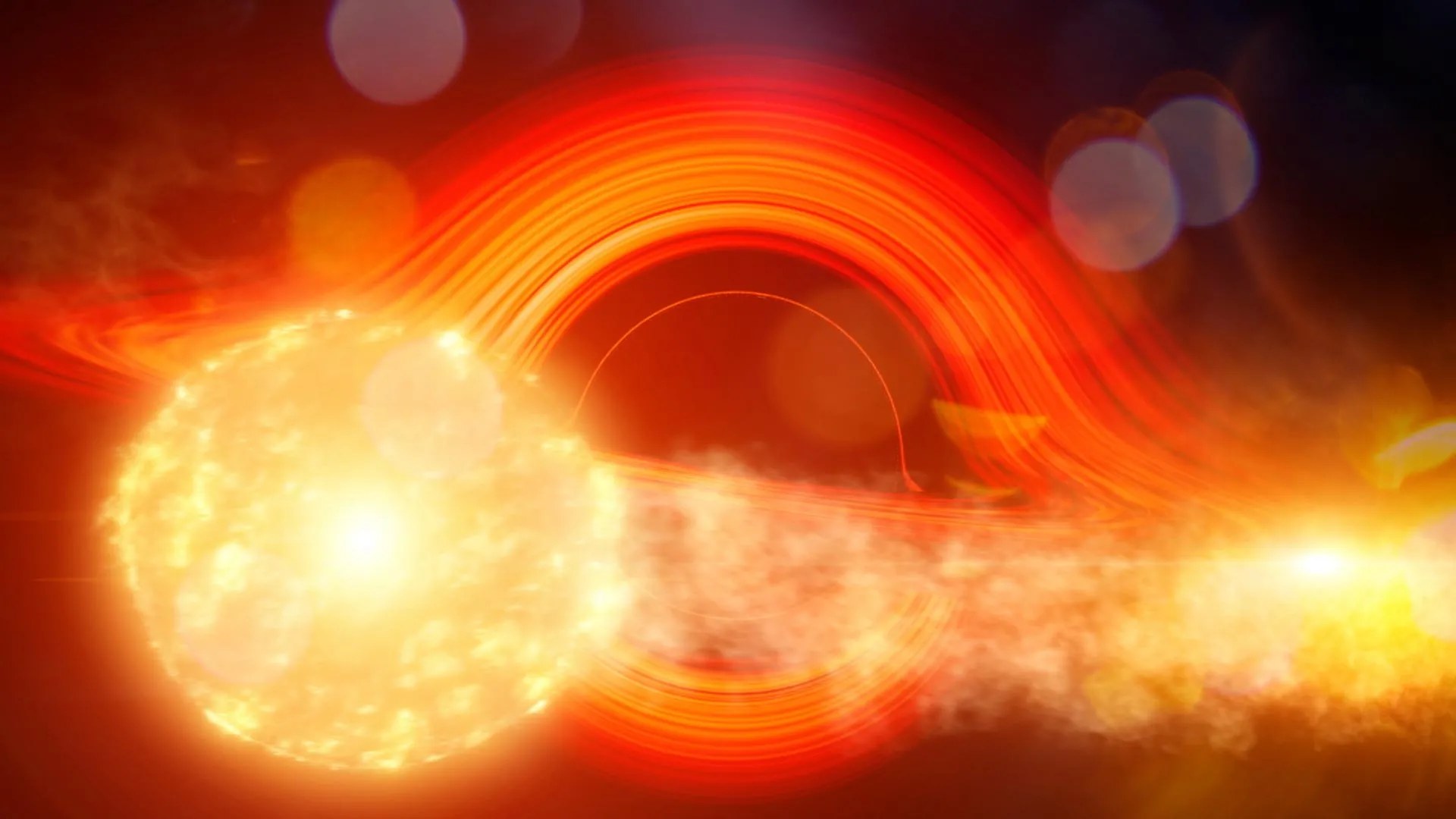
The gamma-ray emission continued for at least seven hours, nearly doubling the duration of the previous record holder. NASA also released an animation showing one possible scenario for the event. In this model, a black hole about three times the mass of the Sun, with an event horizon just 11 miles (18 kilometers) wide, orbits and merges with a companion star.

“This is certainly an outburst unlike any other we have seen in the past 50 years,” said Eliza Neights, an astronomer at NASA’s Goddard Space Flight Center in Maryland.

Possible Explanations Involving Black Holes

Scientists are considering several explanations. One possibility is that this was an unusually extreme gamma-ray burst. Another is that it was a tidal disruption event, in which a black hole thousands of times more massive than the Sun tears apart a star that ventured too close. A more unusual idea suggests a smaller black hole merged with a stripped helium star and consumed it from within.

Regardless of the exact cause, the black hole did far more than take a small bite. It unleashed powerful jets of energy that shot across space.

Multi-Telescope Effort Captures the Event

NASA’s Fermi Gamma-ray Space Telescope first detected the burst on July 2, prompting rapid follow-up observations from other instruments. The event was so intense that no single telescope could capture the full picture. Scientists combined data from space-based and ground-based observatories, collecting gamma rays, X-rays, infrared light, and radio signals. The explosion was not visible in ordinary light.

“Only through the combined power of instruments on multiple spacecraft could we understand this event,” said Eric Burns, an astrophysicist at Louisiana State University.

Distant Galaxy Adds to the Mystery

Images from the Hubble Space Telescope revealed an unusual galaxy at the location of the burst. Initially, it appeared as though two galaxies might be merging, or that a single galaxy was split by a dark band of dust. Later, Webb observations showed the galaxy lies about 8 billion light-years away, meaning the explosion occurred long before Earth formed.

To better understand the host galaxy, Sears led follow-up observations using Webb’s NIRCam, its main near-infrared imaging instrument, several months after the event.

“In such vibrant and unprecedented detail, we see just one very large galaxy with a dust lane,” Sears said. “The galaxy has such complex structure that it’s not 100% clear if there’s anything left to see of the explosion, but if there is, it’s really faint.”

Mystery Remains Unsolved

This finding supports the idea that GRB 250702B was a gamma-ray burst rather than a tidal disruption event. Even so, researchers have not reached a definitive conclusion.

“We have only seen a few tidal disruption events of this type, so we don’t know for sure how they’re supposed to evolve,” Sears said. “A lot of the studies on this explosion provide different, and sometimes contradictory, explanations. It’s still early in our understanding of what really happened.”

Whatever the final explanation, scientists agree the event is both rare and significant.

“This gives us a unique chance to study the extremes of how stars and black holes evolve,” Sears said. “GRB 250702B could even be the discovery of something unexpected and new.”

The Webb telescope also is supported by the European Space Agency (ESA), and the Canadian Space Agency (CSA).

Share Button

Man fears stroke or heart attack due to aspirin shortage

David Slater, 72, says ministers need to step up and sort out issues with the medication.

Share Button

‘I nearly broke trying to help my partner with addiction issues’

Claire Harkin believes the experiences of people who are supporting loved ones with an addiction can be overlooked.

Share Button

Scientists solved the mystery of missing ocean plastic—and the answer is alarming

Scientists have uncovered something surprising in the Atlantic Ocean. The majority of plastic pollution may no longer be visible at all. Instead, it exists as nanoplastics, particles so small they are measured in billionths of a meter.

“This estimate shows that there is more plastic in the form of nanoparticles floating in this part of the ocean than there is in larger micro- or macroplastics floating in the Atlantic or even all the world’s oceans!” said Helge Niemann, researcher at NIOZ and professor of geochemistry at Utrecht University. In mid-June, he received a 3.5 million euro grant to further investigate nanoplastics and what ultimately happens to them.

Ocean Expedition Reveals Tiny Plastic Particles

To gather data, Utrecht master’s student Sophie ten Hietbrink spent four weeks aboard the research vessel RV Pelagia. The ship traveled from the Azores to the European continental shelf, where she collected water samples at 12 different locations.

Each sample was carefully filtered to remove anything larger than one micrometer. What remained contained the smallest particles. “By drying and heating the remaining material, we were able to measure the characteristic molecules of different types of plastics in the Utrecht laboratory, using mass spectrometry,” Ten Hietbrink explains.

First Real Estimate of Ocean Nanoplastics

Previous studies had confirmed that nanoplastics existed in ocean water, but no one had been able to calculate how much was actually there. This research marks the first time scientists have produced a meaningful estimate.

Niemann notes that this breakthrough was made possible by combining ocean research with expertise from atmospheric science, including contributions from Utrecht University scientist Dusân Materic.

27 Million Tons of Invisible Plastic

When the team scaled their measurements across the North Atlantic, the results were striking. They estimate that about 27 million tons of nanoplastics are floating in this region alone.

“A shocking amount,” Ten Hietbrink says. The finding may finally explain a long-standing mystery. Scientists have struggled to account for all the plastic ever produced. Much of it appeared to be missing. This study suggests that a large share has broken down into tiny particles that are now suspended throughout the ocean.

How Nanoplastics Enter the Ocean

These microscopic plastics come from multiple sources. Larger plastic debris can fragment over time due to sunlight. Rivers also carry plastic particles from land into the sea.

Another pathway comes from the atmosphere. Nanoplastics can travel through the air and fall into the ocean with rain or settle directly onto the water’s surface through a process known as dry deposition.

Potential Risks to Ecosystems and Human Health

The widespread presence of nanoplastics raises serious concerns. Niemann points out that these particles are small enough to enter living organisms.

“It is already known that nanoplastics can penetrate deep into our bodies. They are even found in brain tissue,” he says. Because they are now known to be present throughout the ocean, they likely move through entire food webs, from microorganisms to fish and ultimately to humans. The full impact on ecosystems and health is still unclear and requires further study.

What Scientists Still Don’t Know

There are still important gaps in knowledge. Researchers did not detect certain common plastics, such as polyethylene or polypropylene, in the smallest particle range.

“It may well be that those were masked by other molecules in the study,” Niemann says. The team also wants to determine whether similar levels of nanoplastics exist in other oceans. Early indications suggest this could be the case, but more research is needed.

Prevention May Be the Only Solution

While this discovery fills a critical gap in understanding ocean pollution, it also presents a difficult reality. These particles are too small and too widespread to remove.

“The nanoplastics that are there can never be cleaned up,” Niemann emphasizes. The findings highlight the urgency of preventing further plastic pollution before it breaks down into an even more persistent and invisible problem.

Share Button

World’s smallest QR code, smaller than bacteria, could store data for centuries

How small can a QR code get? A team of researchers has pushed the limits to an extreme, creating one so tiny it can only be detected using an electron microscope. Scientists at TU Wien, working with data storage company Cerabyte, produced a QR code measuring just 1.98 square micrometers, which is smaller than most bacteria. This achievement has now been officially confirmed and recorded in the Guinness Book of Records.

Beyond its size, the breakthrough could have major implications for long-term data storage. Traditional storage technologies such as magnetic drives or electronic systems tend to degrade within a few years. In contrast, encoding information into ceramic materials could preserve it for hundreds or even thousands of years.

Stable and Readable at the Nanoscale

“The structure we have created here is so fine that it cannot be seen with optical microscopes at all,” says Prof. Paul Mayrhofer from TU Wien’s Institute of Materials Science and Technology. “But that is not even the truly remarkable part. Structures on the micrometer scale are nothing unusual today — it is even possible to fabricate patterns made of individual atoms. However, that alone does not result in a stable, readable code.”

At extremely small scales, atoms can shift positions or fill gaps, which can erase stored data. “What we have done is something fundamentally different,” Mayrhofer explains. “We have created a tiny, but stable and repeatedly readable QR code.”

Ceramic Materials Enable Durable Data Storage

The key to this achievement lies in the material itself. “We conduct research on thin ceramic films, such as those used for coating high-performance cutting tools,” explain Erwin Peck and Balint Hajas. “For high-performance tools, it is essential that materials remain stable and durable even under extreme conditions. And that is exactly what makes these materials ideal for data storage as well.”

Using focused ion beams, the researchers engraved the QR code into a thin ceramic layer. Each pixel measures just 49 nanometers, which is about ten times smaller than the wavelength of visible light. As a result, the pattern is completely invisible under normal conditions and cannot be resolved using visible light. However, when viewed with an electron microscope, the QR code can be clearly and reliably read.

The storage capacity is also impressive. More than 2 terabytes of data could fit within the area of a single A4 sheet of paper using this approach. Unlike conventional storage systems, these ceramic data carriers can remain intact indefinitely and do not require any energy to maintain the stored information.

A New Approach to Long-Term Data Preservation

“We live in the information age, yet we store our knowledge in media that are astonishingly short-lived,” says Alexander Kirnbauer. Magnetic and electronic storage devices often lose data after only a few years, especially without continuous power, cooling, and maintenance. In contrast, ancient civilizations carved their knowledge into stone, allowing it to survive for thousands of years.

“With ceramic storage media, we are pursuing a similar approach to that of ancient cultures, whose inscriptions we can still read today,” Kirnbauer says. “We write information into stable, inert materials that can withstand the passage of time and remain fully accessible to future generations.”

Another major advantage is energy efficiency. Unlike modern data centers that require significant electricity and cooling, ceramic-based storage can preserve information without any ongoing energy input, helping reduce environmental impact.

Guinness Record and Future Applications

The record-setting QR code and its verification process, including electron microscope readout, were conducted jointly by TU Wien and Cerabyte in front of witnesses. The University of Vienna served as an independent verifier. TU Wien provided advanced materials science facilities along with the high-resolution electron microscopes at its USTEM center. The result has now been officially recognized by Guinness, with the new QR code measuring just 37% the size of the previous record holder.

“The now confirmed world record marks just the beginning of a very promising development,” says Alexander Kirnbauer. “We now aim to use other materials, increase writing speeds, and develop scalable manufacturing processes so that ceramic data storage can be used not only in laboratories but also in industrial applications. At the same time, we are investigating how more complex data structures — far beyond simple QR codes — can be written robustly, quickly, and energy-efficiently into ceramic thin films and read out reliably.”

This work points toward a more sustainable future for data storage, where information can be preserved securely for the long term with minimal energy use.

Share Button

Scientists just found a way to store massive data using light in 3 dimensions

Researchers have developed a new holographic data storage method that records and retrieves information in three dimensions by combining three key properties of light — amplitude, phase and polarization. By using all three together, the approach allows much more data to be stored within the same space, offering a potential solution to the growing global demand for data storage.

Traditional storage systems write data onto flat surfaces such as hard drives or optical discs. In contrast, holographic data storage embeds information throughout the volume of a material using laser light. This creates multiple overlapping light patterns within the same space, which significantly increases storage capacity and enables faster data transfer.

“In conventional holographic data storage, data encoding typically uses one light dimension such as amplitude or phase alone, or, at most, combines two of these dimensions,” said research team leader Xiaodi Tan from Fujian Normal University in China. “Based on the principle of polarization holography, we used a deep learning architecture known as a convolutional neural network model to enable the use of polarization as an independent information dimension.”

The research, published in Optica, Optica Publishing Group’s journal for high-impact research, shows that this new technique can increase how much information is stored while also making it easier to retrieve.

“With further development and commercialization, this type of multidimensional holographic data storage could enable smaller data centers and more efficient large-scale archival storage, while also enhancing data processing and transmission efficiency,” said Tan. “It could also contribute to safer data transmission, optical encryption and advanced imaging.”

Using Polarization to Expand Data Encoding

In holographic storage, information is saved as image-like data pages created by laser light patterns. Encoding converts digital data into these pages, while decoding translates them back into usable information.

Although light has multiple properties that could be used to carry more data, combining them effectively has been difficult in practice. To overcome this, the researchers refined a method called tensor-based polarization holography, which preserves the polarization state of light during reconstruction. This makes polarization a dependable channel for storing additional information.

Building on this work, the team created a 3D modulation encoding strategy. By adjusting the intensity and phase of two perpendicular polarization states and applying a double-phase hologram technique, they enabled a single phase-only spatial light modulator to encode amplitude, phase and polarization together in the optical field.

AI Decoding of Multidimensional Light Data

Decoding this combined information is challenging because standard sensors only measure light intensity (amplitude) and cannot directly detect phase or polarization. To address this, the researchers used tensor-polarization holography theory along with a convolutional neural network to recover all three types of data from diffraction intensity images.

The neural network is trained using two complementary diffraction images, one captured with a vertical polarizer and one without. By analyzing these images, the model learns to identify patterns linked to amplitude, phase and polarization. This allows it to reconstruct all three simultaneously, improving storage density and boosting data transmission speed.

Toward Faster and Higher-Capacity Data Storage

After confirming the concept, the researchers built a compact system capable of recording and reconstructing the encoded optical field within a polarization-sensitive material. During testing, intensity images were analyzed to detect signatures related to amplitude, phase and polarization. These were then used as inputs for the neural network, enabling full 3D reconstruction using only intensity-based measurements.

“Overall, our results showed that multidimensional joint encoding substantially increased the information carried by a single holographic data page, thereby improving storage capacity,” said Tan. “In addition, neural network synchronous decoding reduced the need for complex measurements and step-by-step reconstruction, supporting more efficient readout and decoding. This could enable a practical route toward high-capacity, high-throughput holographic data storage.”

Next Steps for Real-World Applications

The researchers emphasize that the system is still in the research stage and requires further development before it can be used commercially. Future work will focus on increasing the gray levels used in encoding to expand capacity even further, as well as improving the long-term stability, uniformity and repeatability of the recording materials.

They also plan to integrate this method with volumetric holographic multiplexing techniques, which could allow multiple pages and channels of data to be stored at once. Strengthening the integration between optical hardware and decoding algorithms will be essential for achieving faster and more reliable data retrieval under real-world conditions.

Share Button