The parents of baby Macs fear he has days to live and say he urgently needs specialist equipment.


The parents of baby Macs fear he has days to live and say he urgently needs specialist equipment.

Lidar technology uses pulses of infrared light to calculate distances and create detailed 3D maps of the surrounding environment. This allows autonomous vehicles to detect objects in their path and respond quickly. However, conventional lidar sensors are often large and costly, and many rely on moving components that can wear out over time. These limitations make the systems difficult to use in a wider range of settings.
MIT researchers have now developed an approach that could lead to smaller, more durable lidar sensors that operate without any moving parts. Their advance centers on a new silicon-photonics chip, a type of semiconductor device that controls light instead of electrical signals.
Existing lidar systems built with silicon-photonics chips usually have a narrow field of view. As a result, they struggle to scan areas located toward the edges of a scene. Previous attempts to expand this viewing range have often introduced extra noise and reduced measurement accuracy.
The MIT team addressed those problems by creating an array of integrated antennas that greatly limits unwanted crosstalk, which occurs when neighboring antennas interfere with one another. The design allows the chip to scan across a broader field of view while producing less noise than other silicon-photonics-based methods.
A Smaller Lidar System With a Wider View
The advance could support the development of more capable lidar sensors for challenging uses, including autonomous vehicle navigation, aerial mapping, and the monitoring of construction sites.
“The functionality we demonstrated in this work solves a fundamental problem for integrated optical-phased-array technology, enabling future lidar sensors that can achieve significantly higher performance than we could demonstrate previously,” says Jelena Notaros, the Robert J. Shillman Career Development Associate Professor of Electrical Engineering and Computer Science (EECS) at MIT, a member of the Research Laboratory of Electronics, and senior author of a paper on this innovation.
The study also includes lead author and EECS graduate student Henry Crawford-Eng, along with EECS graduate students Andres Garcia Coleto, Benjamin M. Mazur, Daniel M. DeSantis, and Tal Sneh. The findings were published recently in Nature Communications.
How Lidar Maps Its Surroundings
Many traditional lidar systems use a large rotating unit to direct light pulses across a scene. When the light strikes nearby objects, it reflects back toward the sensor. The returning signals provide the information needed to reconstruct a detailed map of the environment.
Silicon-photonics-based lidar works differently. Rather than rotating a mechanical device, it scans a beam of light electronically in several directions with a system known as an integrated optical phased array (OPA).
At the heart of an OPA is a group of integrated antennas. Each antenna contains tiny, regularly spaced variations along its length. These features, known as corrugations, cause light from an input source to scatter upward and out of the photonic chip.
Researchers can control the direction of the outgoing beam by changing the phase of the light sent to each antenna. Adjusting these phases changes the angle at which the array releases light, making it possible to steer the beam without moving any physical components.
The Antenna Spacing Problem
Placing the antennas close together creates a serious obstacle. Neighboring antennas can couple with one another, scrambling the light they produce. Engineers have traditionally prevented this interference by increasing the distance between antennas, but wider spacing creates a different set of problems.
When antennas are too far apart, the array produces several copies of the same beam at different angles. The primary beam can only be moved a limited distance before it becomes difficult to distinguish from these additional copies.
“This limits our field of view, so the autonomous vehicle now only knows what is in front of it for a certain angular range,” Garcia Coleto explains.
The unwanted beam copies, called grating lobes, can confuse the sensor and generate false detections. They also consume energy that could otherwise be directed into the main beam.
To overcome this tradeoff, the MIT researchers developed antennas with reduced crosstalk that can be positioned close together without strongly coupling.
Three Antenna Shapes Reduce Interference
In a conventional OPA, every antenna has an identical structure and uses the same pattern of corrugations. When these matching antennas are placed close together, they interact very strongly.
The MIT team instead created a repeating set of three antennas with distinct shapes. They changed the width of the antennas as well as the size and placement of the corrugations. Because the antennas have different geometries, each one also has a different propagation coefficient, which describes how light moves through the structure.
“Because the antennas have very different propagation coefficients, when we put them close together, essentially each antenna doesn’t ‘see’ the antenna next to it. Therefore, it won’t couple with its neighbor,” Garcia Coleto says.
Making Different Antennas Behave the Same Way
Reducing the coupling was only part of the challenge. Although the antennas needed different propagation coefficients, they still had to release light in the same consistent manner.
The team designed the antennas around three essential requirements.
Each antenna had to emit the same amount of light. Every antenna also needed to release its beam at the same angle when receiving the same wavelength. Finally, the angle of emission had to change evenly across the entire array as the beam was steered.
“We have this challenge where we require the antennas to have different geometries to reduce the crosstalk, but we need to simultaneously design the antennas to have the same emission characteristics. While it is possible to engineer this, it is extremely difficult because, typically, when antennas are designed with different geometries, they tend to behave differently,” Crawford-Eng says.
The researchers began by developing the basic electromagnetic theory describing how radiative modes couple. They then used this theoretical framework to guide the design and computer simulation of the antennas.
Based on those calculations, the team manufactured an OPA containing the reduced-crosstalk antennas. The antennas were placed much closer together than those in a conventional system, and the completed device was then tested experimentally.
Interference Falls From About 100 Percent to 1 Percent
Under the conditions of the experiment, a typical OPA would have produced coupling of approximately 100 percent. The MIT design lowered that coupling to about 1 percent while still generating one clean and precise beam.
The system accurately steered the beam across a broad field of view without producing any grating lobes. This combination of wide scanning, low interference, and strong beam quality addresses one of the central obstacles facing integrated lidar technology.
The researchers now plan to refine the method so the system can cover an even broader viewing range. They are also studying another possible approach to wide field-of-view performance that emerged while they were developing the underlying theory.
“This work addresses a longstanding challenge in integrated optical phased arrays: simultaneously achieving both a wide field of view, which requires dense antenna spacing, and high beam quality, which requires low crosstalk between neighboring antennas. The authors solve this problem with an elegant antenna design. Their innovation is an important step forward for chip-scale, solid-state beam-steering technology,” says Joyce Poon, professor of electrical and computer engineering at the University of Toronto and director of the Max Planck Institute of Microstructure Physics, who was not involved with this work.
The Semiconductor Research Corporation, the National Science Foundation, an MIT MathWorks Fellowship, the U.S. Department of War, and the MIT Rolf G. Locher Endowed Fellowship supported the research, in part.
Some of the work was carried out using MIT.nano facilities.

Antibiotic resistance is becoming one of the most serious dangers facing modern medicine. As bacteria evolve, drugs that once worked reliably can lose their effectiveness. This makes common infections harder to treat and can increase the risks associated with routine surgery, cancer care, and other medical procedures.
Researchers worldwide are searching for ways to stay ahead of these rapidly changing microbes. One promising strategy is not to invent a completely new antibiotic, but to help existing drugs work again. This is the idea behind antibiotic adjuvants, which are companion molecules that do not kill bacteria directly but instead restore the power of antibiotics.
Building New Molecules to Speed Drug Discovery
Professor John Moses and his team at Cold Spring Harbor Laboratory (CSHL) have spent years developing chemical reactions that can make the drug discovery process faster and more efficient.
The researchers use a technique called diversity oriented clicking (DOC), which was created in the Moses laboratory. With this method, they have built a library containing more than 150 different compounds. Molecules from this collection have already contributed to research on both antibiotic resistance and cancer.
Now, through a collaboration with Scripps Research, the library has helped scientists restore the effectiveness of vancomycin. This powerful antibiotic is commonly used against severe infections, including those caused by MRSA and Clostridium difficile (C. diff). Both pathogens can develop resistance and become “superbugs” that evade frontline drugs such as vancomycin. They can then spread through hospitals, nursing homes, and communities.
Restoring Vancomycin Against Resistant Bacteria
In the new study, scientists from the Moses laboratory at CSHL worked with Professor Howard Hang’s team at Scripps to identify a way to make vancomycin effective again.
The researchers targeted a bacterial enzyme called secreted antigen A (SagA). They blocked the enzyme using a small molecule known as pghi-4, which was first discovered in the Moses laboratory in 2020.
When drug-resistant E. faecium was treated with both vancomycin and pghi-4, the antibiotic regained its ability to kill the bacteria.
For Moses, one of the most notable parts of the finding is that the research did not begin as a direct search for a new antibiotic.
“This discovery came from fundamental chemical research,” he explains. “Reaction development led to the discovery of the first inhibitor of an important enzyme involved in antibiotic resistance. This is a process we’re constantly refining to both keep our library of molecules up to date and add more for collaborators to take advantage of in their research.”
A Broader Strategy Against Superbugs
By making the molecular library available to other researchers, the team hopes similar approaches could eventually lead to treatments for additional drug-resistant infections. These could include resistant forms of tuberculosis.
“This work reflects a philosophy of chemistry that’s designed to accelerate drug discovery in its purest form,” says Moses. “By using reliable, robust, and intelligent chemical reactions, we can build new molecules more efficiently. That’s exactly the approach we used here.”
As antibiotic resistance grows around the world, the findings show that important medical advances may come from rethinking the chemistry of drugs that already exist. A future treatment may begin not with a new antibiotic, but with a carefully designed molecule that helps an old one work again.
Funding
National Institutes of Health, National Cancer Institute, Australian Research Council, New York State Biodefense Commercialization Fund, F.M. Kirby Foundation, Starr Foundation
Joe Marler tells BBC Sport’s Alex Fletcher about the benefits of cycling.
Jersey’s government has spent more than £500,000 on its free period product scheme since 2022.
The health worker was evacuated to the UK from the DR Congo after being potentially exposed to the virus.
England is seeing “a worrying increase” in women in their 20s developing type 2 diabetes, say experts. Here’s what to look out for.

Astronomers have reached a major turning point in the search for life beyond Earth by detecting an atmosphere around a rocky, Earth-like planet located in another star’s habitable zone.
The discovery offers the strongest evidence so far that planets with broadly Earth-like temperatures and rocky compositions may exist beyond our solar system while also retaining conditions that could potentially support life.
“An atmosphere is essential for a planet to support life as we know it,” said lead author Collin Cherubim, who recently earned his Ph.D. in Earth and Planetary Sciences from Harvard University.
“This is the first time anyone has found an atmosphere on a rocky planet in the habitable zone of another star.”
Helium Reveals an Exoplanet Atmosphere
The study, published July 16 in Science, describes observations of helium escaping from LHS 1140 b, a rocky exoplanet located about 48 light-years from Earth. The signal supports earlier theoretical predictions that the planet possesses an atmosphere.
LHS 1140 b circles a red dwarf star within its habitable zone. This is the region around a star where temperatures and other environmental conditions may allow liquid water to remain on a planet’s surface.
Scientists have identified thousands of exoplanets, including several rocky worlds in habitable zones. However, confirming whether those planets have atmospheres has been one of the most difficult challenges in exoplanet research.
“Twenty years ago we wondered whether other terrestrial-type planets even existed,” said Robin Wordsworth, Gordon McKay Professor of Environmental Science and Engineering and Professor of Earth and Planetary Sciences at Harvard and one of Cherubim’s dissertation advisors. “Then we learned they’re common, and found some in the habitable zone. The next question was whether any of them had managed to keep an atmosphere. Now we know at least one has.”
A Rocky World That Kept Its Atmosphere
Previous research has identified rocky planets orbiting within the habitable zones of their stars. This study, however, is the first to clearly show that one of those worlds has an atmosphere that may have endured for billions of years.
Cherubim and his colleagues developed a theoretical model predicting that the upper atmosphere of LHS 1140 b would contain large amounts of helium slowly escaping into space.
The researchers tested that prediction using the Warm Infrared Echelle (WINERED) Spectrograph at the Magellan Observatory in Chile. Their observations took advantage of an unusual event in which LHS 1140 b and another planet crossed in front of their star during the same night.
The second planet showed no sign of an atmosphere. LHS 1140 b, however, produced a clear signal of helium escaping from the planet, providing evidence that it still retains an atmosphere.
A Prediction Confirmed by Telescope Data
Cherubim’s joint advisor David Charbonneau, head of the Harvard Department of Astronomy and astronomer in the Center for Astrophysics | Harvard & Smithsonian, initially doubted whether the plan would succeed. The prediction came from a mathematical model, and this type of signal had never before been observed from a rocky world.
The results changed his mind.
“Collin analyzed the planets we knew about and predicted that this one would have a helium atmosphere,” Charbonneau said. “Then he organized telescope time, got the data, and the detection was statistically rock solid.”
The discovery indicates that astronomers may be able to study the atmospheres of rocky exoplanets from the ground by looking for gases escaping into space.
A Promising Target in the Search for Life
Astronomers estimate that the atmosphere of LHS 1140 b has survived for more than three billion years. That longevity makes the planet an especially promising target for additional observations.
Cherubim hopes to identify the atmosphere’s complete chemical composition and eventually determine whether the planet has surface oceans or other features connected with habitability. He and his colleagues also plan to use the model to search for additional rocky worlds with atmospheres.
“This has been a model validation, and hopefully it’s just the first of many more observations to come,” he said.

Ancient DNA is revealing new details about the people who lived at Shimao, one of the most important late Neolithic settlements in China. The findings, published in Nature, clarify the population’s origins, family relationships, and social organization. They also identify genetic connections with communities farther south and provide evidence that mass burials linked to human sacrifice at the site largely contained men.
The project was led by Prof. Qiaomei Fu of the Institute of Vertebrate Paleontology and Paleoanthropology (IVPP) at the Chinese Academy of Sciences. Researchers from the Shaanxi Provincial Academy of Archaeology and several other institutions also contributed to the work.
Over 13 years, the team conducted large-scale, high-resolution analyses of nuclear DNA from 169 ancient human samples (144 unrelated individuals). The remains came from Shimao, nearby archaeological sites, and locations in the southern Shanxi region.
A Vast Walled Settlement in Ancient China
Shimao dates to approximately 4200-3700 years before the present and is located in northern Shaanxi Province, China. Covering about four square kilometers, the enormous stone-walled settlement was divided into separate functional areas.
Archaeological evidence indicates that Shimao had a strongly stratified society with organized political and social systems. The site has also produced extensive evidence of ritual activity and human sacrifice.
Local Roots and Distant Connections
Researchers compared the newly obtained genomes with previously published ancient DNA from populations across China. Their results indicate that most of Shimao’s inhabitants descended from local people who had lived in the region about 1,000 years earlier.
The analysis also uncovered both genetic and cultural links to Yangshao Culture, a major Neolithic civilization that developed across the Loess Plateau near the Yellow River. These connections provide important clues about where the Shimao population came from and how its society developed.
The Shimao people were also closely connected to communities associated with Taosi Culture (southern Shanxi), steppe Yumin-related groups, and southern rice-farming populations. These relationships point to extensive contact and exchange among prehistoric farming and pastoral communities across a wide geographic area.
Ancient DNA Reconstructs Shimao Families
Around 80 human skulls have been discovered near Shimao’s East Gate. Before the late Shang period, no other archaeological site in China had produced such a large collection of human skulls.
Genetic analysis allowed the researchers to reconstruct family pedigrees covering as many as four generations. The results suggest that Shimao’s social hierarchy was organized through patrilineal descent, meaning ancestry and status were traced through fathers. The population also followed patrilocal residence, in which women typically moved to live with or near the families of their male partners.
Together, these patterns offer a rare view of how family relationships may have shaped authority, inheritance, and social rank within the settlement.
Male Sacrifice at Shimao’s East Gate
The findings also overturn a long-held idea about the people sacrificed near Shimao’s East Gate. Earlier interpretations suggested that most of the victims were female, but the genetic evidence shows that nine out of ten burials examined there were male.
A clear pattern emerged across different areas of the settlement. Male sacrificial victims were concentrated near the East Gate, while female sacrificial remains were found in elite cemeteries including Huangchengtai and Hanjiagedan.
This separation suggests that sacrifice at Shimao was carefully organized. Men and women may have been selected for different ceremonies, with their roles determined by the purpose of the ritual and the location where it took place.
New Clues to the Rise of Early States
The genetic evidence indicates that Shimao’s population primarily developed from local groups with Yangshao cultural ancestry in northern Shaanxi. This establishes at least 1,000 years of cultural and genetic continuity in the region.
At the same time, the population’s links to distant communities show that Shimao was not isolated. Its people participated in broad networks connecting agricultural and pastoral societies across northern, central, and southern China.
The study also provides the first direct genetic evidence that can be used to investigate how power was inherited at Shimao, who belonged to its ruling families, and how different social classes were formed. These insights may help researchers better understand the family systems and political structures that contributed to the emergence of early states in East Asia.
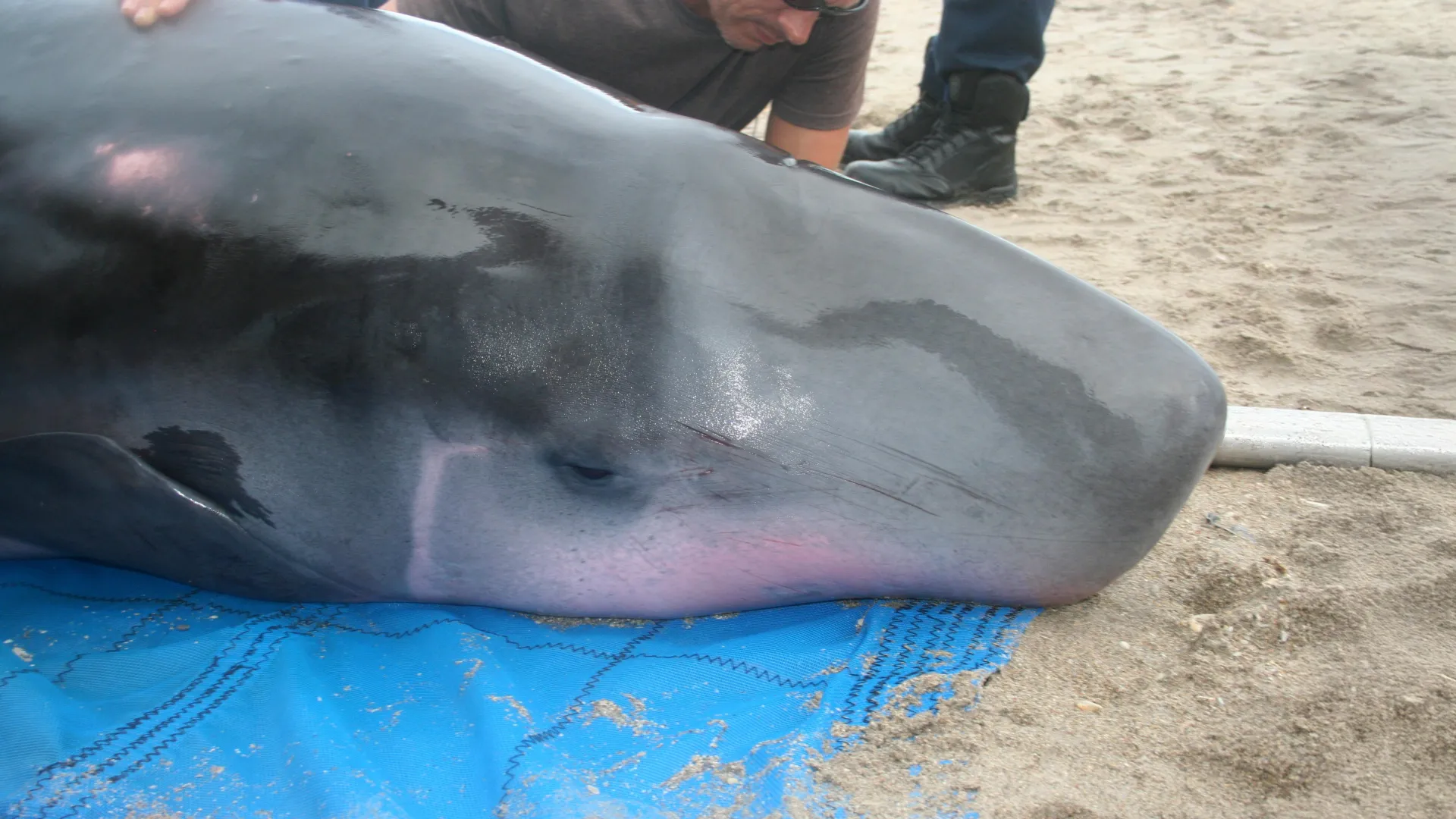
Pygmy sperm whales (Kogia breviceps) are some of the least understood mammals in the ocean. They spend most of their lives far from shore, usually traveling in small groups and diving deep to hunt squid and fish. Because they are quiet, secretive, and rarely seen at the surface, scientists have had few opportunities to observe them in the wild.
Much of what researchers know about pygmy sperm whales has come from animals that wash ashore. Strandings are especially common along the southeastern United States, where this species appears more frequently than almost any other large marine mammal.
Whale Strandings Reveal Hidden Health Problems
Examinations of stranded whales have uncovered several recurring medical problems, including stomach ulcers. These ulcers are sometimes associated with Helicobacter, a group of bacteria that can live in the stomach and intestines of many animals, including humans and whales.
After reviewing more than 20 years of stranding records and preserved tissue samples, researchers at Florida Atlantic University’s Harbor Branch Oceanographic Institute and collaborating institutions identified three Helicobacter genotypes that had never been documented before.
The study, published in the Journal of Wildlife Diseases, marks the first confirmed discovery of these bacterial genotypes in pygmy sperm whales. The researchers named them Kogia Helicobacter 1, 2 and 3. Beyond offering new insight into an elusive whale species, the findings raise broader questions about how bacterial infections may affect marine wildlife and ocean health.
“Helicobacter bacteria have long been associated with gastrointestinal disorders in humans and other animals, including chronic gastritis, ulcers, and even gastric cancer,” said Annie Page, D.V.M., Ph.D., senior author, an associate research professor and clinical veterinarian at FAU Harbor Branch. “To find novel strains of these bacteria in a deep-diving whale species is intriguing.”
Three Bacterial Genotypes New to Science
From 1999 through 2020, FAU Harbor Branch responded to 59 pygmy sperm whale strandings. Post-mortem examinations were completed on 80% of those animals.
In four cases, scientists found spiral-shaped, “spirilliform” bacteria within stomach tissue. The team later reexamined the preserved samples using histopathology, molecular testing and DNA sequencing. That analysis revealed several previously unknown Helicobacter genotypes.
“Two of the genotypes, Kogia Helicobacter 1 and 2, are genetically similar to known Helicobacter species previously found in other cetaceans — such as dolphins and porpoises — and in humans,” said Wendy Marks, corresponding author and a research coordinator of the marine wildlife veterinary medicine and research lab at FAU Harbor Branch. “But Kogia Helicobacter 3 belongs to a more divergent lineage, which emphasizes the possibility that there are far more undiscovered bacteria in the ocean than we realize.”
Researchers found both Kogia Helicobacter 1 and 3 in the forestomach tissue of one whale.
Infected Whales Showed Stomach Damage
Each of the four whales that tested positive also showed clear signs of gastrointestinal disease.
“All four whales that tested positive for Helicobacter had visible gastric pathology,” said Page. “We saw signs of gastritis, gastric ulcers, fibrosis and nematode infestations. In one case, there was also colitis, which suggests that the infection may not be limited to the stomach. While Helicobacter wasn’t listed as the cause of death in any of the whales, these lesions raise questions about its role in gastrointestinal disease.”
The researchers did not conclude that Helicobacter directly caused the whales’ deaths. However, the repeated presence of inflammation, ulcers, tissue scarring and other digestive problems suggests the bacteria could contribute to chronic illness.
Helicobacter was first reported in marine mammals in 2000. Since then, related bacteria have been detected in several cetacean species around the world. In some animals, infection has been connected with low energy, loss of appetite, regurgitation, stomach ulcers and inflammation. Many of these symptoms are similar to those seen in infected humans.
Possible Risks for Vulnerable Whale Populations
“Whales, like humans, appear to be susceptible to certain microbial infections that we’re only beginning to understand,” said Marks. “If chronic Helicobacter infections are causing health issues in these animals, it could have implications not only for individual whale health, but for entire populations — especially for species that are already vulnerable.”
Because pygmy sperm whales are so difficult to study at sea, researchers still do not know how widespread the newly identified bacteria may be or how much they affect the animals over time. Additional testing will be needed to determine whether these infections contribute to illness, strandings or population-level health problems.
The project brought together researchers from FAU Harbor Branch, the University of Florida’s College of Veterinary Medicine, Colorado State University and Marine Mammal Pathology Services.
Decades of Stranding Research Pay Off
“This research underscores the value of long-term marine mammal stranding response programs,” said Page. “Without the ability to study these stranded animals over decades, we never would have discovered these bacteria. Every whale tells a story, and sometimes that story leads us into entirely new scientific territory.”
Study co-authors are Jessy Castellanos-Gell, Ph.D.; Steven Tillis, Ph.D.; James F.X. Wellehan, D.V.M., Ph.D., DACZM; and April Childress, all with the College of Veterinary Medicine, University of Florida; Nicole Pegg, FAU Harbor Branch; David Rotstein, D.V.M., Marine Mammal Pathology Services; Sushan Han, D.V.M., Ph.D., Diagnostic Medicine Center, Colorado State University; and Steve Burton, director, stranding and population assessment, FAU Harbor Branch.
The research was supported by the Florida State Specialty License Plate Program through the “Protect Florida Whales” grant, which is administered by the Harbor Branch Oceanographic Institute Foundation.
