Want to avoid battles over broccoli and squabbles over spinach? We’ve asked you for your advice on how to cope at mealtimes over the summer holidays.


Want to avoid battles over broccoli and squabbles over spinach? We’ve asked you for your advice on how to cope at mealtimes over the summer holidays.
Mammalian meat allergy is a growing problem along Australia’s east coast – and it’s caused by tick bites.
Dr Chris and Dr Xand continue their conversation about AI medicine with Dr Emma Karoune.
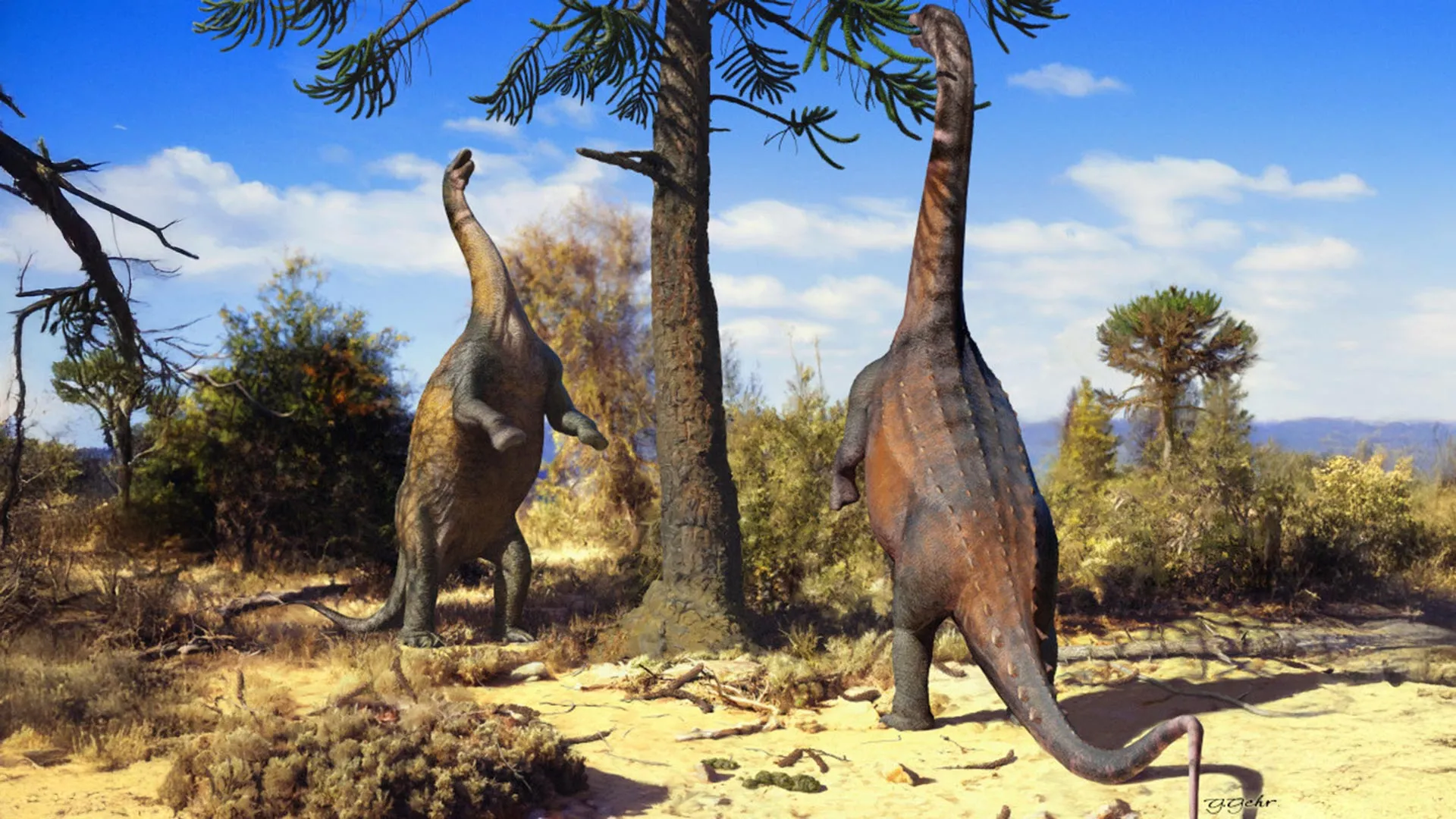
Some long-necked dinosaurs may have been far more capable of standing upright than their enormous bodies suggest.
About 66 million years ago, two South American sauropods could rise onto their hind legs and remain there for relatively long periods, especially when they were young. This ability may have helped them reach leaves high in trees, appear more intimidating to predators, attract mates, or reproduce.
The dinosaurs, Uberabatitan from Brazil and Neuquensaurus from Argentina, were modest in size compared with the largest sauropods. Even so, they were roughly comparable to modern elephants. Adult Uberabatitans may have grown as long as 26 meters, making them the largest dinosaurs known from Brazil.
New research suggests that their ability to stand upright declined as they grew. Younger animals were better able to support themselves on two legs, while adults probably experienced much greater strain because of their increasing weight.
The findings come from a study supported by FAPESP and published in the journal Palaeontology. The international research team included scientists from Brazil, Germany, and Argentina.
Testing Dinosaur Bones With Engineering Tools
To investigate how sauropods handled the forces involved in standing upright, the researchers turned to a computational method commonly used in engineering.
Their goal was to estimate how much stress gravity and body weight placed on the femur, or thigh bone, when each dinosaur shifted its weight onto its hind legs.
“Smaller sauropods like these had a bone and muscle structure that allowed them to stand more easily and for longer on their two hind legs. Larger ones were probably also able to stand, but for a shorter time and with less comfort, since the position caused a lot of stress on the femur,” summarizes Julian Silva Júnior, a postdoctoral researcher at the School of Engineering of São Paulo State University (FEIS-UNESP) in Ilha Solteira, Brazil.
Silva Júnior is the study’s first author. He carried out the research during an internship at the University of Tübingen in Germany with a scholarship from FAPESP.
The team created digital reconstructions of the femurs of seven sauropod species. The selected dinosaurs represented different evolutionary branches, body sizes, and anatomical features. Their models were built from fossils preserved in natural history museums around the world.
Simulating the Forces of Standing Upright
The scientists used finite element analysis (FEA), a method that breaks a structure into many small sections and calculates how each part responds to pressure, weight, heat, or other forces. Engineers often use the same approach to test whether bridges, buildings, and machines can withstand stress.
“Using this technique, we performed two simulations. One dealt with the extrinsic scenario, simulating the force coming from outside to inside. In this case, gravity and the animal’s own weight on the femur when the dinosaur was standing on its hind legs. In the other, we analyzed the intrinsic scenario, the force that the muscles would exert on the femur,” Silva Júnior explains.
By combining the two simulations, the researchers estimated the total stress experienced by the femur of each species.
The lowest stress levels appeared in the two South American sauropods. One was a juvenile Uberabatitan ribeiroi (named after the Brazilian municipality of Uberaba, where it was found, and coincidentally, Silva Júnior’s hometown). The other was Neuquensaurus australis (found near the Neuquén River in Argentina).
Both lived during the Late Cretaceous period, about 66 million years ago.
Stronger Bones Gave Smaller Sauropods an Edge
The researchers found that the two species had particularly robust femurs. Their thicker, sturdier bones were better able to spread out the forces created when the animals stood upright.
“They had more robust femurs and could dissipate stress better. The bigger ones had very large muscles and even giant femurs, but not enough to support their weight. That doesn’t mean they couldn’t stand up, but they probably chose the best time to do so, because it must have been an uncomfortable position,” says the paleontologist.
Larger sauropods may still have been capable of rising onto their hind legs. However, the simulations suggest that they could not hold the pose as comfortably or for as long.
Adult Uberabatitan individuals probably faced the same problem. Although the juvenile examined in the study was well suited to standing upright, fully grown animals would have carried far more weight. That additional mass likely placed them under levels of stress similar to those experienced by other giant sauropods.
Why Sauropods May Have Stood on Two Legs
Standing upright could have provided several important advantages.
Sauropods were plant eaters, so rising onto their hind legs may have allowed them to reach vegetation high in trees that was unavailable to shorter animals. The posture could also have played a role in reproduction by allowing males to mount females or perform visual displays to attract potential mates.
The pose may also have served as a defensive strategy. By lifting the front of the body into the air, a sauropod would have appeared even larger and more threatening to approaching predators.
When supported by both hind legs and the tail, the animal would have formed a tripodal stance, meaning that three points of contact helped stabilize its body.
Important Limits of the Study
The researchers note that their models did not include every structure that would have affected how the dinosaurs stood.
For example, the simulations did not account for cartilage, the flexible tissue that cushions joints and can help absorb and distribute stress. They also did not model the support provided by the tail while the dinosaur was in a tripodal position.
Because cartilage was not analyzed in any of the seven specimens, the researchers assumed that it played a similar role across the species. This means the method is most useful for comparing the dinosaurs with one another rather than producing an exact measurement for each individual animal.
“The tool we use is very efficient for comparisons, even if the answer isn’t exact for each one. By comparing representatives from different lineages, we can get a fairly accurate picture of how these animals behaved millions of years ago,” says the researcher.
The parents of the four naturally-conceived girls were taken by “immense surprise” with the pregnancy, the hospital said.
Scientists led by UC San Diego’s Scripps Institution of Oceanography are warning that oxygen is disappearing rapidly from oceans and freshwater systems, potentially pushing the planet into an “unsafe space.” Some of the resulting changes could persist for centuries and may not be reversible within human lifetimes.
The new review examines aquatic deoxygenation, which refers to declining levels of dissolved oxygen in the ocean (ocean deoxygenation), coastal waters, rivers, lakes and streams. The researchers assessed how this growing problem interacts with the nine major Earth system processes included in the Planetary Boundaries framework.
Introduced in 2009, the framework identifies environmental processes that are essential for maintaining a stable and resilient planet. It also tracks how human activity is pushing those systems beyond safe conditions.
The nine planetary boundaries are climate change, ocean acidification, biodiversity loss, atmospheric aerosol loading, stratospheric ozone depletion, freshwater change, land-use change, chemical pollution and biogeochemical flows (including the nitrogen cycle). The researchers argue that dissolved oxygen levels should also be formally included.
“The health and stability of our planet depends on the health and stability of aquatic ecosystems, which need oxygen to function normally,” said lead author Erica Ferrer, a Scripps Oceanography alumna and current postdoctoral scholar at UC Santa Barbara’s National Center for Ecological Analysis and Synthesis. “This study is designed to elevate the profile of aquatic deoxygenation as a global threat and show that it does not operate in isolation.”
Warming and Pollution Are Draining Oxygen
Human-caused warming, excessive nutrient pollution and changes in the movement and ventilation of deeper waters are the main forces driving aquatic deoxygenation.
As oxygen levels fall, they can disrupt the biological and chemical processes that help regulate Earth’s climate. The decline also threatens organisms across aquatic food webs, from microscopic life to fish and sharks.
Marine mammals can also suffer even though they breathe air at the surface. Oxygen loss can reduce or relocate their prey, damage habitats and alter the food webs they depend on.
Connecting Deoxygenation to Other Planetary Risks
Ferrer and Scripps biological oceanographer Lisa Levin, the study’s senior author, developed the idea for the review after attending COP25, the 2019 United Nations Climate Change Conference held in Madrid.
They hope the findings will encourage researchers and policymakers to examine aquatic oxygen loss alongside climate change, pollution, biodiversity decline and other pressures on the planet rather than treating it as a separate problem.
“Adding aquatic deoxygenation to the Planetary Boundaries framework will help us understand its impacts on Earth system stability,” said Ferrer. “Mitigating its impacts represents a critical component of maintaining biodiversity and climate.”
Research Support and Publication
Ferrer completed the review during her doctoral research at Scripps. Her work was supported by the National Science Foundation’s Graduate Research Fellowship Program, graduate funding from Scripps and UC San Diego, and later postdoctoral support from UC Santa Cruz and UC Santa Barbara.
The study was published June 30, 2026, in the journal Limnology and Oceanography.
Additional authors include four former Scripps PhD students: Shailja Gangrade, Lillian McCormick, Ariel Pezner and Yassir Eddebbar, who is now a Scripps climate scientist. Other contributors were De’Marcus Robinson of UCLA, Véronique Carcon of the Institut de Physique du Globe de Paris and Kevin Rose of the Rensselaer Polytechnic Institute.
The cause can be hidden or buried, says Dr Itamar Shatz, a lecturer at Cambridge University who is publishing a book on the subject this week.

Physicists have used an ordinary computer, advanced mathematics, and specialized software to solve a difficult quantum physics problem that had been described as beyond the reach of classical machines.
The work was carried out by researchers at the Center for Computational Quantum Physics (CCQ) at the Simons Foundation’s Flatiron Institute, together with collaborators at Boston University. Their method proved efficient enough for some of the calculations to run on a personal laptop.
By extracting more computing power from conventional hardware, the approach could expand the range of quantum dynamics problems scientists can study. It may also offer a useful strategy for optimization problems in which researchers must identify the best answer among many possible solutions.
The findings were published in the journal Science.
Simulating Hundreds of Interacting Qubits
The challenge involved modeling hundreds of interacting ‘qubits,’ the quantum counterparts of the bits used by traditional computers. The qubits were arranged in square, cubic, or diamond shaped lattices.
A conventional bit stores either a 0 or a 1. A qubit, however, can exist in a superposition of multiple states. This feature gives quantum systems their unusual capabilities, but it also makes their behavior extremely difficult to reproduce on a classical computer.
In a March 2025 article, also published in Science, another research team reported using a quantum computer to calculate the dynamics of an especially complex qubit system. That team argued that a classical computer could not match the achievement.
“Whenever we [at the CCQ] see these kinds of claims, we’re always a bit skeptical,” says Joseph Tindall, an associate research scientist at the CCQ and first author on the new Science paper. “Like, ‘Did you try this? Did you try that?'”
For the CCQ researchers, the claim offered a compelling way to test the limits of their own techniques.
The problem served as an opportunity to take their tools “out for a test drive,” says study co-author and CCQ research scientist Miles Stoudenmire. “We could have picked some more arbitrary target,” Stoudenmire says. “But it was like ‘Why not pick this one that has a big claim attached to it?'”
The Challenge of Quantum Entanglement
One of the greatest obstacles was quantum entanglement. When qubits become entangled, their properties remain connected, even when the qubits are separated by large distances. As a result, researchers cannot model each qubit independently.
Instead, sophisticated algorithms are needed to describe the entire system.
“When you have lots of particles that interact by quantum physics, you have this wave function that describes the state of the system,” Tindall says. “It’s this huge object that rapidly gets bigger and bigger the more particles there are.”
The wave function contains the information needed to describe the quantum system, but its size increases exponentially as more particles are added.
As the wave function’s size grows exponentially, “I just can’t directly store it on my computer,” he says. Working with such enormous wave functions is a recurring problem in quantum physics. Yet these calculations are essential for predicting the behavior of quantum materials, including superconductors.
Compressing a Vast Quantum System
The researchers overcame this barrier by developing and applying new tools based on tensor networks. These mathematical structures compress the information contained in a wave function so that it can be handled more efficiently.
Tindall compares the approach to “a zip file for the wave function where you’ve taken all this information, and you’ve compressed it into this mathematical data structure full of these small tables of numbers that are interconnected to each other.”
That compression made the simulation manageable on classical computers. Tindall completed many of the first calculations on a laptop using ITensor, a high-performance tensor network software library created at the CCQ.
The new simulations also demonstrate how the ITensor team is adapting tensor techniques for new types of problems. In this case, the researchers modeled three-dimensional quantum dynamics with a 3D tensor network.
“It’s this very powerful compression that can be very effective, but it’s a pretty complex mathematical object,” Tindall says. “This really is a bit of a frontier, because working with these objects — especially in three dimensions — is very untrodden. You need sophisticated codes and algorithms to deal with them; it’s a software engineering challenge in itself.”
An Older Algorithm Finds a New Use
Many of the simulations required only relatively modest computing resources. For the early calculations, Tindall used belief propagation, an algorithm developed in the 1980s that researchers have recently adapted for quantum systems.
“It’s a little more approximate than some of the other methods, but it’s way cheaper, and we can run it much more directly on lots of harder problems,” Stoudenmire says.
He contrasts that with “more sophisticated methods in the past of our field” that “wouldn’t be able to even start going for some of these three-dimensional problems, because they’re so big.”
Although the hardware was modest, the results reached state-of-the-art levels of accuracy. The simulations produced solutions that aligned with theoretical predictions and performed well on smaller problems where the correct answers could be checked.
Most importantly, the results agreed with those previously obtained using a quantum computer. The difference was that the new calculations did not require quantum hardware.
Classical and Quantum Computing Can Work Together
The findings add to the debate over where classical computing ends and quantum advantage begins. However, Tindall and Stoudenmire emphasize that the two fields are not simply competing with each other.
Classical simulations can help researchers understand what quantum computers are capable of doing, while progress in quantum hardware can inspire new classical methods.
“The good side of the classical versus quantum computing debate is that there’s a lot of synergy between the kind of simulations we’re interested in and the codes we write and what can be realized on these quantum computers,” Tindall says. “That can help guide us, and it can also help guide quantum computing researchers, because, obviously, the barrier for entry for us to simulate certain things is a lot easier than for them, because we don’t have to build a quantum computer. I can just write some code and press ‘run’ on my personal computer.”
The Next Quantum Simulation Challenge
The researchers are now developing methods that go beyond systems made only of qubits. Their next goal is to model electrons that can move between different sites.
These systems are significantly more difficult to simulate, but they are also directly relevant to understanding real quantum materials.
“They’re really, quantitatively, a lot harder problems,” Stoudenmire says. “So that’s one of our next big bars that we want to clear.”
Anita Le Brun, the face of a campaign to allow for alcohol to be served at care homes without a licence, is celebrating its success.
Endometriosis wellbeing hubs are being called for by a Medway woman.
