James Webb spots a galaxy with tentacles in deep space

Researchers at the University of Waterloo have identified the farthest jellyfish galaxy ever observed. The discovery was made using deep space observations from the James Webb Space Telescope (JWST).

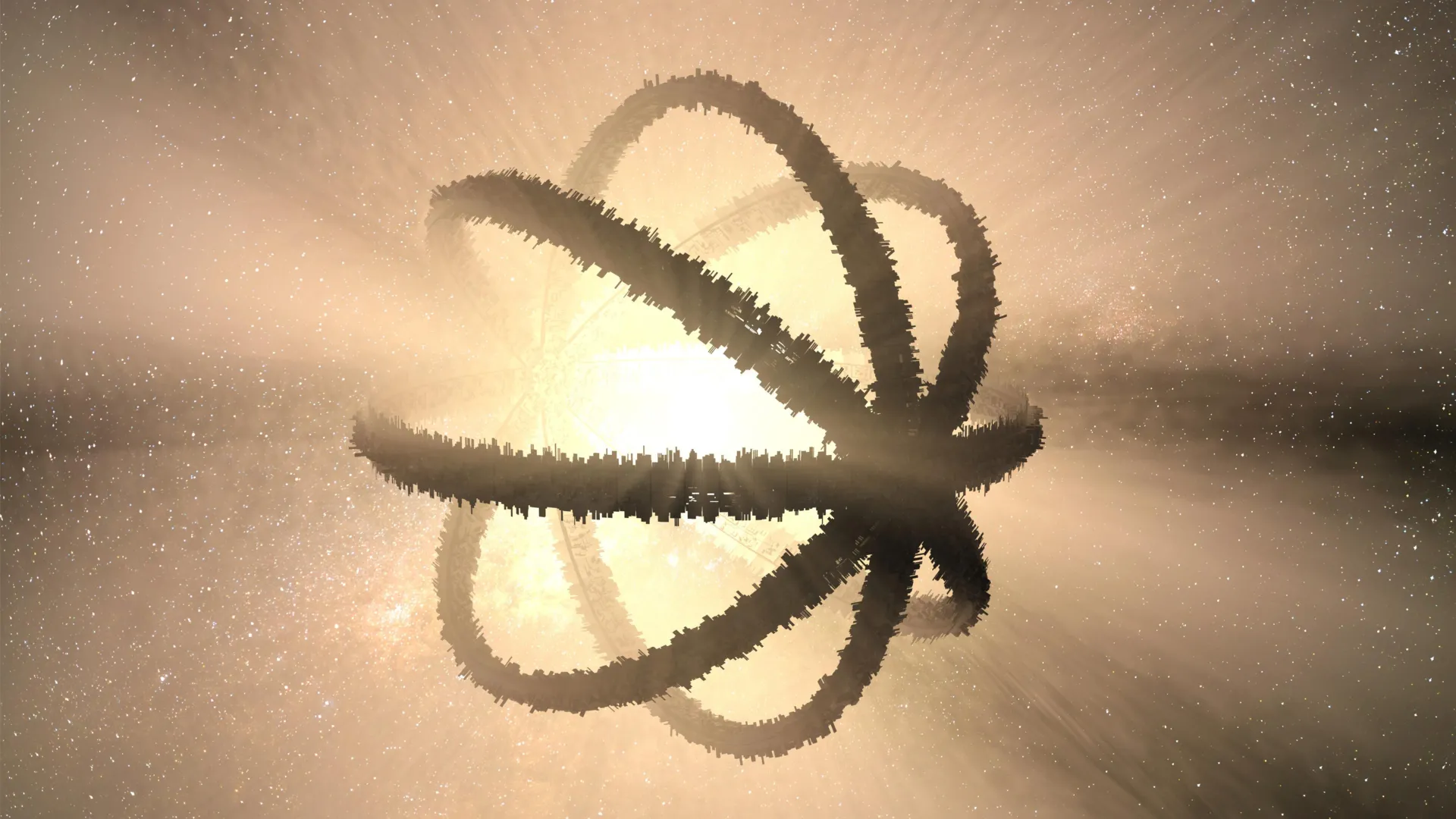
Jellyfish galaxies get their name from the long, flowing streams of gas that stretch out behind them, resembling tentacles. These galaxies race through crowded galaxy clusters filled with extremely hot gas. As they move, that surrounding gas pushes against them like a powerful headwind, sweeping their own gas backward into trailing strands. Astronomers call this process ram-pressure stripping.

This newly identified galaxy sits at z = 1.156, which means its light has traveled for 8.5 billion years to reach us. In other words, we are seeing it as it appeared when the universe was much younger.

The observation offers an unusual glimpse into how galaxies were reshaped long ago and raises new questions about what conditions were really like 8.5 billion years in the past.

A Clear View Into the Distant Universe

The team uncovered the galaxy while studying the COSMOS field — Cosmic Evolution Survey Deep field — a region of the sky that has been examined extensively by multiple telescopes. Astronomers selected this area because it lies far from the crowded plane of the Milky Way, reducing interference from nearby stars and dust. It is also positioned so that telescopes in both hemispheres can observe it, and it lacks bright foreground objects that might block the view. This makes it an ideal window into the distant universe.

“We were looking through a large amount of data from this well-studied region in the sky with the hopes of spotting jellyfish galaxies that haven’t been studied before,” said Dr. Ian Roberts, Banting Postdoctoral Fellow at the Waterloo Centre for Astrophysics in the Faculty of Science. “Early on in our search of the JWST data, we spotted a distant, undocumented jellyfish galaxy that sparked immediate interest.”

Bright Blue Star Formation in Stripped Gas

The galaxy itself has a fairly typical disk shape. What makes it stand out are the bright blue clumps scattered along its trailing streams. These glowing knots are extremely young stars. Their ages indicate they likely formed outside the main body of the galaxy, within the gas that was pushed away. That type of star formation is consistent with what astronomers expect in jellyfish galaxies experiencing ram-pressure stripping.

Rethinking Galaxy Clusters in the Early Universe

Studying this object has challenged previous assumptions about the early universe. Many scientists believed that galaxy clusters at that time were still assembling and that ram-pressure stripping was relatively rare. The new findings suggest otherwise.

“The first is that cluster environments were already harsh enough to strip galaxies, and the second is that galaxy clusters may strongly alter galaxy properties earlier than expected,” Roberts said. “Another is that all the challenges listed might have played a part in building the large population of dead galaxies we see in galaxy clusters today. This data provides us with rare insight into how galaxies were transformed in the early universe.”

If confirmed by further research, these results could reshape understanding of how dense cosmic environments influenced galaxy evolution billions of years ago.

To investigate further, Roberts and his colleagues have applied for additional observing time with JWST to explore this galaxy in greater detail.

The study, “JWST Reveals a Candidate Jellyfish Galaxy at z=1.156,” was published in The Astrophysical Journal.

Share Button

Young cancer survivors face faster aging and possible early dementia

Teens and young adults who survive cancer appear to age more quickly than people their same age who have never had the disease, according to new research. Scientists found signs of faster aging not only inside cells but also in brain performance, including memory, attention, and the ability to process information.

The findings were published in Nature Communications. The research was led by AnnaLynn Williams, PhD, of the University of Rochester Wilmot Cancer Institute, along with co-corresponding author Kevin Krull, PhD, of St. Jude Children’s Research Hospital.

Lifestyle Changes May Help Reverse Biological Aging

There may be encouraging news ahead. Ongoing work at Wilmot suggests that some of the accelerated aging seen in young survivors could potentially be slowed or even reversed through healthy habits such as quitting smoking, exercising regularly, and improving diet, Williams said.

“Young cancer survivors have many more decades of life to live,” she said. “So, if these accelerated aging changes are occurring early on and setting them on a different trajectory, the goal is to intervene to not only increase their lifespan but improve their quality of life.”

Many survivors treated in childhood or young adulthood are working toward finishing school, launching careers, gaining independence, or starting families. Cognitive challenges can make those milestones harder to reach.

“It’s kind of like a perfect storm,” Williams said. “This is why we see many survivors having worse educational and employment outcomes than their siblings.”

Williams, who is also a cancer survivor, serves as an assistant professor in the Department of Surgery and is part of Wilmot’s Cancer Prevention and Control research program, which focuses on reducing long-term symptoms in survivors.

Study Tracks Long Term Survivors

The study included about 1,400 participants treated at St. Jude. All were at least five years beyond their cancer therapy, and some had survived for decades. Most had been treated for acute lymphoblastic leukemia (ALL) or Hodgkin lymphoma.

Researchers found evidence of faster biological aging regardless of the type of treatment received during childhood. However, chemotherapy was linked to the greatest acceleration. Because chemotherapy can alter DNA structure and cause widespread cellular damage, it appears to have the strongest effect on the aging process.

Biological Age Linked to Brain Function

The investigators also identified a close connection between cellular aging and cognitive performance. Survivors whose biological age was higher than their actual chronological age had more difficulty with memory and attention.

For individuals who received radiation directly to the brain, Williams said the priority is preventing further decline.

Scientists are now trying to pinpoint when accelerated aging begins. That research is ongoing at Wilmot.

In a recent pilot study, Williams examined tissue and cell samples taken before and after treatment from 50 people with Hodgkin lymphoma and compared them with samples from 50 healthy individuals. Working with John Ashton, PhD, MBA, director of the Genomics Shared Resource at Wilmot, she analyzed the data to determine whether the aging process starts during treatment or develops years later.

Other Wilmot researchers are carrying out related studies in women with breast cancer and in older adults with leukemia, aiming to find ways to reverse treatment-related aging. One recent study has already demonstrated that exercise can help counteract aging linked to cancer.

The National Cancer Institute funded Williams’ study.

Share Button

Why a good night’s sleep starts in the morning

Sleep psychologist Stephanie Romiszewski explains the benefits of waking up at the same time every day.

Share Button

Scientists reveal why a popular anti-aging compound may also fuel cancer

Polyamines are naturally produced molecules present in all living cells. They play a vital role in basic biological functions, including cell growth and specialization. In recent years, scientists have focused on these compounds, especially spermidine, for their potential to support healthy aging. Often described as ‘geroprotectors,’ they have been shown to stimulate autophagy, a cellular recycling process that clears out damaged components. This benefit largely depends on a protein called eukaryotic translation initiation factor 5A (eIF5A1).

At the same time, researchers have repeatedly observed high levels of polyamines in many types of cancer, where they are linked to aggressive tumor growth. This contrast has created a scientific puzzle. How can the same molecules that appear to promote longevity also be associated with cancer?

A Molecular Puzzle in Cancer Metabolism

Although the connection between polyamines and cancer has been recognized for years, the detailed mechanisms behind their role in tumor progression have remained unclear. Cancer cells are known to alter their metabolism, relying heavily on aerobic glycolysis to rapidly generate energy. However, exactly how polyamines influence this metabolic shift has not been fully understood.

Adding to the complexity, eIF5A1 has well established functions in normal, healthy cells. A closely related protein, eIF5A2, shares 84% of its amino acid sequence but has been linked to cancer development. Why two nearly identical proteins behave so differently has been a major unanswered question.

Large Scale Proteomic Analysis Reveals Distinct Pathways

To investigate, a team led by Associate Professor Kyohei Higashi from the Faculty of Pharmaceutical Sciences at Tokyo University of Science in Japan carried out an in-depth study using advanced molecular and proteomic methods. Their results were published in Volume 301, Issue 8 of the Journal of Biological Chemistry. The findings clarify how polyamines stimulate cancer cell growth through biological routes that differ from those involved in healthy aging.

The researchers worked with human cancer cell lines to examine how polyamines affect protein production and metabolism. They first reduced polyamine levels using a drug, then restored them by adding spermidine. This approach allowed them to directly measure the impact of polyamines on cancer cells. Using high-resolution proteomic techniques, they analyzed changes across more than 6,700 proteins.

Their results showed that polyamines primarily boost glycolysis, the process that quickly converts glucose into energy, rather than enhancing mitochondrial respiration, which is more closely tied to healthy aging. The team also found that polyamines increase levels of eIF5A2 and five ribosomal proteins, including RPS 27A, RPL36AL, and RPL22L1, all of which are associated with cancer severity.

eIF5A1 vs eIF5A2 in Normal and Cancer Cells

A side by side comparison of eIF5A1 and eIF5A2 provided critical insight. “The biological activity of polyamines via eIF5A differs between normal and cancer tissues,” explains Dr. Higashi. “In normal tissues, eIF5A1, activated by polyamines, activates mitochondria via autophagy, whereas in cancer tissues, eIF5A2, whose synthesis is promoted by polyamines, controls gene expression at the translational level to facilitate the proliferation of cancer cells.”

In other words, polyamines trigger very different effects depending on which protein they influence. In healthy cells, they support cellular maintenance and energy production. In cancer cells, they help drive rapid growth.

How Polyamines Increase eIF5A2

Further experiments uncovered how polyamines raise eIF5A2 levels. Under typical conditions, production of the eIF5A2 protein is restrained by a small regulatory RNA molecule called miR-6514-5p. The researchers found that polyamines disrupt this natural brake, allowing eIF5A2 to be produced in greater amounts. They also showed that eIF5A2 controls a distinct group of proteins compared to eIF5A1, reinforcing the idea that these two similar proteins carry out separate functions.

Implications for Cancer Therapy and Supplement Safety

These findings carry important implications for both cancer treatment and the use of polyamine supplements. The results highlight how strongly biological context matters. In healthy tissues, polyamines may provide anti-aging benefits through eIF5A1. In tissues that are cancerous or at risk of becoming malignant, the same molecules can stimulate tumor growth through eIF5A2. This dual behavior helps explain why polyamines have been so challenging to interpret in medical research.

The study also identifies a promising new therapeutic target. “Our findings reveal an important role for eIF5A2, regulated by polyamines and miR-6514-5p, in cancer cell proliferation, suggesting that the interaction between eIF5A2 and ribosomes, which regulates cancer progression, is a selective target for cancer treatment,” remarks Dr. Higashi. Targeting eIF5A2 specifically could, in theory, slow cancer growth without interfering with the beneficial effects linked to eIF5A1.

Overall, this research marks a significant advance in understanding the complex and sometimes contradictory roles of polyamines. In the future, scientists may be able to design strategies that preserve their positive effects on healthy aging while reducing their potential to support cancer development.

This study was supported in part by a Grant-in-Aid for Scientific Research (C) (No. 18K06652) from the Japan Society for the Promotion of Science, the Hamaguchi Foundation for the Advancement of Biochemistry, and an Extramural Collaborative Research Grant of the Cancer Research Institute, Kanazawa University, Japan.

Share Button

A tiny twist creates giant magnetic skyrmions in 2D crystals

In the fast moving field of two dimensional materials, even a slight rotational shift between layers can dramatically change how a material behaves. Scientists previously discovered that when atom thin crystals are stacked with a small angular mismatch, their electronic properties can transform. This approach, known as moiré engineering, has become a key strategy for designing new forms of quantum matter.

Now researchers report in Nature Nanotechnology that magnetism can also behave in surprising ways under these conditions. In twisted antiferromagnetic layers, magnetic spin patterns are not limited to the small repeating moiré unit cell. Instead, they can spread into much larger, topological structures that extend across hundreds of nanometers.

Giant Magnetic Textures Beyond the Moiré Pattern

In most moiré systems, the size of physical effects is determined directly by the interference pattern created when two crystal lattices overlap. Magnetic order in stacked van der Waals magnets was widely expected to follow this same length scale. The new findings challenge that assumption.

The team examined twisted double bilayer chromium triiodide (CrI3) using scanning nitrogen-vacancy magnetometry, a technique that images magnetic fields with nanoscale precision. They observed magnetic textures reaching distances of up to ~300 nm, far exceeding the size of a single moiré cell and roughly ten times larger than the underlying wavelength.

A Counterintuitive Twist Angle Effect

The results reveal an unexpected pattern. When the twist angle becomes smaller, the moiré wavelength increases. However, the magnetic textures do not simply grow along with it. Instead, their size changes in the opposite way, reaching a maximum near 1.1° and disappearing above ~2°.

This reversal shows that magnetism is not just copying the moiré template. Rather, it arises from a balance between several competing forces, including exchange interactions, magnetic anisotropy and Dzyaloshinskii-Moriya interactions. All of these are subtly adjusted by how the layers are rotated relative to one another. Large scale spin dynamics simulations back up this interpretation, demonstrating the formation of extended Néel-type antiferromagnetic skyrmions that span multiple moiré cells.

Skyrmions and Low Power Spintronics

These findings matter beyond basic physics. Skyrmions are promising for future information technologies because they are small, stable and protected by their topology. They can also be moved using very little energy. Creating them simply by adjusting the twist angle, without lithography, heavy metals or strong electric currents, provides a clean and geometry driven path toward low power spintronic devices.

The researchers describe this phenomenon as super-moiré spin order, highlighting that twist engineering operates across multiple scales. A change in atomic alignment can generate topological structures on much larger, mesoscale distances. This challenges the long held idea that moiré physics is only a local effect and positions twist angle as a powerful thermodynamic control parameter capable of tuning exchange, anisotropy and chiral interactions to stabilize topological phases.

From a practical standpoint, these large and robust Néel-type skyrmionic textures are well suited for integration into devices. Their larger size makes them easier to detect and manipulate. At the same time, their topological protection and insulating host material suggest extremely low energy loss during operation. As scientists continue to explore how geometry shapes quantum behavior, such emergent magnetic states could play an important role in developing energy efficient, post-CMOS computing technologies.

Dr. Elton Santos, Reader in Theoretical/Computational Condensed Matter Physics, University of Edinburgh, whose team led the modelling aspect of the project, said: “This discovery shows that twisting is not just an electronic knob, but a magnetic one. We’re seeing collective spin order self-organize on scales far larger than the moiré lattice. It opens the door to designing topological magnetic states simply by controlling angle, which is a remarkably simple handle with profound practical consequences.”

Share Button

‘Doctors said my excruciating period pain was anxiety’

Women with endometriosis say doctors failed to listen to them or take their pain seriously.

Share Button

BBC investigation finds 50,000 people waited over 24 hours in A&E corridor care

Known as “corridor care”, patients are lining up on trolleys or sitting on chairs due to a lack of beds.

Share Button

Massive asteroid impact 6.3 million years ago left giant glass field in Brazil

Scientists have identified Brazil’s first known field of tektites, the glassy material created when an asteroid or other extraterrestrial object strikes Earth with extreme force. These newly recognized specimens, called geraisites after the state of Minas Gerais where they were first found, form a previously unknown strewn field. The discovery helps fill gaps in South America’s incomplete record of ancient impact events.

The findings were detailed in the journal Geology by a research team led by Álvaro Penteado Crósta, a geologist and senior professor at the Institute of Geosciences at the State University of Campinas (IG-UNICAMP). The project involved collaborators from Brazil, Europe, the Middle East, and Australia.

Before this discovery, only five major tektite fields were known worldwide, located in Australasia, Central Europe, the Ivory Coast, North America, and Belize. The Brazilian field now joins this rare group.

A 900 Kilometer Strewn Field of Impact Glass

The geraisites were first documented in three municipalities in northern Minas Gerais — Taiobeiras, Curral de Dentro, and São João do Paraíso — across an area about 90 kilometers long. After the study was submitted, additional finds were reported in Bahia and later in Piauí. As a result, the total known distribution now stretches more than 900 kilometers.

“This growth in the area of occurrence is entirely consistent with what is observed in other tektite fields around the world. The size of the field depends directly on the energy of the impact, among other factors,” Crósta explains.

By July 2025, researchers had collected about 500 pieces. With more recent discoveries, that total now exceeds 600. The fragments vary widely in size, from less than 1 gram to 85.4 grams, and can measure up to 5 centimeters along their longest dimension. Their forms match the aerodynamic shapes typical of tektites, including spheres, ellipsoids, droplets, disks, dumbbells, and twisted shapes.

What the Geraisites Look Like

At first glance, the geraisites appear black and opaque. Under strong light, however, they become translucent with a grayish green hue. This shade differs from the brighter green moldavites of Europe, which have been used in jewelry since the Middle Ages. The surfaces of the Brazilian specimens are pitted with small cavities.

“These small cavities are traces of gas bubbles that escaped during the rapid cooling of the molten material as it traveled through the atmosphere, a process also observed in volcanic lava but especially characteristic of tektites,” says Crósta.

Chemical Clues Confirm Impact Origin

Laboratory analysis shows that the geraisites contain high levels of silica (SiO2), ranging from 70.3% to 73.7%. Sodium (Na2O) and potassium (K2O) oxides together account for 5.86% to 8.01%, slightly higher than what is seen in other tektite regions. Trace elements such as chromium (10-48 parts per million) and nickel (9-63 ppm) vary in small amounts, suggesting the original target rock was not uniform. Researchers also detected rare inclusions of lechatelierite, a high temperature glassy silica that forms during extreme heating, further confirming an impact origin.

“One of the decisive criteria for classifying the material as a tektite was its very low water content, as measured by infrared spectroscopy: between 71 and 107 ppm. For comparison, volcanic glasses, such as obsidian, usually contain from 700 ppm to 2% water, whereas tektites are notoriously much drier,” Crósta points out.

Dating the Ancient Asteroid Impact

Argon isotope dating (⁴⁰Ar/³⁹Ar) indicates the impact occurred around 6.3 million years ago, near the end of the Miocene epoch. Three closely grouped age results were obtained (6.78 ± 0.02 Ma, 6.40 ± 0.02 Ma, and 6.33 ± 0.02 Ma), supporting the conclusion that they came from a single event.

“The age of 6.3 million years should be interpreted as a maximum age since some of the argon may have been inherited from the ancient rocks targeted by the impact,” the researcher comments.

The Search for a Missing Crater

No crater linked to the impact has yet been identified. According to Crósta, this is not unusual. Only three of the six major classical tektite fields have confirmed craters. In the case of the vast Australasia field, the crater is thought to lie beneath the ocean.

Isotopic geochemistry suggests the molten material came from Archean continental crust dating between 3.0 and 3.3 billion years old. That evidence points to the São Francisco craton, one of the oldest and most stable regions of South America’s continental crust.

“The isotopic signature indicates a very ancient continental, granitic source rock. This greatly reduces the universe of candidate areas,” says Crósta.

Future surveys using magnetic and gravimetric techniques could detect circular underground structures that mark a buried or eroded crater.

Estimating the Size of the Impact

Researchers cannot yet determine the exact size of the object that struck Earth, but they believe it was not small. The volume of melted rock and the broad distribution of debris indicate a powerful event, though likely less intense than the impact that created the enormous Australasia field, which spans thousands of kilometers.

The team is developing mathematical models to estimate the impact’s energy, entry speed, trajectory angle, and total volume of melted material. These calculations will become more refined as additional data on the distribution of geraisites are gathered.

The discovery adds an important chapter to South America’s impact history. Only about nine large impact structures are currently known on the continent, most of them much older and located in Brazil. The findings also suggest that tektites may be more widespread than previously recognized, but are sometimes overlooked or mistaken for ordinary glass.

Separating Science From Speculation

To address exaggerated claims about asteroid threats, Crósta works with undergraduate students to manage the Instagram account @defesaplanetaria. The page focuses on science communication and aims to distinguish genuine risks from unfounded speculation about meteorites and asteroids.

Impacts were common in the early solar system, when debris was abundant and planetary orbits were unstable. Large bodies shifted positions, sending smaller objects in many directions. Today, the solar system is far more stable, and major impacts are much less frequent.

“Understanding these processes is essential to separating science from speculation,” the researcher concludes.

Crósta has studied meteorite impact structures since his master’s research project in 1978. Over the years, he has received several grants from FAPESP (08/53588-7, 12/50368-1, and 12/51318-8).

Share Button

Scientists just created chocolate honey packed with surprising health perks

Researchers at the State University of Campinas (UNICAMP) in São Paulo, Brazil, have created a new product that blends native bee honey with cocoa bean shells. The result can be eaten on its own or added to foods and cosmetic formulations. The findings were published in ACS Sustainable Chemistry & Engineering, which highlighted the study on its cover.

To make the product, the team used honey from native bees as a natural, edible solvent to draw out beneficial compounds from cocoa shells, a byproduct typically discarded during chocolate production. These compounds include theobromine and caffeine, which are linked to heart health. The ultrasound-assisted process also boosted the honey’s levels of phenolic compounds, known for their antioxidant and anti-inflammatory effects.

Researchers who sampled the mixture report a pronounced chocolate flavor that varies depending on the proportion of honey to cocoa shells. Additional testing is planned to further evaluate taste and other sensory characteristics.

“Of course, the biggest appeal to the public is the flavor, but our analyses have shown that it has a number of bioactive compounds that make it quite interesting from a nutritional and cosmetic point of view,” says Felipe Sanchez Bragagnolo, the study’s first author. He carried out the research during his postdoctoral work at the Faculty of Applied Sciences (FCA) at UNICAMP in Limeira with support from FAPESP.

Working with INOVA UNICAMP, the university’s innovation agency, the team is now seeking a commercial partner to license the patented method and bring the product to market (read more at agencia.fapesp.br/52969).

Native Bee Honey and Biodiversity

Beyond reducing food waste, the project highlights the sustainable use of local biodiversity. Honey from native Brazilian bees was selected because it generally contains more water and is less viscous than honey from European bees (Apis mellifera), making it more effective for extracting compounds.

The researchers tested honey from five Brazilian species: borá (Tetragona clavipes), jataí (Tetragonisca angustula), mandaçaia (Melipona quadrifasciata), mandaguari (Scaptotrigona postica), and moça-branca (Frieseomelitta varia). Cocoa shells were supplied by the São Paulo State Department of Agriculture and Supply’s Comprehensive Technical Assistance Coordination Office (CATI) unit in São José do Rio Preto.

Mandaguari honey was initially used to refine the extraction process because its water content and viscosity were moderate compared to the others. Once optimized, the same procedure was applied to the remaining honey varieties.

Bragagnolo notes that honey is sensitive to environmental factors such as climate, storage, and temperature. “Therefore, it’s possible to adapt the process to locally available honey, not necessarily mandaguari honey,” he says.

Green Chemistry and Ultrasound Extraction

The extraction method relies on ultrasound technology. A probe that resembles a metal pen is inserted into a container holding the honey and cocoa shells. Sound waves generated by the probe help release compounds from the plant material so they dissolve into the honey.

This approach works by forming microscopic bubbles that collapse and briefly raise the temperature, helping break down the shells. In the food industry, ultrasound-assisted extraction is viewed as an environmentally friendly technique because it is faster and more efficient than many conventional methods.

Sustainability was formally evaluated in the study using Path2Green software, developed by a team led by Professor Mauricio Ariel Rostagno of FCA-UNICAMP, who also supervised Bragagnolo’s postdoctoral research and coordinated the project. The analysis measured how well the process aligned with 12 principles of green chemistry, including transportation, post-treatment, purification, and application. The use of a local, edible, ready-to-use solvent was a major advantage. On a scale of -1 to +1, the product received a score of +0.118.

“We believe that with a device like this, in a cooperative or small business that already works with both cocoa and native bee honey, it’d be possible to increase the portfolio with a value-added product, including for haute cuisine,” Rostagno suggests.

Shelf Life and Future Applications

The team is also planning studies to examine how ultrasound affects honey microbiology. Just as it breaks down plant cells, ultrasound can disrupt the cell walls of microorganisms such as bacteria that may spoil the product.

“Honey from native bees usually needs to be refrigerated, matured, dehumidified, or pasteurized, unlike honey from European bees, which can be stored at room temperature. We suspect that, simply by being exposed to ultrasound, the microorganisms contained in the honey are eliminated, increasing the stability and shelf life of the product,” he explains.

Looking ahead, the researchers intend to explore other uses for native bee honey as a solvent in ultrasound-assisted extraction, including processing additional plant residues.

Along with postdoctoral fellowships and an international research internship for Bragagnolo, the project received multiple scholarships and grants from FAPESP (23/02064-8, 23/16744-0, 21/12264-9, 20/08421-9, 19/13496-0, and 18/14582-5.

Share Button

Beyond amyloid plaques: AI reveals hidden chemical changes across the Alzheimer’s brain

Researchers at Rice University have produced the first comprehensive, label free molecular atlas of the Alzheimer’s brain in an animal model. The work offers a deeper look at how the disease begins and spreads. Alzheimer’s claims more lives each year than breast cancer and prostate cancer combined, underscoring the urgency of understanding what drives it.

Using an advanced light based imaging method combined with machine learning, the team examined brain tissue from both healthy and Alzheimer’s affected animals. Their results, published in ACS Applied Materials and Interfaces, reveal that chemical changes linked to Alzheimer’s are not confined to amyloid plaques. Instead, these alterations appear throughout the brain in uneven and complex patterns.

Laser Imaging Reveals Brain Chemistry in Detail

To detect these subtle shifts, the scientists turned to hyperspectral Raman imaging. This sophisticated form of Raman spectroscopy uses a laser to detect the unique chemical fingerprints of molecules within tissue.

“Traditional Raman spectroscopy takes one measurement of chemical information per molecular site,” said Ziyang Wang, an electrical and computer engineering doctoral student at Rice who is a first author on the study. “Hyperspectral Raman imaging repeats this measurement thousands of times across an entire tissue slice to build a full map. The result is a detailed picture showing how chemical composition varies across different regions of the brain.”

The researchers scanned entire brains slice by slice, compiling thousands of overlapping measurements to build high resolution molecular maps of both healthy and diseased tissue. Because the imaging was label free, the samples were not treated with dyes, fluorescent proteins or molecular tags.

“This means we observed the brain as is, capturing a complete, unaltered portrait of its chemical makeup,” Wang said. “I think this makes the approach more unbiased and better suited for discovering new disease-related changes that might otherwise be missed.”

Machine Learning Maps Uneven Alzheimer’s Damage

The imaging process generated enormous amounts of data, which the team analyzed using machine learning (ML). They first applied unsupervised ML, allowing algorithms to detect natural patterns in the chemical signals without prior assumptions. These models sorted tissue based entirely on its molecular characteristics. The researchers then used supervised ML, training models to distinguish between Alzheimer’s and non Alzheimer’s samples. This step helped determine how strongly different brain regions reflected Alzheimer’s related chemistry.

“We found that the changes caused by Alzheimer’s disease are not spread evenly across the brain,” Wang said. “Some regions show strong chemical changes, while others are less affected. This uneven pattern helps explain why symptoms appear gradually and why treatments that focus on only one problem have had limited success.”

Metabolic Disruption in Memory Regions

Beyond protein buildup, the study identified broader metabolic differences between healthy and Alzheimer’s brains. Levels of cholesterol and glycogen varied across regions, with the most dramatic contrasts appearing in areas responsible for memory, particularly the hippocampus and cortex.

“Cholesterol is important for maintaining brain cell structure, and glycogen serves as a local energy reserve,” said Shengxi Huang, associate professor of electrical and computer engineering and materials science and nanoengineering and corresponding author on the study. “Together, these findings support the idea that Alzheimer’s involves broader disruptions in brain structure and energy balance, not only protein buildup and misfolding,” added Huang, who is also a member of the Ken Kennedy Institute, the Rice Advanced Materials Institute and the Smalley-Curl Institute.

A Broader View of Alzheimer’s Progression

The project grew out of ongoing discussions about new ways to study the Alzheimer’s brain.

“At first, we were measuring only small areas of brain tissue,” Wang said. “Then I thought, what if we could map the entire brain and gain a much broader view? It took several rounds of testing and trial and error before the measurements and analysis worked well together.”

When the complete chemical map finally came together, the impact was immediate.

“Patterns emerged that had not been visible under regular imaging,” Wang said. “Seeing those results was deeply satisfying. It felt like revealing a hidden layer of information that had been there all along, waiting for the right way to be analyzed.”

By delivering the first detailed, dye free chemical maps of the Alzheimer’s brain, this research offers a more comprehensive view of the disease. The team hopes the findings will eventually support earlier diagnosis and more effective strategies to slow progression.

The research was supported by the National Science Foundation (2246564, 1934977), the National Institutes of Health (1R01AG077016) and the Welch Foundation (C2144).

Share Button