Age-related changes in the womb lining may be the cause and could be treatable in the future, say experts.


Age-related changes in the womb lining may be the cause and could be treatable in the future, say experts.
The senior doctors in England now have a mandate for strike action over the next 12 months.
A study found that even a five-minute walk boosts your mood and lowers fatigue.
The euphoria from England’s dramatic victory over Mexico might not be enough to get you through Monday.
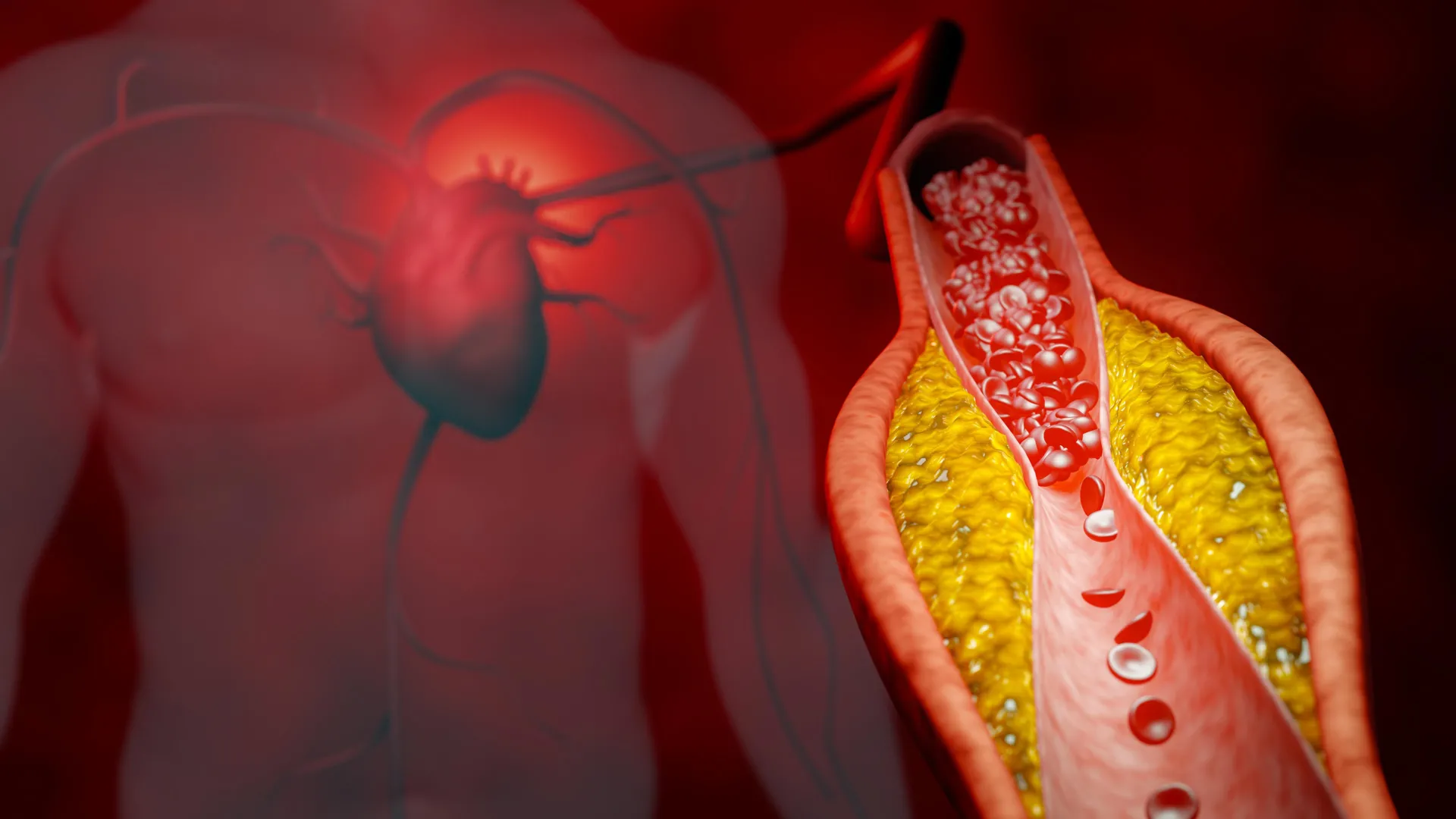
Millions of Americans have a blood test every year to measure LDL, often called “bad” cholesterol. But new research from Northwestern Medicine suggests that another test may do a better job of identifying who needs more aggressive treatment to reduce the risk of heart attacks and strokes.
The study, published in JAMA, found that measuring apolipoprotein B (apoB) was more effective than tracking LDL or non HDL cholesterol when deciding whether to intensify cholesterol lowering therapy, including statins and other medications.
“We found that apoB testing to intensify cholesterol-lowering medication would prevent more heart attacks and strokes than current practice, and that these health benefits were achieved at a cost that represents good value for U.S. healthcare payers,” said study lead author Ciaran Kohli-Lynch, assistant professor of preventive medicine in the division of epidemiology at Northwestern University Feinberg School of Medicine.
Kohli-Lynch said this is the first comprehensive analysis to show that using apoB to guide cholesterol treatment is also cost effective.
Heart disease remains the leading cause of death in the United States and is responsible for enormous healthcare spending. Over time, tiny cholesterol carrying particles can become trapped inside artery walls, where they build up into plaques that restrict blood flow and raise the risk of heart attacks and strokes.
Why ApoB May Be a Better Measure of Heart Disease Risk
Doctors have long relied on LDL cholesterol and non HDL cholesterol levels to decide when patients should begin or intensify cholesterol lowering treatment. While those tests provide useful information, they do not fully capture a person’s cardiovascular risk.
“Research strongly shows that apolipoprotein B (apoB) is better at identifying who is at risk, because it counts the total number of harmful particles in the blood,” explained Kohli-Lynch.
Unlike standard cholesterol tests, apoB measures the number of cholesterol carrying particles that can contribute to plaque buildup. Researchers say that makes it a more direct indicator of cardiovascular risk.
Even with growing evidence supporting apoB, the test is still not commonly used in routine care. Kohli-Lynch said one reason is that measuring apoB generally requires an additional blood test beyond the standard cholesterol panel, increasing both cost and inconvenience.
“Our study asked: Is it worth spending extra money to use apoB instead of LDL to guide treatment intensification?” Kohli-Lynch said.
Computer Model Compared Three Cholesterol Testing Strategies
To answer that question, the research team created a computer simulation representing 250,000 U.S. adults who were eligible for statin therapy but did not already have cardiovascular disease.
The model compared three approaches for guiding treatment:
When patients failed to meet their target, treatment was stepped up first by using stronger statins and then by adding ezetimibe if needed.
Researchers followed each strategy over a lifetime, estimating heart attacks, strokes, life expectancy, quality of life, and healthcare costs.
The results showed that using apoB to guide treatment consistently performed better than the LDL and non HDL approaches. It improved overall health outcomes, prevented more cardiovascular events, and did so in a way the researchers determined was cost effective.
New Cholesterol Guidelines Increase the Importance of Accurate Testing
The findings come as doctors have more cholesterol lowering medications available than ever before. Earlier this year, the American Heart Association and 10 other medical organizations also released updated guidelines recommending that many people begin cholesterol lowering therapy at younger ages.
“This means it is increasingly important to accurately identify who would benefit most from intensive treatment,” Kohli-Lynch said.
Other Northwestern coauthors include Drs. John Wikins and Samuel Luebbe.
The study, titled “Cost-Effectiveness of ApoB, Non-HDL-C, and LDL-C Goals for Primary Prevention Lipid-Lowering Therapy,” was supported by the American Heart Association Career Development Award 24CDA1274989 (Dr. Kohli-Lynch).
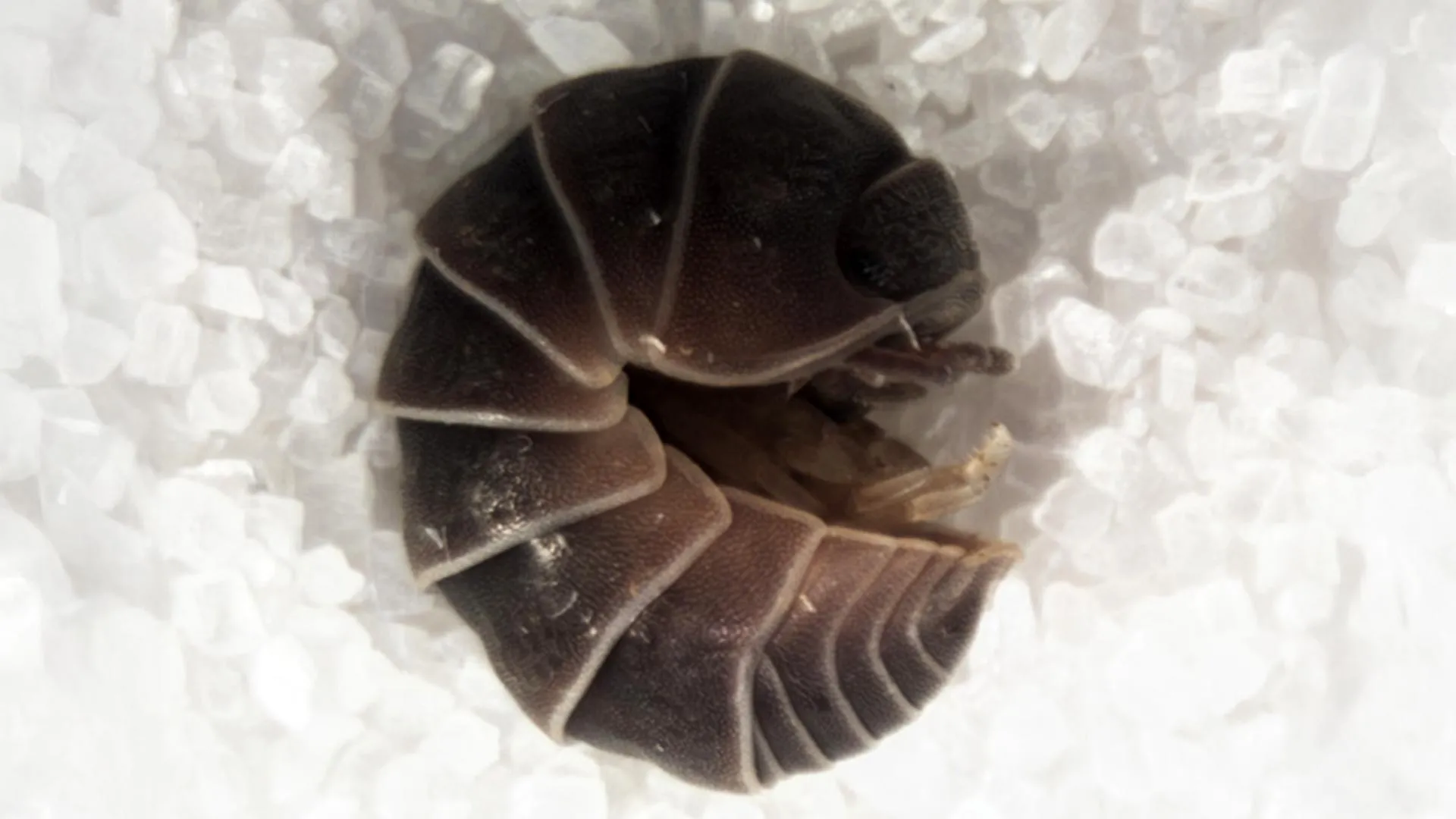
Researchers have uncovered a surprising side effect of artificial lighting: ordinary streetlights can lure thousands of tiny land dwelling isopods into giant synchronized “death spirals.” The newly documented behavior, observed in Israel, is the first of its kind and suggests that human made lighting can dramatically disrupt the instincts of small ground dwelling animals.
The study was led by PhD student Idan Sheizaf under the supervision of Prof. Ariel Chipman at The Hebrew University of Jerusalem. Published in Ecology and Evolution, the research describes how land dwelling isopods, relatives of crabs and shrimp that are better known as woodlice or pill bugs, abandon their normally solitary habits to join enormous circular formations containing more than 5,000 individuals.
A surprising discovery in northern Israel
The unusual behavior first came to light after amateur naturalist Eviatar Itzkovich noticed huge swirling groups of isopods during summer nights in the Golan Heights.
The researchers focused on the species Armadillo sordidus, a little studied isopod that typically spends its time hidden beneath rocks and damp leaf litter, where moisture helps prevent it from drying out.
Although woodlice commonly cluster together to conserve moisture, scientists had never documented coordinated movement on this scale. Before this work, very little was known about A. sordidus. The study also expanded the species’ known range. Previously, it had only been recorded in southern Syria and the Golan Heights. Researchers have now documented it in the Jezreel Valley for the first time.
Experiments reveal the role of artificial light
To determine what was causing the strange circular marches, the team tested several possible explanations, including magnetic fields and different types of lighting.
Strong magnets placed near the moving isopods had no effect, even though the Golan Heights is known for unusual magnetic properties. The animals continued circling uninterrupted.
Ultraviolet flashlights attracted only a small number of isopods and never triggered the swirling formations.
White light, however, consistently produced the dramatic behavior. When researchers positioned a white lamp so that its beam shone straight down, the isopods repeatedly gathered into large rotating circles.
The experiments showed that the shape of the illuminated area is what matters most. A vertical beam creates a circular boundary of light on the ground. Drawn toward that edge, the isopods begin walking along its perimeter. As more individuals join, the movement reaches a tipping point and develops into a large, self sustaining circular procession.
Reflecting on the findings, Idan Sheizaf said: “While collective movement is common in the animal kingdom, seeing it in this form in isopods was entirely unexpected. It appears that the geometry of our modern world — specifically the circular pools of light created by streetlights, is interacting with the natural instincts of these creatures to create a mesmerizing, yet potentially harmful, emergent phenomenon.”
Why the “death spirals” may be dangerous
Although the swirling formations are visually striking, researchers believe they represent an unintended trap created by artificial light at night (ALAN), not a natural social behavior.
Most of the participants were female, and many were carrying eggs, making it unlikely that the gatherings were related to mating. Instead, the evidence suggests that artificial lighting is disrupting the animals’ normal instincts.
The consequences could be severe. During one observation, a centipede preyed on the distracted isopods while they remained caught in the swirling formation. By pulling these animals out of their sheltered habitats and keeping them moving in circles, streetlights may leave them vulnerable to predators while also wasting energy needed for survival.
The findings highlight how even a simple change to the environment, such as installing a streetlight, can reshape ancient behaviors in small animals that often go unnoticed.
The once-a-day pill, from the makers of the Wegovy weight-loss jab, can now be bought privately in UK pharmacies.
Sandra Champkins was symptom-free but a CT scan at Banbury’s Tesco car park detected she had cancer.
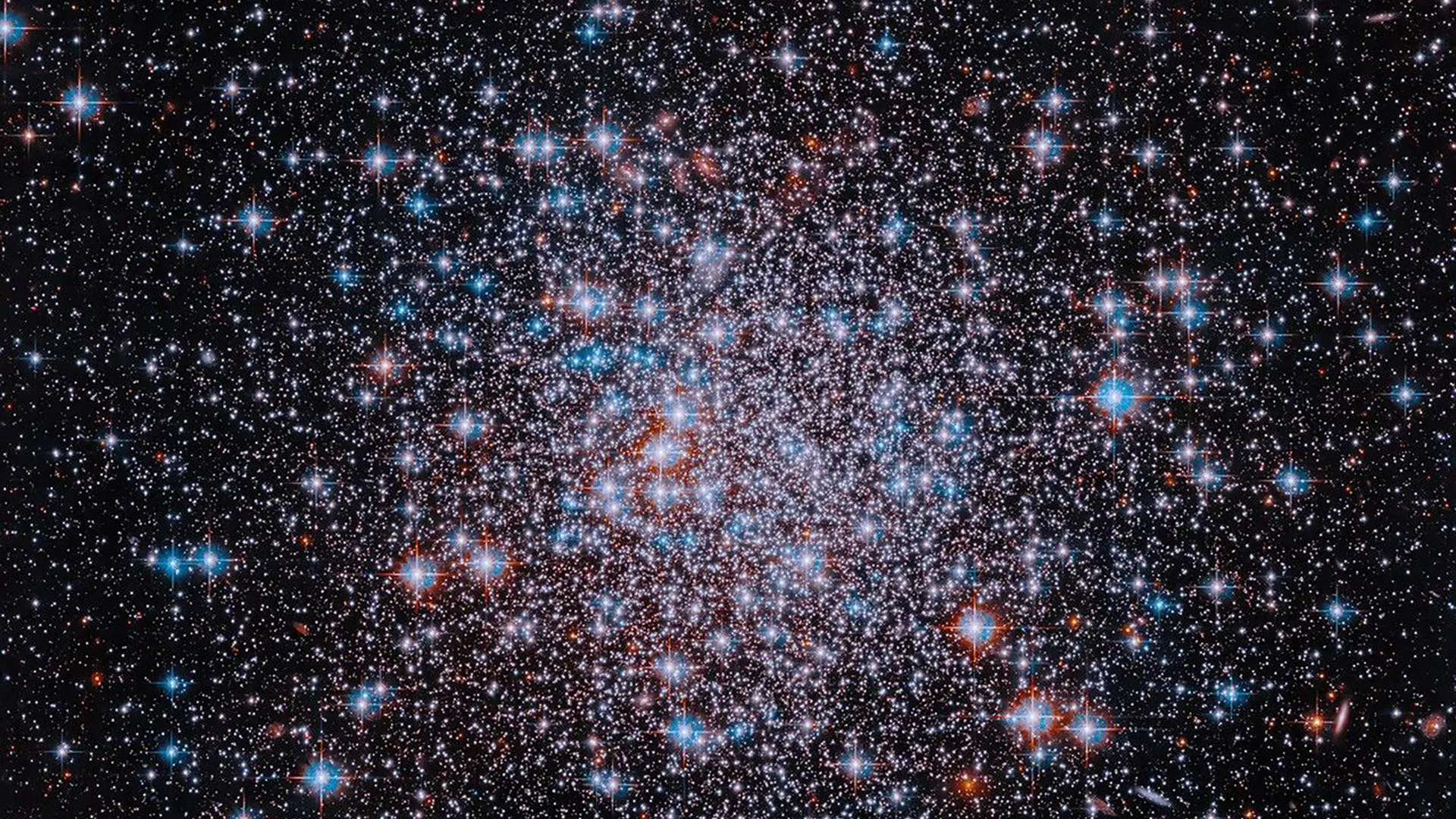
A brilliant field of red, white, and blue stars sparkles across a new image from NASA’s Hubble Space Telescope, resembling a sparkler glowing against the night sky. NASA released the image to commemorate the 250th anniversary of the United States, celebrating the nation’s long history of exploration while showcasing one of the oldest collections of stars in our galaxy.
Beyond its patriotic appearance, the image offers a rare look at a stellar system that has survived for nearly the entire history of the universe.
A 13-Billion-Year-Old Star Cluster
The featured object is NGC 6426, a globular cluster located in the outer halo of the Milky Way. Globular clusters are dense, spherical swarms of stars that remain bound together by gravity. About 150 of these ancient clusters are known to exist within our galaxy.
Most of the stars in a globular cluster are born from the same collapsing cloud of gas, so they tend to be roughly the same age. NGC 6426 is estimated to be around 13 billion years old, making it one of the oldest globular clusters in the Milky Way. Since the universe itself is about 13.7 billion years old, this cluster formed not long after the cosmos came into existence.
That extraordinary age makes NGC 6426 a valuable record of conditions in the early universe.
What the Colors in the Hubble Image Mean
The vivid colors are not simply for visual appeal. They represent different wavelengths of light collected through Hubble’s filters and processed using standard scientific techniques.
Blue highlights shorter wavelengths of visible light, while red represents longer visible wavelengths as well as some near infrared light. Because a star’s color is closely linked to its temperature, the blue stars are hotter and the red stars are cooler.
Ancient Stars Reveal the Early Universe
The stars in NGC 6426 have what astronomers call low metallicity, meaning they contain relatively small amounts of elements heavier than hydrogen and helium. This chemical makeup closely resembles the composition of the young universe, when almost all matter consisted of hydrogen and helium and heavier elements were only beginning to form inside massive stars through nuclear fusion.
Scientists have also found evidence that the cluster contains two chemically distinct populations of stars. This discovery suggests that the slightly younger stars formed after an earlier generation of massive stars ended their lives in powerful supernova explosions.
Those explosions scattered newly created heavy elements throughout the cluster, enriching the gas that later gave birth to another generation of stars. The same process gradually filled the universe with the ingredients needed to create planets and many of the elements found throughout the cosmos today.
Hubble Continues Uncovering the Milky Way’s History
NASA captured this image as part of an ongoing study of globular clusters in the Milky Way’s halo. By measuring their ages and examining their chemical composition, astronomers hope to better understand how our galaxy formed and evolved over billions of years.
For more than 30 years, the Hubble Space Telescope has transformed our view of the universe through groundbreaking discoveries. Today, its observations are complemented by NASA’s James Webb Space Telescope, which studies the cosmos in infrared light, while the Nancy Grace Roman Space Telescope, scheduled to launch in late summer, is expected to further expand our understanding of the universe.
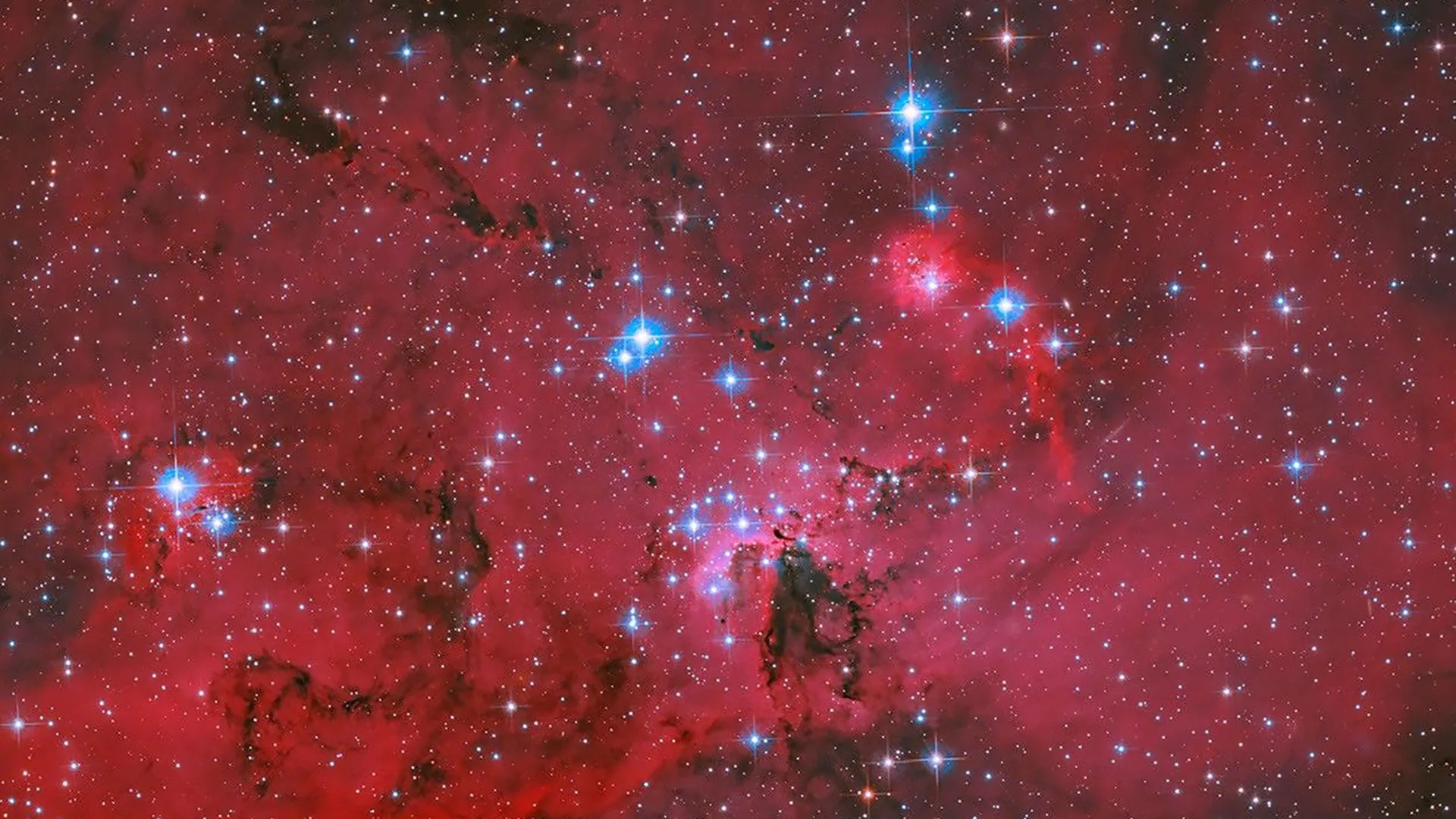
A spectacular new image from NASA’s Hubble Space Telescope offers a front row view of one of the universe’s busiest stellar nurseries. Brilliant blue and white stars sparkle against glowing crimson clouds of hydrogen gas, creating a breathtaking scene that resembles fireworks shining through drifting smoke.
The image showcases LH 95, a vast star forming region inside the Large Magellanic Cloud, a dwarf galaxy that orbits the Milky Way. This remarkable region contains both newly forming low mass stars and massive blue giants, making it one of the Large Magellanic Cloud’s many stellar associations.
Massive Stars Are Reshaping Their Surroundings
The brightest blue stars in LH 95 are also its most powerful. Each has at least three times the mass of the Sun and floods the surrounding region with intense ultraviolet radiation while blasting out powerful stellar winds.
Those energetic forces heat the surrounding hydrogen gas and gradually sculpt the nebula into its striking appearance. Thick lanes of dust stand out as dark filaments because they are dense enough to resist being worn away, creating dramatic contrast against the glowing red clouds.
The colors seen in the image represent specific wavelengths of light rather than what the human eye would naturally observe. Blue highlights shorter visible wavelengths, while red combines longer visible wavelengths with some near infrared light. The nebula’s brilliant crimson glow comes from hydrogen alpha emissions, a telltale sign that new stars are actively forming.
Thousands of Young Stars Are Still Growing
Hydrogen alpha light allows astronomers to pinpoint some of the youngest stars hidden inside the glowing gas. Hubble’s observations reveal thousands of developing stars that are still drawing in material from the surrounding disks of gas and dust that gave birth to them.
Researchers identified approximately 2,500 stars that have accumulated nearly all of the mass they need but have not yet begun nuclear fusion. These objects, known as pre-main-sequence stars, formed from collapsing clouds of gas and continue to shrink under their own gravity. Once their cores become hot and dense enough, hydrogen fusion will ignite, transforming them into fully fledged stars.
Hubble Reveals a Longer Growth Stage
Studying this enormous population of young stars has given astronomers new insight into how stars mature.
The observations confirmed that a young star’s accretion rate, or the speed at which it gathers material, naturally slows as it ages. At the same time, the research showed that this process can continue for several million years, lasting longer than some earlier assumptions suggested.
That discovery helps scientists better understand how stars continue building their final mass and how the disks surrounding them gradually evolve before eventually disappearing.
Multiple Generations of Stars Share One Cosmic Nursery
LH 95 is not producing stars in a single burst. Instead, it has been creating new stars over an extended period, leaving multiple generations living side by side.
One object especially stands out. The region’s most massive star, located slightly left of center near the top of the image, contains roughly 60 to 70 times the Sun’s mass. Despite its enormous size, it appears to be about one million years younger than most of its stellar neighbors, which are estimated to be around 4 million years old.
Stars this massive burn through their fuel quickly, meaning they will eventually end their lives in spectacular supernova explosions that help seed future generations of stars with heavy elements.
Why LH 95 Is So Valuable to Astronomers
LH 95 provides scientists with an exceptional opportunity to study stellar birth because it is both relatively nearby and less obscured by dust than similar star forming regions within the Milky Way. That clearer view allows astronomers to watch thousands of developing stars at different stages of evolution within the same cosmic neighborhood.
For more than 30 years, NASA’s Hubble Space Telescope has transformed our understanding of the universe through discoveries like this. Today, its observations are complemented by other NASA missions, including the infrared capable James Webb Space Telescope. Looking ahead, the Nancy Grace Roman Space Telescope, currently scheduled to launch in late summer, will further expand scientists’ ability to explore the cosmos.
