The figure paid to Crawford & Company Adjusters is eight times the original estimate for the work.
Category Archives: Spirituality
Stop dithering on Brazilian butt lift crackdown, say MPs
A committee of MPs warns tighter restrictions on high-risk cosmetic procedures are needed immediately.
Illegal skin lightening cream being sold in UK butchers, watchdog warns
A trade body has warned illegal skin bleaching products are being sold in an increasingly wide range of places.
Viral face depuffing tricks – skin experts reveal if they work
We look at three viral hacks to unpick fact from fiction – the effects are often at best, temporary, say experts.
Toxic metals found in bananas after Brazil mining disaster

Researchers in soil science, environmental engineering, and public health from the University of São Paulo (USP), the Federal University of Espírito Santo (UFES) in Brazil, and the University of Santiago de Compostela in Spain investigated whether crops grown near the Doce River estuary are safe to eat. The area in Linhares, Espírito Santo, has been exposed to iron mining waste since the Fundão tailings dam collapsed in Minas Gerais in November 2015.
The team focused on bananas, cassava, and cocoa pulp cultivated in soil affected by the disaster. They examined levels of cadmium, chromium, copper, nickel, and lead, metals linked to iron oxides, which are the primary component of the tailings. Their findings suggest that eating bananas grown in contaminated soil may present a potential health risk for children six years old and younger.
“Our group has been studying the impacts of the dam collapse for years. We obtained the first samples seven days after the accident and immediately understood that there was an imminent risk of contamination of plants, soil, water, and fish. But the question remained: Does this contamination pose a risk to human health?” recalls Tiago Osório, an agronomist and professor in the Department of Soil Science at the Luiz de Queiroz College of Agriculture at the University of São Paulo (ESALQ-USP).
The study, published in Environmental Geochemistry and Health, explains how plants absorb potentially toxic elements (PTEs) from mining waste and store them in edible tissues. It also outlines how these substances can move into the human food supply. The research forms part of Amanda Duim’s doctoral work at ESALQ. Her thesis has produced seven international publications and earned two major awards in 2025: the USP Thesis Award in Sustainability and the Capes Thesis Award, granted by the Brazilian Ministry of Education’s Coordination for the Improvement of Higher Education Personnel (CAPES). Duim received support from FAPESP through a doctoral scholarship.
How Contaminated Soil Transfers Metals Into Plants
Duim, the study’s lead author, says the research stands out because it directly links human health risk to the movement of PTEs from soil into crops. “The iron oxide content in the soil, which is the main constituent of the tailings, correlates with its content in the plant. We studied the passage of constituents from the tailings in the soil to the water, and then from the water to the plant, including its leaves and fruits.”
“First, we need to know which elements are there and in what quantities in order to understand the biochemical dynamics of their release,” Osório explains.
Duim began her doctoral research in 2019 by exploring whether plants from flood-prone areas could help restore contaminated environments. She evaluated both cultivated crops and native species. “We evaluated cultivated and native species. In the case of the latter, we wanted to know how they affect the dissolution of iron oxide and, in this process, understand if and how the PTEs associated with this waste enter the plant, since different species accumulate PTEs differently,” she says. “The idea was to find the best native species for cleaning up contaminated environments, and we found more than one species that can fulfill this function, with results already published. In the case of cultivated species, we wanted to know if PTEs would be transferred to the fruits and edible parts of the plants.”
To measure contamination, the researchers carefully collected soil and plant samples. They washed and weighed the fresh plants, then dried them and weighed them again. Roots, stems, leaves, and peeled fruits were ground separately for analysis. “We dissolved the ‘plant powder,’ transforming it into a solution using various acids, and determined the concentration in the solution. We converted the calculation of the concentration of material in the solution and compared it with the weight of the diluted material, thus obtaining the PTE concentration in milligrams per kilogram of dry biomass,” Duim describes.
In bananas and cassava, nearly all PTEs except chromium were found in higher amounts below ground, in roots and tubers. Cocoa behaved differently, with elevated levels in stems, leaves, and fruits. In cocoa pulp, copper and lead concentrations exceeded limits set by the Food and Agriculture Organization of the United Nations (FAO).
When the team discovered that some edible portions contained PTE levels above recommended standards, they conducted a formal health risk assessment.
Health Risk Assessment for Children and Adults
The scientists calculated the risk quotient (RQ), risk index (RI), and total risk index (TRI) for people consuming bananas, cassava rhizomes, and cocoa pulp. They evaluated children (under six years of age) and adults (over 18 years of age) separately. The RQ compares a person’s estimated daily intake of a substance to a reference dose considered safe. The TRI helps determine potential non-carcinogenic health risk from exposure to PTEs. A TRI below 1 indicates low risk.
“These elements exist naturally in the environment. We’re exposed to them in lower concentrations. But in the case of a disaster like the one in Mariana, when exposure is expected to increase, we need to exercise extra caution,” says Tamires Cherubin, a health sciences Ph.D. and co-author of the study. Standard methods evaluate how bioavailable these elements are, since certain concentrations can lead to kidney and heart problems, gastrointestinal discomfort, and lung damage if inhaled. Short-term effects may also include skin irritation and eye problems.
The researchers factored in how much locally grown food residents consume, using data from the Brazilian Institute of Geography and Statistics (IBGE). They also considered how long individuals might be exposed, differences in body weight between children and adults, and the time required for harmful effects to develop.
“According to the reference daily intake doses for contaminants covered by the literature, we consider the limits of 0.05 mg/kg-1 for the presence of cadmium in fruits and 0.1 mg/kg-1 in tubers, 0.5-1.0 mg/kg-1 for the presence of chromium, 20.0 mg/kg-1 for copper, 0.5-1.0 mg/kg-1 for nickel, 0.8-2.3 mg/kg-1 for lead, and 50.0 mg/kg-1 for zinc,” Cherubin explains.
For most metals, TRI values were below 1, indicating no significant non-carcinogenic risk for adults consuming these foods from the Doce River estuary. However, the TRI for bananas exceeded 1 for children, signaling possible health concerns. Elevated lead levels were the primary driver, and cadmium concentrations in bananas also surpassed FAO recommendations. The researchers note that long-term exposure to lead, even at low levels, can permanently affect brain development, potentially lowering IQ and contributing to attention and behavioral problems.
Long-Term Cancer Concerns and Ongoing Exposure
The team cautions that eating food grown in contaminated soil over many years could lead to cumulative effects. “Over time, considering the life expectancy in Brazil of around 75 years, there may be a carcinogenic risk since there’s a possibility of direct and indirect DNA damage,” says Cherubin. Such genetic damage may increase the likelihood of cancers affecting the central nervous system, digestive tract, and blood-forming tissues. “It all depends on the human body’s ability to absorb and metabolize these elements that are available in the environment,” she adds.
Boy first in UK to have pioneering leg-lengthening surgery
Alfie Phillips, 9, had the pioneering treatment at Liverpool’s Alder Hey Children’s Hospital.
Ancient DNA solves 12,000-year-old mystery of rare genetic growth disorder

An international team led by the University of Vienna and Liège University Hospital Centre has uncovered genetic changes linked to a rare inherited growth disorder in two people who lived more than 12,000 years ago. By combining ancient DNA testing with modern clinical genetics, the researchers diagnosed the condition in two individuals buried together in southern Italy. Their findings, published in the New England Journal of Medicine, demonstrate that paleogenomics can now trace ancient population history and pinpoint rare genetic diseases in prehistoric humans.
The work builds on a fresh investigation of a famous Upper Paleolithic burial discovered in 1963 at Grotta del Romito in southern Italy. For decades, the site intrigued scientists because of unusual skeletal traits and the way the two individuals were laid to rest. Researchers long questioned how the pair were related and whether a medical condition explained their short stature.
Ice Age Double Burial Raises New Questions
The two individuals were buried in an embrace. “Romito 2,” a young person with notably shortened limbs who was once believed to be male, rested in the arms of “Romito 1,” thought to be an adult female. There were no signs of injury. Romito 2 stood about 110 cm (3’7″) tall, a height consistent with a rare skeletal disorder called acromesomelic dysplasia, although bones alone could not confirm that diagnosis. Romito 1 was also shorter than average for that time period at roughly 145 cm (4’9″). Over the years, experts debated their sex, their relationship, and whether the same condition might explain both of their statures.
To investigate further, scientists extracted ancient DNA from the petrous portion of the temporal bone in both skeletons, an area known for preserving genetic material. The results showed the two were first-degree relatives. The team then examined genes involved in bone growth and compared the detected variants with modern medical data. This collaborative effort brought together paleogenomics, clinical genetics, and physical anthropology, with researchers from the University of Vienna working alongside colleagues in Italy, Portugal, and Belgium.
Earliest Known Genetic Diagnosis in Humans
Genetic testing revealed that both individuals were female and closely related, most likely a mother and daughter. In Romito 2, researchers found a homozygous mutation in the NPR2 gene, which plays a key role in bone development. This provided clear evidence of acromesomelic dysplasia, Maroteaux type — a very rare inherited disorder characterized by severe short stature and significant shortening of the limbs.
Romito 1 carried a single altered copy of the same gene. That genetic pattern is associated with a milder form of short stature, explaining the difference in height between the two women.
Rare Genetic Diseases Deep in Human History
Ron Pinhasi, University of Vienna, who co-led the study says: “By applying ancient DNA analysis, we can now identify specific mutations in prehistoric individuals. This helps establish how far back rare genetic conditions existed and may also uncover previously unknown variants.”
Daniel Fernandes of the University of Coimbra, first author of the study, adds: “Identifying both individuals as female and closely related turns this burial into a familial genetic case. The older woman’s milder short stature likely reflects a heterozygous mutation, showing how the same gene affected members of a prehistoric family differently.”
The findings underscore that rare genetic diseases are not limited to modern populations. Adrian Daly of Liège University Hospital Centre, a co-leader of the study, notes: “Rare genetic diseases are not a modern phenomenon but have been present throughout human history. Understanding their history may help recognising such conditions today.”
Evidence of Social Care in the Ice Age
Despite serious physical challenges, Romito 2 lived into adolescence or adulthood. Her survival suggests she received consistent support from her community. Alfredo Coppa of Sapienza University of Rome, who also co-led the study, says: “We believe her survival would have required sustained support from her group, including help with food and mobility in a challenging environment.”
Key Findings
- Ancient DNA analysis revealed that two individuals buried together in southern Italy were closely related — most likely mother and daughter.
- In the younger individual, two altered copies of the NPR2 gene confirmed acromesomelic dysplasia (Maroteaux type), a condition marked by severe short stature and pronounced limb shortening; the older individual carried one altered copy linked to milder short stature.
- The findings show that rare genetic diseases were already present in prehistoric populations and can now be studied using paleogenomics.
- The younger individual’s survival despite severe physical limitations suggests sustained care and social support within her community.
Ultra-fast pulsar found near the Milky Way’s supermassive black hole

Scientists at Columbia University working with Breakthrough Listen, a research initiative focused on searching for signs of civilizations beyond Earth, have reported new findings from the Breakthrough Listen Galactic Center Survey. This project represents one of the most sensitive radio investigations ever carried out to search for pulsars in the turbulent central region of the Milky Way. The research was led by recent Columbia PhD graduate Karen I. Perez and published in The Astrophysical Journal.
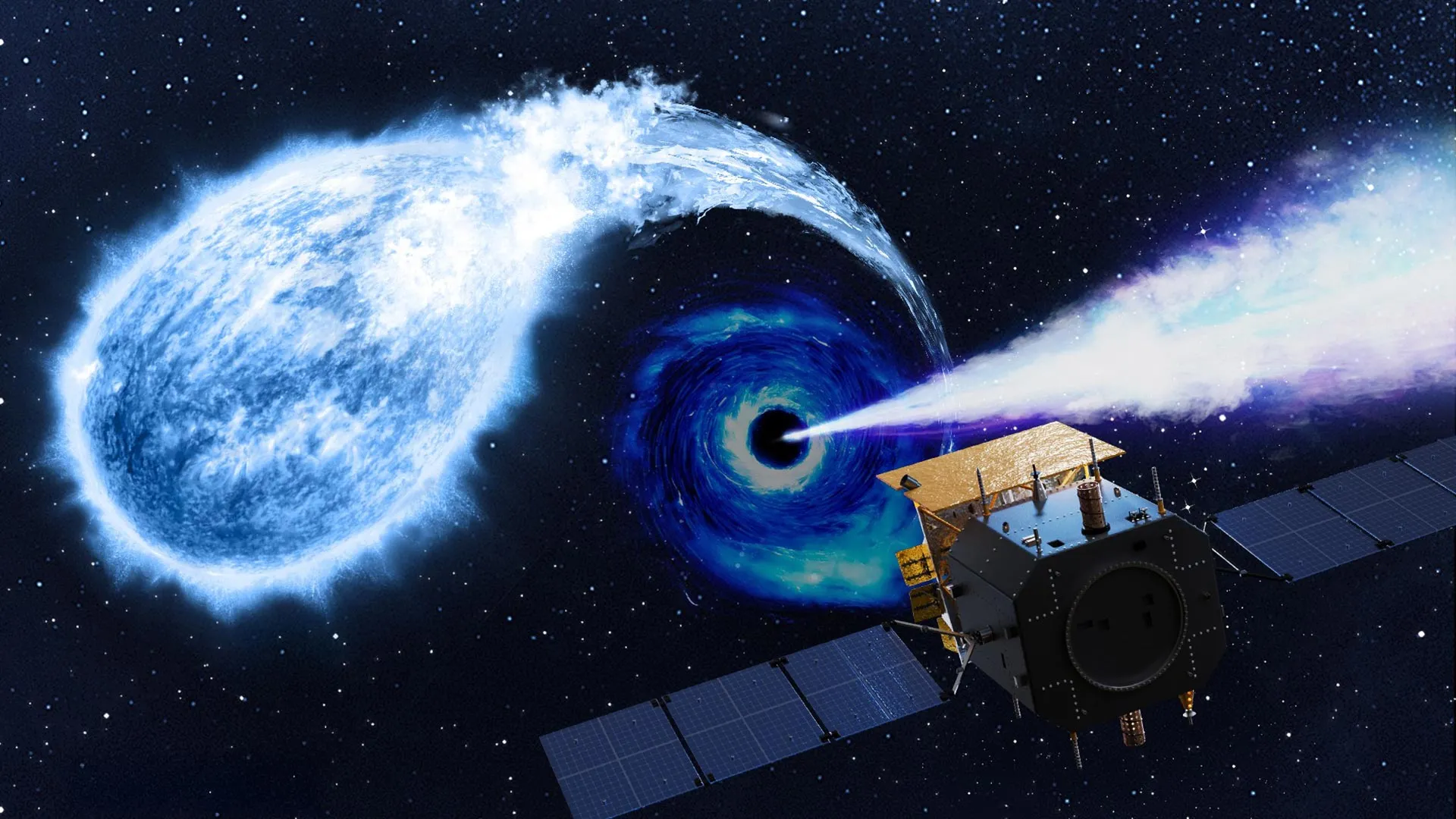
During the survey, researchers identified a promising 8.19-millisecond pulsar (MSP) candidate located close to Sagittarius A*, the supermassive black hole at the center of our galaxy.
A Potential Tool for Testing Einstein’s General Relativity
If astronomers can confirm the object and precisely measure the timing of its pulses, it could create a rare opportunity to test General Relativity under extreme conditions. Tracking a pulsar in this environment would allow scientists to make highly accurate measurements of space-time around a supermassive black hole.
Pulsars are dense remnants of massive stars known as neutron stars. They spin rapidly and generate intense magnetic fields, producing focused beams of radio waves that sweep across space like the beam of a lighthouse.
When undisturbed by outside forces, the radio pulses from a pulsar reach Earth with remarkable consistency. Because of this steady rhythm, pulsars function like highly reliable cosmic clocks. Millisecond pulsars spin especially fast, which makes their timing behavior even more stable and predictable.
How Gravity Can Distort a Pulsar’s Signal
“Any external influence on a pulsar, such as the gravitational pull of a massive object, would introduce anomalies in this steady arrival of pulses, which can be measured and modeled,” said Slavko Bogdanov, a research scientist at the Columbia Astrophysics Laboratory who was a co-author on the study. “In addition, when the pulses travel near a very massive object, they may be deflected and experience time delays due to the warping of space-time, as predicted by Einstein’s General Theory of Relativity.”
Sagittarius A* contains about 4 million times the mass of the Sun, giving it a powerful gravitational reach that strongly affects nearby objects.
Follow Up Observations Underway
Because of the possible scientific significance, researchers are now analyzing additional follow up observations to determine whether the pulsar candidate is genuine.
To encourage broader scientific collaboration, Breakthrough Listen is making the data publicly available. This allows research teams around the world to conduct their own independent analyses and explore related scientific questions.
“We’re looking forward to what follow-up observations might reveal about this pulsar candidate,” Perez said. “If confirmed, it could help us better understand both our own Galaxy, and General Relativity as a whole.”
Bailiffs used to pursue NHS staff over pay errors
Thousands of NHS workers were pursued by debt collectors after salary overpayments, the BBC finds.
One in three people carry this brain parasite but the body has a kill switch

A parasite that may already be living in your brain has the ability to infect the very immune cells designed to eliminate it. New research from UVA Health explains how the body still manages to keep this infection under control.
Toxoplasma gondii is a potentially dangerous parasite that infects warm blooded animals. People are most often exposed through contact with cats, contaminated fruits or vegetables, or undercooked meat. After entering the body, the parasite can spread to multiple organs and eventually settle in the brain, where it can remain for life. Roughly one third of the global population is believed to carry Toxoplasma, yet most people never develop symptoms. When illness does occur, known as toxoplasmosis, it is most serious in individuals with weakened immune systems.
Researchers led by Tajie Harris, PhD, set out to understand how the immune system responds when Toxoplasma invades CD8+ T cells, which are specialized immune cells responsible for killing infected cells.
“We know that T cells are really important for combatting Toxoplasma gondii, and we thought we knew all the reasons why. T cells can destroy infected cells or cue other cells to destroy the parasite. We found that these very T cells can get infected, and, if they do, they can opt to die. Toxoplasma parasites need to live inside cells, so the host cell dying is game over for the parasite,” said Harris, the director of the Center for Brain Immunology and Glia (BIG Center) at the University of Virginia School of Medicine. “Understanding how the immune system fights Toxoplasma is important for several reasons. People with compromised immune systems are vulnerable to this infection, and now we have a better understanding of why and how we can help patients fight this infection.”
Caspase-8 and the Self-Destruct Defense
Harris and her team discovered that CD8+ T cells rely on a powerful enzyme called caspase-8 to control T. gondii. Caspase-8 plays a central role in regulating immune responses and can trigger a process that causes a cell to self-destruct.
In laboratory experiments, mice that lacked caspase-8 in their T cells developed far higher levels of T. gondii in their brains compared to mice whose T cells produced the enzyme. This happened even though both groups mounted strong immune responses against the infection.
The difference in outcomes was striking. Mice with caspase-8 remained healthy, while those without it became severely ill and died. Examination of their brain tissue showed that their CD8+ T cells were much more likely to be infected by the parasite.
These findings indicate that caspase-8 plays a crucial role in limiting T. gondii inside T cells. The results also add to growing evidence that this enzyme is broadly important in helping the body control infectious threats.
“We scoured the scientific literature to find examples of pathogens infecting T cells. We found very few examples,” said Harris, part of UVA’s Department of Neuroscience. “Now, we think we know why. Caspase-8 leads to T cell death. The only pathogens that can live in CD8+ T cells have developed ways to mess with Caspase-8 function. Prior to our study, we had no idea that Caspase-8 was so important for protecting the brain from Toxoplasma.”
Study Details and Funding
The findings were published in the journal Science Advances. The research team included Lydia A. Sibley, Maureen N. Cowan, Abigail G. Kelly, NaaDedee A. Amadi, Isaac W. Babcock, Sydney A. Labuzan, Michael A. Kovacs, Samantha J. Batista, John R. Lukens and Harris. The scientists reported no financial conflicts of interest.
Funding for the research came from the National Institutes of Health, grants R01NS112516, R01NS134747, R21NS12855, T32GM008715, T32AI007496, T32AI007046, T32NS115657, F30AI154740, T32AI007496 and T32GM007267; a University of Virginia Pinn Scholars Award; a UVA Shannon Fellowship; and UVA’s Strategic Investment Fund.