BBC Medical Editor Fergus Walsh speaks to St John’s ambulance service about treating heat exhaustion.


BBC Medical Editor Fergus Walsh speaks to St John’s ambulance service about treating heat exhaustion.
Full emergency cover remained in place and patients were told to attend all scheduled appointments unless advised otherwise.
Two micrograms is an almost unimaginably small amount. It weighs less than a tiny fragment of a grain of table salt. Yet adults need only around this amount of vitamin B12 each day, depending on the guideline used, to support red blood cells, nerves and DNA production.
In 2026, it is 100 years since George Minot and William Murphy reported that a liver-rich diet could treat pernicious anemia, then a frequently fatal disease. Their work transformed medicine and eventually led scientists to identify vitamin B12 as the substance in liver that treated the disease.
But the route to that breakthrough began with an unexpected clue from animal experiments. The American physician and pathologist George Whipple had shown that liver helped dogs recover from anemia caused by blood loss. Blood-loss anemia happens when the body loses red blood cells through bleeding. Pernicious anemia is different: the problem is not bleeding, but poor absorption of vitamin B12. Even so, Whipple’s experiments pointed researchers towards liver as a source of a powerful blood-forming factor.
Patients with pernicious anemia who had been close to death often improved dramatically within weeks of eating liver-rich diets. The success of liver treatment eventually led scientists to isolate the deep red compound now known as vitamin B12, or cobalamin.
Despite decades of research, vitamin B12 deficiency remains common, particularly among older adults, vegans, vegetarians and people with conditions that affect absorption. Some people do not consume enough B12 because it is naturally found mainly in foods from animals, including meat, fish, eggs and dairy products. Others struggle to absorb it properly.
This becomes more common with age. Some older people produce less stomach acid, which is needed to release B12 from food. Others develop autoimmune gastritis, in which the immune system damages stomach cells involved in producing acid and intrinsic factor, the protein needed for vitamin B12 absorption. Weight-loss surgery and some medicines used for diabetes or acid reflux can also reduce absorption.
The symptoms of deficiency can develop slowly and are often mistaken for normal ageing. People may feel exhausted, weak or short of breath. Some develop numbness or tingling in their hands and feet, poor balance, memory problems or what many describe as “brain fog”. These symptoms are not specific to B12 deficiency, so persistent tiredness, tingling or balance problems should be checked rather than assumed to be a simple vitamin problem.
People at higher risk, including vegans, vegetarians, older adults and those taking medicines that affect stomach acid or diabetes treatment, may need testing or supplementation advice from a health professional.
Doctors have traditionally linked tiredness in B12 deficiency to anemia. Without enough vitamin B12, the bone marrow cannot produce healthy red blood cells. Instead, it releases unusually large and immature cells that carry oxygen less effectively around the body.
But anemia may not be the only reason people with low B12 feel exhausted.
In humans, vitamin B12 is directly needed by only two enzymes, the proteins that help chemical reactions happen in the body. One helps the body make DNA, which cells need when they divide. The other helps mitochondria process certain fats and protein building blocks. Mitochondria are the tiny structures inside cells that help turn food into usable energy.
This mitochondrial role has attracted growing interest from researchers studying ageing, muscle function and vitamin B12 status. A 2026 study explored what happens when cells do not have enough B12. Researchers found that low B12 could interfere with the DNA inside mitochondria and reduce energy production in laboratory models of skeletal muscle (muscle cells studied outside the human body).
A related study in aged female mice found that B12 supplementation improved several signs of mitochondrial health in muscle, including the number and structure of mitochondria. Together, this work points to one possible reason why some people with low B12 report fatigue before obvious anemia is detected.
These findings do not mean vitamin B12 supplements can reverse ageing or act as an energy booster for people whose B12 levels are already normal.
Scientists have suspected a link between B12 and mitochondrial function for many years, because one of the two B12-dependent enzymes works inside mitochondria. Earlier research has also suggested that low B12 status may be linked with poorer muscle function in older adults, although much of this work is observational and cannot prove cause and effect.
So if you’re feeling persistently tired, is it worth paying for vitamin B12 injections at a wellness clinic or medispa? For most people, no. B12 injections are an established treatment for diagnosed deficiency, particularly when absorption is impaired, and the NHS uses hydroxocobalamin injections for vitamin B12 deficiency anemia.
But there is little evidence that B12 shots boost energy, weight loss or performance in people whose B12 levels are already normal. The more useful first step is to find out what is causing the tiredness.
The story of vitamin B12 is unusual because the body needs so little of it, yet the consequences of deficiency can be profound. Long before scientists understood its chemistry, doctors recognized that something in liver could restore strength, appetite and vitality to desperately ill patients.
A century later, researchers are still finding that this tiny cobalt-containing molecule does more than prevent anemia. It may also help explain how cells maintain energy and function as the body ages.

A placebo, or fake supplement, may offer real benefits for older adults, according to new research from psychologists at the Università Cattolica in Milan. After taking placebo pills for three weeks, participants showed improvements in both physical performance and cognitive function. Surprisingly, the benefits were seen even when participants knew the pills contained no active ingredients.
The study, published in the International Journal of Clinical and Health Psychology, was led by Diletta Barbiani, Alessandro Antonietti, and Francesco Pagnini. It was supported by PNRR grants through the Age-IT project.
“The study is part of an established line of research in which we analyze the role of the mind in aging processes, which is very important,” says Pagnini, Full Professor of Clinical Psychology at the Faculty of Psychology of the Università Cattolica.
Testing the Placebo Effect in Healthy Aging
Until now, no research had investigated whether a traditional placebo could influence abilities that naturally decline with age.
“Our goal,” Professor Pagnini explains, “was to clarify whether an open-label placebo therapy (i.e., where the recipient is aware it is a placebo) or a fake supplement (people don’t know it’s a placebo) could influence psychological, cognitive, and physical functions in older adults living in the community.”
To explore that question, the researchers recruited 90 healthy older adults and randomly assigned them to one of three groups. One group received no treatment at all. A second group received placebo pills but was told the pills contained active ingredients designed to improve well-being and physical function. The third group received the same inactive pills but was openly informed that the pills were placebos that could still trigger beneficial mind-body responses.
Before and after the three-week study, participants completed questionnaires (providing information on levels of perceived stress, psychological well-being, sleepiness, fatigue, optimism, self-efficacy, and stereotypes about aging). They also took objective tests measuring short-term memory, selective attention, and physical performance.
Memory, Stress, and Physical Performance Improved
After three weeks, the participants who knowingly took placebo pills experienced lower stress levels than both the deceptive placebo group and the control group. They also showed significant improvements in short-term memory compared with those who received no intervention.
Overall, both placebo groups experienced gains in cognitive and physical performance, although the strongest improvements were generally seen among participants who knew they were taking a placebo.
Physical performance increased by 7% in the deceptive placebo group and by 9.2% in the open-label placebo group. Cognitive performance also improved. Depending on the specific test, scores increased by between 12.6% and 14.6% among participants who believed they were taking a real supplement, while those who knowingly took a placebo improved by between 6.9% and 21.5%.
“These are significant effects,” the psychologist emphasizes, “comparable to those seen in some experimental studies on physical activity regarding physical performance and cognitive training, especially with regard to memory.”
Researchers also observed reductions in drowsiness. Stress levels improved most noticeably among participants who were aware they were taking a placebo.
A New Approach to Healthy Aging?
The findings suggest that placebo treatments can improve several aspects of functioning in older adults, with open-label placebos performing as well as, or in some cases better than, deceptive placebos.
According to the researchers, this makes open-label placebos a promising and ethically acceptable strategy for supporting healthy aging.
Professor Pagnini says the results add to growing scientific evidence that the mind plays an important role in the aging process. Thoughts, emotions, and self-perception may influence not only psychological well-being but also physical abilities and cognitive function, highlighting the powerful connection between the mind and the body.
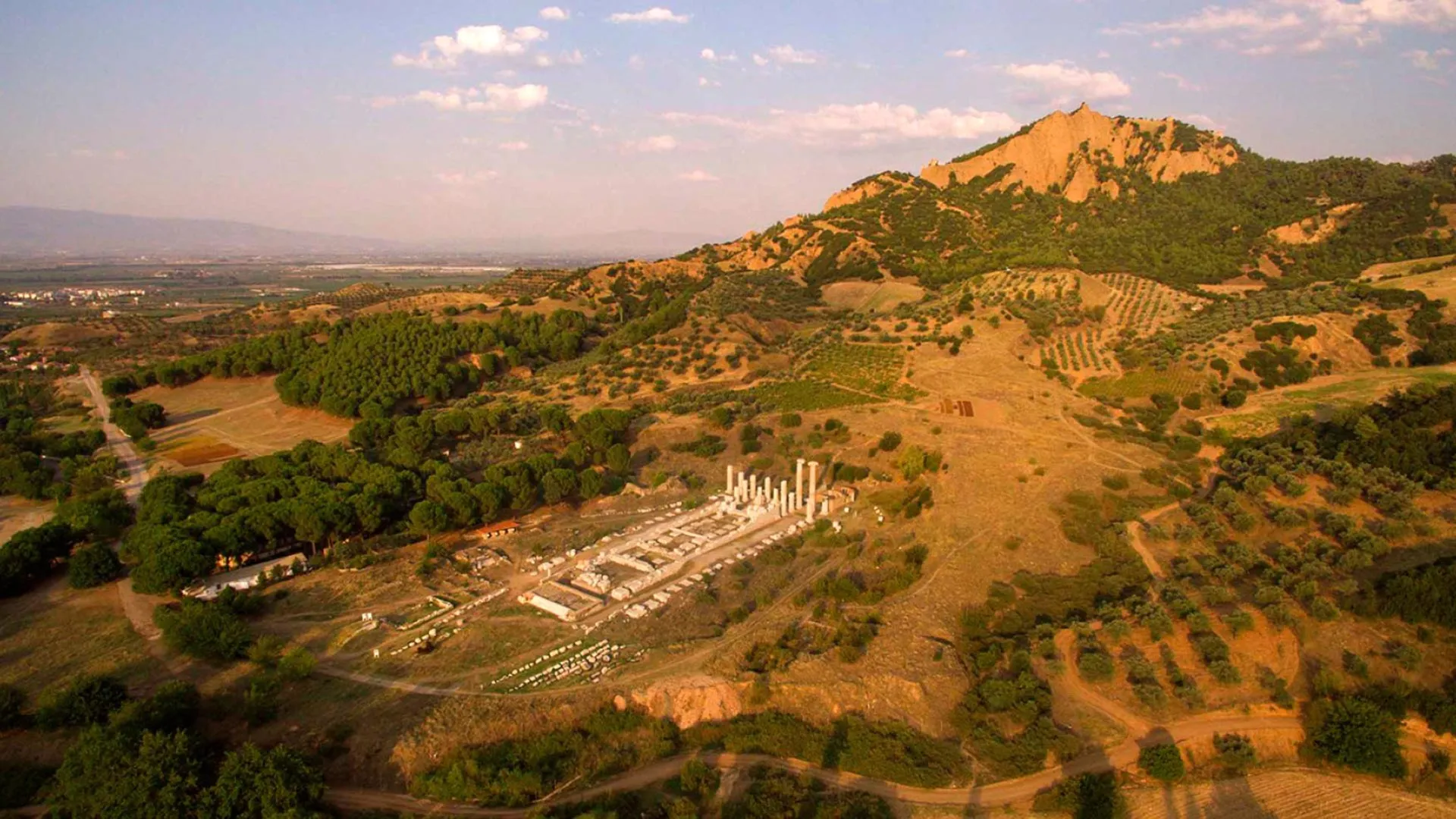
For thousands of years, the ancient city of Sardis in western Turkey changed hands as Greeks, Romans, Byzantines, and Ottomans rose and fell. Yet while the city’s rulers changed repeatedly, one thing has remained remarkably steady. Since 1958, archaeologists have returned every year as part of the Harvard Cornell Exploration of Ancient Sardis, making it one of the world’s longest running institutional excavation projects.
“It’s really important that it has institutional continuity,” said Benjamin Anderson, associate professor of history of art and visual studies in the College of Arts and Sciences. “Many of us know and have been mentored by colleagues of the previous generation of excavators. As a result, it’s one of the few long-term archaeological projects in the region that has generated a critical mass of data.”
For the past several years, Anderson has focused on documenting the walls and buildings of Sardis’ acropolis, which became an important center during the Byzantine period after Roman rule.
“This is a city that shows up in lots of ancient historical sources,” he said. “But now, just in the last 75 years or so, we have the possibility of telling that story, also, through what the project has found archaeologically.”
This summer marked another milestone. Thanks to decades of excavation and the support of the local community, Sardis was added to the UNESCO World Heritage List.
“The opportunity to really start understanding a culture through the material remains is pretty unusual, and it requires that kind of long-term commitment,” Anderson said. “That’s also what’s being celebrated by the World Heritage designation by UNESCO. This project has always been distinguished from the very beginning by a desire to communicate results and to make their work legible to tourists and to locals and all manner of different audiences.”
Sardis Preserves Thousands of Years of History
Once the capital of the Iron Age kingdom of Lydia, Sardis occupied a strategic location between the Mediterranean and the Anatolian plateau. According to Annetta Alexandridis, associate professor of the history of art and classics in A&S, it served as “a place of cultural encounter between the East and West.”
The Lydian era remains especially significant to archaeologists and historians. The Lydians are widely credited with inventing coinage, and their ruler, King Croesus, became legendary for his immense wealth. Alexander the Great later conquered Lydia, after which Sardis became part of the Roman Empire, followed by the Byzantine and Ottoman empires.
“Because it was not over built by a modern city — it’s only a little village — Sardis gives you a really long history, from the Bronze Age, third millennium BCE, to basically today,” Alexandridis said. “These layers are all there, and make it sometimes difficult to excavate, because they are not clearly stratified. They interfere with each other, but, in a way, it’s an ongoing history, and that makes it so fascinating for us.”
As associate director of the excavation, Alexandridis studies Roman funerary culture and is now leading a survey of Sardis’ cemeteries, many of which have received far less attention than the nearby Bin Tepe cemetery, located about 10 kilometers north of the city. Bin Tepe contains some of the largest tumuli (burial mounds) ever recorded.
A Site That Shaped Archaeology
Sardis also occupies an important place in the history of American archaeology. The first modern excavation, led by the American Society for the Excavation of Sardis in the early 20th century, was “a really large-scale exploitation,” Alexandridis said. Excavators uncovered the Temple of Artemis and the necropolis, but many artifacts were damaged, disappeared, or were taken to the United States through questionable means. Among them was a massive column that remains on display at the Metropolitan Museum of Art.
The project ended with the Greco-Turkish War in the early 1920s. Over the following decades, some artifacts gradually made their way back to Turkey.
“It’s one of the first cases where we can see the whole discussion about restitution of antiquities that were illegally exported, until some were returned to Turkey,” Alexandridis said. “It has all of these broader issues of how to deal with cultural heritage from a not only preservation or scholarly point of view, but also political and legal, and of the question of stewardship and responsibility for culture in the past.”
The modern Harvard Cornell partnership began in 1958 under Harvard archaeologist George M. A. Hanfmann and Cornell architect Henry Detweiler from the College of Architecture, Art and Planning, whose expertise centered on documenting historic buildings.
“If you went to Sardis in 1950 there were a few things kind of sticking up above ground, but there was nothing really to see, per se,” Anderson said. “The architects were the first generation of Cornellians who were there, and the project really committed to taking what they’d excavated responsibly, supplementing it through newly manufactured pieces, and presenting a total experience of the structure, instead of just producing a drawing and putting it in a publication.”
During the 1950s and 1960s, the team reconstructed a monumental bath gymnasium complex and the largest synagogue in the ancient world. Those restoration efforts became influential models for similar work at archaeological sites elsewhere.
Since then, excavations have uncovered mud brick city walls, the acropolis, a Persian period garbage pit, a gold refining workshop, an ancient shopping district, and, most recently, a sanctuary plaza that required 15 years of excavation.
Training the Next Generation of Archaeologists
Today, the project is based at the Harvard Art Museums and includes researchers from Turkish institutions as well as several American universities, including the University of Wisconsin, Madison and the University of California, Berkeley. Cornell primarily contributes graduate students, along with an increasing number of undergraduates, who spend 10 weeks each summer working at the site.
Students either catalog recovered artifacts, most of which are ceramics, or “broken pots,” as Anderson described them, or supervise excavation trenches.
Because Sardis sits on an alluvial plain, some trenches extend as much as 12 meters underground.
“[They’re] quite terrifying in their own right,” Anderson said.
“Local workers, who are already trained, gradually remove the soil, and the students are there observing, documenting, taking notes, asking questions, determining when they need to stop and call in maybe the director or an associate director to take a look at what’s coming up, when they should take a photograph, when they should bring in the architects to make a state drawing of a particular moment,” Anderson said.
According to Anderson, Sardis is one of only three excavation projects worldwide that “most people who go on to a career in classical archaeology in the U.S. have been through.”
More than half of the researchers involved today are Turkish experts and students, and local participation remains central to the project’s success.
“A topic that regularly accompanies what we are doing is how are we doing it? How do we include local expertise?” Alexandridis said.
Today, women from the Sardis region work alongside men in excavation and restoration efforts.
A Local Connection to an Ancient City
Leyla Uğurer, now a doctoral student in history of art and archaeology, grew up near Sardis. She first studied English language and literature at Istanbul University before deciding to pursue classical archaeology.
“To learn archaeology, you have to work at the site as well,” she said.
Beginning in 2022, she surveyed rock cut tombs dating from the Lydian through Roman periods around Sardis. She continued that work for three summers before supervising the excavation of a late Roman site this year.
Her experience at Sardis inspired her to pursue a Ph.D. at Cornell, where Alexandridis became her adviser. Both share an interest in funerary art, which provides insights into beliefs about beauty, the afterlife, and everyday life.
This was the city on “one of the most important trade roads in the ancient world,” where the first coin was minted and Alexander the Great visited, Uğurer said. “You were raised there, so you have the same culture going on in you and around you. I remember looking at archaeologists when I was a child and admiring them. To be familiar with those archaeological works going on also helps you understand the archaeological importance more.”
She believes UNESCO recognition will bring important benefits to the region.
“As a local, I can say it is very important,” she said. “First of all, now it is known worldwide and because of UNESCO, there can maybe be more funding for the excavation, also people, more tourists and more research. People will know the area much better, and there will be more protection.”
Protecting Sardis for the Future
Greater protection is badly needed. Sardis’ landscape is vulnerable to natural erosion, while many tumuli have already been damaged by farming. Looting has also become a serious problem.
Alexandridis said treasure hunters now operate on an “industrial dimensions” scale, using explosives, bulldozers, and often weapons to target ancient burial mounds.
Even after nearly seven decades of continuous excavation, researchers say Sardis still has much more to reveal.
“This is why the long-term commitment is so important,” Anderson said. “One season’s work, you’ll learn how to do the thing, but you’re not necessarily going to find something that will be especially significant for the history of the site, until maybe 10 years later, you find something else a little bit further away, and the pieces start to add up.”
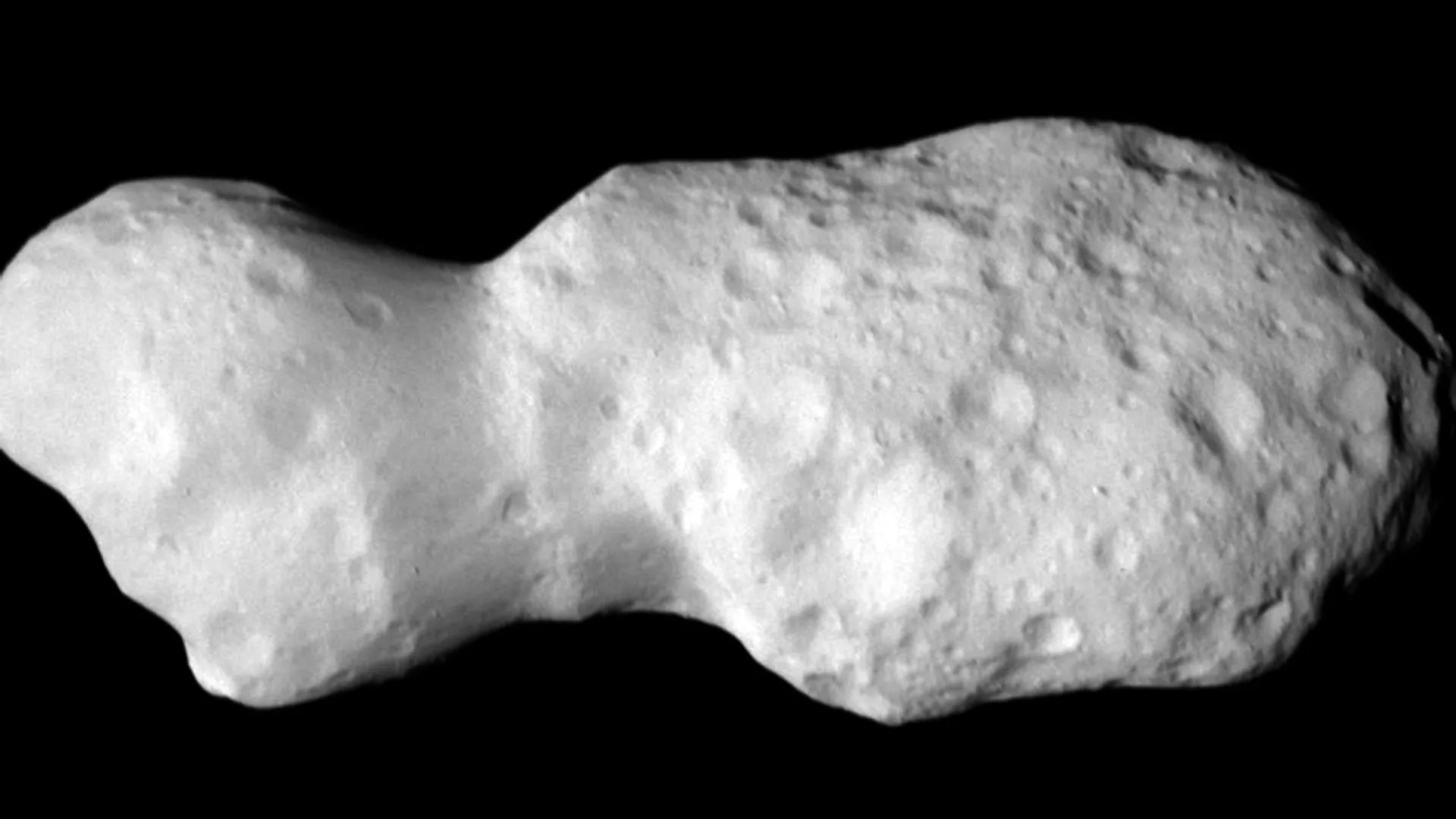
Even relatively small asteroids can have surprisingly eventful histories. NASA’s Lucy spacecraft recently revealed that asteroid Donaldjohanson is a wobbling, peanut-shaped object that has been shaped by collisions, sunlight, and even a brief encounter with liquid water long ago.
The asteroid formed about 155 million years ago when fragments from a violent collision gradually came together. Since then, a subtle but persistent force generated by sunlight has altered its rotation, while traces of ancient water remain preserved in its rocky surface.
On April 20, 2025, Lucy passed within 650 miles of Donaldjohanson while traveling through the main asteroid belt on its way to a group of Jupiter Trojan asteroids. During the flyby, the spacecraft captured the first close-up images and collected detailed scientific measurements. Those observations revealed an asteroid that does not rotate in the simple way scientists expected.
Lucy also provided detailed views of Donaldjohanson’s unusual shape, along with craters, ridges, and other surface features that help tell the story of its evolution.
Lucy’s Asteroid Flyby Reveals an Unusual Rotation
The encounter served as a practice run for Lucy’s future visits to the Trojan asteroids, beginning with its flyby of Eurybates on Aug. 12, 2027. While testing spacecraft systems and mission operations, scientists gained a valuable opportunity to study a previously unexplored asteroid and compare it with Bennu and Ryugu, two asteroids that have been examined up close through sample-return missions.
Researchers reported their findings on June 18 in the journal Science.
Before Lucy’s arrival, astronomers studying Donaldjohanson from Earth noticed a repeating pattern in the asteroid’s brightness. Those observations suggested it was an elongated object completing one rotation every 10.5 Earth days.
The spacecraft’s close-up measurements revealed a more complicated reality.
Instead of rotating around a single axis like most asteroids and planets, Donaldjohanson behaves more like a wobbling spinning top. Scientists found that it turns end-over-end once every 10.5 days while also rocking back and forth around its long axis once every 26.5 days.
Peanut-Shaped Asteroid Formed From Ancient Collision
Earth-based observations had already hinted that Donaldjohanson was elongated, but Lucy showed that the asteroid is actually composed of two connected lobes joined by a narrow neck.
Scientists describe this type of structure as bilobate. It likely formed when two fragments produced by an earlier collision drifted together and merged under their own gravity.
Researchers estimate that the asteroid was spinning at least ten times faster shortly after it formed. Over the last 20 to 60 million years, however, that rotation gradually slowed.
As the spin rate decreased, the balance between centrifugal forces and gravity changed. Loose rock and debris shifted down slopes, reshaping parts of the surface and contributing to the softened appearance of many craters visible in Lucy’s images.
The team believes this slowdown was caused by the YORP effect, a subtle process driven by sunlight.
When sunlight warms an asteroid, the surface releases that energy as infrared radiation. Although the resulting recoil force is extremely small, it acts continuously over millions of years. Because Donaldjohanson’s shape is uneven, those tiny forces do not cancel out completely and instead create a twisting effect that gradually alters the asteroid’s rotation.
The same process can either slow or accelerate an asteroid’s spin. Bennu, which rotates once every four hours, and Ryugu, which rotates roughly once every seven hours, were likely spinning much more slowly in the distant past before YORP sped them up.
Evidence of Ancient Water on Donaldjohanson
As Lucy raced past Donaldjohanson at about 30,000 mph, its instruments detected iron-rich clay minerals on the asteroid’s surface.
These minerals could only have formed in the presence of liquid water. However, scientists believe the water exposure was relatively brief.
Over time, prolonged interaction with water tends to replace iron within clay minerals with other elements such as magnesium. Because the clays on Donaldjohanson remain iron-rich, researchers concluded that liquid water was present only for a limited period.
The situation appears different for Bennu and Ryugu. Both asteroids contain magnesium-rich clays, suggesting they experienced much longer periods of water exposure, possibly lasting millions of years while they were still parts of larger parent bodies.
Those differences may indicate that the parent asteroids formed at different times or in different regions of the solar system before eventually moving into the main asteroid belt.
Comparing Donaldjohanson, Bennu, and Ryugu
Scientists believe Donaldjohanson originated from the rocky remains of a larger asteroid rich in carbon and water that was shattered in a collision within the main asteroid belt.
Bennu and Ryugu likely formed through a similar process and in the same general region. Yet important differences set them apart.
Donaldjohanson is only about 155 million years old, making it much younger than Bennu and Ryugu, which are estimated to have formed 1 to 2 billion years ago.
Its orbital history is also different. Donaldjohanson has remained in the asteroid belt since its formation, while Bennu and Ryugu eventually migrated into near-Earth orbits that periodically bring them close to our planet. Those trajectories made them ideal destinations for sample-return missions.
“It’s helpful for scientists to compare Donaldjohanson with asteroids like Bennu and Ryugu, which are seemingly similar asteroids, because every subtle difference is another clue to our origin story,” said Simone Marchi, Lucy deputy principal investigator and lead author of the study at the Boulder, Colorado, office of the Southwest Research Institute.
“Once we start learning more about the Trojans, a completely different population of space rocks with very different histories, our understanding of solar system formation is destined to be challenged,” said Marchi.
Named after the famous fossilized human ancestor discovered in Ethiopia in 1974, Lucy is on its way to become the first mission to explore Jupiter’s Trojan asteroids. These ancient and relatively unchanged objects formed early in solar system history and may help scientists better understand how the planets formed and migrated before settling into their present-day positions.
About the Lucy Mission
Lucy’s principal investigator is based at the Boulder, Colorado, office of the Southwest Research Institute, which is headquartered in San Antonio. NASA’s Goddard Space Flight Center in Greenbelt, Maryland, oversees mission management, systems engineering, and safety and mission assurance. Lockheed Martin Space in Littleton, Colorado, built the spacecraft.
Lucy is the 13th mission in NASA’s Discovery Program. The program is managed by NASA’s Marshall Space Flight Center in Huntsville, Alabama, for the agency’s Science Mission Directorate in Washington.
Around 40% of adults worldwide are affected by osteopenia: a loss of bone mineral density. This condition is extremely common particularly in postmenopausal women and elderly adults. It’s estimated that more than 500,000 fractures occur annually in the UK due to low bone density.
Osteopenia itself does not usually cause symptoms and it develops silently over time. Many people may not even be aware that they have the condition until they have experienced a fracture or had a bone density test, typically recommended because of risk factors such as age and menopause. This makes osteopenia a significant but often under-recognized public health issue.
Bone is a dynamic tissue that undergoes continuous renewal through a process called bone remodeling. During this process, old bone is broken down (resorption) and new bone is formed (formation).
During early adulthood this process is balanced, so bone resorption equals bone formation. Bone mass usually peaks around a person’s mid-20s to early-30s. After this peak bone loss gradually exceeds bone formation. Over time this leads to reduced bone density.
Ageing is the main risk factor for bone loss. But several additional factors can accelerate the process.
For instance, hormonal changes, especially the decline in estrogen after the menopause, can significantly increase bone breakdown. This is because estrogen helps protect bones by slowing the natural process of bone breakdown. Around one in two women over 50 will experience a fragility fracture.
Lifestyle also plays an important role. Smoking, excessive alcohol consumption and physical inactivity can contribute to reduced bone strength over time. Diet is equally important. Insufficient calcium intake and low vitamin D can limit the body’s ability to build and maintain strong bones.
Certain medications, particularly long-term steroid use, as well as health conditions that affect hormone levels or nutrient absorption (such as Crohn’s or coeliac disease), can further increase the risk.
Detecting osteopenia early is crucial. This allows you and clinicians to take steps that can reduce the risk of fractures and prevent osteopenia progressing to osteoporosis, where bone loss is more advanced and the risk of fractures is significantly higher.
Bone mineral density is commonly measured using a dual-energy X-ray absorptiometry (DXA) scan. This is a type of low-dose X-ray scan used to assess bone strength. Results are usually given as a T-score, which compares a patient’s bone density to that of a healthy young adult. A T-score between –1.0 and –2.5 indicates osteopenia, while a T-score below –2.5 meets the diagnostic threshold for osteoporosis.
Management of osteopenia typically focuses on slowing down or preventing further bone loss and reducing the risk of fractures. This involves making lifestyle changes (such as avoiding smoking, limiting alcohol intake or maintaining healthy body weight), nutritional support and, in some cases, prescription treatment.
Weight-bearing exercises, such as walking, dancing or jogging stimulate bone formation by placing strain on the skeleton. Resistance training can further strengthen bones and muscles.
Research shows that regular physical activity is associated with improved bone mineral density and may reduce the risk of osteoporosis. Exercise, such as Tai Chi, also improves balance and muscle strength, reducing the risk of falls that could lead to fractures.
Sufficient calcium intake supports bone structure too, while vitamin D helps the body absorb calcium efficiently. Foods such as dairy products, leafy green vegetables and fortified products are common dietary sources. Supplements may also be recommended where dietary intake is insufficient. In the UK, vitamin D deficiency is relatively common, so supplementation is often advised.
Not everyone with osteopenia requires drug treatment. Instead, clinicians often use a fracture risk assessment tool to evaluate ten-year probability of a fracture based on age, bone mineral density, steroid use and other risk factors.
If fracture risk is high or if a person has already experienced a fragility fracture, medications may be recommended. These can include antiresorptive drugs which slow bone breakdown and help maintain bone density. Such treatments are more commonly used in osteoporosis but may also benefit high-risk patients with osteopenia.
Osteopenia should not be viewed merely as a mild or early form of osteoporosis but rather as a warning sign and point of intervention. Progression from osteopenia to osteoporosis is not inevitable.
Evidence suggests that early detection and targeted lifestyle changes can maintain bone health, significantly slow bone loss and reduce risk of developing osteoporosis later in life. In some cases, bone density may even improve with appropriate treatment and lifestyle adjustments.
But prevention requires a long-term perspective. Bone health reflects the cumulative influences of our health and lifestyle across the lifespan including our diets, physical activity levels and hormonal changes we have gone through. Maintaining healthy habits over time remains the most effective strategy for protecting bone strength.
Experts say the cost of living, pandemic and boom in unhealthy food are behind the rise in cases.
Why are women’s bodies impacted by heat differently to men’s?

Probably not, according to Eric Schwitzgebel, a distinguished professor of philosophy at the University of California, Riverside.
In a new working paper, Schwitzgebel and Jeremy Pober, a former UCR graduate student who is now a postdoctoral researcher at the University of Lisbon, argue that conscious beings may be possible even if they are built from materials very different from those found in life on Earth. One example comes from the recent blockbuster “Project Hail Mary,” which features a five-limbed alien with a rock-like exterior.
Rather than trying to define consciousness itself, the researchers begin with the assumption that consciousness is a real and recognizable phenomenon. Their focus is on a narrower question: Does consciousness have to depend on Earth-style biology?
The paper arrives at a time when debates about conscious artificial intelligence are becoming increasingly common. While the authors briefly address AI, they do not take a shared position on whether current systems are conscious. In fact, they disagree with each other on some aspects of the issue. Still, their broader argument leaves open the possibility that consciousness could one day emerge in AI, even if today’s systems do not possess it.
The Idea of “Substrate Flexibility”
A central concept in the paper is what philosophers call “substrate flexibility.”
The idea is simple. Some properties can exist in many different materials. A cup, for example, can be made from glass, plastic, metal, or other substances. A book can exist as printed pages or as a digital file. Likewise, records can be stored on vinyl or compact discs.
Schwitzgebel and Pober argue that consciousness belongs in this category as well.
In their view, consciousness is not necessarily tied to any single physical substance.
“The universe may contain minds stranger than we can imagine,” Schwitzgebel said.
Alien Life May Take Many Forms
Astronomers estimate that the observable universe contains roughly 1 trillion galaxies. Planets appear to be abundant, and most likely have environments that differ dramatically from Earth’s.
For their argument, Schwitzgebel and Pober estimate that at least 1,000 behaviorally sophisticated extraterrestrial civilizations have existed somewhere in the universe. They describe this figure as conservative and point to research suggesting that the median scientific estimate is greater than one civilization per galaxy at some point during a galaxy’s lifetime.
Meanwhile, astrobiologists have explored the possibility that life elsewhere could be built from different materials than life on Earth. Researchers have considered alternative amino acids, alternative solvents, and even entirely different chemical structures.
Andy Weir’s novel “Project Hail Mary” offers a vivid fictional example. In the book, readers encounter an alien species with a shell made of oxidized minerals, mercury blood, two circulatory systems, steam-powered muscles, and a crystal brain. The creature comes from an extremely hot world with an atmosphere saturated with ammonia.
The philosophers are not claiming that such exotic life definitely exists. Instead, they argue that if life can emerge under a wide range of chemical conditions, and if the universe provides countless opportunities for life to develop, it would be surprising if every successful evolutionary pathway arrived at the exact same biological ingredients.
Earth itself offers evidence of nature’s creativity. Octopuses, bees, and dogs all process information differently. Even on our own planet, evolution has produced a wide variety of nervous systems rather than a single blueprint. According to the authors, the rest of the universe may display even greater diversity.
The Copernican Principle of Consciousness
The authors’ main argument draws inspiration from the Copernican tradition in astronomy.
Over time, discoveries associated with Nicolaus Copernicus and later astronomers revealed that Earth is not the center of the solar system, the solar system is not the center of the galaxy, and the Milky Way is not the center of the universe. Humanity has repeatedly learned that its place in the cosmos is less special than once believed.
Schwitzgebel and Pober suggest that consciousness may deserve the same treatment.
If many behaviorally sophisticated species exist throughout the universe and possess very different biological structures, then assuming that consciousness belongs only to organisms like us would reflect what the authors call “terrocentrism” — unjustified treatment of Earth life as uniquely privileged. They refer to this broader idea as the “Copernican principle of consciousness.”
The researchers are not arguing that every advanced species must be conscious. Instead, they contend that if consciousness occurs among behaviorally sophisticated beings, it would be odd to conclude that only organisms with biology resembling ours could experience it.
History has repeatedly shown that humans are not as unique or central as we once assumed.
The same lesson may apply to consciousness. Rather than being a rare feature restricted to one specific type of biological organism, consciousness could emerge whenever evolution — or something like it — generates the right level of complexity.
What About Artificial Intelligence?
The paper naturally raises questions about AI, but the authors stop short of claiming that current AI systems are conscious.
Pober argues that the possibility of multiple conscious substrates does not mean every substrate can support consciousness. In his view, there is no reason to assume that today’s computer hardware gives rise to conscious experience.
Schwitzgebel is somewhat more receptive to the possibility. He argues that once we reject the idea that consciousness requires human biology, it becomes harder to dismiss silicon-based systems simply because they are made of silicon rather than organic tissue.
More broadly, Schwitzgebel believes the debate has focused on the wrong question.
“It’s focused too much on whether silicon can duplicate a human brain and not enough on the broader question of what kinds of systems can be conscious,” he said.
The paper distinguishes between highly specific properties and broader categories. Asking whether human consciousness can be reproduced in a different substrate is a very specific question because human consciousness may depend on many details of human biology. Consciousness as a general phenomenon is a broader concept.
The authors compare this distinction to flight. Asking whether another creature can replicate an eagle’s exact style of flight is different from asking whether flight itself can occur in other forms. Hummingbirds, bats, and insects all fly, but they do so in different ways.
Similarly, consciousness may take many forms throughout the universe without necessarily resembling human consciousness.
Does consciousness depend on flesh and blood?
The answer is almost certainly no, according to Eric Schwitzgebel, a distinguished professor of philosophy at the University of California, Riverside.
