One common fat may fuel type 2 diabetes while another helps fight it

Researchers are taking a closer look at how different types of dietary fat may influence the risk of type 2 diabetes, a disease that affects millions of people worldwide and is linked to serious health complications and premature death. A new review published in Trends in Endocrinology & Metabolism (Cell Press) explores the contrasting effects of two major fatty acids found in the diet: palmitic acid and oleic acid.

The work was led by teams from the CIBER Area for Diabetes and Associated Metabolic Diseases (CIBERDEM) at the University of Barcelona.

“Palmitic acid, a saturated fatty acid widely found in foods, is associated with impaired insulin sensitivity, whereas oleic acid, abundant in olive oil, may have a protective effect against these metabolic disorders,” says Professor Manuel Vázquez-Carrera, from the UB’s Faculty of Pharmacy and Food Sciences, the UB Institute of Biomedicine (IBUB), the Sant Joan de Déu Research Institute (IRSJD) and CIBERDEM.

Other contributors include Ricardo Rodríguez-Calvo of CIBERDEM at the Pere Virgili Institute for Health Research (IISPV), Marta Tajes of the CIBER Area for Cardiovascular Diseases (CIBERCV) at the Bellvitge Biomedical Research Institute (IDIBELL), and Walter Wahli of the University of Lausanne (Switzerland).

According to Vázquez-Carrera, the findings suggest that the type of fat people consume may be more important than the overall amount.

“This review highlights the significant role of the quality of dietary fat, rather than the total amount consumed,” notes Professor Manuel Vázquez-Carrera, who is a group leader at CIBERDEM at the UB.

How Palmitic Acid May Promote Diabetes

The researchers examined evidence showing that palmitic acid can trigger several biological processes linked to metabolic disease.

As Xavier Palomer (UB-IBUB-CIBER-IRSJD), the article’s first author, says, “at the molecular level, palmitic acid promotes the accumulation of potentially toxic bioactive lipids, fosters low-grade chronic inflammation, and contributes to the dysfunction of cellular organelles, such as the endoplasmic reticulum and the mitochondria.”

The team notes that these cellular changes “are closely linked to impaired insulin action and the progression of metabolic disease.”

Oleic Acid Shows Protective Effects

The picture looks quite different for oleic acid, a monounsaturated fat found in high amounts in olive oil.

According to the review, oleic acid encourages the body to store fats in forms that are metabolically less disruptive and have little effect on normal cellular function. It also helps maintain healthy insulin signaling in important metabolic tissues, including the liver, muscles, and adipose tissue.

Researchers say oleic acid may also offset many of the harmful effects associated with palmitic acid. This could help explain why eating patterns rich in monounsaturated fats, including the Mediterranean diet, are consistently linked to a lower risk of type 2 diabetes and other metabolic disorders.

Improving Nutrition Strategies for Diabetes Prevention

The authors emphasize that more targeted research is needed to better understand differences seen across population studies.

“It is important to consider variables such as the source of fatty acids, their dietary context, interactions with other nutrients, and different food processing methods,” says Manuel Vázquez-Carrera.

The researchers believe that gaining a clearer understanding of these factors will improve scientists’ ability to evaluate how different fats affect metabolic health. In turn, that knowledge could support the development of more effective dietary approaches for preventing and managing type 2 diabetes.

Share Button

As lakes turn brown, trout and bass decline while pike and walleye thrive

The lakes, streams and ponds you’ve visited for years are likely looking more brown than they used to. And people who are fishing those waters are likely catching different species and sizes of fish than in the past.

Our research has identified a link between those two developments, which means that trout, bass, perch and whitefish may become less common in unstocked lakes. But pike and walleye anglers may be in for a trophy-sized surprise.

In the past several decades, across much of northeastern North America and northern Europe, many freshwater ecosystems are getting darker, and they are changing in other ways as a result.

What is freshwater browning?

The specific phenomenon of darkening water, called “freshwater browning,” is driven by a few factors. Among the reasons are climate change, as higher temperatures and increased runoff are combining to increase the amount and types of carbon compounds that move from soil and land into bodies of water.

Similarly, as people have taken steps to reduce acidic emissions coming from smokestacks and other sources, less acid has fallen as precipitation, changing the chemistry of soils. Those chemical changes are also increasing the flow of carbon to bodies of water.

Higher levels of carbon make water look brown because it’s basically dissolved plant matter that stains the water like tea leaves would.

Underwater visibility

It’s harder to see in browner waters, which makes it harder for fish to locate prey, escape from predators and find suitable habitat to live in.

Our recent study combined a review of past research with some new analyses to examine how different kinds of fish do in darker water. Working with a large team of experts, we tallied findings from previous studies that looked at the relationship between the darkness of a body of water and fish growth rates in that same body of water.

We found that in browner waters, fish often grow more slowly. The decreased growth rate in individual fish appears to reduce the population sizes of these fish, which may, in turn, change the quantities and proportions of different kinds of fish in a lake.

But freshwater browning doesn’t affect all species of fish equally.

Unsurprisingly, we found that vision appeared to be quite important for navigating browner waters. When we studied fish communities in 303 Canadian lakes, we found that in lakes with darker water, fish species with larger eyes were more common.

When we looked at data on populations of eight economically important fish in 871 lakes across North America and Europe, we found that browning was associated with smaller populations of several species, including lake trout, lake whitefish, yellow perch, largemouth bass and smallmouth bass. Brook trout abundance was not affected by freshwater browning.

Browning was associated with larger populations of northern pike and walleye.

We believe that’s because walleye, for example, have a specialized retina that helps them see in browner waters with poorer visibility. Similarly, pike have a well-developed lateral-line sensory system that allows them to sense vibration, movement and pressure changes in the water.

A change for anglers

People fishing in browner lakes may consider appealing to the senses of the fish that are likely to be in the water. For example, rather than using colorful or shiny lures to attract their visual attention, when fishing in darker water, consider using vibrating lures that a fish’s lateral line system can detect, or scented lures that trigger an olfactory response.

By examining what’s happening to the water and in it, both scientists and people who enjoy fishing can understand the changes we’re seeing and what they mean in practical terms.The Conversation

Share Button

The Climate Question

How the rise in night-time temperatures is starting to disrupt our sleep and health

Share Button

Yale study finds nearly half of older adults improved with age

The research was supported by funding from the National Institute on Aging.

oth physical and mental abilities. However, new research from Yale University paints a far more optimistic picture. The study found that many older adults actually improve over time, and their beliefs about aging may play an important role in those gains.

Drawing on more than a decade of data from a large, nationally representative study of older Americans, researchers discovered that nearly half of adults age 65 and older experienced measurable improvements in cognitive function, physical function, or both.

The findings suggest that improvement in later life is far more common than many people realize.

“Many people equate aging with an inevitable and continuous loss of physical and cognitive abilities,” said Becca R. Levy, lead author of the study and professor of social and behavioral sciences at the Yale School of Public Health (YSPH). “What we found is that improvement in later life is not rare, it’s common, and it should be included in our understanding of the aging process.”

The study was published in the journal Geriatrics.

Aging and Improvement Over Time

The research team analyzed data from more than 11,000 participants in the Health and Retirement Study, a federally funded long-term survey of older Americans.

To measure changes in mental abilities, the researchers used a global cognitive assessment. Physical function was evaluated through walking speed, a measure often considered by geriatricians to be a key indicator of overall health because it is closely linked to disability, hospitalization, and mortality.

Participants were followed for as long as 12 years. During that period, 45% showed improvement in at least one of the two areas examined.

Approximately 32% improved cognitively, while 28% improved physically. Many participants experienced gains large enough to be considered clinically meaningful. When researchers also counted individuals whose cognitive abilities remained stable rather than declining, more than half of participants avoided the commonly held expectation of cognitive deterioration.

“What’s striking is that these gains disappear when you only look at averages,” said Levy, author of the book Breaking the Age Code: How Your Beliefs About Aging Determine How Long & How Well You Live. “If you average everyone together, you see decline. But when you look at individual trajectories, you uncover a very different story. A meaningful percentage of the older participants that we studied got better.”

The Role of Positive Age Beliefs

The researchers also explored why some older adults improved while others did not.

One possibility, they proposed, was the influence of age beliefs held at the beginning of the study. Specifically, they examined whether participants had adopted more positive or more negative views about aging.

Their analysis supported that idea. Older adults with more positive beliefs about aging were significantly more likely to improve in both cognitive performance and walking speed. The relationship remained strong even after adjusting for factors including age, sex, education, chronic disease, depression, and length of follow-up.

The findings build on Levy’s stereotype embodiment theory. The theory proposes that age-related stereotypes absorbed from society through sources such as social media and advertising can eventually become personally meaningful and have measurable biological effects.

Previous studies led by Levy found that negative beliefs about aging are associated with poorer memory, slower walking speed, increased cardiovascular risk, and biomarkers linked to Alzheimer’s disease.

According to Levy, the new findings show the opposite pattern can also occur.

The current study shows that those who have assimilated more positive age beliefs often show improvement, Levy said.

“Our findings suggest there is often a reserve capacity for improvement in later life,” she said. “And because age beliefs are modifiable, this opens the door to interventions at both the individual and societal level.”

Challenging Assumptions About Aging

The improvements were not limited to people who began the study with physical or cognitive impairments.

Researchers found that even participants who started with normal levels of cognitive and physical function frequently improved over time. This finding challenges the idea that later-life gains simply reflect recovery from illness or a return to previous levels after a setback.

The authors hope the results will help shift public perceptions about aging and reduce the belief that continuous decline is inevitable. They also suggest the findings support greater investment in preventive care, rehabilitation programs, and other health-promoting services that help older adults build on their capacity for resilience and improvement.

Martin Slade, a lecturer in occupational medicine at Yale School of Medicine and in the Department of Environmental Health Sciences at YSPH, co-authored the study.

The research was supported by funding from the National Institute on Aging.

Share Button

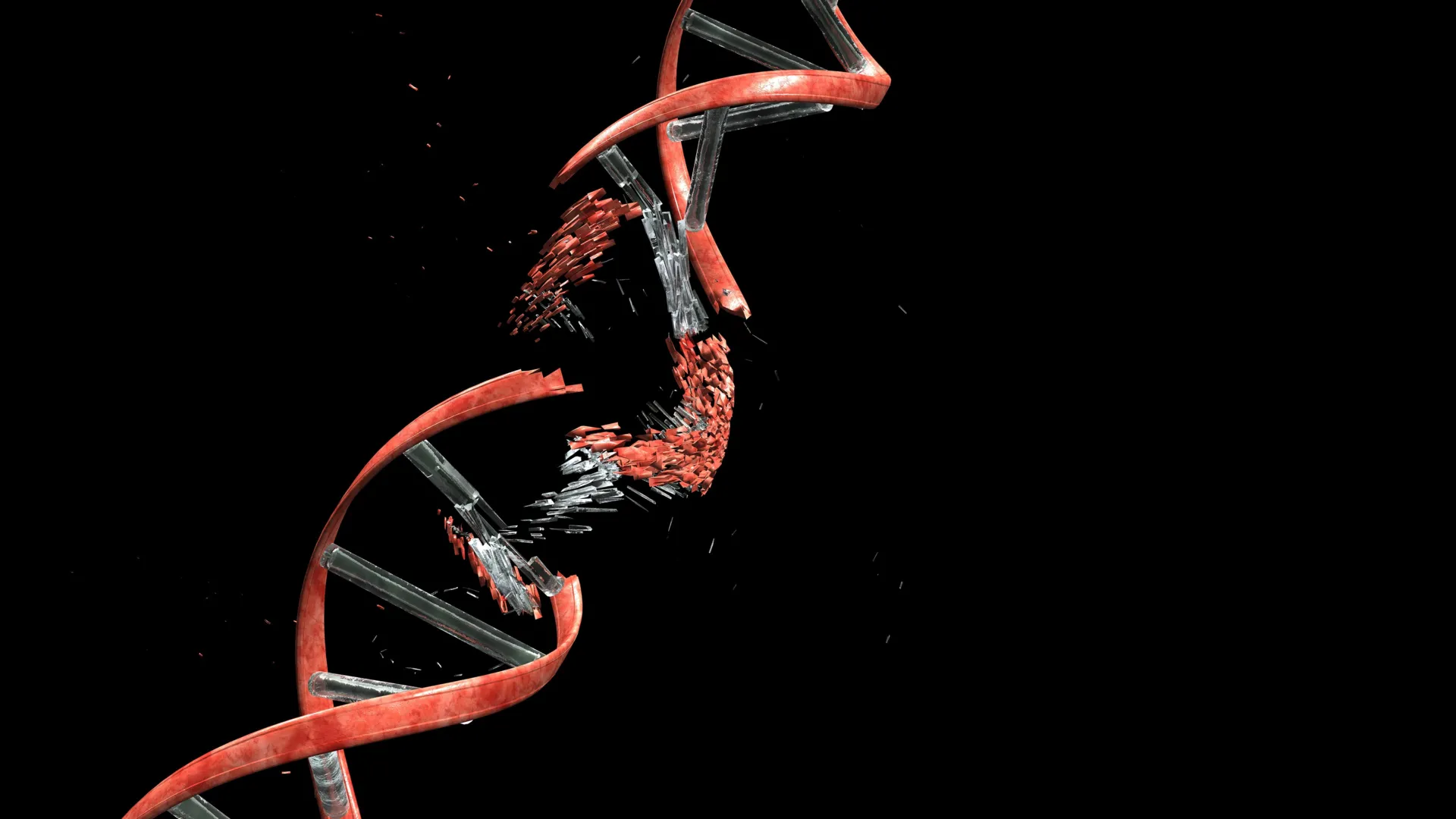
Scientists discover neurons must break their DNA to build the brain

As the brain develops, newly formed neurons must travel through tightly packed tissue to reach their final destinations in the cerebral cortex, where they become part of the brain’s communication network. This journey forces the cells through narrow gaps between fibers and neighboring cells.

A new study published in Nature has revealed an unexpected consequence of that process. Researchers from Kyoto University’s Institute for Integrated Cell-Material Sciences (WPI-iCeMS) and collaborating institutions found that migrating neurons routinely experience significant DNA damage. Specifically, the cells develop double-strand breaks, a severe form of DNA damage in which both strands of the DNA double helix are cut.

Although double-strand breaks are typically associated with mutations, cell dysfunction, and even cell death, the researchers discovered that they are a normal part of brain cortex development. In healthy brains, the damage is rapidly repaired before it can cause lasting problems.

“The developing brain appears to have evolved to tolerate and repair the neuronal damage efficiently,” says Professor Mineko Kengaku, of WPI-iCeMS, who led the study. “But understanding the limits of that tolerance — and what happens when repair is incomplete — brings us closer to understanding a range of neurological conditions.”

DNA Damage During Neuronal Migration

To investigate how this damage occurs, the researchers recreated the physical challenges faced by developing neurons. They guided neurons through tiny microchannels designed to mimic the confined spaces found in growing brain tissue.

Using fluorescent markers, the team observed double-strand DNA breaks appearing as neurons moved through the channels. Once the cells emerged from the other side, the damage gradually disappeared. Most of the breaks were repaired within 24 hours, and the neurons continued functioning normally.

The researchers identified the source of the damage as Topoisomerase IIβ, an enzyme that normally helps cells manage stress within DNA. Under ordinary conditions, the enzyme temporarily cuts DNA strands to relieve twisting and tension generated by routine cellular activity before reconnecting them.

The process can be compared to cutting a tangled cable to remove twists and then reconnecting it. However, when neurons are subjected to mechanical stress while squeezing through tight spaces, the enzyme can become trapped midway through the process, leaving sections of DNA broken. The cell then relies on a repair mechanism called non-homologous end joining to reconnect the damaged DNA ends.

Why Neurons Recover While Other Cells Do Not

The team found that neuronal DNA damage differs from the damage seen in certain cancer cells moving through the same microchannels. In cancer cells, DNA damage tends to occur more randomly and can disrupt normal cellular activity or trigger cell death.

In contrast, the DNA breaks in neurons were concentrated mainly in regions of the genome that are not actively involved in critical gene functions. Because essential genes are largely spared, the cells are able to maintain normal function despite the temporary damage.

When DNA Repair Falls Short

To explore the consequences of failed repair, the researchers engineered mice whose newly formed cerebellar neurons lacked Ligase 4, an enzyme required for repairing DNA breaks.

The mice developed normally and showed no obvious early abnormalities. However, as they reached adulthood, they began to experience mild but gradually worsening balance problems. These symptoms resemble those seen in certain human disorders linked to genome instability that affect the cerebellum.

Clues to Brain Diversity and Disease

The findings suggest that DNA breakage and repair may play a larger role in brain biology than previously recognized. Researchers now want to understand whether these early DNA changes contribute to differences between individual neurons and whether they influence neurodevelopmental or neurodegenerative diseases later in life.

“It shifts how we think about the neuronal genome,” says Professor Kengaku. “All neurons originate from the same DNA, but DNA damage and repair can introduce small genetic differences between individual neurons through a small mechanical journey. Some of that history may be written into the genome itself.”

The study was conducted through a collaboration involving Kyoto University, the University of Tokyo, the University of Osaka, the National University of Singapore, and the Tokyo Metropolitan Institute of Medical Science.

Share Button

How can we help our fathers live longer?

One in five men dies before the age of 65 but getting help sooner could save lives.

Share Button

Jeremy Clarkson in remission from prostate cancer

The presenter shared his “aggressive” cancer diagnosis on an episode of Clarkson’s Farm earlier this week.

Share Button

This simple twist could bring quantum computers closer to reality

Researchers at the University of Technology Sydney have demonstrated a new way to control tiny sources of quantum light by twisting atomically thin layers of hexagonal boron nitride.

The advance provides scientists with a new method for tuning quantum emitters, which are microscopic light sources that could play an important role in future technologies such as quantum computing, secure communications, and ultra-sensitive sensors.

Lead author Dr. Angus Gale said the work offers researchers a valuable new tool for making these quantum systems more practical.

“You can measure these quantum emitters and see that they exist, but it’s hard to make them work in practice. This gives us a lever to get closer to that — a step towards the realization of quantum technologies,” said Dr. Gale.

Twisting Layers Changes Quantum Light

During the experiments, Gale and his team found that twisting the material could significantly alter both the color and wavelength of the light emitted by the quantum emitters. The magnitude of the change was especially noteworthy.

Most studies create a device at a specific twist angle and leave it unchanged. In contrast, the researchers were able to repeatedly lift, rotate, and restack the material, allowing them to continuously modify its properties.

“We’re leveraging the fact that this material, hexagonal boron nitride (hBN), is layered. We can pick it up, stack it, twist it, and use that twist to modify the emitters. You can’t really do that with traditional materials like diamond or silicon carbide.”

“The benefit is that we used this twistable platform to shift the emission by a very significant amount,” said Gale. “Often when you control these systems, the amount of manipulation is very limited, but in this case the shift was much larger than expected.

“Rather than trying to make hBN defects behave like a traditional solid-state hosts, we took advantage of hBN’s own strength: its thin, layered, twistable structure.”

Why Hexagonal Boron Nitride Is Different

Gale compared the material’s structure to slices of cheese rather than a solid block.

“With a block of cheese, you can’t really get to the flavor in the middle. But with slices, you can peel away layers, put them back together and change how they interact,” he said.

Because hBN is made of extremely thin layers, researchers can separate and reassemble those layers in ways that are not possible with more conventional quantum materials.

New Possibilities for Quantum Technologies

Supervising author Professor Igor Aharonovich said the ability to twist layered materials is particularly exciting because it can reveal entirely new physical behavior.

“You can take two layers that don’t do much on their own, put them together at a specific angle, and suddenly you have a completely different system,” said Professor Aharonovich.

According to Aharonovich, the findings could help advance several emerging quantum technologies.

“These materials could eventually be used for quantum computing communications and quantum sensing, which would help for applications such as healthcare, cybersecurity and improved GPS; and gives us more control over the building blocks needed to get there.”

Share Button

How to keep children cool in the heat

How to keep children cool in the heat

Share Button

Minimum age of 11 set for UK puberty blocker trial

Gender-questioning children will have to be at least 11 years old to take part in a clinical trial of puberty-blocking drugs.

Share Button