A new study finds that hundreds of lives have been saved since school-age girls were offered the HPV jab in 2008.


A new study finds that hundreds of lives have been saved since school-age girls were offered the HPV jab in 2008.
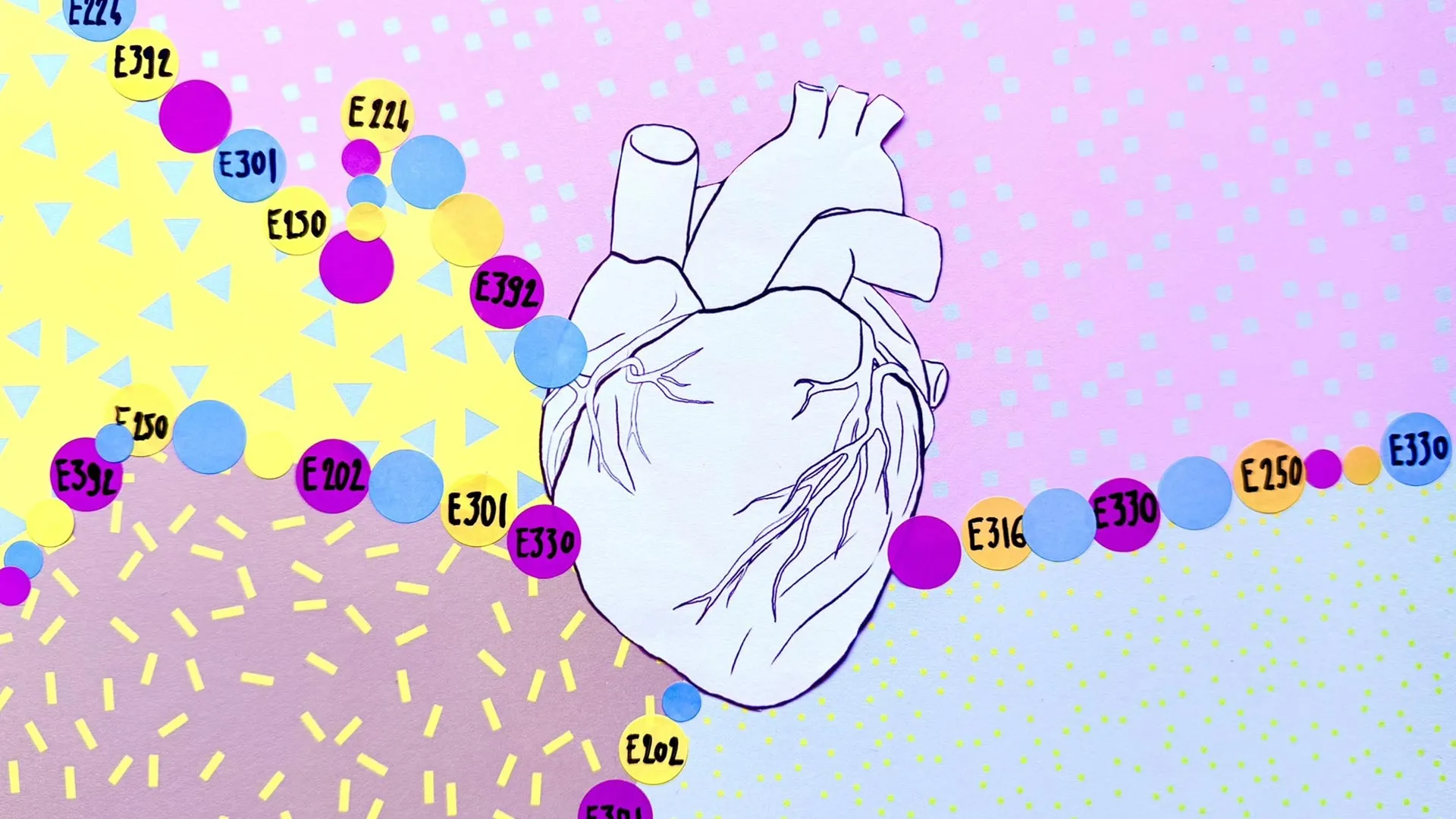
A massive study suggests that some common food preservatives may be putting heart health at risk.
People who regularly consume foods containing common preservatives may face a greater risk of developing high blood pressure and cardiovascular disease, according to a new study published in the European Heart Journal.
The research was led by Dr. Mathilde Touvier, research director at INSERM (the French National Institute for Health and Medical Research), and Anaïs Hasenböhler, a PhD student. Both are members of the Nutritional Epidemiology Research Team at Université Sorbonne Paris Nord and Université Paris Cité in France.
Large Study Examined Food Preservatives and Heart Health
Food preservatives are widely used in industrially processed foods to extend shelf life and maintain product quality. Although previous laboratory and experimental studies have suggested that some of these additives could affect cardiovascular health, evidence from human populations has been limited.
Ms Hasenböhler said: “Food preservatives are used in hundreds of thousands of industrially processed foods. Experimental studies suggest that some preservative food additives may be harmful to cardiovascular health, but we have not had enough evidence on the impact of these ingredients in humans. As far as we know, this is the first study of its kind to investigate the links between a wide range of preservatives and cardiovascular health.”
The investigation was conducted as part of the ongoing NutriNet-Santé study and included 112,395 volunteers from across France. Participants reported everything they ate and drank over three-day periods every six months.
Researchers then performed detailed assessments of the ingredients in those foods and beverages, including preservative additives. Participants’ health was monitored for an average of seven to eight years to determine whether they developed high blood pressure or cardiovascular disease.
Nearly all participants were exposed to preservatives. Within the first two years of the study, 99.5% had consumed at least one food preservative.
Higher Preservative Intake Linked to Greater Health Risks
The analysis found that participants who consumed the highest amounts of non-antioxidant preservatives had a 29% greater risk of hypertension compared with those who consumed the least. They also had a 16% higher risk of cardiovascular disease, including heart attack, stroke, and angina.
People with the highest intake of antioxidant preservatives showed a 22% greater risk of hypertension.
Non-antioxidant preservatives are used to prevent the growth of microbes such as mold and bacteria. Antioxidant preservatives serve a different purpose, helping to prevent oxidation so foods do not become brown or rancid.
Eight Preservatives Associated With High Blood Pressure
Researchers also examined 17 of the most commonly consumed preservatives individually. Eight were specifically associated with a higher risk of high blood pressure:
Among these additives, ascorbic acid (E300) was also specifically linked to cardiovascular disease.
Researchers Call for Further Evaluation
Dr. Touvier added: “This study has some limitations inherent to its observational design. However, the findings are based on highly detailed data, and we have taken account of other factors that can increase or lower the risk of cardiovascular disease. Experimental research in the literature consistently suggested that preservatives may cause oxidative stress in the body or affect the way the pancreas works.
“These results suggest we need a re-evaluation of the risks and benefits of these food additives by the authorities in charge, such as the EFSA in Europe and the FDA in the USA, for better consumer protection. In the meantime, these findings support existing recommendations to favor non-processed and minimally processed foods, and avoid unnecessary additives. Doctors and other healthcare professionals play a key role in explaining these recommendations to the public.”
The research team is continuing to investigate how food additives and ultra-processed foods influence inflammation, oxidative stress, blood metabolic markers, and the composition of the gut microbiota. These studies may help explain the biological mechanisms that could connect food additives to an increased risk of disease.
A new study finds that hundreds of lives have been saved since school-age girls were offered the HPV jab in 2008.
Can we grow a third set of teeth? Dr Oscar examines the truth behind the headlines
For generations, scientists have viewed the inability to regrow lost body parts as one of the fundamental limitations of humans and other mammals. While creatures such as salamanders can regenerate entire limbs, humans typically heal injuries by forming scar tissue.
New research from the Texas A&M College of Veterinary Medicine and Biomedical Sciences (VMBS), however, suggests that regenerative abilities may not be entirely absent in mammals. Instead, they could be hidden within the body’s normal healing machinery, waiting to be activated under the right conditions.
“Why some animals can regenerate and others, particularly humans, can’t is a big question that has been asked since Aristotle,” said Dr. Ken Muneoka, a professor in the VMBS’ Department of Veterinary Physiology & Pharmacology (VTPP). “I’ve spent my career trying to understand that.”
In a study published in Nature Communications, Muneoka and colleagues describe a new two-step treatment that enabled the regeneration of bone, joint structures, and ligaments. Although the regrown tissues were not perfect replicas of the originals, the researchers believe the approach could eventually help reduce scarring and improve tissue repair after amputations.
Redirecting Healing Away From Scar Formation
When mammals are injured, the body usually responds with fibrosis. During this process, fibroblast cells quickly close the wound and create scar tissue. While this response helps prevent infection and further damage, it also limits the body’s ability to rebuild what was lost.
Animals capable of regeneration follow a different path. In salamanders, for example, similar cells gather into a structure called a blastema, which serves as a foundation for new tissue growth.
“It’s as if these cells can move in two different directions,” Muneoka said. “They could either make a scar or make a blastema. Our research focused on redirecting the behavior of fibroblasts already present at the injury site.”
To explore whether mammalian healing could be pushed toward regeneration, the research team developed a treatment that uses two well-known growth factors in sequence.
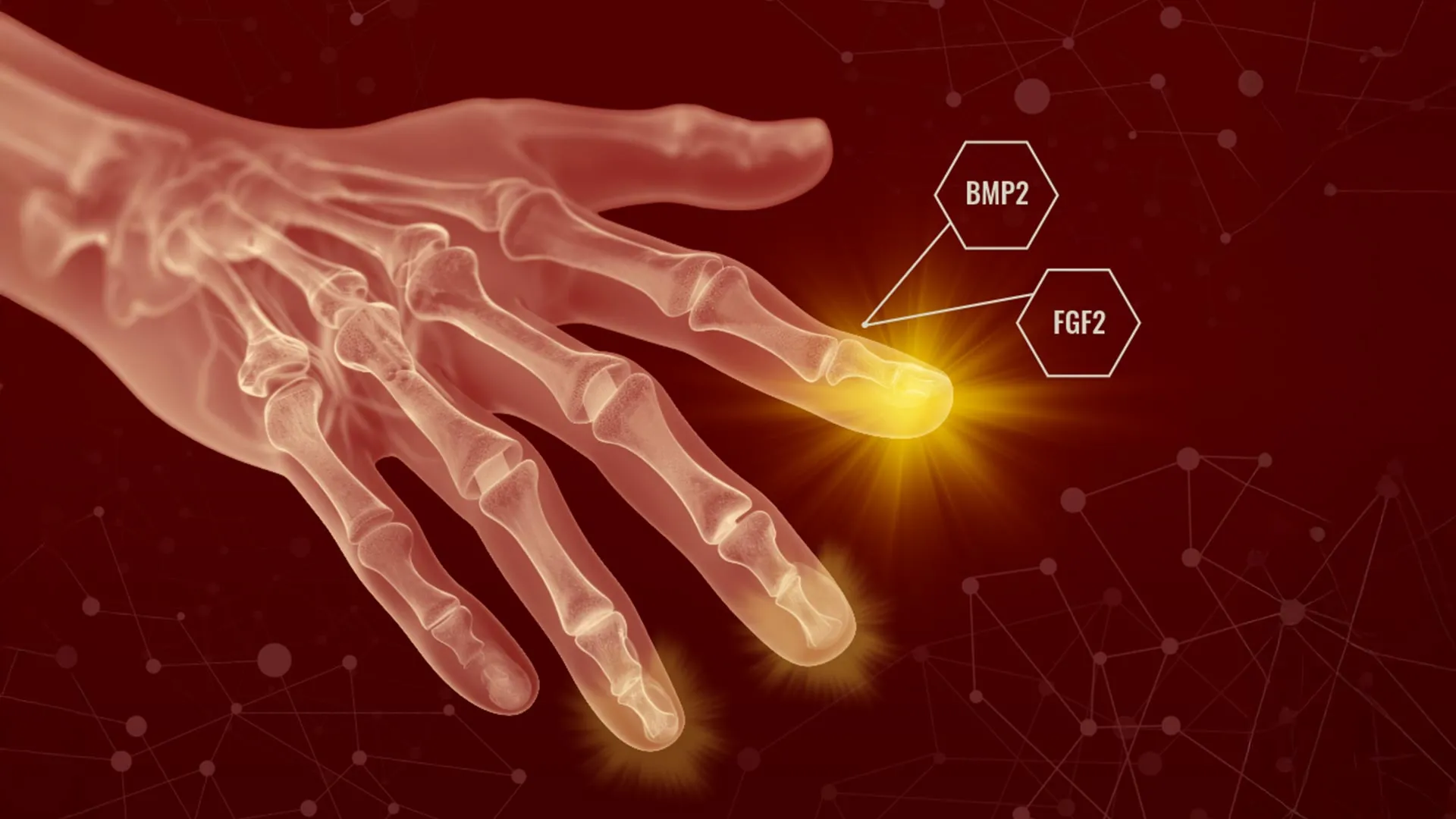
The first step involved applying fibroblast growth factor 2 (FGF2) after the wound had already healed over. By waiting until the initial healing process was complete, the researchers allowed the body to respond normally before intervening.
According to Muneoka, the team then “changed what happens next.”
FGF2 encouraged the formation of a blastema-like structure, something that does not typically occur in mammals after this type of injury. Several days later, the researchers applied a second growth factor, bone morphogenetic protein 2 (BMP2), which prompted those cells to begin building new tissues.
“This is really a two-step process,” Muneoka said. “You first shift the cells away from scarring, and then you provide the signals that tell them what to build.”
Rethinking the Role of Stem Cells
One of the study’s most important findings is that regeneration may not require adding stem cells from outside the body, an approach commonly explored in regenerative medicine.
“You don’t have to actually get stem cells and put them back in,” Muneoka said. “They’re already there — you just need to learn how to get them to behave the way you want.”
Dr. Larry Suva, another VTPP professor involved in the study, said the results challenge long-standing assumptions about what mammalian cells are capable of doing.
“The cells that we thought to be unprogrammable, in fact are,” Suva said. “The capacity is not absent — it’s just obscured.”
The researchers also found evidence that cells can be redirected to create structures outside their usual location. This process, known as positional re-specification, is an important part of development.
In practical terms, cells that would normally help form one type of tissue can be instructed to rebuild a different structure following an injury.
Regrowing Bone, Tendons, Ligaments, and Joints
Although the regenerated tissues were not exact matches to the original anatomy, the researchers successfully restored all of the major structures that had been removed during amputation, including bone, tendon, ligament, and joint tissue.
The regenerated areas contained both skeletal components and connective tissues arranged in patterns resembling natural anatomy.
“We regenerated what you would expect to see at that level of injury,” Muneoka said. “The structures are there — just not in a perfect form.”
The findings also suggest that regeneration depends on multiple biological pathways working together. Rebuilding tissue appears to be far more complex than activating a single mechanism.
Potential Benefits for Wound Healing
While the research remains in its early stages, the scientists believe it could have practical applications long before complete regeneration becomes possible.
Rather than focusing solely on replacing missing structures, the approach may help improve healing outcomes by reducing scar formation and enhancing tissue repair.
“People should start thinking about using these signals during the healing process,” Muneoka said. “Even shifting the response slightly away from scarring could have real benefits.”
The path toward clinical testing may also be more straightforward than with many experimental therapies. BMP2 already has FDA approval for certain medical applications, and FGF2 is currently being evaluated in multiple clinical trials.
A New View of Mammalian Regeneration
The study adds to growing evidence that regeneration in mammals may not be a completely lost trait. Instead, it may be a dormant capability that normally remains inactive during healing.
“This changes the way we think about what’s possible,” Suva said. “Once you show that regeneration can be activated, it opens the door to asking entirely new questions.”
For Muneoka, those questions have driven decades of research and now have a promising new framework.
“Regenerative failure in mammals can be rescued,” he said. “Now we have a model to begin figuring out how.”

Researchers have identified a remarkable new spider species in Ecuador’s Amazon rainforest that disguises itself as a parasitic fungus. The species, named Taczanowskia waska, represents the first known example of a spider mimicking the appearance of a fungus that infects spiders. The discovery was made by an international team of scientists that included researchers from the Leibniz Institute for the Analysis of Biodiversity Change (LIB), and the findings were published in the journal Zootaxa.
The spider was found in the Llanganates-Sangay Corridor, a region of the Ecuadorian Amazon known for its extraordinary biodiversity. During a nighttime field survey, researchers initially mistook the animal for a mushroom, highlighting just how convincing its disguise is.
A Spider With a Fungus-Like Appearance
Taczanowskia waska closely resembles the fruiting body of fungi in the genus Gibellula, which grow on spiders. The spider has elongated structures extending from its abdomen and a pale coloration that gives it the appearance of fungal growth.
Its behavior strengthens the illusion. The spider remains motionless on the undersides of leaves, the same location where Gibellula fungi are commonly found.
Researchers say this combination of appearance and behavior points to a highly specialized adaptation. By blending into its surroundings as something predators are likely to ignore, the spider may reduce its chances of being eaten. The disguise may also help it catch prey by allowing it to remain unnoticed until the right moment.
First Known Example of Its Kind
According to the study, this is the first documented case of a spider imitating a parasitic fungus that infects other spiders. Scientists say the finding offers valuable insight into how mimicry evolves and the ecological functions these adaptations can serve.
The genus Taczanowskia remains poorly understood and is considered rare. Much of its ecology is still a mystery because spiders in this group are seldom encountered in the wild.
Nadine Dupérré of the Museum of Nature Hamburg at LIB contributed to the research by examining reference specimens from scientific collections and helping classify the new species.
Citizen Science Helped Spark the Discovery
The story began with a post on the citizen science platform iNaturalist. What observers initially believed to be a mushroom was later recognized by users as a spider, prompting further scientific investigation.
The case highlights the growing role of citizen science in biodiversity research and species discovery.
“Finds like these demonstrate the value of scientific collections. They enable us to classify new species and compare them with historical specimens. Combined with international collaboration and citizen science, this opens up new opportunities for researching biodiversity,” explains Nadine Dupérré.
The discovery also serves as a reminder of how much remains unknown about life in tropical ecosystems. Scientists say it underscores both the immense biodiversity of rainforest regions and the importance of international cooperation and new sources of data in advancing our understanding of the natural world.

Could improving gut health also help improve mental health? A small clinical trial suggests that probiotics, often called “good bacteria,” may provide an extra boost for older adults being treated for depression.
Researchers found that seniors with depression who took a daily probiotic alongside their regular antidepressant treatment experienced modest but meaningful improvements in depression and anxiety symptoms compared with those who received a placebo. A placebo is an inactive treatment designed to look identical to the real one.
The study was published in the Journal of the American Geriatrics Society.
Exploring the Gut-Brain Connection
Scientists have become increasingly interested in the relationship between the digestive system and the brain, often referred to as the gut-brain connection. The trillions of microbes that live in the human digestive tract, collectively known as the gut microbiome, may influence mood, behavior, and mental health through a variety of biological pathways.
Probiotics are live microorganisms that can help support a healthy balance of bacteria in the gut. Researchers have been investigating whether these microbes could potentially complement traditional treatments for conditions such as depression and anxiety.
Inside the Clinical Trial
The pilot study enrolled 58 adults in India who were at least 60 years old and had moderate depression. All participants continued receiving standard antidepressant treatment.
The volunteers were randomly assigned in a 1:1 ratio to receive either a daily probiotic supplement or a placebo for 12 weeks. Researchers then continued monitoring participants for another 12 weeks to track longer-term outcomes.
Importantly, both groups showed substantial improvement over the course of the study. However, the probiotic group experienced somewhat greater reductions in symptoms of depression and anxiety.
Measuring Mental Health and Biological Changes
To evaluate the effects of treatment, researchers used several different tools.
They assessed participants using established psychological rating scales designed to measure depression and anxiety symptoms. They also examined a biomarker known as (serum brain-derived neurotropic factor level). Brain-derived neurotrophic factor, often abbreviated as BDNF, is a protein involved in the growth, maintenance, and survival of nerve cells and is frequently studied in mental health research.
In addition, investigators analyzed participants’ gut bacteria through (fecal microbiota profiling), which allows scientists to examine the composition of microbes living in the digestive system.
Taken together, the findings suggested that probiotic therapy contributed to symptom improvement. However, the researchers did not find clear evidence that probiotics produced additional improvements in overall quality of life compared with placebo.
Encouraging Results, But More Research Needed
Because this was a relatively small pilot study, the findings should be viewed as preliminary. Larger studies will be needed to determine how much benefit probiotics may provide, which patients are most likely to respond, and whether the effects remain consistent across broader populations.
Even so, the results support the idea that probiotics could serve as a safe and biologically plausible addition to standard depression treatment.
“The results of our study are novel, and we are now planning a follow-up, larger-scale clinical trial due to the encouraging findings,” said co-corresponding author Dr. Saibal Das, MBBS, MD, DM, PhD, of the Indian Council of Medical Research — National Institute for Research in Bacterial Infections, Kolkata.
“My vision is to develop affordable healthcare solutions and make them available to the larger population for meaningful public health impact,” added co-corresponding author Abhinaba Ghosh, MBBS, MSc, PhD, a physician-neuroscientist from Tata Medical Center, Kolkata.

Superconductors could one day help power a new generation of ultra-efficient electronics, but major technical hurdles have kept the technology largely confined to research labs. Now, scientists at Chalmers University of Technology in Sweden have developed a new approach that tackles one of the field’s biggest challenges: maintaining superconductivity at higher temperatures while also resisting strong magnetic fields.
The advance could help move superconducting technologies closer to practical use in electronics, energy systems, and quantum devices.
Modern digital devices, data centers, and information and communications technology (ICT) networks are responsible for an estimated 6 to 12 percent of global electricity consumption. As energy demand continues to rise, researchers are searching for ways to make electronics far more efficient.
Superconductors are particularly attractive because they can carry electrical current with no energy loss. Unlike conventional electronic systems, which waste energy as heat, superconductors can transmit electricity without resistance. In theory, this could make power grids, electronics, and quantum technologies hundreds of times more efficient.
Why Superconductors Are Difficult To Use
Despite their promise, superconductors face several obstacles that limit their real-world applications.
One challenge is temperature. Many superconductors only work at extremely low temperatures, often around minus 200 degrees Celsius. Reaching and maintaining such temperatures requires complex and energy-intensive cooling systems.
Magnetic fields present another major problem. Strong magnetic fields can weaken or even eliminate superconductivity. This is particularly important because many advanced electronic systems and quantum technologies either generate or rely on magnetic fields.
To become practical for widespread use, superconducting materials must be able to operate at higher temperatures (ideally close to room temperature) while remaining stable in strong magnetic environments.
A Different Strategy for Stronger Superconductivity
Researchers have spent years trying to improve superconductors by altering their chemical composition, but progress has been limited. The Chalmers team decided to take a different approach.
“By sculpting the surface that the superconductor rests on, we were able to induce superconductivity at significantly higher temperatures than previously possible. We also found that the material remained superconducting even when exposed to strong magnetic fields,” explains Floriana Lombardi, Professor of Quantum Device Physics at Chalmers and lead author of a study published in Nature Communications.
How a Tiny Surface Change Made a Big Difference
The researchers worked with a copper-oxide material from the cuprate family. Cuprates are already known for exhibiting superconductivity at relatively high temperatures, but their chemical structure is difficult to modify once they have been manufactured.
The superconducting layer used in the study was only a few nanometers thick, less than one millionth the thickness of a human hair. Such ultrathin materials must be grown on a supporting foundation called a substrate, which acts as a template during fabrication.
The breakthrough came from making nanoscale modifications to the substrate itself.
“Because the atoms in the substrate are arranged in a specific pattern, they can ‘guide’ how the atoms in the superconducting layer settle. By changing the surface design of the substrate, we were able to influence the superconducting properties and ensure they were preserved, even at higher temperatures and when high magnetic fields were applied,” explains Eric Walhberg, a researcher at RISE Research Institutes of Sweden.
Before adding the superconducting film, the team treated the substrate in a vacuum at high temperature. This process created an orderly pattern of tiny ridges and valleys across the surface.
Those microscopic features altered the electronic environment where the substrate and superconducting layer meet, creating conditions that favored stronger superconductivity.
“We could see how the electrons’ properties began to have a preferential direction in this interfacial region and behave in a way that stabilized and strengthened the superconducting state,” says Lombardi.
A New Design Principle for Future Superconductors
The findings introduce a new way of thinking about superconducting materials. Instead of focusing solely on discovering new materials or changing their chemistry, researchers may be able to improve performance by carefully engineering the surfaces on which those materials are grown.
“Instead of searching for entirely new materials or manipulating the chemical properties of existing ones, we are now showing how superconductivity can be enhanced by sculpting the substrate,” says Lombardi.
The researchers believe this strategy could eventually help superconductors function at much higher temperatures, potentially even approaching room temperature.
The work also points toward future applications in energy-efficient electronics, advanced quantum components, and technologies that must operate in strong magnetic fields.
“This shows that very small changes at the nanoscale can have decisive effects and may even unlock the full potential of superconductivity in future electronics,” says Lombardi.
Study Details
The study, “Boosting superconductivity in ultrathin YBa2Cu3O7−δ films via nanofaceted substrates,” was published in the journal Nature Communications.
The authors are Eric Wahlberg, Riccardo Arpaia, Debmalya Chakraborty, Alexei Kalaboukhov, David Vignolles, Cyril Proust, Annica M. Black-Schaffer, Thilo Bauch, Götz Seibold, and Floriana Lombardi.
Researchers involved in the project are affiliated with Chalmers University of Technology, RISE Research Institutes of Sweden, Ca’ Foscari University of Venice, Italy, Birla Institute of Technology and Science — Pilani, K. K. Birla Goa Campus, India, Indian Institute of Science Education and Research (IISER), India, Uppsala University, Sweden, Université Grenoble Alpes, Université de Toulouse, INSA-T, France, and Institut für Physik, BTU Cottbus-Senftenberg, Germany.
Part of the research was carried out at Myfab Chalmers, a cleanroom facility.
Funding was provided by the Swedish Research Council (VR), the Knut and Alice Wallenberg Foundation, the European Union through an EIC Pathfinder grant, and the Deutsche Forschungsgemeinschaft.
How a very special hairdressing salon in Lowestoft is cutting it when it comes to neurodivergence.
Caroline Fonjock says she owes her life to the medics who quickly diagnosed and treated her.
