The outdoor ward, at King’s College Hospital in London, will monitor how much it boosts the recovery of seriously ill patients.


The outdoor ward, at King’s College Hospital in London, will monitor how much it boosts the recovery of seriously ill patients.

For more than 250 years, stories from early explorers described crocodiles as a common sight along the shores of the Seychelles. But after permanent settlers arrived in 1770, the island population disappeared rapidly. Within about 50 years, the crocodiles had been completely exterminated.
Now, scientists have finally uncovered the true identity of these vanished reptiles through a new genetic analysis. The study found that the Seychelles crocodiles were not a separate species, as some once suspected. Instead, they were the westernmost known population of the saltwater crocodile (Crocodylus porosus), the world’s largest living reptile and one of its most capable ocean travelers.
DNA Reveals the Origins of Seychelles Crocodiles
Researchers from Germany and the Seychelles investigated the evolutionary history of the saltwater crocodile by comparing DNA from modern animals with genetic material taken from historical museum specimens. The team analyzed mitochondrial genomes from preserved crocodiles belonging to the genus Crocodylus, including rare samples from the Seychelles population that vanished roughly 200 years ago.
The findings confirmed an earlier theory that had been based only on the crocodiles’ physical appearance. Genetic evidence now shows the Seychelles animals were closely connected to saltwater crocodiles living thousands of kilometers away.
Crocodiles Crossed Vast Distances Across the Indian Ocean
Among all living crocodile species, the saltwater crocodile is especially well adapted for life at sea. Specialized salt glands allow these reptiles to remove excess salt from their bodies, enabling them to survive for long periods in seawater. Over time, this ability helped the species spread across enormous stretches of coastline and remote islands.
“The founders of the Seychelles population must have drifted at least 3,000 kilometers across the Indian Ocean to reach the remote archipelago, perhaps even much further,” says reptile expert Frank Glaw of the Bavarian State Collections of Natural History (SNSB) and senior author of the study.
Scientists believe these crocodiles likely traveled with ocean currents over generations, eventually establishing a population in the isolated islands of the Seychelles.
One of the World’s Most Wide Ranging Reptiles
“The genetic patterns suggest that saltwater crocodile populations remained connected over long periods and across great distances, pointing to the high mobility of this species,” explains first author Stefanie Agne of the University of Potsdam.
Today, the saltwater crocodile remains one of the most widely distributed reptiles on Earth. Before the Seychelles population was wiped out, the species occupied an even larger range that stretched more than 12,000 kilometers from Vanuatu in the Pacific Ocean to the Seychelles in the Indian Ocean.
Doctors are warning that some cancers are becoming more common in people in their 20s
Still in her hospital bed, connected to feeding tubes and life support, Hollie is the first patient to try out the new intensive care rooftop ward at King’s College Hospital in south London.
Only men with a dangerous genetic variant and a family history of cancer should be offered screening, say UK advisors.
Your gut doesn’t just respond to your brain – it helps shape your emotions. Professor of Biomolecular Medicine Jon Swann explains why.
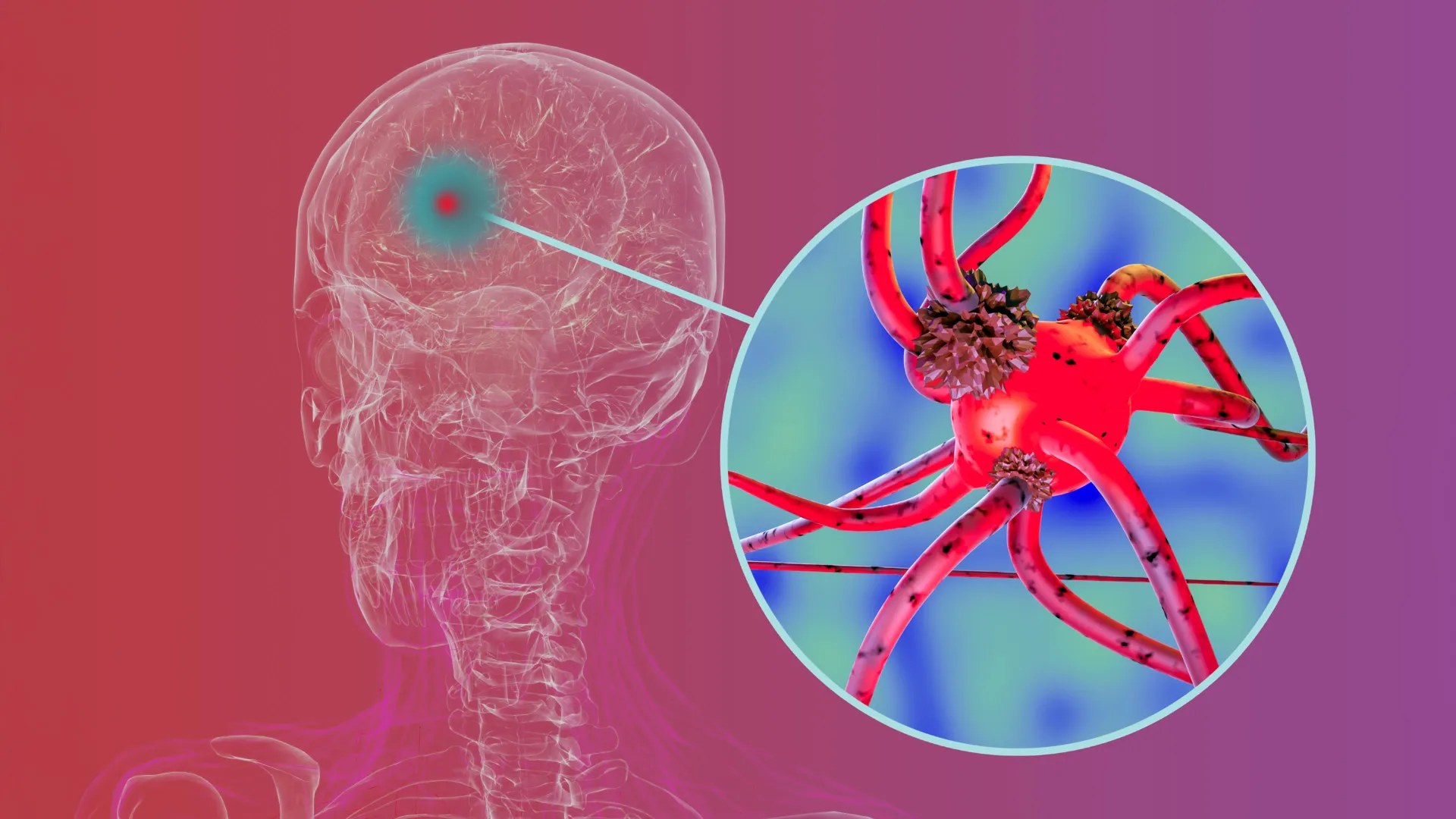
Researchers at the Perelman School of Medicine at the University of Pennsylvania have identified a brain immune protein that may play a major role in the progression of Parkinson’s disease (PD). Their findings, published in Neuron, suggest that blocking this protein with monoclonal antibodies could eventually lead to treatments that slow the disease in its earliest stages.
The protein, known as glycoprotein nonmetastatic melanoma B (GPNMB), appears to help harmful Parkinson’s-related damage spread from one brain cell to another. Scientists say targeting it may offer a new strategy for slowing the worsening of the disease over time.
“Many patients with Parkinson’s disease are diagnosed in the early stages, when symptoms are relatively mild, but there is currently no treatment that slows the progression,” said lead author, Alice Chen-Plotkin, MD, Parker Family Professor of Neurology. “These early results are a promising step towards developing this type of treatment.”
How Parkinson’s Disease Spreads in the Brain
Parkinson’s disease affects more than one million Americans, and approximately 90,000 people in the United States are diagnosed each year. Although researchers still do not fully understand what causes the disease, scientists have known for years that it gradually spreads through the brain in stages.
A protein called alpha-synuclein is central to this process. In Parkinson’s disease, alpha-synuclein forms abnormal clumps inside neurons. These clumps damage the affected cells and can then move into nearby healthy neurons, where they continue spreading.
As more areas of the brain become affected, symptoms worsen. Patients may develop tremors, difficulty walking, balance problems, and trouble swallowing.
Current treatments, including levodopa and deep-brain stimulation, can help reduce symptoms. However, no approved therapy has been shown to slow or stop the underlying progression of Parkinson’s disease itself.
Brain Immune Cells May Help Fuel Disease Progression
In earlier research published in 2022, Chen-Plotkin and colleagues identified GPNMB as an important molecule involved in the spread of alpha-synuclein between neurons. That discovery made the protein a promising target for future therapies.
In the new study, the research team found that microglia, the brain’s immune cells, are a major source of GPNMB in Parkinson’s disease. When neurons become damaged or begin dying, nearby microglia respond by producing larger amounts of the protein.
Enzymes then cut part of GPNMB away from the cell surface, allowing it to move freely between cells in the brain.
Using preclinical laboratory experiments with cultured neurons, researchers developed antibodies designed to block GPNMB. The antibodies successfully prevented alpha-synuclein pathology from spreading from one cell to another.
“These results suggest Parkinson’s disease may be driven by a self reinforcing cycle — alpha-synuclein accumulates in neurons, damaging the neurons. The injury to the neurons initiates the release of GPNMB, which accelerates the spread of alpha-synuclein, leading to further damage,” Chen-Plotkin said. “Interrupting this cycle would hopefully slow, or even stop, the spread of alpha-synuclein through the brain and the neurodegeneration that follows.”
Human Brain Analysis Supports the Findings
To examine whether the results were relevant in people, researchers analyzed tissue samples from 1,675 brains stored in the Penn Brain Bank.
The team found that individuals carrying genetic variants linked to higher GPNMB production also showed more extensive alpha-synuclein pathology. According to the researchers, this provides strong evidence that GPNMB plays a significant role in the progression of Parkinson’s disease in humans.
Importantly, elevated GPNMB levels were not connected to markers associated with other neurodegenerative conditions, including Alzheimer’s disease.
“These results are promising for laboratory models and human brain tissue analysis, but we still have a lot of work to do before we can translate this therapy into humans,” said Chen-Plotkin. “That being said, these results are encouraging as we continue to work towards a novel treatment for PD.”
The study received support from the National Institutes of Health (R37 NS115139, P30 AG010124, U19 AG062418, P01 AG084497), SPARK-NS, the Parker Family Chair, and the Lipman Family Fund.
Live births in England and Wales are at their lowest since 1977, while the age of first-time mothers has also risen.
British Medical Association resident doctor members in England announce new strike for four days from 15 June.

University of Houston researchers have achieved a major superconductivity breakthrough by setting a new temperature record for superconductors operating under ambient pressure conditions. The advance could eventually help create more efficient electrical grids, improved energy storage systems, faster electronics, and new technologies for fusion energy and medical imaging.
Scientists from the Texas Center for Superconductivity (TcSUH) and the University of Houston department of physics reached a superconducting transition temperature (Tc) of 151 Kelvin (about minus 122 degrees Celsius). That is now the highest Tc ever reported for a superconductor functioning at ambient pressure since superconductivity was first discovered in 1911.
The transition temperature marks the point where a material can carry electricity with zero resistance. Increasing this temperature has been one of the biggest goals in superconductivity research because higher operating temperatures could make superconducting technologies far more practical and affordable.
The findings by physicists Ching-Wu Chu and Liangzi Deng were published in the Proceedings of the National Academy of Sciences. Funding for the work came from Intellectual Ventures, the state of Texas through TcSUH, and several foundations.
“Transmitting electricity in the grid loses about 8% of the electricity,” said Chu, professor of physics, TcSUH founding director and the paper’s senior author. “If we conserve that energy, that’s billions of dollars of savings and it also saves us lots of effort and reduces environmental impacts.”
Why Superconductors Matter
Superconductors are materials that allow electricity to flow without resistance. Because no energy is lost as heat, they could dramatically improve the efficiency of electrical systems. Scientists also see superconductors as critical for technologies such as magnetic resonance imaging (MRI), fusion reactors, quantum technologies, and ultrafast electronics.
The challenge is that most superconductors only work at extremely low temperatures, requiring expensive cooling systems that limit widespread use.
“Once we bring the material to ambient pressure, it becomes much more accessible for scientists to use well-developed instrumentation to investigate it and further develop technologies for ambient condition operations,” said Deng, assistant professor of physics, principal investigator at the TcSUH and lead author of the paper.
New Record Breaks Decades-Old Barrier
Researchers have spent decades searching for superconducting materials with increasingly higher transition temperatures.
A major milestone came in 1987 when Chu and his collaborators discovered that a material known as YBCO could become superconducting at minus 180 degrees C, or 93 K. That discovery helped launch a global race to develop high-temperature superconductors.
In 1993, scientists discovered a mercury-based copper-oxide ceramic called Hg1223 that reached superconductivity at minus 140 degrees C, or 133 K. That material held the ambient-pressure record for more than 30 years.
The new University of Houston achievement pushes the record 18 degrees C higher to 151 K.
Pressure Quenching Creates Stable Superconductivity
The breakthrough relied on a process known as pressure quenching. While pressure techniques are commonly used in other fields, including diamond production, the method is relatively new in superconductivity research.
Researchers first subjected the material to extremely high pressure, which enhanced its superconducting behavior and increased its transition temperature. While still under pressure, the material was cooled to a carefully chosen temperature before the pressure was suddenly removed.
That rapid release effectively preserved the enhanced superconducting properties, allowing the material to remain stable even after returning to normal pressure conditions.
“Other researchers have shown that reaching superconductivity at room temperature under pressure is achievable,” Chu said. “Our method shows that it is possible to retain that state without maintaining pressure.”
A Step Toward Room-Temperature Superconductors
Although room-temperature superconductivity at ambient pressure remains out of reach, researchers say the new record is an important advance toward that goal. Room temperature is roughly 300 K, leaving a gap of about 140 degrees C from the newly achieved record.
“This finding has great potential,” Chu said. “We believe, with enough people working on it and given enough time, we should be able to realize the potential.”
Chu and Deng also contributed to a companion perspective paper funded by Intellectual Ventures and published in PNAS. The paper discusses six different approaches researchers could use to raise superconducting temperatures further, including pressure quenching.
“Room-temperature superconductivity has been seen as a ‘holy grail’ by scientists for over a century,” said Rohit Prasankumar, director of superconductivity research at Intellectual Ventures. “The UH team’s result shows that this goal is closer than ever before. However, the distance between the new record set in this study and room temperature is still about 140 degrees C. Closing this gap will require concerted, intentional efforts by the broader scientific community, including materials scientists, chemists, and engineers, as well as physicists.”
