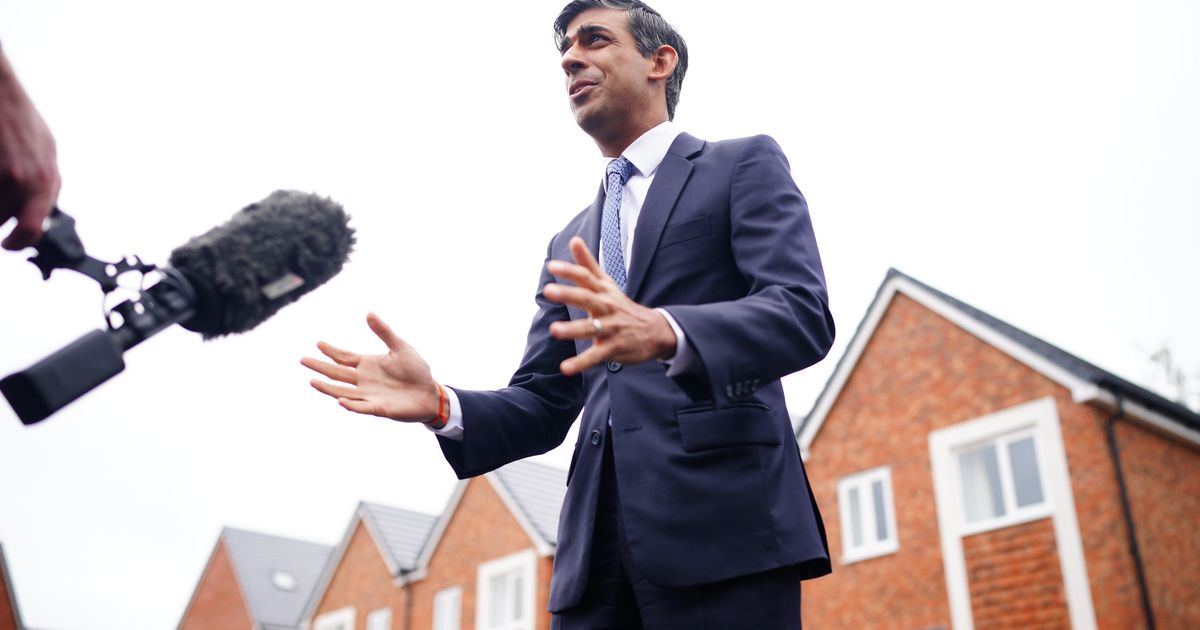
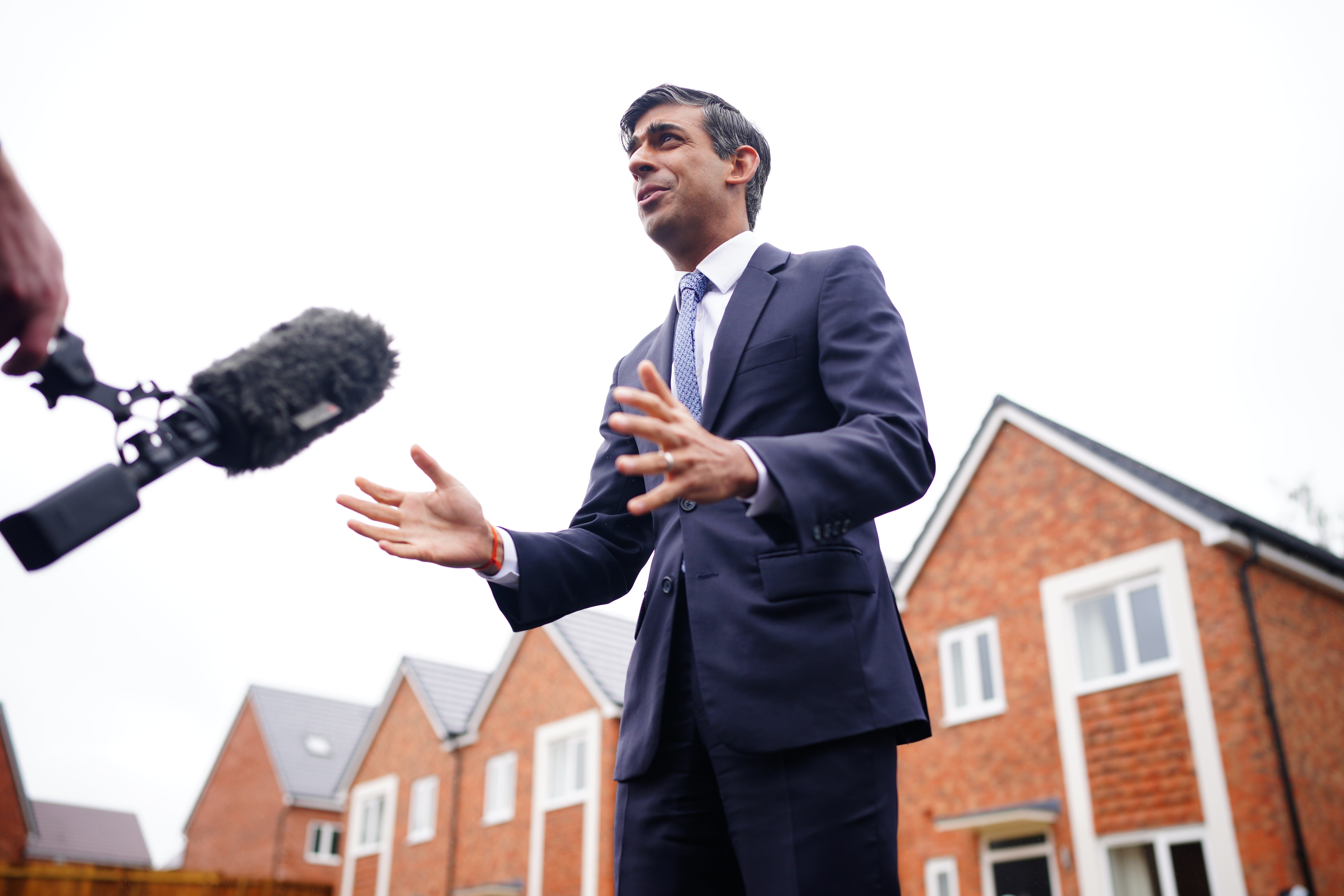
Tory deputy chairman Lee Anderson has admitted his party has “failed” to stop migrants crossing the Channel in small boats, despite Rishi Sunak’s pledge to end the journeys.
He said the situation was now “out of control” and that the Conservative government was to blame.
Anderson’s comments, in an interview with Nigel Farage on GB News, followed the row over his claim that migrants who do not want to board the Bibby Stockholm barge in Dorset should “fuck off back to France”.
Advertisement
He said: “I’m not going to sit here and make excuses to anyone. This is out of control.
“We’re in power at the moment, I’m the deputy chair of the Conservative Party, we’re in government and we have failed on this – there’s no doubt about it.
“We’ve said we’re going to fix it, it is a failure.”
Anderson insisted the Tories had policies in place to tackle the issue, but he added: “I know it’s a bit hard for the British public at the moment to actually understand what we’re trying to do with the Rwanda flights and the Illegal Migration Bill and it seems very slow, it’s cumbersome.
“We’re up against it Nigel, let’s be honest. We’ve got the lefty lawyers, we’ve got the human rights campaigners, we’ve got the charities – everything’s against us, but I’m not making excuses.”
Lee Anderson also admitted the government has “failed” to tackle the small boats issue.
“I’m the deputy chair of the Conservative Party, we’re in government, and we have failed on this. There’s no doubt about it.”
His comments are a further blow to Sunak in a week that was meant to showcase the government’s attempts to stop the boats.
Instead, they have been forced to deny plans to deport migrants to Ascension Island, while they also face legal challenges over the Bibby Stockholm, which has been dubbed a “quasi-prison” by opponents.
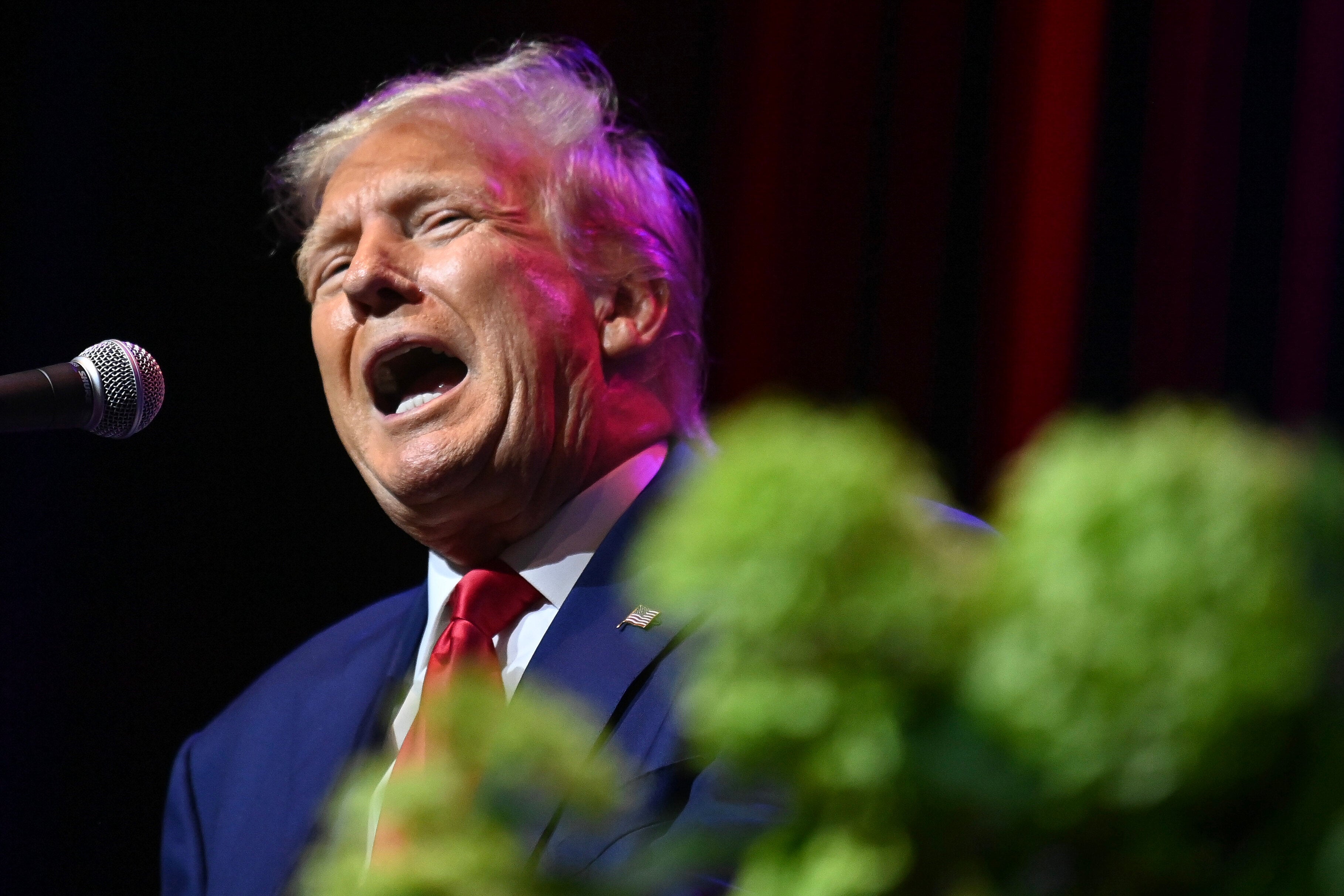
The former president invoked the perpetual flames of the underworld in two separate rants on Sunday against Representative Nancy Pelosi (Democrat, California) and the US women’s national soccer team.
Early in the day, he launched his attack on the former House speaker, who on Friday said Trump looked like a “scared puppy” during his arraignment last week on federal charges of election obstruction and conspiracy.
Advertisement
“I wasn’t ‘scared,’” Trump insisted in a post on his Truth Social website. “Nevertheless, how mean a thing to say! She is a Wicked Witch whose husbands journey from hell starts and finishes with her. She is a sick & demented psycho who will someday live in HELL!”
He called the loss “fully emblematic of what is happening to the our once great Nation under Crooked Joe Biden” and accused the players of being “openly hostile” to the country.
“WOKE EQUALS FAILURE,” he wrote, then took a shot at star player Megan Rapinoe. “Nice shot Megan, the USA is going to Hell!!!”
Advertisement
Trump’s critics raised hell in return:
Imagine if Joe Biden called Kevin McCarthy a “sick & demented psycho” who was going to Hell. Not just Fox but the entire ‘liberal media’ would lose their minds. He would be condemned even by members of his own Democratic Party.
The US Women’s Team is woke now, but they weren’t in 2019 when they won the World Cup with a roster that was mostly the same and led by the woman he singled out. They were unwoke, that’s why they won. Tragic. https://t.co/GcwHq9kwbW
— Republicans against Trump (@RpsAgainstTrump) August 6, 2023
Megan Rapinoe and her teammates won TWO STRAIGHT world cups for their country. You INCITED AN INSURRECTION and brought great shame and dishonor on yours. They have more patriotism in their pinkies than you’ve got in your entire racist, bigoted, and traitorous ass. https://t.co/vZRjYOtn6i
Yo, GOP – we just going to keep pretending this is normal & okay? I wouldn’t let my family near the kind of lunatic that rants like this on the internet. pic.twitter.com/I0Ua1QxvqY
it’s an unusually clear statement of how trump just revels in US failure and in imagining US destruction. presidents usually try to project optimism and hope. Trump thrives on the opposite—visions of american decline and apocalypse. https://t.co/y5z8pEs0ZE
you’d think a guy who was president for 4 years would know Sweden basically tips over the woke-o-meter but maybe that was the week he was trying to buy Greenland or some shit https://t.co/NpXIXN5FVL
Trump was provoked by Nancy Pelosi making a comment that he looked like a “scared puppy” at his arraignment. He responds by calling her a “sick & demented psycho who will someday live in HELL!”
WASHINGTON — For the third time in four months, Donald Trump was dragged into a courtroom on Thursday and charged with felonies that could bring him years in prison, this time for his schemes to remain in power despite having lost the 2020 election that culminated in his violent January 6, 2021, coup attempt.
The former president, technically under arrest yet again while the judge set the conditions of his release, pleaded not guilty to four counts of conspiring to defraud the United States, conspiracy to obstruct an official proceeding, obstructing an official proceeding and unlawfully depriving voters of their civil rights.
Advertisement
Trump stated his name, his age, told the magistrate judge that he had not take any medication that would affect his ability to understand the proceedings, and then listened to her explain that he could face a cumulative 55 years if convicted on all four counts. He then stood and pleaded not guilty to all the charges.
Judge Moxila Upadhyaya then warned Trump not to speak about the case with other witnesses, before informing him that he would not be required to appear personally at his next court date, August 28. That hearing will be before the US District Judge Tanya Chutkan, who has earned a reputation for handing out stiff sentences to January 6 insurrections who have been convicted in her courtroom.
As he has for each of the previous indictments against him, Trump remained defiant and claimed prosecutors were only charging him to hurt his campaign. “I AM NOW GOING TO WASHINGTON, D.C., TO BE ARRESTED FOR HAVING CHALLENGED A CORRUPT, RIGGED, & STOLEN ELECTION. IT IS A GREAT HONOR, BECAUSE I AM BEING ARRESTED FOR YOU. MAKE AMERICA GREAT AGAIN!!!” he wrote on his social media platform early on Thursday afternoon.
The arraignment took place at the E Barrett Prettyman federal courthouse on Constitution Avenue, just eight blocks from the White House, where Trump is accused of having carried out crimes with at least six as-yet-unnamed co-conspirators, but whose identities likely include advisers such as lawyers Rudy Giuliani and John Eastman.
Advertisement
The courthouse is also just four blocks from the Capitol, where a mob of Trump’s followers, incited by a rally where he continued pushing his lies that the 2020 election had been “stolen” from him, assaulted police officers to enter the building in an attempt to stop the congressional ceremony to certify Democrat Joe Biden’s win.
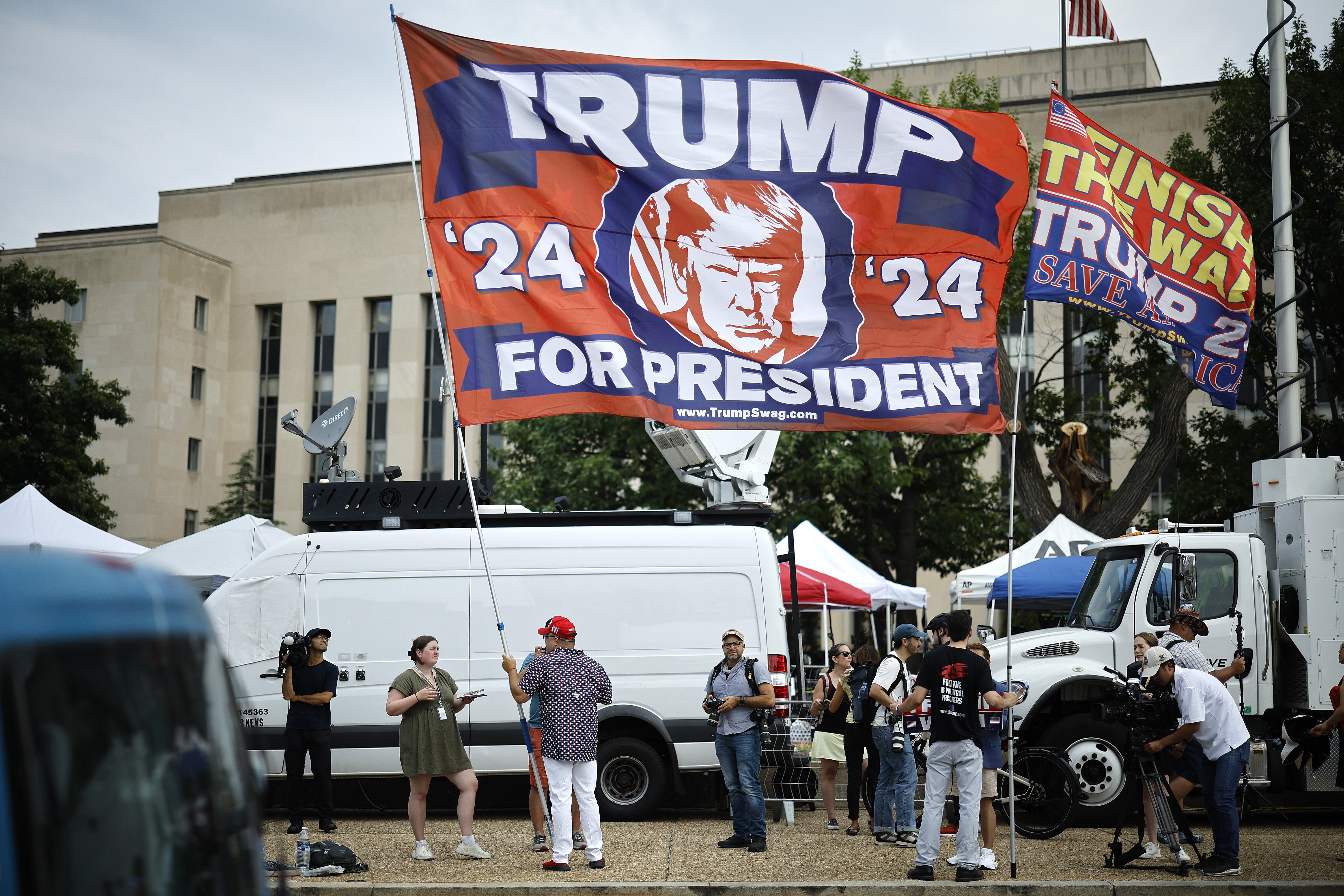
Trump supporters wave flags outside the E. Barrett Prettyman U.S. District Court House ahead of Donald Trump’s arrival on Aug. 3, 2023, ahead of his scheduled arraignment in Washington, D.C.
Chip Somodevilla via Getty Images
The conspiracy to defraud and obstruction charges are based on Trump’s plan to get Republicans in seven states Biden won to submit fake slates of electors to the National Archives and the US Senate, with the goal of using these forged certifications to coerce then-Vice President Mike Pence into awarding Trump a second term. The civil rights charge is based on the argument that Trump disenfranchised millions of voters in those states by attempting to have their votes nullified.
The new indictment, unsealed on Tuesday, follows another federal indictment in June that charged Trump with illegally retaining secret documents at this Florida country club and then trying to hide them from authorities seeking their return. He was also indicted in New York City in April for falsifying business records to conceal a $130,000 hush-money payment to a porn star in the days leading up to the 2016 election.
A fourth indictment against Trump is possible in Georgia, where the Atlanta-area district attorney is presenting evidence to a grand jury that Trump attempted to coerce state officials into overturning his loss to Biden in that state.
Advertisement
Trump would, if convicted in the cases to date, face decades in prison. But if he succeeds in regaining the White House in next year’s election, he would have the authority to end the federal prosecutions against him entirely and would likely be able to persuade state courts to suspend criminal cases against him for the duration of his presidency.
Despite all the criminal cases against Trump, though, his Republican rivals, with few exceptions, have been unwilling to criticise him for his actions that led to the charges, choosing instead to attack the prosecutions as politically motivated. Possibly as a result of this, Trump dominates the GOP field in polling for the 2024 nomination, with massive leads in national surveys and double-digit leads in the early-voting states.
Material from The Associated Press was used in this report.
This is a breaking news story and will be updated. Follow HuffPost UK on Twitter, Facebook and Instagram.
Trump faces four felony charges as part of a sweeping, 45-page indictment filed in the U.S. District Court for the District of Columbia. Special counsel Jack Smith’s team of investigators accused the former president of multiple conspiracies to defraud the United States, to obstruct an official proceeding and to deprive people of their right to vote and have that vote counted under the Constitution.
Advertisement
Here are seven key things to know.
1. Trump knew his claims were false but spread them anyway to create an “intense national atmosphere of mistrust and anger.”
Prosecutors note that Trump, like every American, had the right to speak publicly about the election “and even to claim, falsely,” that there had been “outcome-determinative fraud.”
But his efforts became unlawful when he moved to defraud the United States and attempt to subvert the process of collecting, counting and certifying the election results. That plan, the indictment says, included a multi-prong approach to spread lies, install slates of fake electors in swing states and convince election officials and then-Vice President Mike Pence to subvert the will of the people.
“Despite having lost, the Defendant was determined to remain in power,” the indictment says.
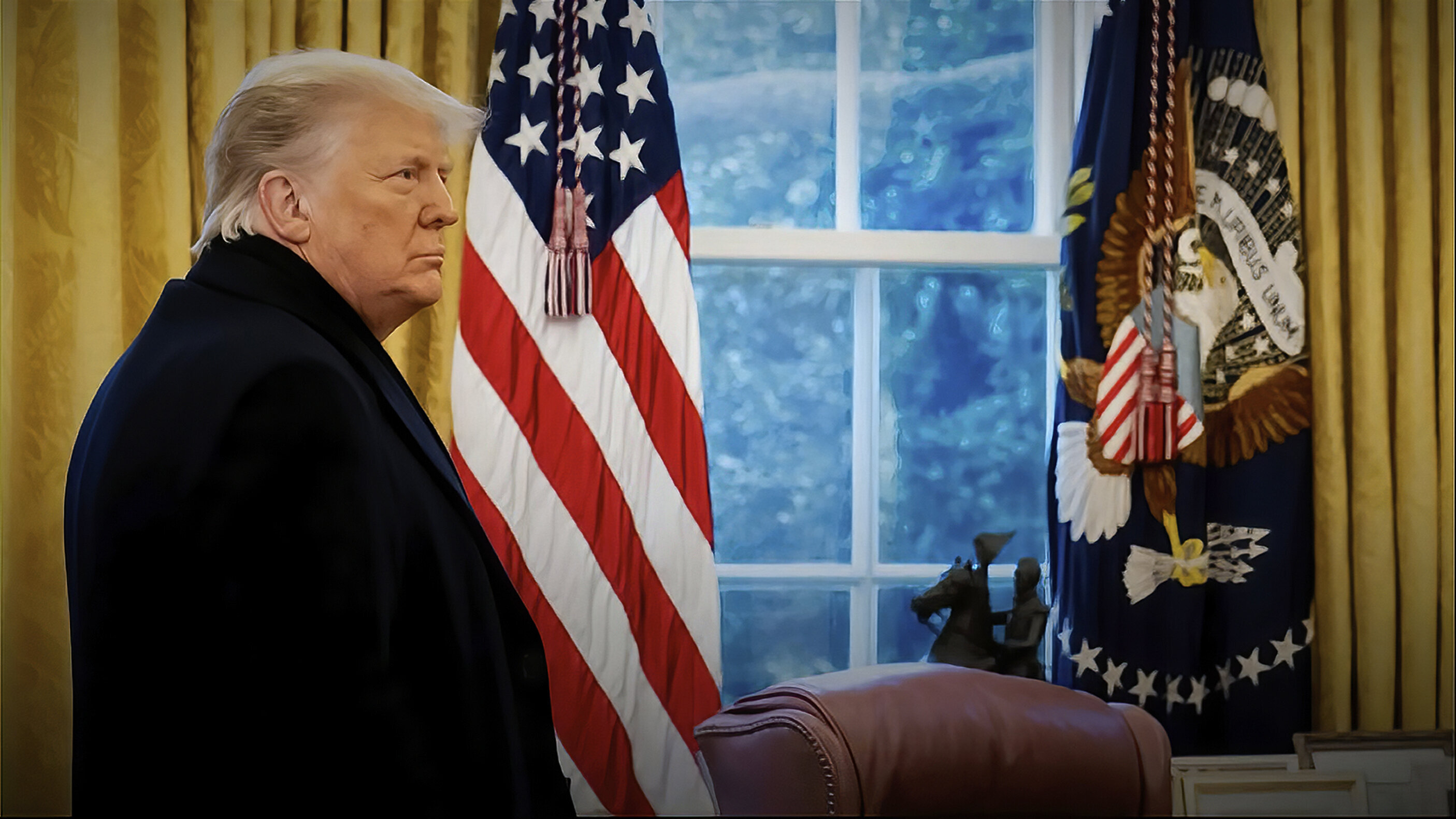
Trump faces four felony charges in the special counsel’s investigation into his effort to remain in the Oval Office despite losing reelection in 2020.
via Associated Press
Advertisement
2. The indictment identifies six co-conspirators.
Trump was aided in his effort to overturn the 2020 election by six unnamed co-conspirators, the indictment says.
Five of them are identifiable through details and information provided in the filing documents:
1. Rudy Giuliani is listed as “an attorney who was willing to spread knowingly false claims and pursue strategies that the Defendant’s 2020 re-election campaign attorneys would not.”
2. John Eastman is listed as “an attorney who devised and attempted to implement a strategy to leverage the Vice President’s ceremonial role overseeing the certification proceeding to obstruct the certification of the presidential election.”
3. Sidney Powell is listed as “an attorney whose unfounded claims of election fraud the Defendant privately acknowledged to others sounded ‘crazy.’”
4. Jeffrey Clark is identified as “a Justice Department official who worked on civil matters and who, with the Defendant, attempted to use the Justice Department to open sham election crime investigations and influence state legislatures with knowingly false claims of election fraud.”
5. Kenneth Chesebro is listed as “an attorney who assisted in devising and attempting to implement a plan to submit fraudulent slates of presidential electors to obstruct the certification proceeding.”
6. The sixth co-conspirator is so far unknown but is identified as “a political consultant who helped implement a plan to submit fraudulent slates of presidential electors to obstruct the certification proceeding.”
3. People in Trump’s orbit repeatedly told him there was no evidence of voter fraud.
The indictment alleges Trump and his co-conspirators made repeated, “prolific” claims of election fraud despite knowing they were false. Prosecutors say that Trump was repeatedly told by his inner circle his claims were untrue but that he “deliberately disregarded the truth.”
Smith’s team pointed to conversations Trump had with Vice President Mike Pence, senior leaders at the Justice Department, the director of national intelligence, the Department of Homeland Security and many aides, White House attorneys and campaign staffers, all of whom said his claims were unsubstantiated.
Advertisement
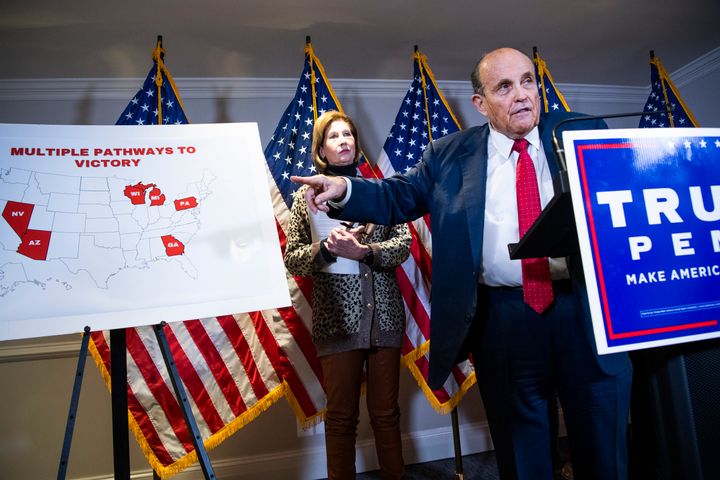
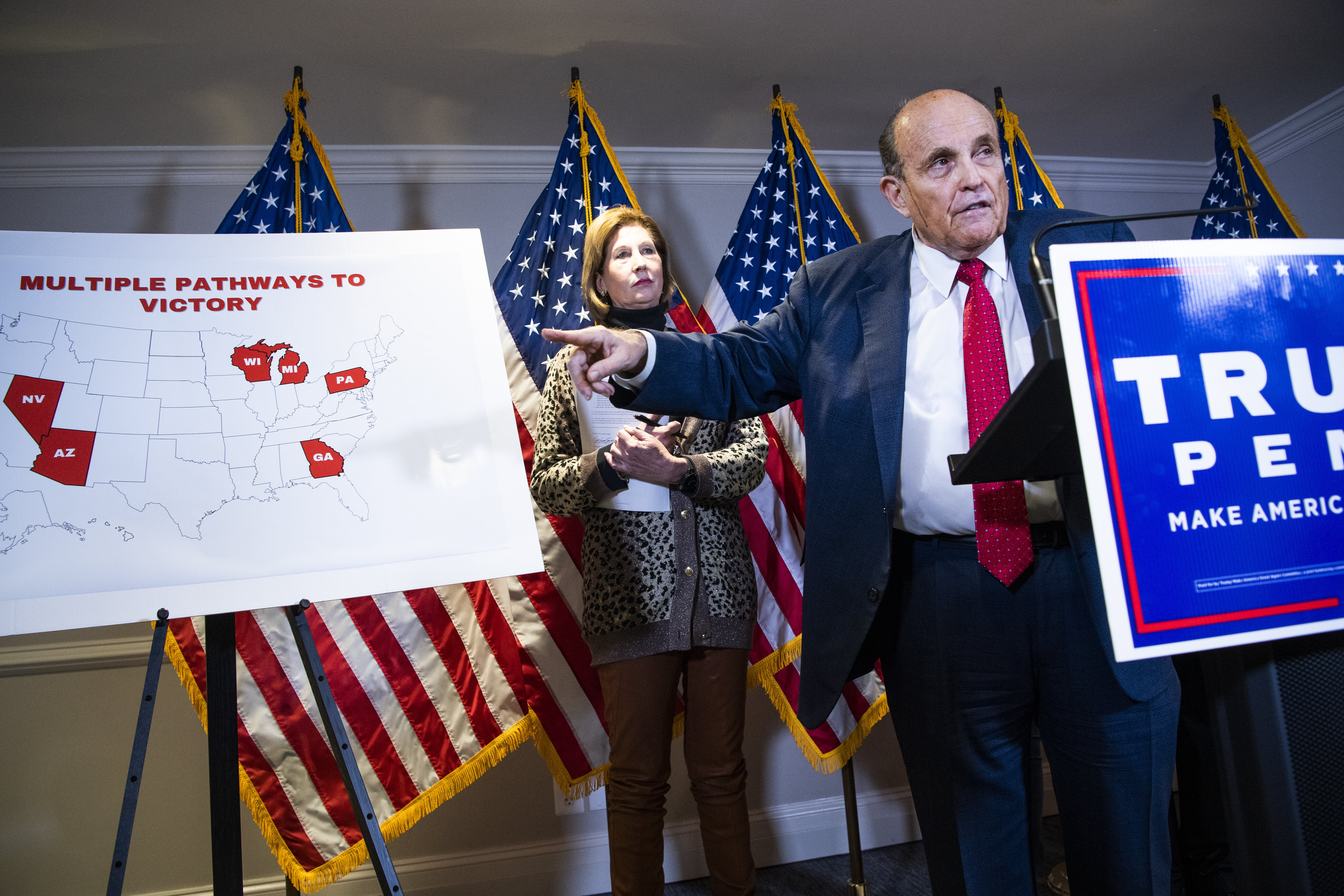
The indictment names six co-conspirators, five of whom can be identified. They include attorneys Sidney Powell (left) and Rudy Giuliani.
Tom Williams via Getty Images
4. Trump acknowledged claims about election fraud and voting machines pushed by a co-conspirator sounded “crazy.”
The indictment notes that even as Trump’s legal advisers were working to undercut election results in Georgia, he knew the claims were unfounded and even described Co-Conspirator 3’s plan as “crazy.”
That sentiment spread through Trump’s close advisers as the effort to install slates of fake electors in swing states began in force in an effort to obstruct a true count of the Electoral College votes.
“Here’s the thing the way this has morphed it’s a crazy play so I don’t know who wants to put their name on it,” Trump’s deputy campaign manager at the time texted to other aides. No one agreed to put their name on the plan as they couldn’t “stand by it.”
Advertisement
5. Trump pressured the Justice Department to support him and threatened to remove those who refused to go along with his plan.
Trump repeatedly tried to get the Department of Justice to support his false claims of election fraud, “thus giving the Defendant’s lies the backing of the federal government.” But the acting attorney general and acting deputy attorney general both refused, saying the agency would not and could not change the outcome of the election.
“Just say that the election was corrupt and leave the rest to me and the Republican congressmen,” Trump replied, the indictment says.
The former president then attempted to install Co-Conspirator 4 as acting attorney general to help further the plot. Trump backed down after many in the White House threatened a mass resignation.
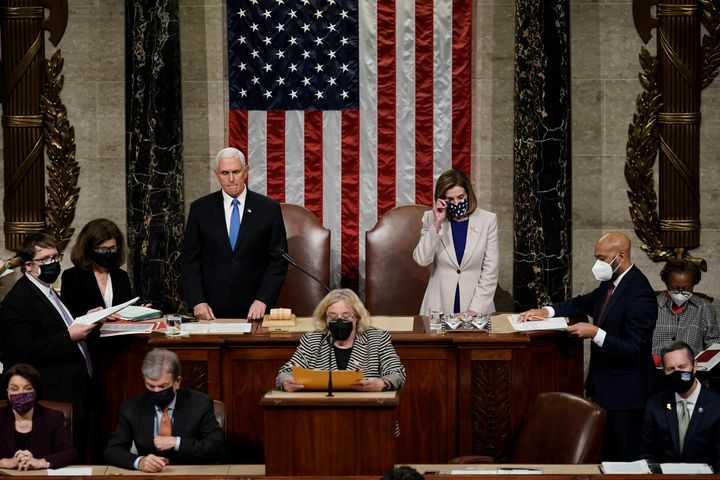
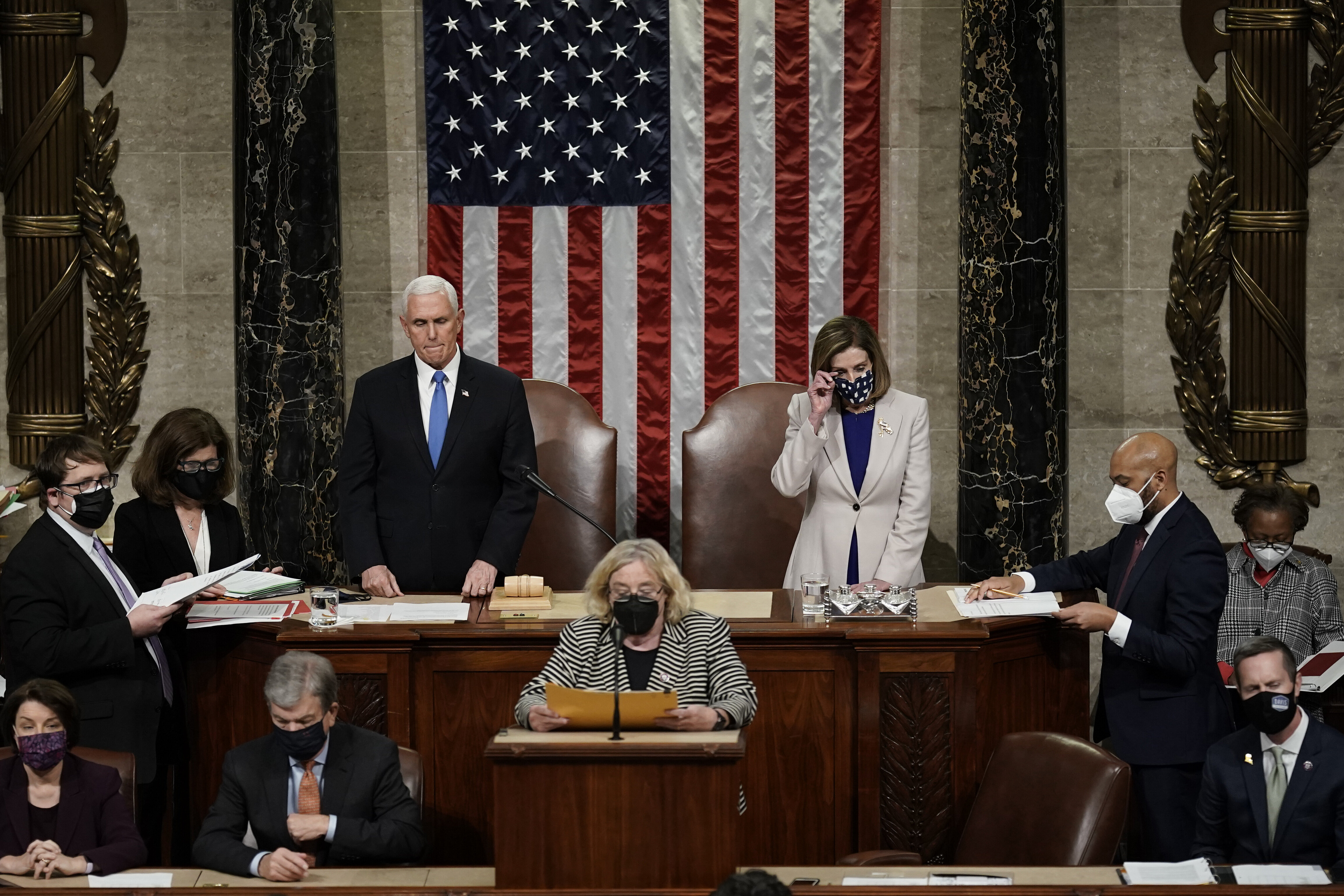
Vice President Mike Pence and Speaker of the House Nancy Pelosi (D-Calif.) read the final certification of Electoral College votes cast in the 2020 presidential election at the Capitol on Jan. 7, 2021, hours after the congressional session was halted by rioting Trump supporters.
J. Scott Applewhite/Associated Press
Advertisement
6. Pence’s notes helped the special counsel craft his case.
Trump heavily pressured Pence to support his effort to remain in power and reject the ceremonial certification of Joe Biden as the winner of the election.
Prosecutors pieced together details of Trump’s conversations and thinking around the time using Pence’s “contemporaneous notes” in the days leading up to Jan. 6.
The vice president rejected Trump’s attempts, telling him to his face that he didn’t believe he had the authority to do what Trump asked.
Trump later told Pence that he would have to publicly criticize him, the indictment says, which prompted his chief of staff to inform the Secret Service about fears for Pence’s safety.
7. Trump waited and watched on TV as his supporters stormed the Capitol.
The indictment claims Trump exploited the violence at the Capitol on Jan. 6 and resisted pleas from his aides and supporters to speak out as the insurrection grew.
Advertisement
“When advisors urged the Defendant to issue a calming message aimed at the rioters, the Defendant refused, instead repeatedly remarking that the people at the Capitol were angry because the election had been stolen,” the document says.
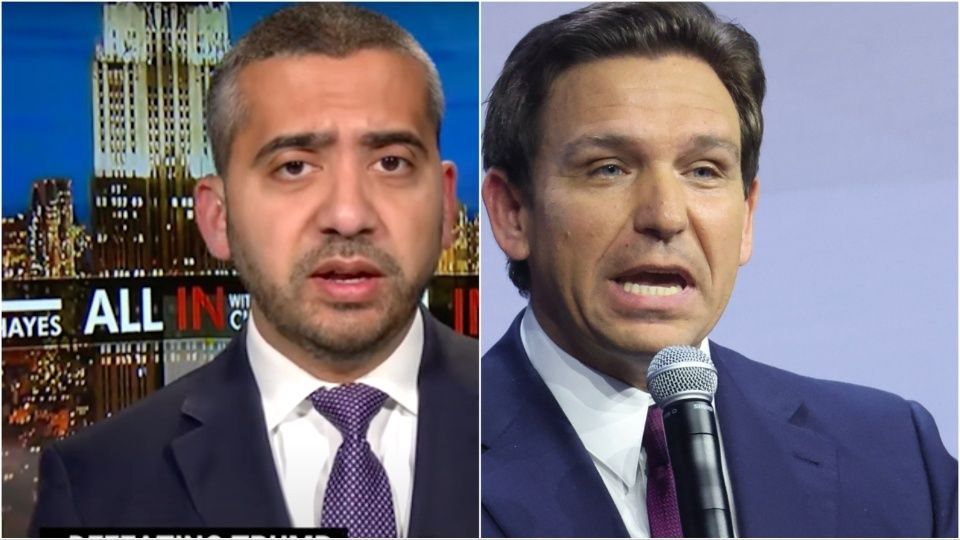
MSNBC’s Mehdi Hasan said a new poll should be considered “funeral rites” for Republicans hoping to defeat Donald Trump in next year’s presidential primary.
And it’s especially bad news for Florida Governor Ron DeSantis, who has been the former president’s chief rival.
“Simply put, it’s done,” Hasan said on Monday evening. “If you had any doubts that this is Trump’s race and Trump’s race to lose, this poll will clear things up for you.”
The New York Times/Siena College poll released Monday shows Trump leading DeSantis by 37 percentage points and ahead by 31 points in a one-on-one matchup. No other candidate pulled more than 3% support. (The poll of 932 likely Republican primary voters was conducted from July 23 to 27.)
DeSantis has made “fighting wokeness” his signature issue, but Hasan noted that Trump polls ahead of him even on that topic.
“Not even close,” Hasan said.
The poll also shows that Trump has sealed his control over the GOP as most Republican voters are unswayed by the criminal charges against the former president.
Overall, just 17% of Republicans polled said they believed Trump had committed a crime. Among “MAGA” Republicans, that number is 0%.
Among likely GOP primary voters, the former president is commanding 54% support and leads his nearest rival, Florida Governor Ron DeSantis, by a whopping 37 percentage points.
His other challengers, including his onetime running mate, former Vice President Mike Pence, are all polling at low single digits.
Trump outperformed other candidates by large margins in nearly every single demographic polled. DeSantis especially floundered among the Republicans’ most influential demographics, earning only 9% support among voters 65 and older. Even if all other candidates dropped out, the poll found, Trump would still be poised to beat DeSantis 62 to 31.
Monday’s poll further cements the results of previous ones. Last week, a Monmouth University poll found that nearly 7 in 10 GOP voters believe Trump is either “definitely” or “probably” the party’s strongest candidate to unseat President Joe Biden.
Trump’s success in the polls comes despite his legal troubles. In March, a Manhattan grand jury indicted him over a $130,000 hush money payment made to the porn star Stormy Daniels, who alleges the two had an affair, shortly before the 2016 election. Then, last month, a federal grand jury indicted Trump after an investigation found he took highly classified documents from the White House to his Mar-a-Lago resort and residence in Florida.
Monday’s poll comes about three weeks ahead of the first Republican debate in Milwaukee and about six months out from the Iowa Republican caucuses.
A Tory civil war has erupted after dozens of the party’s MPs and peers called on Rishi Sunak to delay the ban on the sale of new petrol and diesel cars.
Under the policy, drivers will be unable to buy the vehicles from 2030.
Speaking to the Sunday Telegraph, the prime minister said: “The 2030 target has been our policy for a long time and continues to be – we are not considering a delay to that date.”
Advertisement
But in a letter to the PM, 45 Tory MPs and peers – including former members of the cabinet – urged him to think again.
It said: “You rightly put on record this week that net zero is important, but you do not want to add to consumers’ bills and that measures need to be ‘proportionate and pragmatic’.
“We believe the proposed ban on petrol and diesel vehicles from 2030 would risk that entire approach and do grave harm to the economy.”
They said Sunak should follow the EU’s lead by delaying the ban until 2035.
“The future for this country is in imposing fewer burdens and being more lightly regulated than the EU, not in unilaterally imposing additional job-destroying burdens to meet and unnecessary and unworkable deadline,” the letter said.
Advertisement
Sunak hinted at rowing back on the government’s environmental commitments in the wake of the recent Uxbridge and South Ruislip by-election.
The Tories managed to hang on to Boris Johnson’s old seat by campaigning against opposing the expansion of London’s Ultra Low Emission Zone (ULEZ), which will see drivers of old cars charged £12.50 a day.
The letter said that showed net zero policies which cost voters’ money “are deeply unpopular”.
The MPs and peers added: “We urge you to review this policy to make sure car ownership remains affordable and manufacturers are protected.
“A move to 2035 to match competitor countries such as the EU bloc and the USA would seem entirely sensible.”
Dozens of groups, including Friends of the Earth, Greenpeace UK, the National Trust, RPSCA and RSPB, have written to the PM warning him not to use the environment as “a political football”.
They said: “Acting on climate change needs to be done fairly, but that is best done by delivering well-designed policy, backed up with public and private finance, and by working hand-in-hand with industry and communities. There is no public mandate for a delay.
“It is therefore with deep alarm that we have read reports over the last few weeks of your government considering watering down its commitments on almost every front of environmental policy.”
That led to speculation that he could ditch the government’s commitment to ban the sale of new petrol and diesel cars by 2030, and dilute plans to phase out the use of gas boilers.
The shift in approach comes in the wake of the Uxbridge and South Ruislip by-election, which the Tories won on a campaign opposing the expansion of London’s Ultra Low Emission Zone (ULEZ), which will see drivers of old cars charged £12.50 a day.
Dozens of groups, including Friends of the Earth, Greenpeace UK, the National Trust, RPSCA and RSPB, have now written to the PM warning him not to use the environment as “a political football”.
The letter, which has 52 signatories, said: “The planet needs politicians to act urgently – not least, to protect people here in the UK, but also those across the world, who are being hardest hit by our changing climate.
Advertisement
“At the last election, the Conservative Party manifesto put the 2050 net zero target front and centre. It did so because, as well as being the right thing to do, the environment remains a central concern for voters.
“Acting on climate change needs to be done fairly, but that is best done by delivering well-designed policy, backed up with public and private finance, and by working hand-in-hand with industry and communities. There is no public mandate for a delay.
“It is therefore with deep alarm that we have read reports over the last few weeks of your government considering watering down its commitments on almost every front of environmental policy.”
The letter added: “We will not stand by whilst politicians use the environment as a political football. It is courage and leadership that we need now.”
In a further sign of Sunak’s weakening commitment to protecting the environment, the prime minister has also order a review of “low traffic neighbourhoods”.
Advertisement
The schemes close off certain roads to traffic in an attempt to improve air quality and encourage people to use their cars less.
However, they have proved highly controversial in some areas.
Sunak told the Sunday Telegraph: “The vast majority of people in the country use their cars to get around and are dependent on cars.
“I just want to make sure people know that I’m on their side in supporting them to use their cars to do all the things that matter to them.”
A former Air Force intelligence officer told Congress that the US government has a long-standing programme that retrieves unidentified flying objects, and said that “non-human” “biologics” were found at crash sites where the objects were recovered.
In 2021, the Pentagon created a group to look into the phenomena after more than 100 sightings were reported. By the following year, the Pentagon said it had received “several hundreds” of new reports of unidentified aerial phenomena. The Pentagon has not confirmed that it has a programme to retrieve unidentified flying objects.
Grusch, who served for 14 years as an intelligence officer in the Air Force, told Congress he served as a representative on two Pentagon task forces investigating unidentified aerial phenomena, or UAP, until earlier this year.
In his testimony, Grusch told lawmakers he was informed of “a multi-decade UAP crash retrieval and reverse-engineering program” during the course of his work.
.@RepNancyMace asks about extraterrestrials: “If you believe we have crashed craft…do we have the bodies of the pilots…?”
David Grusch: “As I’ve stated…biologics came with some of these recoveries.”
Asked by Republican representative Nancy Mace if the US government also has the “bodies of the pilots who piloted this craft”, Grusch suggested it might.
“As I’ve stated publicly … biologics came with some of these recoveries, yeah,” Grusch said.
“Were they human or non-human biologics?” Mace asked.
“Non-human,” Grusch responded. “And that was the assessment of people with direct knowledge of the programme I talked to, who are currently still in the programme.”
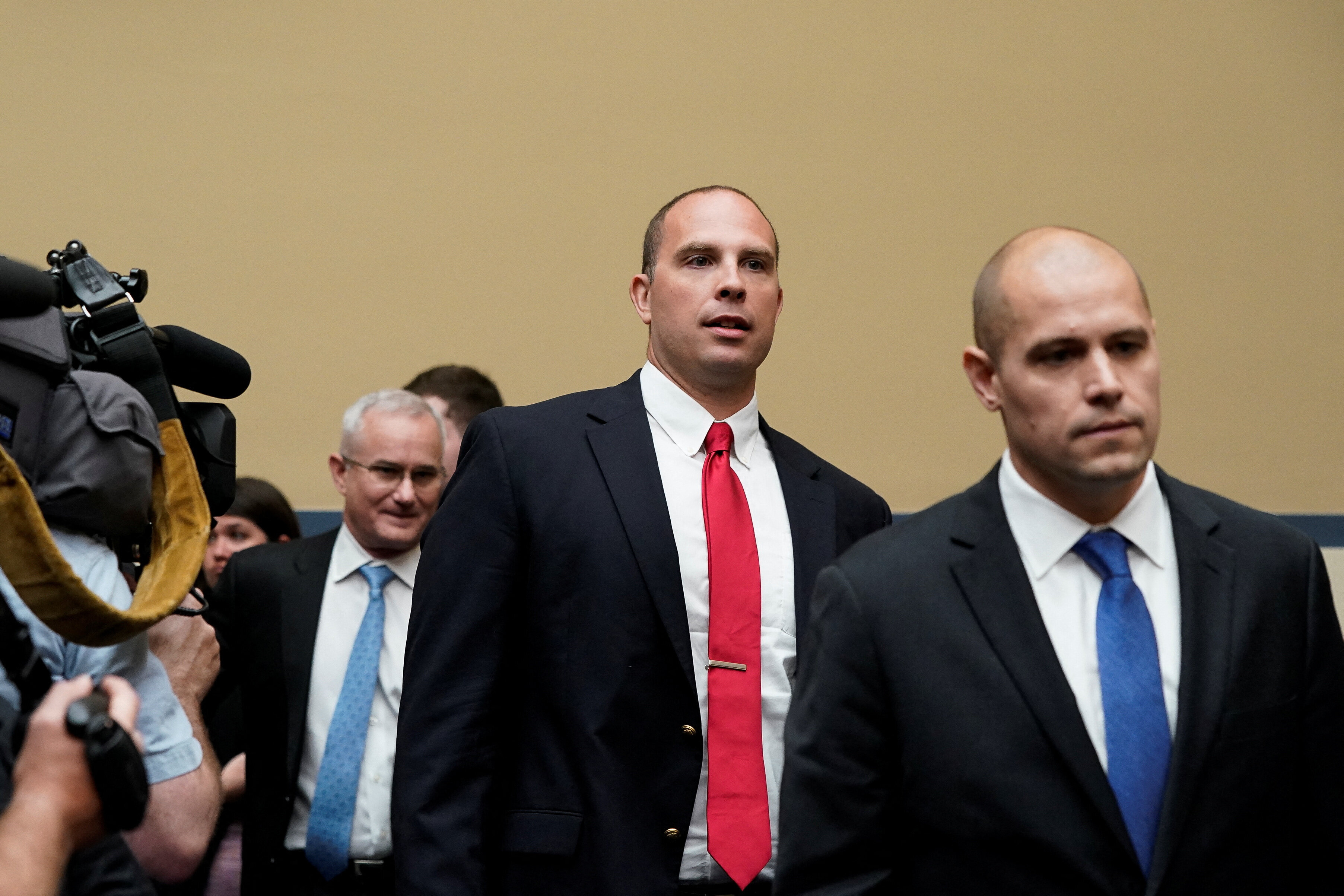
Ryan Graves, executive director of Americans for Safe Aerospace, David Grusch, former National Reconnaissance Office representative on the Defense Department’s Unidentified Aerial Phenomena Task Force, and retired Navy Commander David Fravor arrive for House Oversight & Accountability Committee’s National Security, the Border, and Foreign Affairs Subcommittee’s hearing on “Unidentified Anomalous Phenomena: Implications on National Security, Public Safety, and Government Transparency” at the U.S. Capitol Hill in Washington, U.S., July 26, 2023. REUTERS/Elizabeth Frantz
ELIZABETH FRANTZ via Reuters
Grusch said in June that the federal government has multiple crafts of “non-human” origin.
“Well, naturally, when you recover something that’s either landed or crashed, sometimes you encounter dead pilots and, believe it or not, as fantastical as that sounds, it’s true,” Grusch told NewsNation at the time.
Ryan Graves, a former Navy pilot, testified at Wednesday’s hearing that he nearly collided with an unidentified object in 2014. He said in the years since he’s talked to others in the Navy who have described similar experiences.
Advertisement
“We were primarily seeing dark grey or black cubes inside of a clear sphere,” Graves said of the craft he saw. “Where the apex, or tips of the cube, were touching the inside of that sphere.”
Former Navy pilot Dave Fravor testified that he saw a “Tic Tac”-shaped object during a flight off the coast in California in 2004. He and his co-pilot during the incident, Lieutenant commander Alex Dietrich, previously spoke to CBS’s 60 Minutes” about the experience, describing that the object appeared to reach speeds so quickly it seemed to disappear.
Fravor told Congress he believes more pilots are reporting their findings now that there is less of a stigma surrounding the existence of unidentified aerial phenomena.
“Starting in 2017, when it all actually came out, it took that stigma away,” Fravor said. “Prior to that, if you had mentioned UAP you’d be laughed off the Hill, and now we’re sitting here today for a public testimony on what’s actually going on.”
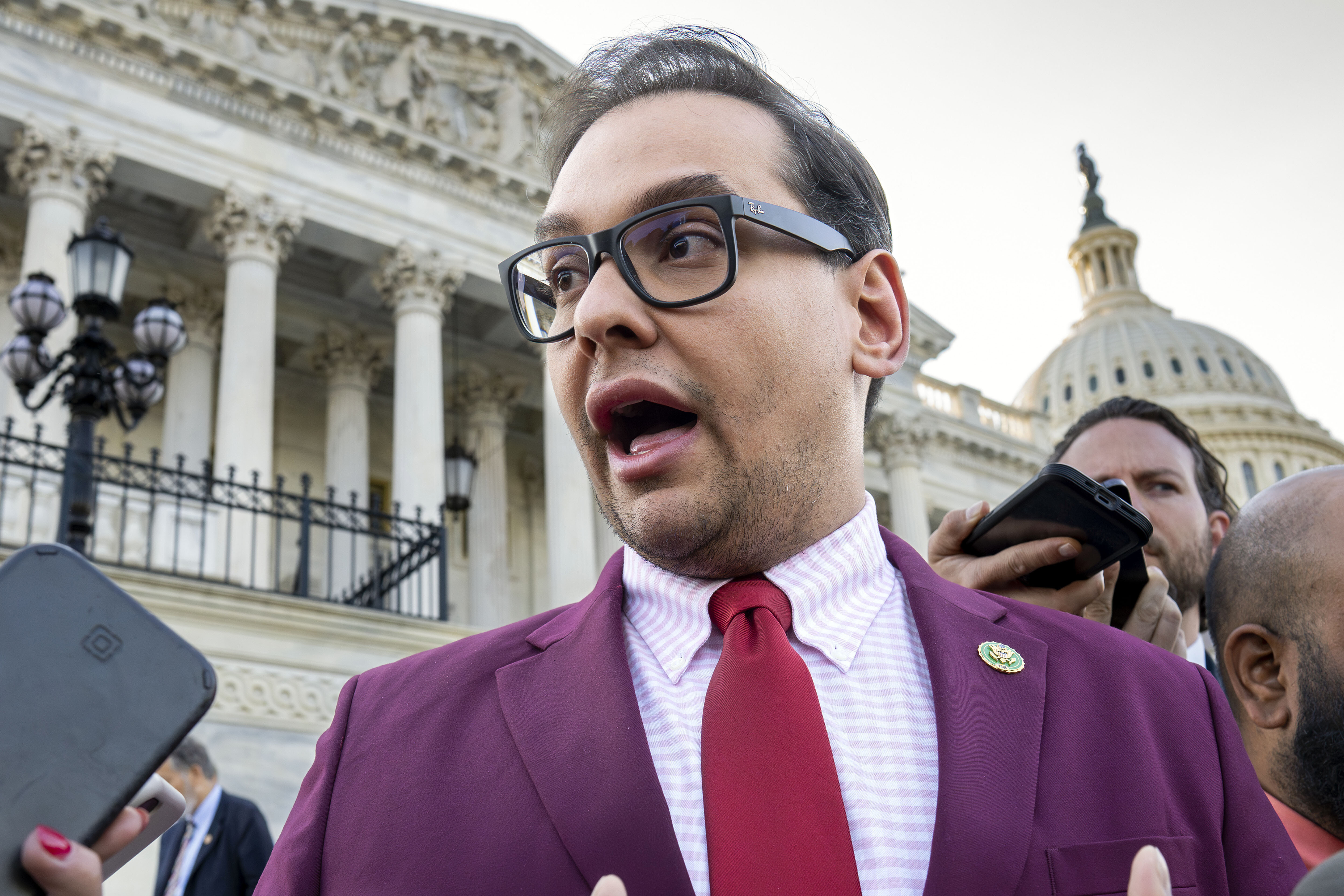
And so is one member of Congress who should probably sit this one out: George Santos .
Considering that Santos was indicted on 13 counts in May for allegedly embezzling money from his campaign, lying to Congress about his income and cheating his way into undeserved unemployment benefits, some people wondered if he was in any position to be calling for an indictment ― including Anna M. Kaplan, who is running to replace him in Congress.
She posted two tweets, the first of which offered some helpful advice ― “Sit this one out, George” ― while the second suggested that McCarthy expel Santos “instead of this partisan impeach inquiry.”
Others joined in on mocking Santos ― and some even brought receipts.