Michael Gove Slaps Down Tory MP Who Said Nurses Using Food Banks Should Budget Better

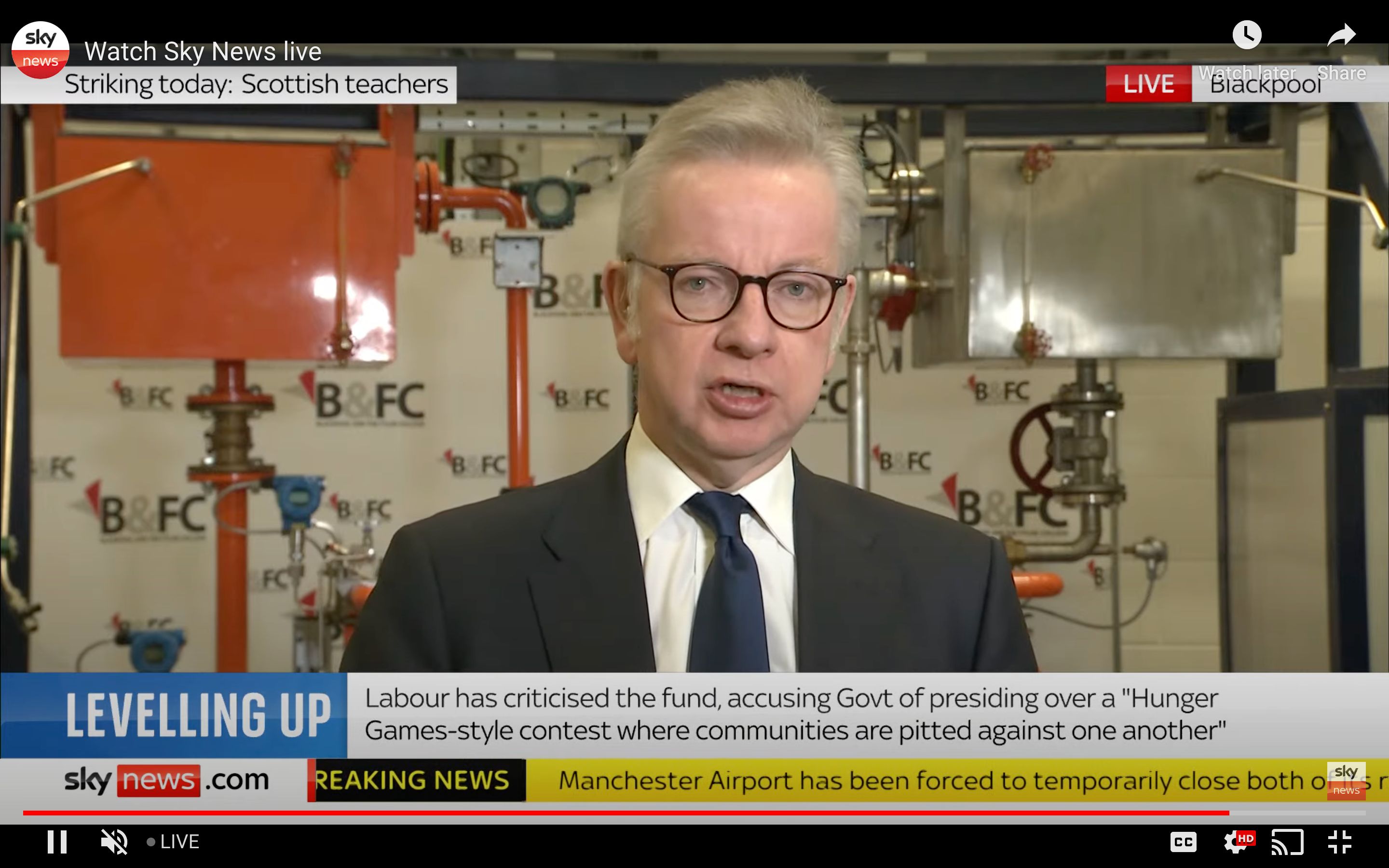
Michael Gove has slapped down a Tory MP who suggested that nurses were using foodbanks because of poor budgeting.

Former Cabinet minister Simon Clarke has been criticised for telling nurses on a £35,000 annual salary that something was “wrong” with their budgeting if they were reliant on foodbanks.

Today marks the second day of strike action by nurses this week as their dispute with the government over pay and working conditions shows no sign of resolution.

Unions have warned that nurses are increasingly turning to foodbanks as the cost of living crisis bites into their wages, which they argue have decreased in real terms over the past decade.

Asked by Kay Burley on Sky News whether he agreed that nurses were “excellent at saving lives but hopeless with their finances”, Gove replied: “No, I would never put it that way.

“I think we appreciate that nurses, everyone who’s working on the front line in the national health service, is doing an amazing job, and my thanks and gratitude to nurses today is something I want to express very deeply and personally.”

“I also think that when we’re looking at the pay claims that are being made by people within the national health service, and also people in other parts of the public sector, we have to balance making sure we do everything we can to reward them for their hard work with recognising that we also have to be careful stewards of public money overall.”

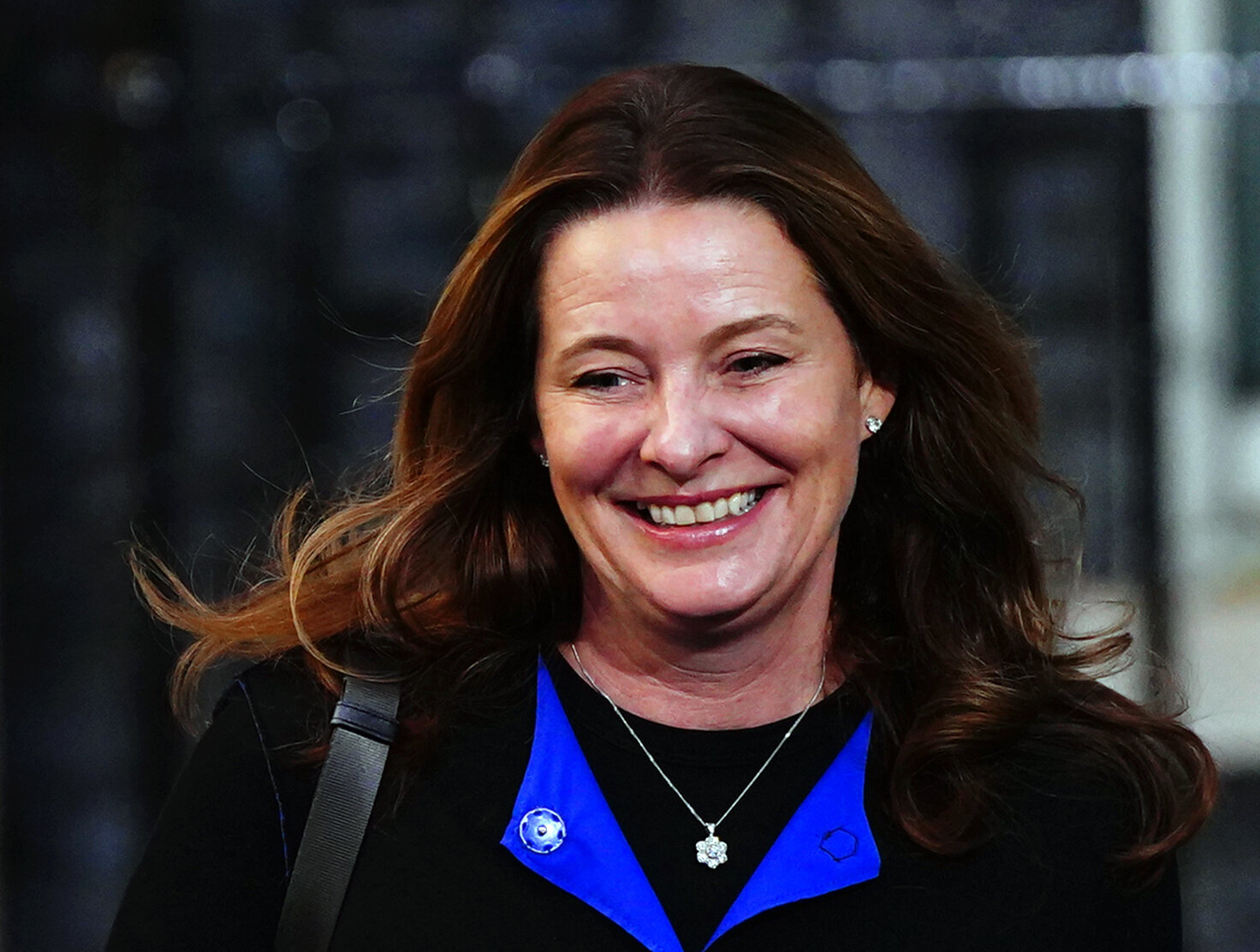
Gillian Keegan, the education secretary, has also faced a backlash after suggesting that people could be turning to foodbanks because “something will have broken down – either a relationship or boiler or anything”.

Pressed on whether his colleagues had been wrong to criticise nurses for the way they manage their money, the levelling up secretary replied: “I would never criticise nurses for something like that.

“I think the most important thing to do is to recognise that people who are working in the NHS are people who’ve dedicated their lives to a caring profession, they’re doing everything they can to support us.”

Clarke, himself a former levelling up secretary, said on Twitter this morning that he “100%” stood behind his comments.

The MP for Middlesbrough South and East Cleveland told BBC Radio Tees on Wednesday that the debate over nurses’ pay is now “way out of hand”.

“I’m afraid if you are using a food bank and you are earning the average nurse’s salary of £35,000 a year then something is wrong with your budgeting, because £35,000 a year is not a salary on which you ought to be relying on a food bank.”

Citing the Nursing Times as his source, he told the station £35,000 is the median nurse’s salary and added: “My message is everyone needs to take responsibility in their lives.

“I don’t believe people on an average salary of £35,000 a year need to be using food banks.”

As well as the strikes this week, the Royal College of Nursing (RCN) has also announced that its members will walk out on February 6 and 7 unless progress is made on pay talks with the government.

Ambulance workers and emergency call handlers will also take to the picket lines on February 6 in a bid to persuade ministers to “get serious on pay”.

Asked whether it was responsible for nurses and ambulance staff to strike on the same day, Gove said: “Naturally we would prefer for there not to any strikes at all and we prefer there not to be co-ordinated strike action of this kind.

“I just say two things, the first is that I am conscious ambulance workers, nurses and others, when they do go on strike action, and I don’t approve of it, I have to say, but they do take steps in order to ensure they can look after the most urgency emergency cases.

“The second thing I would say is we are introducing legislation to make sure that there is a minimum service level, that should provide people with peace of mind that there will always be an NHS there for them, and indeed other blue light services that they need.”

Share Button

‘A Nurse Is For Life Not Just For Covid’: Kay Burley Blasts Minister Over NHS Pay

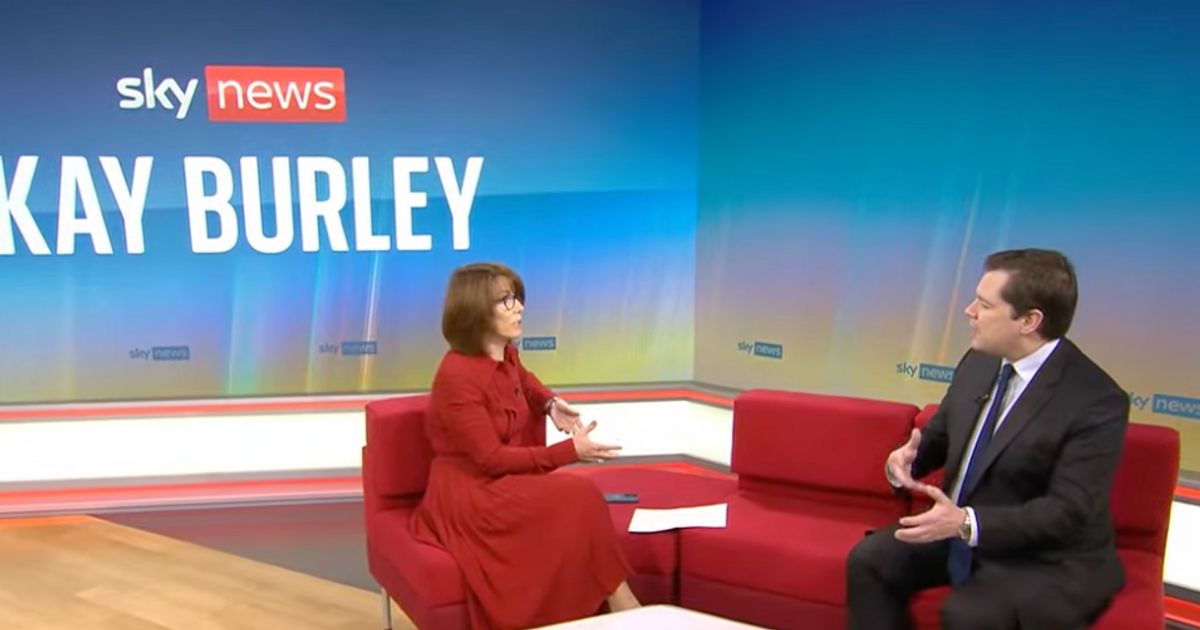
Kay Burley clashed with a Tory minister as she urged the government to increase their pay offer to NHS workers.

The Sky News presenter told Robert Jenrick “a nurse if for life not just for Covid” as it was confirmed inflation his 10.5% last month – down from 10.7% in November.

Nurses are striking once again today and also announced earlier this week that they are to hold two more days of industrial action next month in their long-running dispute over pay.

Jenrick, the immigration minister, said “international factors are beginning to tentatively work in the right direction” to bring inflation down from its peak last autumn.

He added: “The worst thing that we could do domestically would be to significantly increase public sector pay and then entrench inflation in the British economy and get into a wage spiral.”

But Burley told him: “To that end you can take on the rail unions, you can take on the civil servants’ unions, but when it comes to taking on the nurses, you don’t have the support of the British people.

“I’ve seen the banners that say ‘a nurse is for life, not just for Covid’.”

Jenrick replied: “Well, we have great respect for nurses, of course we do.”

But Burley hit back: “Well give them more money then.”

The minister went on: “It’s not always as simple as that in life Kay, because what we have to judge is not only how we motivate and respect nurses – and there is a serious challenge with retention and recruitment within the NHS.

“We have to balance that, however, with general affordability to the tax payer, what can the NHS afford. Secondly, the point about inflation, which is so critical to everybody in this country, and thirdly how can we handle this in a sensible and appropriate manner.

“The way that’s done is through independent pay review bodies, and there was an independent pay review last year which concluded that curses should get the pay rise that they have.”

Share Button

Rishi Sunak Caves In To Tory Rebels Over Online Harms Bill In Latest Climbdown

Rishi Sunak has performed yet another U-turn after he caved in to Tory rebels over the government’s online harms bill.

The prime minister has agreed that social media bosses could face jail over harmful content posted on their platforms after more than 50 Conservative backbenchers backed an amendment demanding the change.

The government had been concerned that the move would put tech firms off investing in the UK.

But Sunak was facing an embarrassing Commons defeat over the issue if he had not shifted his position.

Following talks with culture secretary Michelle Donelan, the rebels dropped the amendment, which will be brought back in the House of Lords “in a more workable format” by the government.

It is the third time the PM has been forced into a humiliating climbdown in the face of pressure from his own MPs.

He has already ditched plans to make it easier to build new homes and dropped his opposition to new onshore wind farms.

Ian Russell, the father of schoolgirl Molly Russell, who killed herself after viewing harmful material on social media, said the threat of imprisonment is “the only thing” that will make the bosses “put safety near the top of their agenda”.

“I think that’s a really important thing in terms of changing the corporate culture at these platforms,” he told BBC’s Newsnight.

Share Button

16 Year Olds Are Old Enough To Decide Gender Change, Education Secretary Says

The Education Secretary has suggested that 16 year olds are old enough to decide to change their gender.

Gillian Keegan knocked back suggestions that 16 was too young, saying: “I was making decisions for myself at 16.”

It comes after Rishi Sunak moved to block Scottish reforms of the gender recognition process passed by Holyrood.

The new law would make it easier for trans people to change gender by reducing the time the process takes and lowering the age at which it can happen to 16.

Asked if she would be content for children in schools at 16 to say whether they want to change their gender, Keegan told Sky News: “We have to be very sensitive to children. We are actually going to publish some guidance and consult because it is a very tricky area to get right.

“It has to be age-appropriate, but children have to be supported as well.”

Pressed on her personal view, the minister was asked if 16 was too young.

“No I don’t actually. “I was working at 16, I was paying tax at 16, I was making decisions for myself at 16,” she replied.

“But it’s not really about what I think, it’s how we make sure we get that right balance of supporting children, but also making sure that what they’re getting taught in schools is age-appropriate.”

Labour leader Keir Starmer said he has “concerns” over Scotland’s gender recognition law because he considers 16 to be too young to decide to change gender.

Yesterday, the UK government took the unprecedented step of blocking Scotland’s gender reforms from becoming law.

It is the first time Westminster has used the power since devolution came into being nearly 25 years ago.

Scottish secretary Alister Jack wrote to Scottish first minister Nicola Sturgeon to inform her that he was making a so-called “section 35 order” vetoing the bill which was passed at Holyrood before Christmas.

It followed advice from government lawyers that the bill would cut across the UK-wide Equality Act.

In a statement, Jack said: “Transgender people who are going through the process to change their legal sex deserve our respect, support and understanding. My decision today is about the legislation’s consequences for the operation of GB-wide equalities protections and other reserved matters.”

Responding to the news, Sturgeon accused the UK government of “a full-frontal attack” on the Scottish parliament.

Share Button

In Case You Missed It, Here’s Rishi Sunak Being Utterly Torn Apart By A Scottish Journalist

Rishi Sunak received a brutal grilling from a Scottish journalist last week, and the clip has now gone viral online.

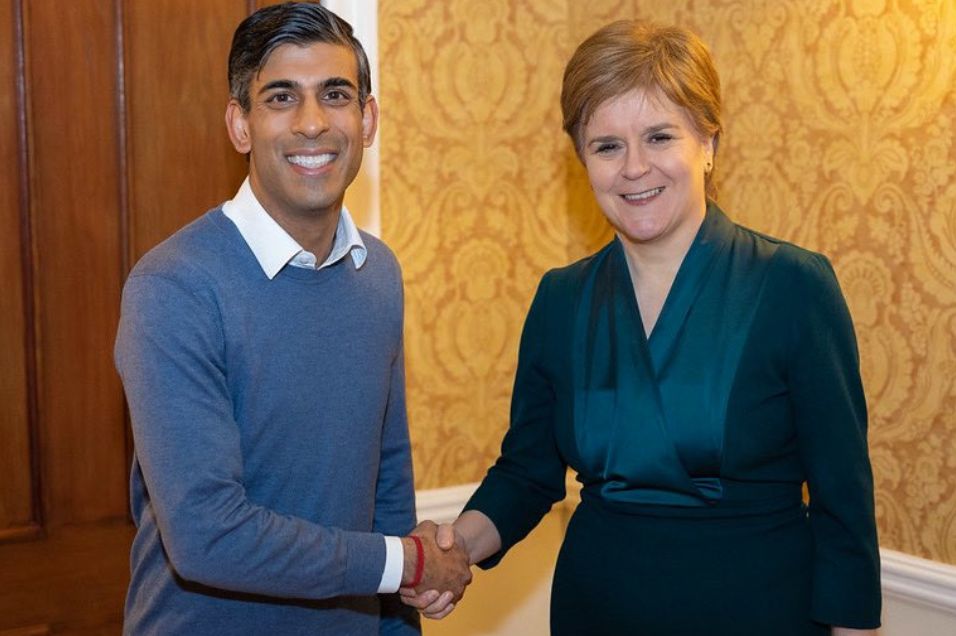
On a visit to Scotland, the prime minister met with Scotland’s first minister Nicola Sturgeon as tensions over the country’s constitutional future (and it’s gender recognition reform bill) continue to bubble away in the background.

In November, the Supreme Court ruled that the Scottish government did not have the legal power to hold its own referendum on whether Scotland should leave the UK.

Sturgeon has since said that she would instead make the next general election a “de facto referendum” – so votes for her (or her party the SNP) would effectively be votes for independence.

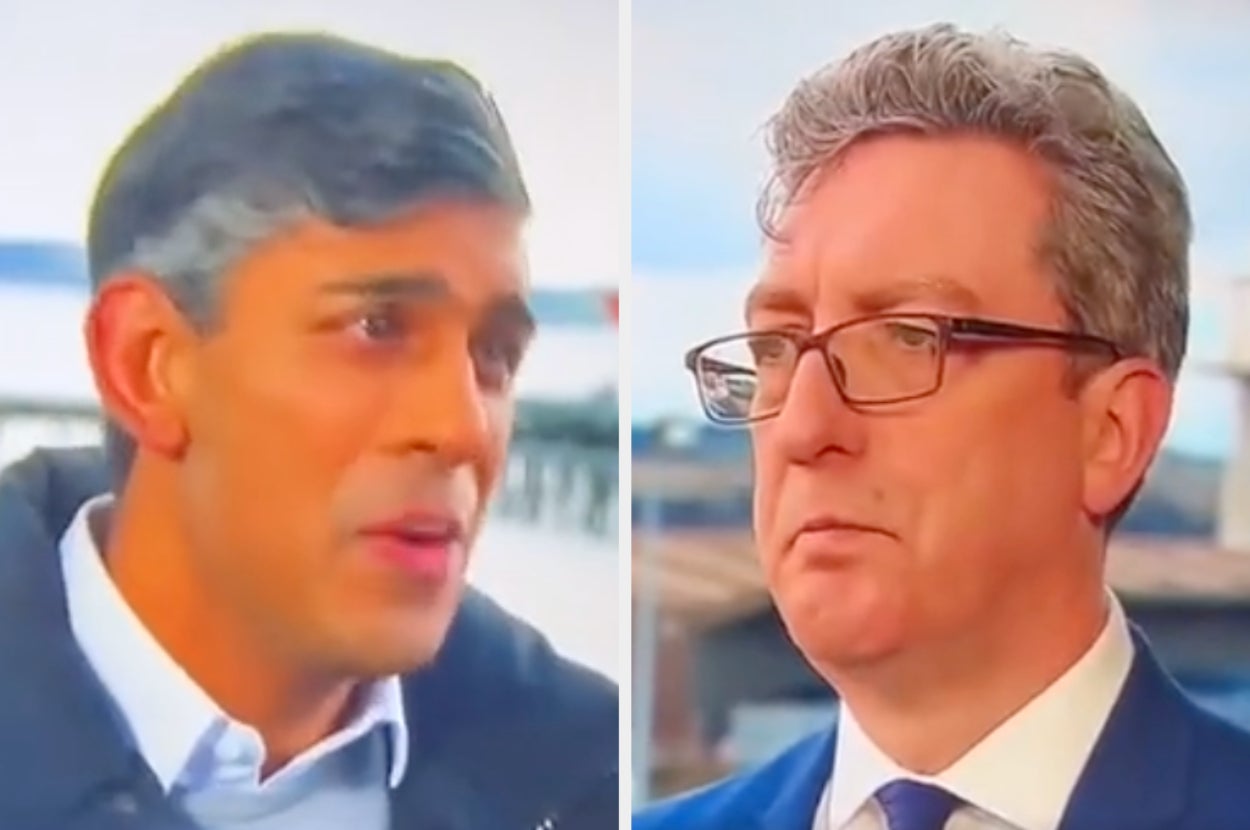
During their tense interview on Friday morning, STV’s political editor Colin Mackay asked Sunak: ″Would you accept the result of that de facto referendum?”

″What I’m focused on is delivering for the people of Scotland,” Sunak began. “Today’s announcement –”

“That’s not what I’m asking you,” Mackay cut him off. “I’m asking you about the possibility of a de facto referendum at the next general election, which the first minister proposed.”

Sunak just said that he and the first minister of Scotland did not talk about the next general election during their meeting on Thursday night.

Mackay asked again: “You’re completely ignoring my question, which is about the possibility of the next general election being a de facto referendum.

″Would you accept the outcome of that?”

“What I’m focused on,” Sunak said, but was cut off once again.

Mackay replied: “That’s not what I’m asking you, I’m asking you to focus on this because a lot of people in Scotland are very interested in this, would you accept the outcome of a de facto referendum?”

The PM said: ″Do you know what, I’ve been out all of yesterday evening, I’ve been out all of today, and what people are talking to me about is what we are doing to actually make their lives better.”

″So you’re just not going to talk about what they’re talking about?” Mackay pushed. “You’re just going to ignore my question about Scotland’s constitutional future, is that what you’re doing? You clearly are.”

“When it comes to a general election people will make up their own minds on what they want to vote on,” Sunak said. ″It’s not really for me to talk about that.”

“Well it is because that’s what I’m asking you about. ”

The STV journalist then asked Sunak if he was “ignoring democracy”.

“No, absolutely not, what we are doing is delivering for people here in Scotland,” the prime minister replied.

“Obviously the Scottish government tried to put forward something which the Supreme Court said was not appropriate, I respect the decision of the Supreme Court.

“In the here and now, I think what the people in Scotland want is for us to make a difference to their lives.”

McKay added: “So, they have no democratic right to express their own opinion in the Scottish future.”

Sunak repeated that he respects the view of the Supreme Court, adding that the two free ports being unveiled in Scotland will bring “jobs, investment and opportunity” to the regions.

Writing for STV after their meeting, Mackay said Sunak dodged some of his questions “as skilfully as some of his predecessors, and much better than he did before he was prime minister”.

Mackay also noted: “What was notable was he was much more open to media access than some of his predecessors, and that really is progress.”

Share Button

Battle Of Britain: Rishi Sunak Set To Block Scotland’s Gender Recognition Law

Rishi Sunak returns to London this morning after spending two days in Scotland.

His visit included a private dinner with Nicola Sturgeon on Thursday evening, during which the pair discussed, among other things, the many issues that divide them.

Nevertheless, the prime minister said he wanted the pair to “strengthen our working relationship and continue discussing our shared challenges and our joint efforts to deliver for people in Scotland”.

But that laudable intention will be blown to pieces next Wednesday if, as HuffPost UK understands, Sunak’s government takes the unprecedented step of blocking a bill passed at Holyrood from becoming law.

The legislation in question is the Gender Recognition Reform Act, which was passed by the Scottish Parliament before Christmas after a fierce debate which highlighted splits on the issue in the main parties.

In simple terms, the new law would make it easier for trans people to change gender by reducing the time the process takes and lowering the age at which it can happen.

The Westminster government has no intention of bringing in a similar bill, giving rise to potential legal problems over how the Scotland-only law would affect the application of the Equalities Act across the UK.

Ministers in London can block Holyrood legislation in such circumstances by triggering section 35 of the Scotland Act — which brought the Scottish Parliament into being in 1999.

That would prevent the presiding officer of the Scottish Parliament from sending the bill to the King for royal assent.

Whitehall sources say Alister Jack, the secretary of state for Scotland, will announce on Wednesday that the UK government will block the bill.

Coming at a time when the SNP are already accusing Westminster of “denying democracy” by not allowing another referendum on independence, this would be the political equivalent of throwing a match into a box of fireworks.

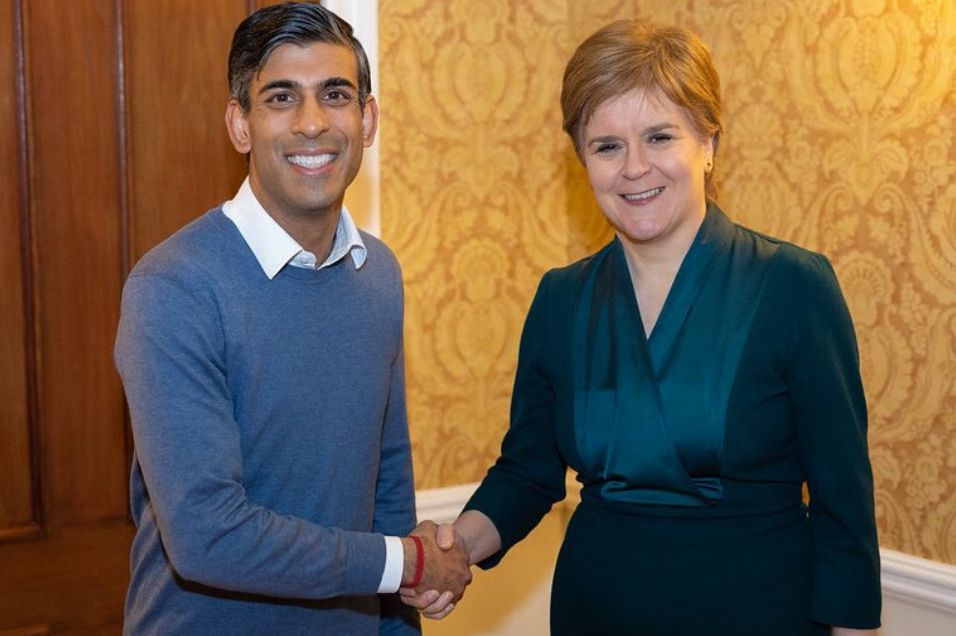
Sunak held "constructive" talks with Nicola Sturgeon in Scotland on Thursday.
Sunak held “constructive” talks with Nicola Sturgeon in Scotland on Thursday.

10 Downing Street

Asked about the issue while in Scotland, Sunak was giving little away.

“Obviously this is a very sensitive area and I know there were very robust debates and exchanges on it as the bill was passing in in Scotland,” he said.

“What I’m concerned about is the impact of the bill across the United Kingdom.

“There may be impacts across the UK that we need to be aware of and understand the impact of them, and that’s what we’re doing, and once the government has received final advice it will set out next steps.”

Stephen Flynn, the SNP leader at Westminster, gave a foretaste of what his party’s reaction will be if the UK government does indeed veto the Gender Reform Recognition Act.

He said: “This goes to the heart of Scotland’s democracy because Scotland’s democratically elected parliament has approved legislation in relation to gender recognition and the UK government is potentially going to try and undermine that. That’s simply not on.”

It’s not a straightforward issue for the SNP, however.

The debate in the Scottish Parliament saw the biggest rebellion against the party leadership since it came to power in 2007, with some SNP MSPs voting against what they see as an attack on women’s sex-based rights.

The SNP’s Westminster group is also split, with Edinburgh South West MP Joanna Cherry one of the most vocal opponents of the Scottish government’s position.

Will those SNP rebels back the UK government blocking a law they hate, or will they row in behind Sturgeon over what their party claims is an attack on devolution itself?

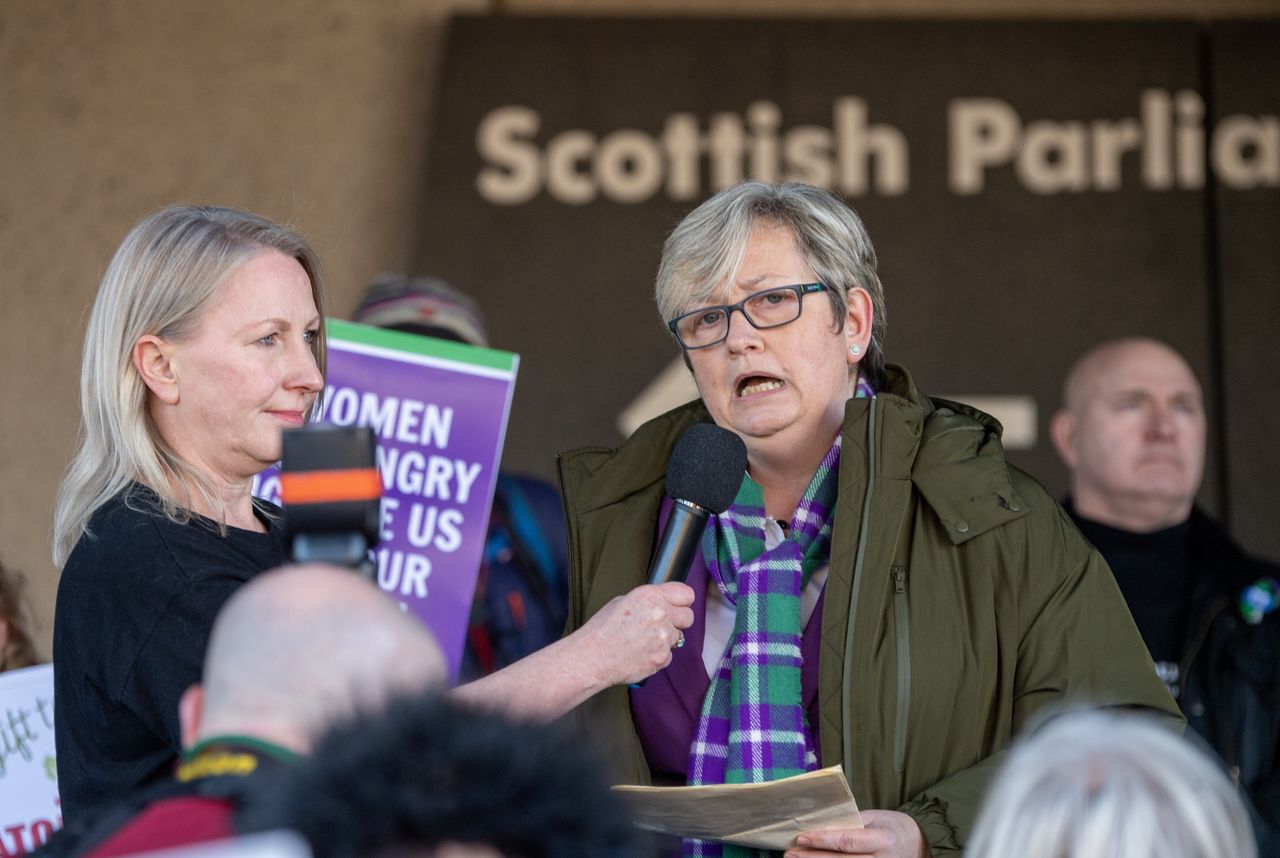
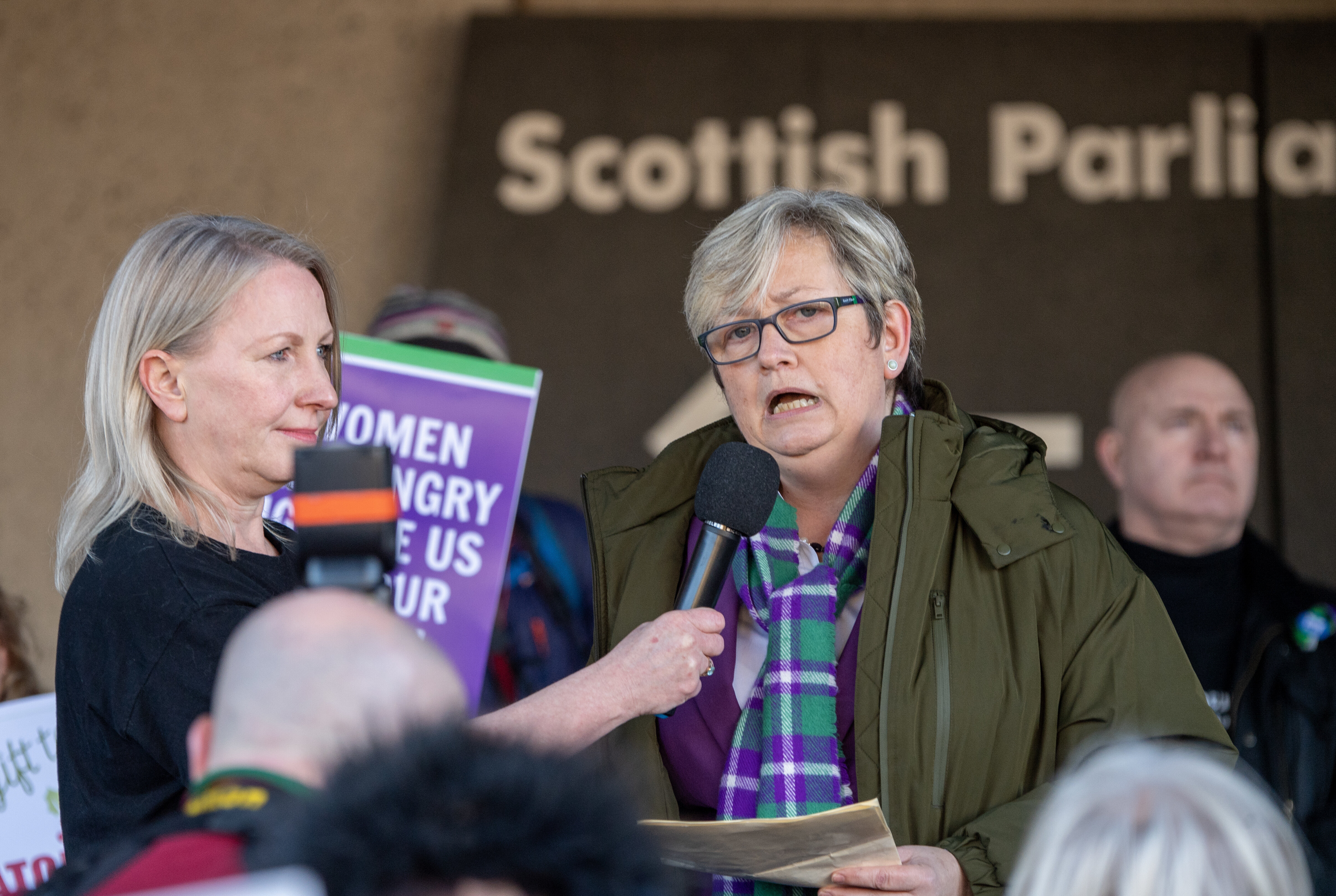
Joanna Cherry speaking at the For Women Scotland and the Scottish Feminist Network demonstration outside the Scottish Parliament ahead of last month's vote on the Gender Recognition Reform Act.
Joanna Cherry speaking at the For Women Scotland and the Scottish Feminist Network demonstration outside the Scottish Parliament ahead of last month’s vote on the Gender Recognition Reform Act.

Lesley Martin via PA Wire/PA Images

One constitutional expert told HuffPost UK that the row will ultimately end up in the Supreme Court, which ruled in November that the Scottish Parliament does not have the power to organise its own independence referendum.

“Using such a radical mechanism as a veto power does rather play into the SNP narrative that Westminster is denying democracy, which seems to me to be politically risky,” they said.

“As we approach the 25th anniversary of devolution, it is a big moment.”

For all his warm words about co-operation with the Scottish government, it seems all-but certain that Sunak is just days away from a constitutional crisis which could end up defining the very future of the United Kingdom.

Share Button

Rishi Sunak Facing Major Tory Rebellion Over Online Safety Bill

Rishi Sunak is facing a fresh Tory backbench rebellion over a law aimed at protecting children when they use the internet.

Nearly 40 Conservative MPs – including former cabinet ministers – have signed an amendment to the online safety bill which could see social media bosses jailed if their platforms publish harmful content.

The prime minister has already been forced to perform embarrassing U-turns over housebuilding targets and new onshore wind farms in the face of rebellions by Tory MPs.

Among the 36 Conservatives backing the rebel amendment are former party leader Iain Duncan Smith and Andrea Leadsom.

With Labour also backing it, Sunak is heading for his first parliamentary defeat as PM unless the government changes its position.

Culture secretary Michelle Donelan hinted that the government was preparing for a climbdown.

Speaking to the BBC’s Newscast podcast, she said: “I’m not ruling out any of those amendments because I’ve been working through them and they’ve been coming in today as well, looking at, you know, what colleagues are putting forward.

“I’m somebody that always takes a sensible approach to these things. If people have good ideas, just because I didn’t think of them, doesn’t mean that we’re not going to do them.”

Ian Russell and Ruth Moss, parents of children who killed themselves after viewing harmful content online, are among those campaigning for the government to accept the proposed change.

The prime minister’s official spokesperson said: “Our aim is to hold to account social media platforms for harmful content while also ensuring the UK remains a great place to invest and grow a tech business.

“We are confident we can achieve both of these things.

“We will carefully consider all the proposed amendments to the online safety bill and set out its position when report stage continues.”

Share Button

Putin’s Decision To Dump Army Chief Shows Russia Is Failing In Ukraine, Says UK

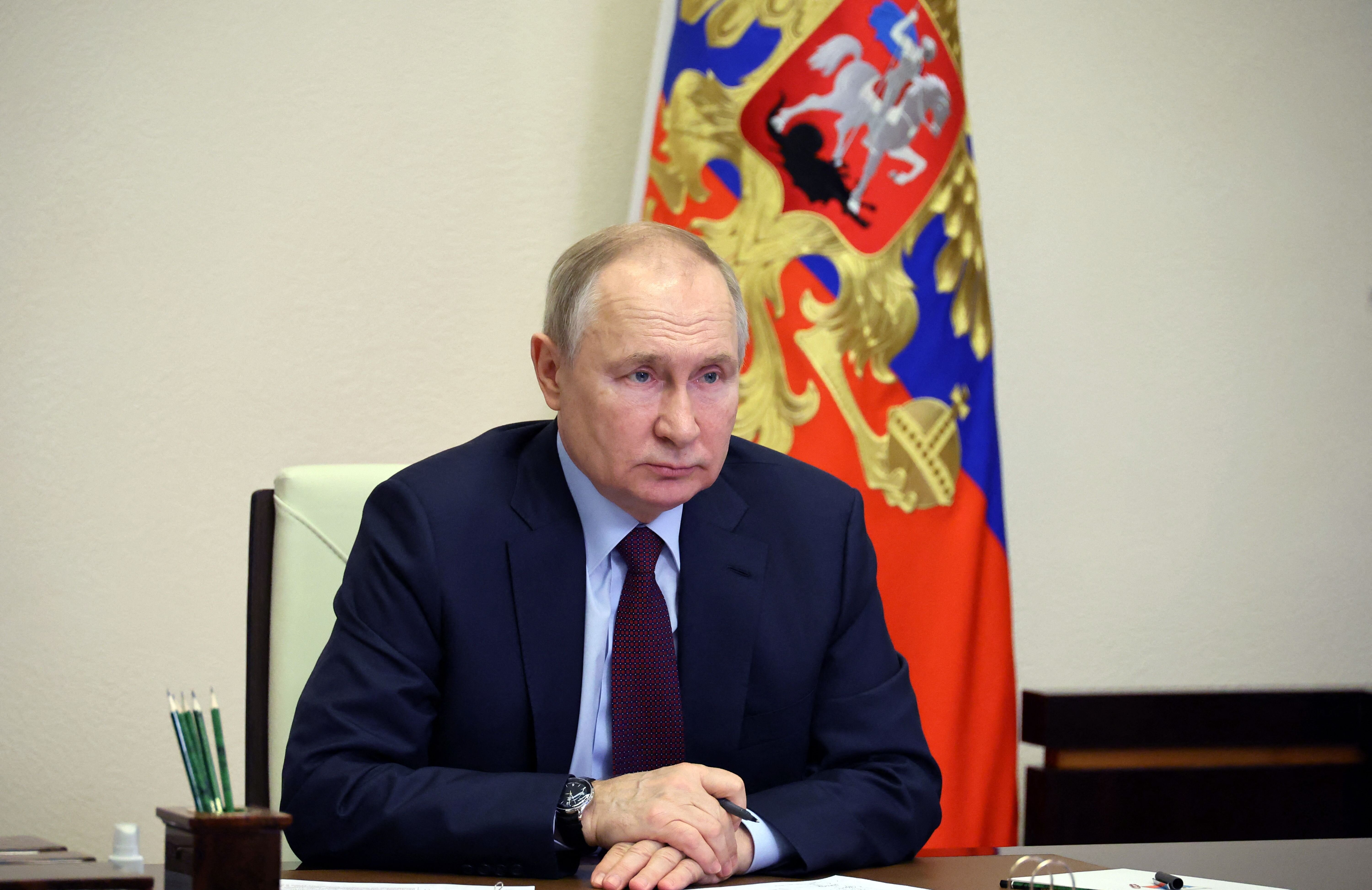
Vladimir Putin has replaced the army chief in charge of Russian troops in Ukraine because his invasion of the country is failing, according to UK intelligence.

Chief of the general staff (CGS) Valery Gerasimov, the head of the Russian military, has taken over from General Sergei Surovikin, who will now be one of his three deputies.

In their latest intelligence update on the war, the Ministry of Defence said: “This is a significant development in Russian president Vladimir Putin’s approach to managing the war.

“The deployment of the CGS as theatre commander is an indicator of the increasing seriousness of the situation Russia is facing, and a clear acknowledgement that the campaign is falling short of Russia’s strategic goals.”

The MoD also said the surprise move “is likely to be greeted with extreme displeasure by much of the Russian ultra-nationalist and military blogger community, who have increasingly blamed Gerasimov for the poor execution of the war”.

They said that in contrast, Surovikin “has been widely praised by this community for his championing of a more realistic approach”.

The changes are further evidence of Russia’s struggles in Ukraine.

Earlier this week, Kyiv denied Russia’s claim that it had killed more than 600 Ukrainian troops in a deadly attack.

Russia claimed that this was its “retaliatory strike” for the New Year’s Day attack, which Moscow says killed 89 of its own soldiers while they were in a Russian base.

It came after Vladimir Putin suggested a 36-hour ceasefire last week, so Russian citizens could mark the Orthodox Christmas, although shelling began very soon after.

Ukraine’s military intelligence has also alleged that Russia is looking to mobilise as many as 500,000 conscripts in mid-January, on top of the 300,000 brought into the army back in October.

Russia has denied any plans for a second wave of mobilisation – it’s worth noting that the September call-up sparked protests across the country.

Share Button

Boris Johnson Described A Lockdown Leaving Do As ‘Most Unsocially Distanced Party In UK’

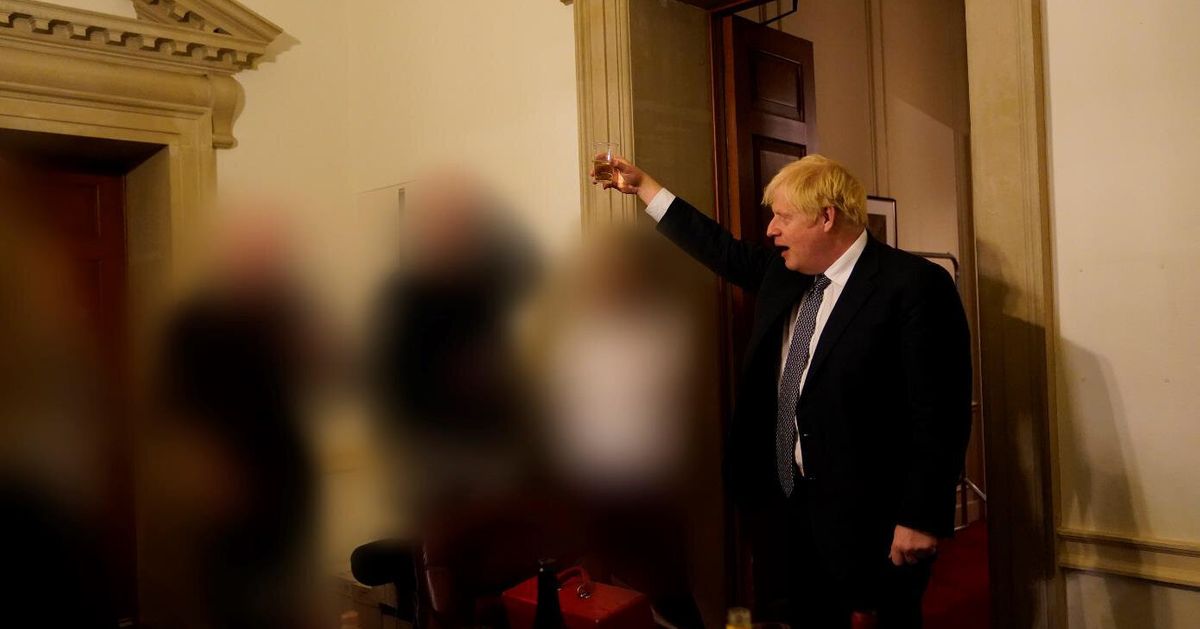
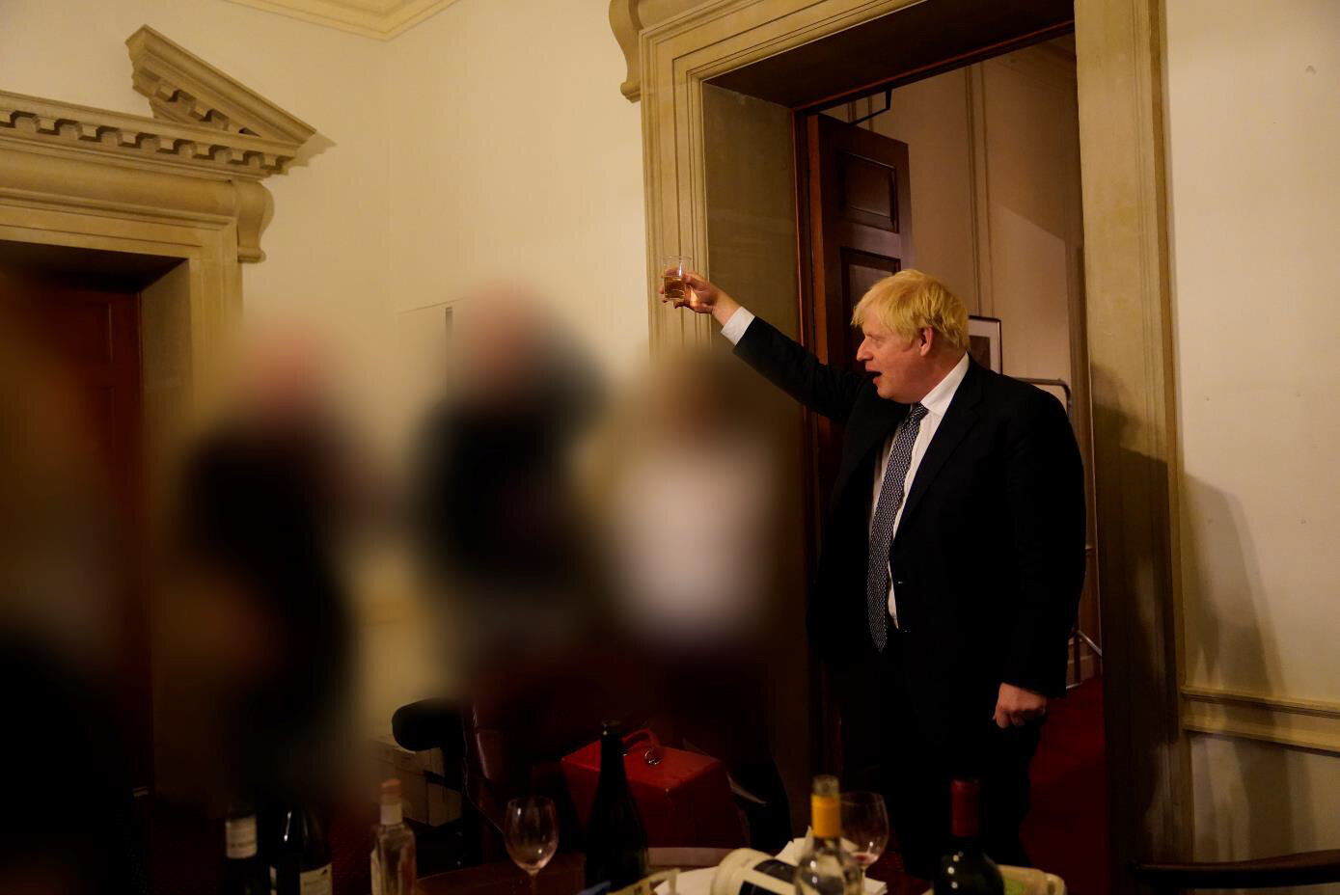
Boris Johnson described a Downing Street leaving do during lockdown as “the most unsocially distanced party in the UK right now”, it has been claimed.

According to a new podcast by ITV, staff were left stunned when Johnson later denied knowledge of any rule-breaking in Number 10.

The fresh partygate allegations come amid speculation that the former prime minister is plotting a Downing Street comeback.

Johnson is accused of making the comment at a leaving party for his director of communications, Lee Cain.

Pictures later emerged of the then PM raining a glass after delivering a speech at the gathering.

One source told the ‘Partygate – The Inside Story’ podcast: “I was working late – some music came on, the mumbling sort of rose, and there were loads of people stood around, but this time I came out because I heard the prime minister speaking and that’s when I heard the quote: ‘This is the most unsocially distanced party in the UK right now’ and everyone was laughing about it.”

The source added: “The PM making that comment really sticks out in my mind, that was pretty bad, because the picture showed one side of this going on.

“But what it didn’t capture is the 20 odd people sat on top of each other on the opposite side – they’re literally shoulder to shoulder, clamped in like a tube carriage.

“And he was there seeing people sat on other people’s laps (in) close proximity, crowded, scrunched up in front of him. He saw that, he saw people with drinks. You saw the picture. It had booze all over that desk. He’s not blind, he’s not stupid. He saw that and didn’t shut it down.

“That was really bad, but that was a normal sight, a regular occurrence, so it wasn’t unusual to see that sort of thing.”

Johnson later told MPs that no lockdown rules were broken in Number 10 – comments which are now the subject of a Commons inquiry.

Another source said of the PM’s comments: “We all watched it live and we were just gobsmacked. We all looked at each other and thought ‘why the hell is he saying this?’ We all know it had happened, he knew it happened – he was there.

“We were all just shocked that he would even deny it. He was there. We were there. We were all there together. And suddenly he’s denying it.”

The podcast also claimed that staff “shredded” key documents ahead of Sue Gray’s partygate investigation and corroborated their stories before filling out Metropolitan Police questionnaires on the scandal.

Johnson, along with his wife Carrie and Rishi Sunak, was fined for attending a birthday party thrown for him in 10 Downing Street during lockdown – but not over Lee Cain’s leaving party.

A spokesperson for Johnson did not deny he had made the “unsocially distanced party” comment.

They said: “During the pandemic, 10 Downing Street staff worked to coordinate the UK government’s national response.

“The work of Downing Street staff was crucial as they helped marshal the UK’s response to a national emergency.”

Liberal Democrat chief whip Wendy Chamberlain said: “These shocking revelations confirm Boris Johnson’s total disregard for the rules he asked us all to follow. He laughed and partied while the rest of the country suffered.

“Conservative MPs should be ashamed that they backed Johnson for so long and that some are even considering putting him back in Number 10.”

Share Button

‘Life And Limb Must Come First’ – Grant Shapps Defends Controversial Anti-Strikes Bill

Grant Shapps today said “life and limb must come first” as he defended a controversial new anti-strike bill.

The Business Secretary was promoting the new law aimed at ensuring a minimum level of service in crucial sectors during industrial action.

Shapps said the government want to end “forever strikes” and argued that the government’s legislation would bring the UK “into line” with other European countries.

The move has sparked threats of legal challenges, while Labour has said it would likely repeal the legislation.

The bill will be introduced to parliament on Tuesday afternoon, a day after crisis talks between ministers and unions failed to resolve industrial disputes involving nurses, teachers and rail workers.

Shapps told GB News: “I’ll be introducing a minimum safety level bill, which will sort of say, ‘look, we will never withdraw the right to strike from people but when there are strikes on life and limb must come first, and there has to be a minimum safety standard put in place for that’.”

He added: “We don’t really ever want to have to use that legislation.

“In those most recent strikes, the Royal College of Nursing, the nurses, agreed a set national level of support.

“Unfortunately, we couldn’t get there with ambulances across the country, meaning there was a bit of a postcode lottery as to whether an ambulance would turn up in the case of something serious, like a heart attack or a stroke.

“We can’t have that, so common sense tells us that we need to have minimum safety levels.”

Health Secretary Steve Barclay is considering backdating next year’s NHS staff pay increase to prevent further strikes.

He suggested that improvements in efficiency could “unlock additional funding”, leading to an increased offer for the 2023/24 pay settlement in the spring.

Sara Gorton, from Unison, said there had been an “acknowledgement” that avoiding strikes would “involve a reach-back” into the current pay year.

It raises the prospect that the pay deal for 2023/24, which is due to be agreed in time for April, could be backdated and applied to the final quarter of the 2022/23 financial year.

Ministers have previously refused to discuss wages for nurses and other public-sector workers, insisting those were matters for the independent pay review bodies.

Prime minister Rishi Sunak will chair his first Cabinet meeting of in 2023 on Tuesday morning.

Share Button