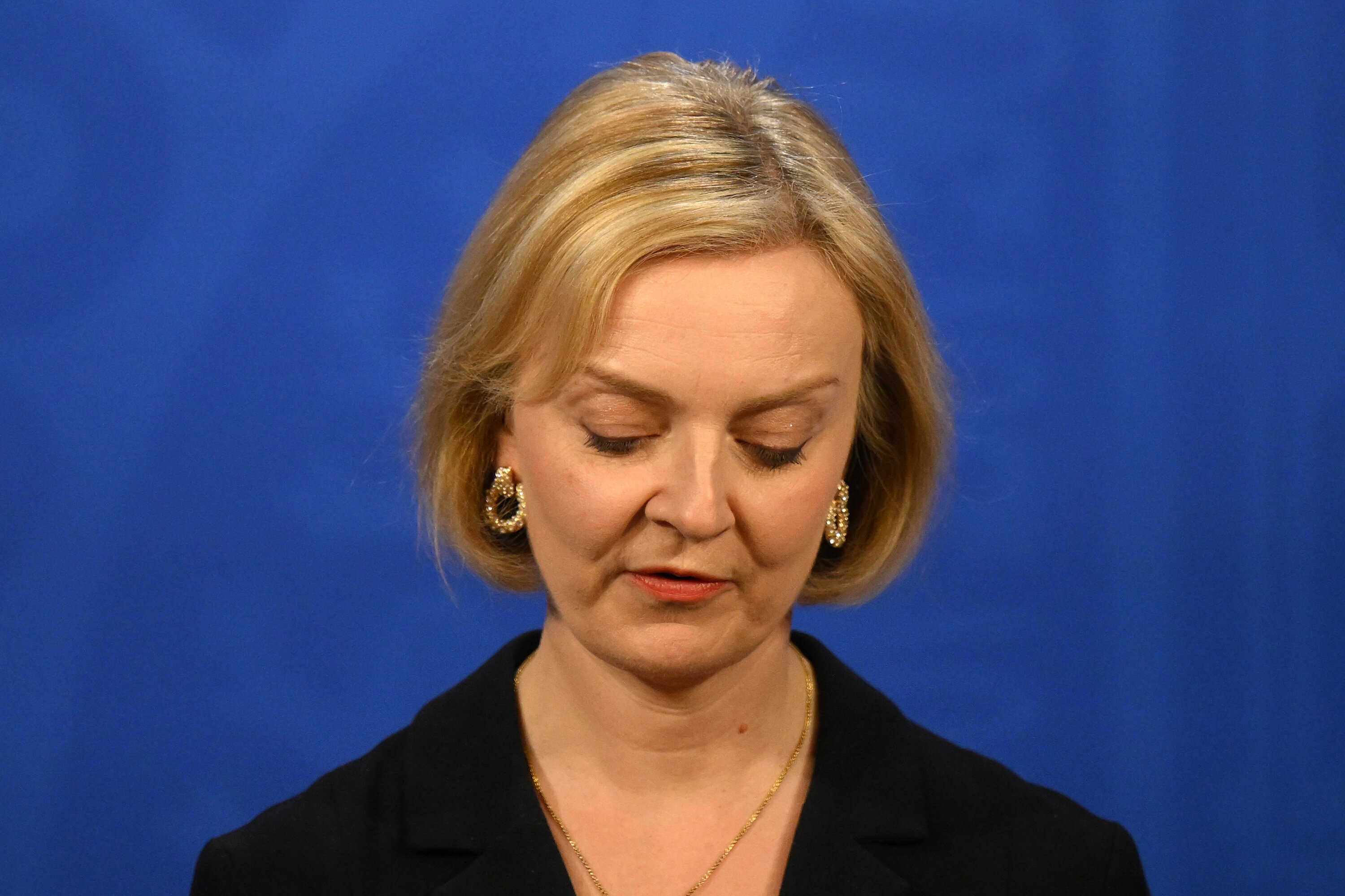
Conservative MPs broke cover on Sunday to publicly demand Liz Truss resign as prime minister, as replacements wait in the wings.
Crispin Blunt, the veteran MP for Reigate, told Channel 4′s The Andrew Neil Show that Truss should quit “now” as “the game is up”.
Advertisement
Jamie Wallis, the MP for Bridgend, said “enough is enough”, revealing he had written to Truss to tell her “she no longer holds the confidence of this country”.
Andrew Bridgen, who is known for calling for Tory prime ministers to resign, wrote on his blog: “Liz has sunk her own leadership”.
Behind closed doors, many Tory MPs have already decided Truss needs to be replaced in light of market turmoil and tanking poll ratings.
One backbencher told HuffPost UK before the weekend: “Last week I’d have given her till Christmas. Now I think she’ll be gone by the end of the month.”
Advertisement
While a former minister said: “Things are just too bad now. She has to go.”
The move by some to go public on Sunday indicates the prime minister’s decision to sack Kwasi Kwarteng as chancellor and replace him with Jeremy Hunt has not calmed things down.
In broadcast interviews on Sunday morning, Tory MPs stopped short of calling for Truss to resign but effectively put her on notice.
Robert Halfon, the chair of the Commons education committee, told Sky News’ Sophy Ridge on Sunday the PM had been acting like like a “libertarian jihadist” but said he was not calling for her to quit “at this time”.
In a separate interview with Times Radio, Halfon suggested the PM had “hours or days” to save her job.
Alicia Kearns, the new chair of the Commons foreign affairs committee, told Times Radio it was “a very difficult one” when asked if Truss should remain in office.
Advertisement
“I need to listen to colleagues and speak to colleagues over the coming days. But do we need a fundamental reset? Without question,” she said.
Matt Hancock, the former health secretary, when asked if Tory MPs should install a new leader told the BBC’s Laura Kuenssberg: “I don’t think we’re there yet.”
But but he added Truss needed to do three things – deliver an economically-credible plan, reshuffle her cabinet and restore trust.
In an interview on the same show, Hunt, the new chancellor, insisted Truss remained “in charge” – despite him having essentially junked her entire mini-Budget.
Truss met with Hunt at Chequers on Sunday to plan the October 31 Budget that will unstitch much of the platform on which she won the leadership.
Advertisement
Hunt is now considered a possible replacement Tory leader and prime minister. Rishi Sunak, who lost out to Truss in the last contest is also seen as a likely candidate, as is cabinet minister Penny Mordaunt and defence secretary Ben Wallace.
But some in her top team offered support, taking to Twitter to post an infographic with a quotation from the media briefing, where she said: “We will deliver the strong and sustained growth that can transform the prosperity of our country for generations to come.”
Simon Clarke, the chief secretary to the Treasury, raised eyebrows when he simply tweeted: “The prime minister has my support.”
Therese Coffey, Ranil Jayawardena and Jake Berry followed.
The PM is right to act now to ensure our country’s economic stability – key for families and businesses – and reassure the markets of our fiscal discipline, especially in light of the worsening global economic conditions with Putin’s illegal invasion of Ukraine. https://t.co/LChPGrnhOR
The Prime Minister has acted in the national interest to reassure the markets of our fiscal discipline and provide economic stability. pic.twitter.com/Mf8PgDniX0
But Tom Tugendhat, minister of state for security who attends cabinet, resisted adding a message of support to the graphic – while Kemi Bandenoch resisted adding the graphic to her message of support.
The international trade secretary, who came fourth in the Conservative party leadership contest earlier this year, wrote: “To say it’s been a difficult day would be an understatement. We knew the scale of the challenge this autumn given multiple global headwinds would be unprecedented. Our Prime Minister is working flat out to get the country through these turbulent times. She has my full support.”
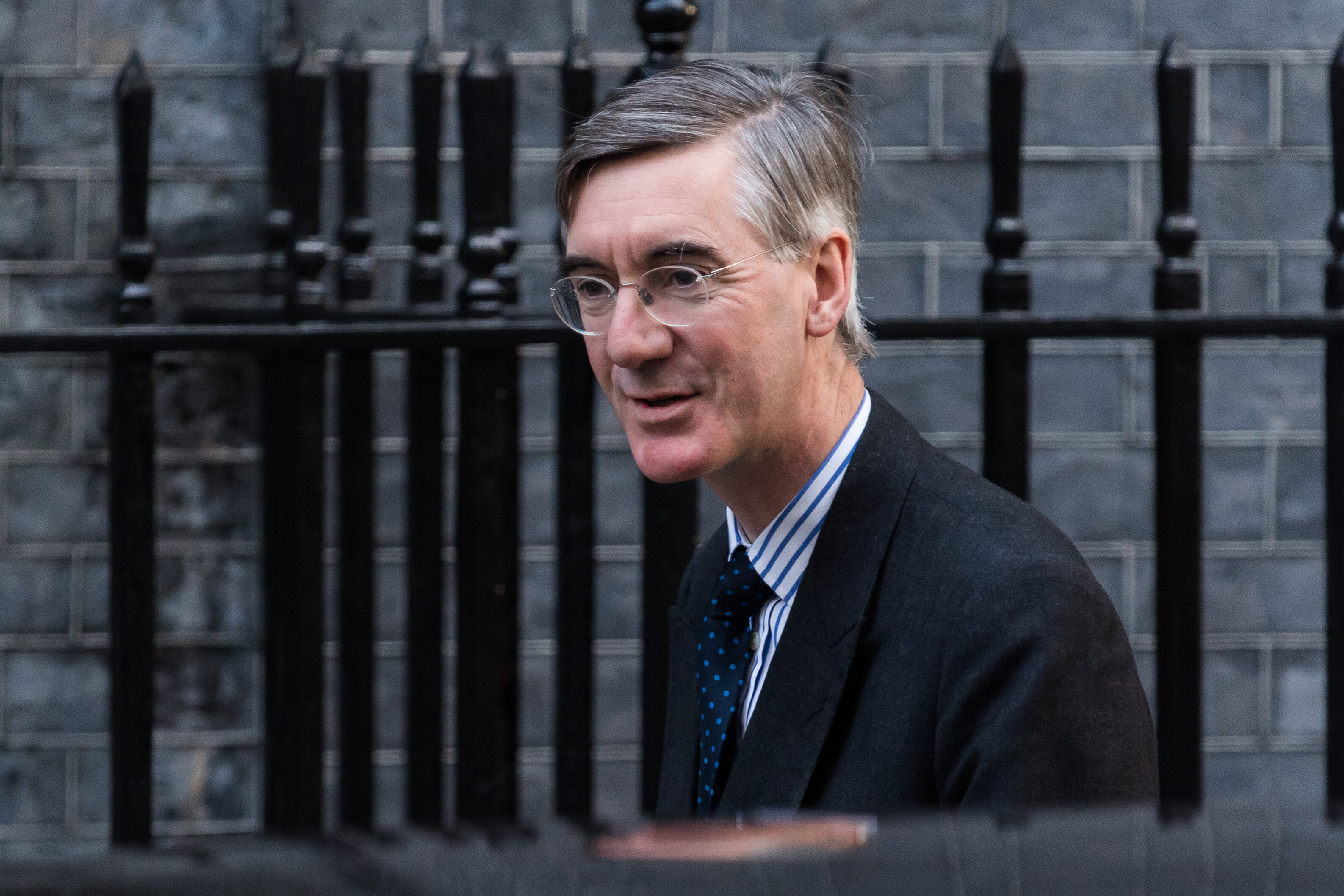
Jacob Rees-Mogg has taken aim at the independent fiscal watchdog that analyses government budgets despite the huge market unrest.
On the day the pound plunged again, the business secretary trashed Office for Budget Responsibility (OBR) forecasting and even suggested chancellor Kwasi Kwarteng could ignore them if they were overly negative.
Advertisement
OBR assessments of the UK economy will accompany the chancellor’s plan to pay for his economic measures and reduce debt on October 31.
A lack of such forecasts during last month’s seismic mini-budget are thought to have contributed to the recent chaos in financial markets – with the cost of government borrowing soaring and the Bank of England forced to intervene.
In a pre-recorded interview on ITV’s Peston, the cabinet minister said: “Let’s see what the Office for Budget Responsibility has to say rather than guessing what it may say.
Advertisement
“But its record of forecasting accurately hasn’t been enormously good.
“So, the job of chancellors is to make decisions in the round rather than to assume that there is any individual forecaster who will hit the nail on the head…
“There are other sources of information. The OBR is not the only organisation that is able to give forecasts.”
His comments are unlikely to reassure investors seeking a firm commitment from the Government to get the nation’s finances under control.
Rees-Mogg also lashed out at the International Monetary Fund (IMF) after it called for the UK’s economic support package to be more targeted and for fiscal policy to be tightened.
He said: “I think the IMF is wrong on both counts. I think it’s particularly wrong on energy, and frankly doesn’t know what it’s talking about…
Advertisement
“The IMF is not holy writ and the IMF likes having a pop at the UK for its own particular reasons. I’m afraid I would never lose too much sleep about the IMF.”
This is exactly what we’ve seen since the mini-budget – Ministers repeatedly going out making things even worse with foolish comments further undermining confidence in the UK.
While they’re in power everyone will pay a premium on their mortgage https://t.co/mBCd0uIQy0
Earlier, the senior Conservative accused Today programme presenter Mishal Husain of failing to meet the BBC’s impartiality standards after she suggested the mini-budget had unleashed the market turmoil.
Labour’s shadow chief secretary to the Treasury Pat McFadden said: “Even now, Tory cabinet ministers do not appear to have learned lessons since their disastrous mini budget.
“The more they publicly trash economic institutions like the OBR, the more they undermine market confidence in their plans and their management of the UK economy.
“The Tories are out of control and working people are being made to pay the price with higher mortgage payments.”
Financial experts have roundly rejected the business secretary’s analysis that interest rates were to blame for the market turmoil.
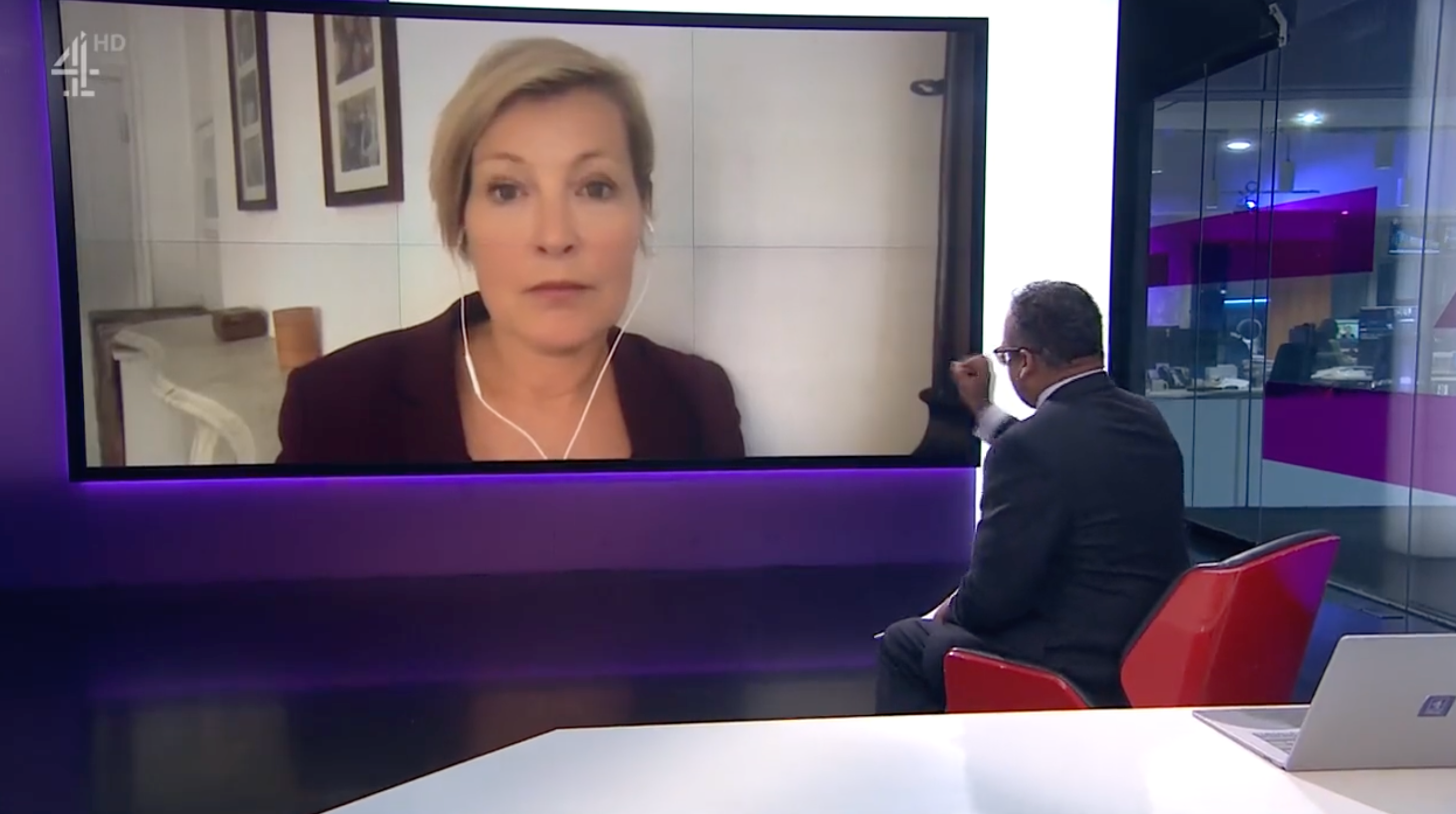
Gillian Tett, Financial Times US editor-at-large, told Channel 4 News: “To use a non-technical term, that’s pretty much bollocks.”
A Financial Times journalist has offered a withering assessment of the government’s suggestion that the Bank of England is to blame for the recent chaos in the markets.
On Tuesday, business secretary Jacob Rees-Mogg suggested the central bank’s failure to raise interest rates in line with the US was driving the financial turmoil rather than chancellor Kwasi Kwarteng’s mini-budget.
Advertisement
But Gillian Tett, the FT journalist who made her name for her prescient commentary on the 2008 financial crash, has said – bluntly – that this was really not the case.
Appearing on Channel 4 News, and asked for a verdict, Tett said: “To use a non-technical term, that is pretty much bullocks.
“I think for the most part it really was the budget and the way it was delivered and the message inside, which sparked the beginning of the crisis.
“The Bank of England certainly is to blame for not having prepared for these kinds of dislocations. The British pension funds appear to have been somewhat asleep at the wheel in terms of their risk management systems.
Advertisement
“But at the end of day, the spark that lit this fire was very much the budget announcement.”
Earlier, Rees-Mogg argued the market response was “much more to do with interest rates than it is to do with a minor part of fiscal policy”.
On September 22 the Bank’s Monetary Policy Committee (MPC) raised rates by 0.5 percentage points to 2.25%, but the day before the Federal Reserve raised rates by 0.75 percentage points.
But economists insisted that the government’s decision to increase borrowing without any plan to balance the books was a major factor.
The cost of government borrowing increased on Wednesday while sterling fell against the euro and dollar in the latest signs of market turbulence.
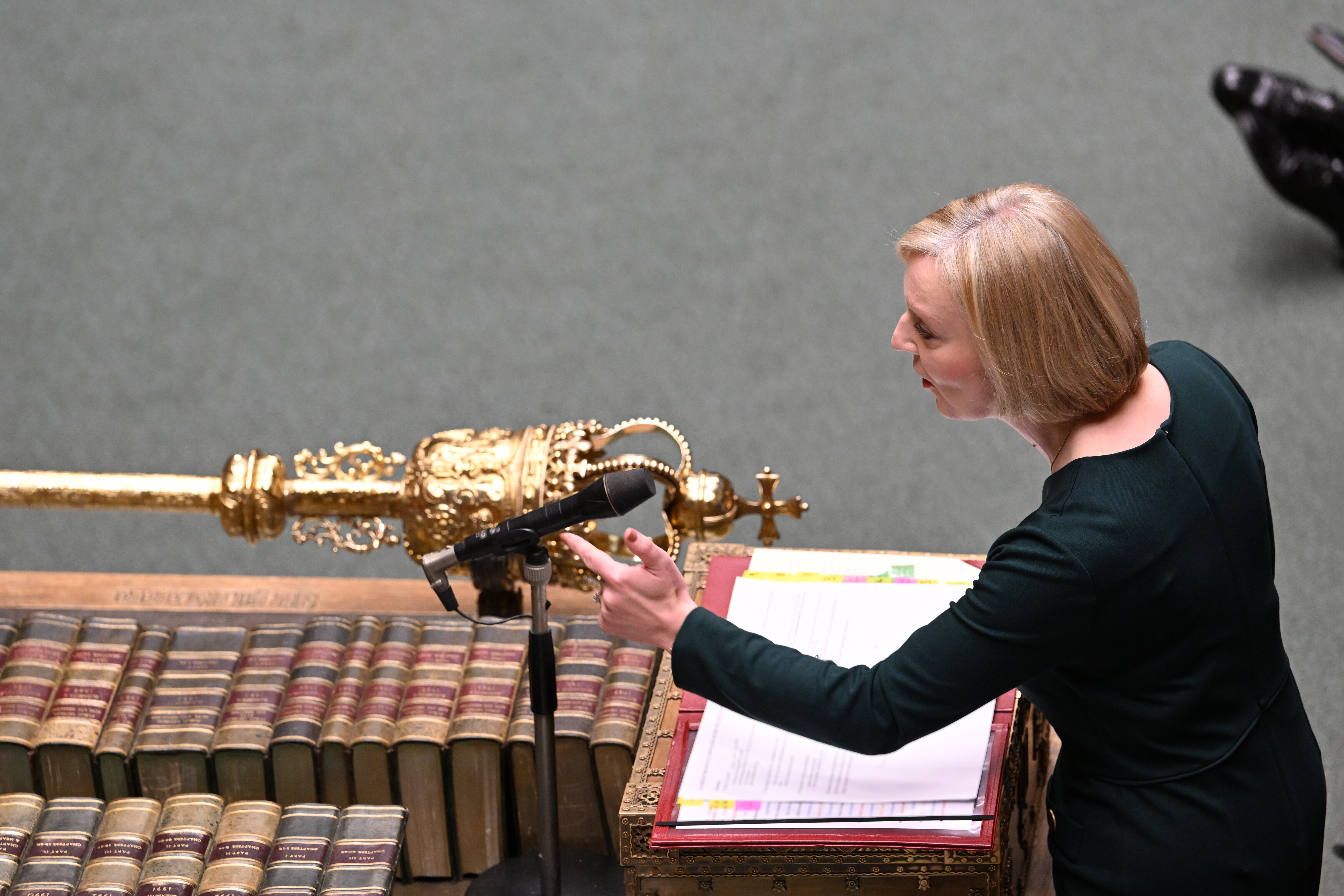
Liz Truss has been savaged by Tory MPs after a disastrous meeting with her backbenchers.
In a bid to win over her mutinous MPs, Truss on Wednesday evening addressed the Tory backbench 1922 Committee, including high-profile critics Michael Gove and Grant Shapps.
But one MP described her performance as “crap” while another told HuffPost UK she was “wooden”.
The showdown in Commitee Room 14 of the House of Commons came as the economic chaos sparked by Kwasi Kwarteng’s mini-budget continued.
Advertisement
Truss told the MPs present that the government’s energy price guarantee would protect households and businesses from soaring bills this winter.
She called on her colleagues to “highlight the devastation that would have been caused to small business had we not acted”.
But her attempts to win over her own MPs failed, with one telling HuffPost UK that almost all of the questions she was asked were critical of the government.
One said: “She was crap and the atmosphere was pretty flat in the room. Even the whips couldn’t be bothered getting people to ask supportive questions.”
Advertisement
One backbencher said her remaining supporters were “libertarian Jihadists who are wrecking the party”.
Former minister Robert Halfon, the Tory MP for Harlow, told Truss she had “trashed blue collar conservatism” by weakening the government’s commitment to affordable housing and lifting the cap on bankers’ bonuses.
Another MP said: “I would say it was worse than anything Theresa May ever faced when she was leader.
“What was really noticeable was the failure of the whips to organise a Praetorian guard of supporters around her. There was only one mildly supportive question and the rest were hostile.
“There was clapping on tables when the government’s policies were criticised and groans when the PM was giving an answer on interest rates and saying they were going up around the world. Try telling that to voters who are seeing their mortgages go up.”
The MP added: “She was wooden, cardboard, lacking in empathy. It’s very bleak.
“It felt very sombre and the mood was a bit like ’what’s going to happen next to bring this to a conclusion?”
Advertisement
The meeting capped another difficult day for the prime minister after she endured a tough prime minister’s questions in which she stunned MPs by declaring she would not impose any spending cuts to pay for the government’s tax giveaways.
The governor of the Bank of England made clear its emergency support programme for the county’s fragile bond market will end on Friday – sparking another sell-off of the pound.
Andrew Bailey warned pension fund managers “you’ve got three days left” to balance the books as the central banker made clear efforts to shore up the financial markets had to be temporary.
Advertisement
It’s almost two weeks since the Bank launched a massive programme to help pension funds cope with a slump in bond prices triggered by the announcement of unfunded tax cuts by the new Liz Truss government.
Earlier on Tuesday, it made a fresh attempt to soothe market chaos, enacting another round of emergency bond-buying after a renewed bout of market turbulence.
Investors have been selling-off government bonds – also known as gilts – as investor concerns about the state of the British economy has failed to subside.
Following the announcement by the governor, the pound plunged against the dollar to below $1.10.
Spooked by the biggest raft of tax cuts for half a century, the pound fell to its lowest point ever against the dollar following the mini-budget – dropping to just over $1.03 – but has rebounded since in no small part thanks to the Bank’s efforts.
Advertisement
Gosh Just look at what happened to the pound when @bankofengland Governor Andrew Bailey told investors its emergency support will definitely end on Friday. “You’ve got three days left now,” he said. “You’ve got to get this done.” pic.twitter.com/ij9verfBBW
At an event organised by the Institute of International Finance in Washington on Tuesday, Bailey said: “We have announced that we will be out by the end of this week. We think the rebalancing must be done.
“And my message to the funds involved and all the firms involved managing those funds: You’ve got three days left now. You’ve got to get this done.”
Earlier on Tuesday, the Pensions and Lifetime Savings Association, an industry body, urged the BoE to extend the bond-buying programme until October 31 “and possibly beyond”.
Advertisement
Why has the Bank stepped in with more emergency action?
On Tuesday, the Bank said it needed to broaden the emergency programme to buy UK government bonds to calm markets as it warned over a “material risk to UK financial stability”.
Advertisement
It came after a further sell-off in the gilt market, which saw the yields on long-dated government bonds rise back up close to levels seen in the immediate aftermath of the mini-budget.
What are gilts and gilt yields?
UK government bonds are a way for the government to raise money.
A gilt is essentially an IOU that the Treasury writes to its lenders, promising to pay the money back, plus interest, within a time frame, for example over two, 10 or 30 years.
The yield on a gilt is the amount of money an investor receives for owning the debt and is represented as a percentage of its price. When a bond price falls, its yield rises.
Yields rise when investors are less willing to own the debt, meaning they will pay a lower price for the bonds.
Why are bond yields rising?
Concerns over the chancellor’s plans for unfunded tax cuts sent gilt yields soaring as markets fretted over the Government’s economic policies.
Advertisement
At one stage, the yield on 30-year gilts hit levels not seen since 2002 in the chaos that followed the mini-budget statement, while the pound also plunged to record lows against the US dollar.
What do gilt prices have to do with pension funds?
Pension funds invest huge amounts of money in gilts, which are seen as safe investments in usual times.
In order to protect themselves against sharp rises in government borrowing costs, funds have been investing in products that act as a kind of insurance – so-called liability driven investment (LDI) funds.
But due to the sudden rise in government borrowing costs after the mini-budget, investment banks called on these LDIs to put up assets or cash as securities for loans, which in turn called on pension funds, forcing them into a fire sale of gilts, driving prices still lower and yields higher and creating a downward spiral.
How bad is the latest crisis in financial markets?
The Bank warned last week that it had been been forced to step in to avoid market meltdown, when some pension funds were left close to collapse and there was a risk of a knock-on impact elsewhere in the financial system.
Advertisement
Its measures initially eased pressure on gilt yields, but they spiked higher again and there are signs the woes may be spreading elsewhere, to index-linked gilts, as well as corporate bonds and even in niche debt markets in the US.
Will my pension be affected?
Experts say the gilt rout, which is largely affecting final salary and defined benefit pensions schemes, will not impact policyholders.
The Pensions and Lifetime Savings Association (PLSA) said: “Although there has been a great deal of commentary over the last few weeks, members of defined benefit pension schemes should be reassured that their pension benefits are safe; scheme funding is strong and, despite the operational challenges, funding will have been strengthened further by rising yields.”
Why are mortgage rates rising?
Higher gilt yields and the prospect of rising interest rates as the Bank looks to cool rampant inflation have a significant impact on mortgage lenders.
Rates on two and five fixed year deals have gone past 6% for the first time in many years due to the market turmoil, while lenders have also been pulling hundreds of products.
Advertisement
Will the latest action be enough?
There are concerns that when the Bank’s programme comes to a close on October 14, there will be a further sell-off of gilts, leaving pension funds in chaos once more.
The PLSA has called for the bond-buying programme to be extended to the chancellor’s next fiscal statement on October 31 or even beyond, suggesting there may yet be further intervention from the Bank.
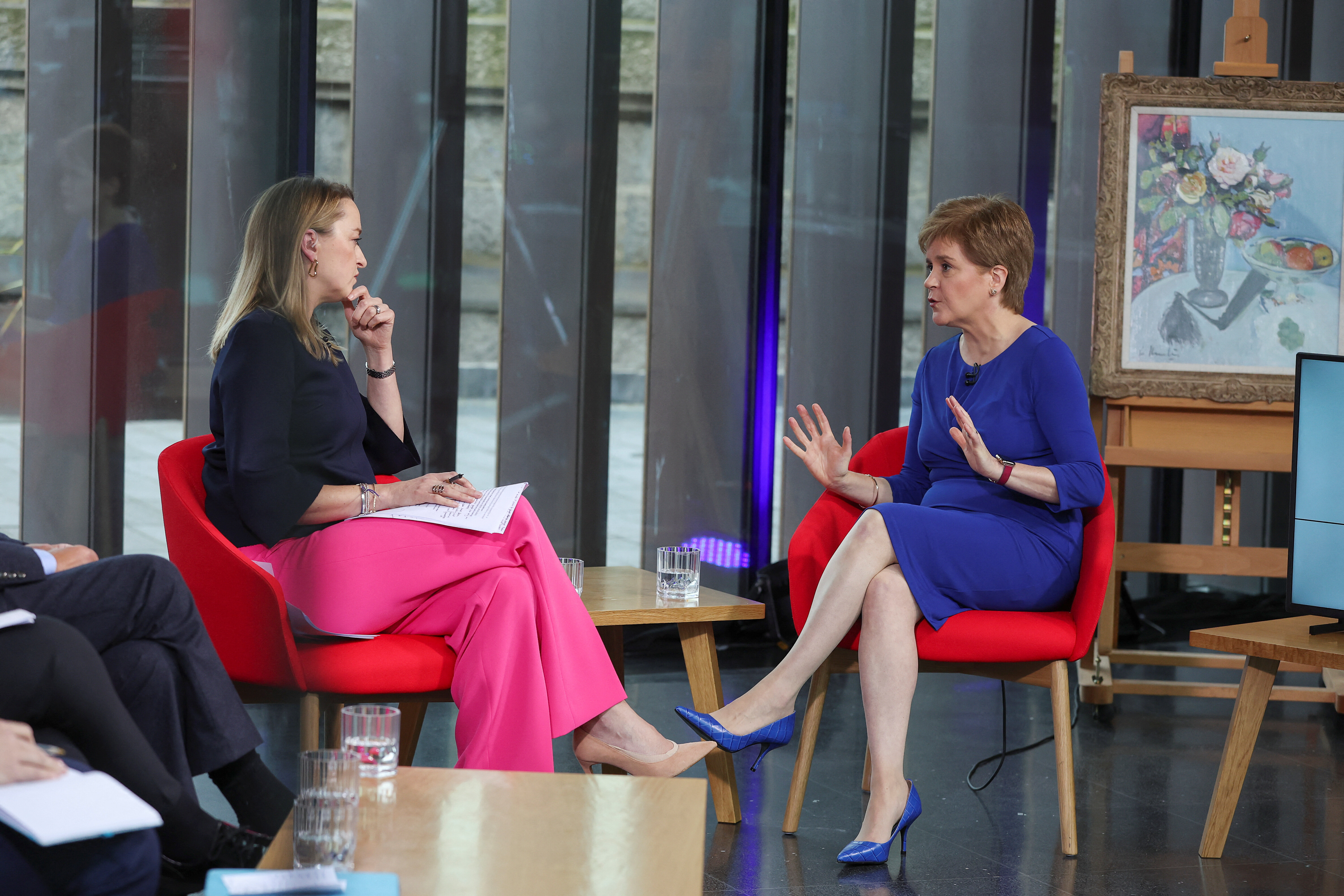
Nicola Sturgeon has sparked a backlash for saying “I detest the Tories” during a BBC interview.
Scotland’s first minister has been accused of using “dangerous language” after she took a swipe at the Conservatives.
Sturgeon told the Sunday with Laura Kuenssberg programme: “If the question to me is would I prefer a Labour government over a Tory government – I detest the Tories and everything they stand for – so it’s not difficult to answer that question.”
Advertisement
Chancellor of the Duchy of Lancaster Nadhim Zahawi hit back: “I think that language is really dangerous.
“I prefer to work with my colleagues in Scotland on delivering the free ports, the green ports, as I want to do with [Deputy First Minister] John Swinney and others.”
Tory MP Andrew Bowie commented: “That’s the first minister of Scotland ‘detesting’ a quarter of the Scottish electorate.
“Good to see the language of respectful disagreement being demonstrated here. Btw, how’s that plan to win over 2014 no voters going?”
Advertisement
While Sturgeon said she would favour a Labour government, she added: “Being better than the Tories is not a high bar to cross right now.
“I think we need to see more of a radical alternative from Labour rather than just a pale imitation.
“If you’re asking me do I think either a Westminster Tory government or a Westminster Labour government are good enough for Scotland, then my answer to that is no.”
She also told the broadcaster she was disappointed that Labour leader Keir Starmer had “thrown in the towel” on re-joining the European Union.
During the interview, Sturgeon said she was “confident” that a second Scottish independence referendum will take place next October.
She dismissed opinion polls that show people do not want indyref2 now or in the next few years, saying they did not need to look at the polls to know there was a mandate for another referendum.
Advertisement
The SNP want to hold a vote next autumn if the Supreme Court rules that ordering a ballot is within the powers of the Scottish parliament.
Sturgeon said plans were “ready to go” to legislate for the referendum – if it gets the go ahead from the court.
The first minister also claimed that any attempt to boycott an indyref2 would show the UK government does not believe it can win the case for the union.
However, some – including Scottish Conservative leader Douglas Ross – have suggested the unionist side could boycott the referendum.
Sturgeon went on to say that she believed the “vast majority” of Scots would take part in the referendum and she was “confident Scotland will become independent”.
Advertisement
The Scottish government is expected to publish a new paper setting out its plans for the economy and currency of an independent Scotland next week.
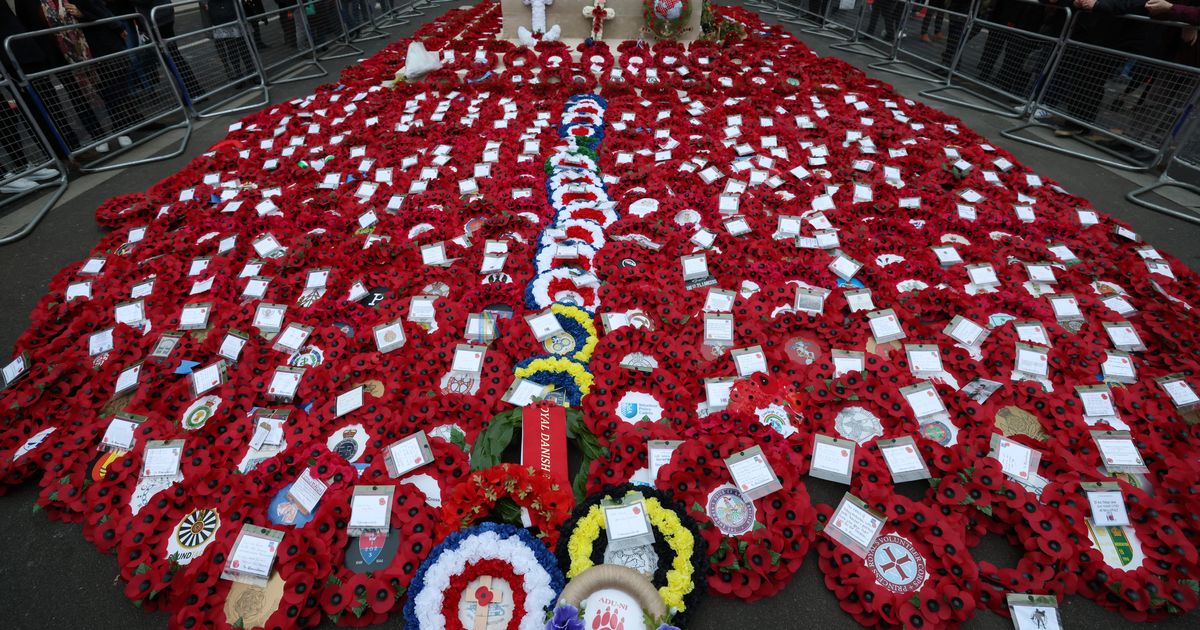
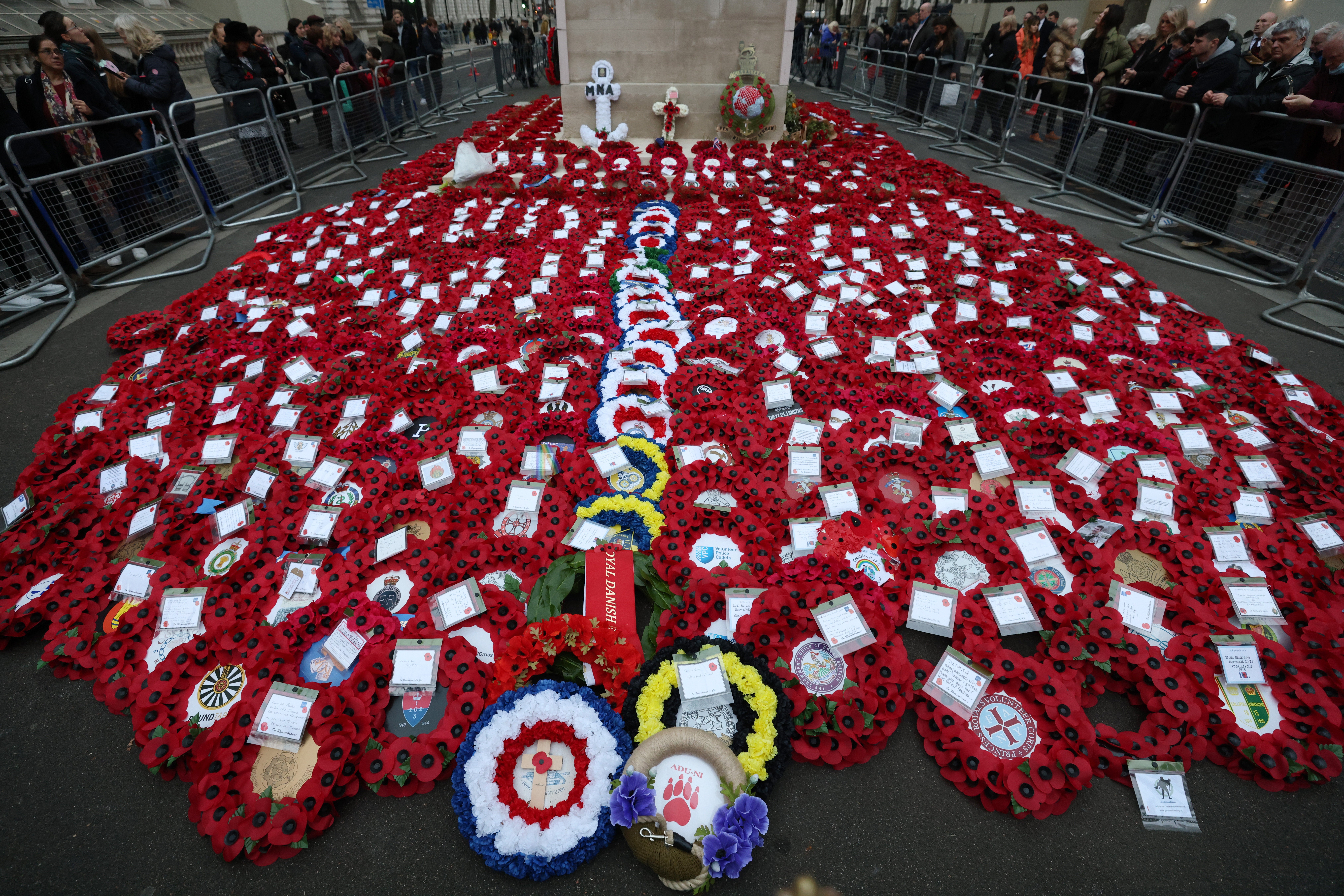
The transport secretary is to reverse a decision to scrap free train travel for military veterans to attend remembrance services.
On Friday evening, the Guardian reported the government was said to have revoked the offer, previously funded by the public purse in 2021, because the cost to the taxpayer would be “too great”.
Advertisement
The decision was revealed in an internal briefing for staff by the Rail Delivery Group, which represents rail companies. A RDG spokesperson confirmed “we are unable to offer free travel to veterans on Remembrance Sunday this year”.
But following an immediate online backlash from senior Tories – among others – it was reported by the PA News agency that transport secretary Anne-Marie Trevelyan is looking at reversing the move.
It added neither Trevelyan nor her ministers signed off on the decision.
As a proud champion of our armed forces, I’m appalled by reports veterans would pay for their travel to commemorate the fallen. Incorrect.
Our military veterans have given of themselves to protect us all. It cannot be right to remove this small piece of recognition for their service to the country.
.@annietrev in her 7 years in Parliament has done more for veterans than most of those who never stop banging on about their own service.
But if you take your Veterans Minister out of cabinet, smash it together with another brief (Min AF) & no-one takes responsibility.. voila. https://t.co/5qU6s1jMzU
In response to the suggestion the offer had been scrapped, she tweeted: “As a proud champion of our armed forces, I’m appalled by reports veterans would pay for their travel to commemorate the fallen. Incorrect.
“Our #ArmedForcesCovenant is a commitment to go the extra mile for our military. Train travel for veterans for remembrance remains free.”
Former transport secretary Grant Shapps had said ministers should “urgently” review the decision.
“Our military veterans have given of themselves to protect us all,” he said.
“It cannot be right to remove this small piece of recognition for their service to the country.”
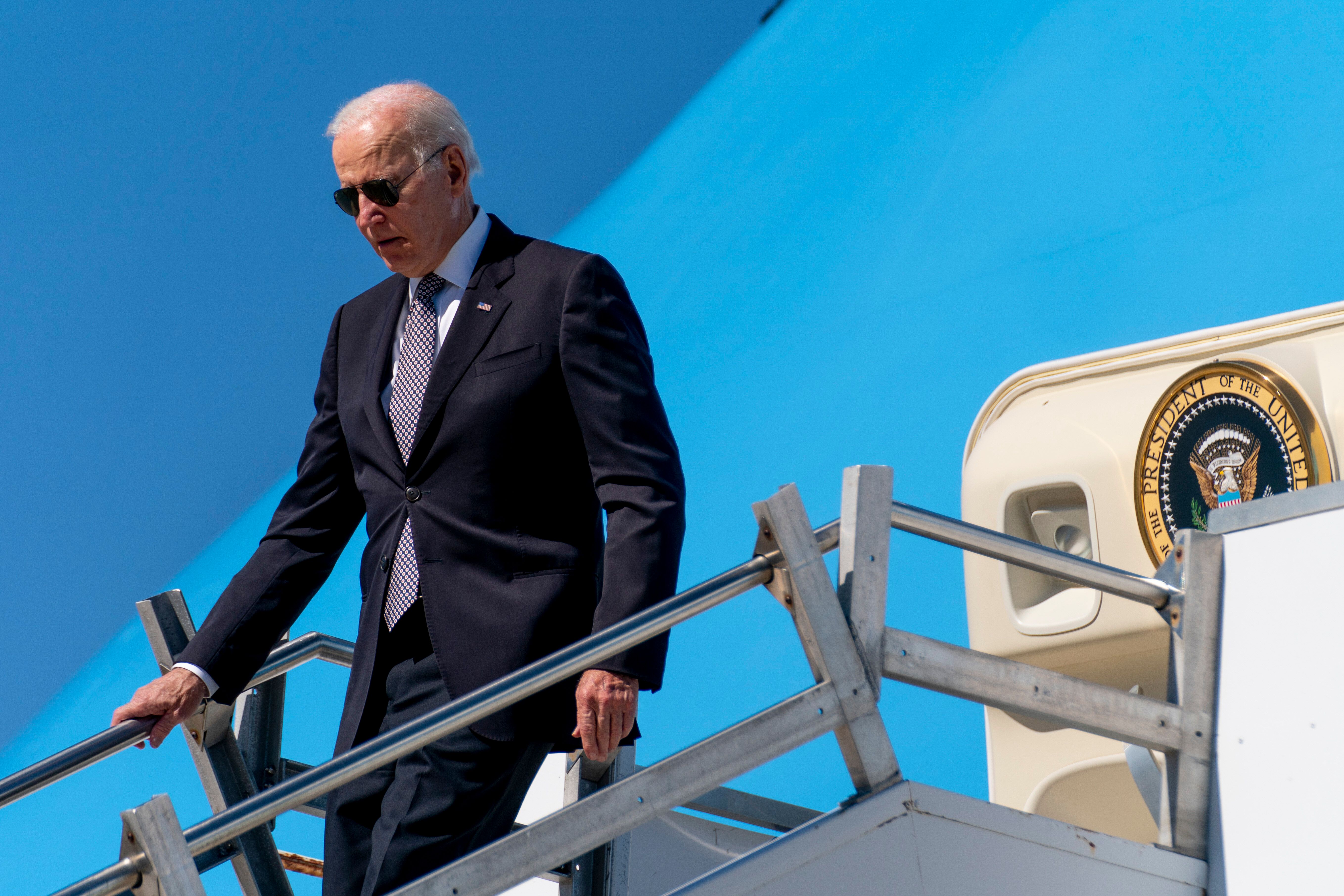
President Joe Biden will pardon all prior federal offences of simple possession of marijuana, he announced on Thursday.
The president is also calling on governors to pardon state marijuana offences. He will also ask the secretary of the Department of Health and Human Services and the attorney general to review how the drug is scheduled under current federal law.
The forthcoming pardons are set to clear the convictions of some 6,500 people who had federal charges of simple possession of marijuana from 1992 to 2021, officials said. Thousands more who were convicted in the District of Columbia will also be pardoned.
“Criminal records for marijuana possession have also imposed needless barriers to employment, housing, and educational opportunities,” Biden said in a statement. “And while white and Black and brown people use marijuana at similar rates, Black and brown people have been arrested, prosecuted, and convicted at disproportionate rates.”
The announcement still stops short of decriminalizing marijuana, even as a growing majority of Americans say the drug should be legal. The president also intends to keep the current regulations relating to trafficking, marketing and underage sales in place.
Marijuana is currently classified as a Schedule 1 drug under the Controlled Substances Act, like heroin and LSD. The Justice Department said it will work with the Department of Health and Human Services to review how marijuana is classified under federal law.
“Too many lives have been upended because of our failed approach to marijuana,” Biden said. “It’s time that we right these wrongs.”
This was meant to enlist 300,000 men with previous military experience to boost the Russian forces, although the official decree did not specify a required figure.
But just a week later, Putin announced there would be “corrections” to the call-out after there were reports that people with no experience or those beyond the draft age have been called up.
He said: “For example, I’m thinking of fathers of many children, or people suffering from chronic diseases, or those who are already past conscription age.”
Now he has deferred conscription for additional categories of students, too.
More than 200,000 people have already been drafted in, according to the Kremlin.
Meanwhile, Russians have allegedly been fleeing the country in droves to avoid being called up to war and anti-war protests have broken out all over Russia. Data shared by Bloomberg.com revealed that 400,000 Russians have escaped to nearby states.
Advertisement
According to OVD-Info, 2,418 people were detained for protesting against mobilisation between September 21 and 26.
2. And Russia still isn’t sure about its new external borders
Moscow annexed four regions of Ukraine last week, after holding sham referendums in each area – Kherson, Zaporizhzhia, Donetsk and Luhansk.
Putin has since claimed that all four regions wanted to join Russia, although almost the entire international community still believes these areas are part of Ukraine.
And, in claiming the land for Russia without Ukraine’s permission, Putin has officially broken international law.
Advertisement
However, Russia does not control any of these areas completely – many pockets are still rebelling against Moscow rule. As a result, Russia has still not entirely confirmed where it thinks its new borders are, especially as Ukraine continues to reclaim land.
Kremlin spokesperson Dmitry Peskov refused to give a solid answer about where the borders of Kherson and Zaporizhzhia regions should be following the annexations.
Asked by CNN, he said: “I will leave this question unanswered.”
He then added: “But I repeat once again: certain territories there will be returned and we will continue to consult with the population, that expresses a desire to live in Russia.”
This is only made more confusing by the decision to include these annexed areas in the Russian TV weather forecasts.
Advertisement
3. Ukraine’s counteroffensive continues
Ukraine has reclaimed astounding quantities of land in the east over the last few weeks, amid claims that Russian soldiers fled or surrendered.
President Volodymyr Zelenskyy has remained confident about Ukraine’s success, believing the whole country – including the annexed land – can be reclaimed.
But, as Zelenskyy, noted, this reclaimed land is severely damaged.
He shared images of the recently liberated city of Lyman, showing how – even where Ukrainians comfortably declared victory – there is extensive tragedy left.
Zelenskyy wrote: “Our Lyman after the occupier. All basics of life have been destroyed here. They are doing so everywhere in the territories they seize.”
Our Lyman after the occupier… All basics of life have been destroyed here. They are doing so everywhere in the territories they seize. This can be stopped in 1 way only: liberate Ukraine, life, humanity, law and truth as soon as possible. pic.twitter.com/WInSrmQxsA
The 27 states of the bloc all agreed to a sanctions package on Wednesday. This is part of the ongoing sanctions meant to reduce Putin’s ability to attack Ukraine by reducing its income and forcing it to sell its oil abroad for less.
It’s also the eighth round of sanctions from the EU since Moscow invaded in February, signed off on Wednesday.
In response, European Commission president Ursula von der Leyen wrote: “We will never accept Putin’s sham referenda nor any kind of annexation in Ukraine. We are determined to continue making the Kremlin pay.”
The West in general is also trying to reduce its reliance on exported Russian fossil fuels, so that Moscow can no longer use it for leverage.
5. Zaporizhzhia nuclear power plant concerns grow
Ukraine’s largest nuclear power plant is still in the line of fire. Russia have attempted to annexe the region, and it has been occupied since the start of the war, although the plant itself is still operated by Ukrainian technicians.
Advertisement
Head of the International Atomic Energy Agency Rafael Grossi is also expected to visit the Kremlin to discuss de-escalating the situation.
Ukraine’s government of Zaporizhzhia said this week that, “the enemy fired rockets at the regional centre and the outskirts of the city” during the night, meaning “infrastructure facilities were destroyed”.
Former RAF Air Marshal Edward Stringer told Sky News that Putin’s continued attacks on the region meant Putin was trying to “keep the world worried” about his aggression, and “employing terror against the civilian population.”
Despite these attacks near the power plant, the Kremlin has promised it is “fully committed” to not fighting a nuclear war.
It’s worth remembering, only last month Putin promised he was “not bluffing” when it came to using “all the means available to us” to win the war.
Advertisement
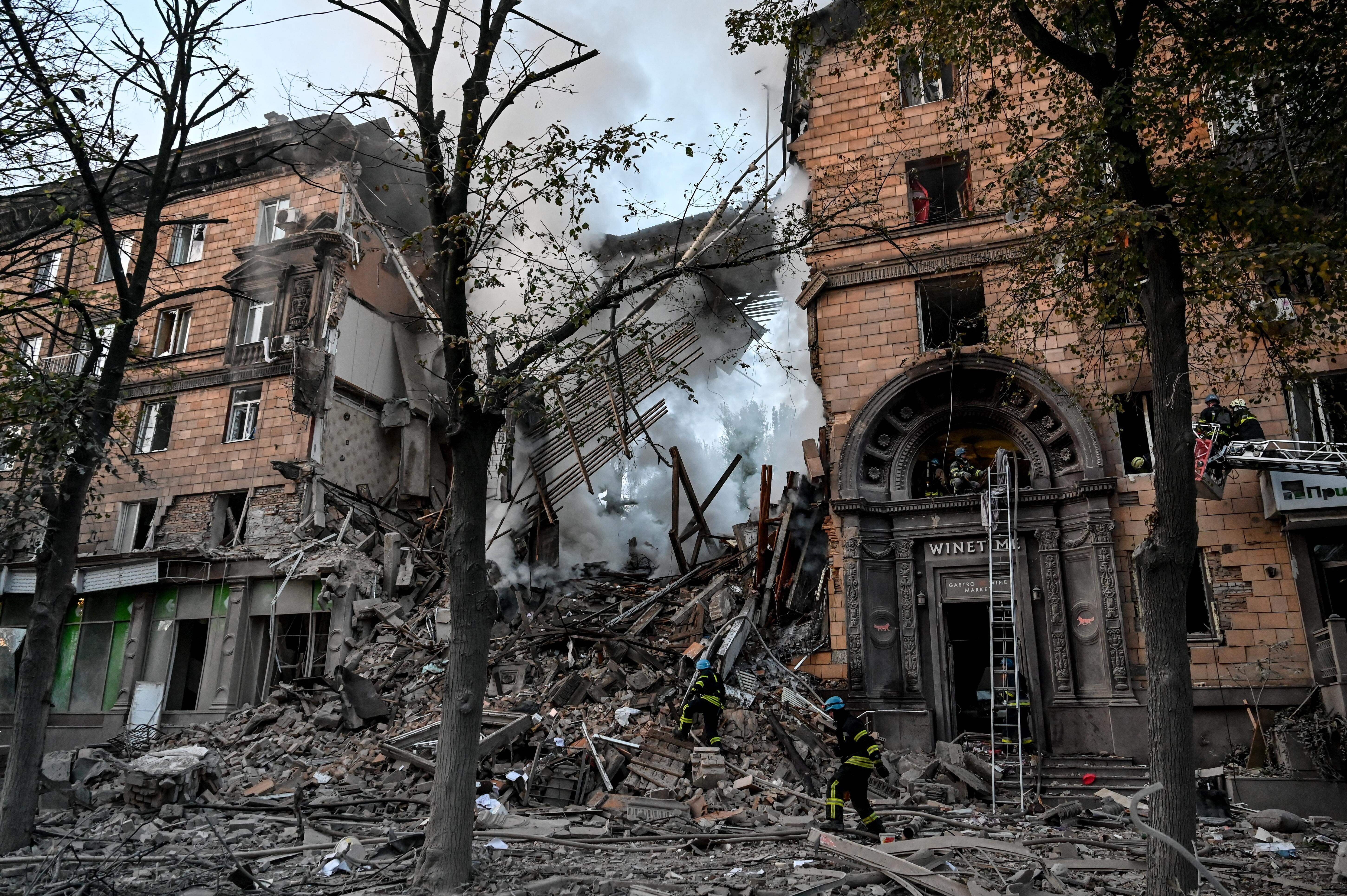
Ukrainian firefighters push out a fire after a strike in Zaporizhzhia on October 6, 2022, amid the Russian invasion of Ukraine.
MARINA MOISEYENKO via Getty Images
6. Russia sounds warning to the US
Russia’s ambassador to the US, Anatoly Antonov, said Washington’s attempts to send more military aid to Ukraine were only increasing military tensions between Russia and the West.
He added that this was an “immediate threat” to Moscow, adding: “We call on Washington to stop its provocative actions that could lead to the most serious consequences.”
Moscow also warned that the US is a “participant of the conflict” after Washington announced it was sending another $625 million (£547 million) in military aid to Ukraine, along with advanced US weaponry.
In total, Washington committed nearly $17 billion (£15.15 billion) in military support since the war began.